D&D AI That Remembers Past Decisions: Lasting Campaign Canon
2026-09-16
Roleplay Game Master helps you play D&D-style adventures by remembering every meaningful choice you make — who you spared, what you promised, and which rumor you ignored. In September 2026, players hunting a D&D AI that remembers past decisions are done with chatbots that treat last session like it never happened. While a generic model can improvise a tavern scene, this AI provides unlimited memory and perfect character consistency so a decision from session two still shapes the world in session twenty.
✅ Unlimited memory that stores choices, not just the last scene ✅ Perfect character consistency so NPCs react to what you actually did ✅ Complete creative freedom across D&D-style play, homebrew, or any setting ✅ Consequences that persist — alliances, grudges, and unfinished quests stay canon
To understand why this matters, let's examine why most AI dungeon masters lose your decisions — and why remembering them is the difference between a one-shot chatbot and a campaign that actually belongs to you.
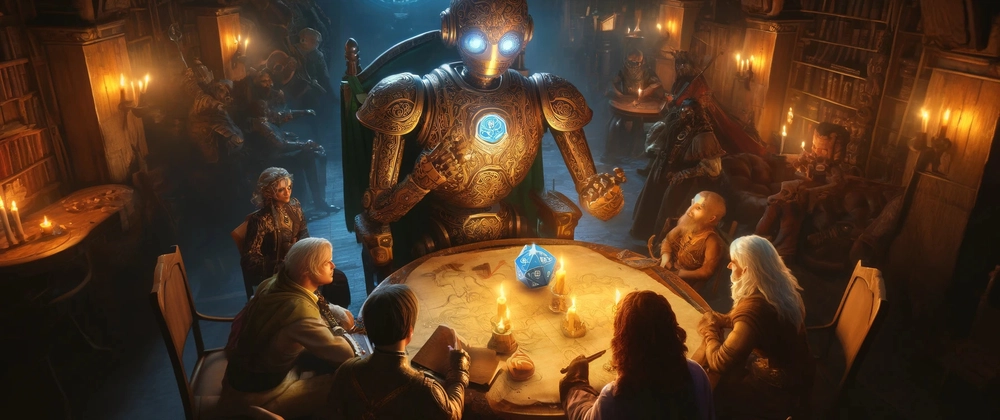
Quick Answer: What Is a D&D AI That Remembers Past Decisions?
Roleplay Game Master is a D&D AI that remembers past decisions so NPCs, quests, and world state stay consistent across every session. You continue the campaign. You do not re-explain the plot.
Key capabilities:
- Persistent memory of player choices, promises, and consequences
- NPCs who stay in character and recall what you did to them
- Open-ended play across D&D-style fantasy, homebrew rules, or any tone
- Campaign continuity that treats last session's decisions as canon, not optional flavor
Why Most D&D AIs Forget What You Chose
D&D is a game of accumulating decisions. The global TTRPG market was valued at USD 2.31 billion in 2025, with other analyses placing it near USD 2.41 billion in 2026. Players already know how to roll a check. What they cannot fake is a dungeon master who remembers the choice.
Human DMs treat decision-tracking as the job. Veteran advice is blunt: keep good records or a long campaign collapses into confusion. Practical session hygiene is the same — write down what the party decided while it is still fresh. An AI that cannot hold those decisions is not a DM. It is a scene generator.
But getting that continuity from a language model is frustratingly difficult:
- Context windows are not campaign bibles
- NPCs forget your bargains, lies, and mercy
- Factions, inventory, and unfinished quests vanish between sessions
- The model invents a new plot instead of honoring the one your choices already built
A Chat Log Is Not a Decision Ledger
A context window is a token budget. System instructions, the current scene, recent chat, and tool output all compete for the same space. When the window fills, last month's political marriage is just another paragraph that got truncated.
Researchers at UC San Diego used D&D itself as a benchmark for this problem: the game is a natural testing ground for multistep planning, rule-following, and long-horizon decisions. Short chat is easy. Remembering what you chose three sessions ago is the hard part.
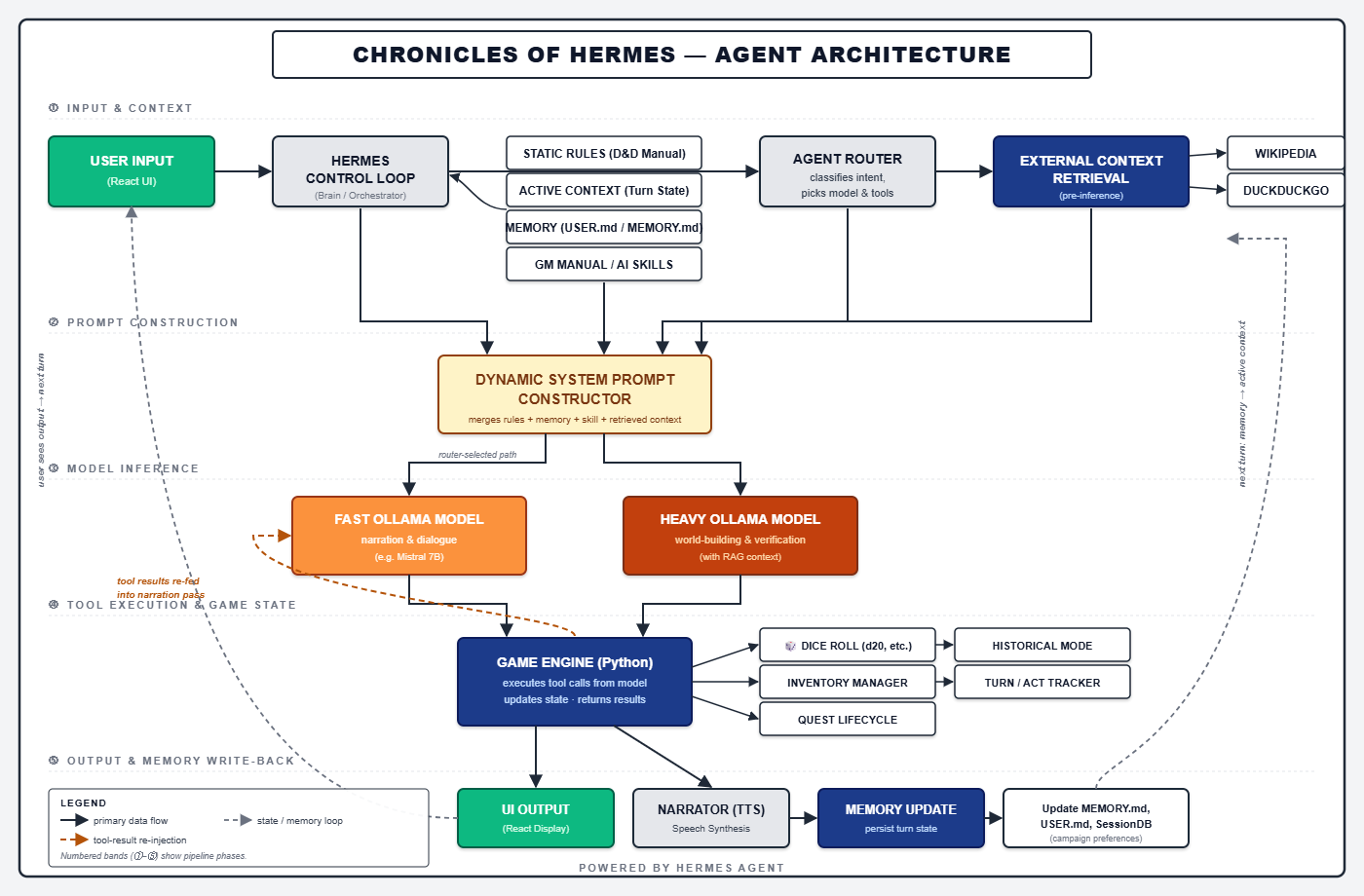
That diagram is the point. A D&D AI that remembers past decisions needs a write path out of the prompt — turn state, memory, and a loop that feeds last session's choices back into the next one. Without it, you are prompting a model to act like a DM, not continuing a world.
Recurring NPCs Die When Decisions Die
Players notice when someone they met many sessions ago
. That only works if the NPC still knows whether you bribed them, insulted them, or saved their sibling.When the innkeeper who hid your stolen relic becomes a cheerful stranger, the fiction breaks. Practitioners put it simply: every other feature sits on top of memory. Combat, dice, and lore dumps do not matter if grudges, secrets, and hit points reset.
One-Shots Are Easy; Consequence Arcs Are Hard
An AI can improvise a tavern brawl. A campaign needs callbacks: the goblin you spared, the noble you embarrassed, the relic you left in the dungeon. Comparative research on solo GM systems found that a prompt-only GM is weaker than an agentic design with a dedicated archivist that logs characters, locations, and state. Players rated the memory-aware version higher on immersion, flow, and perceived intelligence.
This is exactly what Roleplay Game Master was built for.
Why Roleplay Game Master
This D&D AI is built for the campaign, not the vignette. Unlimited memory and perfect character consistency mean your decisions accumulate. You are not prompting a model to "act like a Dungeon Master." You are continuing a world that already knows who you poisoned, who still owes you a favor, and which rumor you ignored three sessions ago.
| Traditional Approach | Roleplay Game Master |
|---|---|
| Chatbot that forgets when the context fills | Unlimited memory of past decisions across sessions |
| You maintain a wiki so the AI does not contradict itself | Perfect character consistency built into play |
| Recap every session, including every choice, in the prompt | The campaign continues where you left off |
| One-shots work; consequence arcs collapse | Multi-arc stories where choices still matter |
| Notes scattered across Discord, docs, and paper | One persistent world the AI actually uses |
A raw chatbot can still run a scene. The difference is whether last week's decision is treated as canon. D&D campaigns run on several overlapping continuities at once — character history, faction politics, dungeon state, and table lore. If any of those reset, the game feels fake. That is the gap this product is designed to close.
Decisions That Compound
Every session writes onto the last. Factions remember slights. Cities change hands. Your character's reputation precedes them. You can also ground play in your own materials — setting bible, house rules, character sheet, or session notes — so the GM is not inventing canon you already wrote.
NPCs Who Stay Themselves
Perfect character consistency is the difference between a cast and a random generator. The rival paladin who spared you in the ruins should still wrestle with that choice when you meet again. Voice, goals, and relationships hold because your past decisions are part of who they are now.
Any World, Any Rules Flavor
Complete creative freedom means you are not locked to one published setting. Run high-crunch dungeon crawls, diceless political intrigue, horror, or a homebrew system with three homemade stats. The GM follows the table you set — including the consequences you already earned.
Play Across Devices Without Resetting Choices
Campaigns die when they are trapped on one laptop. Pick up the same thread on your phone between classes or on the couch after work. The memory travels with the campaign, not the browser tab.
Example openings you can actually use:
"You are the DM for a long-running D&D campaign. I am Kaelen, a disgraced cartographer who sold a false map that got a village burned. Continue from the moment I return to that village two years later. Do not reset relationships or forget that decision."
"Track inventory, NPC agendas, and open quests as canon. If I contradict established facts, correct me in-world instead of rewriting history."
"I lied to the harbormaster last session and bribed the night watch. Both of those decisions are canon. Run the next scene as if the city already started reacting."
Related Agents You'll Also Find Useful
If you are building a D&D campaign that lasts, these tools sit next to the DM chair.
Name Generator
Long campaigns burn through names. Villages, ships, spell lineages, and throwaway guards become load-bearing canon the moment players latch on. Name Generator is a naming consultant with cultural and linguistic range — useful before session one and every time a new faction walks onstage.
- Character, place, and faction names that fit the culture you specified
- Linguistic consistency so a desert city does not sound like a Nordic hold
- Fast options when an NPC needs a name in the middle of a scene
Game Designer Assistant
Remembering decisions is half the job. Designing a world worth deciding in is the other half. Game Designer Assistant helps you pressure-test systems, factions, and adventure structure before those choices hit the table.
- Systems analysis for homebrew classes, economies, and dungeon loops
- Documentation you can attach as campaign canon
- Concept work across genres when your table wants to drift from vanilla fantasy
The Mansion
If you want a tighter mystery instead of a sandbox, The Mansion drops you into a house that will not explain itself. Every room hides information. It is a strong palate cleanser between open-world arcs, or a model for how location-based secrets should feel when earlier choices still matter.
- Room-by-room investigation with rising stakes
- Secrets that reward paying attention
- A complete scenario when you do not want to world-build from scratch
Try Roleplay Game Master free — no credit card required.
How It Works
Step 1: State the Campaign and the Stakes Tell the GM the setting, tone, and what "remembering decisions" means at your table. Specify D&D-style mechanics if you want them, or ask for fiction-first play with light rules.
"Start a multi-arc D&D campaign in a bronze-age archipelago. Tone is mythic and morally grey. I want lasting political consequences, not dungeon-of-the-week. I am playing a navigator-priest who can read storms."
Step 2: Lock Characters and Non-Negotiable Canon Name your PC, a handful of NPCs, and any facts that must never drift. Attach a character sheet or setting notes if you have them. This is how the AI dungeon master stops inventing a sister you do not have — and stops undoing a choice you already made.
"Canon: I spared the goblin boss in the first dungeon. The harbormaster is secretly funding pirates. Do not resolve either plot in the first session, and do not forget either decision."
Step 3: Play the Session and Make Real Choices Describe actions in first person or third. Ask for scenes, downtime, travel, or a hard cut to the next hook. Treat it like a table: you declare intent, the GM resolves the world.
"I try to bluff the customs officer using the forged seal from last session. If they recognize it, I want a chance to run, not an auto-fail that erases the earlier heist."
Step 4: Stop Mid-Consequence on Purpose End on a decision, not a fade-to-black summary. A D&D AI that remembers past decisions only pays off if you leave threads on the table. When you return, do not paste a recap unless you want to revise canon. Ask to continue.
"End here. Next time, resume in the war-room with the map still on the table. The assassin's letter stays unread until I open it."
Step 5: Come Back and Test the Memory After several sessions, poke the continuity on purpose. Revisit an NPC. Spend an old favor. Ask what changed in a city you left. That is the test — and the reason to keep playing in the same thread.
"Weeks have passed. I return to the tannery. What does Mara remember about the night I lied to her, and how has the guild reacted to that decision?"
Results & Use Cases
📊 A Sandbox Where Mercy Comes Back
Scenario: You spare a goblin scout in a coastal dungeon. Three sessions later you return to the same hex.
Traditional Approach: Recap documents, a wiki, and a chatbot that still treats the scout as a fresh random encounter. The mercy never mattered.
Roleplay Game Master: The scout is still out there — allied, hostile, or indebted, depending on what you actually did. The unfinished dungeon is still unfinished, with the traps you already triggered treated as gone.
- Regional factions react to your reputation
- Side quests remain open instead of evaporating
- You can pause for a week without rebuilding the world
If a new island needs a culture-accurate name before you land, Name Generator fills the gap in seconds.
🎯 A Political Campaign Built on Broken Promises
Scenario: You swore loyalty to a duke, then sold his war plans to a rival temple. You want that lie to haunt the next arc.
Traditional Approach: The AI renames the duke and forgets which temple you betrayed. Recaps contradict play. The politics reset.
With persistent decision memory: Both courts still know what you did. After each arc, you can hand the recap to a visual tool or keep playing the fallout.
- Continuity that supports a serial, not a reset
- NPCs who can hold a grudge across arcs
- A chronicle you can reread when you forget your own plot
If you need to design the faction economy before the next betrayal, Game Designer Assistant can stress-test the system so the politics stay playable.
📱 Lunch-Break Infiltration on Your Phone
Scenario: You have twenty minutes on a train. You are in the middle of infiltrating a counting house under an alias you invented last week.
Traditional Approach: Laptop-only chat. By the time you reopen it, the model has lost the floor plan and the alias.
On mobile: Open the same campaign, continue the infiltration, and close the phone when your stop arrives. The alias, the guard you bribed, and the unlocked stairwell are still canon after work.
- Full play on iOS and Android, not a stripped-down demo
- Short sessions that still feed a long campaign
- No "who are you again?" from the DM
💼 Saturday Table Prep for a Human Group
Scenario: You are the human DM on Saturdays. During the week you want a rehearsal partner who remembers your notes and the party's last three bad ideas.
Traditional Approach: You bounce ideas off a generic chatbot and re-explain the villain's plan every time.
As a prep DM: Load the villain dossier once. Workshop likely player choices. Stress-test whether the mystery is solvable. Saturday you still run the table — but the notes are battle-tested.
- NPC voices you can steal for the live session
- Plot holes found before players find them
- Prep that compounds week over week
When you want a closed-room mystery to steal structure from, The Mansion is a compact example of secrets that reward earlier attention.
FAQ
What is a D&D AI that remembers past decisions?
A D&D AI that remembers past decisions is software that runs tabletop-style play and retains your choices, NPCs, and world state across sessions. A context window only holds the current prompt. Campaign memory is stored and recalled so a spared enemy, a broken oath, or a unfinished dungeon can still matter later. Roleplay Game Master is built around that second model: unlimited memory and character consistency, not a one-scene improvisation.
Is Roleplay Game Master free?
Yes. There is a free tier with core play and limited usage, so you can test whether last week's decisions are still canon after you close the chat. Paid tiers increase usage if you run long daily sessions. You do not need a credit card to start a world and see whether NPCs still know your name next week.
How is this different from using ChatGPT as a Dungeon Master?
A general chatbot can roleplay a scene. It does not, by default, treat your campaign decisions as a durable world. Players who try that path often end up hand-building ledgers, NPC files, and recap prompts to fight amnesia. This product's job is the campaign itself: persistent memory, consistent characters, and creative freedom without rebuilding canon every session.
Can it remember choices across weeks or months?
That is the point of a D&D AI that remembers past decisions. Keep playing in the same campaign thread and treat established facts as canon. For best results, state non-negotiable facts once, avoid starting a "new chat" for the same world, and end sessions on a clear pause rather than a vague summary. If you need a new proper name mid-arc, generate it separately with Name Generator and then lock it into play.
Does this D&D AI work on mobile?
Yes. Play continues on web, iOS, and Android with the same campaign memory. That matters more than it sounds: long campaigns survive when you can run a twenty-minute scene on the couch instead of waiting for a desktop evening that never happens.
Can it run D&D 5e-style play without rewriting my lore?
It stays as accurate as the canon and rules flavor you give it. Attach setting notes, house rules, or a character sheet, and correct contradictions in-world when they happen. No DM — human or AI — is infallible. The difference is whether the correction becomes lasting memory or whether you re-teach the same decision next session.
Keep the Decision, Not Just the Scene
D&D campaigns fail for a boring reason: nobody remembers them well enough. Human tables solve that with binders, wikis, and a DM who cares. Most AI GMs solve it with a bigger prompt, then forget that you spared the duke anyway.
A D&D AI that remembers past decisions flips that. Roleplay Game Master holds the world, keeps characters in character, and lets you play the next scene instead of reconstructing the last one. That is how a lunch-break encounter becomes a year of play.
Try it with the campaign you actually want to finish. Explore more at Jenova.
For Developers: Roleplay Game Master is available programmatically via the Jenova API — integrate a D&D AI that remembers past decisions into your application with a single API call. Full documentation →