Comic Book Panelling: Master Panel Types, Transitions & Gutters (April 2026)
2026-04-25
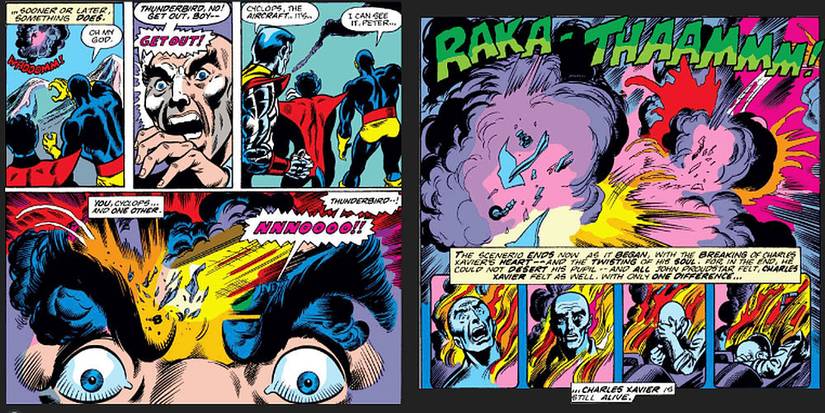
Comic book panelling is the grammar of sequential art — the system of frames, borders, and spaces that transforms static images into living stories. In a medium that generated $2.2 billion in U.S. and Canadian sales in 2025, with graphic novel sales surging 28.5% in Q1 2026 alone, the craft of panelling has never been more commercially relevant or creatively diverse (ICv2; Comics Beat).
Every panel you draw is a storytelling decision. Its size controls pacing. Its shape conveys emotion. Its borders — or lack thereof — signal shifts in reality, time, and tone. And the space between panels, the gutter, is where readers become co-creators, filling in the action their imagination demands.
Jenova's Comic Creator handles the technical complexity of panelling — intelligent sequential layouts, speech bubble integration, and consistent character art across 200+ panels — so you can focus entirely on the storytelling decisions that make your comic unique.
This guide covers everything a creator needs to know about comic book panelling in 2026: panel structure types, the six essential transitions, gutter mechanics, shot composition, common mistakes, and how panelling differs across Western comics, manga, and webtoons.
Quick Answer: What Is Comic Book Panelling?
Comic book panelling is the art and craft of dividing a comic page into individual frames (panels) separated by gutters, controlling how readers experience a story's pacing, emotion, and narrative flow.
- Panels contain single moments or scenes — the fundamental building blocks of sequential storytelling
- Gutters (spaces between panels) create "closure," where readers imagine what happens between frames
- Transitions determine how panels relate to each other — from moment-to-moment to scene-to-scene
- Shot composition within panels (close-ups, wide shots, silhouettes) controls emotional emphasis
The Comic Creator on Jenova generates intelligent panel layouts from your script, with six professional art style templates and automatic speech bubble placement.
The Problem: Panelling Is Where Stories Succeed or Fail
The comic market is booming — the global market is projected at USD 18.63 billion in 2026, growing at a 4.75% CAGR through 2034 (Fortune Business Insights). But more creators entering the space means more pages that fail at the panelling level.
Panelling Is Invisible When Done Right — and Devastating When Done Wrong
As pro comic artist Steve Ellis explains, the panel "is literally a wall that says to the reader 'here is a complete idea, read it and move onto the next'" (Clip Studio — Art Rocket). When panelling breaks down, readers lose the thread entirely. Poor flow creates ambiguous reading paths. Overcrowded panels overwhelm the eye. Inconsistent sizing without narrative purpose looks amateurish.
The Knowledge Gap Is Real
Comics theorist Scott McCloud identified six types of panel transitions in Understanding Comics (1993), and comics scholars like Chris Gavaler have built extensive taxonomies of layout patterns (The Patron Saint of Superheroes). But most aspiring creators have never studied this visual grammar systematically — they learn by trial and error across dozens of failed pages.
Consistency Across Long-Form Projects
Maintaining consistent panel proportions, gutter widths, and character scale across an entire graphic novel is one of the most demanding production challenges in comics.
Even experienced artists struggle with drift — panels that gradually shift in proportion, gutters that widen or narrow without intent, and characters whose scale changes from page to page.
This is exactly what Comic Creator was built for — handling the technical production of panelling while you direct the storytelling.
The Anatomy of a Comic Panel
Before mastering panelling, you need to understand what a panel actually does. As Eisner-nominated creator Ben Argon writes, "The panel in comic art isn't merely a container — it's a fundamental storytelling tool that shapes how readers experience your narrative" (Ben Argon).
Panel Structure Types
Panel structure refers to the frame itself — its shape, size, and arrangement on the page. The most common types include:
| Panel Type | Description | Storytelling Purpose |
|---|---|---|
| Regular panels | Standard rectangular or square frames with consistent borders | Rhythm, reliability, sequential flow |
| Irregular panels | Non-standard shapes (diagonal, circular, jagged) | Emotional disruption, altered states, chaos |
| Overlapping panels | Frames that intersect or overlay each other | Compressed time, simultaneous action, speed |
| Borderless panels | Images extending to the page edge without borders | Expansiveness, freedom, emotional openness |
| Inset panels | Smaller panels contained within larger ones | Detail emphasis, reaction shots, simultaneous action |
| Broken panels | Characters or action extending beyond the border | Intense movement, power, breaking the fourth wall |
| Splash panels | Full-page or two-page panels | Pivotal moments, reveals, epic scale |
As Argon explains, "A tilted panel can create unease; a borderless panel can suggest limitless space or time; an inset panel can highlight important details. These choices aren't arbitrary — they're powerful tools that work on both conscious and subconscious levels" (Ben Argon).
Shot Composition Within Panels
While panel structure deals with the frame, shot composition concerns what's shown inside. Comic artists function as both directors and cinematographers:
- Close-ups: Focusing tightly on faces or objects to highlight emotional states or important details
- Medium shots: Showing characters from the waist up, balancing detail with context
- Wide/establishing shots: Presenting entire environments to orient readers
- Silhouette shots: Creating drama while focusing attention on key information
- Foreground/background: One character in front, one behind — highlighting relationships or tension
The legendary comic artist Wally Wood created "22 Panels That Always Work," an industry-standard reference for maintaining visual interest, particularly in dialogue-heavy scenes (Ben Argon).
Key rule: Begin every scene or location change with an establishing shot that orients readers spatially, then progress logically from wide to close as action intensifies. Reserve extreme close-ups for moments when faces "truly express something" (Ben Argon).
The 6 Panel Transitions Every Creator Must Master
Scott McCloud's six panel-to-panel transitions are the vocabulary of comic storytelling. Each requires a different degree of "closure" — the mental process where readers fill in what happens between panels (Understanding Comics via WordPress; Training For Comics).
1. Moment-to-Moment
Shows tiny increments of a single action. Like a temporal microscope — perfect for building tension in climactic moments.
Panel 1: A detective's hand approaching a drawer. Panel 2: Fingers touching the knob. Panel 3: The drawer opening slightly. Panel 4: The look of surprise in the detective's eyes.
Use sparingly. Overuse slows the narrative to a crawl.
2. Action-to-Action
The bread and butter of comics. Shows a single subject progressing through distinct actions. This is the most common transition in Western comics because it drives the story forward efficiently.
Panel 1: A thief runs out of a bank. Panel 2: A police officer starts chasing. Panel 3: The thief jumps over a car. Panel 4: The officer trips on a hydrant.
3. Subject-to-Subject
Stays within a scene or idea but shifts between different subjects. Requires more reader participation to connect the dots.
Panel 1: A factory emitting smoke. Panel 2: A dead fish in a river. Panel 3: A child with an inhaler. Panel 4: A polar bear on melting ice.
Powerful for abstract themes — but if connections are too obscure, you risk losing the reader.
4. Scene-to-Scene
The time machine of comics. Makes significant jumps in time and space, connecting events separated by hours, days, or years.
Panel 1: A young man witnesses his family's murder. Panel 2: The same character, now an adult, training on a mountain. Panel 3: The villain, aged, on his throne.
Essential for epic narratives. Provide visual or textual clues (aging, environment changes, captions) so readers can follow the jumps.
5. Aspect-to-Aspect
Shows different aspects of the same scene or environment simultaneously. Common in manga, rare in Western comics.
Panel 1: Rain hitting a window. Panel 2: A clock showing midnight. Panel 3: Steam rising from a cup. Panel 4: A character staring into the distance.
Best for atmosphere and mood. Doesn't advance the plot — it deepens the emotional landscape.
6. Non-Sequitur
No logical connection between panels. Used in experimental, surreal, or abstract comics.
McCloud describes this categorization as "an inexact science," but it remains the most useful framework for understanding how panels relate to each other. In Western comics, action-to-action transitions dominate, followed by subject-to-subject and scene-to-scene. Manga makes far greater use of aspect-to-aspect transitions, which is one reason manga pages often feel more atmospheric and emotionally immersive (Understanding Comics via WordPress).
Why Comic Creator
Instead of struggling with panel proportions, transition logic, and consistency across dozens of pages, the Comic Creator on Jenova handles the production pipeline while you direct the storytelling.
| Dimension | Manual Workflow | Comic Creator on Jenova |
|---|---|---|
| Panel layout | Rule grids by hand, calculate proportions for every page | Intelligent sequential layouts generated from your script |
| Character consistency | Constant reference checking, proportion drift across pages | Reference sheet architecture across 200+ panels |
| Shot composition | Manual decisions for every panel, risk of monotony | Varied compositions following professional conventions |
| Speech bubbles | Manual placement, tail-crossing risks, flow confusion | Integrated speech bubble placement with reading flow awareness |
| Art style | Years of practice per tradition | Six professional templates: Superhero, Noir, Indie, Franco-Belgian, Cartoon, Realistic |
| Story memory | Scattered notes, outlines, reference files | Persistent memory across sessions — characters, plot, world details carry forward |
"I'm writing a noir detective comic. Page 5 needs five panels: wide shot of a smoky bar interior, medium shot of the protagonist sitting alone at the counter, close-up of a photograph sliding across the bar, reaction close-up showing recognition, then a silhouette shot of a figure leaving through the back door."
That single prompt produces a professionally panelled page with consistent character art, appropriate noir styling, and speech bubble placement — no grid-ruling, no template hunting, no manual composition.
The Gutter: The Space Where Stories Come Alive
The gutter — the space between panels — is arguably the most powerful element in comics. As the Comics Devices Library explains, "Though gutters often appear as negative space, they are not actually empty. Instead, they contain meaning and implicit information" (Comics Devices Library).
Scott McCloud calls the reader's act of filling in what happens between panels "closure" — "observing the parts, but perceiving the whole." This collaboration between creator and reader is what makes comics unique as a storytelling medium (EBSCO Research).
Gutter Width and Pacing
Steve Ellis explains that gutters "control the pacing of your story" (Clip Studio — Art Rocket):
- Standard-width gutters: Smooth, even transitions — the default reading rhythm
- Wide gutters: Give the reader more time to absorb — create "in-between" moments, pauses, emotional weight
- No gutters (borderless): Actions feel simultaneous or immediate — two moments bleeding into one
- Overlapping panels: Create speed and urgency, but risk confusing the reader if elements of each panel disrupt the other
Gutter as Storytelling Tool
As Storyspread notes, gutters "force the reader to come up with their own conclusion on how some scenes end" — creating suspense and curiosity that keeps readers turning pages (Storyspread).
Pro tip: Create suspense by using gutters to separate scenes that don't have a clear ending. The reader's imagination will fill in possibilities far more effectively than any drawn panel could.
Panelling Across Comic Traditions
Different comic traditions have developed distinct approaches to panelling, each reflecting cultural storytelling philosophies.
🦸 American Superhero Comics
Evolved from uniform panels to dynamic, varied shapes emphasizing action and movement. Artists like Jack Kirby revolutionized panel design with dramatic diagonal borders, explosive splash panels, and irregular shapes that mirror the energy of their content. Action-to-action transitions dominate (Ben Argon).
🌸 Manga
Employs distinctive panel techniques that create cinematic effects. Japanese comics frequently use borderless panels to suggest emotional expansion, speed lines that break through panel edges to convey motion, and dramatic variation between tiny reaction panels and full-page splashes. Aspect-to-aspect transitions are far more common than in Western comics, creating atmospheric depth (Ben Argon).
Jenova's Manga Creator specializes in these conventions — right-to-left reading flow, authentic guttering, screen tone application, and the emotional pacing that defines the tradition.
🏰 Franco-Belgian Comics
Exemplify the ligne claire approach: clean, consistent rectangular panels with uniform borders. Creators like Hergé treated panels as orderly windows into the narrative world, where the frame remains invisible so readers focus entirely on the content within (Ben Argon).
📱 Webtoons
A fundamentally different panelling paradigm. Vertical scroll replaces page turns, eliminating traditional tier-based layouts entirely. Panels flow downward with variable widths, and the "gutter" becomes vertical scroll space rather than horizontal white space.
Jenova's Webtoon Creator is purpose-built for this format, with scroll rhythm mapping, panel width variation, and export presets for LINE Webtoon, Tapas, and Lezhin.
Common Panelling Mistakes and How to Avoid Them
Even experienced comic artists fall into these traps. Recognizing them will immediately improve your pages (Ben Argon; Clip Studio — Art Rocket):
❌ Overcrowding Panels
Too much detail, dialogue, or action in a single panel makes it unreadable. Fix: Ruthless editing — determine what's essential and eliminate the rest. You don't need to show everything in one frame.
❌ Poor Flow
Ambiguous reading paths or abrupt transitions confuse readers. Fix: Create clear visual hierarchies. Character eyelines should lead toward the next panel. Speech balloons should read left-to-right within each panel (first speaker on the left).
❌ Ignoring Shot Composition
Using the same shot type repeatedly creates visual monotony. Fix: Mix close-ups with establishing shots, try different perspectives, and reference Wally Wood's "22 Panels That Always Work."
❌ Inconsistent Panel Sizing Without Purpose
Random changes in panel size without narrative justification look amateurish. Fix: Develop systems — larger panels for important moments, smaller panels for quick sequences. Variation should always serve the story.
❌ Random Shot Progression
Jumping between shot types without logic undermines clarity. Fix: Begin every scene with an establishing shot, then progress from wide to close as action intensifies.
❌ Inconsistent Border Styles
Switching between border styles without a system creates visual chaos. Fix: Develop a consistent code — jagged for violence, rounded for memories, solid for normalcy — and maintain it throughout your story.
Featured Agents for Comic Creators
Comic Creator
Your personal comic book artist for crafting complete stories — from single issues to epic graphic novel sagas.
- Reference sheet architecture for character consistency across 200+ panels
- Six professional art style templates (Superhero, Noir, Indie, Franco-Belgian, Cartoon, Realistic)
- Intelligent sequential panel layouts with speech bubble integration
- Persistent story memory across sessions
Manga Creator
Specialized in Japanese manga storytelling conventions with authentic right-to-left reading flow.
- Manga-specific panel techniques: borderless panels, speed lines, reaction shots
- Screen tone and inking style options
- Consistent character art across long-form serialized epics
Webtoon Creator
Mobile-first vertical scroll storytelling — a fundamentally different panelling paradigm.
- Scroll rhythm mapping for optimal pacing
- Panel width variation for dramatic emphasis
- Platform-specific export presets (LINE Webtoon, Tapas, Lezhin)
Graphic Designer
For supporting visual assets — cover designs, promotional graphics, and brand identity for your comic series.
- Cover composition and typography
- Character design sheets and style guides
- Print-ready file preparation
Start with Comic Creator free — no credit card required.
How It Works: From Script to Panelled Pages
Here's how to go from a story idea to professionally panelled comic pages using the Comic Creator:
1. Define Your Style and Panelling Approach
Tell the agent which visual tradition and panelling philosophy you want:
"I want a superhero comic with dynamic panelling — lots of diagonal panels for action scenes, a flexible 3-row grid as the base pattern, and full-page splashes for major reveals. Think Jim Lee meets Jorge Jiménez."
2. Build Your Character Reference Sheets
Before any panels are drawn, establish consistent character designs — front, side, and three-quarter views with proportions, clothing details, and color palettes:
"My protagonist is a 30-year-old man with a lean athletic build, close-cropped hair, and a jagged scar across his jaw. His costume is dark red with black accents. His expression defaults to quiet intensity."
3. Script Your Pages with Panelling Intent
Provide your script with as much or as little panelling direction as you want:
"Page 7: Six panels. Tier 1 — wide establishing shot of the city at night, rain falling. Tier 2 — three equal panels: close-up of the protagonist's eyes narrowing, medium shot of him pulling on his gloves, close-up of his boots hitting the rooftop. Tier 3 — two panels: he leaps off the building (broken panel, extending beyond the border), and a distant shot of him falling toward the street below."
4. Generate, Review, and Refine
The agent produces the page following your script. Iterate on specific panels:
"Panel 5 needs more dynamic foreshortening — I want the viewer to feel the height. And widen the gutter before the last panel to create a pause before the fall."
5. Continue Across Sessions
Return days or weeks later. The agent remembers your characters, your story, your panelling patterns, and where you left off. Pick up exactly where you stopped.
Results & Use Cases
📚 Graphic Novel Production
Scenario: A writer has a 120-page graphic novel script and needs professional panelling throughout.
Traditional approach: Hire a layout artist and penciler ($100–$250/page), manage revisions over months, risk consistency drift. Total: $12,000–$30,000.
Jenova approach: Use the Comic Creator to produce panelled pages chapter by chapter. Reference sheet architecture maintains character consistency. Iterate on panel composition and transition choices in real-time conversation.
🎌 Manga Serialization
Scenario: A creator wants to launch a weekly manga with authentic Japanese panelling conventions.
Traditional approach: Study manga panelling extensively — borderless panels, aspect-to-aspect transitions, emotional pacing — then practice for months before producing publishable pages.
Jenova approach: The Manga Creator handles right-to-left reading flow, authentic guttering, and the aspect-to-aspect transitions that give manga its atmospheric depth. Persistent memory tracks character designs and plot threads across episodes.
📱 Webtoon Launch
Scenario: A print comic creator wants to adapt their work for vertical-scroll platforms.
Traditional approach: Manually reflow every page into scroll-friendly segments, rethink gutter mechanics for vertical space, adjust panel widths for mobile screens.
Jenova approach: The Webtoon Creator treats vertical scroll as a separate panelling language, not a resize. Scroll rhythm mapping and panel width variation handle the format translation.
🎓 Learning Panelling Principles
Scenario: An art student wants to understand how different panelling choices affect the same scene.
Traditional approach: Study dozens of reference books, attempt to replicate techniques through practice.
Jenova approach: Ask the Comic Creator to render the same scene using a rigid 3×3 grid, a flexible grid with a splash panel, and an open experimental layout. Compare the results to understand how panelling structure shapes emotional impact.
FAQ
What is comic book panelling?
Comic book panelling is the craft of dividing a comic page into individual frames (panels) separated by gutters to control storytelling pacing, reading flow, and emotional impact. Each panel contains a single moment or scene, and the arrangement of panels on a page — their size, shape, borders, and spacing — directly affects how readers experience the narrative. Comics theorist Scott McCloud describes the relationship between panels and gutters as the foundation of "closure," where readers mentally fill in what happens between frames (EBSCO Research).
What are the 6 types of panel transitions?
Scott McCloud identified six panel-to-panel transitions: moment-to-moment (tiny increments of a single action), action-to-action (a subject progressing through distinct actions), subject-to-subject (shifting between subjects within a scene), scene-to-scene (jumps in time and space), aspect-to-aspect (different aspects of the same scene simultaneously), and non-sequitur (no logical connection). Action-to-action is the most common in Western comics, while manga makes greater use of aspect-to-aspect transitions (Training For Comics).
How many panels should a comic page have?
There's no fixed rule — it depends on the scene. Action pages often need 3–4 large panels so motion reads clearly. Dialogue pages can handle 5–7 panels because conversation carries the pacing. Reveal pages may use a single splash panel. As Steve Ellis advises, plan the page beat first, then build a panel layout that supports it (Clip Studio — Art Rocket).
Can I create professional comic panels without drawing skills?
Yes. Jenova's Comic Creator converts scripts into sequential comic pages with intelligent panel layouts, consistent character art, and speech bubble integration — no drawing required. You provide the story and creative direction; the agent handles the visual production.
What's the difference between panelling in comics, manga, and webtoons?
Western comics use left-to-right, page-based panelling with rectangular panels and horizontal tiers. Manga uses right-to-left reading with more borderless panels, speed lines, and aspect-to-aspect transitions for atmospheric depth. Webtoons use vertical scroll with no page breaks — panels flow downward with variable widths, fundamentally changing how pacing and transitions work. Jenova offers specialized agents for each: Comic Creator, Manga Creator, and Webtoon Creator.
What are gutters in comics?
Gutters are the spaces between panels. They control pacing and enable "closure" — the reader's mental process of imagining what happens between frames. Standard-width gutters create smooth transitions, wide gutters create pauses, and removing gutters makes actions feel simultaneous. As Steve Ellis explains, "If each panel is an idea, the gutter's job is to be the space between ideas" (Clip Studio — Art Rocket).
Conclusion
Comic book panelling is the invisible architecture that makes sequential storytelling work. Every panel size, border shape, transition type, and gutter width is a storytelling decision — controlling pacing, emphasis, emotion, and comprehension. From Scott McCloud's six transitions to Wally Wood's 22 panels that always work, the craft has a rich theoretical foundation that separates professional pages from amateur ones.
Whether you're panelling a superhero epic with explosive broken panels, a manga romance with atmospheric aspect-to-aspect transitions, or a vertical-scroll webtoon with rhythm-mapped pacing, the principles remain the same: guide the eye, control the pace, and let every panel serve the story.
Try Comic Creator now — go from script to professionally panelled pages with consistent characters and intelligent layout design. Explore more creative agents at Jenova.