College Life Simulator: AI Campus Romance & Friendships
2026-08-30
College Life helps you live an open-world campus romance by letting friendships, heartbreak, and connections emerge from what you actually say and do. While most campus games lock you into scripted routes, class-grinding, and predetermined love interests, this AI college life simulator reacts in real time to your personality, timing, and social risks.
✅ Open-world college romance with emergent social dynamics ✅ Friendships, rivalries, and heartbreak that unfold from your choices ✅ Conversation-first play — no predetermined route to memorize ✅ Full feature parity across web, iOS, and Android, with memory that persists across sessions
If you have ever wanted to replay freshman year, test a bolder social version of yourself, or simply wander a campus where every hallway conversation can change the story, this is built for that itch. To understand why a true college life simulator is harder to find than it looks, it helps to look at how campus games usually fail the social part of college.
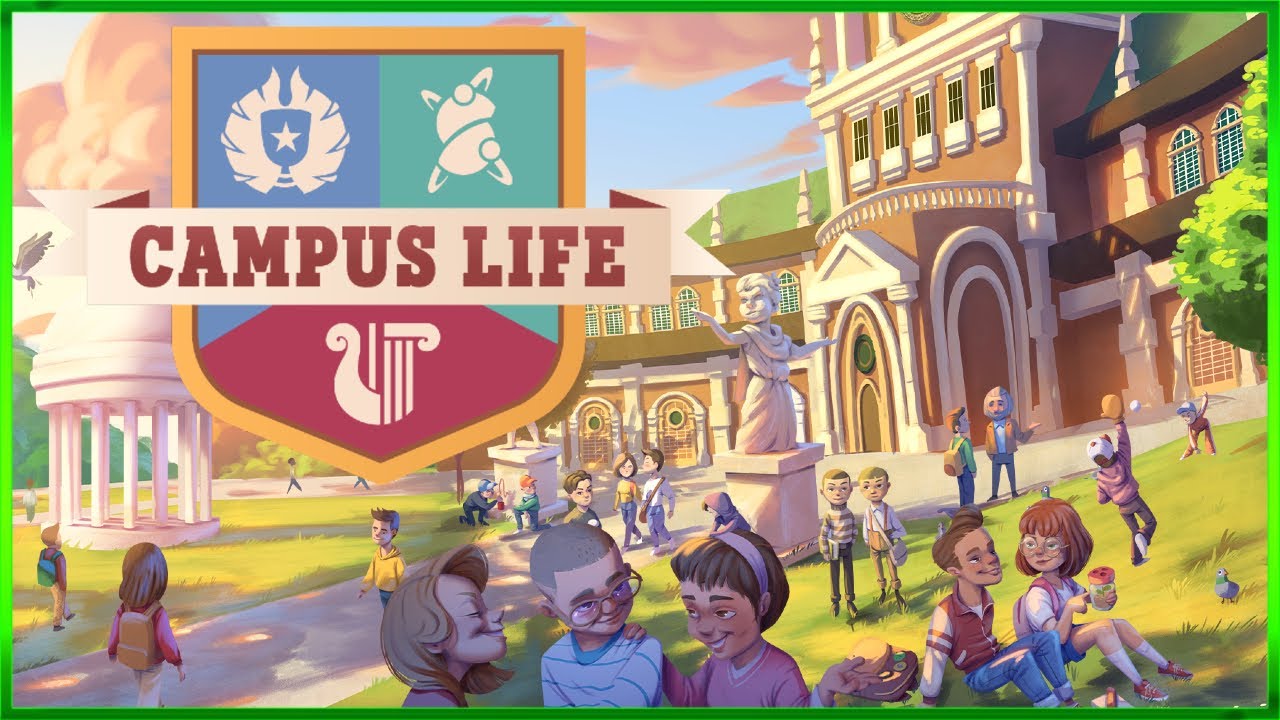
Quick Answer: What Is a College Life Simulator?
College Life is an AI college life simulator that turns your choices into emergent campus friendships, romance, and heartbreak through open-world conversation. There is no fixed route. The story is the social life you create.
Key capabilities:
- Open-world campus romance where connections form from your decisions, not a flowchart
- Emergent friendships, rivalries, and breakups that remember prior scenes
- Roleplay that follows your major, dorm, clubs, and social style
- Persistent memory so a Tuesday library run can still matter on Saturday night
The Problem With Most Campus Games
Life simulation is not a niche hobby. The [life simulation game market was valued at $7.4 billion](https://dataintelo.com/report/life-simulation-game-market) and is projected to reach $16.2 billion by 2034. Broader online simulation games were already a $10.53 billion market](https://www.mordorintelligence.com/industry-reports/global-online-simulation-games-market), while the [global games market reached $197 billion. Players clearly want to inhabit other lives.
College is one of the lives people most want to inhabit — or inhabit again. University students are already deep in games: one study of player profiles found a median of four hours of daily play. Research summarized by the Entertainment Software Association also found that high school and undergraduate students who play video games perform better on cognitive tasks than peers who do not, and that play can support emotional and social benefits.
But getting a college life simulator that actually feels like campus is frustratingly difficult:
- Scripted dating routes that collapse the moment you go off-path
- Class, hunger, and hygiene meters that crowd out conversation
- NPCs who forget last night’s fight by morning
- Desktop-only sandboxes that you cannot open on the bus between lectures
Scripted romance is not campus social life
A designer working on social simulation put it plainly: the genre only works when social interactions with NPCs meaningfully affect the outcome. Most campus titles fail that test. You pick a love interest from a roster, hit affinity checkpoints, and watch a cutscene. Real college is messier — a roommate who overheard you, a professor who saw you leave the party, a friend who wanted an introduction you never made.
Meters replace consequences
Many life sims ask you to manage energy, grades, and bladder before you get to the interesting part. That can be fun as systems play. It is a poor stand-in for the social physics of a dorm floor, where one impulsive text can cost you a friend group.
Memory is the missing campus infrastructure
College stories compound. The person you sat next to in English becomes the person who knows you failed the midterm, who then decides whether to invite you out. Games that reset character knowledge every session cannot simulate that accumulation. Players end up restating the plot instead of living it.
Campus should travel with you
The social peak of college is rarely at a desk. It is the walk after a late seminar, the group chat at 1 a.m., the decision you make on your phone before you lose your nerve. A college life simulator that only runs on a PC misses when people actually want to play.
This is exactly what College Life was built for.
Why College Life Works as a College Life Simulator
This AI campus romance sim treats college as a social open world, not a checklist of classes. You talk. People react. Friendships form, stall, or break because of what you chose in the last scene — and the scene before that.
| Traditional campus game | College Life |
|---|---|
| Fixed love-interest routes and affinity meters | Emergent romance and friendship from your choices |
| Class / hunger / bladder grinding before the story | Conversation-first play focused on people |
| NPCs who forget last night | Persistent memory across sessions and devices |
| Desktop-only sandboxes | Web, iOS, and Android with synced history |
| One canned freshman plot | Your major, dorm, clubs, and social risks |
Emergent social dynamics, not a dating flowchart
You do not unlock a character by handing them coffee three times. You meet people in motion — after a lecture, in a stairwell, at a party you almost skipped. Because the sim is conversational, a joke that lands, a secret you keep, or a loyalty you break can reroute the whole campus graph. Heartbreak is on the table. So is the quieter outcome: a friendship that becomes the center of the year.
Your choices are the engine
The product promise is specific: friendships, heartbreak, and connections all unfold from your choices. That only works if the simulator will let you be awkward, ambitious, loyal, reckless, or quiet — and then live with the social weather that follows. You can play a transfer student who never goes out, a debate-team striver, or someone who is on campus mostly to fall in love. The AI does not scold you back onto a “correct” route.
Try opening a year like this:
"I'm a first-year English major moving into a triple. My roommates already know each other from high school. I want friends, but I also don't want to look desperate. Walk me through move-in night."
Or skip straight to the charged scene:
"It's 11 p.m. in the library the night before midterms. My crush sits down at my table with two coffees and a look that says this isn't about the reading. What do I do?"
A campus that remembers you
Because conversation history and preferences persist, the sim can carry a slight from week one into a confrontation at homecoming. That is closer to how college actually feels than a relationship bar. It also means you can close the chat on your phone and reopen it later without rebuilding the friend group from scratch.
Built for the way students already play
You do not need a gaming PC or a three-hour session. Start a scene between classes, continue it on the couch, and pick it up the next morning. Speech-to-text is available when you would rather talk the scene than type it. Privacy matters here too: data is not used to train public AI models, and it is not sold to advertisers.
Related Agents You'll Also Find Useful
A college life simulator is often the start of a broader habit — romance play, freeform roleplay, or the real admissions work sitting next to the fantasy.
Love Island
If you want the same emergent romance engine with the volume turned up, Love Island drops you among eight singles on a private island. Connections and rejections still unfold from your choices, but the pressure-cooker setting makes every conversation count faster than a long campus semester.
- Open-world romance with emergent social dynamics
- Recoupling, jealousy, and alliance play without a fixed winner route
- A tighter cast, so every slight is public
Roleplay Game Master
If a dorm scene makes you want a completely custom world — a secret society on campus, a rival university, a timeline where you never left home — the Roleplay Game Master gives you unlimited memory and character consistency with no setting constraints.
- Any scenario you can describe, held consistently across long sessions
- NPCs who do not drift out of voice
- A natural next step when you outgrow a single campus
College Admissions Consultant
If the fantasy is running in parallel with the real thing, this is the practical counterpart. College Admissions Consultant helps with school selection, essays, and timeline management so the life you are simulating can become an application you actually file.
- Personalized strategy from school list to essay
- Timeline management so deadlines do not sneak up
- Useful when “what if I went there?” turns into “how do I apply?”
Try College Life free — no credit card required.
How It Works
You do not install a client, build a Sim, or spend an hour placing furniture. You start talking, and the campus forms around the person you claim to be.
Step 1: Open a new campus story Start the college life simulator and say who you are — year, major, dorm, and what you want from the semester. One specific paragraph beats a vague “I’m in college.”
"Sophomore, pre-med, in a quiet single. I bombed organic chemistry last year and I'm trying to rebuild my friend group without dating anyone in my lab. First day back."
Step 2: Put yourself in a concrete place Name the location and the social risk. The more specific the room, the richer the NPCs. A dining hall at 7:40 p.m. produces different people than a 2 a.m. laundry room.
"I'm in the back of an English lecture. The TA just asked a question I actually know. The person I like is two seats left. Do I raise my hand?"
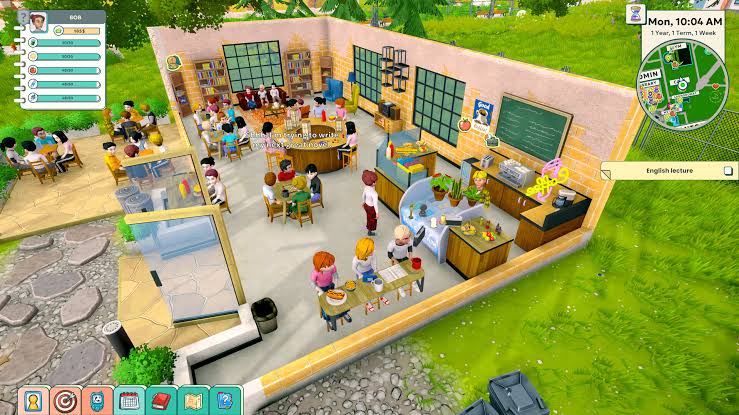
Step 3: Choose in character, not as a max-optimizer Answer as the student you are playing. If they would freeze, freeze. If they would overshare, overshare. Emergent social dynamics only appear when you stop steering toward the “good ending.”
Step 4: Let the campus answer, then continue Read the fallout. Follow up the next morning, skip a week, or change the power dynamic. Because memory persists, you can leave a fight unresolved and return to it later on your phone — which is how real campus drama actually works.
Results & Use Cases
📊 Replay a freshman year you never got
Scenario: You commuted to a local college, worked nights, and missed the dorm-floor version of 18. You want the parties, the bad decisions, and the 3 a.m. diner run without enrolling again.
Traditional Approach: A boxed life sim with a generic “university expansion,” plus hours of building a dorm and clicking through class objects before anyone interesting talks to you.
College Life: You write two sentences about being a first-year who does not know anyone, and move-in night starts. Friendships and crushes form because of how you handle the awkwardness, not because you maxed a charisma skill.
- No campus-building busywork
- Social outcomes tied to your actual dialogue
- You can replay the year as a different kind of student
💼 Practice campus confidence before you arrive
Scenario: You have an offer in hand and a quiet personality. You want to rehearse introducing yourself, setting boundaries with a roommate, and asking someone to study without sounding like a speech.
Traditional Approach: Advice articles and imagined conversations that collapse the first time a real person answers in an unexpected way.
This college life simulator: You run the scene until the words feel like yours. If you also need the real application polished, College Admissions Consultant can sit beside the fantasy and work the essay and school list.
- Low-stakes practice for high-stakes social moments
- NPCs who push back, interrupt, and misread you
- A clean split between play and real admissions work
📱 Late-night dorm romance on your phone
Scenario: It is after midnight. You are in bed. You want one charged campus scene — not a 40-minute load into a desktop neighborhood.
Traditional Approach: Open a PC life sim, wait through boot and neighborhood load, then abandon it because the social interaction you wanted took 15 clicks.
The AI campus sim: You type (or speak) the scene on iOS or Android. The crush, the almost-kiss, the roommate who walks in — it plays in the same chat thread you will reopen on the bus tomorrow.
- Full feature parity with web
- Speech-to-text when you do not want to type
- History that follows you across devices
🎯 Stress-test a story you want to write
Scenario: You are drafting a campus novel or a webcomic and your side characters all sound like you. You need other people in the room.
Traditional Approach: Outline on a blank page, or bounce ideas off friends who do not want to roleplay your ensemble cast.
College Life, then a wider net: Run the ensemble on campus until someone surprises you. When the story leaves the quad, hand the same characters to the Roleplay Game Master and keep their voices consistent off-campus.
- Dialogue you did not pre-write
- Social consequences you can steal for fiction
- A path from campus sim to unbounded roleplay
FAQ
What is a college life simulator?
A college life simulator is a game or AI experience that lets you live campus social life — classes as setting, not the point — with friendships, romance, and conflict that respond to your choices. College Life is an AI version of that idea: open-world college romance where connections emerge from conversation rather than from a predetermined dating route or relationship meter.
Is College Life free to use?
Yes. You can start on the free tier with all core features and limited usage, and no credit card is required to try it. If you play long campus sagas every day, paid plans raise the monthly usage allowance. Usage resets on your billing date, with the full limit available from day one rather than rationed as a daily cap.
How is this different from The Sims, BitLife, or scripted campus games?
Those games are strong at systems, stats, or branching checklists. A social simulation only works when interactions change the outcome, and most campus titles still run on affinity meters and fixed routes. This college life simulator is conversation-first: you speak as a student, and friendships or heartbreak follow from what you did, including across sessions, because the story remembers.
Does a college life simulator work on mobile?
Yes. Play on the web, iPhone, or Android with the same history and settings. That matters for this genre — the scenes people actually want (the after-party walk, the 1 a.m. text, the decision before you lose your nerve) happen away from a desk. You can also use speech-to-text when your hands are full.
Can I control both romance and ordinary friendships?
Yes. The design is not romance-only. You can play a year that is mostly about a roommate, a teammate, a rival in seminar, or a friend group that never becomes a love triangle. Romance is available and can go badly. Ordinary loyalty, exclusion, and repair are part of the same emergent system.
Will the story stay consistent if I come back days later?
That is one of the main reasons to use an AI college life simulator with persistent memory instead of a stateless chatbot. Prior scenes, names, grudges, and preferences carry forward, so you are not re-explaining that you already dated the RA. For completely custom premises beyond campus, Roleplay Game Master offers the same memory discipline in any setting.
Conclusion
Most campus games give you a map, a meter, and a love interest who waits at the end of a checklist. A real college life simulator needs something harder: people who change because of you, a campus that remembers, and the freedom to be brave or disastrous in conversation.
College Life is that AI college life simulator — open-world campus romance where friendships, heartbreak, and connections unfold from your choices. Start a move-in night, a library almost-confession, or the quieter story of a student who only wanted one friend. Then keep playing when the semester (and the group chat) gets complicated.
Explore more at Jenova.
For Developers: College Life is available programmatically via the Jenova API — integrate open-world campus romance and emergent social dynamics into your application with a single API call. Full documentation →