Collaborative Roleplay Story: AI Game Master for Shared Worlds
2026-09-09
Roleplay Game Master helps you build a collaborative roleplay story by playing every other chair at the table — narrator, rival, innkeeper, and consequence — while remembering the world you already made. In September 2026, writers and players still lose campaigns to scheduling, forgotten NPCs, and chat tools that reset the plot. This AI provides a consistent co-author that never drops a vow, a grudge, or a proper name.
- ✅ Persistent memory across sessions, so canon does not reset overnight
- ✅ Character voices that stay distinct under pressure, downtime, and time jumps
- ✅ Full creative freedom — any genre, tone, or intensity you set
- ✅ Play on web, iOS, or Android when your human table cannot assemble
A collaborative roleplay story is not a solo draft with extra adjectives. It is a living contract: you offer a choice, the world answers, and both of you are bound by what happened. To understand why that contract is so hard to keep — and why a dedicated game master matters — it helps to look at what actually breaks shared narrative.
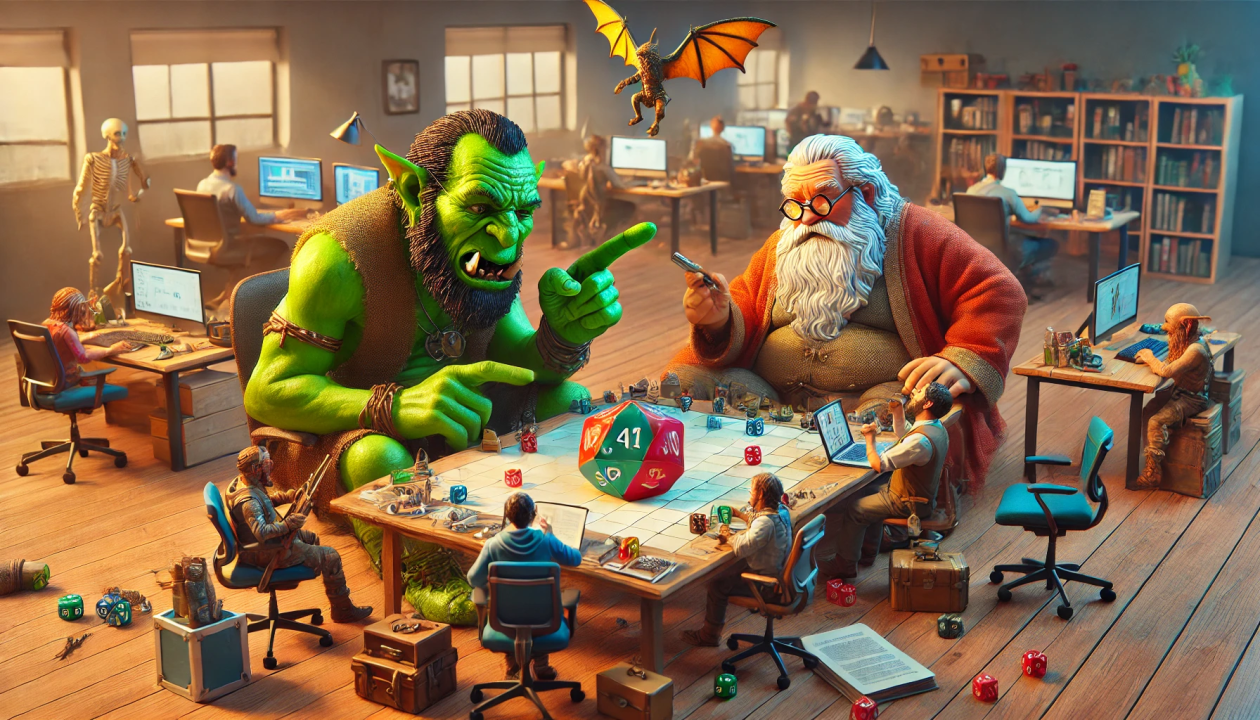
Quick Answer: What Is a Collaborative Roleplay Story?
A collaborative roleplay story is a shared narrative that two or more participants co-create in real time, taking turns as characters, consequences, and world. Unlike a finished novel, the plot is discovered through play rather than outlined in advance.
Key capabilities:
- Stay in character while the other participant drives scene, stakes, and tone
- Track names, factions, injuries, debts, and secrets across many sessions
- Improvise NPCs, locations, and complications that fit the established world
- Convert raw play into scenes you can later revise, adapt, or publish
Why Collaborative Roleplay Stories Fall Apart
Shared storytelling is one of the oldest human tools for building empathy, language, and social skill. Research on storytelling in childhood links story-making to memory, confidence, and social understanding. Action research on story creation found that making stories together built confidence and language skills. Collaborative story writing has been associated with a significant increase in empathy, especially when people write in a group rather than alone.
Tabletop role-playing sits in the same family. Academic work from Roskilde University describes role-playing games as spaces with psychological, social, and educational benefits. A peer-reviewed report on Dungeons & Dragons play described significant decreases in depression, stress, and anxiety, with increases in self-esteem and self-efficacy. A 2024 scoping review of tabletop RPGs as psychological intervention maps similar potential — and the open questions still ahead. Related reporting has examined how structured play can support autistic players in social interaction.
The hunger for interactive narrative is not niche. The adventure games market was valued at USD 16.2 billion in 2024 and is projected to reach USD 30 billion by 2032. Interactive fiction research treats text worlds as a serious creative problem: quest generation in text-adventure games has to stay semantically coherent, or players stop believing the story.
USD 16.2 billion — Adventure games market size in 2024, with a projected path to $30 billion by 2032
Significant decreases in depression, stress, and anxiety — Reported outcomes in peer-reviewed research on Dungeons & Dragons play
Empathy rose after collaborative story writing — Especially in group conditions, according to research on collaborative story writing
But sustaining a collaborative roleplay story is frustratingly difficult:
- Human tables collapse under calendars, time zones, and GM burnout
- Notes live in five apps, so last month’s traitor becomes this month’s ally by accident
- Generic chatbots drift out of character, forget canon, and flatten distinct voices
- Solo drafting is faster — and lonelier — so the “collaboration” quietly dies
Scheduling Kills More Campaigns Than Bad Dice
A shared story needs a second mind in the room. When that mind is a person, you inherit their job, their kids, their flu season, and their energy after work. Play-by-post forums stretch a scene across weeks. Voice tables vanish for a month and return with three conflicting memories of the same fight. The story did not fail. The logistics did.
Continuity Is the Real Game Master Skill
Improvisation is cheap. Continuity is expensive. The duke’s limp, the stolen chart, the name you whispered in session two — those details are the difference between play and a slot machine of tropes. When the world forgets, players stop taking risks because nothing they do will be remembered.
Generic Chat Is a Shaky Table
A general-purpose chatbot can start a scene. It struggles to keep one. Characters merge. Factions reset. The assassin who failed last week greets you like a stranger. Interactive fiction research has long treated coherence as the hard problem, not vocabulary. A collaborative roleplay story needs a partner built for memory and character, not a blank prompt window.
This is exactly what Roleplay Game Master was built for.
Why Roleplay Game Master
Roleplay Game Master is a dedicated co-author for immersive roleplay: unlimited memory, stable character voices, and no ceiling on the scenario you want to explore. You bring the protagonist, the premise, and the tone. It brings the rest of the table — and it still knows what you did last session.
| Traditional Approach | Roleplay Game Master |
|---|---|
| Hunt for a weekly table or stall a campaign | Start or resume a scene the moment you have twenty minutes |
| NPCs forget names, bargains, and grudges | Persistent memory across the whole story |
| GM burnout and scattered notes | One continuous world that answers in character |
| Generic chat that breaks voice mid-scene | Character consistency under long, messy plots |
| Imagination limited by who can show up | Any genre, any intensity, complete creative freedom |
A Second Mind That Does Not Drop Canon
The value is not that an AI can describe a tavern. It is that the barkeep still hates you for the fire, the rival still wants the map, and the wound you took three scenes ago still changes how you climb. That is what makes a collaborative roleplay story feel played rather than generated.
Voices, Not a Single Narrator Mask
Ask for a clipped rival captain, a weary archivist, or a child who lies badly, and those voices should not collapse into one witty narrator. Distinct speech patterns are how collaboration stays fair: you can argue with someone who is not you.
Creative Freedom Without a Rules Lawyer
Some tables want strict initiative and encumbrance. Others want literary slow-burn, horror, comedy, or a one-shot on a train. You set the constraints. The game master follows them — including “no dice, just consequences” or “treat this like a novel chapter.”
Try prompts like these:
"You are the Game Master. I am a disgraced cartographer stepping onto a fog-locked pier at dusk. Open in second person. The harbormaster already knows my old name."
"Continue from last session. The duke still owes me a favor. The assassin who failed last week is in the gallery. Do not recap — just play the moment the toast begins."
"Switch POV. Play the rival captain who just learned I stole their charts. Keep their speech clipped, their loyalty to the crew absolute, and their anger professional."
Related Agents You'll Also Find Useful
If you also want the session to become a finished piece of writing, Writing Assistant turns raw play into prose that sounds like you — same world, tighter sentences, a version you can send to a reader.
- Adapts to your format, audience, and voice
- Strong editorial instincts when you want a collaborator, not a ghostwriter
- Useful the night after a session, when the scene is still hot
If the campaign wants a camera, Film Screenwriter helps you lift a collaborative roleplay story into outline, draft, and dialogue that can live as a screenplay.
- Structure, character, and visual storytelling in one workflow
- Scene craft for turning improvisation into acts
- Revision that protects what was discovered in play
If you think in panels instead of prose, Manga Creator can carry the same characters into sequential art — from a one-shot to a long serialized run — so the table’s choices get a visual second life.
- Panel flow and consistent visual style
- Character sheets that survive chapter after chapter
- A path from “we played this” to “this can be read”
Try Roleplay Game Master free — no credit card required.
How to Start a Collaborative Roleplay Story
Step 1: Set the Table
Open a Roleplay Game Master session and state the deal in one breath: genre, tone, point of view, and what is off-limits. A clear session zero prevents the story from sliding into a tone you did not ask for.
"Dark political fantasy, second person, no gore, witty dialogue allowed. I play a clerk who forges harbor ledgers. You play everyone else. Treat my choices as binding canon."
Step 2: Lock Character and Stakes
Give the protagonist a want, a wound, and a clock. Collaboration dies when nobody knows what failure looks like. Name the first pressure so the world has something to push.
"I want the stolen chart back before the spring convoy. I limp from an old pier accident. If the harbormaster proves the forgery, I hang."
Step 3: Play the Scene, Do Not Outline It
Ask for a specific place and time, then act. Offer one clear move. Let the world answer with a complication, not a summary. The story is the exchange, not the recap.
"I slide the false ledger across the desk and keep my bad foot hidden. What does the clerk on duty notice first?"
Step 4: Carry the World Forward
When you return, do not restart. Point at a live thread — a debt, a witness, a body that should still be missing. Memory only matters if you use it.
"Same campaign. Skip to dawn. The witness from the gallery is gone. The duke’s toast is still on the table. Play the first person who lies to me."
Step 5: Harvest the Session
When a scene sings, paste it into Writing Assistant for a clean chapter, or into Film Screenwriter if you want it as a sequence. The play stays the source. The other tools finish the artifact.
Results & Use Cases
🎭 Keep a Campaign Alive When the Table Goes Quiet
- Scenario: Your Friday group ghosts for three weeks. The paladin’s player is traveling. You still think about the unfinished siege.
- Traditional Approach: You reread old notes, forget who has the relic, and the restart feels like a book report.
- This AI game master: You resume mid-watch on the wall. The relic is still sewn into the cook’s hem. The traitor still uses the wrong honorific.
- You get story momentum without replacing your friends
- Canon survives the gap
- The human table can rejoin without a full reset
✍️ Turn Raw Play Into a Chapter You Can Share
- Scenario: A two-hour scene produced a perfect betrayal — and a messy transcript.
- Traditional Approach: You spend a weekend rewriting, and the dialogue goes stiff.
- Writing Assistant: You keep the choices from play and get prose that still sounds like you.
- Faster path from session to readable fiction
- Voice stays yours, not generic narrator-voice
- Easy to send a chapter to a co-player for the next session
📱 One-Shot on a Commute
- Scenario: Forty minutes on a bus. Headphones in. You want a complete arc, not homework.
- Traditional Approach: A novel is too long; a generic chatbot forgets the opening by the last stop.
- This AI game master: You start at a locked train compartment and end at a confession before you reach your station.
- Full scenes on iOS or Android
- Short-session design: one location, one want, one cost
- The next ride can be chapter two, not a reboot
🎬 Lift a Campaign Into a Screenplay
- Scenario: Your collaborative roleplay story has three acts hiding inside six months of play.
- Traditional Approach: You drown in recap and cannot find the film.
- Film Screenwriter: You extract the spine — want, midpoint reversal, last bargain — and write it for a camera.
- Improvised scenes become structured sequences
- Character IDs stay consistent from table to script
- A path from private play to a draft you can show
FAQ
What is a collaborative roleplay story?
A collaborative roleplay story is a narrative two or more people (or a person and a dedicated game master) create by taking turns: one side acts, the other side answers with consequence, character, and world. It is closer to tabletop play or improvisational writing than to outlining a novel. The plot is discovered in the exchange, then remembered as canon.
Is Roleplay Game Master free?
Yes. There is a free tier with core features and limited usage. Paid tiers increase usage if you run long campaigns or daily one-shots. You can start a collaborative roleplay story without a credit card and upgrade only if the world outgrows the free limit.
How is this different from a generic chatbot roleplay?
Generic chat can open a scene and then lose names, tone, and prior deals. A dedicated game master is built for immersive roleplay: unlimited memory, character consistency, and the freedom to stay in a single world for as long as you want. The difference shows up in session five, not sentence five.
Can I use it for original fiction, not only tabletop rules?
Yes. You can play with dice-and-stats language, or you can forbid mechanics entirely and treat the session as literary improvisation. Horror, romance, mystery, science fiction, and quiet character studies are all valid. State the genre and limits up front so the world matches the story you actually want.
Does a collaborative roleplay story work on mobile?
Yes. You can play on iOS and Android with the same world you started on the web. That is what makes commute one-shots and late-night scenes practical — you are not waiting for a desktop and a full table.
Will it remember my campaign next week?
That is the point of a memory-first game master. Refer to live threads when you return (“the witness is gone,” “the duke still owes me”) so the next scene uses canon instead of summarizing it. If you later want a polished chapter, Writing Assistant can shape the session without erasing what happened in play.
Write the Next Scene — Then Keep It
A collaborative roleplay story fails in the gaps: the week no one can meet, the NPC who forgets your name, the tool that treats last session as optional flavor. Shared narrative is worth protecting. Research keeps finding social and creative benefits in storytelling and play. The bottleneck is continuity.
Roleplay Game Master is the partner that holds the world still while you move. Bring a character and a want. Leave with a scene that still exists tomorrow.
Try it now. Explore more at Jenova.
For Developers: Roleplay Game Master is available programmatically via the Jenova API — integrate immersive collaborative roleplay into your application with a single API call. Full documentation →