Character Voice Generator: AI Voices for Games, Stories & Film
2026-09-06
Jenova helps you design distinctive characters, write speakable dialogue, and prepare production-ready prompts for any character voice generator. In September 2026, AI speech systems can copy a timbre in seconds, yet most output still sounds generic because the writing behind it has no personality. Studio voice acting remains slow and costly for indie teams, while a thin text-to-speech pass flattens every role into the same cadence.
- ✅ Character-consistent personalities across long stories and game loops
- ✅ Dialogue written to be spoken, not just read on a page
- ✅ Prompts structured for modern voice models and localization
- ✅ Scripts, comics, music, and roleplay support in one creative workflow
To understand why this matters, look at what creators actually need from a character voice generator: not another slider labeled “happy,” but a voice that belongs to someone. The bottleneck is rarely the renderer. It is the character work, the line reading, and the ethical line between original performance and unauthorized imitation.
Quick Answer: What Is a Character Voice Generator?
A character voice generator is an AI system that produces distinct, personality-specific speech so each role sounds like a different person. Creators use it for games, stories, videos, and accessibility — but the voice only works if the character is already clear.
Key capabilities:
- Distinct timbre, pacing, and emotional range per character
- Scripts and prompts that survive text-to-speech without sounding like a GPS
- Roleplay with locked character consistency before you ever hit generate
- Original-character workflows that avoid cloning real people without consent
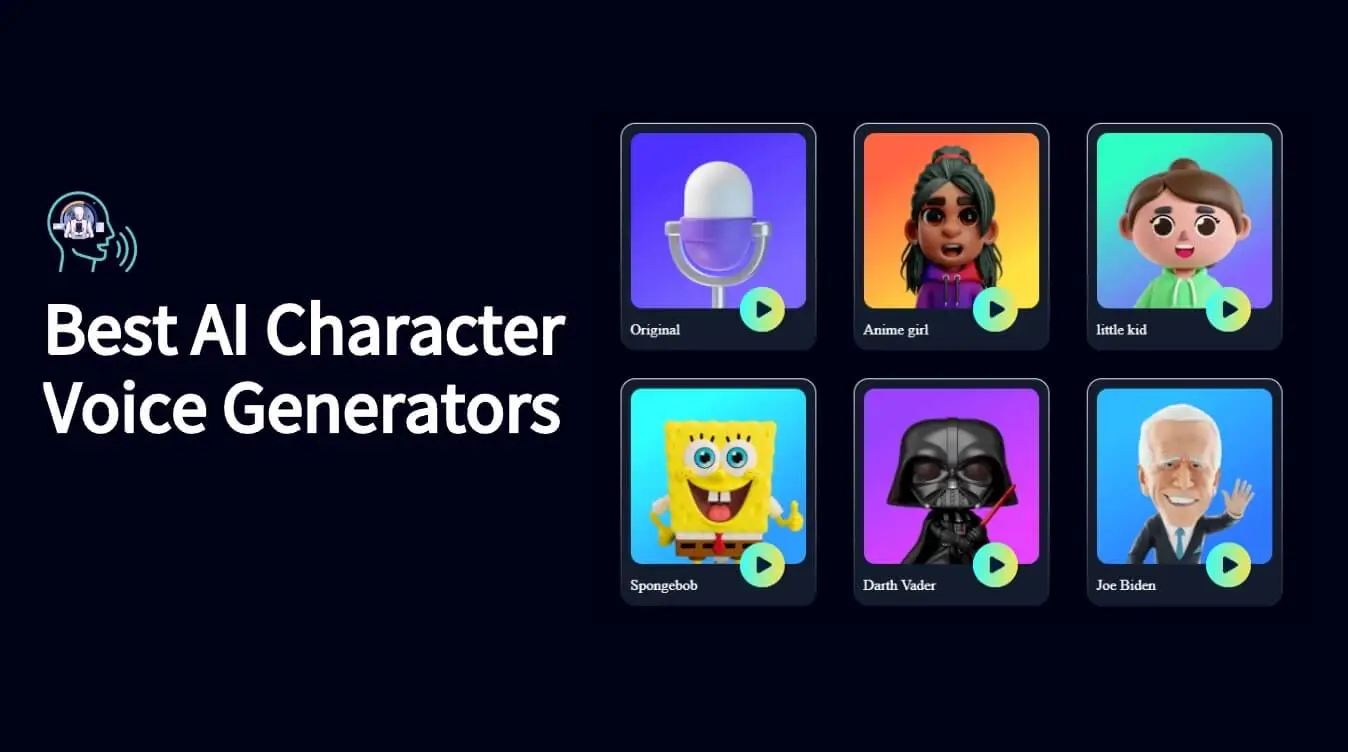
Why Most Character Voice Generators Still Sound Generic
Demand for synthetic speech is no longer experimental. Research firms now track AI voice generation as its own market, not a side feature of chatbots.
USD 6.4 billion — Global AI voice generators market size in 2025, with growth projected from USD 8.36 billion in 2026
USD 19.09 billion — Speech and voice recognition market in 2025, projected at USD 23.70 billion in 2026
That spend is flowing into games, localization, social video, and customer audio. Voice AI usage grew 9x in 2025, and 84 percent of surveyed organizations planned to increase voice-technology budgets. But buying a renderer does not buy a performance. Accessing a voice that audiences remember is still frustratingly difficult:
- Every character inherits the same rhythm, breath pattern, and “helpful assistant” tone
- Studio sessions are too slow and expensive for NPC long tails, YouTube casts, and weekly webtoon dubs
- Lines written for the page collapse when spoken — clauses pile up, jokes die, names get mangled
- Celebrity and politician clones create legal and trust risk even when the UI makes them one click away
- Teams juggle a writer, a prompt engineer, a composer, and a voice tool with no shared character bible
Same Voice, Different Nameplate
A character voice generator can change pitch and still fail at identity. Listeners track attitude, not just frequency: how a villain delays a consonant, how a child rushes a joke, how a tired captain drops volume at the end of a report. Research on emotion-aware, character-specific speech from comics and text-driven multi-character voice generation keeps returning to the same finding — the model needs character context, not only a waveform target. Without a written personality, you get costume, not performance.
The Cost Wall for Indie and Mid-Size Teams
Human leads still carry emotionally complex scenes. The production problem is the long tail: thousands of NPC greetings, localized variants, and player-name pronunciations. Industry analysis of ethical AI voice in games describes a “human plus” split — actors on hero scenes, synthesis on volume — and notes that indie teams can now localize into dozens of languages in weeks instead of months. That only helps if the source lines are speakable and the character sheet is stable. Otherwise you pay to multiply mediocre audio.
Scripts That Were Never Meant to Be Heard
Novel prose and UI copy fight the mouth. Nested clauses, unexplained acronyms, and unpronounceable fantasy names force the model into robotic stress patterns. A character voice generator will faithfully render a bad line. The fix is upstream: shorter beats, phonetic spellings, emotional stage directions, and dialogue that a performer could actually say in one breath.
Consent, Cloning, and Platforms That Invite Trouble
Zero-shot systems can replicate a timbre in about three seconds. That speed is useful for consented replicas and original characters. It is dangerous when a library surfaces public figures or copyrighted mascots as presets. The FTC has been explicit that there is no AI exemption from existing consumer-protection law, and it has used the Voice Cloning Challenge plus an Impersonation Rule to target deceptive audio. In games, the July 2025 Interactive Media Agreement passed with 95.04% approval and made written consent non-negotiable for voice replication. If your pipeline cannot prove consent, do not generate the voice.
This is exactly what Jenova was built for: the character intelligence around the generator, not a shortcut around the law.
The Jenova Solution
A character voice generator turns text into audio. Jenova makes that text worth voicing. You define who is speaking, how they think, what they would never say, and how a line should land — then you hand a clean prompt and script to whatever speech model you use. Dedicated audio platforms render waveforms; this platform builds the person behind the waveform.
| Traditional Approach | Jenova |
|---|---|
| Book a booth, wait on sessions, recut every pickup | Character sheets and speakable drafts in a single working session |
| One TTS voice with a new display name | Personality, diction, and emotional beats written per role |
| Clone a famous voice and hope no one notices | Original characters, consented replicas, and documented usage |
| Writer in one tab, prompt notes in another, composer in a third | Linked agents for story, prompts, comics, music, and delivery |
| Flat localization that ignores humor and timing | Lines structured for syllable fit and cultural rewrite |
Character Bibles Before You Touch Audio
Start with identity, not a preset. The Name Generator produces names that are culturally coherent and speakable — a practical filter many voice pipelines skip until a model chews on a cluster of consonants. Pair that with the Writing Assistant to lock diction: vocabulary ceiling, taboo words, running jokes, and the one metaphor a character always reaches for. When those constraints exist, any character voice generator has something specific to perform.
Dialogue Built for the Mouth
The Film Screenwriter treats lines as timed behavior: interruption, silence, and subtext. That craft transfers directly to game barks, vertical drama, and dubbed comics. You get parentheticals a voice model can follow (“under the breath, then brighter”) instead of vague labels like “sad.” For serialized mobile storytelling, the Microdrama Screenwriter keeps cliffhangers short enough to voice without gasping.
Example direction you can paste into a generator:
"Read as Captain Ilya Voss, 50s, gravel low in the chest. She never raises volume when angry — she slows down. Line: 'You brought the map. You did not bring the weather.' Pause after map. No smile."
Prompts That Survive Contact With a Model
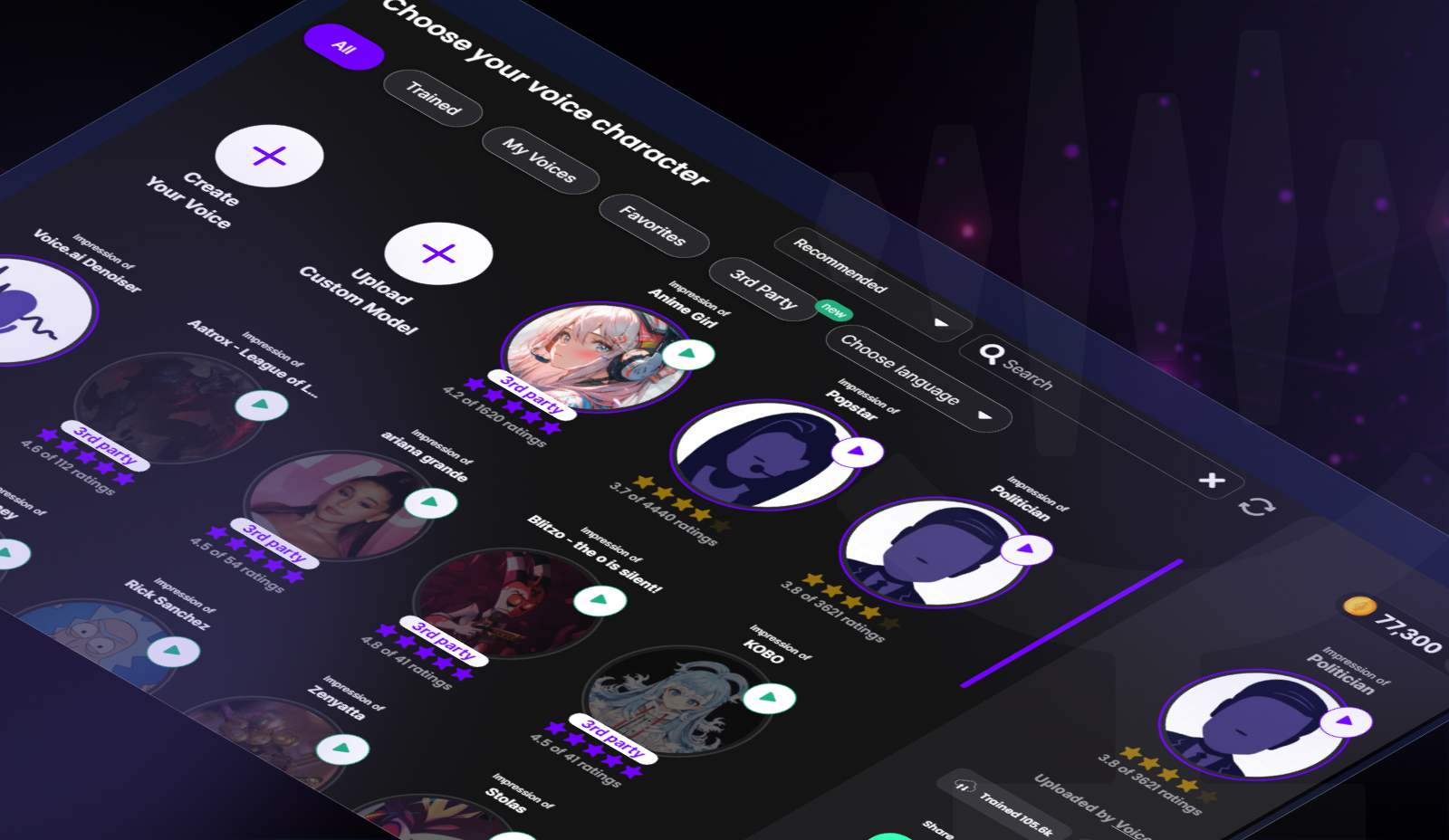
Most “bad AI voices” are bad instructions. The Prompt Generator turns a character bible into model-ready copy: accent notes, age, recording space, emotional arc, and negative prompts (“no announcer cadence, no smile on the vowels”). That is the difference between a library card named “Anime Girl” and a person who happens to be animated.
Picture, Score, and the Rest of the Scene
Voice is one layer. The Graphic Designer builds the face the ear expects. Manga Creator, Comic Creator, and Webtoon Creator produce sequential art whose lip flaps and panel rhythm you can score. The Music Composition Assistant and Lyric Writer give characters motifs and singable lines so the spoken voice and the song belong to the same world.
While dedicated speech APIs specialize in rendering audio, Jenova specializes in the writing, prompting, and continuity that decide whether anyone wants to hear that audio twice.
Specialized AI Agents for Character Voice Work
Try Jenova free — no credit card required. These agents cover the jobs that sit immediately upstream and downstream of a character voice generator.
Roleplay Game Master
If you need to hear a character in language before you synthesize them, this is the rehearsal room. Unlimited memory keeps diction, secrets, and relationships stable across sessions, which is the text equivalent of a locked voice model.
- Stress-tests catchphrases until they sound inevitable
- Holds party and NPC voices apart in long campaigns
- Produces in-character lines you can drop straight into a generator
Film Screenwriter
Use it when the voice has to carry plot, not just flavor. Structure, scene objectives, and dialogue craft keep performances from turning into exposition with a funny accent.
- Beats and conflict that justify emotional shifts in the audio
- Pickup-friendly short lines for games and ads
- Character development that survives a twelve-episode dub
Prompt Generator
Voice models are only as good as the brief. This agent writes prompts for text, image, music, and video systems — including the speech models you already pay for.
- Consistent prompt blocks per character so episodes match
- Emotion and space descriptors models actually follow
- Iterative refinement when a take comes back too bright or too slow
Writing Assistant
The workhorse for bibles, narration, and “this should sound like them” rewrites. It adapts to format and audience so a lore dump and a tavern insult do not share a sentence rhythm.
- Editorial pass for speakability and reading grade
- Tone matching across quest text, trailers, and patch notes
- Collaboration when you already have a draft that almost works
Music Composition Assistant
A character voice generator handles speech. This agent handles the bed under it — motifs, harmony, and arrangement notes you can hand to a DAW or another model.
- Leitmotifs tied to specific roles
- Tempo maps that leave space for dialogue
- Theory-aware guidance so a villain theme does not collide with a vocal range
Public Speaking Coach
When you are the performer — or when you need to direct one — this agent works delivery, anxiety, and audience. It is the human-side counterpart to synthetic speech: breath, pause, and emphasis you can then encode in a prompt.
- Marks for pace and stress that transfer to TTS tags
- Q&A and live-read rehearsal for hybrid streams
- Notes on what a line is doing to the listener, not just how it sounds
How a Character Voice Generator Workflow Actually Runs
You do not need a studio first. You need a person on the page, a line that can be said, and a prompt that does not contradict itself.
Step 1: Lock the Person, Not the Preset
Write age, status, body, and one rule they never break. Generate a speakable name, then a 150-word bible. If two characters can swap lines without anyone noticing, you do not have two voices yet.
"Create a character bible for Ryn Calder, 17, river courier, always polite to cargo and rude to captains. Short sentences. No slang from after her village burned. Give me three lines she would never say."
Step 2: Write Lines for Breath, Not for the Page
Move the scene into the Writing Assistant or Film Screenwriter. Cut nested clauses. Spell difficult names phonetically in brackets. Add a performance note the model can execute.
"Rewrite this lore paragraph as six spoken lines for Ryn, max twelve words each, with a pause marked before the last line."
Step 3: Turn the Bible Into a Generator Prompt
Hand the same constraints to the Prompt Generator. Specify recording space, microphone distance, emotion on a 1–5 scale, and what to avoid. Keep a saved block per character so episode four does not drift.
"Convert Ryn's bible into a voice-model prompt: teenage alto, dry, indoor warehouse reverb, 1.05x pace, no smile, no announcer finish. Include negative prompt."
Step 4: Match Face, Panel, and Score
Drop the same bible into visual and music agents so the picture and the bed agree with the voice. A bright cartoon face over a funereal read is how audiences decide the audio is fake — even when the model is accurate.
Step 5: Rehearse on the Phone, Then Render
Jenova runs with full feature parity on web, iOS, and Android. Read the line out loud on a commute, mark the stumble, rewrite, and only then paste into your character voice generator. The cheapest pickup is the one you never had to record.
Results and Use Cases
🎮 Indie Game NPCs Without a Booth Budget
Scenario: A 12-hour RPG needs 4,000 non-lead lines, plus name pronunciation for the player.
Traditional Approach: Union sessions for principals, silence or recycled barks for everyone else, localization queued for “someday.”
Jenova: Hero scenes stay human. The long tail gets bibles, speakable lines, and stable prompts so your character voice generator can fill greeters, shopkeepers, and rumor NPCs without cloning a celebrity.
- Character sheets that keep a blacksmith from sounding like a wizard
- Localization-ready short lines
- Prompt blocks you can version like code
🎬 Webtoon and Comic Dubbing
Scenario: A weekly vertical series wants audio episodes without waiting on a full cast.
Traditional Approach: Fan dubs with mismatched mics, or a single narrator doing every role.
Jenova: Webtoon Creator and Comic Creator hold visual continuity while the screenwriter splits voices by panel. Each role gets its own prompt so the generator is not guessing.
- Panel-timed lines instead of prose dumps
- Distinct casts for leads versus crowd
- Music cues that leave space for speech
📱 Language Practice That Sounds Like Someone
Scenario: You are commuting and want conversation, not a textbook voice.
Traditional Approach: App drills with one synthetic tutor and no memory of your mistakes.
Jenova: Learn English Through Roleplay puts you in a scene with a consistent character. You can later voice those same lines in a generator for listening practice — still as original characters, not impersonations.
- Memory that keeps the barista from resetting every session
- Idioms inside situations you will actually reuse
- Mobile sessions that fit a train ride
🎙️ Branded Podcast and Social Casts
Scenario: A product channel needs a host, a skeptic sidekick, and a cold-read disclaimer each week.
Traditional Approach: The same founder voice for every segment, or a freelancer who cannot make Thursday.
Jenova: The Social Media Content Generator drafts platform-native scripts; the writing and prompt agents keep the host and sidekick from merging. You render in your licensed voice tool, not with an unauthorized public-figure clone.
- Recurring bits with stable diction
- Disclaimers written to be spoken, not skimmed
- Hooks sized for Shorts, Reels, and full episodes
FAQ
What is a character voice generator?
A character voice generator is software that turns text into speech with a chosen identity — age, pitch, accent, and emotion — so different roles do not share one cadence. The audio model supplies the timbre. Character writing, stage direction, and prompts supply the person. Tools on Jenova sit on that writing side: bibles, dialogue, and model-ready instructions you can paste into any licensed speech system.
Are character voice generators free to use?
Many speech apps offer a limited free tier and charge for longer clips, commercial rights, or cloned voices. Jenova has a free plan with core features and paid tiers if you need more usage. Budget for two costs: the creative work (scripts, prompts, continuity) and the renderer (minutes of audio, voice licenses). Consent and commercial terms on cloned voices are separate from subscription price — read both before you publish.
How do I make AI character voices sound unique?
Give each role a rule, a vocabulary ceiling, and a physical habit, then write lines they would not swap. Put those constraints in the prompt every time: space, pace, emotion, and a negative prompt against announcer cadence. The Prompt Generator is built for that brief. If two characters still sound identical after a good prompt, the problem is the bible, not the slider.
Is it legal to clone a real person’s voice?
Not as a default, and not as a joke preset. You need clear, recorded consent for the use you actually intend, plus whatever publicity and copyright rules apply in your jurisdiction. The FTC treats deceptive AI voice cloning as a consumer-protection problem, not a novelty. Game and entertainment agreements increasingly require written consent and usage reporting. Build original characters or licensed replicas. Do not scrape a politician, actor, or singer because a dashboard made it easy.
Can I run this workflow on my phone?
Yes. Jenova is built for web, iOS, and Android with the same core capabilities, including speech-to-text when you would rather talk in a note than type on a commute. Draft a line on the train, tighten it, generate the prompt, then render in your desktop voice tool if that is where your licensed models live.
How is this different from plain text-to-speech?
Plain TTS reads words. A character voice generator tries to perform a role. Performance still depends on writing: identity, conflict, and direction. Jenova does not replace your licensed audio renderer. It produces the character work that renderer needs, through agents such as the Roleplay Game Master and Film Screenwriter, so you are not paying to hear the same helpful intern in six costumes.
Conclusion
A character voice generator is only as good as the person you ask it to be. Markets for AI speech are growing quickly, models can lock a timbre in seconds, and regulators have already rejected the idea that “the AI did it” is a defense. The practical path is narrower and better: original characters, consented replicas, speakable writing, and prompts you can reproduce.
Design the role, write the breath, then generate the take. Start with Jenova — then bring those lines to the speech tool you already trust.
Explore more of the same workflow with the Roleplay Game Master, Writing Assistant, and Prompt Generator. When the character is clear, the voice has somewhere to go.
For Developers: Every agent in this article is available programmatically via the Jenova API — integrate character bibles, dialogue generation, and voice-model prompting into your application with a single integration. Full documentation →