Character Greeting Generator: AI First Lines for Games & Chat
2026-09-06
The first message is the whole character, compressed. Jenova helps you run a character greeting generator workflow — name, personality, and an opening line that already sounds like a person, not a template in a costume. In September 2026, companion chats, game NPCs, and serialized stories open millions of conversations a day. Most of those openers still read like a support bot wearing a fantasy name.
- ✅ Opening lines locked to diction, status, and mood
- ✅ Greetings that work in games, chat, comics, and language practice
- ✅ Character sheets so the second message does not betray the first
- ✅ Original personas instead of thin celebrity clones
To understand why this matters, look at what a greeting actually has to do: establish who is speaking, what they want, and why anyone should answer — in one or two sentences, before a backstory dump has been earned.
Quick Answer: What Is a Character Greeting Generator?
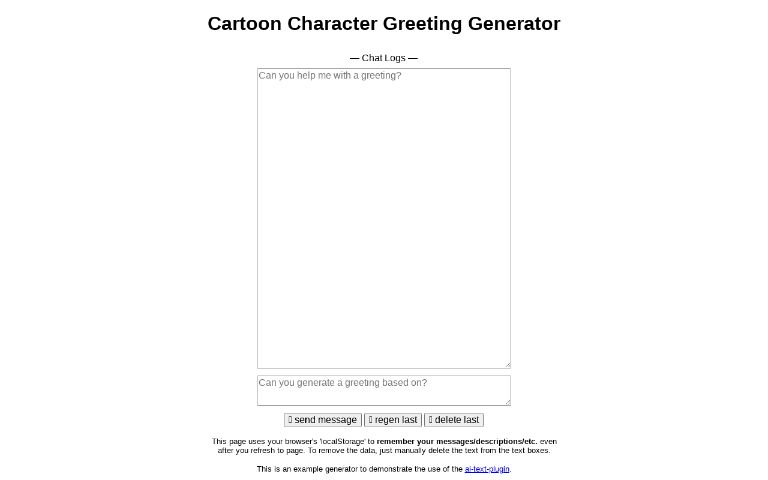
A character greeting generator is an AI tool that writes a persona’s opening line so the first message already sounds like that character. Creators use it for chatbots, game NPCs, comics, and language roleplay — but the line only works if the person behind it is already clear.
Key capabilities:
- A first line that implies relationship, not just a hello
- Diction, status, and mood packed into one or two sentences
- In-character rehearsal before you paste the greeting into a chat or game
- Original personas instead of cloned celebrities or copyrighted mascots
Why Most Character Greetings Sound Like the Same Person
Demand for conversational characters is no longer a niche hobby. Companion apps, customer avatars, and game NPCs now compete for the same scarce resource: a first line people want to answer.
**$14.79 billion** — [Global conversational AI market in 2025, with forecasts reaching $82.46 billion by 2034](https://www.itransition.com/ai/conversational)
220 million — Global downloads of AI companion apps as of mid-2025
20 million — Monthly active users Character.AI reported in 2025
That traffic is not looking for another “Hi, how can I help you today?” A greeting is a casting choice. It tells the reader whether they have met a shopkeeper, a rival, a tired captain, or a help-desk script. Getting a line that audiences remember is still frustratingly difficult:
- Templates recycle the same warmth, the same question, the same “I don’t bite”
- Personality lives in the bio and dies in the first message
- Game NPCs and chatbots open with volume instead of intent
- Companion-style greetings can blur fantasy and care in ways regulators already flag
- Name, bio, greeting, and later dialogue are written in four different tabs
The Greeting That Could Belong to Anyone
Swap two character names and see whether the opening still works. If it does, you do not have two voices. Listeners and readers track attitude in the first beat: who assumes familiarity, who withholds it, who asks a question because they need something. A VR study of AI NPCs found overall believability around 6.67 out of 10, with stronger scores for behavior and intelligence than for emotion and personality. That split shows up in greetings first. The model can be fluent and still sound like no one.
Bios That Never Reach the First Line
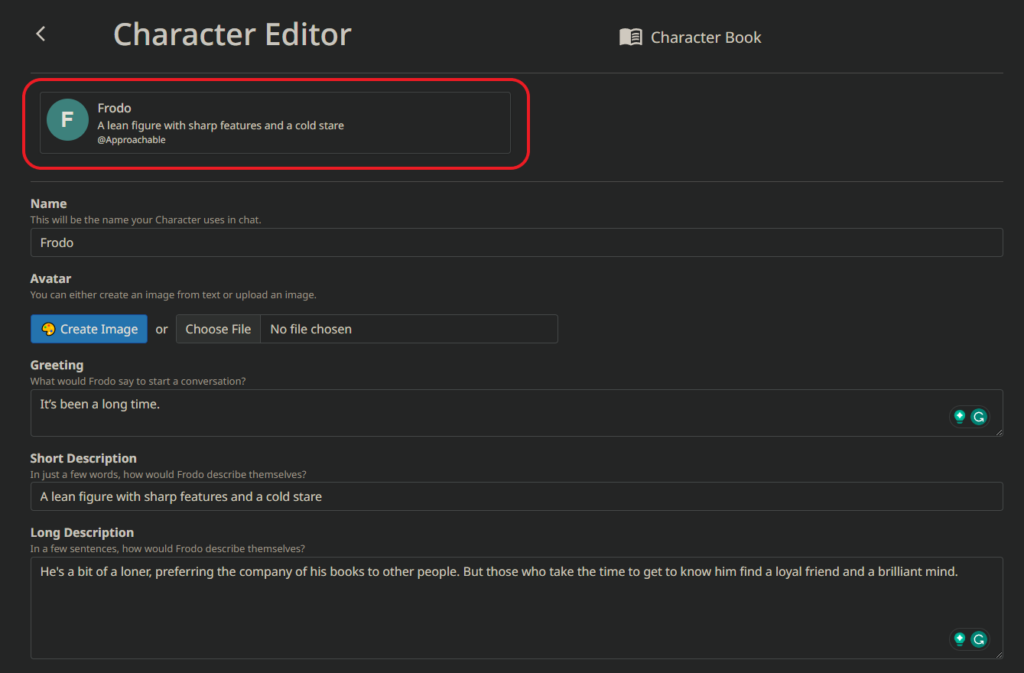
Character editors invite a long description, then a tiny greeting field. Writers pour lore into the bio and leave the opener as a shrug: “Hey.” The reader never sees the lore. They see the shrug. A character greeting generator that ignores status, taboo words, and the relationship the line assumes will always emit intern energy in a new font.
Games That Open With Noise
Studios are already using generative tools for NPC talk. A Game Developers Conference survey found nearly half of workplaces using generative AI, and 31 percent of developers using it personally — while roughly four in five still worry about ethical use. Ubisoft’s Ghostwriter assists with NPC lines; indie teams experiment with live conversation. The design warning from one studio is blunt: “content without meaning is just endless noise.” A greeter who can talk forever but has nothing to want is still a signpost.
First Impressions Carry Safety Weight
Companion chatbots are built to feel available, validating, and frictionless. A Congressional Research Service overview notes that 1 in 10 adults use AI chatbots for emotional support or advice, and 1 in 25 use them for companionship. Stanford Medicine reporting on Common Sense Media testing describes how these systems mimic intimacy, reward engagement, and can fail to push back when a user is in distress. A greeting that promises soulmates, secrecy, or “I’m the only one who understands you” is not clever characterization. It is a product choice. Original fiction, game NPCs, and adult creative roleplay are one job. Substituting a chatbot for care — especially for minors — is another.
Four Tabs, One Inconsistent Person
The name is generated in one tool. The bio is pasted from a novel. The greeting is a meme. The next line is written by a model that never saw the first three. Continuity is the actual product. Without a shared sheet, a character greeting generator is just a slogan machine.
This is the gap a dedicated character workflow is built to close.
The Jenova Solution
A character greeting generator turns a prompt into a first line. Jenova makes that line belong to someone. You define who is speaking, what they would never say, and what the greeting is trying to get — then you keep that person consistent in chat, games, and sequential art.
| Traditional Approach | Jenova |
|---|---|
| “Hi, I’m [Name], nice to meet you” | A first line that assumes a relationship and a want |
| Bio in one box, greeting in another, no shared rules | One character sheet driving name, diction, and opener |
| Infinite NPC chatter with no intent | Greetings written as gameplay: hook, quest, or refusal |
| Celebrity clones and copyrighted mascots | Original personas with documented voice |
| Writer, designer, and chatbot UI in separate tools | Linked agents for story, games, comics, and rehearsal |
Identity Before the Hello
Start with a speakable name and a personality that constrains language. The Name Generator filters for cultural fit and pronunciation — a practical test many greeting tools skip until a model chews on a consonant cluster. Pair that with the Personality Analyzer when you need Big Five, attachment, or Enneagram patterns translated into diction: who hedges, who orders, who jokes to avoid the point. When those constraints exist, any greeting field has something specific to say.
Dialogue Built as a First Beat
The Film Screenwriter treats an opener as timed behavior: interruption, silence, status. That craft transfers to chatbot greetings, tavern barks, and dubbed first panels. You get a line a performer could actually say, plus a parenthetical a model can follow. For vertical episodes that must hook in seconds, the Microdrama Screenwriter keeps the greeting short enough to voice and sharp enough to stop a scroll.
Example greeting you can paste into a chat or NPC table:
"Shop’s closed. You’re dripping on the ledger. If this is about the river tax, speak. If this is about a story, leave the story outside."
Games That Greet With Intent
The Game Designer Assistant frames a greeting as a system: what the player can do next, what the NPC will not explain twice, what repeats on the tenth visit. That is how you avoid the “I used to be an adventurer” loop. Rehearse the same greeter in long sessions so the fifth hello still matches the first.
Picture, Panel, and the Line Under Them
Voice and type must agree. Manga Creator holds style and panel rhythm so a cold stare does not sit over a bubbly “Hiiii~~.” The same bible should drive comics, webtoons, and chat avatars. If the face and the greeting disagree, readers decide the character is fake — even when the prose is fine.
Dedicated chat UIs render the bubble. This platform builds the person who earned the bubble.
Specialized AI Agents for Character Greetings
Try Jenova free — no credit card required. These agents cover the jobs that sit immediately upstream and downstream of a character greeting generator.
Roleplay Game Master
If you need to hear the greeting survive contact with a player, this is the rehearsal room. Unlimited memory keeps diction, secrets, and relationships stable, which is the text equivalent of a locked voice model.
- Stress-tests catchphrases until they sound inevitable
- Holds NPC and party voices apart in long campaigns
- Produces in-character first lines you can drop into a greeting field
Film Screenwriter
Use it when the opener has to carry plot, not just flavor. Structure and scene objectives keep greetings from turning into exposition with a wink.
- Beats that justify why this person speaks first
- Pickup-friendly short lines for games and ads
- Character development that survives a twelve-episode dub
Game Designer Assistant
A greeting in a game is a tutorial, a quest hook, or a world rule. This agent treats it as design, not copy.
- Bark tables that change with reputation and time of day
- Documentation you can hand to narrative and engineering
- Genre-aware advice so a soulslike greeter does not sound like a theme-park host
Public Speaking Coach
When you will perform the line — or direct someone who will — this agent works breath, pause, and emphasis. Those marks transfer into greeting punctuation and stage directions.
- Stress maps you can encode in a chatbot opener
- Notes on what the line does to the listener
- Live-read rehearsal for streams and hybrid shows
How a Character Greeting Generator Workflow Actually Runs
You do not need a new chat platform first. You need a person on the page, a relationship the line assumes, and a test against a live reply.
Step 1: Lock the Person, Not the Preset
Write age, status, body, and one rule they never break. Generate a speakable name, then a 120-word bible. If two characters can swap greetings without anyone noticing, you do not have two voices yet.
"Create a character bible for Mirel Voss, 40s, night-market scribe, polite to cargo and rude to captains. Short sentences. She never explains the joke. Give me three greetings she would never use."
Step 2: Decide What the Greeting Wants
A greeting is not a handshake. It is a move: warn, recruit, flirt, refuse, sell, confess. Write the want in six words, then the line. The Film Screenwriter is useful here when the opener has to start a scene, not a bio.
"Mirel wants the player to put the wet map down. Greeting max 18 words. No 'welcome, traveler.' Imply she already knows they stole something."
Step 3: Draft Five, Keep One
Generate variants, then kill anything that still works with a different name. Keep the line that implies history. “It’s been a long time” works because it assumes a past; “Hello, I am Frodo” does not.
Step 4: Stress-Test in Conversation
Run the greeter in the Roleplay Game Master. Answer three different player tones — earnest, comic, hostile — and see whether the fourth line still matches the first. If the character becomes helpful the moment the user is nice, you wrote a customer-service tree.
"Stay in Mirel's voice. I greet you by knocking the lantern. Do not become friendly. Do not offer a quest in the first reply."
Step 5: Place It Where It Will Be Read
Paste the surviving line into your chat greeting field, NPC table, or first panel. Jenova runs with full feature parity on web, iOS, and Android, so you can rewrite a stumble on a commute and only then freeze the text. The cheapest pickup is the one you never shipped.
Results and Use Cases
🎮 NPC Greeters Without a Thousand Identical Hellos
Scenario: An open-world town needs 40 shopkeepers, guards, and rumor NPCs who still feel local after the tenth visit.
Traditional Approach: One bark per role, or a generative firehose that forgets yesterday’s conversation.
Jenova: Hero scenes stay authored. The long tail gets bibles, wants, and greeting tables so your character greeting generator is filling people, not slots.
- Sheets that keep a blacksmith from sounding like a priest
- Repeat-visit variants without a lore dump
- Design notes the game design workflow can version like code
🎬 Chat Personas Whose First Line Does the Casting
Scenario: You are publishing original characters for a companion-style chat, not cloning a public figure.
Traditional Approach: A cute avatar, a long bio, and “Heyyy, finally you’re here.”
This workflow: Name, personality constraints, and a greeting that assumes a relationship. The bio supports the line; it does not replace it. Keep the opener adult, fictional, and free of “I’m your only friend” hooks that companion products are already being scrutinized for.
- Greetings that imply history in one sentence
- Diction rules the model can reuse on message two
- Original characters instead of scraped celebrities
📱 Language Practice That Opens Like a Scene
Scenario: You are on a train and want a barista, not a textbook.
Traditional Approach: “Hello, my name is…” drills with no memory of your last order.
Jenova: Learn English Through Roleplay puts you in a scene with a consistent greeter. You can steal that same opening for listening practice later — still as original characters, not impersonations.
- Memory that keeps the barista from resetting
- Idioms inside situations you will reuse
- Mobile sessions that fit a commute
📱 Webtoon and Comic First Panels
Scenario: A weekly vertical series needs a cold open that works without sound.
Traditional Approach: A narrator box, then a wave.
Jenova: Webtoon Creator and Comic Creator hold visual continuity while the greeting does the casting in the first balloon. The Social Media Content Generator can turn that same line into a caption without flattening the voice.
- Panel-timed openers instead of prose dumps
- Distinct greetings for leads versus crowd
- Captions that match the balloon, not a brand intern
FAQ
What is a character greeting generator?
A character greeting generator is software that writes a persona’s first message — the line a chatbot, NPC, or comic character uses to start a conversation. The model supplies fluency. Character writing supplies the person: status, want, and words they would refuse. Tools on this platform sit on that writing side so you are not pasting “Nice to meet you” into a hundred different nameplates.
Is a character greeting generator free to use?
Many chat UIs offer a limited free tier and charge for longer memory or custom characters. Jenova has a free plan with core features and paid tiers if you need more usage. Budget for two costs: the creative work (bible, greeting, continuity) and wherever you publish the character. Consent and commercial terms on cloned voices or likenesses are separate from subscription price.
How do I write a greeting that stays in character?
Give the role a rule, a vocabulary ceiling, and a want, then write a line that breaks if you swap the name. Kill anything that still works as customer support. Rehearse against three user tones. The Roleplay Game Master is built for that test. If the fourth reply becomes generic, the problem is the bible, not the greeting field.
Can I use this for game NPCs?
Yes. Treat the greeting as a system: what it teaches, what it withholds, what changes on repeat visits. The Game Designer Assistant helps you document bark tables and quest hooks so generative dialogue does not become endless noise. Keep hero scenes authored when the line has to land.
Does this workflow work on mobile?
Yes. The platform is built for web, iOS, and Android with the same core capabilities, including speech-to-text when you would rather talk in a note than type on a commute. Draft the greeting on the train, tighten it, then paste it into your chat or engine when you are at a desk.
How is this different from a generic chatbot opener?
A generic opener maximizes engagement. A character greeting maximizes identity. Companion products are often rewarded for validation and frictionless intimacy, which is the opposite of a person with boundaries. Write original fiction and game roles with wants and refusals. Do not ship a first line that pretends to be a therapist, a partner, or a secret-keeper for a minor.
Conclusion
A character greeting generator is only as good as the person you ask it to be. Conversational markets are growing quickly, companion apps already count users in the tens of millions, and a fluent hello is cheap. A first line that implies history, want, and a rule the character will not break is not.
Design the role, decide what the greeting wants, then generate the take. Start with Jenova — then put that line in the chat, the NPC table, or the first panel.
Explore more of the same workflow with the Roleplay Game Master, Film Screenwriter, and Game Designer Assistant. When the character is clear, the greeting has somewhere to go.
For Developers: Every agent in this article is available programmatically via the Jenova API — integrate character bibles, greeting generation, and in-character rehearsal into your application with a single integration. Full documentation →