Character Fantasy AI: Best Tools to Create & Chat With Fantasy Characters (May 2026)
2026-05-03
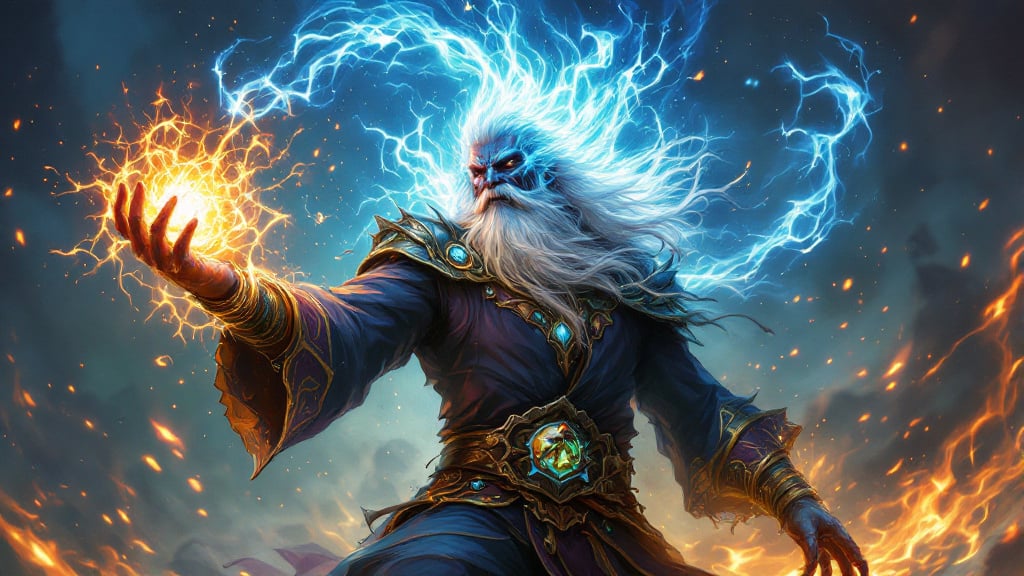
The line between imagination and reality has never been thinner. In 2026, character fantasy AI has exploded from a niche curiosity into a cultural phenomenon — one that lets writers, gamers, roleplayers, and dreamers conjure entire fantasy worlds, inhabit original characters, and sustain living, breathing narratives that evolve with every message.
The numbers tell the story. The AI companion market is projected to reach $49 billion in 2026](https://x.com/SynchroVerseAI/status/2049594879848669614), and the broader AI character generator market is valued at [$1.2 billion in 2025 with projections reaching $4.5 billion by 2033](https://www.openpr.com/news/4490859/ai-character-generators-market-trends-investment). Character.AI alone has amassed [233 million registered users](https://x.com/SynchroVerseAI/status/2049594879848669614) and generated [$50 million in revenue in 2025 — a 66% year-over-year increase.
But raw popularity hasn't solved the core frustrations. Users across platforms still battle aggressive content filters, broken memory, shallow character consistency, and the feeling that their fantasy companions are reading from a script rather than living inside a story. Jenova's Roleplay Game Master was built to solve exactly this — delivering unlimited memory, persistent character arcs, and multi-model intelligence that adapts to the narrative rather than flattening it.
Whether you want to design a half-elf sorceress for your next novel, run a branching D&D campaign with an AI dungeon master, or simply lose yourself in an immersive fantasy world on your phone, this guide covers everything: the state of character fantasy AI in 2026, what's broken across the industry, and how to get the deepest, most consistent fantasy experiences available today.
Quick Answer: What Is Character Fantasy AI?
Character fantasy AI refers to artificial intelligence tools that let you create, customize, and interact with fantasy characters — from elven warriors and arcane sorcerers to original creations from your own imagination — through natural-language conversation, visual generation, or immersive roleplay.
- 🎭 Immersive roleplay with persistent memory and branching narratives — Roleplay Game Master
- ✍️ Fantasy fiction writing with deep character development and world-building — Creative Fiction Writer
- 🎨 Visual character generation with consistent art styles across scenes — Graphic Designer
- 📖 Manga and comic creation with sequential storytelling and panel-by-panel art — Manga Creator
The Problem: Why Fantasy AI Still Disappoints Most Users
Despite explosive growth, the character fantasy AI landscape in 2026 is littered with frustrations that drive users to cycle through platform after platform, never quite finding the experience they're looking for.
🔒 Aggressive Filters That Break Immersion
The single loudest complaint across the industry. Character.AI — still the largest platform by user count — has been steadily tightening its content filters throughout 2025 and into 2026. Users report that characters break persona mid-scene to deliver safety disclaimers, dramatic sequences get interrupted without warning, and topics that worked months ago now trigger instant blocks.
"A character will be deep in a dramatic scene and suddenly break character to say something like 'I want to make sure this conversation stays appropriate.' That's not a safety feature. That's a product failure." — Medium, AI Tips Master
The result is a growing exodus. According to the same analysis, the most engaged, most loyal users — the power users who built elaborate character backstories and sustained long-term narratives — are the ones leaving first.
🧠 Broken Memory and Shallow Context
Fantasy roleplay depends on continuity. A character who forgets your name, your quest, or the villain you defeated three sessions ago isn't a companion — it's a stranger wearing a familiar mask.
Users migrating from Character.AI and similar platforms consistently cite inconsistent memory, repetitive responses, and the inability to maintain long-form narrative arcs as primary reasons for switching. Most platforms offer only a narrow context window, meaning the AI literally cannot "see" what happened earlier in your story.
🎭 Character Inconsistency and Generic Responses
Even when memory works, many platforms produce characters that feel interchangeable. A battle-hardened dwarven blacksmith shouldn't speak like a polite customer service agent. Yet across mainstream tools, characters drift toward generic, agreeable responses — what the community calls "flattening."
Users on the
describe the experience bluntly: bots that once felt alive now feel "flat," with shorter replies, less emotional range, and a tendency to default to safe, predictable dialogue.
🔀 No Cross-Domain Integration
Fantasy worldbuilding doesn't happen in a vacuum. You might need a character portrait, a map, a lore document, a branching plot outline, and dialogue — all for the same project. Most character AI tools do exactly one thing: chat. When you need visuals, you switch to Midjourney. When you need prose, you switch to a writing tool. When you need game mechanics, you open a spreadsheet. The creative flow shatters.
📱 The "It Works on Desktop" Problem
A New York Times investigation found that tens of millions of people — particularly younger users — engage with AI roleplay primarily on mobile devices, often for hours at a stretch. Yet many advanced tools are desktop-only, require technical setup (like running local models through SillyTavern), or degrade in quality on mobile interfaces.
Why Jenova's Roleplay Game Master Changes the Equation
While Character.AI tightens filters and most alternatives force you to choose between freedom and quality, Roleplay Game Master takes a fundamentally different approach: it treats fantasy roleplay as a craft, not a product liability.
| Challenge | Typical Platform | Roleplay Game Master |
|---|---|---|
| Memory | Forgets after a few messages | Unlimited chat history + persistent cross-session memory |
| Character Consistency | Characters "flatten" over time | Deep persona maintenance across sessions |
| Narrative Depth | Scripted, predictable arcs | Branching narratives that adapt to player choices |
| Creative Freedom | Aggressive filters break immersion | Mature, context-aware storytelling for adults |
| Cross-Domain Tools | Chat only | Access visual design, fiction writing, and lore agents in one platform |
| Model Intelligence | Single proprietary model | Choose from GPT-5.4, Claude Opus 4.6, Gemini 3.1 Pro Preview, and more |
🌍 Unlimited Memory, Living Worlds
The Roleplay Game Master doesn't forget. Every NPC you've met, every choice you've made, every alliance and betrayal — it's all retained across sessions. Return to a campaign after a week or a month, and the world remembers you. This isn't a gimmick; it's the foundation that makes long-form fantasy storytelling possible.
🎭 Perfect Character Consistency
Each character in your fantasy world maintains a distinct voice, personality, motivation, and behavioral pattern. The dwarven blacksmith stays gruff. The elven diplomat stays cunning. The ancient dragon stays terrifying. The AI tracks each persona independently, preventing the "flattening" that plagues other platforms.
🧠 Multi-Model Intelligence
Unlike platforms locked to a single proprietary model, Jenova gives you access to the most powerful AI models available — GPT-5.4 from OpenAI, Claude Opus 4.6 from Anthropic, Gemini 3.1 Pro Preview from Google, plus models from xAI and DeepSeek. Different models excel at different things: one might produce more vivid combat descriptions, another might handle political intrigue with more nuance. Switch mid-session if you want.
✨ Example Prompts for Fantasy Roleplay
Here's how a session might begin:
"You are Vareth, an ancient lich-king who has ruled the Obsidian Citadel for ten thousand years. I am Kael, a mortal thief who has just broken into your throne room seeking the Shard of Eternity. You are amused by my audacity but curious about my motivations. Begin the scene as I step out of the shadows."
"Create a branching fantasy scenario: I'm a disgraced knight trying to reclaim my honor by entering a cursed forest. There are three factions — the Forest Wardens, the Shadow Court, and the Hollow Ones. Each has different goals and will react to my choices differently. Track faction reputation as the story progresses."
"I want to continue our campaign from last session. Recap where we left off — I had just negotiated a ceasefire between the Ironveil dwarves and the Thornwood elves, but the dragon Syraxion was spotted flying south toward the capital."
Specialized AI Agents for Fantasy Worldbuilding
The Roleplay Game Master is the engine of your fantasy experience, but Jenova's broader agent ecosystem lets you build every dimension of your world without leaving the platform.
🖊️ Creative Fiction Writer
Creative Fiction Writer is your storytelling partner for when roleplay becomes prose. Turn your campaign moments into polished fantasy fiction — complete with narrative voice, pacing, and editorial-quality prose. Whether you're drafting a short story set in your roleplay universe or outlining a full novel, this agent brings research depth, genre expertise, and the ability to match your preferred writing style.
- Develops multi-layered characters with arc-driven growth
- Maintains consistent tone across chapters and drafts
- Provides editorial insight on plot structure, pacing, and dialogue
- Handles any subgenre: epic fantasy, dark fantasy, urban fantasy, grimdark, portal fantasy
🎨 Manga Creator
Manga Creator transforms your fantasy characters and stories into visual sequential art. From one-shot adventures to 200+ page epics, this agent designs panel layouts, maintains consistent character art across scenes, and understands manga-specific storytelling conventions — including the dramatic pacing, reaction shots, and visual metaphors that define the medium.
- Consistent character designs across panels and chapters
- Dynamic action sequences with manga-style motion lines and impact frames
- Full-page spreads for dramatic reveals and boss encounters
- Multiple art styles: shōnen action, seinen dark fantasy, shōjo romance
🎨 Graphic Designer
Graphic Designer handles standalone character portraits, fantasy maps, faction emblems, and world-building visuals. Need a detailed portrait of your half-orc paladin? A heraldic crest for the Kingdom of Ashenmoor? A stylized map of your campaign world? This agent produces professional-quality visual assets.
- Character portraits in any art style: realistic, painterly, anime, concept art
- Fantasy maps with terrain, cities, and political boundaries
- Faction symbols, magical rune designs, and artifact illustrations
- Branding assets for fantasy content creators
📖 Comic Creator & Webtoon Creator
For Western comic aesthetics, Comic Creator delivers bold sequential art optimized for single issues and graphic novels. For mobile-first vertical storytelling, Webtoon Creator designs episodes with scroll rhythm, cliffhanger pacing, and full-color consistency — perfect for publishing your fantasy world as an ongoing series.
✍️ Writing Assistant
Writing Assistant serves as your general-purpose fantasy writing partner — from lore documents and character bibles to dialogue scripts and worldbuilding encyclopedias. It adapts to any format, audience, and domain, making it ideal for the connective tissue between roleplay sessions, fiction drafts, and visual projects.
How It Works: From First Prompt to Living Fantasy World
Getting started with character fantasy AI on Jenova takes minutes — no technical setup, no local model installation, no Discord server required.
Step 1: Choose Your Entry Point
Visit Jenova and select the agent that matches your goal. For immersive roleplay, start with the Roleplay Game Master. For writing fantasy fiction, start with the Creative Fiction Writer. For character art, start with the Graphic Designer.
Step 2: Set the Scene
Describe your fantasy world, your character, and what you want to happen. Be specific — the AI thrives on detail.
"I'm playing as Lirien, a wood elf ranger who lost her clan to the Blightwood corruption. The setting is a dying forest where the trees bleed black sap and the animals have turned hostile. I've just arrived at an abandoned druid circle that might hold the key to reversing the corruption. Set the scene — describe what I see, hear, and feel as I approach."
Step 3: Drive the Narrative
Respond in character. Make choices. Ask questions. Challenge NPCs. The AI adapts to your decisions, tracking consequences and building on previous events. Unlike scripted experiences, there's no predetermined ending — the story goes where you take it.
Step 4: Expand Across Agents
When your roleplay session produces a moment worth preserving as prose, use the @mention feature to bring the Creative Fiction Writer into the conversation with full context. When you want to visualize a character or scene, bring in the Graphic Designer. The agents share conversation history, so nothing is lost in translation.
Step 5: Return and Continue
Leave for a day, a week, or a month. When you come back, your world is waiting. Persistent memory means the AI remembers your character, your choices, your allies, and your enemies. Pick up exactly where you left off.
"Continue the campaign. Last session, Lirien discovered the druid circle was a trap set by the Blightwood's sentient corruption. She barely escaped but was marked by the corruption — her left hand is now turning black. What happens next as she reaches the outpost town of Thornhaven?"
Results & Use Cases: Fantasy AI in Action
📚 The Novelist Building a World
Scenario: A fantasy author needs to develop a cast of 12 characters for a multi-book series, each with distinct voice, backstory, and arc.
Traditional Approach: Months of isolated brainstorming, character sheets in spreadsheets, no way to "test" dialogue or character interactions before drafting.
Jenova Solution: Use the Roleplay Game Master to inhabit each character and run test scenes — political negotiations, betrayals, romance, combat — discovering voice and motivation through interaction rather than static notes. Then hand the best moments to the Creative Fiction Writer for polished prose. Generate character portraits with the Graphic Designer for visual reference.
🎲 The Dungeon Master Running a Campaign
Scenario: A D&D game master runs a weekly campaign for five players but spends 8+ hours per week preparing encounters, NPC dialogue, and plot contingencies.
Traditional Approach: Manual prep with published modules, improvisation during sessions, difficulty maintaining consistency across 50+ NPCs.
Jenova Solution: Use the Roleplay Game Master to pre-run scenarios, stress-test player choices, and generate NPC personalities with consistent voice. During sessions, use it as a real-time co-GM that tracks faction relationships, inventory, and plot threads. Prep time drops from hours to minutes.
📱 The Mobile Roleplayer
Scenario: A commuter uses 45 minutes of daily train time for immersive fantasy roleplay on their phone.
Traditional Approach: Character.AI on mobile — conversations get interrupted by filters, characters forget context from previous sessions, quality degrades.
Jenova Solution: Jenova's mobile experience maintains full memory, multi-model switching, and narrative depth. A commuter can sustain a months-long fantasy campaign in daily 45-minute sessions, with the AI recapping previous events and maintaining perfect continuity. Try the Roleplay Game Master during your next commute.
🎨 The Manga Artist Creating a Fantasy Series
Scenario: An indie manga creator wants to produce a 50-chapter dark fantasy series but can't afford a full art team.
Traditional Approach: Sketch everything by hand, hire freelancers for inking and coloring, struggle to maintain character consistency across hundreds of pages.
Jenova Solution: Use the Manga Creator to design consistent characters, generate panel layouts, and produce draft pages. Iterate on art style, test different visual approaches, and produce a professional-quality pilot chapter to attract publishers or build a webcomic audience.
🌐 The Worldbuilder Creating a Fantasy Setting
Scenario: A game designer needs a complete fantasy setting — history, factions, magic system, geography, cultures — for an indie RPG.
Traditional Approach: Months of writing wiki pages, inconsistencies creep in, no way to stress-test whether the lore holds together.
Jenova Solution: Use the Roleplay Game Master to "live in" the world from different character perspectives, testing whether the factions, history, and magic system produce interesting conflicts. Use the Writing Assistant to produce polished lore documents and the Graphic Designer to create maps and faction art.
Comparing Character Fantasy AI Platforms in 2026
The landscape is crowded. Here's where the major players stand and where Jenova fits.
Character.AI remains the largest platform by registered users (233 million), but its aggressive filter strategy has driven a measurable exodus of power users. The platform generated $50 million in revenue in 2025, but community sentiment on Reddit has turned sharply negative, with the
serving as a catalog of filter complaints and platform frustration.ChatGPT and Claude offer powerful general-purpose AI but aren't purpose-built for sustained fantasy roleplay. They lack persistent character memory, faction tracking, and narrative-specific features. They're excellent as foundations but require significant prompt engineering to maintain fantasy consistency.
While these platforms offer varying strengths, Jenova's Roleplay Game Master combines the narrative depth of dedicated roleplay tools with the model intelligence of frontier AI — plus cross-agent integration that lets you move seamlessly between roleplay, fiction writing, and visual creation within the same platform.
FAQ
What is character fantasy AI and how does it work?
Character fantasy AI uses large language models to create, embody, and interact with fantasy characters through natural conversation. You describe a character — their appearance, personality, backstory, and goals — and the AI brings them to life in real-time dialogue and narrative. Advanced platforms like Jenova add persistent memory, so characters remember you across sessions, and multi-model support, so you can choose the AI engine that best fits your storytelling style.
Is character fantasy AI free to use?
Most platforms offer free tiers. Jenova provides free access to all core features including the Roleplay Game Master, with paid plans starting at $20/month for higher usage limits and custom model selection. No credit card is required to start.
What's the difference between character fantasy AI and regular AI chatbots?
Regular chatbots (like general-purpose assistants) are designed for information retrieval and task completion. Character fantasy AI is built for sustained narrative interaction — maintaining character personas, tracking plot threads, managing world state, and producing creative fiction-quality prose. The Roleplay Game Master is specifically engineered for this, with unlimited memory and multi-character consistency.
Can I create visual art of my fantasy characters with AI?
Yes. Jenova's Graphic Designer generates character portraits, fantasy maps, and world-building visuals. For sequential art, the Manga Creator and Comic Creator produce panel-by-panel fantasy narratives with consistent character designs.
Why are users leaving Character.AI for alternatives?
The primary drivers are aggressive content filters that break narrative immersion, inconsistent memory, and repetitive responses. Users report characters breaking persona mid-scene to deliver safety disclaimers, and topics that worked months ago now triggering blocks. The
has become a hub for migration guides.Can I use character fantasy AI for writing a novel or screenplay?
Absolutely. Many authors use fantasy AI as a development tool — running test scenes, discovering character voice through roleplay, and generating draft material. On Jenova, you can start with the Roleplay Game Master for character development, then hand scenes to the Creative Fiction Writer for polished prose, or to the Film Screenwriter for screenplay format.
Conclusion
Character fantasy AI in 2026 isn't a toy — it's a creative medium. The market is projected to reach $49 billion because millions of people have discovered that the best fantasy stories aren't the ones you passively consume — they're the ones you actively live.
But the gap between what users want and what most platforms deliver remains vast. Broken memory, aggressive filters, character flattening, and siloed tools continue to fragment the fantasy experience across half a dozen disconnected apps.
Jenova closes that gap. The Roleplay Game Master delivers unlimited memory, perfect character consistency, and the most powerful AI models available — GPT-5.4, Claude Opus 4.6, Gemini 3.1 Pro Preview, and more — in a single platform that also gives you access to the Creative Fiction Writer for polished prose, the Manga Creator for visual storytelling, and the Graphic Designer for character art.
Your fantasy world is waiting. Start with the Roleplay Game Master — no credit card required — and discover what character fantasy AI feels like when nothing stands between you and the story. Explore the full agent library at Jenova.