Character Catchphrase Generator: AI Signature Lines That Stick
2026-09-08
A signature line is how a character enters the room—and how the audience still hears them after they leave. In September 2026, writers, game masters, and brand teams still bounce between slogan mills, meme generators, and a blank page looking for a character catchphrase generator that sounds like a person, not a bumper sticker. Jenova treats catchphrases as voice design: personality, rhythm, and a line you can repeat without it collapsing into filler.
✅ Write lines only that character would say—and refuse lines anyone could say ✅ Stress-test rhythm, subtext, and how the phrase dies if overused ✅ Cover fiction, RPG NPCs, comics, streamer personas, and brand mascots ✅ Leave with a ranked shortlist, not fifty interchangeable slogans
Volume is easy. Constraint is the actual craft.
To understand why this matters, look at what usually fails: generic taglines, legal gray zones, and tools that never meet the person behind the line.

Quick Answer: What Is a Character Catchphrase Generator?
Jenova is an AI platform that works as a character catchphrase generator—writing short, in-voice signature lines for fiction, games, comics, and brand characters in one conversation. You bring the person; the agents bring rhythm, alternatives, and a reason the line belongs to them.
Key capabilities:
- Scene-ready dialogue and verbal tics via Film Screenwriter
- Novel and series voice that stays consistent across chapters
- Slogan-tight lines for mascots and product characters
- Lyric-level stickiness when the phrase has to be spoken, chanted, or sung
- Personality-first drafts so the catchphrase follows from who they are, not a random adjective
Why Most Catchphrase Tools Miss the Character
A catchphrase is not a slogan with a costume on. It is a compressed habit: how someone greets, dodges, brags, or panics. Research on branding still groups a slogan or catchphrase as a core brand asset—but fiction, games, and mascots fail when that asset could be stamped on anyone.
The demand is real. Free AI dialogue generators and incorrect-quote toys keep multiplying. But getting a line that is short, ownable, and still funny on the twentieth repeat is frustratingly difficult:
- One-click mills optimize for signup walls, not character voice
- Writers confuse slogans, taglines, and catchphrases—and ship the wrong object
- “Funny” lines collapse when you say them in the character’s actual mouth
- Legal and originality risk is ignored until merch or a trailer is already in motion
- RPG, comic, and brand workflows live in different tabs, so the line never matches the rest of the character
Generators that sell a button, not a voice
A free catchphrase widget that asks for a topic and returns twelve puns is doing marketing volume, not characterization. It does not know whether the speaker is a coward, a captain, or a cartoon cat. Game-master guides treat unique catchphrases as a dialogue technique that follows personality, not a prefix you bolt on. If the tool never asks who is talking, the output will sound like stock copy with a name taped to it.
Slogan, tagline, and catchphrase are different jobs
A tagline sells the work (“In space, no one can hear you scream”). A slogan positions a brand. A character catchphrase is a repeatable tic inside the story: greeting, insult, self-soothe, battle cry. Mixing them produces lines that pitch the show instead of living in it. Advertising slogans carry pragma-semantic weight—promise, tone, audience. Character lines carry habit. If your “catchphrase” explains the premise, it is a logline wearing a trench coat.
Funny on the page, dead in performance
Writers often keep the cleverest sentence. Performers keep the one they can hit under stress. A good character catchphrase generator has to test spoken rhythm: syllables, hard consonants, whether it still works whispered, yelled, or exhausted. RPG tables feel this immediately. An NPC who says a paragraph of lore is forgettable; an NPC who always answers a threat with the same four words becomes a person.
Originality and trademark are not the same as “it sounded cool”
Catchy phrases attract merch, bios, and trailers—and then attract examiners. The USPTO refuses slogans that merely convey an informational message because the public will not treat them as a single source. Familiar rallying cries and everyday admonitions fail for the same reason.
Informational slogans do not function as trademarks — they communicate a message; they do not identify who made the goods. USPTO examining attorney analysis
Slogans and taglines are also notoriously difficult to register when they read as ornamental or descriptive. Failure-to-function refusals are common. Length is not the loophole: U.S. trademark law does not cap how long a phrase can be, but a long line is still useless if nobody hears a source in it. A generator that only maximizes punchline density will happily hand you a phrase the whole internet already owns.
The rest of the character is in another app
Names live in a randomizer. Personality lives in a quiz. Dialogue lives in a script doc. The catchphrase is invented last, in a panic, and it fights everything else. Voice has to be designed as a system: lexicon, taboos, status, and the one line that leaks all four.
This is exactly what Jenova was built for.
The Jenova Solution
Jenova does not spit a list of puns from a single keyword. It runs a character catchphrase generator as a writing room: who the speaker is, where the line fires, and what must never come out of their mouth. You describe the role; specialized agents handle psychology, dialogue craft, slogan tightness, and the musical stickiness of a phrase you will actually repeat.
While generic slogan tools optimize for a free button and a signup, this platform specializes in lines that survive a scene, a session, or a campaign.
| Traditional Approach | Jenova |
|---|---|
| Keyword in, pun list out | Brief the person, then draft lines only they would say |
| Slogan, tagline, and catchphrase treated as synonyms | Separate objects, tested for the job you actually need |
| Cleverest sentence wins | Spoken rhythm, overuse, and status win |
| Ignore legal/common-use risk | Flag phrases that sound like public slogans, not character tics |
| Name, personality, and dialogue in three tabs | One thread that remembers the voice |
Voice before punchline
A catchphrase that fights the personality will be abandoned by session two. Personality Analyzer turns “gruff but loyal” into tells, taboos, and the kind of joke this person would never make. That constraint is the generator. You do not ask for “something iconic.” You ask for the line they use when they are stalling, winning, or about to run.
Dialogue craft, not caption craft
Film Screenwriter is the right desk for catchphrases that have to play in a scene: entrance lines, exits, callbacks, and the difference between a catchphrase and a monologue. Pair it with Creative Fiction Writer when the line must survive chapters, not a 90-second trailer. Both will generate alternatives in the character’s diction—then you pick the one that still works when they are tired.
Tightness from copy and song
Some catchphrases need slogan muscle: mascots, streamer outros, toy-line heroes. Product Copywriter compresses without draining character. Lyric Writer is the stickiness pass—vowel shapes, chorus repeat, the reason a four-word line lodges in the ear. Use copy for merch-length; use lyrics when the line will be said out loud on a loop.
Names, comics, and the room they speak in
A catchphrase attached to the wrong name still fails. Name Generator handles phonology so the line and the name share a culture. Comic Creator and Manga Creator test whether the phrase fits a balloon, a splash, or a silent beat. Roleplay Game Master keeps the NPC consistent after you lock the tic, so the catchphrase is not a one-off gag.
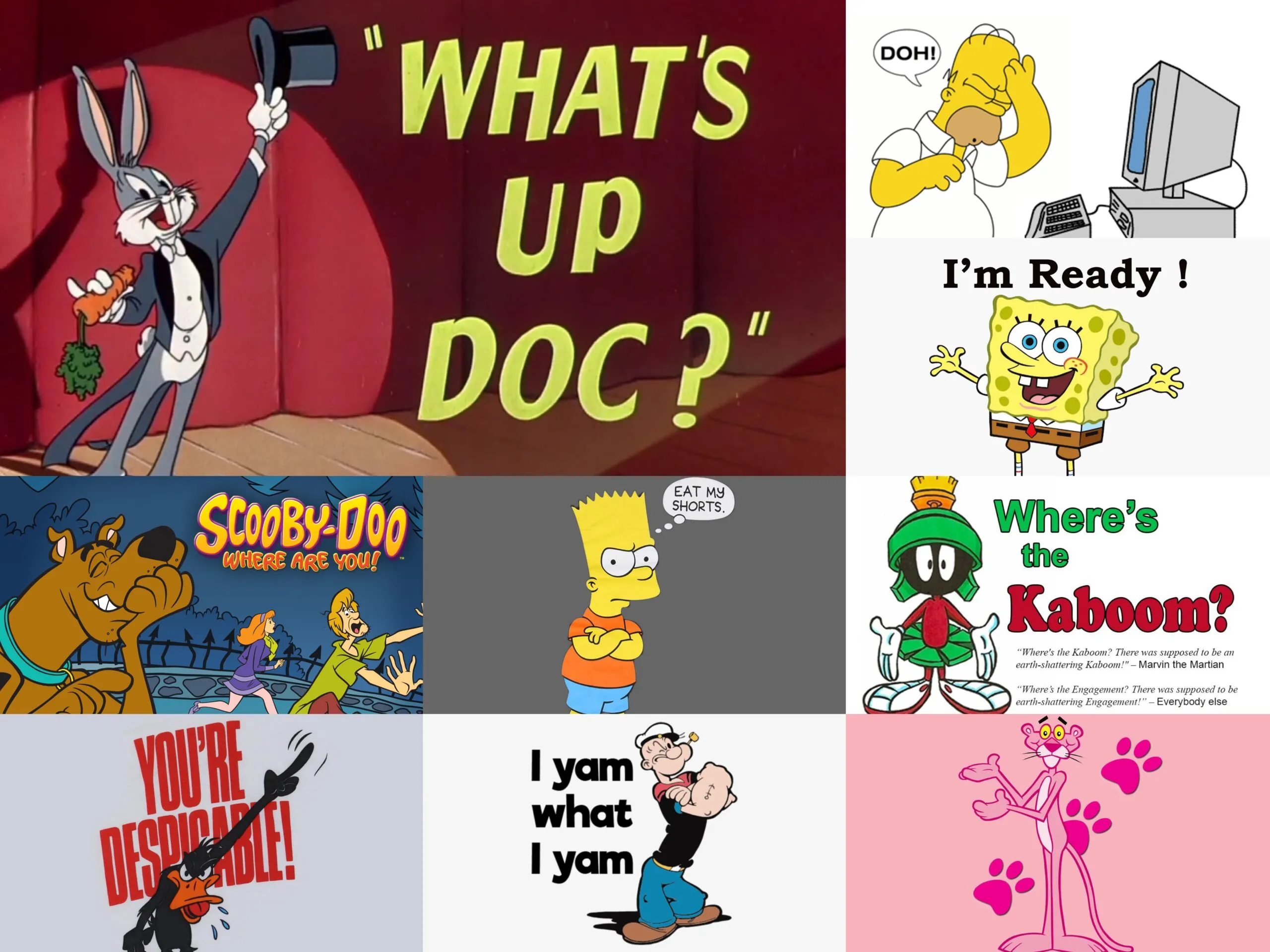
Those famous tics work because they are short, in-character, and reusable under pressure—not because they explain the plot.
Specialized AI Agents for Catchphrase Work
These agents map to the jobs people actually do when they need a line that sticks. Try Jenova free—no credit card required.
Film Screenwriter
Film Screenwriter treats the catchphrase as a dramatic tool: when it fires, who it is aimed at, and what it costs the speaker. That is how you avoid a line that only works in a trailer.
- Draft entrance, stall, and exit variants of the same tic
- Write the surrounding two lines so the catchphrase has a runway
- Kill options that summarize theme instead of revealing habit
Creative Fiction Writer
Creative Fiction Writer is for series voice—the phrase that can recur in chapter 3 and still feel earned in chapter 30.
- Keep diction stable across drafts
- Offer dialect and formality notes, not just jokes
- Produce a “do not say” list so the character stays specific
Product Copywriter
Product Copywriter is the mascot and brand-character desk: lines that fit packaging, bios, and ads without turning the character into a brochure.
- Six-word and twelve-word versions of the same tic
- Variants for hero, sidekick, and villain in one product world
- Compression that still sounds spoken, not typeset
Lyric Writer
Lyric Writer stress-tests singability and mouthfeel. If a catchphrase will be chanted, streamed, or used as an outro, this is the pass that finds the version people can actually say.
- Chorus-length repeats and call-and-response pairs
- Genre-aware rhythm (cartoon bounce vs. noir mutter)
- Alternatives when a consonant cluster dies on microphone
Comic Creator and Public Speaking Coach
Comic Creator checks balloon real estate and visual timing. Public Speaking Coach is unexpectedly useful for catchphrases: it hears the line as performance—breath, emphasis, and whether it survives a live table or a convention panel.
Marketing Strategist and Social Media Content Generator
Marketing Strategist decides whether you even want a public-facing slogan versus a private character tic. Social Media Content Generator adapts a locked catchphrase into bios, hooks, and platform-native posts without drifting the voice.
How It Works
Step 1: Brief the person, not the punchline
Open Jenova and describe speaker, status, audience, and the moment the line has to fire. Ban the clichés you are tired of. A character catchphrase generator that starts with “make it iconic” will give you someone else’s icon.
"Female orc quartermaster, dry, low status in public, terrifying in the stockroom. She never swears. I need a 3–6 word catchphrase she uses when adventurers try to haggle. No ‘me smash,’ no pirate talk, table is PG-13."
Step 2: Lock voice rules before you generate volume
Ask Personality Analyzer or the fiction desk for lexicon, taboos, and a sample paragraph of speech. Then generate catchphrases inside those rules. If you skip this, you will spend an hour ranking lines that the character would never utter.
"From this voice sample, list words she would never use, her default sentence length, and three emotional states where a catchphrase would fire. Then give me ten candidates that obey those rules."
Step 3: Generate for a job, then cut for the mouth
Send the brief to Film Screenwriter or Creative Fiction Writer for scene lines; use Product Copywriter if it must fit a toy, app, or cereal box. Ask for spoken stress tests: whisper, shout, drunk, exhausted. Keep the one that still sounds like them when the joke is gone.
"Give me 12 catchphrases in three buckets: greeting, stall, and threat. Mark syllable count. Star the three that still work if she is injured and out of breath."
Step 4: Originality and overuse pass
Ask the agent to flag anything that sounds like a public slogan, a famous cartoon tic, or a motivational poster. Then ask how the line dies if said every scene. A usable catchphrase has a trigger; it is not background radiation.
"Kill anything that sounds like a brand slogan, a political rallying cry, or a line already famous from animation. For the survivors, write one sentence on when she should NOT say it."
Step 5: Package for the rest of the character
Attach a name pass, a comic balloon test, or an NPC memory thread so the phrase stays consistent. Save the shortlist in the same conversation. If you work on a phone between sessions, reopen the thread and paste the winner into your script, VTT note, or bio.
Results & Use Cases
📊 Novel series with a line that can recur
- Scenario: A fantasy author needs a thief whose humor is specific, not “witty rogue #4.” The catchphrase has to work in chapter 2 and still land in chapter 18.
- Traditional Approach: A pun list from a slogan widget, then a find-and-replace that makes every scene feel like a sitcom button.
- Jenova: Creative Fiction Writer drafts voice rules; Film Screenwriter places the tic on haggling and panic only. The line is a tell, not a laugh track.
- Recurrence with a trigger, not spam
- A “never say” list that protects the voice
- Alternatives if the first choice wears out in draft three
💼 Brand mascot that is not a poster slogan
- Scenario: A snack startup wants a raccoon mascot line for packaging and a 15-second ad. Legal is already nervous about motivational clichés.
- Traditional Approach: Twelve rhymes, one of which is a phrase the whole internet already prints on shirts.
- Product Copywriter: Compresses to merch length, then the originality pass flags public-slogan risk using the same distinction examiners care about—message versus source.
- Packaging-length and ad-length twins
- Character still audible after compression
- Fewer “this sounds like everyone” notes from brand and counsel
🎯 Tabletop NPC the party quotes
- Scenario: A GM needs a harbor clerk the players will remember without a three-page monologue.
- Traditional Approach: An accent and a quest dump. Nobody remembers the name.
- Roleplay Game Master: Locks a four-word stall line, then stays consistent when players poke, bribe, or threaten. NPC craft advice has long treated distinctive speech patterns as the thing that makes a character stick.
- One tic, many situations
- Continuity after the first joke
- A quote the table will use in session notes
📱 Catchphrase on the commute, lock at the table
- Scenario: A webtoon writer has a 20-minute train ride and a protagonist whose balloon dialogue feels generic.
- Traditional Approach: Type into a web slogan mill, hit a signup wall, arrive at the studio with nothing.
- Jenova: Same thread on iOS or Android—voice rules, eight balloon-length options, one starred for the episode hook. They paste the winner into the script before the doors open.
- Full feature parity across phone and desktop
- Balloon-length constraints, not paragraph jokes
- A shortlist waiting in the same conversation that night
FAQ
Is Jenova a free character catchphrase generator?
Jenova has a free tier with core features and limited monthly usage, plus paid plans if you need more volume. You can run a full catchphrase session—voice rules, shortlist, overuse notes—without buying a separate slogan app. The free tier is for trying the workflow, not for unlimited factory output.
How is this different from a random slogan or quote generator?
Slogan mills and incorrect-quote toys shuffle tone. A character catchphrase generator has to refuse lines the speaker would never say. Jenova starts from personality and scene, then compresses. The output is a tic with a trigger, not a caption that would fit any face.
Can I use it for RPG NPCs, comics, and brand mascots?
Yes. The same voice brief can feed Film Screenwriter for scenes, Comic Creator for balloons, Roleplay Game Master for table continuity, and Product Copywriter for packaging. What changes is the constraint (syllables, rating, merch length)—not the person underneath.
Will the phrases be original enough to trademark?
No tool can promise a registrable mark. Examiners refuse phrases that read as informational messages or common speech, and slogans are often treated as ornamental. Use the originality pass to avoid famous tics and poster language, then talk to counsel before merch. Treat the AI as a writing partner, not a trademark search.
Does a character catchphrase generator work on mobile?
Yes. Web, iOS, and Android share conversations and settings, including speech-to-text if you would rather talk through a voice sample than type it. That matters when you are between sessions or on a commute and a signup-walled widget is the other option.
How do I keep the catchphrase from getting old?
Give it a trigger and a ban list. Ask the agent when the character should stay silent, and write one “broken” variant for late-story payoff. A line that fires every panel is noise. A line that fires when they are cornered is character.
Write the Line Only They Would Say
A character catchphrase generator should do more than rhyme. The internet is full of buttons; tables and manuscripts fail when the line could belong to anyone. Jenova’s answer is a writing-room workflow: personality first, dialogue craft, compression when you need merch-length, and a shortlist you can actually perform.
You do not need another pun dump. You need a tic with a mouth, a moment, and a reason to repeat it.
Explore the full agent library at Jenova and leave with a signature line that still sounds like them the twentieth time.
For Developers: Every agent in this article is available programmatically via the Jenova API — build AI-powered catchphrase and character-voice features into your application with a single integration. Full documentation →