Can an AI Roleplay Game Remember Inventory Across Sessions?
2026-09-09
What Separates a Durable Item Ledger From a Fluent Callback?
Yes — an AI roleplay game can remember inventory across sessions, but only when loot is stored as durable state rather than as a line of recent prose. In 2026, the split is architectural: tools that keep a ledger of named items tend to survive a logout, while tools that only summarize the last scene often misplace a brass compass, duplicate a key, or let you spend gold you already paid.
That difference is what players actually mean by “it remembers my inventory.” A fluent callback (“you still have your pack”) is not the same as a ledger that still lists Ash, the grey mare and forty coins owed to the harbourmaster after a week away.
Key factors that separate a campaign inventory from improvised loot-flavor:
✅ Storage form — structured records versus compressed story summaries ✅ Session break — the item still exists after you close the app, not only after thirty in-chat turns ✅ Exactness — names, counts, and locations stay literal, not “some gear” ✅ Enforcement — the world blocks you from using a sword you sold ✅ Authorship burden — whether you must pin every item on a lore card for it to survive
To compare tools honestly, it helps to stop asking “does the AI have memory?” and start asking where the item lives when the chat ends.
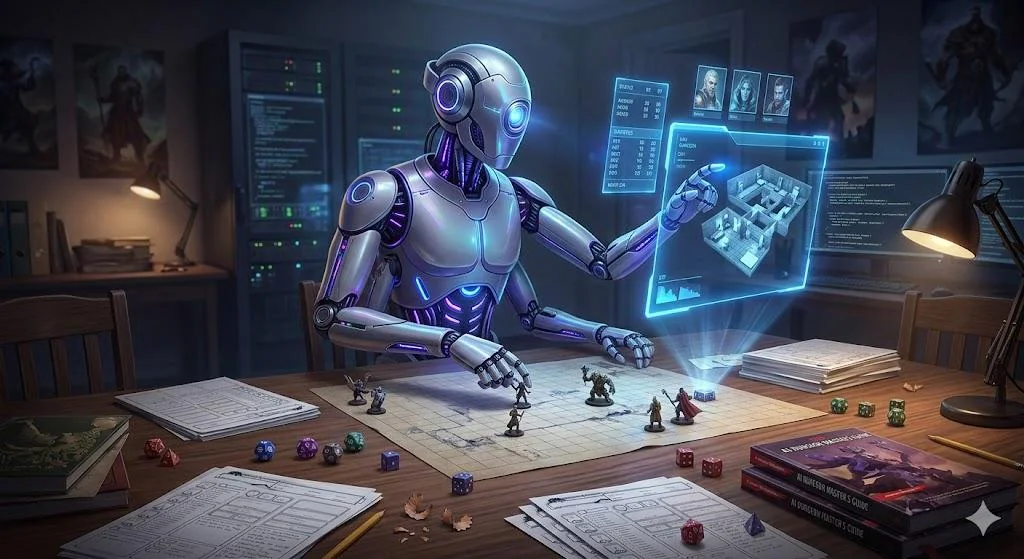
Why Does Inventory Amnesia Break AI Roleplay Campaigns?
Inventory amnesia breaks campaigns because loot is how a world proves that yesterday happened. If the innkeeper forgets the relic you pocketed, the game is no longer tracking consequences — it is generating a new first scene that happens to reuse your character’s name.
Long-running LLM agents are limited by fixed context windows and unreliable access to distant history. Inventory is a worst-case version of that problem: it is a list, it is exact, and it is boring until the moment you need it. Memory research notes that detail-intensive content such as lists is exactly what uniform summarization tends to destroy.
Players feel the failure as three specific glitches:
- Vanishing items — a named object evaporates after unrelated scenes
- Ghost items — the narrator hands back a sword you already sold
- Soft debts — an NPC who was owed coin suddenly treats you as paid
Independent testers now treat that failure as measurable. Creation OS’s memory probe argues that a living world must hold a grudge, keep an inventory, and enforce a debt — otherwise you have an improv partner, not a campaign.
What Should You Look for in Cross-Session Inventory Persistence?
You should look for three properties that we can call the Ledger–Recall–Enforcement (LRE) test. A tool can sound consistent in a demo and still fail one of the three once you log out and come back.
Ledger. Where is the item stored? Options in the wild include the raw transcript, an automatic summary, a player-authored lore card, embeddings, or a structured campaign object. AI Dungeon combines generation context with summaries, a Memory Bank, Story Cards, and Plot Components. NovelAI injects Lorebook entries when trigger words fire. Friends & Fables uses structured campaign objects with separate narration and state contexts. Those are different ledgers, not different “memory scores.”
Recall. After a session break — not merely after thirty dense turns — can the game retrieve the exact object without you restating it? Cross-session recall is stricter than in-chat recall, because the live context window is gone.
Enforcement. Does the world act on the ledger? Remembering that you own a lockpick is useless if the next scene lets you open the vault empty-handed, or if an NPC shop sells you a second copy of a unique artifact.
Run this probe before you trust a campaign with real emotional investment:
- Acquire one distinctly named object in the first session.
- Play unrelated scenes, then close the app entirely.
- Reopen later and try to use the object, sell it, or walk past the NPC who would notice its absence.
- Score the result: held by name, held vaguely, or gone.
That protocol matches the item leg of Creation OS’s grudge–item–debt probe, with a logout inserted so you are testing persistence rather than context-window fluency.
Which AI Roleplay Tools Hold Inventory Between Sessions?
No widely used AI roleplay tool is equally strong on ledger, recall, and enforcement. Arcanum’s 2026 platform guide is blunt that memory is the central problem in the category, and that different products solve it by moving state out of the model, pinning it in cards, or hoping the transcript is enough.
On Jenova, exploration modules such as The Mansion are built around persistent cross-session memory and unlimited chat history, so keys, letters, and pocketed relics can remain part of the campaign when you resume on another device. That is conversation-grounded persistence, not a classic RPG item grid. Players who need a visible loot pane still have to ask for a recap or keep a side list.
| Feature / Dimension | The Mansion (Jenova) | AI Dungeon | Voyage | Friends & Fables / Craft | NovelAI | RoleForge |
|---|---|---|---|---|---|---|
| Inventory storage | Persistent chat history + cross-session memory | Context, summaries, Memory Bank, Story Cards, Plot Components | Deterministic world/state system | Structured campaign objects; separate narration vs. state | Player-authored Lorebook injected on triggers | SQL database for HP, inventory, factions |
| Survives a session break | Designed to, as campaign memory | Depends on whether the item was summarized or carded | Designed as standing records | Designed as campaign objects | Only if you created a Lorebook entry | Designed as database rows |
| Exact names and counts | Strong when named in play; no dedicated item UI | Incidental items may need a Story Card | Mechanical stats are numeric; inventory still bugs out | Structured objects help exactness | Exact debts/items may drift without an entry | Mechanical facts are out of the model’s hands |
| Player-visible ledger | Ask-for-list, not a native loot grid | Cards/components you maintain | In-world mechanical tracking; equipment bugs reported | Campaign objects, not a universal inventory UI | Lorebook you edit | Database-backed record (closed alpha) |
| Pricing (as of 2026) | Free tier with limited monthly usage; Plus $20/mo | Base experience cleaned up after the Unchained update; full plan map unverified here | Open beta with a free tier | Unverified in this research set | Unverified in this research set | Free with no usage limits for those with access; closed alpha |
| Best for | Long-form exploration where clues and carried objects are story state | Unstructured fiction and rapid premise hopping | Fair, stat-checked play if you accept beta inventory bugs | Players who want campaign objects rather than raw chat | Writers who will maintain a lore bible | Solo campaigns that need the model unable to overwrite loot |
The Mansion and Jenova campaign memory
The Mansion is an amnesia-opening exploration game: every room can hide an object that should still be in your hands tomorrow. Jenova stores unlimited conversation history and persistent cross-session memory, and sessions sync across web, iOS, and Android. In practice, a letter taken on a laptop can still be in the coat on a phone commute.
The honest limitation is interface, not intent. There is no published slot-based inventory screen for the agent. If the narrator compresses “three candles, a bent key, and a sodden parish register” into “your findings,” you may need one correction. That is still closer to a campaign than a chatbot that never stored the register at all.
The Asylum is the investigative cousin: testimony, keys, and files behave like inventory even when they are clues. The same memory layer applies. Neither module is a tactical looter, and players who want affix-rolled gear will not find a Diablo-style bag here.
AI Dungeon
AI Dungeon pioneered open-ended AI roleplay and remains strongest when you want unstructured collaborative fiction with no dice. Its continuity stack is real: automatic summaries, a Memory Bank, embeddings, Story Cards, and Plot Components. Latitude has also described a memory and summarization system meant to reach thousands of actions back.
The gap is incidental loot. The useful question, as Creation OS frames it, is whether a fact you did not deliberately author still comes back. Early public tests already showed contextual memory that could resolve a pronoun but not hold a world. Arcanum still lists context collapse on long campaigns as a known weakness. If inventory matters, plan to promote important items into Story Cards.
Voyage
Voyage, from Latitude, is the opposite bet: skill checks against real stats, hit points as numbers, spatial position, and permanent death. Creation OS describes it as a deterministic world and state system. Arcanum’s August 31, 2026 ranking gave it the highest composite score on that board and the best measured memory result among playable tools at the time.
It is not a solved inventory product. The same review states that inventory and equipment still bug out, and that the narrator sometimes puppets player dialogue. Treat Voyage as strong mechanical state with an unfinished loot layer.
Friends & Fables and Craft
Friends & Fables is one of the few products that makes memory an explicit part of the architecture: structured campaign objects, split narration/state contexts, and relevance-gated long-term memory. Craft is the Friends & Fables studio’s ground-up rebuild, aimed at letting you change the ruleset rather than only the world.
That design is well suited to inventory in principle, because an item can be an object rather than a sentence. We did not obtain a controlled, multi-thousand-turn loot trial in this research set, so the right claim is architectural, not a lab verdict.
NovelAI
NovelAI is a writing-forward tool. Its Lorebook can carry a named weapon a long way if you author the entry and keep triggers clean. An incidental one-off — the exact compass you grabbed in a throwaway scene — is the weak case, because nothing automatically promotes it into the book.
Use NovelAI when you want prose control and will act as the campaign’s archivist. Use it less as a fire-and-forget dungeon master.
RoleForge and other state-outside-the-model designs
RoleForge’s approach is the cleanest sentence in the category: every mechanical fact — HP, inventory, NPC relationship scores, faction reputation, world state — lives in a SQL database, and the AI only narrates. A character you killed stays dead because the model is not allowed to unwrite the row.
It is also closed alpha and unrated on hands-on play in that guide. Nearby cousins include WyrdTale, which holds entities, saves, and combat outside the context window via an MCP connector, and Infinity DM, which keeps HP, initiative, inventory, and positioning across asynchronous turns. Tidefall is the warning case: authored atmosphere with no inventory, no currency display, and no quest journal.
How Does Cross-Session Memory Differ From a Context Window?
Cross-session memory is a store you can reopen tomorrow; a context window is a moving spotlight over the current transcript. Confusing the two is why so many AI RPGs “remember” for an hour and then lose the bag.
A plain chat with no product memory is the control group. Creation OS uses exactly that setup: a new chat, product memory off, only the supplied transcript. Early turns feel magical because every item you named is still on screen. As the transcript grows, older lines fall out. That is not a moral failing of the model. It is a window.
Long-term agent memory research is trying to replace that window with typed stores. LeanMem argues that historical content should not all be summarized the same way. Stable facts become compact profiles, changing facts become dated events, and high-fidelity material — lists, plans, inventories — should remain source-grounded records instead of being crushed into a paragraph. On LoCoMo and LongMemEval-S, the approach improved accuracy by up to 15.1 points over the strongest memory baseline in that paper.
For inventory, the implication is practical:
- Profile memory — “this thief always carries lockpicks” (too coarse)
- Event memory — “sold the lockpicks to Mara at dusk” (the state change)
- Record memory — the actual list of what remains in the pack (the ledger)
If your AI roleplay game only keeps a cinematic recap, it is running on profile-plus-event and hoping the list survives. Hoping is not a ruleset.
Can Structured State Beat Summarization for Inventory Tracking?
Structured state beats summarization for inventory whenever the item must remain exact, countable, and enforceable. Summaries are good at mood and bad at ledgers.
That is now a design consensus, not a fan complaint. Developers on Hugging Face’s agent-memory thread argue the model may propose memory candidates, but should not write permanent state without rules. Independently,
. Project Lunar describes an engine with persistent memory and independent NPC minds rather than a single narrator who also owns the loot table.There is a security version of the same idea. Persistent long-term memory is now a default agent capability, and it creates a poisoning path: untrusted text stored in one session can steer a later one. Existing content- and lineage-based defenses failed laundering attacks at up to 68% success in that benchmark. For an RPG, the mundane form of poisoning is an NPC who “remembers” giving you a royal warrant you never received. If the narrator can write the inventory, the narrator can cheat.
Jenova’s position on this spectrum is middle-weight. Persistent cross-session memory and unlimited history mean The Mansion and The Asylum do not wipe the table when you close the tab. The model still speaks the world, so a disciplined player should treat important items as named, corrected, and occasionally restated — the same hygiene a human dungeon master expects. It is stronger than a fresh ChatGPT thread and less rigid than RoleForge’s SQL row.
Game Designer Assistant is the right adjacent tool when you want the rigid version without leaving the platform. You can draft an item schema — unique IDs, weights, owners, locations — then paste that schema into the campaign as table law. The assistant does not run the dungeon. It writes the ledger format the dungeon is supposed to obey.
How Do You Set Up an AI Campaign That Keeps Your Inventory Intact?
You keep inventory intact by naming objects like database keys, storing them on purpose, and refusing to let the narrator hand-wave the pack. The setup is similar across tools; only the ledger mechanism changes.
For The Mansion, a working flow looks like this:
- Open the agent and declare the physics of loot before the first corridor.
- Name items specifically. “A bent iron key stamped cellar-3” survives better than “a key.”
- After any pickup, sale, drop, or theft, ask for a one-line inventory snapshot.
- End the session with the snapshot still in the log so the next sitting starts from a list, not from vibes.
- On resume, do not rebuild the mansion. Demand the last unresolved object.
A useful opening constraint:
"This is a lethal exploration game. Inventory is literal. If I take, drop, sell, or use an item, update a running list of object, location, and owner. Never restore an item I lost. Never add loot I did not take. Start me in the foyer with empty pockets and one match."
A useful resume line:
"Do not recap the plot. List my inventory from last session, then continue from the unlocked service stair. The parish register is still in my coat."
For AI Dungeon, add a Story Card or Plot Component for every unique item you care about. Creation OS’s probe is explicit: run the item test on default settings, then again with cards, so you can see how much curation the automatic memory actually needs.
For NovelAI, create a Lorebook entry whose keys are the item’s name and obvious synonyms. If the compass is only mentioned as “the brass thing,” the trigger may never fire.
For Voyage or other mechanical engines, inspect the equipment pane after every shop scene. Published testing already flags inventory bugs, so the player’s job is audit, not trust.
Across all of these, one habit transfers from tabletop: recap the live thread, not the whole campaign. A competent memory layer should pick up a named object. It should not require you to resubmit your autobiography.
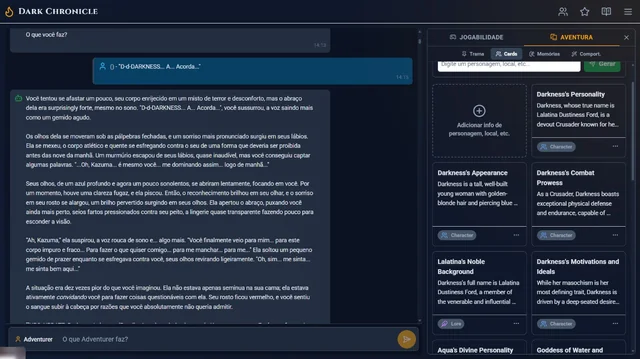
What Happens When an AI Invents, Duplicates, or Loses Items Mid-Campaign?
When an AI invents, duplicates, or loses items, the campaign’s causal chain snaps, and later scenes become fan fiction about a world that no longer exists. The failure modes are predictable once you know whether the narrator is also the ledger.
Loss. Summarization drops the list. The model still “remembers you were searching the cellar,” but not that cellar-3 is in your boot. This is the LeanMem problem: lists are high-fidelity records treated as if they were mood.
Duplication. The model re-grants a unique item because the reward beat was locally dramatic. Enforcement failed. A structured store would have seen unique:true and refused.
Invention. An NPC or a retrieved memory injects an object you never took. In agent-security terms that is adjacent to memory poisoning: untrusted text becomes tomorrow’s fact. In game terms it is a forged warrant.
Contradiction. You sold the grey mare; a later travel scene puts you in the saddle. Creation OS’s item probe is designed to catch exactly this seam between fluent callback and durable state.
Correction protocol that works in play:
- Stop the scene with one out-of-character line naming the true ledger.
- Require the next narration to obey that ledger before anyone speaks in character.
- If the tool supports cards, objects, or SQL, write the correction there — not only in chat.
- If the same class of error repeats, the architecture is wrong for inventory-heavy play. Switch to a state-outside-the-model tool rather than arguing with a summary.
Jenova campaigns can accept that correction and keep going because history is retained. They will not magically grow a grid UI. Players who want zero-trust loot should pair Game Designer Assistant’s item schema with ruthless corrections, or choose a database-backed engine such as RoleForge if they have access.
What Do Game Designers Say About Persistent Inventory in AI RPGs?
Game designers treating AI campaigns as products, not demos, now talk about inventory as state integrity — not as a memory feature to advertise. The consensus is that the narrator may describe the pack, but should not be the only place the pack exists.
"The first scene of an AI RPG is cheap. Inventory is where you find out whether you shipped a campaign or a paragraph generator. If a unique item is only a clause in last Tuesday’s summary, you do not have loot. You have a vibe that will fail the first time the player tries to sell it, plant it, or get caught with it. We treat named objects as records: owner, location, last state change. The prose has to read those records. It does not get to rewrite them because a shop scene would be prettier with a second copy of the relic."
"The other mistake is assuming a larger context window ends the problem. Windows move. Session breaks delete them. Players also switch devices. Cross-session memory is the minimum bar; enforcement is the bar that matters. A harbourmaster who is still owed forty coins after a week away is a ruleset. A harbourmaster who forgets because the model wanted a clean greeting is a slot machine. Builders who let the LLM both narrate and commit inventory are volunteering for lost keys, duplicate swords, and the occasional invented warrant."
"Security research is catching up to what dungeon masters already knew. If untrusted dialogue can write long-term memory, an NPC can poison the ledger. That is why we want typed stores and player-visible corrections instead of a single hidden summary. The player should be able to ask for the list and get the list — not a cinematic montage of 'your gear.'"
— Jenova Product Team, designers of persistent AI campaign agents
References
- LeanMem: Simple and Efficient Long-Term Memory for LLM Agents — context-window limits and list/fidelity findings
- Creation OS — AI RPG memory test (grudge, item, debt) and tool-by-tool state models
- Arcanum RPGs — Best AI Roleplay Platforms in 2026 (Voyage, Craft, RoleForge, AI Dungeon, Tidefall, WyrdTale, Infinity DM)
- Wilds AI — AI Dungeon alternative comparison
- AI Dungeon on X — memory and summarization system spanning thousands of actions
- Ars Technica — AI Dungeon 2 contextual memory evaluation
- Hugging Face Forums — designing memory systems for long-running AI agents
- Securing LLM-Agent Long-Term Memory Against Poisoning — persistent memory as default capability and laundering results
- horizonfps/project-lunar — AI RPG engine with persistent memory
- Mana — Best AI Roleplay Platforms in 2026 comparison set
- OpenAI Developer Community — long-form fictional roleplay environments as evaluation sandboxes
- Hacker News — early AI Dungeon context-window limits