Breakup Story Game: Direct AI Heartbreak & Recovery Stories
2026-09-02
Roleplay Game Master helps you run a breakup story game by turning one fracture—a text, a dinner, a letter—into scenes where both people stay in character, remember the last fight, and live with the consequences. While most heartbreak apps lock you into a handful of illustrated paths, this AI writes original aftermaths on demand: the confrontation, the silent apartment, the group-chat fallout, the slow rebuild. In September 2026, that is what a breakup story game should do—play your split, not a catalog title.
✅ Unlimited memory so the ex never “forgets” why it ended ✅ Any pairing, any tone: messy, funny, bitter, or hopeful ✅ Episode-style aftermath you can pause and resume ✅ Same story on web, iPhone, and Android
To understand why this matters, look at how romance games treat the ending. Most interactive love stories are built to get two people together. A breakup story game has to stay interesting after the couple is already over—and that is a harder narrative problem than the first kiss.
Quick Answer: What Is a Breakup Story Game?
A breakup story game is an interactive narrative that lets you play a relationship’s collapse and aftermath, with choices that change the fight, the silence, and the recovery. With AI, those scenes are original—not a finite tree of pre-written heartbreak episodes.
Key capabilities:
- Persistent memory so secrets, grudges, and unfinished apologies carry forward
- Open-ended premises: the dinner that went wrong, the letter, the slow fade, the public split
- Episode pacing with confrontation, fallout, and the first ordinary morning after
- A path from fiction into real next steps with Dating App Advisor when you are ready to date again—not while the scene is still mid-fight
The Problem With Scripted Breakup Story Games
Interactive romance is no longer a niche. The [**global interactive fiction market was valued at $6.4 billion in 2025**](https://dataintelo.com/report/interactive-fiction-market) and is projected to reach $14.8 billion by 2034. Mobile already accounts for about 41.2% of that revenue—exactly where short, emotional, choice-driven sessions thrive.
1.4 billion — People worldwide who engaged with some form of interactive narrative in 2025
Breakups are also one of the most searched, most replayed human plots. HelpGuide notes that a breakup or divorce can be intensely painful, and people look for language, rehearsal, and a way to make sense of what happened. Research on post-relationship change even finds that some people later report feeling more self-confident, independent, and emotionally stable once the acute period passes.
But getting a good breakup story game is still frustratingly difficult:
- Pre-written apps run out of branches, then gate the next scene behind a paywall
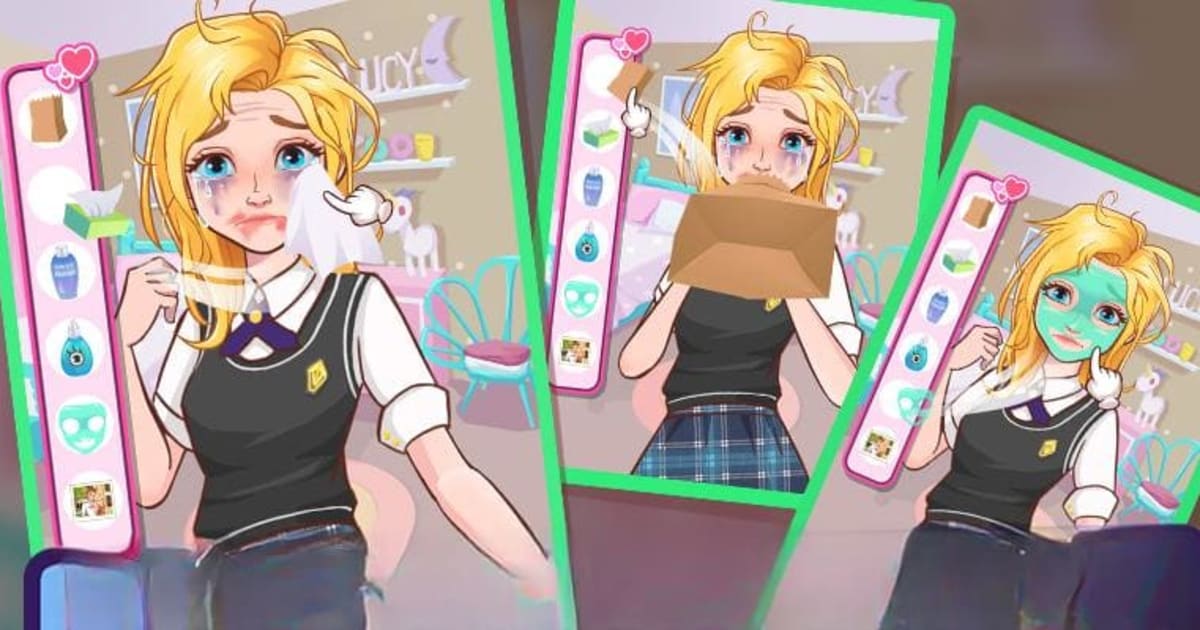
- Illustrated “heartbreak nightmare” titles give you outfits and tears, not a new couple from a one-line premise
- Generic chatbots flatten both exes into the same voice, or rush to comfort instead of staying in the fight
- Romance systems in games are built for courtship, not for the weeks after the split
Those gaps are structural, not cosmetic. Game studies research on digital romance shows that many titles treat love as a courtship arc that climaxes when feelings are admitted—then the relationship is “won.” Aftermath, boredom, resentment, and the first grocery run alone are rarely the design center. Players who want a breakup story game are asking for the part most romance systems skip.
Demand for inhabitable stories is real. Episode Interactive reported more than 20 million monthly active users, and the broader interactive story apps market was valued at $7.8 billion in 2025. People will sit with a painful scene if it feels specific. They will not stay for a character who forgets the lie from last night.
People are also bringing heartbreak to AI whether designers plan for it or not. A Harvard Business Review analysis found therapy and companionship among the top reasons people use generative AI. That is not a reason to confuse a story tool with clinical care. It is a reason the fiction has to hold: if the “ex” only validates you, the breakup never becomes a story. It becomes a comfort loop.
This is exactly what Roleplay Game Master was built for.
Why Roleplay Game Master
Roleplay Game Master is a standalone breakup story game: you set who split, why it still hurts, and what is not allowed to happen yet, then play the aftermath scene by scene. It does not hand you a twelve-episode “get over him” script. It writes the next hour from everything that already happened.
| Traditional Approach | Roleplay Game Master |
|---|---|
| Finite branches written months ago | Original scenes generated from your split |
| Characters reset or contradict canon | Unlimited memory and distinct voices |
| Paywalled diamonds / extra tears | Continuous story you can pause and resume |
| One art style, one pairing, one ending | Any couple, any tone, any recovery pace |
| Menu taps instead of real dialogue | Natural-language direction of both people |
That difference matters because branching narrative used to be expensive to produce. Generative narrative engines cut interactive-fiction production costs by an estimated 45% between 2022 and 2025. The result is not only cheaper apps. It is the first time you can commission a private heartbreak—your dinner, your letter, your silent rides home—and actually get one.
Characters who remember why it ended
A breakup only feels real if last week’s argument still has weight. This simulator keeps both people’s voices, secrets, and unfinished business in play. If she never sent the text, he still has not read it. If he lied about the job, that lie is still in the room until you decide it surfaces.
You direct the fight and the morning after
You can play one side, both, or a narrator who watches the gap between what they say and what they mean. Ask for close-third on the person who cannot cry yet. Specify no-contact, messy contact, mutual, or blindsided. The story follows the constraint, not a hidden “they get back together in episode six” default.
Episode rhythm, not endless venting
Breakup story games work when a scene has a buttoned opening, a turn, and a last image you can carry around. You can demand that structure:
"Write Episode 3 as an 800-word scene in the restaurant. They do not break up until the check arrives. Keep both voices. No inner-monologue dump. End on the moment she realizes he already packed."
If those episodes later want a tighter vertical cut—hook, turn, paywall-aware last line—Microdrama Screenwriter is the next desk. Same split. Sharper cliffhangers.
Recovery is playable, not automatic
A breakup story game that only does the scream is incomplete. You can also play the self-care night, the first wedding invite, the box of hoodies, the joke that still lands. State the rule: no rebound in chapter one, or no reconciliation at all. The simulator should earn any softness.
Try a first move like this:
"We are at a candlelit dinner. I already know. He thinks this is our anniversary. Slow, not shouty. I am the one who ends it. He gets angry, then small. Closed-door. No getting back together tonight."
Or this, if you want the aftermath:
"Two weeks after. Shared apartment, separate bedrooms. She finds the letter he never sent. Play both POVs. She does not cry on camera. He does, in the hallway, after she leaves for work."
Related Agents You'll Also Find Useful
If the breakup story game is the rehearsal room, these agents pick up the next hour of real life—or the next draft.
Personal Therapist
When the scene stops being fun and starts being a loop, Personal Therapist is built for support, honesty, and evidence-based coping—not for playing your ex. Use it to name the pattern, not to keep arguing with a fictional one.
- Empathetic, direct conversation when you need a person-shaped sounding board
- Accountability if you are stuck rereading the same night
- A clear line: story play is not a substitute for licensed care when grief or safety is at stake
Dating App Advisor
When you are actually ready to be seen again, Dating App Advisor treats profiles, openers, and first-date talk as skills—not as a sequel to the heartbreak plot.
- Honest profile critique instead of “just be yourself” slogans
- Conversation practice that does not impersonate your ex
- First-date strategy when the goal is a real evening, not another scene
Date Planner
Chemistry on the page is not a reservation. Date Planner builds intent-driven plans—venue psychology, local options, backups—when you want the next night to belong to someone new.
- Situation-specific plans, not generic “get coffee” lists
- Contingencies when nerves, timing, or weather intervene
- A clean break from the fictional restaurant where the last story ended
Microdrama Screenwriter
If your breakup story game sessions already feel like a season, this is the production pass. Microdrama Screenwriter specializes in 60–100 snackable episodes: hooks, turns, and last lines that play on a phone.
- Season architecture for short-form heartbreak
- Dialogue that survives a vertical frame
- Continuity across a long episode count
Try Roleplay Game Master free — no credit card required.
How It Works
Step 1: Name the split and the rules Open a session and state who they were, who ended it, heat level, and hard limits. Specificity is what keeps the first scene from sounding like every other “we need to talk” montage.
"Contemporary. Dual POV. Nora (29, architect, avoidant) ended it. Eli (31, teacher, anxious) did not see it coming. Shared lease, one cat, no cheating. No reunion in the first four episodes. Witty when it hurts, never cruel for sport."
Step 2: Play the scene, then steer Read the opening, then direct like a showrunner. Ask for a tighter close-up, a cut to the other person, or a consequence you did not expect. This AI storyteller will keep both voices distinct if you insist on it.
"Stay in Eli’s POV. She says it between the salad and the entrée. Do not let him perform. End the scene when the waiter asks if they want dessert."
Step 3: Lock canon as you go When a detail is load-bearing—the voicemail, the other person, who keeps the apartment—say so. Memory is unlimited, but you are still the continuity editor.
"Canon: There was no affair. Nora let him believe there might be because leaving for ‘we grew apart’ felt worse. Eli still does not know that."
Step 4: Continue as episodes Treat each session like a numbered installment. Ask for a recap line, a cold open, and a last-image hook. Come back tomorrow; they are still mid-lease, mid-silence, mid-season.
"Episode 6 cold open: the self-care night. Face mask, group chat on mute, the letter on the dresser. She does not open it until the last paragraph."
Step 5: Decide what leaves the page If the story is working, keep playing. If you need coping tools, a profile rewrite, or a first-date plan, take the next step with a different agent. The breakup story game is the rehearsal. The rest is life.
Results & Use Cases
📊 Play the night it actually ended
Scenario: You want the restaurant fight—the crossed arms, the uneaten food, the moment someone decides—but every app’s breakup is the same montage with different hair.
Traditional Approach: Replay a visual novel until you unlock the “sad ending,” or write the fic yourself and stall because both voices sound like you.
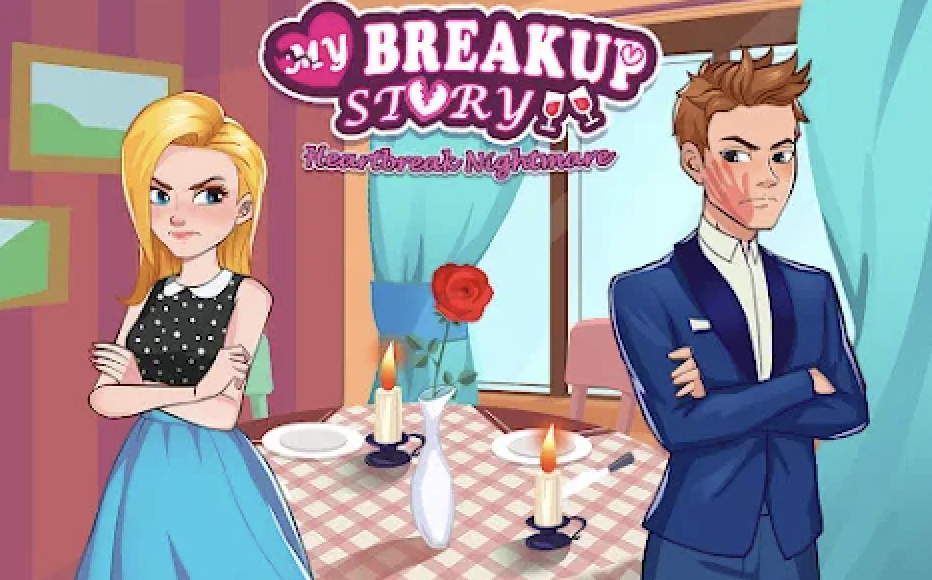
Roleplay Game Master: You set the anniversary lie, the check, and who speaks first. Each episode inherits the last. The promotional image of a breakup story game many players know—two people at a candlelit table, already done—is the feeling you are after. The difference is that your plot is not someone else’s catalog title.
- Custom pairing instead of a locked route
- A confrontation that can stay ugly without becoming cartoonish
- Continuity without a wiki spreadsheet
💼 Rehearse the talk you keep rewriting
Scenario: You have a real conversation coming—lease, friends, the box of things—and you freeze every time you draft the text.
Traditional Approach: Notes app drafts at 1 a.m. Advice threads that do not know your specific lie.
The simulator, then Personal Therapist if you need the non-fiction pass: Play the talk from both sides. Keep the version that is honest without being theatrical. When you are no longer directing characters and you need coping structure, switch out of the game.
- Multiple takes without sending anything
- Both interiorities, not just the speech you wish you had given
- A boundary between story and support
📱 One episode on the commute
Scenario: You have 15 minutes on the train and want a complete aftermath scene, not a feed of other people’s heartbreak.
Traditional Approach: Open a story app, hit a paywall three taps before the letter is read, and close the phone.
Roleplay Game Master: Same session on iPhone or Android as on desktop. Ask for a single-scene episode—tissue, letter, face mask, done—with a last line you can think about until the next stop.
- Full feature parity across web, iOS, and Android
- Story state that follows you between devices
- Scene length you specify (“700 words, one room”)
🎯 Turn the split into a season you control
Scenario: The breakup is too good (or too awful) not to serialize, but you do not want a 110-page feature yet.
Traditional Approach: Outline in a vacuum, then discover in episode 12 that nobody remembers who kept the cat.
Microdrama Screenwriter: After you have improvised the fight and the first week, hand the pairing to a vertical-season pass: hooks, mid-episode turns, last-image cliffhangers. The couple is already proven in play; the structure is next.
- Improvisation first, episode architecture second
- Dialogue already stress-tested in the simulator
- Fewer dead-end drafts
FAQ
What is a breakup story game, exactly?
A breakup story game is interactive fiction about the end of a relationship and what follows. You define the couple, the reason, and the rules; the system writes scenes that respond to your choices. Unlike a finished visual novel, an AI breakup story game can invent a new split from a single prompt and keep that split consistent across episodes.
Is Roleplay Game Master free?
Yes. There is a free tier with core features and limited monthly usage—enough to run a first aftermath, learn the prompting rhythm, and see whether the voices hold. Paid plans increase usage if you are serializing long. No credit card is required to start.
How is this different from Episode-style or illustrated heartbreak apps?
Those apps shine at polished art and pre-authored routes. A breakup story game like Roleplay Game Master shines at unpublished splits: your dinner, your letter, your continuity. You will not get their specific art pipelines. You will get a story that cannot exist in their catalog because nobody has written it yet.
Can I play recovery, not just the fight?
Yes. State it in the first message: no-contact, messy contact, self-care nights, first wedding as someone’s plus-one, the ordinary Tuesday. The quality still depends on conflict and consequence. A recovery with no friction is a montage, not a game.
Does a breakup story game work on mobile?
Yes. Sessions work on web, iOS, and Android with the same story memory. That matters for episode-style play: start the restaurant scene at a desk, finish the hallway fallout on your phone. Speech-to-text is available if you would rather dictate stage directions than type them on a commute.
Is playing a breakup story the same as therapy?
No. Interactive fiction can help you hear both sides and find language. It is not clinical treatment. If grief, safety, or looping distress is the real problem, use Personal Therapist as a support layer—and licensed care when you need it. Psychologists have warned that companion-style tools often optimize for validation, which is the opposite of a useful breakup scene.
Conclusion
Pre-written romance apps proved that millions of people want to steer a relationship, not only watch one. They also proved the ceiling: finite branches, forgotten canon, and a love story that ends when the couple finally admits it. A breakup story game removes that ceiling. You bring the split; Roleplay Game Master writes the next scene as if the relationship already has a history—because, after episode one, it does.
If you have a dinner that still will not leave your head, start there. If the aftermath wants structure, cut it into episodes. If you are done playing and need a profile, a date, or a clearer next hour, step out of the fiction on purpose. The through-line is the same: interactive heartbreak you actually direct.
Try Roleplay Game Master now. Explore more at Jenova.
For Developers: Roleplay Game Master is available programmatically via the Jenova API — integrate persistent, choice-driven breakup story gameplay into your application with a single API call. Full documentation →