Best AI Webtoon Creator: Produce Scroll-Optimized Episodes With Consistent Characters (June 2026)
2026-06-18
Webtoon Creator turns your story ideas into professional, scroll-optimized webtoon episodes — full-color vertical panels, consistent character designs, mobile-first pacing, and platform-ready exports — all through natural conversation, no drawing skills required. While the global webtoon market is surging past $14 billion in 2026 and vertical scroll has become the dominant format for digital comics worldwide, producing an actual serialized webtoon still demands a punishing combination of writing, illustration, coloring, layout, and platform formatting that burns out even professional creators. This AI handles the complete episode pipeline from concept to publishable scroll strip, in any genre you choose.
✅ Vertical scroll mastery: thumb-stop moments, panel width variation, scroll rhythm pacing, and mobile-first composition ✅ Character consistency locked across hundreds of episodes — the defining failure point of every other AI tool, solved ✅ Six professional art style templates matched to major webtoon genres: Romance/Drama, Action/Fantasy, Horror/Thriller, Comedy, Slice-of-Life, and Stylized ✅ Platform-ready exports for LINE Webtoon, Tapas, Lezhin, and more — with persistent memory tracking your project across sessions
The webtoon industry is experiencing the fastest growth of any entertainment format on the planet, and AI is rewriting who gets to participate. To understand why a purpose-built webtoon agent matters right now, let's look at what's happening in 2026.
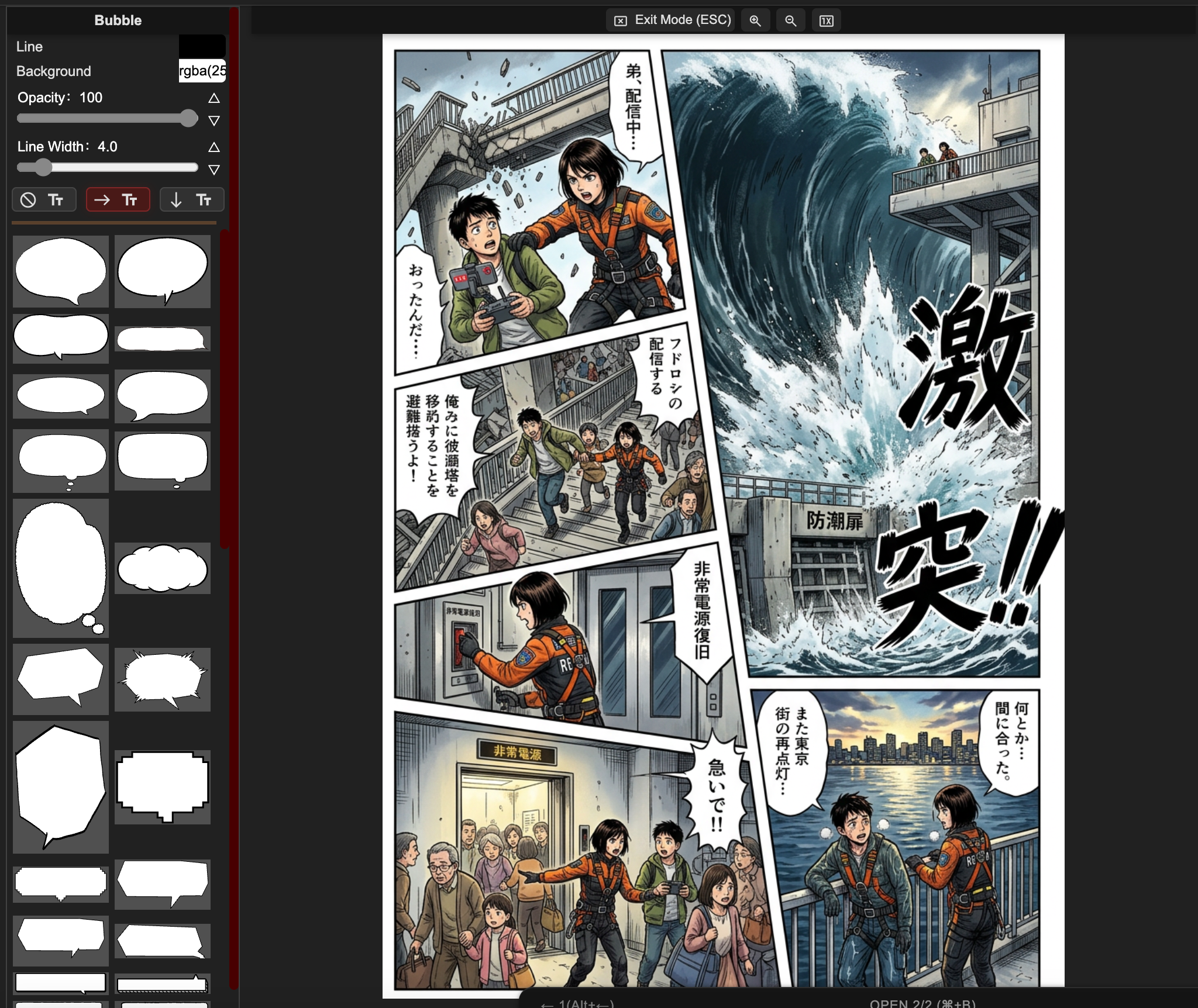
Quick Answer: What Is Webtoon Creator?
Webtoon Creator is an AI-powered vertical scroll storytelling agent that generates complete webtoon episodes — from character design and script to full-color, scroll-optimized panels — through natural conversation.
Key capabilities:
- Beat-by-beat episode generation with scroll rhythm mapping, thumb-stop placement, and vertical pacing
- Consistent character rendering maintained across episodes, seasons, and sessions — anchored by reference sheet architecture
- Six genre-matched art style templates: Romance/Drama, Action/Fantasy, Horror/Thriller, Comedy/Gag, Slice-of-Life, and Stylized/Artistic
- Platform-specific export presets for LINE Webtoon Canvas, Tapas, Lezhin, and general multi-platform use
- Full serialization support from short series to 100+ episode sagas with persistent creative memory
The Problem: The Webtoon Market Is Exploding — But Creating Webtoons Destroys People
Webtoons have become the fastest-growing storytelling format in the world. The audience is massive, the platforms are desperate for content, and the cross-media pipeline (webtoon → anime → live-action → merch) has turned vertical scroll comics into the most valuable IP incubator in entertainment. But the human cost of producing them is staggering.
**$14.44 billion** — [Global webtoon market size in 2026, projected to reach $60.25 billion by 2031 at 33.1% CAGR](https://www.mordorintelligence.com/industry-reports/webtoons-market)
**$8.76 billion** — [Global webcomics market projected for 2026, reaching $14.73 billion by 2034](https://www.fortunebusinessinsights.com/webcomics-market-105731)
74.2% of webtoon reading time — Occurs on mobile phones, making vertical scroll optimization essential for every creator
But creating webtoons — real, serialized, full-color, weekly webtoons — is one of the most punishing creative workflows in any medium:
-
The production workload is physically unsustainable. Every episode requires writing, storyboarding, penciling, inking, coloring, lettering, and formatting — all in full color, every week. Research has documented that webtoon creators are four times as likely to be depressed as the general population, with chronic sleep deprivation and burnout endemic to the industry.
-
Vertical scroll is a completely different storytelling grammar. Webtoons aren't just comics rotated 90 degrees. Panel width variation affects emotional impact. Vertical white space controls pacing. "Thumb stop" moments must be strategically placed to make readers naturally pause mid-scroll. As MediBang Paint's tutorial notes, vertical scrolling comics are "vulnerable to horizontal movement" — making action scenes particularly challenging. Most artists trained in traditional page-based comics struggle to master this format.
-
Existing AI tools produce isolated images, not episodes. Tools like Midjourney generate beautiful single panels, but as comprehensive 2026 testing confirms, "Midjourney is not built for sequential storytelling" — it produces excellent single images but offers no character consistency across panels, no vertical layout tools, and no scroll pacing. You'd still need to assemble everything manually in separate software.
-
Character consistency collapses across episodes. The #1 frustration in AI-assisted webtoons: characters who look different in every panel. Most tools require complex technical workarounds — LoRA fine-tuning, reference URLs, model training — that writers and storytellers don't have the skills to execute. As Comistitch's 2026 ranking notes, the "biggest shift" in 2026 has been face-consistency technology finally becoming production-ready, but it remains locked inside technical pipelines most creators can't access.
The Creator Economy Paradox
The demand side is overwhelming. The U.S. webtoon market alone reached $2.9 billion in 2025 and is projected to hit $25 billion by 2034. Netflix adaptations of webtoons like Sweet Home and All of Us Are Dead have tripled readership within eight weeks of trailer drops. Individual creators represent a growing share of the market — but they're competing against Korean studios with 10-person production teams while working alone on their phones.
The audience is there. The platforms are there. The monetization is there. What's missing is a creation tool that handles the full episode pipeline without requiring either artistic mastery or a production staff.
This is exactly what Webtoon Creator was built for.
Why Webtoon Creator
Unlike image generators that produce disconnected panels or comic tools designed for page-based formats, Webtoon Creator is purpose-built for vertical scroll storytelling. It understands webtoons as a distinct medium with its own grammar — scroll rhythm, thumb stops, panel width modulation, and mobile-first composition — and builds episodes with these mechanics as foundational elements, not afterthoughts.
| Traditional Approach | Webtoon Creator |
|---|---|
| 10-person studio teams spending 7-10 days per episode at production costs of $700-$8,000+ | Free to start, full episode production from day one with no per-episode fees |
| Years mastering vertical scroll techniques, full-color illustration, and digital formatting | Produce professional-quality episodes through natural language conversation |
| Use Midjourney for panels + Photoshop for layout + Clip Studio for lettering — 3+ tools minimum | Complete concept-to-export pipeline in a single agent |
| Characters drift between panels and episodes — the #1 complaint across AI comic tools | Reference sheet architecture locks character designs from first creation |
| Manual formatting for each platform's specifications (800px wide for WEBTOON, 940px for Tapas) | Built-in export presets for LINE Webtoon Canvas, Tapas, Lezhin, and multi-platform |
Scroll Rhythm Intelligence
Webtoon Creator doesn't just stack panels vertically — it paces the scroll. It understands how vertical white space functions as a storytelling tool: small gaps (50-100px) for quick continuation within the same moment, medium gaps (150-300px) for scene breaths, and large gaps (400px+) for dramatic pauses, revelations, and time skips. It plans 2-3 "thumb stop" moments per episode — strategic full-width impact panels placed at key emotional beats that make readers naturally pause mid-scroll.
"Episode 3 opening: Start with a slow scroll — large vertical gap, then a narrow panel showing just the protagonist's phone screen with an unread message. Medium gap. Standard-width panel of her staring at the ceiling. Then hit them with a full-width panel: the message notification disappears — he deleted it before she could read it. I want that to be the first thumb stop."
Character Consistency Through Reference Architecture
Before generating a single story beat, Webtoon Creator establishes your visual foundation: character reference sheets showing each character in neutral poses with labeled features, a style exemplar strip that locks your visual language, and a color palette reference for project-wide consistency. These references load with every subsequent generation, ensuring your protagonist looks identical in Episode 1 and Episode 100.
"Design the female lead: Seo-yeon Park, 22, Korean, heart-shaped face, large warm brown eyes, shoulder-length black hair with a single auburn-highlighted strand that falls across her right eye. She wears oversized cardigans in muted earth tones and always has a fabric tote bag with a small cat pin. Her default expression is quietly observant — she watches more than she speaks."
Six Genre-Matched Art Style Templates
Each webtoon genre has distinct visual conventions that readers recognize within seconds of scrolling. Webtoon Creator matches its entire art direction to your chosen template:
- Romance/Drama: Soft cel-shading, pastel palettes, sparkle effects, atmospheric lighting for emotional close-ups
- Action/Fantasy: Bold colors, dynamic effects, dramatic lighting, high-contrast impact panels
- Horror/Thriller: High contrast, desaturated palettes, atmospheric shadows, unsettling negative space
- Comedy/Gag: Simplified designs, exaggerated expressions, bright colors, quick visual punchlines
- Slice-of-Life: Warm colors, cozy atmosphere, gentle expressions, soft environmental detail
- Stylized/Artistic: Unique personal style — painterly, sketchy, minimalist, or experimental
"I want the Romance/Drama template but with a slight melancholy edge — think the color grading of a rainy day even in sunny scenes. Desaturate the backgrounds slightly so the characters always feel like they're the warmest thing in any panel."
Related Agents You'll Also Find Useful
If you're building a webtoon project, these agents handle the creative workflows that surround vertical scroll production:
Manga Creator
If your project targets traditional manga conventions — right-to-left reading order, black-and-white screentone shading, page-based layouts, and Japanese panel flow — this dedicated mangaka agent is built for the format. Where Webtoon Creator specializes in full-color vertical scroll, Manga Creator handles the print-native conventions of Japanese sequential art.
- Right-to-left panel flow with traditional manga page architecture
- Screentone application, speed lines, and genre-specific visual effects
- One-shots to 200+ page serialized epics with character consistency
Creative Fiction Writer
The script determines everything — pacing, dialogue rhythm, cliffhanger timing, episode structure. Before a single panel is generated, you need a narrative engineered for the vertical scroll format's unique demands. This agent develops original fiction with editorial insight, giving you a polished script designed for visual adaptation.
- Episode structure with hook-driven openings and cliffhanger endings
- Character voice consistency across dialogue-heavy webtoon formats
- Genre expertise across romance, fantasy, thriller, comedy, and literary fiction
Comic Creator
If your project targets Western comic conventions — left-to-right reading, page-based layouts, American superhero dynamics, European ligne claire, or indie graphic novel aesthetics — this agent covers the full spectrum of non-webtoon sequential storytelling. Useful if you're adapting your webtoon story into a print format or working across both mediums simultaneously.
- Left-to-right panel flow with Western page composition
- Full-color rendering across superhero, noir, sci-fi, horror, and indie styles
- Single issues to graphic novel sagas with persistent character models
Graphic Designer
For thumbnail art, promotional banners, social media assets, and the branding layer that turns a webtoon into a discoverable product on crowded platforms. Your episode content is only half the battle — the packaging determines whether readers click.
- Webtoon thumbnail design optimized for platform browse pages
- Social media promotional assets and banner art
- Brand identity systems for webtoon series
How It Works
Step 1: Set Up Your Project and Characters
Start by establishing your webtoon's foundation: title, genre, tone, target episode count, episode length, and your core cast. Describe your characters with enough detail for the agent to build locked reference sheets — physical features, clothing defaults, personality-driven body language, and signature visual details. This becomes the creative bible that persists across your entire series.
"I'm creating a romance/thriller webtoon called 'Red Thread.' Set in modern-day Seoul — a barista discovers she can see invisible red threads connecting people who are fated to meet, but some threads are black, and the people connected by black threads always die within 72 hours. Art style: Romance/Drama template with Horror/Thriller lighting for the black-thread scenes. 60 episodes planned, 40-50 panels per episode."
Step 2: Choose Your Style and Build References
Select from six art style templates and customize the visual direction. Webtoon Creator generates your reference materials before any story beats: character reference sheets in neutral poses with labeled features, a style exemplar strip establishing your visual language, and a locked color palette. These references anchor every panel that follows.
"Main character: Ji-woo Kang, 24, gentle face with tired eyes, messy bun with loose strands, always wears the café's brown apron over casual clothes. When she sees the threads, her eyes glow faintly amber — I want that to be subtle in early episodes and more pronounced as the story progresses."
Step 3: Plan and Generate Episodes
Feed your story episode by episode. For each episode, Webtoon Creator builds a structured plan: episode outline (beginning, middle, end, cliffhanger hook), beat breakdown (5-10 panel sequences), and scroll rhythm mapping with thumb-stop placement. Then it generates panels beat by beat, maintaining character consistency and scroll flow throughout.
"Episode 1: Ji-woo's normal morning — opening her café, making coffee, interacting with regulars. Everything is warm and ordinary. Then a customer walks in and she sees it for the first time — a glowing red thread extending from his hand, leading out the door. End on her frozen expression, coffee overflowing the cup she forgot she was pouring."
Step 4: Refine and Iterate
Review generated panels and iterate — adjust framing, change expressions, modify backgrounds, shift scroll pacing, or restructure the beat sequence. Every refinement builds on the established style and character references. The agent maintains your creative direction while incorporating your feedback.
"The reveal panel where she first sees the thread needs more impact. Make it a full-width panel with the warm café colors suddenly shifting cooler — like the ambient temperature just dropped. And I want the thread itself to feel almost alive, slightly luminous, not just a flat line."
Step 5: Serialize Across Episodes and Seasons
With persistent memory, Webtoon Creator maintains your characters, settings, art direction, color palette, and narrative context across sessions. Return days or weeks later to continue your series — the agent remembers Ji-woo's tired eyes, the exact amber glow of her thread-sight, and the visual language you established for the café versus the outdoor scenes.
"Let's start Episode 15. The mid-season turn — Ji-woo sees her first black thread, connecting two people in the café. Same characters, same style, but the mood shifts hard. I want the Horror/Thriller lighting to start bleeding into our Romance/Drama palette — not replacing it, mixing with it. The café should feel slightly wrong."

Results & Use Cases
📱 Solo Creator Launching a Romance Webtoon on WEBTOON Canvas
Scenario: A college student in the Philippines has a 60-episode romance story outlined — enemies-to-lovers set in a university music program — but can't draw beyond rough storyboard sketches. Art school is years away, and commissioning even a short run would cost more than tuition.
Traditional Approach: Post on collaboration forums hoping to find an artist willing to work for revenue share (most decline), or shelve the project indefinitely and watch the story idea age out of relevance.
Webtoon Creator: Translates the complete story into full-color, scroll-optimized episodes with the Romance/Drama template — soft cel-shading, sparkle effects for romantic beats, character consistency maintained from Episode 1 through Episode 60, and export-ready formatting for WEBTOON Canvas specifications.
- Character designs locked from the pilot episode and maintained across 60 episodes of outfit changes, hairstyle updates, and seasonal shifts
- Scroll rhythm calibrated for romance pacing: slow scroll for longing scenes, rapid-fire panels for comedic bickering, full-width thumb stops for kiss scenes
- WEBTOON Canvas export presets (800px wide, 1280px max per slice) — upload-ready without additional formatting
💼 Marketing Team Producing a Branded Webtoon Campaign
Scenario: A skincare brand wants to launch a 6-episode branded webtoon series following a character's skincare journey — educational content disguised as engaging storytelling for their Gen Z audience on Instagram and LINE Webtoon. The marketing budget doesn't allocate $30,000+ for a studio commission.
Traditional Approach: Brief a creative agency, wait 4-6 weeks for concepts and revisions, pay premium rates for commercial illustration, and manage a complex approval pipeline.
Webtoon Creator: Produces brand-aligned webtoon episodes that weave product education into compelling character-driven narrative — matching the brand's color palette, incorporating product visuals in natural story contexts, and delivering scroll-optimized content for both platform publication and social media cropping.
- Brand color palette locked across all episodes for visual consistency with existing marketing assets
- Product integration that feels narrative rather than promotional — characters use products in realistic daily scenarios
- Dual-format output: vertical scroll for webtoon platforms and cropped panel sets for Instagram carousels
📊 Aspiring Creator Testing a Concept Before Full Production
Scenario: A screenwriter has three different webtoon concepts and wants to test which resonates with audiences before committing to a full series. Creating pilot episodes for three different series through traditional methods would cost $6,000-$24,000 minimum.
Traditional Approach: Write prose summaries and hope readers can imagine the visual execution, or invest heavily in one concept and risk discovering the audience isn't there.
Webtoon Creator: Produces 3-5 episode pilot runs for each concept — different art styles, different tones, different character designs — allowing the creator to publish test runs on WEBTOON Canvas and Tapas, gauge reader response with real visual content, and commit resources to the concept with proven traction.
- Three distinct visual identities developed simultaneously with separate reference sheets
- Pilot episodes polished enough for real audience testing, not just rough concepts
- Data-informed decision: commit to the series readers actually engage with
🎯 Established Webtoon Creator Scaling Production Without Burnout
Scenario: A webtoon artist with 50,000 subscribers on Tapas is producing one episode per week manually — 60+ hours of drawing, coloring, and formatting. They're approaching burnout and considering hiatus, which would risk losing their audience momentum.
Traditional Approach: Hire an assistant ($2,000-$4,000/month), reduce episode quality, or go on hiatus and hope readers return.
Webtoon Creator: Handles the production-heavy pipeline — background generation, color fills, panel formatting, and platform exports — while the creator focuses on story direction, character expression refinement, and the creative decisions that define their series' identity. Production time per episode drops dramatically without sacrificing the visual quality their audience expects.
- Background and environment generation that matches the creator's established art direction
- Consistent coloring and formatting that eliminates the most time-consuming production steps
- Sustainable weekly schedule without sacrificing sleep, health, or creative quality
FAQ
Is Webtoon Creator free to use?
Yes. You can start creating webtoons with Webtoon Creator immediately on Jenova's free tier — no credit card, no trial expiration. Free users get full access to the agent's capabilities with limited usage; paid tiers increase how much you can create per month. Generated content on paid tiers has no watermark.
How is Webtoon Creator different from Midjourney or other AI image generators?
Image generators like Midjourney produce individual illustrations but are not built for sequential storytelling — no character consistency across panels, no vertical scroll layout, no scroll rhythm pacing, and no platform-specific exports. Webtoon Creator handles the complete episode pipeline: reference sheet creation, beat-by-beat generation with scroll rhythm mapping, character consistency across hundreds of panels, and export-ready formatting for WEBTOON, Tapas, and Lezhin — all in one conversation.
Can it maintain character consistency across a long-running series?
Character consistency is the agent's core capability. The reference sheet architecture — character sheets, style exemplars, and locked color palettes — ensures characters look identical from Episode 1 to Episode 100+. Persistent memory means you can return weeks later and your characters, settings, and art direction are exactly as established. This directly solves what industry testing has identified as the defining challenge of AI-assisted comics.
What webtoon platforms does it export for?
Built-in presets for LINE Webtoon Canvas (800px wide, 1280px max per slice), Tapas (940px wide, flexible height), Lezhin (longer episode formats), and general multi-platform use. The Graphic Designer agent can also help create platform-optimized thumbnail art and promotional assets.
Does it work on mobile?
Full feature parity across web, iOS, and Android. Every conversation, character reference, and art direction decision syncs across devices. Start building an episode on your laptop during the weekend and continue refining panels from your phone during a commute — your project state persists seamlessly.
Can I use the webtoons I create commercially?
Jenova never uses your data to train public AI models, and your creations remain yours. For specific commercial use terms, review the terms of service for your subscription tier. Always check each distribution platform's AI content policies before publishing — WEBTOON, Tapas, and other platforms may have their own guidelines regarding AI-assisted content.
Conclusion
The global webtoon market has reached [$14.44 billion in 2026](https://www.mordorintelligence.com/industry-reports/webtoons-market) and is accelerating toward $60 billion by 2031. The U.S. market alone is projected to grow from $2.9 billion to $25 billion by 2034. Netflix adaptations are tripling readership overnight. The platforms, the audience, the monetization, and the cross-media pipeline are all in place. What's been missing is a creation tool that lets storytellers actually produce webtoons — not generate disconnected images and manually assemble them in three different apps.
Webtoon Creator closes that gap. From character reference sheets and scroll rhythm mapping to beat-by-beat episode generation and platform-ready exports, it handles the full vertical scroll production pipeline through natural conversation. Whether you're a solo creator launching your first romance series on WEBTOON Canvas, a marketing team producing branded content, or an established artist fighting burnout, the barrier between your story and a published episode is now a conversation.
Try Webtoon Creator now — free, no credit card required. Explore the full agent library at Jenova.