Generated Story: Best AI Tools to Create Complete Stories (May 2026)
2026-05-03
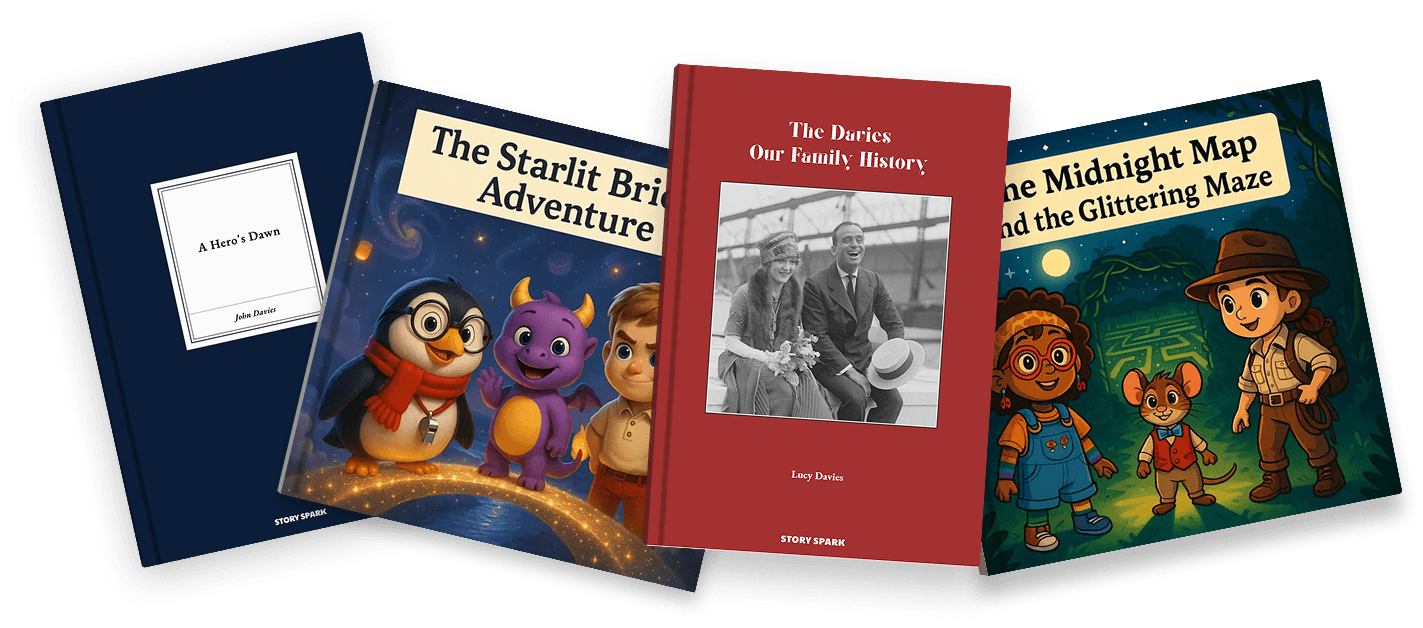
A generated story used to mean something disposable — a paragraph of flat text spit out by a template engine, good for a laugh and nothing else. In May 2026, that definition has been rewritten. The AI writing assistant software market stands at $1.77 billion and is projected to reach $4.88 billion by 2030, the broader generative AI market has hit $86.70 billion globally, and the AI story generator tool category alone is growing at an 8.8% CAGR through 2033. The question is no longer whether AI can generate stories. It's whether AI can generate stories worth reading.
For most tools, the answer is still no. One-click generators produce text that reads like what it is — statistically average prose assembled from patterns, with no understanding of character, structure, or the invisible architecture that turns a sequence of events into something a reader can't put down. The search for "generated story" in 2026 reveals a market flooded with tools that produce volume and starved for tools that produce craft.
The Creative Fiction Writer on Jenova was built to close that gap — not a button that generates disposable paragraphs, but a narrative partner that builds stories with you: persistent memory that tracks every character and plot thread across sessions, multi-model access across GPT-5.4, Claude Opus 4.6, and Gemini 3.1 Pro Preview, three creative modes (Planning, Writing, Critique), and the structural intelligence to produce fiction that reads like it was written by someone who understands what makes stories work.
This guide breaks down what generated stories can actually achieve in May 2026, where the current tools fall short, and how to generate fiction that's structurally sound, emotionally resonant, and genuinely worth a reader's time.
Quick Answer: What Is a Generated Story?
A generated story is a narrative — complete with characters, plot structure, conflict, and resolution — created with the assistance of artificial intelligence from text prompts, ranging from single-scene flash fiction to novel-length projects.
- 📖 Complete narrative creation — concept, characters, structure, and polished prose with the Creative Fiction Writer
- 🧠 Persistent story memory — every character detail, plot thread, and creative decision tracked across unlimited sessions
- 🔄 Three creative modes — Planning (structure), Writing (prose), and Critique (honest editorial feedback)
- 🎭 Multi-model flexibility — switch between GPT-5.4, Claude Opus 4.6, and Gemini 3.1 Pro Preview for different tonal strengths per scene
The Problem: Why Most AI-Generated Stories Aren't Stories at All
The tools exist. The demand is real — 87% of marketers now use generative AI in at least one workflow, up from 51% in 2024, and fiction writers are adopting AI at comparable rates. But the gap between "generating text" and "generating stories" remains the central unsolved problem in AI writing.
Generated Text ≠ Generated Story
The distinction is structural and non-negotiable. A story has architecture — a character whose desire creates forward motion, obstacles that escalate with causal logic, a transformation that gives the events meaning. Generated text has none of this. It produces sentences that follow each other grammatically but not narratively. As Nelson Ogbonna wrote in his 2026 Medium analysis:
"Generative AI is evolving beyond mimicry into intuition. It can anticipate narrative arcs, suggest emotional beats, and even mimic human cadence in ways that can fool even the most discerning reader. Yet, what it cannot replicate — not yet — is the subtle tremor of lived experience: the tiny, human inconsistencies that make a story linger."
The tools that call themselves "story generators" overwhelmingly produce the mimicry without the architecture. They generate paragraphs that look like fiction and feel like nothing.
The Quality Crisis Is Measurable
The flood of AI-generated content hasn't raised the bar — it's lowered it. A Medium review testing six major AI story writing tools in 2026 found that while tools like Sudowrite could improve existing prose through targeted rewriting, most struggled to generate original fiction with a distinctive voice. The output converges toward a statistically average tone that one reviewer described as "competent but a little safe" — the literary equivalent of elevator music.
SidekickWriter's 2026 analysis crystallized the problem: "simple chatbots are fine for emails, but they fail when you need a cohesive narrative." The tools that generate stories as a side feature of a general-purpose AI produce output that reads like a side feature — functional, forgettable, and structurally flat.
Memory Ceilings Collapse Every Story Over 2,000 Words
A generated story that can't remember its own characters isn't a story — it's a sequence of unrelated scenes wearing the same character names. Metamandrill's comprehensive 2026 comparison stress-tested every major platform and confirmed the field's central limitation:
"NovelAI's 8K context is kind of a joke these days; it forgets my hero's eye color by chapter three." — Reddit user on r/WritingWithAI, cited in Metamandrill
The numbers tell the same story across the board: DreamGen operates within approximately 8K tokens plus a Codex system. AI Dungeon tracks only 2–4K tokens of recent context. Claude offers 100K tokens but requires pasting the entire manuscript into every session rather than maintaining persistent memory automatically. For a generated story to function as a story — where a planted detail in chapter 1 pays off in chapter 8, where a character's lie in scene 3 creates consequences in scene 12 — the AI needs to remember everything, always. Most tools can't.
Paywalls Hit Before You've Found Your Story
Story generation is inherently exploratory. You might draft three openings, two character backstories, and a complete outline before writing page one. Metamandrill's pricing analysis mapped the cost landscape: Sudowrite requires $10/month after a short trial. NovelAI costs $10–$25/month with no free writing tier. Writesonic's unlimited plan starts at $19/month but uses a lower-quality model. DreamGen offers a rare permanent free tier at $8/month for the upgrade, but its 8K token context constrains serious projects. Hitting a paywall during the discovery phase — the most important phase — means paying for the privilege of figuring out what story you're trying to tell.
Why Creative Fiction Writer Generates Stories That Are Actually Worth Reading
This is exactly what the Creative Fiction Writer was built for — not a text generator that produces paragraphs in response to prompts, but a story-generation partner that understands narrative as a discipline with its own architecture, mechanics, and craft.
The difference is structural. Most "story generators" produce prose. The Creative Fiction Writer produces narratives — with character arcs that create forward motion, conflict that escalates with causal logic, voice that feels specific and alive, and memory that holds every detail together from the first sentence to the last. It doesn't just generate stories. It generates stories that function as stories.
While ChatGPT and Gemini produce competent but filtered output, and niche tools like DreamGen and NovelAI offer creative freedom within sharp context limits, the Creative Fiction Writer combines unrestricted creative range, persistent cross-session memory, and frontier-model prose quality in a single conversational workflow.
How It Compares
| Capability | Typical Story Generator | Creative Fiction Writer on Jenova |
|---|---|---|
| Story output | Flat paragraphs or template-based generation | Full narrative collaboration: concept → structure → characters → scenes → polished prose |
| Context memory | 2K–8K tokens; contradicts itself within a single chapter | Persistent cross-session memory; tracks every character, plot thread, and creative decision indefinitely |
| Voice control | Generic, statistically average tone | Adapts to your specified voice — literary, genre, raw, polished, experimental, any register |
| Revision | Regenerate from scratch or accept output | Conversational editing — rework any element without losing everything else |
| Creative modes | Writing only | Three modes: Planning (structure), Writing (prose), Critique (honest editorial feedback) |
| Model access | Single fixed model | GPT-5.4, Claude Opus 4.6, Gemini 3.1 Pro Preview — switch per session for different tonal strengths |
| Research integration | None or separate tool | Built-in research for historical accuracy, cultural context, and setting details |
| Export | Copy-paste | Download as PDF, Word, or TXT directly from the chat |
| Cost to start | Free with sharp limits or paywalled from day one | Free tier with all core features — no credit card required |
What Story Generation Actually Looks Like
The Creative Fiction Writer doesn't produce a finished story on the first prompt. It builds the story with you — concept, voice, structure, and every detail in between. Here's what real story-generation conversations look like:
"I want to generate a story about a lighthouse keeper on a coast where the ocean is slowly retreating. Every year, the water pulls back further, and the lighthouse moves further from usefulness. But she stays. I don't know why she stays yet — that's what the story needs to discover. Help me figure out her reason, and make it something the reader doesn't expect."
"Generate a short story with this constraint: two characters, one room, one hour. A woman is interviewing a man for a job. By the end of the interview, the reader should realize she was never going to hire him — she brought him in because he's the last person who saw her brother alive. The reveal should arrive through subtext, not exposition. The reader should piece it together before the characters acknowledge it."
"I need a generated story for a middle-grade audience — 3,000 words. A kid discovers that the neighborhood cat has been leaving objects on their doorstep — but the objects are from the future. Small things at first (a coin with next year's date), then bigger things (a photograph of the kid's family with a person they've never met). The tone should balance wonder with genuine unease. The ending should be ambiguous — hopeful if the reader is optimistic, unsettling if they're not."
These aren't prompts for a one-click button. They're the beginning of a creative partnership — and the Creative Fiction Writer responds with the narrative intelligence and tonal precision to match.
Try the Creative Fiction Writer free — no credit card required.
Related Agents You'll Also Like
The Creative Fiction Writer handles the core story generation, but storytelling often extends into adjacent creative workflows. These agents complement the fiction process:
Writing Assistant
When your generated story is ready for the world. The Writing Assistant handles everything around the story — query letters to literary agents, book blurbs that sell without spoiling, platform-specific formatting for Wattpad, AO3, Kindle Vella, or Substack, synopses that capture the emotional core, and author bios that establish credibility. It learns your voice and maintains it across every professional format, making it indispensable for writers moving from generation to publication.
- ✍️ Query letters, synopses, blurbs, and cover copy tailored to your genre
- 🎯 Learns your voice and maintains consistency across professional documents
- 📝 Adapts stories for different platforms: Kindle, Wattpad, AO3, newsletters, blogs
Roleplay Game Master
For writers who generate stories best through immersion rather than outlining. Instead of architecting a plot on paper, step inside the world — inhabit a character, make decisions under pressure, and discover the narrative through lived experience. Metamandrill's 2026 review highlighted interactive AI loops as ideal for discovery writers who brainstorm through action. Where AI Dungeon's free Griffin model operates within 2–4K tokens, the Roleplay Game Master delivers unlimited memory with perfect character consistency across sessions that span months.
- 🎭 Immersive scenario exploration that generates story material organically
- 🧠 Unlimited memory for character and world continuity across hundreds of sessions
- 📖 Export narrative discoveries directly into your manuscript workflow
Manga Creator
Turn your generated story into a visual narrative. As Robotics & Automation News noted, AI story generation and image creation are converging — the Manga Creator bridges that gap, producing complete sequential art with consistent character design and panel flow. From one-shots to 200+ page epics, your generated story becomes a visual experience.
- 🖼️ Consistent character art across scenes and chapters
- 📐 Panel layout optimized for visual narrative pacing
- 📚 Supports everything from single-page experiments to graphic novel–length projects
Film Screenwriter
When your generated story is destined for the screen — or when thinking cinematically helps you write better prose. Screenwriting forces a different discipline: showing emotion through action and dialogue, building tension through scene construction, and conveying meaning through subtext. For fiction writers, generating a scene as a screenplay first can reveal structural problems that prose conceals.
- 🎬 Visual storytelling logic: subtext, scene construction, and dialogue craft
- 🎥 Industry-standard formatting and cinematic pacing
- ✂️ Scene-level structural analysis and restructuring
How It Works: From Blank Page to Generated Story
Here's a step-by-step walkthrough of using the Creative Fiction Writer to generate a story from nothing — or from a fragment, or from a fully formed concept.
Step 1: Start with Whatever You Have
You don't need a premise, a genre, or even a sentence. You need a starting point — and anything qualifies:
"I want to generate a story. I don't have a plot. I have an image: a woman sitting alone at a kitchen table at 3 AM, holding a coffee mug with both hands, staring at a phone that's facedown on the table. Something happened. I don't know what. Help me figure out what happened and why it matters."
The agent responds by exploring the image's emotional landscape — What's she afraid to see on that phone? Is the call she's waiting for good news or bad news? Or did the call already happen and she's processing? Is the coffee her first cup or her fourth? Each answer creates a different story. The narrative emerges from the conversation, not from a template.
Step 2: Build the Characters Who Drive the Events
Once the emotional core has shape, the agent helps you create characters whose internal conflicts generate external story:
"She's a 42-year-old ER nurse. The phone is facedown because her estranged daughter called for the first time in three years — and she missed the call. She's been staring at the phone for two hours because calling back means reopening everything: why the daughter left, what happened at Thanksgiving, the thing she said that she can't unsay. Build her — the specific way she thinks, the defense mechanisms she uses, the reason she became a nurse and how it connects to the reason she failed as a mother."
The Creative Fiction Writer produces a character whose psychology drives every choice in the story — not a biography, but a living architecture of motivations, fears, contradictions, and the specific wound that makes this story hers.
Step 3: Generate the Structure
With character and concept in place, request the narrative skeleton:
"Give me a three-scene structure. Scene 1: the kitchen, 3 AM, building toward the decision to call back. Scene 2: the phone call itself — which goes nothing like she expected. Scene 3: the aftermath — what she does in the first five minutes after hanging up. The story should be 2,500 words. The tone should be quiet, intimate, and honest. No melodrama. The emotional weight should come from restraint, not performance."
The agent builds an outline where every scene serves the character's arc — not a sequence of events, but a narrative where each moment creates the conditions for the next.
Step 4: Generate Prose with Voice Control
Now the writing begins — and voice is everything:
"Write Scene 1. Close third person, present tense. She counts things when she's anxious — the tiles on the floor, the drips from the faucet, the seconds between the refrigerator's hum cycles. The counting should feel like a medical professional's instinct — quantify to control — but also like a child's coping mechanism that never fully went away. Don't reveal what the phone call was about until the end of the scene. Let the reader sit with her avoidance."
If the tone isn't right — too detached, too sentimental, not specific enough — you refine conversationally:
"The third paragraph reads like a writer describing anxiety. I need it to read like a nurse experiencing anxiety — the language should be clinical in the places where she's maintaining control and messy in the places where she's losing it. The shift between those registers is where the character lives."
The agent revises without losing the scene's architecture. Every change is surgical.
Step 5: Critique with Editorial Intelligence
Switch to Critique mode for honest feedback:
"Read the complete draft. Is the emotional climax landing in Scene 2 or is it arriving too early? Am I showing her avoidance or just describing it? Does the counting motif pay off or does it feel like a device? Where does the reader's empathy peak — and is that where I want it to peak?"
The agent returns specific, actionable notes — not praise, not vague encouragement. "The counting motif works in Scene 1 but becomes invisible in Scene 2 — when she's on the phone and most anxious, she stops counting. This could be intentional (the call breaks through her defenses) or an oversight. If intentional, make the absence noticeable — a moment where she reaches for the habit and it fails her."
Step 6: Export the Finished Story
Download the generated story as PDF, Word, or TXT directly from the chat. The formatting is clean and ready for submission, self-publishing, or sharing. Come back in a week, a month, or a year — every character detail, every creative decision, every editorial note persists in the conversation.
Try the Creative Fiction Writer free — no credit card required.
Results & Use Cases
📖 The Writer Who Has Ideas but Can't Finish Stories
Scenario: A writer has seventeen abandoned stories across four different apps — fragments that felt electric at 2 AM and dead by morning. The ideas aren't the problem. The architecture is. She doesn't know how to get from a compelling opening to a satisfying ending, and every AI tool she's tried produces flat middles that make her lose interest in her own concepts.
Traditional approach: Paste the opening into ChatGPT → receive a competent but predictable continuation → realize the AI completed the story she described but not the story she meant → abandon attempt #18.
With the Creative Fiction Writer: Start with the fragment — just the image, the mood, the sentence that won't leave her alone. The agent doesn't complete the story for her. It excavates what the story is about — the emotional question underneath the premise — and builds a structure where the middle serves the discovery, not just the plot. The seventeen fragments become starting points for stories that have somewhere to go, because the destination was found before the journey began.
💼 The Content Creator Producing Narrative at Scale
Scenario: A content creator needs original stories for a weekly newsletter, a Substack serialization, and a podcast. Each platform requires different lengths, pacing, and structural conventions. Generating three versions of every story from scratch is unsustainable, and one-click generators produce output that sounds identical to every other AI-generated newsletter on the internet.
Traditional approach: Generate a generic story → manually rewrite for each platform → lose the voice in translation → spend more time editing than creating → produce content that sounds like what it is: AI output with a human veneer.
With the Creative Fiction Writer + Writing Assistant: Generate the core narrative in the Creative Fiction Writer — characters, structure, voice, complete prose. Then use the Writing Assistant to adapt: the newsletter gets a tight, hook-driven version. The Substack serialization gets chapter breaks and cliffhangers. The podcast script gets pacing cues and natural pause points. One story, three platforms, distinctive voice across all of them.
📱 The Writer Generating Stories in Stolen Moments
Scenario: A parent writes during fragmented windows — fifteen minutes during lunch, twenty minutes after the kids are asleep. Every session starts from scratch because the AI tools don't remember what was built yesterday. By the time the context is re-established, the creative window is gone.
Traditional approach: Copy-paste story notes into a general AI → hit the context limit before reaching the actual writing → maintain a separate document that grows longer than the story it's supposed to support → produce nothing in a month of stolen minutes.
With the Creative Fiction Writer on mobile: Open the Jenova app, continue from exactly where you left off. The agent remembers the protagonist's name, the unresolved tension from Tuesday's scene, and the structural decision made last Thursday. Voice-to-text captures ideas hands-free during walks. Fifteen minutes of creative work, zero minutes of setup.
📊 The Educator Using Generated Stories as Teaching Tools
Scenario: A middle school teacher wants to create custom reading materials — stories calibrated to specific reading levels, curriculum themes, and the interests of her specific students. Published materials don't cover the intersection of topics she needs. Generic AI output produces text that reads like a textbook wearing a fiction costume.
Traditional approach: Use ChatGPT to generate a "story about climate change for 7th graders" → receive a flat, didactic narrative that teaches at students instead of engaging them → watch the class disengage by paragraph two.
With the Creative Fiction Writer: Generate a story where climate change isn't the lesson — it's the setting. A 13-year-old protagonist deals with a flooded hometown, a friendship strained by relocation, and a science project that becomes personally meaningful. The climate science is embedded in the narrative's DNA rather than bolted onto a plot. The story teaches because it matters to the character, and readers learn because they care about what happens next.
FAQ
What is a generated story?
A generated story is a narrative created with AI assistance — from a text prompt, an image, a concept, or even a mood — that includes characters, plot structure, conflict, and resolution. Unlike generated text (which produces grammatically correct paragraphs without narrative architecture), a generated story functions as fiction: events have causal relationships, characters change, and the ending gives the events meaning. The Creative Fiction Writer on Jenova is designed specifically for this kind of structured narrative generation.
Are AI-generated stories any good?
They can be — but most aren't, because most tools generate text rather than stories. A 2026 Medium review testing six major platforms found that output quality varies dramatically based on whether the tool understands narrative structure or just produces prose. The Creative Fiction Writer combines persistent character memory, three creative modes (Planning, Writing, Critique), and multi-model access to produce fiction with genuine structural and emotional intelligence.
Can AI generate a complete novel-length story?
Yes — but only with tools designed for long-form memory. Metamandrill's 2026 testing confirmed that most AI story generators operate within 2,000 to 8,000 tokens of context, far too little for a novel. The Creative Fiction Writer uses persistent cross-session memory to track every character, subplot, planted detail, and creative decision indefinitely — making full-length novel generation viable without manual lorebooks or context re-loading.
Is there a free AI story generator that produces quality output?
Most tools impose significant limits on free tiers or paywall quality features behind $10–$25/month subscriptions. Metamandrill noted that DreamGen offers a rare permanent free tier, but its 8K token context constrains serious projects. Jenova's free tier gives you access to the Creative Fiction Writer with all core features — persistent memory, multi-model access, three creative modes, and full narrative workflows — no credit card required.
Which AI model generates the best stories?
Different models excel at different narrative modes. Claude Opus 4.6 produces the most emotionally nuanced character work — ideal for literary fiction and relationship-driven stories. GPT-5.4 handles complex plotting, multi-threaded narratives, and genre fiction with propulsive pacing. Gemini 3.1 Pro Preview manages long-context work effectively for series-level continuity. On Jenova, you can switch between all of them per session — no separate subscriptions, no context loss between switches.
How is a generated story different from AI-assisted writing?
Generated stories are created primarily through AI collaboration — the AI produces the prose, structure, and narrative architecture based on the writer's direction. AI-assisted writing uses AI to enhance human-written prose — rewriting sentences, suggesting alternatives, or improving existing drafts. The Creative Fiction Writer does both: it can generate complete stories from a concept or function as an editorial partner for stories you've already started. The three-mode workflow (Planning, Writing, Critique) supports the full spectrum from pure generation to pure revision.
Conclusion
The AI writing assistant market is heading toward $4.88 billion by 2030, and the story generator category is growing at 8.8% CAGR through 2033. More tools than ever claim to generate stories. But as Nelson Ogbonna observed, the AI tools that will define storytelling in 2026 won't be the ones that replace human creativity — they'll be the ones that collaborate with it, "the apprentice to the master, a mirror reflecting the possibilities of a story while leaving the soul intact."
The gap between generating text and generating stories is the gap between prose that fills a page and prose that holds a reader. A real generated story has characters who drive events, structure that creates meaning, voice that feels specific and alive, and memory that holds every detail together from the first word to the last. The Creative Fiction Writer on Jenova does exactly that — with persistent cross-session memory, three creative modes, multi-model access across GPT-5.4, Claude Opus 4.6, and Gemini 3.1 Pro Preview, and the narrative intelligence to transform a fragment of inspiration into a story worth reading.
Try the Creative Fiction Writer now and generate the story you've been carrying. Or explore the full agent library at Jenova to discover what's possible when AI is built for storytelling, not just text generation.