Best AI Legal & Contract Advisor: Instant Contract Analysis and Legal Guidance Without the Billable Hour (June 2026)
2026-06-18
Legal & Contract Advisor gives you on-demand legal research, contract analysis, risk identification, and plain-language explanations of complex legal documents — without the $300-$500 per hour price tag of outside counsel. While the legal AI market has exploded past $5 billion in 2026 and AI adoption among legal professionals has nearly doubled in a single year, most AI tools on the market are enterprise platforms built for Am Law 100 firms with six-figure annual contracts and months-long implementation timelines. For individuals, small business owners, freelancers, and startup founders who need to understand a contract *today* — not after a $30,000 software deployment — the gap between available tools and actual need has never been wider. This agent closes that gap instantly.
✅ Upload any contract for clause-by-clause risk analysis, plain-language summaries, and flagged issues ✅ Legal research across jurisdictions — explains statutes, regulations, and legal concepts in accessible language ✅ Persistent memory that tracks your legal context, prior questions, and ongoing matters across sessions ✅ Free to start on web, iOS, and Android — no retainer, no minimum engagement, no credit card required
The legal industry's AI transformation is accelerating at breakneck speed in 2026, but who actually benefits from it depends entirely on what tools you can access. To understand why a personal AI legal advisor matters right now, let's look at the forces reshaping legal services.
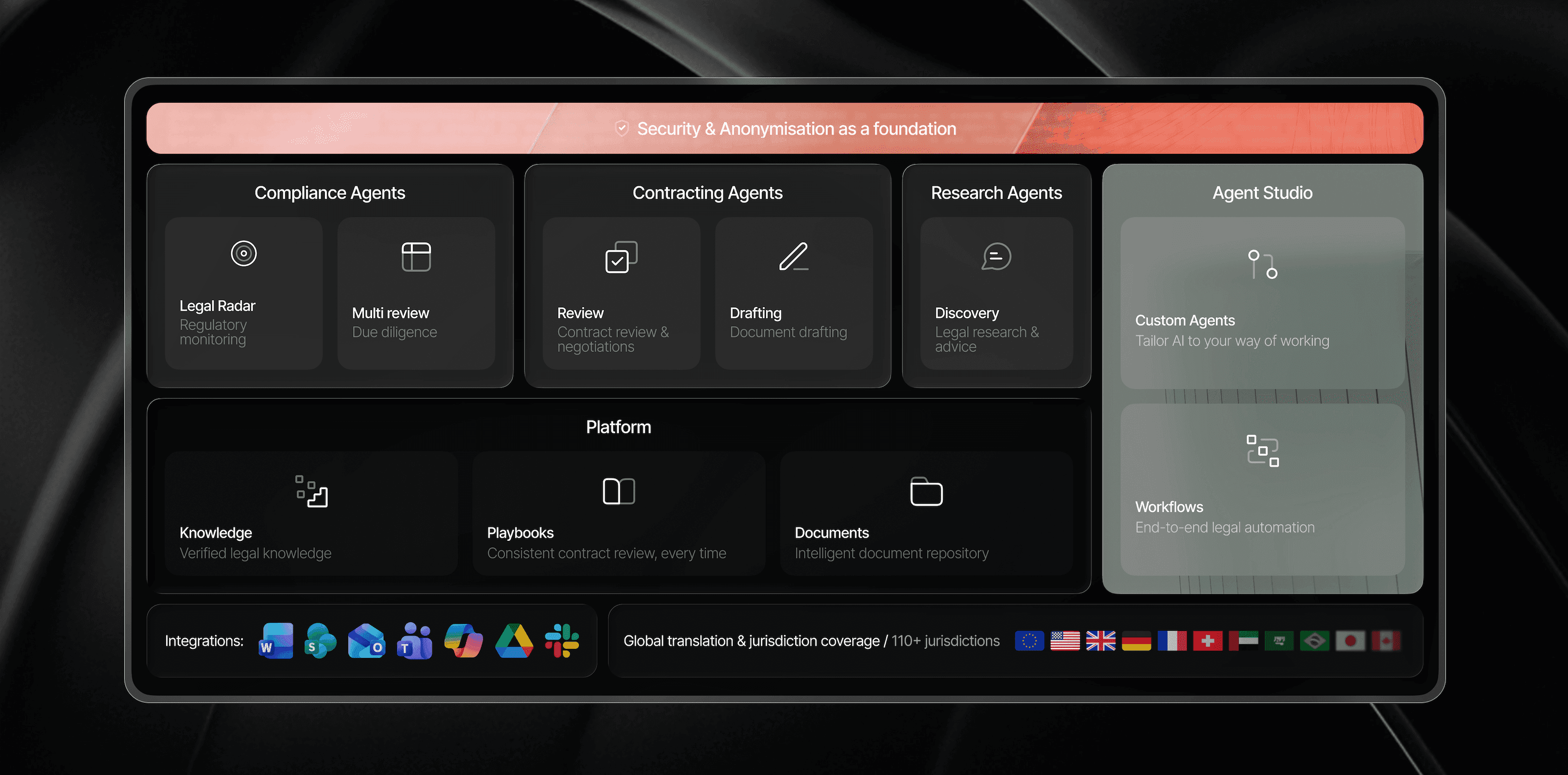
Quick Answer: What Is Legal & Contract Advisor?
Legal & Contract Advisor is an AI-powered legal research assistant that analyzes contracts, identifies risks, clarifies legalese, and provides accessible legal guidance through natural conversation.
Key capabilities:
- Contract analysis with clause-by-clause risk identification, missing provision detection, and plain-language explanations
- Legal research across multiple jurisdictions — statutes, regulations, case law concepts, and compliance requirements
- Legalese translation that converts dense legal language into clear, actionable summaries
- Risk assessment that flags unfavorable terms, unusual clauses, and potential liabilities before you sign
- Persistent memory that tracks your legal context, business details, and prior matters across sessions
The Problem: Legal Help Is Expensive, Inaccessible, and Arriving Too Late
The demand for legal guidance has never been higher — every business transaction, employment agreement, lease, partnership, and vendor relationship involves legal documents that carry real consequences. But the supply of affordable, accessible legal help remains catastrophically mismatched with how most people and small businesses actually encounter legal questions.
**$5.21 billion** — [Global legal AI software market size in 2026, projected to reach $40.94 billion by 2034 at 29.40% CAGR](https://www.fortunebusinessinsights.com/legal-ai-software-market-111369)
69% of legal professionals — Now report personally using generative AI tools like ChatGPT or Claude for work-related purposes, according to the 2026 Legal Industry Report
23% → 52% — Corporate legal AI adoption more than doubled in a single year, according to the ACC/Everlaw GenAI Survey
But this AI revolution is overwhelmingly benefiting large firms and enterprise legal departments — not the people who need legal help most:
-
Enterprise legal AI is priced for enterprises. Harvey, the leading AI platform for Am Law 100 firms, costs $30,000+ per month](https://www.legalontech.com/post/best-ai-contract-review-tools) with a 2-6 month implementation timeline. Ironclad's CLM platform runs [$30,000 to $100,000+ per year](https://www.legalontech.com/post/best-ai-contract-review-tools). Luminance, the due diligence specialist, prices at [$100,000+ annually. Even dedicated contract review tools like LegalOn typically cost $3,000-$8,000/year for small teams. These are tools built for legal departments, not for a freelancer reviewing a client contract.
-
General-purpose AI models miss what matters in legal work. As LegalOn's 2026 Contract Review Benchmark found, general-purpose AI like Claude and GPT "reliably found clauses, but failed on precise language, numeric thresholds, multi-part requirements, cross-references, and absence checks." Eve Legal's analysis confirms: "A general chatbot can summarize a contract. Legal AI can tell you which clauses deviate from market standard, flag risks worth negotiating, and cite the authority behind its analysis."
-
Hiring a lawyer for a single contract review is prohibitively expensive. Attorney fees for contract review range from $200-$500+ per hour, and even a "quick review" of a standard agreement can run $500-$2,000. For small business owners signing vendor agreements, independent contractors reviewing service contracts, or tenants evaluating lease terms, the cost of legal review often exceeds the value of the transaction itself.
-
Most people sign contracts they don't fully understand. Without accessible legal guidance, millions of people and businesses sign agreements containing unfavorable terms, hidden liabilities, one-sided termination clauses, and automatic renewal provisions they never noticed. The consequences — financial exposure, intellectual property loss, non-compete restrictions — surface months or years later when it's too late to renegotiate.
The Access-to-Justice Gap
The 2026 Legal Industry Report identifies a persistent structural problem: while AI adoption is accelerating and efficiency is rising, "access to justice is still constrained." The firms and departments deploying AI are the ones that could already afford legal services. The individuals and small businesses who need legal help most — reviewing a lease, understanding employment terms, evaluating a partnership agreement — are no closer to affordable legal guidance than they were before the AI revolution began.
This is exactly what Legal & Contract Advisor was built for.
Why Legal & Contract Advisor
Unlike enterprise platforms built for in-house legal departments or general-purpose chatbots that treat contracts like any other document, Legal & Contract Advisor operates as a dedicated legal research partner accessible to anyone — individuals, freelancers, small business owners, startup founders, and professionals who need to understand legal documents and concepts without a $30,000 annual software license or a $500/hour attorney on retainer.
| Traditional Approach | Legal & Contract Advisor |
|---|---|
| Attorney review at $200-$500/hour — a single contract review costs $500-$2,000+ | Free to start, instant contract analysis with no per-document fees |
| Enterprise AI platforms cost $3,000-$100,000+/year with months of implementation | Available immediately — upload a contract and get analysis in minutes |
| General-purpose AI summarizes contracts but misses numeric thresholds, cross-references, and absence checks | Purpose-built legal analysis that flags risks, missing provisions, and unfavorable terms |
| Legal advice arrives days or weeks after you request it | 24/7 availability — get answers before you sign, not after |
| Legalese requires a law degree to decipher | Plain-language explanations that translate complex clauses into actionable understanding |
| No continuity between legal consultations — re-explain your situation each time | Persistent memory tracks your business context, prior questions, and ongoing matters |
Contract Analysis That Catches What You'd Miss
Legal & Contract Advisor doesn't just summarize your contract — it reads it the way a careful attorney would. It identifies unfavorable indemnification clauses, flags unlimited liability exposure, catches auto-renewal provisions buried in boilerplate, highlights non-compete restrictions that could limit your career, and detects intellectual property assignment language that could cost you ownership of your own work. Every flagged issue comes with a plain-language explanation of what it means and why it matters.
"Review this freelance services agreement. I'm the contractor. Flag any clauses that give the client ownership of work I create outside the scope of this project, and identify any non-compete restrictions that could prevent me from working with their competitors."
Legal Research Without the Research
Whether you're trying to understand your rights as a tenant, evaluating the enforceability of a non-compete, researching LLC formation requirements across states, or navigating the basics of trademark registration, the agent provides clear, accessible explanations grounded in legal principles — not vague disclaimers wrapped in "consult a lawyer" hedging.
"I'm a freelance designer in California. My former employer sent a cease-and-desist claiming my non-compete prevents me from taking clients in the same industry. Is a non-compete enforceable in California? What are my options?"
Legalese Translation on Demand
Upload any legal document — contracts, terms of service, lease agreements, partnership agreements, employment offers — and get a plain-language breakdown of every material provision. The agent translates dense legal language into clear explanations that non-lawyers can act on, highlighting what's standard, what's unusual, and what deserves pushback.
"Translate this commercial lease into plain English. I'm specifically concerned about the maintenance responsibilities, the escalation clause for rent increases, and what happens if I need to terminate early."
Related Agents You'll Also Find Useful
If legal questions are part of your broader professional workflow, these agents handle the adjacent decisions and research that often accompany legal matters:
Patent, Trademark, Copyright & IP Researcher
When your legal questions involve intellectual property — prior art searches, trademark screening, copyright clearance, or IP landscape analysis — this agent provides specialized research that goes deeper than general legal guidance. If you're filing a trademark, evaluating patent risk, or assessing whether your product name is already claimed, this is the dedicated IP tool.
- Prior art discovery and patent landscape analysis
- Trademark availability screening across jurisdictions
- Copyright and licensing research for creative and technical assets
Business Co-Pilot
Many legal questions arise from business decisions — structuring an entity, evaluating a partnership, navigating compliance, or planning an expansion. This agent provides strategic business guidance that contextualizes legal considerations within your broader business operations, helping you ask the right legal questions before you need them answered.
- Business entity structuring and strategic planning
- Financial modeling and operational decision support
- Compliance navigation across industries and jurisdictions
Personal Tax Advisor
Legal and tax questions often overlap — contract structures affect tax treatment, entity formation has tax implications, and settlement agreements carry tax consequences. This agent provides jurisdiction-specific tax guidance that complements Legal & Contract Advisor's contract analysis.
- Tax implications of contract structures and business arrangements
- Entity formation tax considerations across jurisdictions
- Income, deduction, and compliance guidance for complex situations
How It Works
Step 1: Share Your Legal Question or Upload a Document
Start a conversation by describing your legal situation or uploading the document you need analyzed. Be specific about your role (are you the buyer or seller? the employer or employee? the landlord or tenant?) — context determines which provisions work for or against you.
"I'm a small business owner and I just received a vendor agreement from a software provider. I need to understand the liability limitations, data ownership provisions, and what happens if I want to cancel. Here's the contract."
Step 2: Get a Structured Analysis
Legal & Contract Advisor analyzes the document clause by clause — identifying favorable and unfavorable terms, flagging missing provisions that should be present, and translating dense legal language into plain English. Each flagged issue includes an explanation of the risk and, where applicable, suggested language for negotiation.
"The indemnification clause in Section 8 — is this standard for a SaaS agreement this size? It seems like I'm indemnifying them for basically everything, but they're not indemnifying me for anything."
Step 3: Ask Follow-Up Questions
Dive deeper into any provision, concept, or concern. Ask about enforceability, industry standards, jurisdiction-specific requirements, or negotiation strategy. The agent maintains full context from the document analysis, so every follow-up builds on what's already been discussed.
"If I push back on the auto-renewal clause and ask for a 30-day written notice requirement instead of 90 days, is that a reasonable ask? What's standard in SaaS vendor agreements?"
Step 4: Research Legal Concepts Beyond the Document
Extend the conversation beyond contract review into broader legal research. Ask about regulatory requirements, business formation, employment law, intellectual property basics, or any legal concept relevant to your situation.
"I'm also thinking about converting my sole proprietorship to an LLC. What are the liability protection differences, and does my state (Texas) have any specific requirements I should know about?"
Step 5: Return With New Questions — Your Context Persists
Come back days or weeks later with new contracts, follow-up questions, or entirely different legal matters. The agent remembers your business context, prior analyses, and established preferences — no re-explaining who you are, what you do, or what you've already discussed.
"I'm back. Remember the SaaS vendor agreement from last month? They came back with a revised version. Can you compare the key changes, specifically in the indemnification and termination sections?"

Results & Use Cases
💼 Freelancer Reviewing a Client Services Agreement
Scenario: A freelance software developer receives a 12-page services agreement from a new corporate client. The contract includes intellectual property assignment language, a 24-month non-compete, and an indemnification clause that appears to make the developer liable for the client's entire project outcome. The developer has 48 hours to sign or lose the engagement.
Traditional Approach: Pay an attorney $500-$1,500 for a rush contract review — if one is even available within 48 hours. Or sign without understanding the terms and discover months later that the IP clause assigns ownership of unrelated personal projects to the client.
Legal & Contract Advisor: Analyzes the full agreement within minutes, flags the IP assignment clause as overly broad (extending beyond project scope), identifies the non-compete as potentially unenforceable in the developer's jurisdiction, and provides specific redline suggestions for the indemnification section — all before the signing deadline.
- IP clause analysis identifying language that extends ownership beyond the contracted work
- Non-compete enforceability assessment based on the developer's jurisdiction
- Specific, actionable redline suggestions the developer can present to the client
📊 Small Business Owner Negotiating a Commercial Lease
Scenario: A restaurant owner is reviewing a 15-year commercial lease with a personal guarantee, triple-net (NNN) structure, and a demolition clause that allows the landlord to terminate with 90 days' notice for redevelopment. The owner has never negotiated a commercial lease before and doesn't know which terms are standard versus which are aggressively one-sided.
Traditional Approach: Hire a commercial real estate attorney for $3,000-$10,000 to review and negotiate the lease — a significant upfront cost for a business that hasn't opened yet.
Legal & Contract Advisor: Identifies the demolition clause as a significant risk for a long-term tenant who will invest heavily in build-out, flags the personal guarantee as standard but negotiable (suggesting a burn-off schedule tied to lease term), and explains the NNN cost structure so the owner can accurately project total occupancy costs before signing.
- Demolition clause risk assessment with suggested protective language
- Personal guarantee negotiation strategy with common alternatives
- NNN cost projection guidance so the owner understands true monthly obligations
📱 Startup Founder Evaluating a Term Sheet on Mobile
Scenario: A first-time founder receives a term sheet from a seed investor during a conference. The terms include a 2x liquidation preference, full-ratchet anti-dilution, and a board composition that gives investors majority control at the seed stage. The founder needs to understand whether these terms are standard or predatory — and needs to respond before the investor's interest cools.
Traditional Approach: Email the term sheet to a startup attorney ($400-$600/hour) and wait 3-5 business days for a review — by which time the investor may have moved on.
Legal & Contract Advisor: Accessible on mobile with full feature parity, the agent analyzes the term sheet immediately — identifying the full-ratchet anti-dilution as unusually aggressive for a seed round, flagging the board composition as a potential control issue, and explaining what a 2x liquidation preference means for the founder's payout in various exit scenarios.
- Term sheet analysis calibrated to stage-appropriate norms (seed vs. Series A vs. later)
- Liquidation preference impact modeling across different exit valuations
- Board composition analysis with governance implications for the founder's decision-making authority
🎯 Employee Reviewing a Severance Agreement
Scenario: A mid-level marketing manager is being laid off and presented with a severance agreement that includes a general release of claims, a 12-month non-solicitation clause, and a confidentiality provision that appears to prevent the employee from discussing the terms of their own separation — including with future employers who ask why they left.
Traditional Approach: Consult an employment attorney for $1,000-$3,000 to review the severance package — a significant expense for someone who just lost their income.
Legal & Contract Advisor: Identifies the confidentiality provision as potentially overbroad (distinguishing between legitimate trade secret protection and provisions that could prevent the employee from discussing their own employment history), explains the general release and which claims it waives, and highlights the non-solicitation clause's scope and enforceability.
- General release analysis identifying which specific claims the employee would waive
- Confidentiality provision scope assessment — what it actually prevents versus what it appears to prevent
- Non-solicitation enforceability analysis based on the employee's jurisdiction and role
FAQ
Is Legal & Contract Advisor free to use?
Yes. You can start analyzing contracts and researching legal questions with Legal & Contract Advisor immediately on Jenova's free tier — no credit card, no retainer, no minimum engagement. Paid tiers increase usage limits for professionals who need frequent, extended legal research sessions.
How is this different from enterprise legal AI platforms like Harvey or LegalOn?
Enterprise platforms like Harvey ($30,000+/month](https://www.legalontech.com/post/best-ai-contract-review-tools)) and LegalOn ([$3,000-$8,000/year) are built for in-house legal departments and large law firms — they require lengthy implementation, integrate with enterprise document management systems, and price accordingly. Legal & Contract Advisor is built for individuals, small businesses, and professionals who need to understand a contract or legal concept right now — accessible instantly through conversation with no deployment required.
Can this replace a lawyer?
It handles the vast majority of everyday legal questions — contract analysis, risk identification, legal research, legalese translation, and compliance basics — with depth and availability that exceed periodic attorney consultations. For high-stakes matters involving litigation, regulatory proceedings, or complex transactions where legal representation is required, pairing AI guidance with a qualified attorney produces the strongest outcomes. The Patent, Trademark, Copyright & IP Researcher provides additional depth for intellectual property-specific questions.
What types of legal documents can it analyze?
Any text-based legal document: service agreements, vendor contracts, employment offers, severance packages, NDAs, commercial leases, partnership agreements, terms of service, licensing agreements, independent contractor agreements, and more. Upload the document or paste relevant sections directly into the conversation.
Does it work on mobile?
Full feature parity across web, iOS, and Android. Every conversation, analysis, and legal context syncs across devices. Start a contract review on your laptop and continue asking follow-up questions from your phone — your entire legal history persists seamlessly.
Is my legal information secure?
Jenova never uses your data to train public AI models. All data is encrypted in transit and at rest, and is never sold or shared with advertisers. Your contracts, legal questions, and business context remain yours — the platform's privacy architecture is built for exactly this kind of sensitive professional content.
Conclusion
The legal AI market has reached [$5.21 billion in 2026](https://www.fortunebusinessinsights.com/legal-ai-software-market-111369) and is accelerating toward $40 billion by 2034. 69% of legal professionals now use generative AI, and corporate legal AI adoption has more than doubled in a single year. But this transformation has overwhelmingly benefited large law firms and enterprise legal departments deploying six-figure platforms with months-long implementation cycles. The freelancer reviewing a client contract, the small business owner signing a commercial lease, the employee evaluating a severance agreement — the people who need legal guidance most urgently are still priced out of meaningful access.
Legal & Contract Advisor exists to close that gap. It provides instant contract analysis with clause-by-clause risk identification, plain-language translation of dense legalese, legal research across jurisdictions, and persistent memory that tracks your business context and ongoing matters across every session. Whether you're a founder evaluating a term sheet between conference sessions, a freelancer with 48 hours to review a services agreement, or a business owner who needs to understand a commercial lease before committing to a 15-year obligation, the distance between a legal question and an actionable answer is now a conversation.
Try Legal & Contract Advisor now — free, no credit card required. Explore the full agent library at Jenova.