Best AI for Whiskey and Spirits Guidance: Tasting Methodology, Collection Strategy & Bottle Hunting Across Every Category
2026-05-10
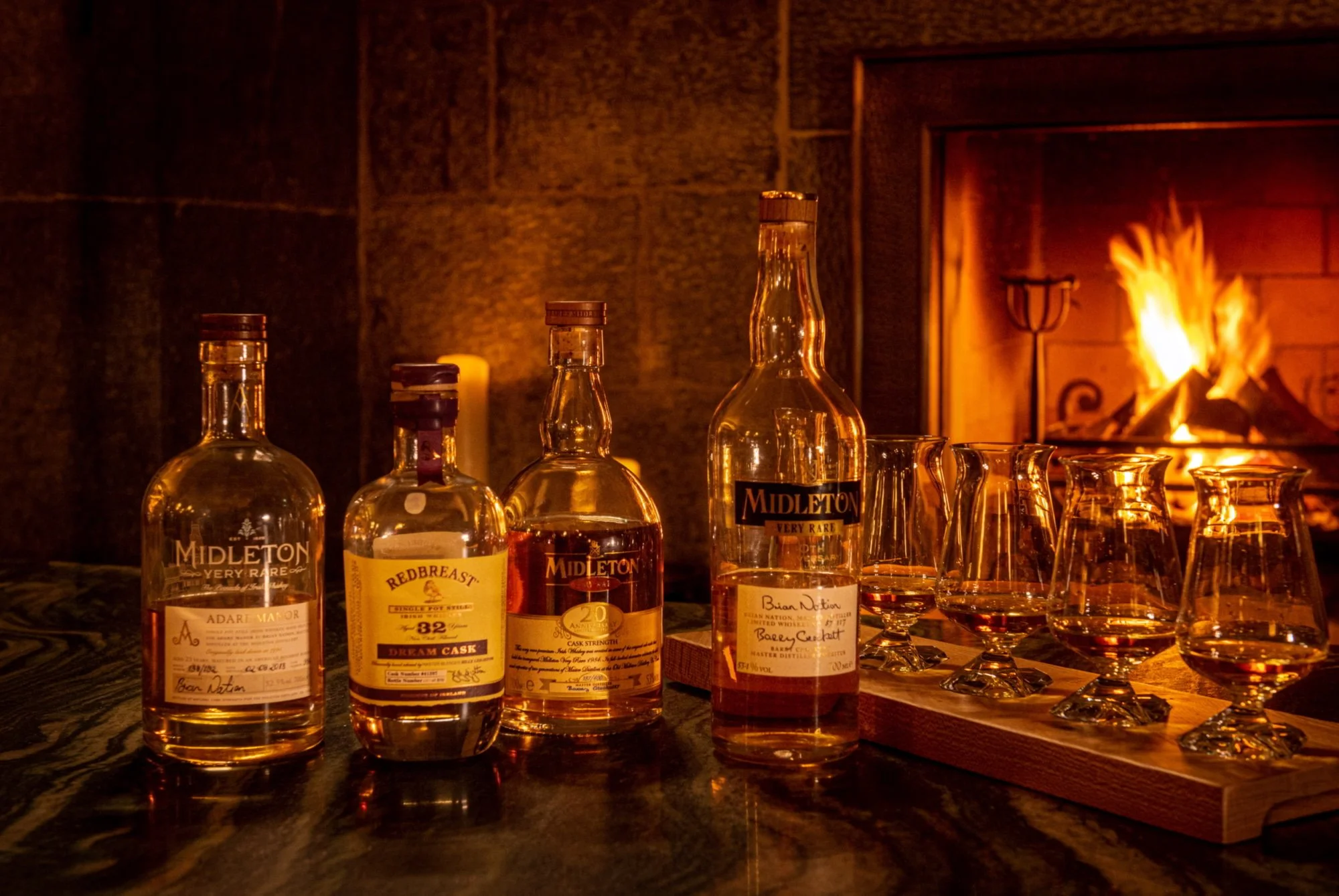
The global whiskey market is valued at [**$99.73 billion in 2026**](https://www.fortunebusinessinsights.com/whiskey-market-109132), projected to reach $180.20 billion by 2034 — and it's never been harder to navigate. Auction prices for high-end bottles have dropped roughly 40% in value over the past year, bourbon inventories are overflowing after a decade of overproduction, and consumers at every level are asking sharper questions about mash bills, barrel programs, and whether that $120 limited release is actually worth it. If you're looking for the best AI for whiskey and spirits guidance, the challenge isn't finding opinions — it's finding structured, honest expertise that adapts to your palate, your budget, and your goals. Whiskey & Spirits Guide AI delivers exactly that: a spirits scholar, tasting partner, and market analyst in your pocket — covering scotch, bourbon, rye, Irish, Japanese, and world whiskey plus tequila, mezcal, rum, gin, and beyond.
✅ Systematic tasting methodology that builds your palate vocabulary from first pour onward ✅ Personalized bottle recommendations calibrated to your taste profile, budget, and occasion ✅ Collection portfolio strategy with honest hype assessment and secondary market literacy ✅ Real-time search for current releases, market pricing, community reviews, and auction data ✅ Deep expertise across the full spirits world — not just whiskey
Over 4,600 spirits enthusiasts have used this AI to sharpen their palates, build more intentional collections, and make smarter purchases — from beginners who assembled their first four-bottle tasting flight to serious collectors who restructured five-figure portfolios during the current market correction. Here's why it's the strongest tool available for spirits guidance, and how to put it to work.
Quick Answer: What's the Best AI for Whiskey and Spirits Guidance?
Whiskey & Spirits Guide AI is the best AI for whiskey and spirits guidance because it combines deep category knowledge across every major tradition with personalized recommendations, structured tasting methodology, and real-time market research — all adapted to your experience level and goals.
It works like having an experienced spirits director available around the clock — one who remembers your palate preferences, knows the current market, and gives honest assessments instead of marketing language.
Key capabilities:
- Systematic tasting analysis and fault detection across scotch, bourbon, rye, Irish, Japanese, and world whiskey
- Personalized recommendations with explicit reasoning — not just "you might like this," but why and how it fits
- Collection strategy including allocated release hunting, secondary market valuation, and portfolio diversification
- Photo analysis of labels, bottles, spirits menus, and collection shelves for instant identification and guidance
- Serious expertise extending to tequila, mezcal, rum, gin, cognac, and spirit-forward cocktails
The 2026 Spirits Landscape: A Market in Recalibration
The whiskey world in 2026 is defined by a single word: recalibration. After two decades of relentless ascent — prices climbing, aged stocks disappearing, limited editions treated as financial instruments — the market has shifted. Forbes' Joe Micallef describes it plainly: "The speculative heat is cooling. The category is not losing relevance; it is becoming more grounded."
This creates both opportunity and complexity for anyone who drinks, collects, or invests in spirits:
- Oversupply is creating a buyer's market — bourbon inventories built during the 2010s boom are hitting shelves, driving prices down on aged expressions
- Auction and secondary markets have corrected sharply — high-end bottle prices down ~40%, creating opportunity for informed buyers and risk for uninformed ones
- Consumer expectations are evolving — younger drinkers prioritize taste and value over prestige and packaging
- Category boundaries are blurring — American single malt, premium blends, heirloom grain whiskeys, and international expressions are fragmenting what was already a complex landscape
- Information overload is intensifying — thousands of releases, independent bottlings, craft distilleries, and conflicting reviews with no coherent guide through the noise
📉 The Correction Most People Don't Understand
The investment side of whiskey illustrates the challenge starkly. Rare whisky investments surged 428% between 2011 and 2021, with the Knight Frank Luxury Investment Index showing investment-grade Scotch soaring over 560% over the past decade. But the correction is real. Auction volumes for bottles selling above £1,000 declined 34% in the past year. Duncan McFadzean of Noble & Co. told the Financial Times: "The bubble in which fine and rare scotch whisky has been traded for so long may have finally burst."
Key insight: This correction punishes uninformed buyers and rewards informed ones. Bottles that were overpriced by hype are falling. Bottles with genuine quality, provenance, and scarcity are holding or appreciating. The difference between the two requires expertise most drinkers don't have.
🥃 The Bourbon Glut — Good News for Drinkers, Confusing for Buyers
On the American side, the picture is different but equally complex. According to Tasting Table's 2026 trend analysis, the bourbon boom of the 2010s brought a wave of private equity and overproduction. That slow-aging inventory is now ready to bottle — just as demand has settled from its pandemic-era highs.
Ari Sussman, whiskey maker at Whiskey JYPSI, puts it directly: "It's no secret that large distilleries are cutting production in 2026 to balance their inventories. They have to. Everyone has to figure out a way to sell this high-quality whiskey in volume, and that means consumers can expect prices to come down."
The practical result? Five, six, and seven-year-old bourbons at prices previously reserved for younger expressions. But navigating which bottles represent genuine value — versus which are simply being cleared from warehouses — requires knowledge that Google searches and Reddit threads deliver inconsistently at best.
🌏 Expanding Horizons, Expanding Confusion
The market is also becoming more international. Japan recorded a 22.9% rise in Scotch export volume in 2024. American single malt received its official TTB standard of identity at the end of 2024, and brands from Stranahan's to Jack Daniel's are releasing expressions in this new category. Heirloom grain whiskeys — made with Cherokee White Eagle corn, Jimmy Red corn, Abruzzi rye — are gaining serious traction as distillers bring a wine-like terroir consciousness to grain selection.
Meanwhile, the spirits world beyond whiskey — tequila additive transparency, mezcal certification tiers, rum age statement inconsistencies — adds another layer of complexity for anyone building a home bar or exploring new categories.
The common thread? Enthusiasts at every level need better tools to make informed decisions. Whether you're choosing a $40 daily sipper, assembling a tasting flight for friends, or evaluating a cask investment in a correcting market, the gap between having good guidance and navigating blind has real financial and experiential consequences.
Why Whiskey & Spirits Guide AI Is the Best Choice for Spirits Expertise

Whiskey & Spirits Guide AI combines the depth of a veteran spirits professional with instant availability and personalized adaptation that no human advisor, publication, or forum can match at scale.
| How Most People Navigate Spirits | How Whiskey & Spirits Guide AI Works |
|---|---|
| Read scattered reviews across dozens of publications | Synthesizes knowledge from major critics, communities, and industry sources |
| Ask a store clerk who may or may not know the category | Adaptive expertise across scotch, bourbon, rye, Irish, Japanese, world whiskey, tequila, mezcal, rum, gin, brandy |
| Attend $75+ tasting events for guided palate development | Structured tasting methodology available from your first pour — at home |
| Spend months developing flavor vocabulary through trial and error | Guided sensory language building that turns "it tastes weird" into actionable descriptors |
| Rely on hype cycles and social media for purchase decisions | Honest hype assessment grounded in market data and quality analysis |
| Navigate collecting and secondary markets without a framework | Portfolio strategy, fair market valuation, and settlement risk awareness |
| Hire whisky advisors at £150+/hour for collection guidance | Available 24/7 at a fraction of the cost |
🥃 Depth Across Every Major Whiskey Tradition
The AI's whiskey knowledge spans every significant tradition with the kind of granularity that separates serious guidance from surface-level summaries:
- Scotch — Regional character (Islay smoke, Speyside elegance, Highland complexity, Campbeltown funk), independent bottlers vs. official releases, NAS vs. age-stated, cask finishing discipline, the renaissance of premium blended Scotch from Compass Box, Dewar's Double Double, and Johnnie Walker's upper range
- Bourbon and American whiskey — Mash bill composition, char levels, warehouse placement, the current oversupply dynamics creating value opportunities, single barrel vs. small batch, bonded designations, the new American single malt category
- Rye — The American rye spectrum from 95% MGP-sourced to barely-legal, Canadian traditions, heirloom grain expressions using Abruzzi and Rosen rye
- Irish — Pot still vs. grain vs. malt, the single pot still renaissance, Midleton and Redbreast's influence
- Japanese — Scottish heritage and Japanese innovation, mizunara oak, labeling authenticity standards, the 22.9% surge in Scotch exports to Japan
- World whiskey — Taiwan (Kavalan), India (Amrut, Paul John), Australia, New Zealand, Scandinavia, and emerging producers
🍸 Serious Expertise Beyond Whiskey
This AI extends genuine depth to the broader spirits world — not as an afterthought, but as a core competency:
- Tequila and mezcal — Agave varieties, production methods, additive transparency (a critical issue as brands face scrutiny), ancestral vs. artisanal vs. industrial classifications
- Rum — Geographical styles from Jamaican funk to Martinique agricole, age statement inconsistencies across regions (a common source of buyer confusion)
- Gin — Botanical profiles, London Dry vs. contemporary vs. Old Tom vs. genever, the craft gin evolution
- Brandy and cognac — VS/VSOP/XO classifications, Armagnac, calvados, pisco
- Spirit-forward cocktails — Old Fashioned, Manhattan, Sazerac, Negroni as natural extensions of spirit appreciation
📊 Market Intelligence and Honest Hype Assessment
In a market where Forbes describes "experiences replacing speculation" and consumer fatigue with manufactured collectibles is at an all-time high, honest assessment of value is more important than ever. As Distiller Magazine documented, the collector mindset is no longer driving purchases. Consumers are making calculations about value and return — and unlike other collectibles, you usually can't trade in your bottles for the upgrade.
Whiskey & Spirits Guide AI provides:
- Allocated release strategy — How distribution works, lottery systems, retailer relationships, optimal timing
- Secondary market literacy — Fair market value assessment, trusted platforms, authenticity verification, provenance red flags
- Hype calibration — Honest assessment of when allocated bottles earn their premium and when they're riding name recognition
- Value hunting — Identifying quality before prices inflate, overlooked distilleries, undervalued categories (like the current bourbon oversupply creating 5-7 year expressions at 4-5 year prices)
- Investment risk transparency — Including liquidity constraints, storage costs, the current auction correction, and cask investment fraud risks
How to Use It: Step-by-Step Guide
Step 1: Describe What You're Looking For
Open Whiskey & Spirits Guide AI and tell it what you need. The AI adapts instantly to your experience level — no setup required. Whether you're a complete beginner or a seasoned collector, just talk naturally.
"I like smoky scotch but want to try something with more sweetness and sherry influence. Budget around $70-90."
"I'm building a home bar from scratch. What are the five essential bottles across categories?"
Step 2: Receive Personalized Recommendations With Reasoning
The AI provides specific bottle recommendations — producer, expression, approximate price, availability notes — and, critically, the reasoning behind each pick. You'll understand why a particular bottle fits your preferences, not just that it does. Expect a primary recommendation, alternatives at different price points, and serving or pairing suggestions.
"I need to bring a bottle to a dinner party. The host likes bourbon. Budget is $50-80. I want something interesting, not basic."
Step 3: Analyze What You're Drinking
Share a photo of a bottle label, your current shelf, or a restaurant's spirits menu. The AI identifies expressions, provides tasting profiles, suggests food pairings, estimates current market value, and flags optimal drinking windows. For pour photos, it offers educated inferences about color and viscosity while being transparent about the limits of visual analysis.
Step 4: Develop Your Palate Systematically
Unlike reading static reviews, the AI builds your tasting vocabulary through guided interaction. Describe what you're tasting — even imprecisely — and it helps you develop precision. "It tastes kind of sweet and spicy" becomes "you're picking up caramel and vanilla from the bourbon barrel with baking spice from the rye content and possibly some cinnamon from a longer finishing period."
Over time, this guided tasting methodology builds the diagnostic palate skills that usually require years of tastings and hundreds of dollars in event fees.
Step 5: Build and Manage Your Collection
Describe your current collection and goals. The AI assesses diversity across regions, styles, age statements, and price tiers. It identifies gaps, suggests strategic additions, advises on storage conditions, and provides honest perspective on investment potential — including the risks, especially in a market where auction prices have corrected 40%.
"I have about 25 bottles, mostly bourbon and a few scotches. I'm spending about $100-150/month on new bottles. How do I build a more interesting collection?"
Step 6: Stay Current With Market Conditions
Ask about current releases, emerging trends, pricing shifts, or category developments. Whiskey & Spirits Guide AI can search for the latest community reviews, release calendars, auction results, and market analysis to ground its guidance in what's actually happening right now — not outdated training data.
Real Results: How Enthusiasts Use This Guide
🥃 The Beginner Building a First Tasting Flight
Scenario: Someone interested in whiskey but overwhelmed by the terminology, variety, and price ranges. They don't want to spend $300 on bottles they might not enjoy.
Typical approach: Read "best whiskey for beginners" articles (which are often sponsored), buy whatever the store clerk recommends, develop preferences through expensive trial and error.
Whiskey & Spirits Guide AI: Asks guided questions about existing flavor preferences — do you enjoy coffee, dark chocolate, citrus, honey, smoky foods? Then constructs a four-bottle tasting flight across categories, sequenced for palate development, with specific serving instructions (Glencairn glass, room temperature, add a few drops of water after initial nosing). Each recommendation includes a clear "why this fits" explanation and concrete tasting notes to look for.
Over 1,200 beginners have used this approach to build their first curated tasting experience — spending their budget on bottles they'll actually enjoy rather than guessing.
- Guided palate discovery, not lectures
- Budget-conscious recommendations with clear value reasoning
- Tasting methodology that builds transferable skills from the first pour
💼 The Serious Collector Navigating the Market Correction
Scenario: A collector with 60+ bottles wants to understand how the current market correction affects their collection, identify what to open vs. hold, and make strategic additions while prices are favorable.
Typical approach: Cross-reference auction databases, read multiple market reports, hire a whisky advisor at £150+/hour, or rely on community forums with anonymous contributors.
Whiskey & Spirits Guide AI: The user describes their inventory or shares collection photos. The AI assesses diversity across regions, distilleries, vintages, and styles. It identifies bottles approaching their optimal drinking windows (holding aged whiskey indefinitely in open bottles doesn't improve it), flags expressions that may be appreciating despite the broader correction, and suggests specific additions that take advantage of the current buyer's market — particularly in categories where supply is temporarily exceeding demand.
- Portfolio assessment with honest quality-to-price analysis
- Strategic timing advice grounded in current market conditions
- Drinking window guidance that prevents wasting peak-quality bottles
📊 The Value Hunter Exploiting the Bourbon Oversupply
Scenario: A bourbon drinker who's noticed prices becoming more favorable and wants to know which bottles represent the best value in the current oversupply environment.
Typical approach: Browse Reddit r/bourbon, check a few review aggregators, buy based on hype rankings that may not reflect current pricing dynamics.
This AI-powered guide: Explains the oversupply dynamic — distilleries overproduced during the boom, that inventory is now mature and needs to sell, creating a temporary window where aged expressions are available at younger-expression prices. Identifies specific producers and expressions where this dynamic is most pronounced. Distinguishes between genuine value (well-made bourbon priced below its quality tier) and clearance (mediocre liquid being pushed at volume). Recommends a purchasing strategy that takes advantage of the window without overcommitting to bottles that won't improve with further storage.
Over 800 bourbon enthusiasts have used this framework to identify value bottles during the current market shift.
- Market-informed value identification, not just taste-based ranking
- Oversupply dynamics explained in practical purchasing terms
- Storage and timing advice for building a meaningful collection during favorable conditions
📱 The Restaurant Menu Navigator
Scenario: A user is at a restaurant with a 40-bottle spirits list and limited time to decide. The server knows cocktails but not the difference between a sherried Highland and a peated Islay.
Typical approach: Order something familiar, pay restaurant markup on a bottle you could buy retail for half the price, or take a risk on something unknown.
Try Whiskey & Spirits Guide AI on mobile: photograph the menu. The AI identifies every expression, highlights value picks (bottles priced at or below typical restaurant markup), flags interesting expressions worth trying that you might not encounter regularly, suggests pairings with your food order, and warns about any bottles priced dramatically above market — all in under a minute.
- Real-time menu analysis on mobile via iOS and Android
- Value identification that catches overpriced and underpriced bottles
- Food pairing suggestions that enhance both the spirit and the meal
🌍 The Distillery Trip Planner
Scenario: A user is planning a week in Scotland and wants to maximize their distillery visits — hitting the right regions, experiencing diverse styles, and knowing which distillery-exclusive expressions are worth purchasing on-site.
Typical approach: Research distilleries individually, book whatever tours are available, visit based on proximity rather than palate fit, miss hidden gems.
Whiskey & Spirits Guide AI: Designs an optimized itinerary based on the user's taste preferences — pairing Islay peat with Speyside fruit for contrast, including a Campbeltown stop for maritime funk, and scheduling a lesser-known distillery alongside the iconic names. Can search for current tour availability, exclusive releases, and travel logistics. Recommends specific distillery-exclusive expressions worth purchasing on-site — bottles you genuinely cannot get elsewhere, not just gift shop upsells.
- Taste-profile-based itinerary, not just geographic convenience
- Distillery-exclusive bottle recommendations with honest value assessment
- Logistical support including search for flights, hotels, and tour availability
Frequently Asked Questions
What makes this the best AI for whiskey and spirits guidance?
Unlike generic search results, review aggregators, or general-purpose AI, Whiskey & Spirits Guide AI provides personalized, adaptive expertise that covers the full depth of spirits knowledge — from beginner palate development through advanced collection strategy. It adapts to your specific equipment (Glencairn, rocks glass, cocktail context), your budget, your taste profile, and your goals. It synthesizes knowledge from major critics and communities, searches for current market data, and provides honest assessments including risks and limitations — something marketing-driven content rarely does.
Is Whiskey & Spirits Guide AI free to use?
Yes. You can start using Whiskey & Spirits Guide AI for free with core features and limited usage — enough to get personalized recommendations, tasting guidance, and collection advice. Paid plans starting at $20/month offer significantly more sessions and additional features like custom model selection. The cost of a single guided tasting event typically exceeds several months of unlimited AI guidance.
Can it analyze photos of bottles and menus?
Yes. Share a photo of a label, bottle, spirits menu, or collection shelf. The AI identifies expressions with high confidence, provides tasting profiles, current market context, optimal drinking windows, and serving suggestions. For restaurant menus, it identifies value picks and overpriced bottles in seconds — particularly useful on mobile.
How is this different from reading whiskey reviews online?
Reviews are static, one-size-fits-all, and scattered. This AI provides interactive, personalized guidance — it asks about your palate, adapts recommendations to your budget and occasion, provides follow-up answers, analyzes your specific photos, and builds your tasting vocabulary through conversation. It's the difference between reading a restaurant review and having a sommelier at your table.
Does it cover spirits beyond whiskey?
Absolutely. While whiskey is the deepest area of expertise, the AI provides genuine depth on tequila, mezcal, rum, gin, cognac, brandy, and other categories. It covers additive transparency in tequila, age statement inconsistencies in rum, botanical profiles in gin, and spirit-forward cocktails as natural extensions of spirit appreciation — not as afterthoughts.
Is the collecting and investment advice reliable?
The AI provides market-informed analysis grounded in current data from auction houses, industry reports, and market indices — including the current 40% correction in high-end auction values and the bourbon oversupply dynamics. It always includes appropriate risk caveats. Whiskey investment carries real liquidity, storage, and market risks, and the AI distinguishes clearly between drinking value and investment potential. It will never promise returns or encourage speculative behavior.
Does it work on mobile?
Yes. Full feature parity across web, iOS, and Android. This is especially valuable for real-time scenarios — photographing a bottle at a shop, navigating a restaurant spirits list, or getting a quick recommendation while browsing a liquor store. Voice input is supported for hands-free interaction.
Make Every Pour Count — Starting Now
The whiskey and spirits world has entered a period that Forbes calls a "golden moment" for drinkers. Oversupply is creating value. The speculative froth is clearing. Transparency and quality are being rewarded over packaging and hype. But navigating this landscape — a nearly $100 billion global market with thousands of expressions, shifting dynamics, and real money at stake — still demands expertise that most enthusiasts don't have and can't easily acquire.
Whiskey & Spirits Guide AI delivers that expertise on demand — systematic tasting methodology, honest hype assessment, collection strategy grounded in current market data, and personalized recommendations across every spirits category. Whether you're choosing your first bottle, building a tasting flight for friends, hunting an allocated release, or restructuring a collection during the correction, get started with Whiskey & Spirits Guide AI and turn every purchase into an informed decision.