Best AI for The Mansion: Mystery Escape With Persistent Memory and Emergent Consequences (June 2026)
2026-06-25
You wake up in a mansion. You don't know how you got here. You don't know who you are. Every room holds a clue — or a trap. Every door you open changes what's possible, and every mistake is permanent. The Mansion is an AI-powered mystery escape game where you explore a sprawling, enigmatic estate with no memory, no instructions, and no second chances. The story isn't written for you — it emerges from your choices: which rooms you enter, which objects you examine, which risks you take, and which warnings you ignore. There's no walkthrough. No save file. No predetermined path to the exit. Just you, the house, and the growing realization that whatever happened here — you were part of it.
✅ Wake-up-with-no-memory premise that unfolds into layered mystery through environmental discovery ✅ Persistent memory — every door opened, every item taken, every mistake made is remembered forever ✅ Emergent puzzles and consequences — the mansion adapts to your choices and exploration patterns ✅ Multiple narrative layers — the house's history, your identity, and the reason you're here interweave based on what you find
The hunger for exactly this kind of experience is enormous. The global escape room market was valued at $7.37 billion in 2026 and is projected to reach $13.74 billion by 2032, growing at a 10.8% CAGR. The murder mystery games market alone is on pace to cross [**$2.38 billion by 2033**](https://www.coherentmarketinsights.com/industry-reports/murder-mystery-games-market), up from $1.47 billion in 2026. Meanwhile, immersive entertainment as a category has exploded — the U.S. immersive entertainment market is projected to reach $281 billion by 2033, with permanent experiential venues like Netflix House, Universal Horror Unleashed, and immersive theater productions drawing millions who crave interactive storytelling over passive consumption. The Mansion sits at the intersection of all these forces: escape room logic, mystery narrative depth, and AI-driven emergent storytelling — available anytime, from any device, with consequences that never reset.
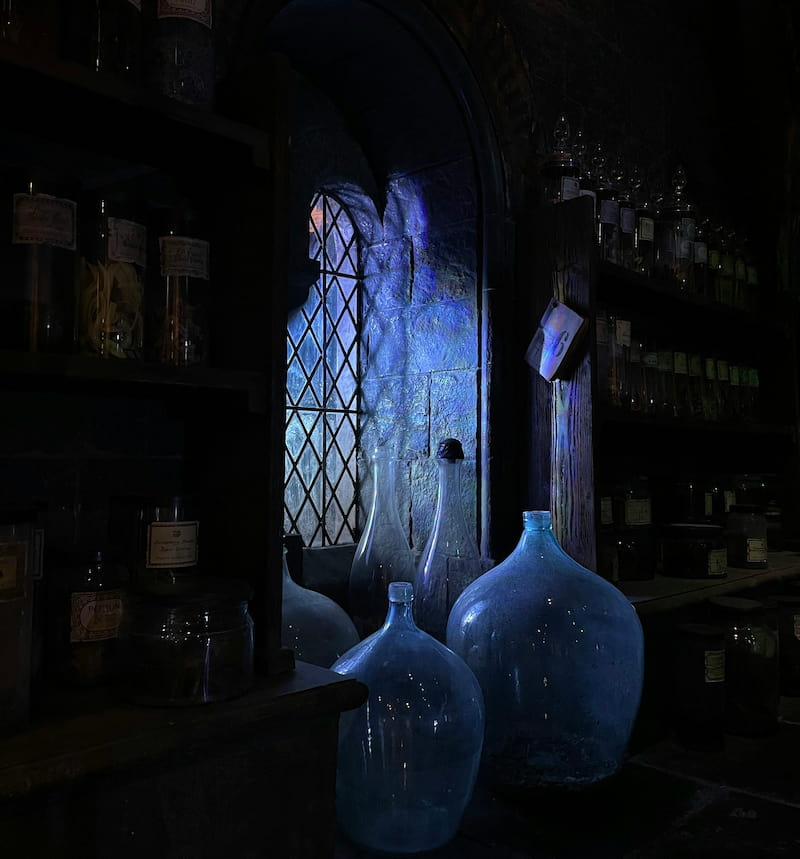
Quick Answer: What Is AI The Mansion?
The Mansion is an AI-driven mystery escape game where you wake with no memory inside a sprawling estate, piecing together who you are and why you're here through exploration, puzzle-solving, and permanent choices.
Key capabilities:
- Amnesia-driven narrative that reveals your identity and the mansion's secrets through what you discover
- Open-world exploration of interconnected rooms, hidden passages, and locked areas
- Unlimited persistent memory — every action, discovery, and mistake is permanent across sessions
- Emergent puzzle logic that adapts to your inventory, knowledge, and exploration history
The Problem: Why Mystery and Escape Experiences Hit a Ceiling
Mystery entertainment is having a moment — and running into a wall at the same time. The escape room industry is growing at 10.8% CAGR toward $13.74 billion by 2032, corporate team-building demand for escape rooms surged 42% in 2025, and immersive theater productions like Sleep No More and the Stranger Things Broadway experience have proven that audiences will pay premium prices to be inside a story rather than watching one. The appeal is clear: people want mystery, agency, and consequences they can feel.
But the interactive mystery experiences available today — physical escape rooms, digital puzzle games, and narrative adventures — share fundamental limitations:
-
One-and-done design. A physical escape room is thrilling exactly once. The moment you've solved the puzzles and found the exit, the experience is over. The average escape room charges €24–€32 per ticket for a 60-minute session with zero replayability. Digital escape games share the same problem — once you know the solution, the mystery is gone.
-
Fixed puzzle logic ignores player behavior. Traditional escape rooms and mystery games use static puzzles: find the key, open the lock, read the code. Your approach, personality, and exploration style don't change what the puzzles are or how they respond. A careful, methodical player and an impulsive risk-taker encounter the exact same experience.
-
No persistent consequences. In physical escape rooms, the clock resets every session. In digital mystery games, save files let you undo every mistake. The tension that comes from genuine irreversibility — knowing that a wrong choice permanently alters your situation — is absent. Without stakes, mystery becomes puzzle-solving. The emotional weight disappears.
-
Narrative shallowness. Most escape rooms and mystery games offer a thin premise — "escape the mad scientist's lab" or "find the treasure before time runs out" — without genuine narrative depth. There's no character development, no identity mystery, no layered backstory that rewards careful investigation with deeper revelations. The story exists to justify the puzzles, not the other way around.
-
Geographic and scheduling constraints. Physical escape rooms require travel, booking, and coordination. The best immersive theater experiences — Sleep No More, The Burnt City — exist in a handful of cities worldwide. Most people who want this kind of experience simply can't access it.
Immersive Entertainment Is Scaling Up — But Interactive Mystery Hasn't Kept Pace
The immersive entertainment industry is investing billions in permanent venues. Netflix House opened locations in Philadelphia and Dallas with Las Vegas planned for 2027. Universal Horror Unleashed launched a year-round attraction at AREA15 in Las Vegas. Dungeons & Dragons: The Immersive Quest has been touring the country. Immersive gaming experiences are rapidly gaining steam, and as Event Marketer documented, the entire sector is moving toward "multisensory real-life experiences that make [audiences] feel like they're a living, breathing part of the worlds they're so passionate about."
But all of these experiences still require physical presence, advance booking, and a fixed window of engagement. The mystery that adapts to you — that remembers your choices, builds on your discoveries, and delivers consequences you can't undo — is precisely what AI makes possible. This is what The Mansion was built for.
Why The Mansion
The Mansion isn't an escape room with a timer or a mystery game with a walkthrough. It's an open-world identity mystery where the central puzzle isn't "how do I get out" — it's "who am I, and what happened here?" The amnesia premise isn't a gimmick. It's a narrative architecture that makes every discovery personal: every document you find, every room you unlock, every memory fragment you recover brings you closer to understanding both the mansion's history and your own role in it.
| Traditional Escape/Mystery Games | The Mansion |
|---|---|
| Static puzzles with fixed solutions | Emergent puzzles that respond to your inventory and knowledge |
| One playthrough reveals everything | Narrative layers unfold differently based on exploration order |
| Memory resets between sessions | Unlimited persistent memory — every action is permanent |
| Thin premise to justify puzzles | Deep identity mystery with interconnected narrative threads |
| 60-minute fixed time limit | No time pressure — explore at your own pace across unlimited sessions |
| Requires physical location and booking | Available instantly on web, iOS, and Android |
| Zero replayability after solving | Genuinely different experiences based on different choices |
The Amnesia Premise: You Are the Mystery
You don't arrive at the mansion as a detective or an adventurer. You wake up inside it with no memory. The first question isn't "how do I escape" — it's "who am I?" The mansion answers that question piece by piece, through the things you find: a photograph with your face in it, a letter addressed to a name you don't recognize, a room that feels familiar for reasons you can't articulate. Your identity is the deepest layer of the mystery, and the mansion reveals it at the pace of your own exploration.
"I examine the photograph on the mantelpiece more closely. Is anyone in the image familiar? Is there writing on the back?"
This isn't a puzzle box. It's a narrative experience where every discovery reshapes your understanding of the situation — and of yourself.
Persistent Memory Creates Irreversible Consequences
Every door you open stays open. Every item you take is gone from where you found it. Every warning you ignore has consequences that unfold across sessions. If you broke a lock to enter a room in your second session, the broken lock is still there in your tenth session — and whoever else lives in this house may have noticed. The Mansion's persistent memory means the experience compounds. Tension doesn't reset when you close the app. It builds.
"Wait — the cabinet I searched last session is open now. I left it closed. Someone — or something — has been in this room since I was here."
The knowledge that your actions have permanent, irreversible effects transforms every decision from a gameplay choice into a genuine risk assessment. Do you open the door at the end of the hall? You can't un-open it. Do you read the diary hidden under the floorboard? You can't un-know what it says.
Emergent Puzzle Logic — Not Static Solutions
The Mansion doesn't have a fixed set of puzzles with predetermined solutions. The challenges you encounter — locked doors, coded messages, environmental obstacles, narrative riddles — respond to what you've already found, what you know, and how you've been approaching the space. A player who methodically catalogs every document before acting encounters different puzzle dynamics than a player who impulsively tests every door handle. The mansion adapts.
"I have the brass key from the study, the torn letter from the library, and the clock stopped at 3:47. Is there a connection between these three things?"
Atmosphere That Rewards Patience
The Mansion rewards slow, careful exploration. Rushing through rooms means missing details — a scratch on a wall, a book left slightly ajar, a scent that doesn't belong. The AI crafts environmental descriptions that layer atmosphere with clues, creating spaces where the line between decoration and evidence blurs. The unease isn't manufactured by jump scares. It's built by the growing recognition that the mansion's layout, contents, and history tell a story that becomes more disturbing the more you understand it.
"I stop in the hallway and listen. Not for anything specific — just to get a sense of the house. Is it silent? Are there ambient sounds — creaking, wind, anything?"
Related Agents You'll Also Find Useful
If the mystery, exploration, and emergent storytelling of The Mansion resonate with you, these agents extend the experience in different directions:
The Asylum
If The Mansion's atmosphere grips you and you want a darker, more overtly horror-driven investigation, The Asylum drops you into a shuttered psychiatric institution. Same persistent memory, same emergent storytelling — but the tone shifts from gothic mystery to institutional dread. Where The Mansion asks "who are you?", The Asylum asks "what did they do here?" Both are investigation-driven experiences that reward careful, methodical players.
- Investigate a sprawling abandoned psychiatric hospital
- Environmental storytelling through patient records, staff logs, and physical evidence
- Psychological horror that builds through discovery, not jump scares
Roleplay Game Master
If the open-world, choice-driven narrative of The Mansion is what hooks you — the feeling that the story belongs to you — the Roleplay Game Master extends that into any genre, any setting, any world. Build a mystery in a Victorian manor, a sci-fi station, a medieval castle, or an entirely original creation. Same unlimited memory and character consistency, infinite creative flexibility.
- Any genre, any setting, any character configuration
- Unlimited memory with perfect narrative continuity
- Full creative control over world-building and scenario design
Creative Fiction Writer
If playing through The Mansion inspires you to write your own mystery or gothic fiction — the locked-room puzzle, the unreliable narrator, the house that's more than a house — the Creative Fiction Writer collaborates on original fiction with editorial insight, genre expertise, and polished prose. It understands mystery craft: pacing, misdirection, reveal architecture, and the balance between clue and atmosphere.
- Mystery and gothic genre expertise from classic to contemporary
- Editorial-quality feedback on structure, pacing, and misdirection
- Research integration for historically grounded settings

How It Works
Step 1: Wake Up
Open The Mansion and the experience begins immediately. You regain consciousness in a room you don't recognize. You don't know your name, how you got here, or what this place is. The room around you — its furniture, its light, its details — is your first clue. What do you examine? Where do you look first? Your investigation begins the moment your eyes open.
"I open my eyes slowly. Before I move, I take in the room — what do I see? What's the light like? Is there a door?"
Step 2: Explore and Discover
The mansion is open-world. Corridors branch. Doors lead to rooms that lead to more doors. Some are locked. Some are hidden. The house reveals itself at the pace of your curiosity. Examine objects closely — a clock stopped at an odd time, a painting that seems to watch you, a fireplace with ashes that are still warm. Every detail exists for a reason, but the game never tells you which details matter. That judgment is yours.
"I pick up the journal on the desk and read the most recent entry. Then I check whether any pages have been torn out."
Step 3: Piece Together the Mystery
As you explore across sessions, fragments begin to connect. A name from a letter reappears on a portrait. A key you found in the attic fits a drawer in the basement. A memory fragment surfaces that contradicts something you read in the study. The mystery doesn't unfold in order — it unfolds in the order you discover it. The AI tracks what you know, what you've missed, and what contradictions you haven't noticed yet.
"The initials on the ring match the monogram on the stationery from the study. And the date on the letter — it's the same date the clock is stopped at. What happened on that day?"
Step 4: Face the Consequences
The deeper you go, the more the mansion responds. Not with scripted events — with consequences. Rooms you've searched may change subtly between visits. Items you moved may have been moved again. The identity mystery intensifies as evidence accumulates, and the question of whether you're the victim, the detective, or something else entirely becomes impossible to ignore. Every session picks up exactly where you left off. No resets. No do-overs.
"Something is different about this room. The chair has been moved. I didn't move it. I need to decide — do I keep investigating, or do I get out of this wing of the house?"
Results & Use Cases
🏰 The Escape Room Enthusiast Who Wants Infinite Replayability
Scenario: An escape room veteran has completed every room within driving distance — some of them twice. He loves the puzzle-solving, the atmosphere, and the satisfaction of cracking a mystery. But each room only works once, costs $25–$35 per person, and requires booking, travel, and coordinating a group.
Traditional Approach: Drive farther to find new rooms. Repeat favorites with friends who haven't played them. Wait for new rooms to open locally. Spend $24–$32 per ticket for 60 minutes of non-repeatable content.
The Mansion: An escape experience with no fixed solution, no predetermined ending, and no expiration date. The persistent memory means the mystery compounds across sessions — last week's discovery reshapes this week's understanding. Different exploration strategies produce genuinely different narrative outcomes. It's the depth and atmosphere of a premium escape room, available anytime, with replay value that grows rather than depletes.
- No fixed puzzles — emergent challenges respond to your exploration history
- Unlimited sessions with compounding narrative depth
- Zero travel, zero scheduling, zero group coordination required
🔍 The Mystery Fiction Fan Who Wants to Be Inside the Story
Scenario: A devoted reader of Agatha Christie, Shirley Jackson, and gothic mystery fiction wants an interactive experience that captures the atmosphere of a great mystery novel — not a mobile game with energy bars and microtransactions. She wants to investigate, to think, to piece clues together the way a protagonist would.
Traditional Approach: Read another novel (passive). Play a mystery video game with a fixed solution she'll find on a walkthrough site (solved in hours). Watch a murder mystery show (no agency).
The Mansion: The mansion reads like a novel you explore from the inside. The atmospheric descriptions, the environmental storytelling, the slow reveal of character and history through found documents — it's the reading experience made interactive. She's not following a protagonist; she is the protagonist. And unlike a novel, the story responds to her investigative instincts.
- Literary-quality atmospheric writing and environmental storytelling
- Investigation-driven narrative that rewards analytical thinking
- No walkthrough exists — the experience is uniquely hers
📱 Quick Mystery Sessions on Mobile
Scenario: A commuter wants 15–20 minutes of engaging, thoughtful entertainment during his train ride — something that feels immersive and personal, not another endless-scroll social media session.
Traditional Approach: Scroll Instagram. Play a mobile puzzle game that forgets him between sessions. Read a few pages of a book that requires sustained focus he can't maintain on a crowded train.
The Mansion: On Jenova's iOS or Android app, he drops into exactly where he left off — mid-investigation in the mansion's library, or testing whether a key from yesterday's session fits the lock on the conservatory door. Persistent memory means the experience carries forward seamlessly. Voice input lets him play hands-free. Even a 10-minute session moves the investigation forward.
- Full experience on mobile with voice input
- Sessions as short as 10 minutes or as long as you want
- Persistent memory — the mystery never resets
🎯 The Immersive Theater Fan Without Access to Major Cities
Scenario: She's fascinated by immersive experiences like Sleep No More and the Stranger Things Broadway production, but she lives in a mid-size city without access to immersive theater, high-end escape rooms, or experiential entertainment venues. Netflix House is in Philadelphia and Dallas. Universal Horror Unleashed is in Las Vegas. She's not.
Traditional Approach: Travel to a major city specifically for an immersive experience — flights, hotels, tickets. Or accept that this category of entertainment isn't accessible to her.
The Mansion: The open-world exploration, environmental storytelling, identity mystery, and consequential choices of premium immersive entertainment — accessible from anywhere with an internet connection. It's not a replacement for standing inside Sleep No More. It's the closest thing to that experience for the millions of people who can't get to New York, London, or Las Vegas.
- Immersive mystery experience accessible from any location
- No tickets, no travel, no scheduling constraints
- Same emergent, consequential storytelling that defines premium immersive entertainment
FAQ
Is The Mansion free to play?
Yes. The Mansion is available on Jenova's free tier with all core gameplay functionality. Paid plans starting at $20/month unlock significantly more usage for longer and more frequent exploration sessions — up to 1,500× the free limit on the Enterprise tier.
How is this different from other escape room or mystery games?
Traditional escape games use static puzzles with fixed solutions — once solved, the experience is over. The Mansion uses AI to generate emergent puzzles and narrative that adapt to your specific exploration history, inventory, and knowledge. It has unlimited persistent memory, meaning every action is permanent across sessions. There's no walkthrough, no predetermined solution sequence, and no two playthroughs that unfold the same way.
Do I need to play for a long time to enjoy it?
No. Sessions can be as short as 10 minutes — examine a single room, read a document, test a lock — or as long as several hours of deep exploration. The persistent memory means every session, regardless of length, contributes to your ongoing investigation. The mansion remembers where you stopped and picks up seamlessly.
Does it really remember everything?
Yes. The Mansion uses unlimited persistent memory. Every room you've entered, every object you've examined, every item you've taken, and every choice you've made is remembered permanently. If you moved a chair in session three, it's still moved in session thirty — unless something else moved it back.
Can I play on my phone?
Yes. Jenova has full feature parity across web, iOS, and Android. The complete Mansion experience — exploration, puzzle-solving, persistent memory, atmospheric storytelling — works identically on mobile. Voice input is supported for hands-free play, which many players prefer for immersive sessions.
Is this a horror game?
The Mansion is a mystery, not a horror game — though the atmosphere can become deeply unsettling. The tone is gothic mystery: think Shirley Jackson's The Haunting of Hill House or Agatha Christie's And Then There Were None rather than survival horror. The tension comes from not knowing who you are, what happened in the house, and whether you're safe — not from jump scares or graphic content.
Conclusion
The escape room market is racing toward $13.74 billion by 2032**](https://www.researchandmarkets.com/report/escape-room?srsltid=AfmBOoq7oZJNd91i14wYDaV78tfZDJiHJ3IAn9m52AIlU1PMKbWtfXLQ). Murder mystery games are crossing [**$2.38 billion by 2033. The U.S. immersive entertainment market is projected to hit $281 billion by 2033, with permanent venues from Netflix, Universal, and independent producers proving that audiences will invest deeply in interactive storytelling that makes them participants rather than spectators. But physical escape rooms expire after one visit, mystery games expire after one solution, and immersive venues exist in a handful of cities. The demand for mystery experiences with genuine depth, real consequences, and unlimited replayability far outpaces what's available.
The Mansion doesn't need a fixed solution because the mystery is you. It doesn't need scripted scares because the dread of not knowing who you are — and what you might discover you've done — is more unsettling than any jump scare ever written. And it doesn't need a physical location because the house exists wherever you open it, remembers everything you've ever done inside it, and waits patiently for you to come back and open the next door. Try The Mansion now. Explore the full agent library at Jenova.