Best AI for Supply Chain Analyst: Real-Time Intelligence & Risk Management (June 2026)
2026-06-29
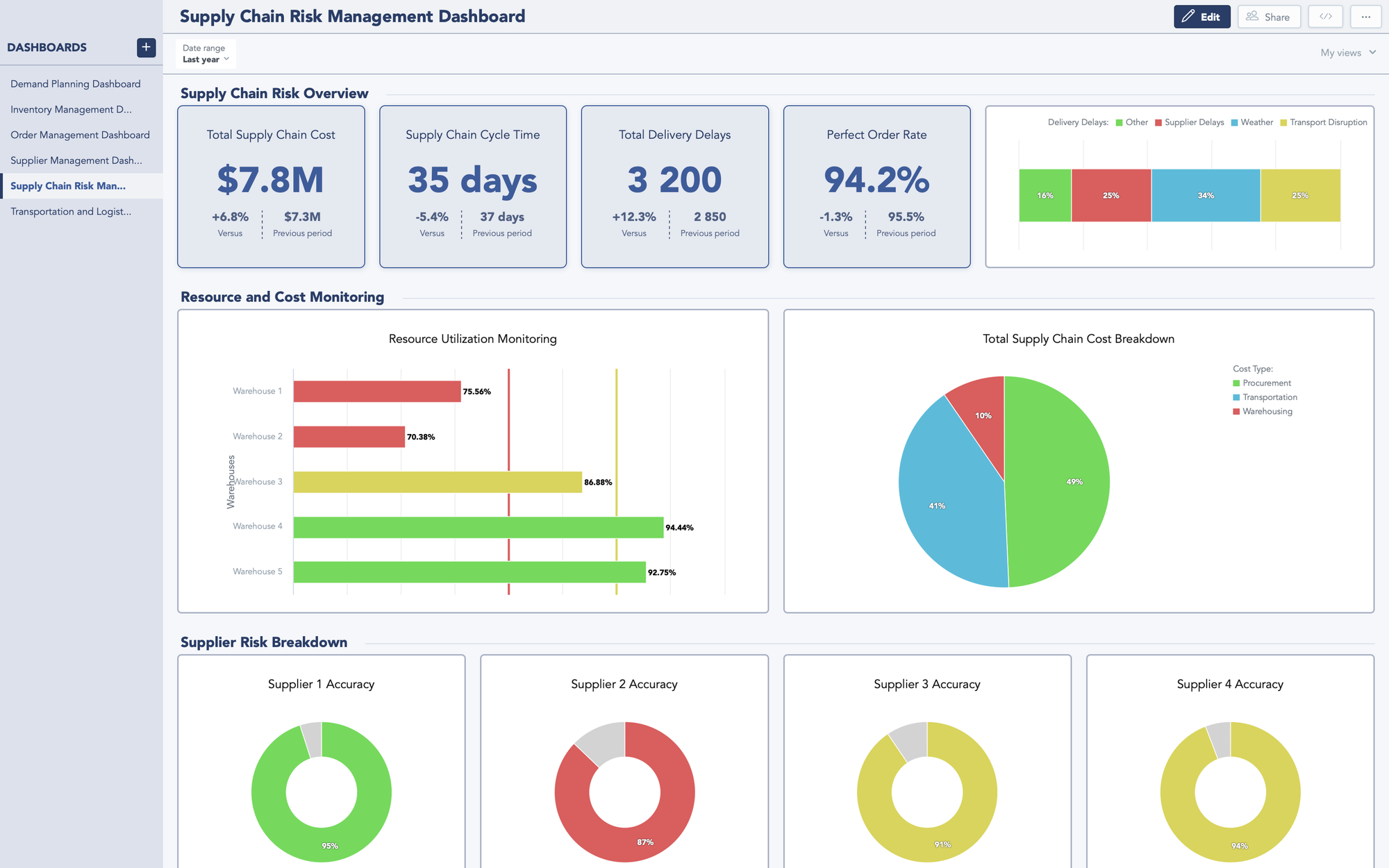
Supply Chain Analyst delivers real-time supply chain intelligence — operations research, geopolitical risk assessment, scenario planning, and quantitative analysis — for any industry or geography. While global supply chains grow more complex and volatile by the quarter, this AI provides the analytical depth that typically requires an entire team of specialists working across multiple data sources.
✅ Real-time research across operations, markets, geopolitics, and logistics ✅ Scenario planning and quantitative modeling for disruption response ✅ Industry-agnostic coverage — manufacturing, retail, pharma, agriculture, energy ✅ Persistent memory that tracks your supply chain context across sessions
To understand why this level of intelligence matters now more than ever, let's examine the challenges facing supply chain professionals in 2026.
Quick Answer: What Is the Best AI for Supply Chain Analysis?
Supply Chain Analyst is an AI-powered supply chain intelligence tool that delivers real-time research, risk assessment, and scenario planning to optimize operations across any industry or geography.
Key capabilities:
- Real-time geopolitical and trade disruption monitoring with actionable risk assessments
- Quantitative supply chain modeling and cost-impact simulation
- Supplier diversification analysis and sourcing strategy optimization
- Cross-functional intelligence connecting procurement, logistics, finance, and ESG data
The Supply Chain Complexity Crisis in 2026
The supply chain landscape in 2026 is defined by compounding disruptions. According to KPMG's latest trends analysis, supply chain leaders face six dominant trends reshaping their operations, from tariff volatility and trade disruption to the rapid scaling of AI across procurement and planning functions. Meanwhile, a survey of over 500 supply chain professionals found that emerging technologies and external pressures are converging at an unprecedented pace.
But navigating this environment with traditional approaches is increasingly untenable:
- Data fragmentation across systems — ERP, WMS, TMS, and EDI data sitting in silos, making end-to-end visibility nearly impossible
- Tariff and trade policy whiplash — duties changing overnight, forcing teams to constantly recalculate landed costs, reroute shipments, and renegotiate contracts
- Talent and bandwidth constraints — skilled supply chain analysts are in high demand, and limited internal capacity slows down dashboard development, reporting, and insight delivery
- Geopolitical risk acceleration — tensions, sanctions, and regional instability requiring constant monitoring across dozens of variables
📉 Visibility Gaps Are Costing Billions
The Association for Supply Chain Management (ASCM) identified that limited visibility into supply chain operations leads to unexpected disruptions, delayed deliveries, and higher costs, with organizations struggling to make informed decisions when they can't see what's happening in real time. Traditional spreadsheet-based analysis and monthly reporting cycles simply cannot keep pace with the velocity of modern disruptions.
55% of supply chain leaders are increasing technology investments in 2026, with 45% planning significant AI and automation deployments — MHI/Deloitte Annual Industry Report via Infor
🌍 Globalization Multiplies Complexity
Globalization makes it difficult to coordinate supply and demand across different regions or countries, requiring real-time data from disparate sources, predictive modeling, and scenario simulation to forecast demand and optimize resource allocation. A single tariff change can cascade across procurement, logistics, pricing, and customer delivery — and traditional teams often lack the bandwidth to model these impacts before they hit.
⚡ Speed of Decision-Making Is the New Differentiator
Companies investing in AI-driven supply chain capabilities are seeing 61% higher revenue growth than their peers — IBM via BrainWorks
The gap between organizations that leverage AI intelligence and those relying on manual analysis is no longer marginal — it's existential.
Why Supply Chain Analyst Changes the Game
Supply Chain Analyst functions as your dedicated intelligence unit — combining the analytical depth of a senior supply chain strategist with real-time research capabilities and persistent contextual memory. It doesn't just answer questions; it builds a working understanding of your supply chain, tracks evolving risks, and delivers quantitative analysis on demand.
| Traditional Approach | Supply Chain Analyst |
|---|---|
| Manual research across dozens of sources and reports | Real-time automated research across operations, markets, and geopolitical data |
| Weekly or monthly reporting cycles | On-demand intelligence and continuous monitoring |
| Siloed analysis by function (procurement, logistics, finance) | Cross-functional synthesis connecting all supply chain dimensions |
| Static spreadsheet models | Dynamic scenario planning and quantitative simulation |
| Hiring specialist consultants at $200-$400/hour | Always-available AI analyst with persistent supply chain context |
🔍 Real-Time Research & Intelligence
Supply Chain Analyst pulls live data across web sources, industry publications, government trade databases, and market reports to deliver actionable intelligence — not stale summaries. Whether you need to understand the impact of a new tariff on your Southeast Asian supplier network or assess port congestion trends across European logistics corridors, the analysis happens in real time.
"Analyze the impact of the latest US tariff changes on my automotive parts supply chain from Mexico and suggest three alternative sourcing scenarios with cost comparisons"
📊 Quantitative Modeling & Scenario Planning
Move beyond qualitative assessments. Supply Chain Analyst builds quantitative models for landed cost analysis, supplier risk scoring, inventory optimization, and demand-supply balancing. Run what-if scenarios before disruptions hit:
"Model three scenarios for shifting 30% of our Chinese semiconductor sourcing to Vietnam and India — include lead time changes, quality risk factors, and total landed cost impact over 12 months"
🌐 Geopolitical & Trade Risk Assessment
KPMG's 2026 outlook emphasizes that tariff-management platforms and AI-powered scenario simulators are now essential for supply chain leaders to simulate alternative flows and test 'what-ifs' before policies are implemented. Supply Chain Analyst delivers exactly this capability — monitoring geopolitical developments, trade policy changes, and regional instability, then translating these into concrete risk assessments for your specific supply chain.
🧠 Persistent Memory Across Sessions
Unlike one-off research tools, Supply Chain Analyst remembers your supplier network, commodity exposures, logistics partners, risk thresholds, and strategic priorities across every conversation. Each session builds on previous intelligence, creating a continuously deepening analytical relationship.
Related Agents You'll Also Find Useful
If your supply chain work extends into adjacent domains — and it almost always does — these specialized agents complement the core intelligence that Supply Chain Analyst provides.
Geopolitics Analyst
When supply chain disruptions originate from geopolitical events — trade wars, sanctions, regional conflicts, or political transitions — the Geopolitics Analyst provides the deep contextual analysis you need.
- Power dynamics and game theory modeling for trade relationships
- Escalation analysis and scenario forecasting for regional instability
- Geoeconomic impact assessment across specific industries and trade corridors
Economics Analyst
Macro and microeconomic forces directly shape supply chain costs, demand patterns, and strategic planning. The Economics Analyst provides the economic intelligence layer.
- Macroeconomic trend analysis — inflation, interest rates, currency movements
- Trade policy mechanism tracing and economic impact modeling
- Development economics and emerging market opportunity assessment
Deep Research
For comprehensive research that requires synthesizing hundreds of sources into a single cited report — supplier due diligence, market entry analysis, or competitive intelligence.
- Searches and synthesizes hundreds of sources automatically
- Produces cited research reports with full source attribution
- Ideal for deep-dive investigations that go beyond real-time monitoring
Business Co-Pilot
When supply chain decisions connect to broader business strategy — financial modeling, operations optimization, or compliance planning — the Business Co-Pilot provides the strategic layer.
- Financial modeling and budget impact analysis
- Operations strategy and process optimization
- Cross-functional planning connecting supply chain to business outcomes
How It Works: From First Question to Strategic Intelligence
Step 1: Define Your Supply Chain Context
Start by sharing the basics of your supply chain — industry, key commodities, primary suppliers and regions, logistics networks, and strategic priorities. Supply Chain Analyst builds a persistent understanding that deepens over time.
"I manage supply chain operations for a mid-size electronics manufacturer. Our primary suppliers are in Shenzhen, Taipei, and Seoul, with secondary sourcing in Vietnam. We ship via sea freight to Long Beach and Rotterdam. Our biggest concerns are semiconductor availability and tariff exposure."
Step 2: Request Targeted Analysis
Ask specific questions or request structured analysis. The tool conducts real-time research, applies quantitative frameworks, and delivers actionable intelligence.
"What's the current risk profile for semiconductor sourcing from Taiwan, and how should I adjust my safety stock and dual-sourcing strategy for Q3?"
Step 3: Run Scenarios and Model Decisions
Use scenario planning to test strategic options before committing resources. Supply Chain Analyst models cost impacts, risk factors, lead time changes, and trade-offs across multiple variables.
"Compare three scenarios: maintaining current Taiwan-heavy sourcing, shifting 40% to Vietnam within 6 months, or building a domestic US partnership. Include cost differentials, lead time impacts, and risk scores."
Step 4: Monitor and Iterate
Return regularly to update intelligence, track developing risks, and refine strategies. Persistent memory means you never need to re-explain your supply chain — every session builds on the last.
"Update me on any changes to US-China trade policy this week that affect our component sourcing, and flag any new disruption risks in our Southeast Asian logistics corridors."
Results & Use Cases
📊 Tariff Impact Modeling for a Consumer Goods Manufacturer
Scenario: A consumer goods company sources packaging materials from three countries and faces shifting tariff schedules across multiple trade agreements.
Traditional Approach: The procurement team spends 2-3 weeks manually researching tariff changes, building spreadsheet models, and consulting with trade compliance advisors at $300+/hour.
Supply Chain Analyst: Delivers a comprehensive tariff impact analysis within a single session — modeling landed cost changes across all three sourcing countries, recommending optimal allocation shifts, and providing a monitoring framework for ongoing policy changes.
- Real-time tariff data integrated with supplier-specific cost structures
- Side-by-side scenario comparison with quantified savings and risk trade-offs
- Continuous monitoring as trade policies evolve
💼 Supplier Risk Assessment for Pharmaceutical Distribution
Scenario: A pharmaceutical distributor needs to evaluate the financial stability and operational reliability of 15 critical API suppliers across India and China.
Traditional Approach: Requires a supply chain risk management team to manually pull financial reports, check regulatory compliance databases, and compile risk scorecards over 4-6 weeks.
Supply Chain Analyst: Conducts real-time research across financial data, regulatory records, and industry sources — delivering a structured risk scorecard with actionable diversification recommendations.
- Supplier-by-supplier risk scoring across financial, regulatory, and operational dimensions
- Automated flag identification for compliance concerns and concentration risk
- Strategic recommendations for supplier diversification with specific alternatives
📱 Real-Time Disruption Response on Mobile
Scenario: A logistics manager receives news of a port closure while traveling and needs to assess impact and reroute options immediately.
Traditional Approach: Scramble to contact the operations center, wait for internal analysis, and make decisions with incomplete information under time pressure.
Supply Chain Analyst: Accessible on any device, delivers instant disruption assessment — affected shipments, alternative routing options with cost and time comparisons, and downstream impact analysis — all within minutes.
- Instant disruption impact quantification
- Alternative routing scenarios with cost-benefit comparison
- Downstream customer impact assessment and communication templates
🎯 ESG Supply Chain Compliance Reporting
Scenario: A retail brand needs to prepare Scope 3 emissions reporting and assess supplier ESG compliance across a 200+ vendor network for upcoming regulatory deadlines.
Traditional Approach: Engage ESG consultants at premium rates, spend months collecting and standardizing supplier data, and still end up with incomplete coverage.
Supply Chain Analyst: Structures the ESG analysis framework, researches reporting requirements, models emissions estimates based on available data, and identifies compliance gaps with prioritized remediation steps — supported by the Economics Analyst for regulatory context.
- Structured Scope 3 estimation frameworks tailored to your industry
- Supplier compliance gap analysis with prioritized action items
- Regulatory requirement mapping across jurisdictions
Frequently Asked Questions
Is the AI Supply Chain Analyst free to use?
Yes, Supply Chain Analyst is available on Jenova's free tier with core functionality. Paid plans starting at $20/month provide significantly expanded usage, custom model selection, and enhanced capabilities for intensive analytical workflows.
How is this different from traditional supply chain software like SAP or Oracle?
Traditional supply chain platforms manage internal operational data — inventory levels, purchase orders, and logistics tracking within your own systems. Supply Chain Analyst provides external intelligence — real-time market research, geopolitical risk analysis, scenario modeling, and strategic recommendations. It complements rather than replaces your existing ERP or SCM platform.
Can it analyze supply chains for any industry?
Absolutely. The tool is industry-agnostic and has been used across manufacturing, retail, pharmaceuticals, agriculture, energy, automotive, and consumer goods. You define your supply chain context, and the analysis adapts to your specific industry dynamics, commodity markets, and regulatory environment.
Does Supply Chain Analyst work on mobile?
Yes, Jenova operates with full feature parity across web, iOS, and Android. Supply chain professionals can access real-time intelligence, run scenario analyses, and respond to disruptions from any device — critical for professionals who aren't always at a desk.
How accurate is the AI's supply chain analysis?
Supply Chain Analyst grounds its analysis in real-time research from authoritative sources — industry reports, government databases, market data, and news sources. All data points are traceable to their origins. For high-stakes decisions, it provides the analytical framework and intelligence foundation while recommending human validation for final execution.
Can it monitor ongoing risks across my supply chain?
Yes. With persistent memory, Supply Chain Analyst maintains context about your supplier network, commodity exposures, and risk thresholds across sessions. You can return regularly for updated risk assessments, emerging threat monitoring, and strategic adjustments — each session building on your established supply chain profile.
Conclusion
Supply chain complexity in 2026 demands analytical capabilities that go far beyond spreadsheets and monthly reports. From tariff volatility and geopolitical instability to ESG compliance pressures and the scaling of AI across procurement, the professionals who thrive are those with real-time intelligence and scenario planning at their fingertips.
Supply Chain Analyst delivers that intelligence — real-time research, quantitative modeling, risk assessment, and persistent strategic context — accessible from any device, for any industry and geography. Whether you're modeling the impact of new trade policies, diversifying your supplier base, or preparing for the next disruption, this is the analytical depth that transforms reactive operations into strategic advantage.
Try Supply Chain Analyst now and start building your supply chain intelligence advantage. Explore more specialized AI agents at Jenova.