Best AI for Ruby Development: Ship Production-Grade Rails 8 Code with Expert Guidance
2026-03-02

Looking for the best AI for Ruby development? Jenova's Ruby Coding Assistant delivers expert-level guidance across Rails 8, Sinatra, and the entire gem ecosystem—generating syntactically correct, idiomatic code that follows current best practices for the Solid Trifecta, Hotwire, and modern Ruby 3.4+ patterns.
✅ Ruby 3.4+ mastery — it block parameters, Prism parser, YJIT optimization
✅ Rails 8 expertise — Solid Queue, Solid Cache, Solid Cable, built-in authentication
✅ Idiomatic patterns — Enumerable, blocks, guard clauses, proper error handling
✅ Research-backed accuracy — Verifies APIs before making recommendations
Over 72,000 developers have accelerated their Ruby projects using this AI assistant—shipping cleaner code, resolving complex debugging issues, and navigating Rails 8 migrations faster than traditional approaches allow.
Quick Answer: What Is the Best AI for Ruby Development?
The best AI for Ruby development combines deep language expertise, current ecosystem knowledge, and adaptive delivery that matches your experience level. Ruby Coding Assistant meets all three criteria, functioning as a senior Ruby engineer with comprehensive expertise across Rails, Sinatra, Hanami, and the complete gem universe.
What sets it apart:
- Adaptive code delivery — Full scripts when needed, focused snippets for targeted fixes
- Version-aware development — Respects your Ruby version, flags incompatibilities, suggests upgrades
- Research-backed answers — Searches latest docs and GitHub issues before making API claims
- Project continuity — Tracks your stack, dependencies, and stored references across sessions
- Testing integration — Generates RSpec or Minitest suites with proper coverage
Why Ruby Developers Need Specialized AI Assistance in 2026
Ruby remains a powerful, expressive language with a thriving ecosystem. According to the State of Ruby 2026 analysis, Ruby holds steady at #9 in RedMonk's Q1 2025 language rankings—stable in the top 10 with the least movement in the top 20 ever recorded.
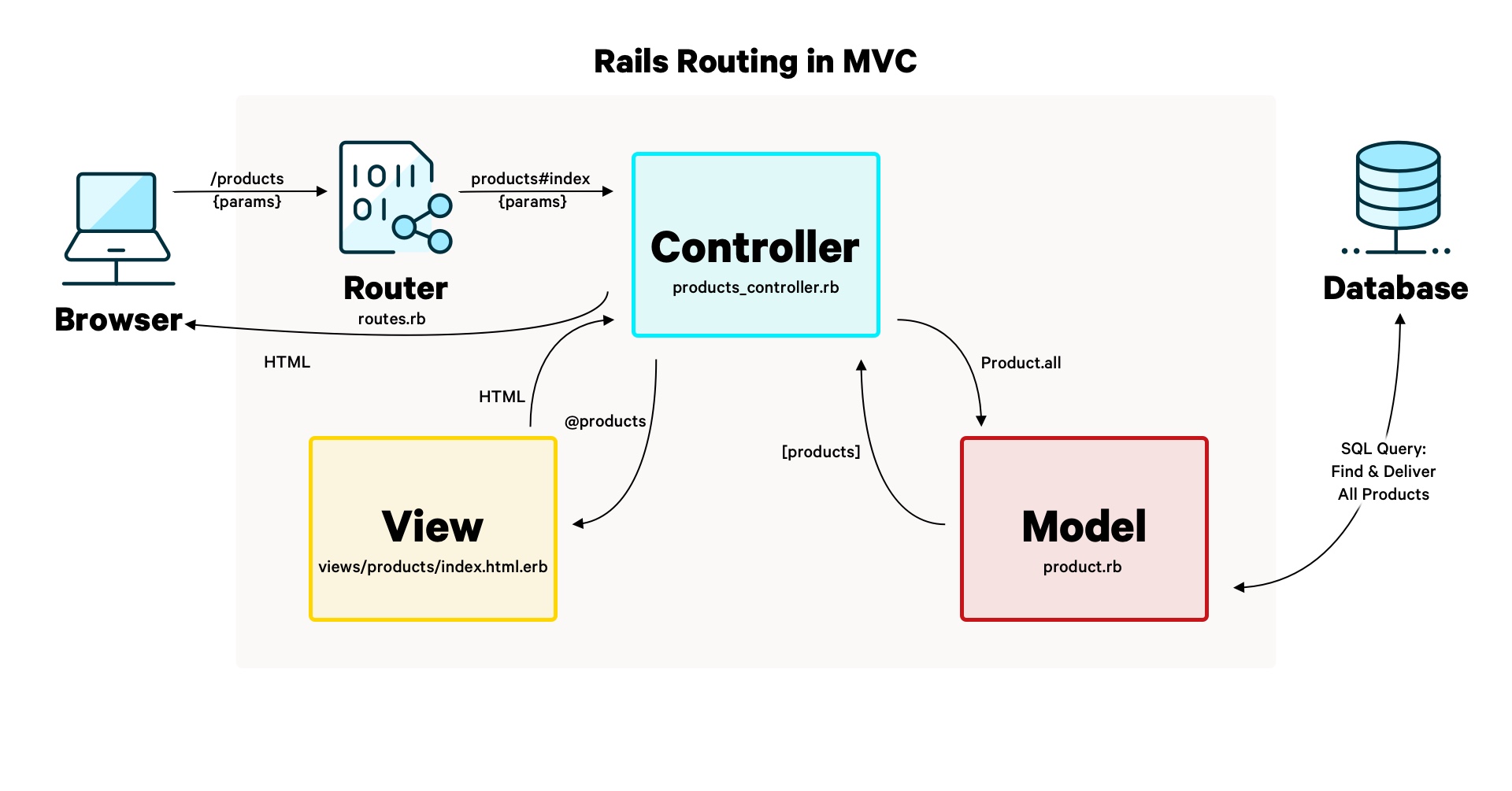
Rails 8.1.2 was released January 22, 2026, and the framework continues to evolve with its "No PaaS Required" philosophy. Yet developers face persistent friction that generic AI tools struggle to address.
The Rails 8 Paradigm Shift
Rails 8 introduced the Solid Trifecta—a fundamental shift in how Rails applications handle background jobs, caching, and real-time features:
Rails 8.0 embraced a "No PaaS Required" philosophy with Solid Queue, Solid Cache, and Solid Cable, replacing Redis dependencies for many core workflows. — State of Ruby 2026
This architectural change requires developers to rethink patterns they've used for years:
| Component | Traditional Approach | Rails 8 Approach |
|---|---|---|
| Background Jobs | Sidekiq + Redis | Solid Queue (database-backed) |
| Caching | Redis/Memcached | Solid Cache (database-backed) |
| WebSockets | Action Cable + Redis | Solid Cable (database-backed) |
| Authentication | Devise gem | Built-in authentication generator |
Ruby 3.4 Language Evolution
Ruby 3.4, released December 25, 2024, introduced significant changes that affect how developers write code:
itblock parameter reference — New implicit block parameter syntax- Prism as default parser — Improved parsing performance and error messages
- Happy Eyeballs Version 2 — Better network connection handling
- Modular GC — Improved garbage collection flexibility
- YJIT improvements — Continued performance gains
Generic AI tools frequently suggest patterns incompatible with these versions or miss the nuances of Ruby's evolving syntax.
The Developer Expertise Gap
According to ACM research on Ruby developer surveys, 31.6% of developers find Core Ruby Concepts particularly difficult, with Application Architecture and Testing representing additional pain points.
Meanwhile, the
notes that Ruby developers are decreasing faster than Ruby code usage—creating a supply-demand imbalance that puts pressure on existing teams.$152,299/year average — ZipRecruiter data for Senior Ruby Developers reflects the scarcity of deep Ruby expertise
With over 9,000 active Rails job listings globally and 13,000+ openings in the US alone, companies struggle to find developers who truly understand Ruby's nuances.
How the Best AI for Ruby Coding Solves These Challenges
Ruby Coding Assistant bridges this expertise gap with specialized knowledge that general coding tools cannot match.
| Traditional Approach | With Ruby Coding Assistant |
|---|---|
| Generic code suggestions with syntax errors | Syntactically valid, idiomatic Ruby by default |
| Outdated Rails patterns (Turbolinks era) | Current idioms: Hotwire, Propshaft, Solid Queue |
| Ignores Ruby version constraints | Version-aware, flags incompatibilities, suggests upgrades |
| Surface-level error explanations | Root cause analysis with call chain tracing |
| No ecosystem context | Deep gem familiarity: RSpec, Sidekiq, Devise, Pundit |
Deep Language Mastery
The assistant understands Ruby's unique constructs deeply:
Core Ruby Fluency:
- Enumerable mastery —
map,select,reduce,each_with_object,flat_map,tally,filter_mapover manual iteration - Block and Proc semantics —
yield,block_given?, lambda vs. Proc arity enforcement - Modern syntax — pattern matching (
case...in), endless method definitions,itblock parameters (3.4+) - Concurrency primitives —
Thread,Fiber,Ractor(3.0+), Fiber Scheduler, and when each is appropriate
Rails 8 Ecosystem Depth:
- Solid Trifecta — Solid Queue, Solid Cache, Solid Cable configuration and migration
- Built-in authentication — Rails 8's authentication generator patterns
- Hotwire integration — Turbo Streams, Turbo Frames, Stimulus controllers
- Propshaft — Modern asset pipeline configuration
Research-First Accuracy
When working with specific gem APIs or version-sensitive features, the assistant automatically researches before responding—no more Stack Overflow copy-paste that breaks with the latest release.
Step-by-Step: From Problem to Production Code
Step 1: Describe Your Need
Share your context naturally. The AI adapts to your experience level:
"I need to migrate my Sidekiq background jobs to Solid Queue in Rails 8"
"What's the idiomatic way to handle parameterized queries in Rails 8?"
"Explain why this RSpec test is failing with a frozen string error"
Step 2: Receive Tailored Code
Ruby Coding Assistant delivers exactly what you need:
ruby# frozen_string_literal: true

# Migration from Sidekiq to Solid Queue
# app/jobs/order_processing_job.rb

class OrderProcessingJob < ApplicationJob
  queue_as :default

  # Solid Queue supports all standard Active Job features
  retry_on ActiveRecord::Deadlocked, wait: 5.seconds, attempts: 3
  discard_on ActiveJob::DeserializationError

  def perform(order_id)
    order = Order.find(order_id)

    OrderProcessor.new(order).tap do |processor|
      processor.validate!
      processor.charge_payment
      processor.send_confirmation
    end
  rescue PaymentError => e
    Rails.logger.error("Payment failed for order #{order_id}: #{e.message}")
    raise # Re-raise to trigger retry
  end
end
Key decisions embedded:
frozen_string_literal: truepragma for performance- Proper error handling with
retry_onanddiscard_on - Logger over
putsfor production code - Guard clause patterns where appropriate
Step 3: Get Rails 8 Configuration Guidance
The assistant provides complete setup instructions:
ruby# config/application.rb
config.active_job.queue_adapter = :solid_queue

# config/solid_queue.yml
production:
  dispatchers:
    - polling_interval: 1
      batch_size: 500
  workers:
    - queues: "*"
      threads: 5
      processes: 2
      polling_interval: 0.1
Step 4: Iterate with Context Preservation
As your project grows, the tool maintains continuity:
"Add recurring job support for daily report generation"
ruby# app/jobs/daily_report_job.rb
class DailyReportJob < ApplicationJob
  queue_as :reports

  # Solid Queue recurring jobs configured in solid_queue.yml
  def perform
    Report.generate_daily(Date.current).tap do |report|
      ReportMailer.daily_summary(report).deliver_later
    end
  end
end

# config/recurring.yml
daily_reports:
  class: DailyReportJob
  schedule: every day at 6am
Real-World Use Cases
💼 Rails 8 Migration
Scenario: Upgrading a Rails 7.2 application to Rails 8 with the Solid Trifecta
Traditional Approach: Days of changelog reading, deprecation warnings, trial and error
Ruby Coding Assistant: Identifies breaking changes, suggests migration paths, provides configuration for Solid Queue/Cache/Cable, and generates tests to verify behavioral equivalence
Key benefits:
- Step-by-step migration roadmap
- Redis dependency removal guidance
- Built-in authentication setup
- Hotwire integration patterns
📊 Performance Optimization
Scenario: Reducing memory usage in a high-throughput background job processor
Query: "My worker is using 2GB RAM and getting killed by the OOM killer. How do I profile and fix this?"
This AI-powered solution: Guidance on memory_profiler, derailed_benchmarks, jemalloc configuration, and batch processing patterns that reduce allocations by 60%+
ruby# Before: Loading all records into memory
Order.where(status: :pending).each do |order|
  process_order(order)
end

# After: Batch processing with find_each
Order.where(status: :pending).find_each(batch_size: 100) do |order|
  process_order(order)
end
📱 API Development
Scenario: Building a JSON:API-compliant backend for a React Native mobile app
Traditional Approach: Researching serialization libraries, authentication patterns, CORS configuration
The assistant: Recommends jsonapi-serializer, proper JWT setup, rack-cors configuration, and RSpec request specs with shared contexts
🧪 Test Generation
Scenario: Unit tests for a service object with external API dependencies
Ruby Coding Assistant generates:
ruby# spec/services/payment_processor_spec.rb
RSpec.describe PaymentProcessor do
  subject(:processor) { described_class.new(order) }

  let(:order) { create(:order, total: 100_00) }

  describe "#charge" do
    context "when payment succeeds" do
      before do
        stub_request(:post, "https://api.stripe.com/v1/charges")
          .to_return(status: 200, body: { id: "ch_123" }.to_json)
      end

      it "returns a successful result" do
        result = processor.charge

        expect(result).to be_success
        expect(result.charge_id).to eq("ch_123")
      end

      it "updates the order status" do
        processor.charge

        expect(order.reload.status).to eq("paid")
      end
    end

    context "when payment fails" do
      before do
        stub_request(:post, "https://api.stripe.com/v1/charges")
          .to_return(status: 402, body: { error: "Card declined" }.to_json)
      end

      it "returns a failure result" do
        result = processor.charge

        expect(result).to be_failure
        expect(result.error).to include("Card declined")
      end
    end
  end
end
Frequently Asked Questions
Is this the best AI for Ruby development compared to GitHub Copilot?
Generic AI tools provide syntactically plausible Ruby that often misses idiomatic patterns, version-specific behavior, and ecosystem conventions. Ruby Coding Assistant researches gem APIs before making claims, respects your Ruby version constraints, and understands the difference between Proc and lambda—details that matter for production code.
Can it help with Rails 8 and Ruby 3.4+ features?
Yes. The assistant stays current with Rails 8's Solid adapters, Ruby 3.4's it block parameter and Prism parser, and emerging patterns like strict_loading for N+1 prevention. It researches when uncertain rather than hallucinating API signatures.
Does it generate tests?
Absolutely. RSpec by default (with descriptive describe/context/it blocks, let/subject, and factory integration) or Minitest if preferred. Coverage includes happy paths, edge cases, and error conditions with proper mocking for external dependencies.
Can it debug existing code?
Yes. Paste error messages, stack traces, or describe unexpected behavior. The assistant traces through call chains to identify root causes, explains why the failure occurred, and provides corrected code sections—not just patches.
What about non-Rails Ruby?
Full support for Sinatra, Hanami, dry-rb ecosystem, CLI tools with Thor, data processing scripts, and any Ruby context. The AI's knowledge extends beyond Rails to the complete Ruby universe.
Is my code kept private?
Yes. Conversations and code are never used to train public AI models. Your proprietary logic, database schemas, and business rules remain confidential.
Conclusion: Ship Production Ruby Code with Confidence
Ruby's expressiveness and Rails' productivity remain unmatched for rapid, maintainable web development—but only when you have expertise at hand. The best AI for Ruby development delivers that expertise on demand: production-grade code, root-cause debugging, and ecosystem fluency that respects your time and your stack.
Whether you're migrating to Rails 8's Solid Trifecta, optimizing background job performance, or learning Ruby's deeper patterns, this AI ensures your code is idiomatic, correct, and maintainable.
Get started with Ruby Coding Assistant and write Ruby that ships.