Best AI for Ruby Coding: Build, Debug & Ship Rails Apps Faster (June 2026)
2026-06-21
Jenova's Ruby Coding Assistant transforms how developers write, debug, and ship production Ruby — navigating Rails conventions, ActiveRecord optimization, gem ecosystem complexity, and modern Hotwire/Turbo patterns through natural conversation with an expert-level Ruby engineer who understands convention over configuration from the ground up. While Ruby and Rails continue to power some of the world's most successful web applications, the framework's rapid evolution across Rails 7/8, Solid Queue/Cable/Cache, Kamal deployments, and import maps means even experienced developers constantly battle shifting best practices and outdated Stack Overflow answers.
✅ Rails 8 mastery — controllers, models, Hotwire/Turbo, Stimulus, Solid Queue, and Kamal deployment ✅ ActiveRecord expertise — N+1 elimination, eager loading strategies, migration design, and query optimization ✅ Full gem ecosystem fluency — version-aware selection, configuration, compatibility, and upgrade strategies ✅ Persistent memory that learns your app structure, Gemfile, and coding conventions over time
The Ruby ecosystem is thriving in 2026 — but the gap between writing basic Ruby syntax and building production-grade Rails applications that follow current conventions has never been wider. To understand why specialized AI assistance has become essential, let's examine the real challenges Ruby developers face today.
Quick Answer: What Is the Best AI for Ruby Coding?
Jenova's Ruby Coding Assistant is a purpose-built AI pair-programmer for Ruby that writes idiomatic, convention-following code with deep expertise in Rails, ActiveRecord, and the gem ecosystem.
Key capabilities:
- Generate production-ready Rails applications with proper MVC patterns, Hotwire/Turbo integration, and modern frontend architecture
- Write optimized ActiveRecord queries with correct eager loading, scope composition, and N+1 prevention from the start
- Navigate the gem ecosystem with version-aware recommendations — Devise vs. Rodauth, Pundit vs. Action Policy, Sidekiq vs. Solid Queue
- Persistent memory that remembers your Rails version, model structure, gem dependencies, and architectural decisions across sessions
The Ruby Problem in 2026
Ruby and Rails power a disproportionate share of the web's most valuable applications — from Shopify and GitHub to Basecamp, Hey, and Stripe's dashboard. But the reality of productive Ruby development in 2026 is significantly more complex than the language's elegant syntax suggests.
Ruby remains a top choice for startups and established companies prioritizing developer productivity — companies like Shopify (the world's largest Rails application), GitHub, and Basecamp chose Ruby because developer productivity translates directly to business velocity — RailsCarma, 10 Best AI Tools for Rails Development 2026
Rails 8.0 introduced enhanced performance through YJIT, simplified deployment with Kamal, and native support for Hotwire — fundamentally changing how Rails applications are built and deployed — RailsCarma
AI coding tools accelerate routine tasks by 30-50%, but only 10-20% for complex architecture work — and all tools require human review for logic errors, security issues, and poor patterns — Verdent AI, Best AI Coding Assistants 2026
Ruby is still popular in 2026 because it has a strong community and extensive existing projects that teams keep maintaining and expanding —
But accessing AI assistance that truly understands Ruby's unique philosophy — rather than treating it as "Python with different syntax" — remains frustratingly difficult:
The Rails Evolution Velocity Problem
Rails ships transformative changes with each major version. The jump from Rails 6 to Rails 8 replaced Webpacker with import maps, Turbolinks with Turbo, Action Cable with Solid Cable, traditional background jobs with Solid Queue, and introduced the "no PaaS" deployment philosophy with Kamal. Generic AI tools trained on mixed-era documentation routinely generate Webpacker configuration for projects using import maps, suggest Turbolinks patterns when Turbo is the current approach, or produce controller code targeting API surfaces that changed two versions ago. Stack Overflow answers from 18 months ago actively mislead.
ActiveRecord's Deceptive Simplicity
ActiveRecord's elegant syntax hides significant performance traps. The difference between includes, preload, and eager_load — each generating fundamentally different SQL — can turn a millisecond page load into a multi-second database thrash. N+1 queries that don't surface in development with 10 records become catastrophic with 10,000 in production. Counter caches that drift, polymorphic associations that resist optimization, and scope composition that creates query plan issues are decisions that generic AI tools consistently get wrong because they optimize for readability rather than database performance.
Gem Ecosystem Complexity
With thousands of gems available, choosing the right one — and configuring it correctly for your specific Rails version — requires ecosystem knowledge that generic AI tools lack. Version conflicts, abandoned gems with security vulnerabilities, gems that monkey-patch core classes in conflicting ways, and the constant evaluation of whether a gem or custom implementation better serves the codebase create friction that compounds as applications mature.
Ruby's Metaprogramming Makes AI Harder
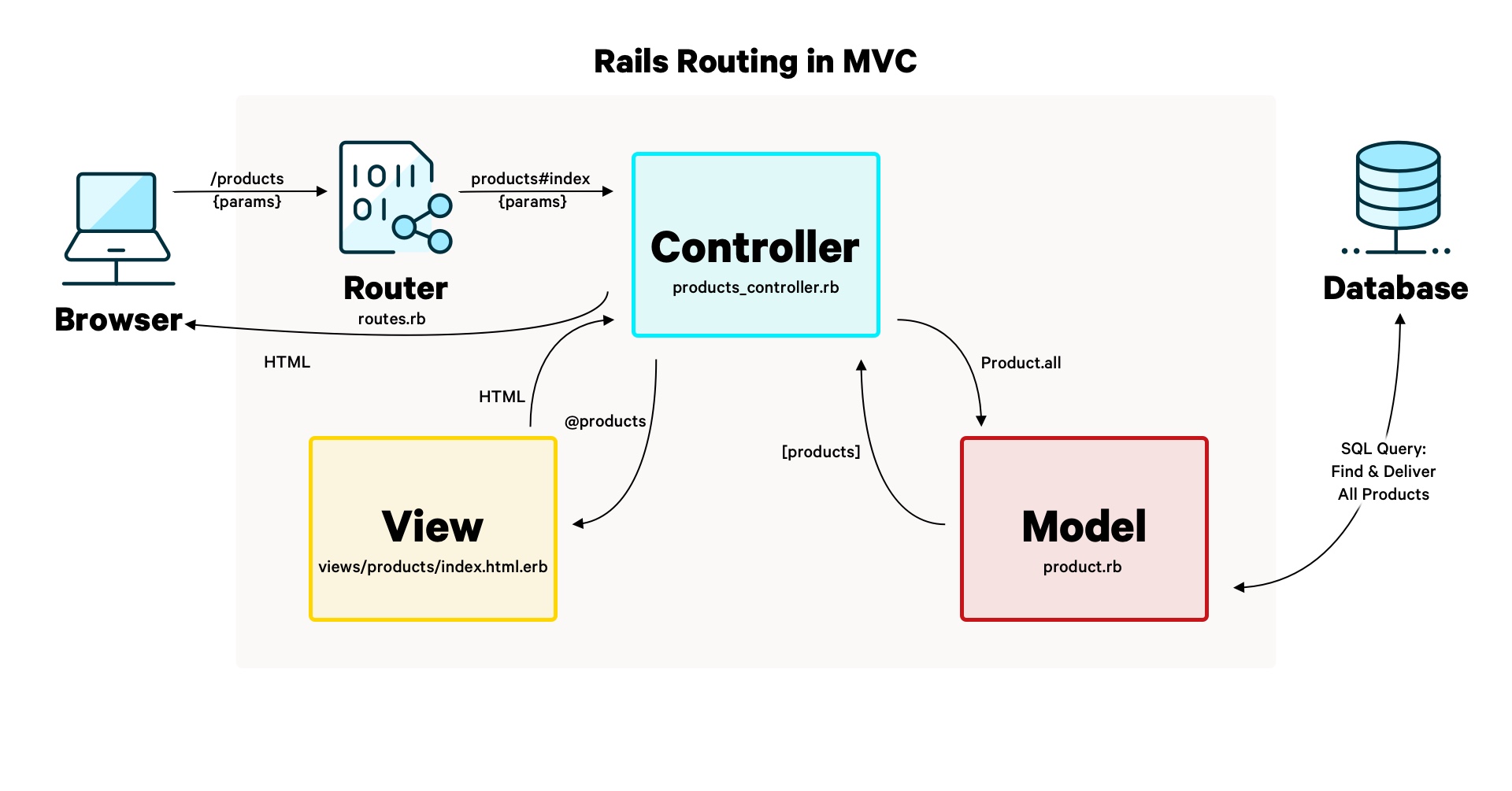
Ruby is fundamentally different from the languages that dominate AI training data. Its metaprogramming capabilities — method_missing, define_method, class_eval — mean that code behavior is often determined at runtime in ways that static analysis can't capture. Rails amplifies this with conventions invisible to tools trained primarily on Python and JavaScript: automatic file loading by naming convention, implicit rendering, RESTful routing that generates helper methods, and concern modules that extend class behavior across files.
General-Purpose AI Produces Anti-Pattern Ruby
When a generic AI generates a Rails controller that manually instantiates objects instead of using before_action callbacks, creates a service class for logic that belongs in a model concern, or writes raw SQL instead of an ActiveRecord scope — the developer spends more time fixing the output than they saved by asking. As RailsCarma's analysis notes, AI tools are supportive but produce code that frequently ignores Rails conventions, creating maintenance nightmares in codebases that depend on convention over configuration.
Why Jenova's Ruby Coding Assistant
Most AI coding tools treat Ruby as one language among dozens — the same model that writes your Python scripts also attempts your Rails controller pipeline. Jenova's Ruby Coding Assistant is purpose-built for Ruby-first development — not a Python assistant that tolerates Ruby syntax, but a dedicated expert across Rails, gem ecosystems, and idiomatic Ruby patterns with deep understanding of convention over configuration.
| Traditional AI Coding Tools | Jenova Ruby Coding Assistant |
|---|---|
| Treats Ruby as one of 50+ supported languages | Purpose-built for Ruby's metaprogramming model and Rails conventions |
| Generates service objects for everything, ignoring Rails patterns | Proper use of concerns, scopes, callbacks, and Rails patterns where they belong |
| Stack Overflow answers mixing Rails 5, 6, 7, and 8 patterns | Version-aware code targeting your specific Rails and Ruby version |
| Manual N+1 detection with Bullet gem after the fact | ActiveRecord queries written with eager loading and optimized associations from the start |
| Trial-and-error Hotwire/Turbo integration | Correct Turbo Frame, Turbo Stream, and Stimulus patterns with proper DOM targeting |
| Forgets your project context between conversations | Persistent memory tracks your Gemfile, model structure, and architecture decisions |
Rails 8 Mastery
The assistant generates complete, convention-following Rails code with proper routing, controller organization, model validations, and view rendering — not just isolated snippets. Whether you're building a Hotwire-powered SPA-like experience, a traditional server-rendered application, or an API-only backend, it produces code that follows current Rails 8 conventions including Solid Queue for background jobs, Solid Cache for caching, and Kamal for deployment:
"Create a Rails 8 resource for project management with nested task resources, Turbo Stream updates for real-time task status changes, and Stimulus controllers for drag-and-drop reordering"
"Set up Kamal deployment for my Rails 8 app with PostgreSQL, Redis, and automatic SSL — including health checks and zero-downtime deploys"
ActiveRecord Expertise
ActiveRecord is powerful but treacherous at scale. The assistant understands eager loading strategies (includes vs. preload vs. eager_load), knows when joins with select outperforms includes, designs counter caches for frequently accessed counts, and writes scopes that compose cleanly without creating query plan issues:
"This dashboard page loads 50 projects with their tasks, task assignees, and comment counts. It takes 3 seconds in production with 10,000 projects. Optimize the queries without changing the view structure"
Gem Ecosystem Navigation
The assistant provides current recommendations with version-aware configuration, knows which gems are actively maintained versus abandoned, and flags potential conflicts before they surface in production. Devise vs. Rodauth for authentication, Pundit vs. Action Policy for authorization, Sidekiq vs. Solid Queue for background processing — it understands the tradeoffs and configures the gem correctly for your specific Rails version.
Idiomatic Ruby by Default
Every code block follows Ruby's philosophy: scope functions used appropriately, metaprogramming applied judiciously rather than avoided entirely, clean DSL design where it improves readability, proper use of blocks and procs, and convention-over-configuration adherence that makes the codebase predictable for any Rails developer joining the team.
This is exactly what Jenova's Ruby Coding Assistant was built for.
Related Agents You'll Also Find Useful
If you're building Ruby applications as part of a broader development workflow, these agents complement the Ruby Coding Assistant at different stages:
SQL Coding Assistant
While ActiveRecord handles most database interactions, production Rails applications inevitably require raw SQL — for complex reporting queries, PostgreSQL-specific features like JSONB queries and materialized views, or performance-critical operations that bypass the ORM. The SQL Coding Assistant provides cross-platform query optimization across PostgreSQL, MySQL, and SQLite.
- Complex reporting queries that complement ActiveRecord scopes
- PostgreSQL-specific features: CTEs, window functions, JSONB queries, partial indexes
- Migration scripts for production database changes with zero-downtime strategies
JavaScript/TypeScript Coding Assistant
Modern Rails development is inseparable from frontend JavaScript — Stimulus controllers, Turbo Frame interactions, and import map configuration all require JavaScript fluency. The JavaScript/TypeScript Coding Assistant handles the frontend side of Rails applications, from Stimulus controller design to API client generation.
- Stimulus controllers that integrate cleanly with Turbo Frames and Streams
- Import map configuration and JavaScript module management in Rails 8
- React/Vue/Svelte frontends consuming Rails API-only backends
Python Coding Assistant
Many Ruby teams work alongside Python-powered data pipelines, ML model serving, or DevOps tooling. Whether you're integrating a Rails application with a Python ML backend, building data processing scripts that feed into your Rails database, or automating infrastructure with Python-based tools, the Python Coding Assistant handles the other side of that boundary.
- Data pipeline orchestration that feeds into Rails application databases
- ML model integration with Rails via API endpoints
- Infrastructure automation scripts alongside Kamal deployment
How It Works
Step 1: Describe Your Project Context
Start a conversation and tell the Ruby Coding Assistant about your project — the Ruby and Rails versions, key gems, database, and what you're building. It remembers this context across all future sessions, so you never re-explain your architecture.
"I'm building a multi-tenant SaaS with Rails 8, Ruby 3.3, PostgreSQL, Devise for auth, Pundit for authorization, Solid Queue for background jobs, and Hotwire/Turbo for the frontend. We use RSpec with FactoryBot for testing and deploy with Kamal to a VPS."
Step 2: Request Code in Plain English
Describe what you need naturally. The assistant generates convention-following, production-grade Ruby based on your actual project context — proper Rails patterns, correct gem configuration, and architecture that matches your stated design approach.
"Add a notifications system: users can receive in-app notifications for task assignments, comments on their projects, and deadline reminders. Use Turbo Streams for real-time delivery, a polymorphic notifiable association, and a notification preferences model so users can mute specific notification types"
Step 3: Debug and Optimize
Paste error messages, slow query logs, or code that doesn't behave as expected. The assistant traces from symptom to root cause — whether it's an N+1 query hiding behind includes, a Turbo Stream that isn't targeting the correct DOM element, or a gem version conflict causing silent failures.
"My index page takes 4 seconds to load with 500 records. Here's my controller action and the view — Bullet isn't flagging any N+1s but the query log shows 47 queries. What's happening?"
Step 4: Evolve Your Architecture Over Time
As your project grows, continue the conversation. New feature modules, Rails version upgrades, gem replacements, background job architecture changes — the assistant tracks your project's evolution and keeps recommendations consistent with your existing decisions.
"We're upgrading from Rails 7.1 to Rails 8. Walk me through the migration — what breaks, what needs updating, and how do we transition from Sidekiq to Solid Queue without losing in-flight jobs"
Results & Use Cases
📊 Production SaaS Application Development
Scenario: A startup team needs to build a project management SaaS with real-time collaboration, multi-tenancy, subscription billing via Stripe, and role-based access control — all in Rails 8 with Hotwire for a modern, reactive frontend without a JavaScript framework.
Traditional Approach: 3-4 weeks researching current Rails 8 patterns, configuring Turbo Streams for real-time updates, debugging Stimulus controller interactions, integrating Stripe with proper webhook handling, and implementing tenant scoping across every query.
Ruby Coding Assistant: Complete architecture in days — multi-tenant scoping with default_scope alternatives and Current.tenant pattern, Turbo Stream broadcasts for real-time project updates, Stripe integration with webhook verification and subscription lifecycle management, and Pundit policies for role-based access — all following Rails 8 conventions.
- Proper tenant isolation without
default_scopepitfalls - Turbo Stream broadcasts with authentication-scoped channels
- Stripe webhook handling with idempotency and retry logic
- RSpec test suite covering authentication, authorization, and billing edge cases
💼 Legacy Rails Upgrade and Modernization
Scenario: An enterprise team needs to upgrade a 200,000-line Rails 5.2 application to Rails 8 — replacing Webpacker with import maps, migrating from Turbolinks to Turbo, updating deprecated ActiveRecord patterns, and transitioning from Heroku to Kamal deployment.
Traditional Approach: Months of manual migration research, trial-and-error gem upgrades, debugging deprecation warnings that cascade across files, and extensive regression testing with limited confidence.
Ruby Coding Assistant: Systematic version-by-version upgrade path — Rails 5.2 → 6.0 → 6.1 → 7.0 → 7.1 → 8.0 — with specific breaking changes identified at each step, gem replacement recommendations for deprecated dependencies, and automated deprecation resolution patterns. Paired with the SQL Coding Assistant for database migration scripts that handle schema changes with zero downtime.
- Version-by-version upgrade plan keeping CI green at every step
- Webpacker to import maps migration with asset pipeline restructuring
- Turbolinks to Turbo migration with Stimulus controller scaffolding
- Kamal deployment configuration replacing Heroku buildpacks
📱 API-Only Backend on Mobile
Scenario: A solo developer building a Rails API backend on their phone during a commute needs to scaffold authenticated endpoints with JWT tokens, versioned API namespaces, and JSON serialization — quickly, without a laptop.
Traditional Approach: Waiting to get to a workstation, researching rack-cors configuration, debugging JWT token lifecycle with Devise, comparing serializer gems, and testing API responses with Postman.
Ruby Coding Assistant on mobile: Describe the requirements by voice or text, get compilable Rails API code with devise-jwt integration, API versioning via namespace routing, Alba serializers, and proper CORS configuration — all consistent with Rails 8 API-only conventions.
- Full feature parity on iOS and Android
- Voice-to-text for describing model associations and controller logic naturally
- Copy generated code directly to share with the team or commit later
🎯 Background Job Architecture for High-Volume Processing
Scenario: An e-commerce platform processes 50,000 orders per day, each triggering a cascade of background jobs — inventory updates, payment processing, shipping label generation, email notifications, analytics events, and webhook deliveries. Jobs occasionally fail silently, retry endlessly, or execute out of order.
Traditional Approach: 2-3 weeks of senior engineer time redesigning the job architecture, implementing idempotency, adding dead letter queues, and building monitoring dashboards. Multiple production incidents during the transition.
Ruby Coding Assistant: Complete job architecture redesign with idempotency keys, ordered execution using job dependencies, dead letter handling with retry policies, and monitoring — using Solid Queue for simple jobs and Sidekiq for jobs requiring Redis-specific features like rate limiting. Paired naturally with the SQL Coding Assistant for database-backed audit trails.
- Idempotent job design preventing duplicate processing on retry
- Job dependency chains ensuring correct execution order
- Dead letter queue with alerting for jobs exceeding retry limits
- Database-backed audit trail for every job execution with timing metrics
FAQ
Is Jenova's Ruby Coding Assistant free?
Yes, Jenova's Ruby Coding Assistant is available on the free tier with all core features. Paid plans starting at $20/month provide up to 30× more usage, custom model selection across providers like OpenAI, Anthropic, and Google, and no watermarks on generated documents. No credit card required to start.
How is this different from GitHub Copilot or Cursor for Ruby development?
General-purpose tools treat Ruby as one language among many and frequently produce code that ignores Rails conventions — creating service objects where concerns belong, writing raw SQL where scopes suffice, and generating patterns from Rails 5 in a Rails 8 project. RailsCarma's 2026 analysis notes that while tools like Copilot offer "excellent Rails support for models, controllers, and migrations," they still produce "occasional irrelevant suggestions for complex Rails logic." Jenova's Ruby Coding Assistant specializes in current Rails conventions, maintains persistent memory of your model structure and gem versions across sessions, and generates code that a senior Rails developer would approve in a pull request.
Which Ruby and Rails versions does it support?
The assistant covers Ruby 2.7 through 3.3+ and Rails 5 through 8. It generates version-appropriate code, flags deprecated APIs, and provides migration guidance when upgrading between major versions. When you specify your target versions, every response follows the conventions and APIs available in that combination — no mixing of Rails 6 patterns into a Rails 8 project.
Can it handle complex Rails architectures beyond standard CRUD?
Yes. The assistant handles Rails monoliths, modular monoliths with engines, API-only backends, and microservice architectures with event-driven communication. It generates proper service boundary design, inter-service communication patterns, and shared gem extraction — with pragmatic guidance on when a monolith is the right choice versus premature decomposition.
Does it work on mobile?
Yes. Jenova provides full feature parity across web, iOS, and Android with state-of-the-art speech-to-text. You can debug an ActiveRecord query from your phone, dictate architecture questions using voice-to-text, or review Ruby code on a tablet — with all conversation history synced across devices.
Is my code kept private?
Jenova never uses your data to train public AI models. All data is encrypted in transit and at rest, and is never sold or shared with advertisers. Your application code, gem configurations, and conversation history remain private and secure.
Conclusion
Ruby and Rails continue to power some of the most successful web applications in the world — Shopify, GitHub, Basecamp, and thousands of startups that chose developer productivity as their competitive advantage. With Rails 8 introducing Solid Queue, Solid Cache, Kamal deployment, and enhanced YJIT performance, the framework has never been more capable — but the velocity of convention changes, ActiveRecord's deceptive simplicity at scale, and the complexity of gem ecosystem management mean that productive Ruby development demands more expertise than ever. Generic AI tools that treat Ruby as one language among dozens produce anti-pattern code that fights the framework rather than leveraging it.
Jenova's Ruby Coding Assistant closes that gap with purpose-built Rails expertise, persistent memory that remembers your application architecture across sessions, and idiomatic code generation that respects Ruby's philosophy of convention over configuration. Whether you're building a Hotwire-powered SaaS, upgrading a legacy Rails application, architecting high-volume background job pipelines, or navigating gem ecosystem decisions, it delivers code that follows the conventions that make Rails applications maintainable at scale.
Try Jenova's Ruby Coding Assistant now — no credit card required. Explore the full agent library at Jenova.