Best AI for Plumbing Assistance: Leak Detection, Code Compliance & Water Heater Sizing in One Conversation
2026-05-18

When a pipe bursts at midnight or a mystery leak inflates your water bill by 200%, what you need isn't a search engine full of contradictory forum posts — it's structured guidance from someone who understands pipe materials, drainage physics, and your local plumbing code. The best AI for plumbing assistance delivers exactly that. AI Plumber's Assistant replicates the diagnostic thinking of a master plumber — branching between supply-side, drain-waste-vent, and leak isolation protocols — and calibrates every recommendation to your skill level, geography, and the specific materials in your walls. No service call fee, no appointment wait, no generic advice from the wrong jurisdiction.
✅ Upload photos to identify pipe materials, trace leak paths, and decode water heater nameplates ✅ Code-aware diagnostics that distinguish IPC from UPC and adapt to your local amendments ✅ Repair-vs-repipe economics factoring material age, water quality, insurance, and rebates ✅ Skill-adaptive language — plain English for homeowners, trade terminology for licensed plumbers ✅ Downloadable material lists, maintenance schedules, and project scope documents
More than 8,200 homeowners and plumbing professionals have used this AI to diagnose plumbing issues faster — identifying root causes an average of 4x quicker than traditional search-and-call workflows, and collectively avoiding an estimated $920,000 in unnecessary service call charges. Here's what makes it the strongest AI option for plumbing in 2026.
Quick Answer: What Is the Best AI for Plumbing Assistance?
The best AI for plumbing assistance is AI Plumber's Assistant — a domain-specific diagnostic tool that identifies plumbing failures, guides repairs, sizes water supply and DWV systems, and calculates replacement economics in real time.
Unlike general-purpose AI or scattered YouTube tutorials, it applies structured plumbing logic — the same branching methodology a 30-year master plumber uses on every call — and adapts it to your exact situation.
Key capabilities:
- Supply-side vs. drain-side diagnostic branching with probability-ranked causes
- Photo-based identification of pipe materials (copper, PEX, CPVC, galvanized, polybutylene, cast iron)
- IPC, UPC, and international code framework awareness with section-level references
- Water heater comparison analysis across tank, tankless, and hybrid heat pump models with rebate research
The 2026 Plumbing Crisis: Why Every Homeowner and Tradesperson Needs Better Tools
The plumbing industry in 2026 is defined by a collision between aging infrastructure, a shrinking workforce, and escalating costs. The U.S. plumbing sector is valued at approximately $191.4 billion, but behind that number is a system under severe strain — and ordinary homeowners bear the financial brunt.
The forces creating this crisis:
- Water damage is the #1 property insurance claim — averaging thousands per incident, with escalation measured in hours, not days
- A generational workforce cliff — hundreds of thousands of plumbers are approaching retirement with insufficient replacements
- Hidden pipe failures — millions of homes contain materials with known, predictable failure timelines
- Code complexity — two competing national frameworks (IPC and UPC) plus local amendments create a patchwork where advice from one state is wrong in another
- Technology confusion — heat pump water heaters, smart leak detectors, and greywater systems are going mainstream without adequate consumer education
🚰 The True Cost of a Plumbing Failure
Water damage isn't just expensive — it's one of the fastest-escalating property emergencies a homeowner can face. The national average for water damage restoration sits at [**$3,863**](https://www.angi.com/articles/how-much-does-it-cost-repair-water-damage.htm), but that figure masks a wide range: a caught-early supply line drip might cost $450 to remediate, while a burst pipe left unaddressed for 48 hours can trigger mold growth that pushes restoration past $16,000.
The insurance picture is equally sobering. Average water damage claims now exceed $11,000, and carriers are increasingly scrutinizing repeat claims — raising premiums, adding exclusions, or declining coverage for homes with documented plumbing failures.
Household leaks waste nearly 1 trillion gallons of water per year across the United States — enough to supply 11 million homes annually. Source: EPA WaterSense
The urgency factor compounds the financial risk. Between 70% and 80% of plumbing service calls are classified as urgent, meaning most plumbing failures don't give you the luxury of shopping for quotes. You call whoever answers first and pay whatever they charge.
👷 The Workforce Is Aging Out Faster Than It's Being Replaced
The United States faces a projected shortage of roughly 550,000 plumbers by 2026. The root cause is demographic: approximately 23% to 25% of active plumbers are over 55, and the pipeline of new entrants — roughly 72,000 annual openings projected through 2032 — falls well short of replacement demand.
The practical impact is straightforward: longer wait times (non-emergency appointments in many metro areas now stretch to 5–10 business days), higher per-visit costs, and less availability for preventive maintenance and non-critical work. If your problem isn't actively flooding your home, you're at the back of the line.
🏗️ Millions of Homes Are Sitting on Predictable Pipe Failures
The age profile of American housing stock creates a ticking clock for plumbing failures that most homeowners don't know they're living with:
- Galvanized steel pipes (common pre-1960s) — corrode internally over 40–70 years, restricting flow and eventually perforating
- Polybutylene piping (installed 1978–1995) — known for catastrophic, large-scale failures triggered by chlorinated water exposure
- Lead service lines — the EPA's revised Lead and Copper Rule is driving replacement mandates, creating confusion about responsibility and cost
- Copper Type M (thin-wall) — susceptible to pinhole leaks in regions with aggressive water chemistry
Material costs for plumbing have risen nearly 30% between 2021 and 2025, meaning both spot repairs and full repiping are significantly more expensive than even a few years ago.
⚡ Water Heating Is Getting More Complex
Water heating accounts for 20% of a typical home's energy consumption, and the technology landscape is shifting rapidly. Hybrid heat pump water heaters are growing at an 18.52% CAGR through 2031, tankless systems are displacing traditional tank heaters in new construction, and federal efficiency mandates are raising minimum performance standards.
For homeowners, this creates a confusing matrix of options when a water heater fails: tank vs. tankless vs. heat pump, gas vs. electric, first-hour delivery ratings vs. recovery rates, and a bewildering landscape of federal tax credits, utility rebates, and manufacturer promotions. Making the wrong sizing decision means either lukewarm showers or a system that short-cycles and fails prematurely.
Why This Is the Best AI for Plumbing Work
AI Plumber's Assistant was built from the ground up for plumbing — not adapted from a general knowledge assistant. Every response follows the same diagnostic logic a master plumber applies in the field: identify the subsystem, determine the failure branch, rank probable causes, and prescribe verification steps in order of safety and simplicity.
| What People Typically Do | What AI Plumber's Assistant Does Instead |
|---|---|
| Google the symptom → get 15 results from different code jurisdictions | Single conversation calibrated to your location, pipe materials, and code framework |
| Watch a YouTube fix for a different pipe material than yours | Adapts guidance to your exact materials, fixtures, and system age |
| Call a plumber → $150+ diagnostic fee, 3–7 day wait | Instant structured diagnosis; clear escalation when professional help is needed |
| Ask a neighbor or landlord for advice | Evidence-based recommendations with code references and safety protocols |
| Guess whether to repair or replace | Data-driven cost analysis factoring age, failure patterns, water quality, and rebates |
🧠 Diagnostic Logic, Not Pattern Matching
The difference between this AI and typing your problem into a general assistant is methodology. General AI generates plausible-sounding text about plumbing. AI Plumber's Assistant follows a structured diagnostic protocol:
- Branch determination — Is this a supply-side pressure issue, a drain-waste-vent blockage, or a leak between the two?
- Subsystem isolation — Within the identified branch, which component or section is most likely failing?
- Probability ranking — Causes ordered by statistical likelihood for your specific symptom set, system age, and material type
- Verification sequencing — Steps arranged from safest and easiest to most complex, with clear "stop and call a professional" boundaries
This mirrors how the best plumbers actually think — not jumping to conclusions, but systematically narrowing possibilities.
🎯 Reads Your Expertise Automatically
There's no "select your skill level" menu. The AI interprets your language in real time. When a homeowner says "there's water pooling around the base of my toilet," they receive step-by-step guidance using plain terms — "the wax ring is the seal between the toilet and the floor flange." When a journeyman plumber says "I need to confirm DFU ratings for a battery of four lavatories on a 2-inch horizontal branch," they get direct code references without condescension.
The calibration adjusts continuously throughout the conversation. If a homeowner demonstrates more competence than initially assumed, the AI scales up its technical detail accordingly.
🌐 Jurisdiction-Aware by Default
Plumbing is one of the most code-fragmented trades in construction. IPC governs the majority of U.S. states, UPC covers California and much of the western U.S., and dozens of municipalities layer local amendments on top. A venting distance that passes inspection in Texas may fail in California. A fixture unit calculation accepted under IPC may be wrong under UPC.
This AI detects your location and automatically applies the correct code framework — including unit systems (imperial vs. metric), equipment availability norms, freeze protection requirements, and material preferences typical to your region.
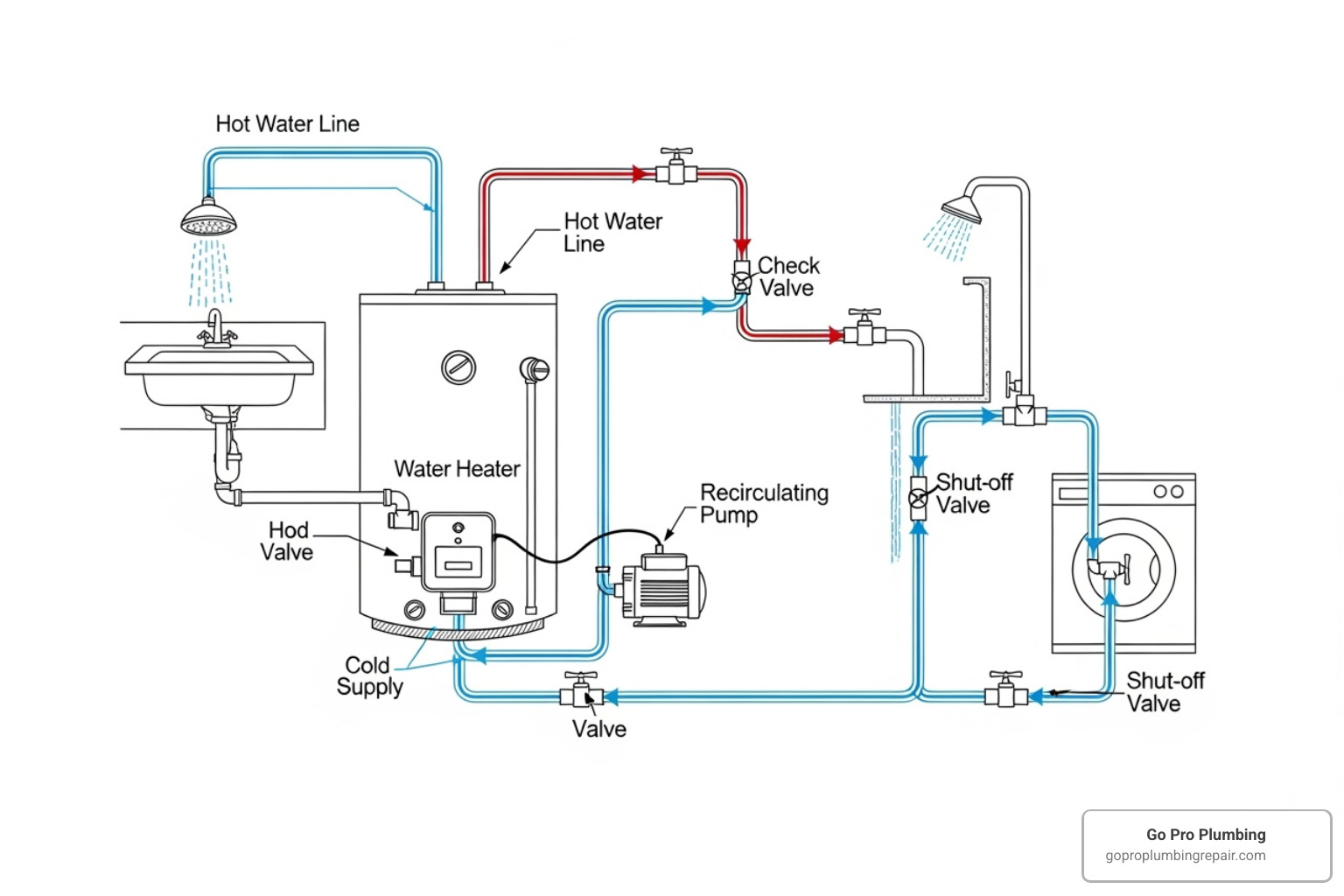
How to Use the Best AI for Plumbing Diagnostics: Step-by-Step
Here's what a real session with AI Plumber's Assistant looks like from start to resolution:
Step 1: Describe What You're Seeing
Open the AI and explain the problem in your own words. No forms, no category dropdowns, no required fields. Just describe what's happening.
"My kitchen faucet pressure dropped to almost nothing over the past week, but the bathroom faucet is fine. The house was built in 1975."
Step 2: Respond to Focused Follow-Ups
The AI asks targeted questions to isolate the failure branch — supply-side, drain-side, or a specific fixture issue. It's looking for the data points that separate one probable cause from another.
"Is the low pressure on both hot and cold at the kitchen faucet, or just one? Also, when you say 1975 — do you know if the supply pipes are copper, galvanized steel, or something else?"
Step 3: Follow the Probability-Ranked Diagnostic Path
Based on your answers, the AI delivers causes ranked by likelihood — not alphabetically, not randomly, but by statistical frequency for your exact symptom profile, material type, and system age.
"Low pressure on both hot and cold at a single fixture in a 1975 home with galvanized pipes — here are the most likely causes, ranked: 1. Galvanized supply line corrosion/buildup at the faucet connection — this is the most common single-fixture pressure loss in homes of this age… 2. Partially closed or deteriorated angle stop valve — the shutoff valve under the sink may be partially seized… 3. Clogged faucet aerator or cartridge — remove the aerator and check for mineral scale or debris…"
Step 4: Upload Photos for Material and Condition Assessment
Take a photo of the pipes under your sink, the shutoff valves, or the faucet connections. The AI identifies pipe material (and flags galvanized-to-copper transitions, which are common corrosion points), assesses visible condition, and integrates findings into the active diagnosis.
Step 5: Get a Resolution — Or Know Exactly What to Tell the Plumber
For issues within your skill level, the AI provides a repair walkthrough with safety steps embedded naturally. For issues beyond safe DIY — gas connections, main line work, permit-required modifications — it draws a clear line and tells you exactly what to communicate to a professional so you avoid unnecessary diagnostic charges and scope creep.
For bigger decisions (repair vs. repipe, water heater replacement, remodel planning), the AI builds out the cost analysis: material pricing, labor estimates for your region, insurance implications, available rebates, and long-term ownership economics.
Real-World Scenarios: How This AI Solves Actual Plumbing Problems
🚿 Mystery Leak Behind a Wall
Scenario: A homeowner in Portland, OR hears a faint hissing sound near the upstairs bathroom wall. There's no visible water yet, but the water meter is slowly ticking even with all fixtures off.
Without AI: Call a plumber for a leak detection visit ($200–$400), which may involve cutting exploratory holes in drywall. If the plumber is booked for a week, the leak continues — potentially saturating framing and drywall.
With AI Plumber's Assistant: The homeowner confirms the meter test (flow with everything off = active leak on the supply side). The AI guides them to isolate sections of the house using shutoff valves to narrow the leak's location — when the meter stops moving, the leak is downstream of the last valve closed. This narrows the plumber's search area from "somewhere in the house" to "between the upstairs bathroom and the main stack," reducing diagnostic time and cost dramatically. The AI also advises the homeowner to document current conditions with timestamped photos for their insurance claim and to check whether their homeowner's policy covers leak detection costs (many do under service line coverage endorsements).
- Leak location narrowed before the plumber arrives — saving 1–2 hours of billable diagnostic time
- Insurance documentation started immediately
- Potential savings: $150–$300 in reduced on-site diagnostic charges
🔧 Journeyman Plumber: Pipe Sizing for a Commercial Tenant Build-Out
Scenario: A plumber is bidding a restaurant tenant improvement that requires sizing the grease interceptor, hot water system, and supply lines for a commercial kitchen with three-compartment sinks, a pre-rinse spray, and a commercial dishwasher.
Without AI: Pull out the code book (IPC Chapter 9), calculate fixture unit loads by hand, cross-reference interceptor sizing tables with local health department requirements, and spend 2–3 hours building the bid package.
AI Plumber's Assistant: The plumber inputs the fixture list and jurisdiction. Within minutes, they receive calculated fixture unit loads, recommended pipe sizes for the water supply and DWV systems, grease interceptor sizing per IPC and local health code requirements, and hot water demand calculations. The AI generates a downloadable material list and project scope document formatted for bid submission.
- Bid package assembled in minutes instead of hours
- Code-compliant calculations with section references for inspector questions
- Downloadable documentation ready for the general contractor
🏠 Polybutylene Pipe Discovery During a Home Purchase
Scenario: A first-time homebuyer's inspector flags "polybutylene piping" in their inspection report for a 1988-built home. The buyer has never heard of polybutylene and doesn't know if this should be a dealbreaker.
Without AI: Google "polybutylene pipes" → land on a mix of alarmist forums and attorney advertisements → still unclear on actual risk, timeline, and cost to address.
AI Plumber's Assistant: The buyer uploads the inspection report photo. The AI confirms the pipe material as polybutylene (gray plastic with copper or acetal fittings), explains the known failure mechanism (chlorine exposure causes micro-fractures that lead to sudden, high-volume leaks), provides realistic failure timeline context (many PB systems have already failed; remaining ones carry elevated ongoing risk), and lays out the options: negotiate a repipe credit ($5,000–$12,000 depending on home size), require the seller to repipe before closing, or accept the risk with a plan. It also researches whether the home's municipality has any active PB assistance programs and checks insurance implications — some carriers won't insure homes with known PB piping.
- Informed negotiating position instead of panic or ignorance
- Insurance and resale implications quantified
- Specific dollar figures for negotiation leverage
📱 Weekend Emergency: Water Heater Flooding the Garage
Scenario: A homeowner in Austin, TX walks into the garage Saturday morning to find their 14-year-old gas water heater leaking from the bottom — a growing puddle spreading across the floor.
Without AI: Panic, call every plumber in the area (most weekend emergency services quote $500+ just to show up), or attempt to ignore it until Monday.
AI Plumber's Assistant: The AI immediately triages: (1) Turn the gas valve on the water heater to "pilot" or "off," (2) shut off the cold water supply valve on top of the unit, (3) connect a garden hose to the drain valve and route water outside or to a floor drain. With the immediate flooding stopped, the AI then pivots to the replacement decision: at 14 years, a tank water heater has reached or exceeded its expected lifespan — repair is not economically justified. It walks the homeowner through their replacement options (50-gallon atmospheric gas vs. power vent vs. tankless vs. hybrid heat pump), researches Austin Energy rebates and the federal 25C tax credit for qualifying high-efficiency models, and generates a comparison table with 10-year total cost of ownership for each option.
- Flooding contained within minutes
- Clear repair-vs-replace analysis eliminating the need for a high-pressure sales pitch from an emergency contractor
- $800+ in rebates and tax credits identified that the homeowner didn't know existed
🌍 International User: Sizing Water Supply for a Multi-Story Home in India
Scenario: A homeowner building a three-story residence in Bangalore needs to size the overhead water tank, pump capacity, and distribution piping for 4 bathrooms, a kitchen, and a utility area on municipal supply with intermittent pressure.
Without AI: Hire a local plumbing consultant ($200–$500), or rely on the contractor's guess-and-check approach — which frequently results in undersized tanks and inadequate pressure on upper floors.
AI Plumber's Assistant: The homeowner describes the layout and fixture count. The AI calculates peak demand, recommends tank capacity with a reserve buffer for intermittent supply conditions, sizes the booster pump based on total dynamic head (vertical lift + friction losses + residual pressure required), and specifies distribution pipe diameters for each floor. All units in metric, all recommendations accounting for Indian Standard pipe sizes and local material availability (CPVC dominance over copper in Indian residential construction).
- Technical precision that matches a consulting engineer
- Adapted to local materials, standards, and supply conditions
- Eliminates contractor guesswork that causes pressure problems post-construction
Frequently Asked Questions
What makes this the best AI for plumbing compared to a general AI assistant?
General AI produces plausible text about plumbing. AI Plumber's Assistant applies structured diagnostic logic — supply-side vs. drain-side branching, probability-ranked cause lists, code-framework awareness (IPC vs. UPC), and safety-calibrated guidance. It also generates professional documents (material lists, scope documents, maintenance schedules) and conducts local research for rebates, water quality data, and code requirements. It's built for this domain, not adapted from a generalist.
Is AI Plumber's Assistant free?
Yes — core functionality is available on a free tier with limited usage. Paid plans starting at $20/month provide significantly more usage, custom model selection, and watermark-free document downloads. The free tier gives full access to diagnostic methodology, photo analysis, code references, and cost analysis capabilities.
Can it identify my pipe material from a photo?
Yes. Upload a photo of exposed pipes — under a sink, in a crawl space, at the water heater — and the AI identifies the material: copper, PEX (red/blue/white), CPVC, galvanized steel, polybutylene, cast iron, ABS, or PVC. It also flags transition fittings (e.g., galvanized-to-copper dielectric unions, or the absence of one) that indicate corrosion risk.
Does it handle both IPC and UPC jurisdictions?
Yes. It detects your location and applies the correct code framework automatically, including local amendments. It also explicitly flags situations where IPC and UPC differ — venting methods, trap arm distances, fixture unit calculations, and pipe sizing tables diverge between the two systems, and applying the wrong one can cause failed inspections.
Will it tell me when NOT to do the work myself?
Absolutely. Safety is embedded in every response, scaled to the risk level of the task. Low-risk tasks (replacing a faucet aerator, adjusting a fill valve) proceed with standard guidance. Moderate-risk tasks (replacing a water heater, soldering copper) include explicit safety prerequisites. High-risk work — anything involving gas lines, main sewer connections, or structural modifications — triggers a firm referral to a licensed professional with a clear explanation of the specific risks.
Does it work on my phone while I'm under the house?
Yes — full functionality across web, iOS, and Android. Photo uploads work for pipe identification even in low-light crawl space conditions (the AI will tell you if it needs a better photo). Voice input is supported for hands-free use when your hands are occupied holding a flashlight or wrench.
Conclusion: Solve Plumbing Problems With Methodology, Not Guesswork
Every year, household leaks waste nearly 1 trillion gallons of water in the U.S. alone. Water damage restoration averages [**$3,863 per incident**](https://www.angi.com/articles/how-much-does-it-cost-repair-water-damage.htm). A national shortage of [**550,000 plumbers**](https://www.bdrco.com/blog/plumbing-industry-trends/) means professional help is slower and more expensive than ever. In this environment, the best AI for plumbing assistance isn't a nice-to-have — it's the difference between a $2 flapper fix and a $10,000 mold remediation bill.
AI Plumber's Assistant brings master-plumber diagnostic methodology, code-aware precision, and cost-transparent decision support into a single conversation — accessible from any device, at any hour, for any skill level. Whether you're a homeowner confronting a mystery leak, a DIYer tackling a water heater replacement, or a licensed plumber who needs a fast code reference on a commercial job, the best AI for plumbing assistance is already available. Start your first conversation and turn every plumbing problem into a structured, solvable challenge.