Best AI for Plumber's Assistant: Diagnostics, Pipe Sizing & Photo-Based Leak Assessment (July 2026)
2026-07-07
Plumber's Assistant is an AI-powered diagnostic companion and technical reference for professional plumbers, apprentices, and homeowners — delivering fault diagnostics, pipe sizing calculations, photo-based leak assessment, step-by-step repair walkthroughs, and repair-vs-replace cost analysis across supply, drainage, gas, and hydronic systems, instantly, 24/7, without the $150–$300 service call or the wait for a master plumber to walk you through it.
✅ Systematic fault diagnostics with reasoning across supply lines, drain-waste-vent systems, water heaters, and gas piping ✅ Pipe sizing, flow rate, and pressure calculations with code-referenced step-by-step math ✅ Photo-based assessment for leaks, corrosion, pipe damage, and installation compliance ✅ Repair-vs-replace cost analysis grounded in material costs, system age, and expected lifespan
The plumbing trade is facing a workforce crisis that shows no sign of easing. The Bureau of Labor Statistics reports 504,500 plumber, pipefitter, and steamfitter jobs in 2024, with roughly 44,000 openings projected annually over the coming decade — many driven by retirements and transfers out of the profession. The median annual wage reached $62,970 in May 2024, reflecting strong demand, yet the pipeline of new entrants can't keep pace with the experienced plumbers leaving the trade. Whether you're an apprentice interpreting your first drain-waste-vent layout, a journeyman troubleshooting an intermittent water hammer in a commercial building, or a homeowner staring at a leak under the kitchen sink at 11 PM — the challenge is identical: getting accurate answers fast enough to fix the problem before it becomes a catastrophe. Here's how AI changes that equation entirely.

Quick Answer: What Is Plumber's Assistant?
Plumber's Assistant is a free AI diagnostic tool that delivers plumbing fault isolation, pipe sizing calculations, photo-based leak assessment, repair walkthroughs, and code guidance for supply, drainage, gas, and hydronic systems — instantly.
Key capabilities:
- Fault diagnostics with systematic reasoning across water supply, DWV, water heaters, gas lines, and hydronic heating
- Pipe sizing, flow rate, fixture unit calculations, and pressure loss analysis with code references
- Photo upload for leak identification, corrosion assessment, pipe material identification, and installation evaluation
- Repair-vs-replace cost analysis factoring material costs, system age, and damage extent
The Problem: Why Plumbing Diagnostics Are Getting Harder, Not Easier
Plumbing is the most essential trade in the built environment — and in 2026, it's caught between surging demand, a workforce that can't keep pace, and system complexity that outstrips what a single plumber can carry in their head. Every residential and commercial building depends on plumbing systems that are aging, evolving, and failing in ways that require faster, more accurate diagnostic support than the traditional mentorship model can deliver.
504,500 — Total plumber, pipefitter, and steamfitter jobs in the U.S. in 2024
$62,970 — Median annual wage for plumbers in May 2024, reflecting strong demand pressure across the trade
Here's what makes every service call harder without intelligent support:
- The mentorship pipeline is fracturing — Senior master plumbers with decades of diagnostic intuition are retiring faster than apprentices are entering, and the institutional knowledge they carry doesn't exist in any manual
- Plumbing codes are complex and jurisdiction-specific — The Uniform Plumbing Code, International Plumbing Code, and state/local amendments create a patchwork of requirements that varies by city and county
- Diagnostic information is fragmented and unreliable — Forum posts, YouTube videos, and manufacturer support lines provide conflicting guidance that wastes time and can lead to incorrect repairs
- System diversity is enormous — A single plumber may encounter cast iron, copper, PEX, CPVC, galvanized steel, ABS, and PVC in a single day — each with different failure modes, repair methods, and code requirements
- Water damage is time-critical — Unlike most trade problems, plumbing failures actively destroy property every minute they go unresolved
📉 The Workforce Crisis Is Accelerating
The plumbing workforce shortage isn't a temporary hiring difficulty — it's a structural transformation with no near-term resolution. The BLS projects 4% employment growth from 2024 to 2034, which sounds modest until you factor in the 44,000 annual openings needed just to replace workers who retire or leave the trade. The typical entry path — a four-to-five-year apprenticeship — means today's shortage won't be meaningfully addressed until 2030 at the earliest, even if enrollment surged tomorrow.
The problem hits hardest at the diagnostic level. A second-year apprentice can sweat copper, install PEX, and rough in a bathroom. What they can't do — yet — is listen to a water heater and know the difference between sediment rumble and a failing heating element, look at a drain backup pattern and deduce whether it's a mainline problem or a branch-specific issue, or evaluate whether a galvanized supply line has enough remaining wall thickness to justify a spot repair versus a full repipe. That diagnostic intuition takes a decade to develop, and the plumbers who have it are leaving faster than those who don't can acquire it.
🔧 The Material Complexity Problem
Modern plumbing systems are a museum of material evolution. A single residential service call might involve:
- Cast iron drain lines from the 1950s, corroding from the inside out
- Galvanized steel supply pipes from the 1960s, with mineral deposits reducing flow to a trickle
- Copper supply lines from the 1980s, with pinhole leaks from aggressive water chemistry
- CPVC that's becoming brittle after 20 years of hot water service
- PEX with expansion fittings, crimp rings, or push-fit connections — each requiring different tools and techniques
- ABS and PVC drain lines with different solvent welding requirements and code acceptability by jurisdiction
Each material has its own failure modes, its own repair methods, its own code requirements, and its own gotchas that catch inexperienced plumbers. The galvanized-to-copper transition fitting that looks fine but creates a galvanic corrosion cell. The CPVC that cracks if you look at it wrong in cold weather. The cast iron hub that's corroded beyond the point where a fernco coupling can create a reliable seal. Knowing which material you're dealing with — and what it means for the repair approach — is knowledge that traditionally came only from years of field experience.
💸 The Cost of Getting It Wrong
Plumbing misdiagnoses are uniquely expensive because water damage is cumulative and accelerating. A slow leak behind a wall that goes unidentified for a week can cause thousands of dollars in mold remediation, structural damage, and finish replacement. A drain repair that doesn't address the root cause — cleaning a symptom rather than fixing a bellied line or failed fitting — means a callback, a frustrated customer, and a reputation hit.
For homeowners, the cost of plumbing service creates a painful decision loop. The average service call — dispatch fee plus diagnostic time — runs $150–$300 before any repair work begins. Many homeowners delay calling because they can't assess whether the problem is a $50 fix they could handle themselves or a $2,000 emergency that needs immediate professional attention. That delay often turns a manageable issue into a catastrophic one.
Why Plumber's Assistant Solves This
Plumber's Assistant functions as the master plumber, code reference, and diagnostic sounding board you can consult at any hour — delivering the kind of experienced, systematic guidance that keeps diagnostics accurate, repairs code-compliant, and customers confident, without the bottleneck of waiting for a senior journeyman to free up or spending 45 minutes on a manufacturer's support line.
| Traditional Approach | Plumber's Assistant |
|---|---|
| $150–$300 service call with diagnostic fee before any work begins | Free diagnostic guidance available 24/7 |
| Wait 2–5 days for a plumber appointment in peak season | Instant troubleshooting from the first message |
| Search fragmented forums and YouTube for conflicting repair advice | Systematic fault isolation with prioritized diagnostic steps |
| Describe pipe conditions verbally to a supervisor or inspector | Upload photos for structured assessment and material identification |
| Flip through code books to find fixture unit tables and pipe sizing requirements | Instant code-referenced calculations with step-by-step math |
| Guess whether a repair is worth doing based on gut feeling | Structured cost analysis factoring materials, labor, system age, and damage extent |
🎯 Systematic Fault Isolation
When you describe a plumbing problem — a slow drain, a dripping faucet, a water heater that won't heat, a sewer smell in the basement, a water hammer that started last week — the assistant doesn't jump to a single conclusion. It walks through the diagnostic process systematically: what are the possible causes? What's most probable given the symptoms? What should you check first, and what does each result tell you?
For drain problems especially, this systematic approach prevents the most common diagnostic error: treating the symptom rather than the cause. A slow kitchen drain might be a grease buildup in the trap arm (a 10-minute fix), a partially blocked branch line (a snake job), or a bellied main line that will keep backing up no matter how many times you clean it (a repair or replacement). The assistant asks the right questions — how many fixtures are affected, does the backup correlate with other fixture use, how old is the building, what material are the drain lines — to narrow the diagnosis before you start cutting pipe.
📸 Photo-Based Assessment
Upload a photo of a leaking fitting, a corroded pipe, a stained ceiling, a water heater tank, or any visible plumbing condition, and the assistant provides a structured assessment. It identifies the pipe material, evaluates the visible damage or corrosion level, assesses whether a spot repair is viable or whether the damage indicates a systemic issue requiring broader replacement, and describes the documentation language needed for insurance claims or property inspection reports.
This capability is especially valuable in three scenarios: homeowners who can see something wrong but can't name the part or assess the severity; apprentices who encounter an unfamiliar material or fitting type; and professional plumbers documenting conditions for customer communication or insurance purposes.
🔢 Code-Referenced Calculations
Every pipe sizing decision, every fixture unit calculation, and every drainage slope specification carries code implications. The assistant performs these calculations with the work shown — not just the answer, but the formula, the inputs, the applicable code table references, and the step-by-step math. This means you can verify the output independently, which is essential for permit applications and inspections.
Supported calculations include:
- Supply pipe sizing — Based on fixture unit counts, developed length, available pressure, and pipe material
- DWV pipe sizing — Drain, waste, and vent sizing based on drainage fixture unit loads and code-mandated minimums
- Water heater sizing — First-hour rating requirements based on peak demand analysis
- Flow rate and pressure loss — Hazen-Williams calculations for supply systems
- Drainage slope — Minimum grade requirements by pipe diameter per code
- Gas pipe sizing — BTU demand, pipe length, and pressure drop calculations
🛠️ Material-Specific Repair Guidance
The assistant knows the difference between repairing copper with a sweat coupling, transitioning from galvanized to PEX with a dielectric union, joining cast iron with a banded coupling versus a no-hub coupling, and when CPVC requires a mechanical fitting because the pipe is too brittle for solvent welding. It adjusts repair recommendations based on the specific material, the type of joint, the location (accessible versus in-wall), and the code requirements in your jurisdiction.
Related Agents You'll Also Find Useful
If you're working in plumbing, your professional needs extend beyond pipe repair and drain clearing. These agents complement Plumber's Assistant across the broader demands of mechanical trade work.
HVAC Technician
Plumbers frequently encounter HVAC systems — hydronic heating loops, boiler piping, condensate drain lines, refrigerant line sets, and humidifier water feeds all sit at the intersection of plumbing and mechanical. This agent provides HVAC-specific diagnostics, system sizing, and refrigerant troubleshooting that helps plumbers work more effectively when mechanical and plumbing systems overlap.
- Diagnostics across heating, cooling, ventilation, and refrigeration systems
- System sizing calculations and equipment matching
- Photo-based assessment for HVAC components and connections
Electrician's Assistant
Water heaters, sump pumps, well pumps, garbage disposals, and hydronic zone valves all require electrical connections. When the plumbing problem turns out to be an electrical problem — a tripped GFCI protecting the garbage disposal, a failed water heater element, a sump pump that won't turn on — this agent provides electrical diagnostics, code navigation, and circuit-level fault isolation.
- Circuit-level diagnostics and NEC code references
- Wire sizing and load calculations for plumbing-connected equipment
- Photo-based assessment for electrical panels and wiring conditions
Appliance Repair Technician
Dishwashers, washing machines, ice makers, and water softeners connect to your plumbing system and frequently cause calls that blur the line between plumbing and appliance repair. This agent provides appliance-specific diagnostic depth that helps determine whether the issue is in the appliance or the plumbing feeding it.
- Error code decoding across all major appliance brands
- Appliance-specific fault isolation that distinguishes appliance failures from supply/drain problems
- Repair-vs-replace cost analysis for plumbing-connected appliances
This is exactly what Plumber's Assistant was built for — try it free, no credit card required.
How It Works: From Leak to Fix in Minutes
Getting expert-level plumbing guidance from Plumber's Assistant takes one message. Here's the workflow from first symptom to completed repair.
Step 1: Describe the Problem or Upload a Photo
Tell the assistant what you're dealing with — in plain language, with technical detail, or by uploading a photo of the leak, the pipe, the fixture, or the damage. Include the building type (residential, commercial), approximate age, and pipe material if you know it. All levels of technical knowledge work equally well.
"I've got a slow drain in the master bathroom sink. It drains but takes about 45 seconds to empty. The other bathroom sinks drain fine. The house is 30 years old with PVC drains."
If critical details are missing — building age, pipe material, or the number of fixtures affected — the assistant asks before diagnosing, rather than guessing.
Step 2: Get a Prioritized Diagnostic Path
The assistant returns the most probable causes in order of likelihood, with specific checks for each. It tells you what to inspect first, what tools you'll need, and what each finding means. For the slow drain above, it would start with the pop-up assembly and trap (most common, easiest fix), move to the trap arm and branch line (next most likely), and only then consider a mainline issue — which the single-fixture symptom already makes unlikely.
"My water heater is making a rumbling/popping noise when it's heating. Tank is 8 years old, never been flushed. Is this dangerous?"
Step 3: Upload Photos for Visual Assessment
When you encounter a pipe condition you want evaluated — corrosion on a supply line, a stain pattern on a ceiling, a fitting you can't identify, or visible damage — upload a photo. The assistant identifies the material, evaluates the condition, and provides a structured assessment with recommended next steps.
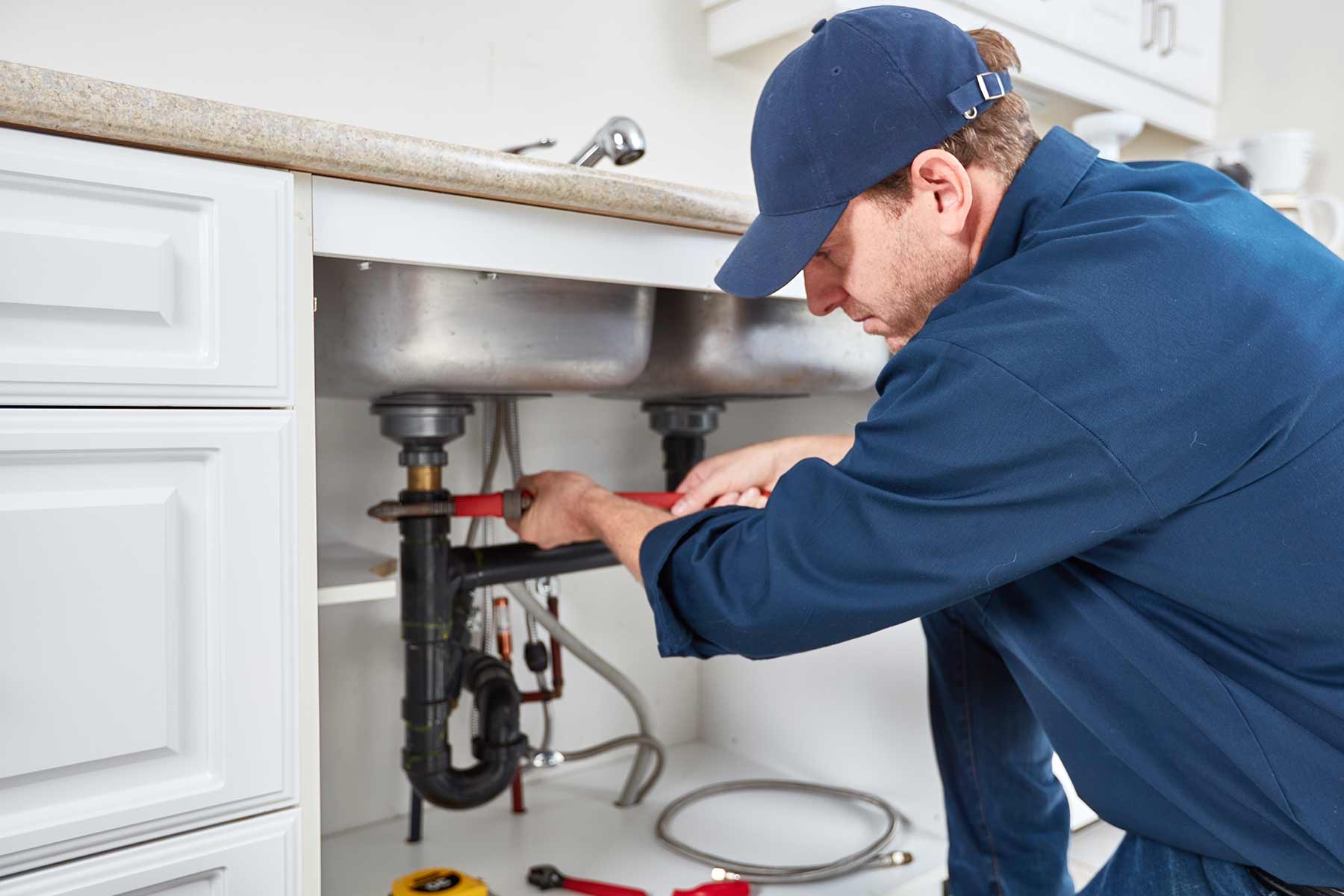
"Here's a photo of the pipes under my kitchen sink. The connection at the wall is wet. What's leaking and can I fix this myself?"
Step 4: Follow Step-by-Step Repair Instructions
Once the diagnosis is confirmed, the assistant walks you through the repair — tools needed, materials required, safety precautions, disassembly sequence, the repair itself, and reassembly with testing. Each step is calibrated to your skill level and the specific materials involved.
"The P-trap under my bathroom sink is cracked. It's 1-1/4 inch PVC slip joint. Walk me through replacing it."
Step 5: Get a Repair-vs-Replace Recommendation
Before investing time and money, ask whether the repair is worth doing — or whether the underlying condition indicates a broader problem that spot repairs won't solve. The assistant evaluates material condition, system age, damage extent, and replacement cost to give you a clear, honest recommendation.
"I've got pinhole leaks in two different copper supply lines in a 1985 house. One in the basement ceiling and one behind the washing machine. Is it worth patching these or am I looking at a repipe?"
Results & Use Cases
📊 The Homeowner Avoiding a $300 Service Call for a $5 Fix
Scenario: A homeowner's kitchen faucet has developed a steady drip — about one drop per second from the spout. They've tightened the handle, which didn't help. The drip is wasting water and the sound is driving them crazy. A local plumber quotes $175–$250 for the repair including the service call fee.
Traditional Approach: Googles "kitchen faucet drip repair," finds a YouTube video for a different faucet brand, attempts to disassemble the handle without knowing whether it's a cartridge, ball, or ceramic disc valve. Strips the set screw, can't remove the handle, and calls the plumber anyway — now with additional damage. Total cost: $250+ for what was originally a $5 cartridge replacement.
Plumber's Assistant: Asks for the faucet brand and model (usually printed on the body or visible when the decorative cap is removed). Identifies the valve type — single-handle Moen faucets use a cartridge, Delta uses a ball or cartridge depending on the series, Kohler uses ceramic disc. Walks the homeowner through the correct disassembly sequence for their specific faucet, identifies the replacement cartridge by part number, and provides step-by-step installation instructions with the one critical detail most videos miss: turning off the supply valves first and relieving pressure before removing the retaining clip. Total cost: $5–$15 for the cartridge, 20 minutes of time.
- Brand-specific repair instructions eliminate the guesswork of generic videos
- Correct part identification by model saves a trip to the hardware store for the wrong cartridge
- $175–$250 service call avoided entirely for a straightforward repair
💼 The Apprentice Sizing a DWV System for Their First Solo Rough-In
Scenario: A second-year plumbing apprentice is roughing in a bathroom addition — toilet, lavatory, and bathtub/shower — for the first time without their journeyman standing over their shoulder. They know the fixture locations and the connection point to the existing main stack, but they're uncertain about pipe sizing for the branch drain, proper vent configuration, and whether they need a separate vent stack or can wet-vent the lavatory through the bathtub drain.
Traditional Approach: Calls the journeyman, who's on another job and says "just use 3-inch for the toilet and 2-inch for everything else." No discussion of vent sizing, wet-vent requirements, or whether the existing stack has capacity for the additional fixture units. The apprentice installs what they're told, the inspector fails it for improper venting, and the drywall has to come down for corrections. Two days of rework, material waste, and a conversation with the boss nobody wants to have.
Plumber's Assistant: Walks through the complete DWV design systematically. Calculates total drainage fixture units for the three fixtures (toilet = 4 DFU, lavatory = 1 DFU, bathtub = 2 DFU = 7 DFU total). Sizes the branch drain per code tables. Explains wet-vent requirements — which fixtures can be wet-vented through which, the pipe size increase required for wet-venting, and the maximum developed length. Clarifies whether the existing stack has capacity for the additional load based on its size and current fixture unit count. The apprentice installs it correctly, passes inspection on the first try, and builds confidence for the next solo job.
- Complete DWV design with fixture unit calculations and code references
- Wet-vent versus dry-vent guidance specific to the fixture configuration
- First-try inspection pass saves two days of rework and material costs
📱 The Service Plumber Diagnosing a Sewer Smell on Mobile
Scenario: A service plumber gets a callback from a customer who had a bathroom remodel completed two months ago by a different contractor. There's an intermittent sewer gas smell in the new bathroom — sometimes strong in the morning, sometimes undetectable for days. The plumber has 30 minutes between calls to diagnose the issue.
Traditional Approach: Checks the obvious — runs water in all fixtures to fill traps, checks for visible gaps in wax ring seal, sniffs around the toilet base. The smell isn't present during the visit. Tells the customer to call back if it returns. Charges $95 for the trip. The smell returns two days later. The customer is frustrated and calls a different plumber.
Plumber's Assistant: Asks targeted questions about the remodel scope and symptom pattern. The intermittent, morning-heavy pattern combined with a recent remodel suggests trap evaporation in an infrequently used fixture (did the remodel add a floor drain or a secondary lavatory that doesn't get daily use?), or — more commonly in remodel situations — a missing or improperly connected vent that creates negative pressure siphoning trap water when other fixtures drain. The assistant recommends a specific diagnostic sequence: fill all traps and observe over 48 hours to rule out simple evaporation, then perform a smoke test on the DWV system to identify any vent disconnection or missing vent hidden behind the new drywall. The plumber identifies a disconnected vent pipe in the wall — the remodel contractor cut through it and never reconnected it. A $200 repair resolves a problem that was heading toward a customer complaint and a negative review.
- Symptom pattern analysis narrows the diagnosis before the plumber arrives
- Specific diagnostic sequence eliminates guesswork and prevents premature conclusions
- Full feature parity on iOS and Android for checking between calls from the truck
🎯 The Property Inspector Evaluating a Pre-Purchase Plumbing System
Scenario: A home inspector is evaluating the plumbing system in a 1975 home for a buyer. The home has a mix of galvanized steel supply lines, copper branch lines added in a 1990s renovation, cast iron drain lines in the basement, and a 12-year-old tank water heater. The buyer wants to know the expected remaining life of each system and what to budget for replacements.
Traditional Approach: Notes "galvanized supply lines — recommend evaluation by licensed plumber" in the report. Notes the water heater age. Takes photos but provides no specific assessment of pipe condition or remaining useful life. The buyer is left with a vague recommendation and no budget framework.
Plumber's Assistant: The inspector uploads photos of the galvanized supply lines (showing exterior corrosion and reduced flow at a hose bib), the cast iron drain lines (showing surface rust but no active dripping or bellying), and the water heater (showing the data plate and condition of the anode rod access). The assistant provides a structured assessment: galvanized supply lines from 1975 are at 50+ years and typically reach end-of-life at 40–70 years depending on water chemistry — the visible corrosion and flow reduction suggest these are nearing replacement; estimated repipe cost for a home this size is $8,000–$15,000 in copper or $4,000–$8,000 in PEX. Cast iron drains from 1975 have 20–40 years of remaining life if not showing active failure — recommend camera inspection to evaluate interior condition. Water heater at 12 years is past the median lifespan for tank models (8–12 years) — recommend budgeting $1,200–$2,500 for replacement within 1–3 years.
- Material-specific lifespan assessment with budget estimates
- Photo-based condition evaluation adds specificity to inspection reports
- Actionable cost projections help buyers make informed decisions
Frequently Asked Questions
Is Plumber's Assistant free to use?
Yes. You can start using Plumber's Assistant immediately with free-tier access on Jenova — no credit card required. Free access includes core diagnostic, calculation, and photo assessment features with limited usage per billing cycle. Paid plans increase usage significantly for professionals who need frequent technical support throughout their workday.
What plumbing systems and materials does it cover?
Plumber's Assistant covers the full scope of plumbing work — water supply (copper, PEX, CPVC, galvanized, PVC), drain-waste-vent (PVC, ABS, cast iron, galvanized), gas piping (black iron, CSST, copper), water heaters (tank, tankless, heat pump), hydronic heating, well systems, sump and sewage pumps, water treatment equipment, and all associated fixtures and fittings. It adapts to residential, commercial, and industrial plumbing contexts.
Can I upload photos of leaks and pipe conditions?
Yes. Upload photos of leaks, corroded pipes, damaged fittings, stained ceilings, unfamiliar connections, or any visible plumbing condition, and the assistant identifies the material, evaluates the damage, and recommends next steps. Photo assessment is especially valuable for identifying pipe materials in older homes, evaluating corrosion severity, and documenting conditions for insurance or inspection purposes.
Is this safe for someone with no plumbing experience?
The assistant calibrates its guidance to your skill level and always leads with safety — advising when to shut off the water supply, when gas work requires a licensed professional, and when a repair genuinely exceeds safe DIY scope. It won't walk a novice through gas line work, sewer line repairs, or anything that requires specialized equipment or licensing. When a job exceeds safe DIY scope, it tells you directly and explains what to tell the plumber when you call.
Does it work on my phone?
Yes. Full feature parity across web, iOS, and Android. Diagnose a leak from under the sink, upload photos from the crawl space, calculate pipe sizing from the job site, or get repair guidance while standing in the hardware store — all from your phone.
Can professional plumbers use it too?
Absolutely. Professional plumbers use it as a diagnostic sounding board for unusual problems, a quick reference for code requirements across jurisdictions, a calculation tool for pipe sizing and fixture unit counts, and a second opinion on repair-vs-replace decisions. With 44,000 annual openings projected in the plumbing trade and the institutional knowledge of retiring master plumbers disappearing from the workforce, AI diagnostic support helps bridge the expertise gap for the next generation entering the trade.
Conclusion
Plumbing in 2026 sits at the intersection of irreplaceable expertise leaving the workforce and rising complexity in every system plumbers encounter. With 504,500 plumbing jobs nationwide and 44,000 openings projected annually — the majority driven by retirements that take decades of diagnostic intuition with them — the gap between what the trade demands and what the available workforce can deliver grows wider every year. Every leaking pipe, every failed water heater, every sewer backup is a time-critical problem where the difference between a correct diagnosis and a misdiagnosis is measured in property damage, wasted money, and customer trust. The master plumber who could listen to a pipe, look at a stain pattern, and tell you exactly what was happening — and what it would take to fix it — is retiring. The next generation needs a technical partner that delivers that same depth of diagnostic reasoning, code knowledge, and material expertise instantly, accurately, and on any device. That partner is free and available right now. The only question is whether your next call will have it.
Try Plumber's Assistant free now → Explore more AI agents at Jenova.