Best AI for Pharmacy Tutoring: Adaptive Coaching Across Pharmacology, Therapeutics & Global Licensure (June 2026)
2026-06-23
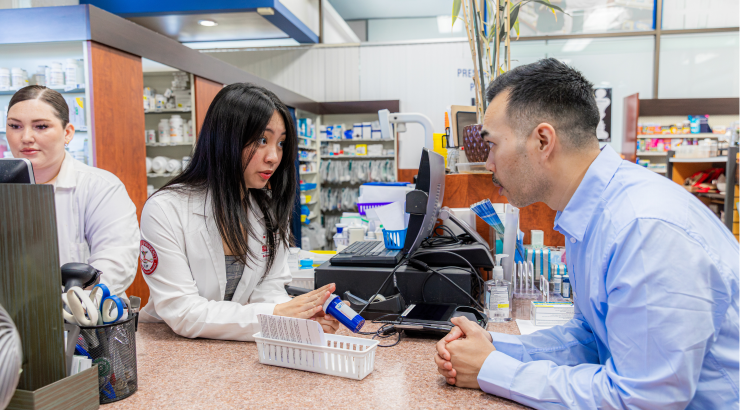
Pharmacy Tutor AI helps you master pharmacology, clinical therapeutics, and exam-specific preparation by delivering adaptive tutoring that diagnoses your conceptual gaps, generates practice questions in your exact licensure exam format, and builds study plans calibrated to your program stage and timeline. While the pharmacy profession faces a tightening labor market and the NAPLEX has seen dramatic pass rate swings over recent years, this AI provides depth-first coaching across every major pharmacy qualification worldwide — from first-year pharmacology courses through board licensure and beyond.
✅ Full coverage across NAPLEX, MPJE, GPhC, PEBCx, KAPS, and every major global pharmacy licensure pathway ✅ Pharmacology and therapeutics coaching organized by drug class, mechanism, indication, and clinical scenario ✅ Exam-format practice questions with detailed rationale analysis and distractor breakdowns ✅ Adaptive study plans that redistribute your time based on diagnosed weak areas, not self-reported comfort ✅ Clinical reasoning support for IPPE/APPE rotations, patient case workups, and drug information queries
To understand why the right preparation tool makes such a measurable difference, it helps to look at what pharmacy students and candidates are actually up against in 2026.
Quick Answer: What Is Pharmacy Tutor AI?
Pharmacy Tutor AI is an adaptive tutoring tool that provides deep pharmacology education, clinical therapeutics coaching, and licensure exam preparation across every major pharmacy qualification worldwide.
Key capabilities:
- Covers pharmacology, medicinal chemistry, pharmaceutics, clinical therapeutics, and pharmacy law across all program years
- Generates exam-format practice questions with full rationale and distractor analysis
- Diagnoses the specific conceptual gap behind each wrong answer — not just "study more"
- Creates phased study plans adapted to your program stage, licensure timeline, and performance data
The Problem: Why Pharmacy Education and Licensure Are More Demanding Than Ever in 2026
The pharmacy profession is navigating a paradox: demand for pharmacists is growing faster than average while the pipeline of new graduates faces increasingly difficult licensure hurdles and expanding scope-of-practice responsibilities.
The median annual wage for pharmacists was $137,480 in May 2024, with employment projected to grow 5% from 2024 to 2034 — faster than the average for all occupations — Bureau of Labor Statistics
About 14,200 openings for pharmacists are projected each year, on average, over the decade — many from the need to replace workers who transfer to different occupations or retire — Bureau of Labor Statistics
The national NAPLEX first-time pass rate was 85.7% in 2025, a sharp recovery from 74.3% in 2024 and 75.5% in 2023, but still leaving roughly 1 in 7 graduates failing on their first attempt — ClinCalc NAPLEX Pass Rates
The mean NAPLEX pass rate across all schools rose to 84.5% in 2025, compared to the previous year's significantly lower figures — Becker's Hospital Review
But accessing quality preparation is frustratingly difficult:
-
The sheer volume of pharmacology content is staggering — A Pharm.D. curriculum covers hundreds of drug classes across dozens of therapeutic categories, with each drug requiring mastery of mechanism of action, pharmacokinetics, indications, contraindications, adverse effects, drug interactions, monitoring parameters, and dosing adjustments. No human tutor can provide on-demand coverage across this breadth with consistent depth.
-
NAPLEX pass rate volatility creates anxiety — The swing from 75.5% in 2023 to 74.3% in 2024 to 85.7% in 2025 means students can't rely on historical trends to gauge their readiness. What worked for last year's cohort may not work for this year's exam content emphasis.
-
Clinical rotations demand applied knowledge that lectures don't build — During Introductory Pharmacy Practice Experiences (IPPEs) and Advanced Pharmacy Practice Experiences (APPEs), students must apply pharmacological knowledge to real patient scenarios — performing drug therapy assessments, identifying drug interactions, and making therapeutic recommendations. The gap between memorized facts and clinical reasoning is where most students struggle.
-
Multi-jurisdiction licensure adds complexity — Beyond the NAPLEX, candidates must pass the MPJE for state-specific pharmacy law. International graduates face additional pathways — the FPGEC for foreign-educated pharmacists in the US, the GPhC Registration Assessment in the UK, PEBCx in Canada, KAPS in Australia. Each demands fundamentally different preparation strategies.
The Memorization Trap
The instinct to memorize drug facts — brand names, generic names, doses — is understandable but insufficient for modern pharmacy exams. The NAPLEX emphasizes clinical application: given a patient scenario with specific comorbidities, medications, and lab values, which therapeutic intervention is most appropriate? A student who memorized that lisinopril treats hypertension but doesn't understand why it's contraindicated in bilateral renal artery stenosis will miss the questions that determine pass or fail.
The Clinical Reasoning Gap
Pharmacy education increasingly emphasizes patient-centered care, medication therapy management, and interprofessional collaboration. Yet most study tools remain organized around drug facts rather than clinical decision-making frameworks. A student rotating through an internal medicine APPE needs to evaluate a patient's medication list for drug-drug interactions, assess renal dosing adjustments, and recommend therapy changes — skills that require guided practice with feedback, not flashcard review.
Why Pharmacy Tutor AI Is the Best AI for Pharmacy Education
The difference between Pharmacy Tutor AI and every other preparation approach comes down to one principle: clinical reasoning built from pharmacological depth, not surface-level memorization.
| Traditional Pharmacy Study | Pharmacy Tutor AI |
|---|---|
| Memorize drug facts from textbook tables | Learns mechanisms first, then builds to clinical application |
| Static flashcard apps with no feedback | Adaptive practice that identifies why you missed each question |
| Same study plan regardless of your weaknesses | Dynamic plans weighted by exam importance × diagnosed gap size |
| No help during clinical rotations | Patient case workup coaching and drug information query support |
| NAPLEX-only focus (US market) | Multi-jurisdiction: NAPLEX, MPJE, GPhC, PEBCx, KAPS, and more |
| $200–$500 for a single exam prep course | All pharmacy topics and licensure pathways in one conversation |
| Office hours or forum-based Q&A | Available 24/7 with instant, detailed responses |
🎯 Mechanism-First Teaching That Builds Transferable Understanding
Pharmacy Tutor AI doesn't start with "memorize this drug's dose." It starts with why the drug works — the molecular target, the receptor pharmacology, the downstream physiological effect — and builds outward to clinical application. When you understand that ACE inhibitors block the conversion of angiotensin I to angiotensin II, the indications (hypertension, heart failure, diabetic nephropathy), adverse effects (dry cough from bradykinin accumulation, hyperkalemia from aldosterone reduction), and contraindications (pregnancy, bilateral renal artery stenosis) all follow logically rather than requiring separate memorization.
This approach means that when you encounter a new drug in the same class, you already understand 80% of its pharmacology. That's the difference between memorizing 500 individual drug profiles and understanding 40 mechanisms that explain them all.
"Walk me through the mechanism of action of DOACs versus warfarin, and explain why the monitoring requirements are different."
📊 Adaptive Weak-Area Detection
When you answer a practice question incorrectly, the tutor doesn't just reveal the right answer. It identifies the specific conceptual gap:
- Did you confuse the mechanism of two drug classes (mixing up SSRIs and SNRIs)?
- Did you apply the right drug to the wrong patient scenario (choosing a drug that's contraindicated given the patient's renal function)?
- Did you make a calculation error (incorrect creatinine clearance estimation leading to wrong dose)?
- Did you miss a drug interaction (failing to recognize a CYP450 inhibitor affecting the metabolism of a concurrent medication)?
Each identified gap triggers targeted re-teaching with fresh explanations and progressively harder questions until the pattern is corrected.
"You selected metformin for this patient, but notice the eGFR is 28 mL/min. Metformin is contraindicated below 30 mL/min due to lactic acidosis risk. Let me walk through the renal dosing thresholds for all oral antidiabetics and give you three more questions testing this exact distinction."
🏥 Clinical Rotation Support
Beyond exam preparation, the tutor functions as a real-time clinical reasoning partner during IPPEs and APPEs. Upload a patient case or describe a clinical scenario, and the tutor helps you:
- Perform a systematic medication therapy review
- Identify drug-drug and drug-disease interactions
- Calculate renal dose adjustments using Cockcroft-Gault or CKD-EPI
- Formulate SOAP notes for pharmacotherapy recommendations
- Prepare for preceptor discussions with evidence-based rationale
"I have a patient on warfarin, amiodarone, and fluconazole. Walk me through the interaction risks, expected INR changes, and what I should recommend to the team."
🌍 Multi-Jurisdiction Licensure Expertise
The tutor calibrates its coaching to your specific licensure pathway:
- US NAPLEX: Competency areas 1–6 with emphasis on patient safety, medication therapy management, and clinical calculations
- US MPJE: State-specific pharmacy law, DEA regulations, controlled substance schedules, and practice standards
- UK GPhC Registration Assessment: Clinical and pharmaceutical sciences integrated into the UK practice framework
- Canada PEBCx: Qualifying Examination Parts I and II, including the OSCE component
- Australia KAPS: Knowledge Assessment of Pharmaceutical Sciences for international graduates
- India GPAT: Graduate Pharmacy Aptitude Test for postgraduate program admission
📈 Progressive Difficulty Calibration
The AI tracks your performance across therapeutic categories and adjusts difficulty accordingly. Scoring consistently above 85% on cardiovascular pharmacology? It stops serving easy questions on that topic and redirects your time to areas below threshold — infectious disease, oncology, or wherever your actual gaps live. This prevents the common trap of studying what you already know while neglecting what will actually determine your exam score.
Related Agents You'll Also Find Useful
If you're deep in pharmacy education, coursework and licensure exams are part of a broader professional trajectory. These agents cover complementary skills and decisions that shape your pharmacy career.
Nursing Tutor
Pharmacists increasingly work in interprofessional teams alongside nurses. Understanding nursing clinical reasoning — particularly around medication administration, patient monitoring, and NCLEX-style clinical judgment — strengthens your ability to collaborate effectively and communicate pharmacotherapy recommendations.
- Clinical reasoning and patient safety frameworks
- Medication administration perspectives from the nursing side
- Interprofessional education context for team-based care
Personal Medical Analyst
For pharmacy students building clinical reasoning skills, having an AI that can analyze patient symptoms, interpret lab results, and discuss pathophysiology alongside your pharmacology knowledge creates a richer understanding of how drug therapy connects to disease management.
- Symptom analysis and differential considerations
- Lab value interpretation in clinical context
- Evidence-based health guidance that complements pharmacological training
Academic Research Assistant
Pharmacy students often need to conduct drug literature evaluations, journal club presentations, and research projects. This agent helps with literature discovery, study design critique, and manuscript preparation — essential skills for evidence-based pharmacy practice.
- Literature search and critical appraisal of drug studies
- Statistical interpretation of clinical trial endpoints
- Citation management and manuscript preparation support
How It Works: From First Pharmacology Course to Licensure
Step 1: Describe Where You Are
Open Pharmacy Tutor AI and share your current situation — your program year, the courses you're taking, upcoming exams, clinical rotation assignments, or licensure timeline. The tutor uses this context to calibrate topic depth, question difficulty, and teaching approach.
"I'm a P2 pharmacy student starting my medicinal chemistry and pharmacotherapy modules this semester. I'm struggling with autonomic pharmacology — specifically distinguishing between cholinergic and adrenergic receptor subtypes and their clinical significance."
Step 2: Build Understanding Through Mechanism-First Teaching
Ask about any pharmacology topic, drug class, or therapeutic area. The tutor structures its explanation from mechanism to clinical application — receptor pharmacology, pharmacokinetics, indications, adverse effects, interactions, monitoring, and patient counseling points. Follow up with unlimited questions until the concept clicks.
"Explain the difference between selective and non-selective beta blockers. When would I choose metoprolol over propranolol, and what are the clinical consequences of non-selectivity?"
Step 3: Practice with Exam-Format Questions
Request practice questions matched to your exam format — NAPLEX-style clinical vignettes, GPhC-format questions, calculation problems, or drug interaction scenarios. After each answer, the tutor provides detailed rationale explaining not just the correct answer but why each distractor is wrong and what misconception it targets.
"Give me 10 NAPLEX-style questions on anticoagulation therapy — include at least two patient scenarios requiring dose adjustment and one drug interaction question."
Step 4: Get a Personalized Study Plan
Share your exam date, available study hours, and current strengths and weaknesses. The tutor builds a phased plan — Foundation, Integration, Practice, and Final Review — that prioritizes high-yield topics weighted by both exam emphasis and your specific gaps. Export the plan as a downloadable document.
"I'm taking the NAPLEX in 8 weeks. I can study 4 hours a day. Build me a plan that focuses on my weakest areas — infectious disease and oncology — while maintaining my strength in cardiovascular."
Step 5: Use During Rotations and Track Progress
During APPEs, use the tutor as a clinical reasoning partner for patient cases, drug information queries, and preceptor preparation. Your performance data accumulates across sessions — the tutor tracks mastery by therapeutic area, identifies persistent weak spots, and adjusts recommendations as you improve.
"I'm on my critical care APPE. Walk me through the vasopressor selection algorithm for septic shock — when do I use norepinephrine versus vasopressin, and what monitoring parameters guide escalation?"
Results & Use Cases
📊 The P2 Student Drowning in Pharmacology Content
Scenario: A second-year pharmacy student taking pharmacology, medicinal chemistry, and pharmacotherapy simultaneously. The volume of drug information feels overwhelming — hundreds of drugs, each with mechanisms, kinetics, interactions, and clinical applications to learn. Lecture slides pile up faster than they can be reviewed.
Traditional Approach: Re-read lecture slides. Create flashcards for every drug. Memorize isolated facts without connecting them to clinical reasoning. Score well on recognition-based quizzes but struggle on application-based exams that present patient scenarios.
With Pharmacy Tutor AI: The tutor organizes knowledge by mechanism and drug class rather than individual drug profiles. Instead of memorizing that "amlodipine causes peripheral edema," the student learns that all dihydropyridine CCBs preferentially dilate arterioles, causing reflex edema — and now understands the side effect for the entire subclass, not just one drug. Practice questions test application, and weak areas surface within the first session.
- ✅ Mechanism-first teaching that reduces the memorization burden by 60-80%
- ✅ Connects pharmacology to therapeutics so learning serves both courses simultaneously
- ✅ Identifies whether errors are mechanistic, clinical, or calculation-based
- ✅ Available at 11 PM when the question arises — no waiting for office hours
💼 The NAPLEX Candidate After Two Years of Pass Rate Volatility
Scenario: A 2026 graduate preparing for the NAPLEX, aware that the national first-time pass rate swung from 75.5% in 2023 to 74.3% in 2024 to 85.7% in 2025. The volatility creates uncertainty about what level of preparation is actually sufficient. Traditional review courses promise results but cost $200–$500 and follow a fixed curriculum.
Traditional Approach: Purchase a review course. Follow the scheduled modules. Take practice exams and hope the score translates. No targeted diagnosis of which competency areas need the most attention or why specific questions are consistently missed.
With Pharmacy Tutor AI: The tutor starts with diagnostic practice across all NAPLEX competency areas — patient safety, medication therapy assessment, medication dispensing, clinical calculations, and health and wellness. Within the first few sessions, it maps the candidate's strengths and weaknesses and builds a study plan that spends 70% of time on areas below threshold and 30% on maintaining strengths. Every practice question includes detailed rationale analysis.
- ✅ Diagnostic-first approach that maps strengths and weaknesses across all competency areas
- ✅ Study plan dynamically weighted by exam emphasis × individual gap size
- ✅ Detailed rationale for every question — not just right/wrong but why
- ✅ Accessible free to start, covering all content areas in a single tool
📱 The APPE Student Preparing for Preceptor Rounds
Scenario: A P4 student on an acute care APPE who needs to present a complex patient case to their preceptor tomorrow morning. The patient is on 12 medications with multiple comorbidities, and the student isn't confident in their therapeutic assessment.
Traditional Approach: Spend hours searching UpToDate, Lexicomp, and textbooks for each drug interaction individually. Compile notes without a systematic framework. Present haltingly because the reasoning isn't organized around a clear clinical narrative.
With Pharmacy Tutor AI: The student describes the patient case — medications, diagnoses, labs, vitals — and the tutor walks through a systematic medication therapy review. It identifies the two most clinically significant drug interactions, flags a renal dosing adjustment the team may have missed, and helps structure the presentation with evidence-based recommendations and monitoring parameters.
- ✅ Systematic medication therapy review for complex polypharmacy patients
- ✅ Identifies clinically significant interactions ranked by severity
- ✅ Renal and hepatic dose adjustment calculations with cited guidelines
- ✅ Presentation structure coaching with evidence-based rationale
🌍 The International Graduate Navigating US Licensure
Scenario: A pharmacist educated in India seeking US licensure through the FPGEC pathway. They need to pass the FPGEE (Foreign Pharmacy Graduate Equivalency Examination), then the NAPLEX and MPJE — three distinct exams with fundamentally different content and formats. Finding guidance that covers all three accurately and maps their existing knowledge to US-specific requirements is nearly impossible.
Traditional Approach: Research each exam independently. Purchase separate study materials for each. Struggle with US-specific drug naming conventions (brand names differ internationally), FDA regulatory frameworks, and state-specific pharmacy law that varies across all 50 states.
With Pharmacy Tutor AI: The tutor maps the candidate's existing pharmacological knowledge to US-specific requirements, identifies gaps in FDA regulatory knowledge and US prescribing conventions, and builds a sequential preparation plan — FPGEE first, then NAPLEX, then MPJE for the target state. It explains differences between international and US drug naming, translates familiar therapeutic guidelines into US-standard references (e.g., AHA/ACC guidelines versus international equivalents), and covers MPJE content specific to the candidate's chosen state of practice.
- ✅ Cross-qualification pathway mapping from international credentials to US licensure
- ✅ US-specific drug naming and prescribing convention coaching
- ✅ Sequential study plan across FPGEE → NAPLEX → MPJE
- ✅ State-specific pharmacy law coverage for the target jurisdiction
🧪 The Pharmacist Expanding Clinical Scope
Scenario: A practicing community pharmacist whose state has expanded pharmacist prescriptive authority to include hormonal contraceptives, smoking cessation medications, and travel vaccines. They haven't studied these therapeutic areas in depth since pharmacy school and need to build clinical competency quickly.
Traditional Approach: Attend a weekend CE seminar that covers material at a surface level. Read a few review articles. Feel underprepared when the first patient presents with a complex contraceptive counseling question involving drug interactions with their existing medications.
With the pharmacy AI tutor: The tutor provides deep therapeutic review of expanded scope areas — contraceptive pharmacology, smoking cessation pharmacotherapy, travel medicine immunology — calibrated to clinical practice rather than exam preparation. It walks through patient counseling scenarios, contraindication screening, and documentation requirements specific to the pharmacist's state.
- ✅ Therapeutic deep dives calibrated to clinical practice, not exam format
- ✅ Patient counseling scenario practice with realistic complexity
- ✅ Contraindication screening workflows for expanded scope services
- ✅ Available on mobile for quick reference during patient encounters
Frequently Asked Questions
Is Pharmacy Tutor AI free to use?
Pharmacy Tutor AI is available on Jenova's free tier with limited usage. For intensive exam preparation or daily study support throughout a pharmacy program, paid plans starting at $20/month provide significantly more capacity. Compared to dedicated NAPLEX review courses at $200–$500 that cover only US licensure, even the paid tier represents a fraction of the cost and covers every major global pharmacy qualification.
How is this different from using ChatGPT for pharmacy study?
General-purpose AI models lack structured knowledge of pharmacy exam formats, clinical decision-making frameworks, and drug interaction databases. They may provide outdated drug information, miss critical interactions, or apply inappropriate clinical reasoning. Pharmacy Tutor AI is purpose-built with deep pharmacological expertise — it understands NAPLEX competency weighting, generates exam-format practice questions with full distractor analysis, tracks your performance across therapeutic areas, and diagnoses the specific conceptual gap behind each wrong answer.
Can it help with clinical rotations, not just exams?
Yes. Beyond exam preparation, the tutor functions as a clinical reasoning partner during IPPEs and APPEs. It can help you perform medication therapy reviews, identify drug interactions in complex patient cases, calculate renal dose adjustments, structure SOAP notes, and prepare for preceptor discussions with evidence-based rationale.
What pharmacy licensure exams does it cover?
The tutor covers the US NAPLEX and MPJE, UK GPhC Registration Assessment, Canadian PEBCx (Parts I and II including OSCE), Australian KAPS, Indian GPAT, FPGEE for international graduates seeking US licensure, and additional pharmacy licensure pathways worldwide. It calibrates practice questions, content emphasis, and strategic guidance to the specific format of your target exam.
Does Pharmacy Tutor AI work on mobile?
Yes. It runs with full feature parity across web, iOS, and Android. All progress, study plans, and performance data sync across devices automatically. Review a drug mechanism on your commute, run through practice questions during a break, or look up an interaction during a rotation — the tutor picks up exactly where you left off.
How current is the pharmacology information?
The tutor references specific guidelines (AHA/ACC, IDSA, NCCN), clinical resources, and current prescribing standards. When encountering rapidly evolving areas — newly approved medications, updated treatment guidelines, or emerging drug safety data — it flags areas of uncertainty and can research current guidance rather than risk providing outdated clinical information.
The Pharmacy Profession Has Never Offered More Opportunity — Or Demanded More Preparation
With 14,200 pharmacist openings projected annually, a median salary of $137,480, and expanding clinical scope across states and countries, the return on pharmacy education has never been stronger. But earning that credential requires mastering a body of knowledge that spans hundreds of drug classes, navigating licensure exams where even a single-year pass rate can swing by over 10 percentage points, and building clinical reasoning skills that textbooks alone can't develop.
The best AI for pharmacy tutoring isn't the one with the most drug facts — it's the one that teaches you to think pharmacologically, diagnoses your specific gaps, and adapts to whether you're a P1 learning receptor pharmacology or a licensed pharmacist expanding your clinical scope. Pharmacy Tutor AI delivers exactly that: mechanism-first coaching that builds transferable understanding across every therapeutic area, every licensure pathway, and every stage of your pharmacy career. Try it free and turn your study time into measurable progress. Explore more AI agents at Jenova.