Best AI for Options Strategy Selection: Match Your Market View to Optimal Structures with Real-Time IV Analysis
2026-01-12

The U.S. options market has shattered records once again. According to Cboe's January 2026 report, total options volume exceeded 15.2 billion contracts in 2025—a sixth consecutive annual record. Daily volume averaged a staggering 59 million contracts, up 22% from 2024. Zero-days-to-expiration (0DTE) options on the S&P 500 alone hit a record ADV of 2.3 million contracts, representing 59% of total SPX volume.
Yet despite this explosive growth, most retail traders consistently lose money. The fundamental problem isn't lack of opportunity—it's strategy selection. Traders buy calls when implied volatility is elevated, sell premium when IV is depressed, ignore Greeks until positions blow up, and size positions based on gut feel rather than risk parameters.
That's why finding the best AI for options strategy selection has become essential for traders seeking to match their market views with optimal position structures. Over 156,000 traders have already discovered how AI-powered options analysis can transform the overwhelming complexity of strategy selection into systematic, data-driven decisions—complete with IV environment assessment, Greeks analysis, and position sizing guidance.
What the best AI for options strategy selection delivers:
✅ Instant strategy recommendations based on your directional view and IV environment
✅ Complete Greeks analysis with position sizing guidance
✅ Real-time volatility assessment (IV Rank, term structure, skew)
✅ Step-by-step position management and exit planning
✅ Earnings play analysis comparing implied vs. historical moves
Quick Answer: What Is the Best AI for Options Strategy Selection?
The best AI for options strategy selection is an expert options analysis tool that translates your market views into optimal options structures by analyzing IV environment, Greeks exposure, and position sizing in seconds.
Whether you're bullish on NVDA, expecting a volatility spike before earnings, or seeking income from your portfolio, this AI evaluates current market conditions and recommends the specific strategy, strikes, and expirations that maximize your risk-adjusted returns.
Core capabilities:
- Strategy selection based on direction, magnitude, timeframe, and IV environment
- Real-time IV Rank/Percentile analysis with historical context
- Complete Greeks breakdown (Delta, Gamma, Theta, Vega) for any position
- Position sizing recommendations based on your risk tolerance
- Earnings play analysis comparing implied vs. historical moves
The 2026 Options Landscape: Why AI-Powered Strategy Selection Has Become Essential
Understanding current market dynamics helps explain why AI-powered options analysis has become a critical edge for serious traders.
📊 Record Volumes Meet Record Complexity
The options market has never been larger—or more complex:
15.2 billion contracts — Total U.S. options volume in 2025, a sixth consecutive annual record
Source: Cboe Global Markets
59 million contracts daily — Average daily volume through 2025, up 22% from 2024
Source: Cboe Q3 2025 Industry Report
110 million contracts — Single-day record set on October 10, 2025, during tariff-related volatility
Source: Cboe
According to Cboe's Meaghan Dugan, SVP and Head of U.S. Derivatives: "2025 was defined by heightened volatility and an intensified focus on risk management. Growth in short-dated options trading and retail participation helped drive record volume in our S&P 500 (SPX) and Cboe Volatility (VIX) Index options."
📈 Retail Participation at All-Time Highs
Retail traders now account for a massive share of options activity:
Nearly half of total daily options volume — Retail participation in U.S. options markets
Source: Cboe Q3 2025 Report
51% of short-dated options trading — Retail share of 0DTE and weekly options volume
Source: Devexperts
According to Devexperts' analysis of retail options trading: "Options trading volumes have continued to grow every year since 2020... The rise of platforms like YouTube, Reddit, and Discord led to a new generation of financial educators sharing their knowledge on everything from how to read charts and order books, to risk management strategies."
⚡ The 0DTE Revolution
Zero-days-to-expiration options have fundamentally changed how traders manage risk:
59% of SPX volume — 0DTE options share of total S&P 500 Index options trading
Source: Cboe
2.6 million contracts daily — Record 0DTE SPX volume in Q4 2025
Source: Cboe
According to Cboe's 2026 outlook: "0DTE trading has drastically changed the way investors manage risk, and while this has been a key trend over the last several years, we expect the desire to express shorter-dated views to continue."
The Problem: Why Most Options Traders Lose Money
The options market has never been more accessible—or more treacherous. Despite record volumes and unprecedented retail participation, the majority of traders consistently lose money due to systematic errors in strategy selection and risk management.
Mismatching Strategy to Market Conditions
The most fundamental error traders make is selecting strategies without considering the volatility environment. Fidelity's research on common options mistakes identifies this as the primary cause of preventable losses:
"If implied volatility is relatively high or low, it helps determine the price of the option premium. Knowing if the premium is expensive or cheap is an important factor when deciding on what option strategy makes the most sense."
— Fidelity Trading Strategy Desk
A trader buying calls in a high-IV environment pays inflated premiums that require larger moves just to break even. Conversely, selling premium when IV is depressed offers minimal reward for substantial risk. Without systematic IV assessment, traders are essentially flying blind.
The Greeks Blindspot
Options don't behave like stocks—a reality that catches most beginners off guard. Interactive Brokers' analysis of account-destroying mistakes emphasizes:
"If you don't understand the Greeks, you don't understand options trading. Period. The Greeks help traders measure risk, probability, and how options prices will react to market movements."
— Scott Bauer, Prosper Trading Academy
Time decay (Theta) silently erodes long option positions—especially those far out-of-the-money approaching expiration. Gamma risk accelerates near expiration, turning small underlying moves into massive P&L swings. Vega exposure means volatility changes can dwarf directional profits or losses.
The 0DTE Trap
While 0DTE options offer unprecedented flexibility, they also present extreme risks. Charles Schwab's educational content warns:
"Looking at the time decay curve, you can see that the rate of decay generally accelerates as the option approaches its expiration date, especially for at-the-money options."
— Nathan Peterson, Charles Schwab
The April 2025 tariff-driven volatility demonstrated this risk starkly—traders holding iron condors expecting range-bound action suffered maximum losses as markets swung wildly. Without proper strategy selection and risk management, 0DTE trading becomes gambling with leverage.
Position Sizing Failures
Even correct directional calls become losses when position sizing is wrong. Interactive Brokers' research found:
"Too many traders go all in on one trade, thinking it's a guaranteed win. When that trade goes south, their account gets wiped out."
— Scott Bauer, Prosper Trading Academy
Strategy selection without position sizing is incomplete. A perfectly chosen bull call spread becomes a portfolio-killer when sized at 50% of capital.
The Solution: AI-Powered Options Strategy Selection
The best AI for options strategy selection addresses each of these failure points by systematically analyzing market conditions before recommending any strategy. Rather than relying on gut instinct or pattern-matching from past trades, the AI evaluates:
| Factor | What It Analyzes | Impact on Recommendation |
|---|---|---|
| Direction | Your bullish, bearish, or neutral thesis | Determines strategy family (calls, puts, spreads, straddles) |
| Magnitude | Expected size of move | OTM vs. ATM strikes, defined vs. undefined risk |
| Timeframe | Days, weeks, or months | Expiration selection, theta considerations |
| IV Environment | Current IV Rank/Percentile vs. history | Premium buying vs. selling strategies |
| Risk Tolerance | Defined or undefined risk acceptable | Spreads vs. naked positions |
| Event Calendar | Earnings, Fed meetings, catalysts | Event premium analysis, IV crush risk |
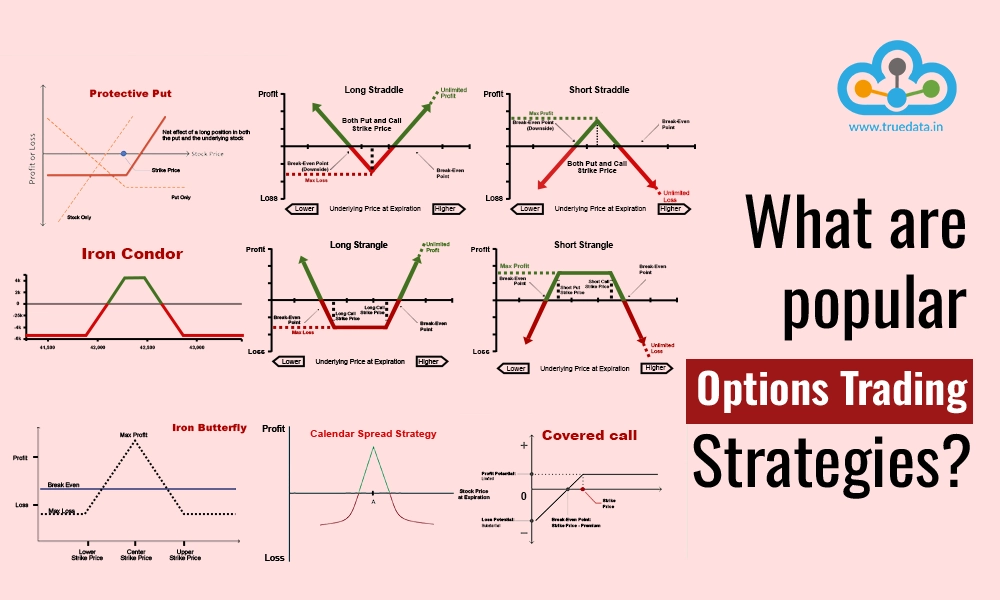
Volatility-First Analysis Framework
Unlike traditional approaches that start with direction, the best AI for options strategy selection begins with volatility assessment. The AI pulls current IV data and compares it against historical ranges to determine whether options are "expensive" or "cheap":
| IV Environment | Strategy Bias | Rationale |
|---|---|---|
| High IV (Rank > 70) | Sell premium (credit spreads, iron condors) | IV tends to mean-revert; collect inflated premium |
| Low IV (Rank < 30) | Buy premium (debit spreads, long straddles) | IV may expand; options are underpriced |
| Moderate IV (30-70) | Context-dependent | Consider direction, events, other factors |
This volatility-first framework prevents the common mistake of buying expensive options or selling cheap ones—errors that doom trades before they even begin.
Complete Greeks Transparency
Every strategy recommendation includes full Greeks analysis, adapted to your sophistication level:
For beginners:
- Delta: How much you make/lose per $1 move in the stock
- Theta: How much value you lose each day from time passing
- Vega: How much you make/lose if implied volatility changes
For advanced traders:
- Net position Greeks across all legs
- Gamma risk assessment near expiration
- Vega exposure relative to expected IV changes
- Probability of profit calculations
Position Sizing Integration
The AI doesn't just recommend strategies—it provides specific sizing guidance based on your stated risk tolerance:
| Strategy Type | Sizing Approach |
|---|---|
| Defined risk (spreads) | Max loss = risk budget; can size to full allocation |
| Undefined risk (naked) | Size for worst-case 2-3 standard deviation move |
| Premium selling | Target consistent premium as % of portfolio |
| Directional bets | Size based on conviction level |
How It Works: From Market View to Optimal Position
Using the best AI for options strategy selection requires no specialized knowledge of volatility surfaces or Greeks calculations. Simply describe your market view in natural language.
Step 1: State Your Market View
Begin by describing your thesis. This can be as simple as "I'm bullish on AAPL" or as specific as "I expect NVDA to move 8-10% after earnings but I'm not sure which direction."
The AI accepts natural language—no need to know options terminology. If you're unsure about your view, the strategist can help identify potential opportunities based on current market conditions.
Step 2: Receive IV Environment Analysis
Before any strategy recommendation, the best AI for options strategy selection analyzes the current volatility landscape:
- IV Rank/Percentile: Where current IV sits relative to the past year
- IV vs. Historical Volatility: Whether options are over or underpriced relative to realized moves
- Term Structure: Front-month vs. back-month IV dynamics
- Event Calendar: Upcoming earnings, Fed meetings, or catalysts affecting IV
This analysis determines whether you should be buying or selling premium—the single most important strategic decision.
Step 3: Get Strategy Recommendations
Based on your view and the IV environment, the AI recommends specific strategies with complete details:
- Strategy name and structure: What you're trading and why it fits
- Strike selection rationale: Why these specific strikes optimize risk/reward
- Expiration choice: Time horizon matched to your thesis
- Greeks profile: Your exact exposures to direction, time, and volatility
- Max profit/loss: Defined outcomes at key price levels
- Breakeven points: Where the position starts making or losing money
Step 4: Understand Position Management
Entry is only half the trade. The best AI for options strategy selection provides management guidance:
| Situation | Recommended Action |
|---|---|
| Credit spread at 50% profit | Consider closing—diminishing returns vs. remaining risk |
| Long option thesis intact but underwater | Evaluate rolling if IV environment still favorable |
| Earnings approaching on long premium | Decide: play the move or exit before IV crush |
| Thesis invalidated | Exit regardless of P&L |
Step 5: Execute with Confidence
Armed with complete analysis, you can execute knowing:
- Your maximum risk is defined
- Your position is sized appropriately
- Your management rules are predetermined
- Your Greeks exposure is understood
Real Results: How Traders Are Transforming Their Options Trading
📊 Earnings Play Analysis
Scenario: You want to know whether to play NVDA earnings.
Traditional Approach: Guess whether to buy calls or puts based on directional conviction, often ignoring that IV is elevated 80% above normal levels.
With the Best AI for Options Strategy Selection:
- Calculates implied move from current straddle price
- Compares to historical average earnings moves
- Assesses whether IV is over or underpriced
- Recommends specific strategy (e.g., iron condor if implied > historical, straddle if implied < historical)
- Provides exact strikes, expiration, and position size
Over 156,000 traders have used these capabilities to navigate earnings season with systematic precision.
💼 Income Generation Strategy
Scenario: You own 500 shares of MSFT and want to generate income.
Traditional Approach: Sell covered calls at whatever strike "looks good," often leaving money on the table or getting called away at inopportune times.
With the Best AI for Options Strategy Selection:
- Evaluates current IV environment for MSFT
- Identifies optimal strike based on delta (probability of assignment)
- Recommends expiration balancing premium capture vs. assignment risk
- Calculates annualized return on the position
- Provides roll guidance if stock approaches strike
Key benefits:
- Systematic strike selection based on probability
- Annualized return calculations
- Clear roll management rules
- Assignment risk quantification
📱 Quick Volatility Analysis
Scenario: Market just dropped 2%—is this a buying opportunity?
Traditional Approach: Panic-buy calls or freeze, missing the opportunity entirely.
With the Best AI for Options Strategy Selection:
- Instantly assesses VIX spike and IV environment
- Determines if put premium is elevated (selling opportunity) or call premium is cheap (buying opportunity)
- Recommends specific strategy for the volatility regime
- Provides position sizing for the elevated-risk environment
Key benefits:
- Real-time volatility assessment
- Strategy recommendations matched to regime
- Risk-adjusted position sizing
- Clear entry and exit parameters
🎯 Complex Multi-Leg Structures
Scenario: You want to be long TSLA but limit your risk and reduce cost basis.
Traditional Approach: Buy shares or calls without considering alternatives.
With the Best AI for Options Strategy Selection:
- Evaluates PMCC (Poor Man's Covered Call) vs. bull call spread vs. collar
- Compares capital requirements and Greeks profiles
- Recommends optimal structure based on IV environment
- Provides complete management plan for the chosen strategy
Key benefits:
- Capital efficiency comparison
- Greeks profile analysis
- IV-adjusted recommendations
- Complete position management plan
2026 Trends: Why AI-Powered Options Analysis Has Become Essential
Understanding current trends helps explain why AI-powered options analysis has become a valuable resource for traders.
🌐 Extended Trading Hours Expansion
According to Cboe's 2026 outlook:
"We recently announced the planned extension of Russell 2000 Index (RUT) options trading hours in early 2026 to nearly 24×5 hours, enabling investors globally to manage small-cap exposure during their local trading hours."
— Meaghan Dugan, SVP, Head of U.S. Derivatives, Cboe
📈 New Product Innovation
Cboe continues expanding the options ecosystem:
"In December, we launched futures and options on Cboe's Magnificent 10 Index (MGTN), giving market participants the ability to manage popular tech and AI stock exposure through a single futures or options contract."
— Meaghan Dugan, Cboe
🤖 AI-Driven Trading Strategies
According to iShares' 2026 Investment Directions:
"Options income strategies can help investors with a differentiated source of return by seeking to capture volatility risk premium through covered call writing, generating income while maintaining some exposure to the equity market's long-term growth potential."
— BlackRock Investment and Portfolio Solutions
📊 Institutional Volatility Frameworks
According to Interactive Brokers' webinar on relative value frameworks:
"By expressing volatility levels as ratios rather than absolutes, we'll outline a practical framework for comparing different assets, identifying dislocations, and spotting possible trading opportunities – without needing to predict market direction."
— Mathew Cashman, OCC/Options Industry Council
Frequently Asked Questions
Is the best AI for options strategy selection free to use?
The best AI for options strategy selection is available on Jenova's platform with free tier access for basic usage. Higher usage limits and advanced features are available through paid subscriptions starting at $20/month. Visit www.jenova.ai for current pricing.
Can the AI execute trades for me?
No—the AI provides analysis and recommendations only. You execute trades through your own brokerage account. This separation ensures you maintain full control over your capital and can verify recommendations before acting.
How is this different from my broker's options tools?
Broker tools typically show you data—chains, Greeks, probability calculators. The best AI for options strategy selection synthesizes that data into actionable recommendations. Instead of looking at 50 strikes and guessing, you describe your view and receive a specific, justified strategy recommendation.
Does it work for 0DTE options?
Yes, though the AI will clearly communicate the elevated risks of 0DTE trading. For same-day expirations, recommendations focus on defined-risk strategies and emphasize the importance of active monitoring and predetermined exit rules.
What data sources does it use?
The AI searches real-time options data from sources including Barchart, Yahoo Finance, Market Chameleon, and CBOE for IV analysis, earnings calendars, and unusual activity. All recommendations cite specific data points so you can verify independently.
Can it help me learn options trading?
Absolutely. The AI adapts its explanations to your sophistication level. Beginners receive detailed education on concepts like Greeks and IV, while advanced traders get precise technical analysis without unnecessary explanation.
Transform Your Options Trading with Systematic Precision
The options market offers unparalleled flexibility for expressing market views—but that flexibility becomes a liability without systematic analysis. With record volumes exceeding 15.2 billion contracts in 2025 and retail participation at all-time highs, the gap between informed and uninformed traders has never been more consequential.
The best AI for options strategy selection bridges that gap by providing institutional-grade analysis to every trader. No more guessing at strike selection. No more ignoring IV environment. No more position sizing by feel. Every recommendation is grounded in current market data, complete with Greeks analysis and management guidance.
Whether you're playing earnings, generating income, or expressing a directional view, the AI ensures your strategy matches your outlook and the market conditions. In options trading, that alignment is the difference between consistent profits and preventable losses.
Discover the best AI for options strategy selection →
References:
- Cboe Global Markets - December and Full Year 2025 Trading Volume
- Cboe - The State of the Options Industry: Q3 2025
- Traders Magazine - Outlook 2026: Meaghan Dugan, Cboe
- Devexperts - How Retail Traders are Changing Options Markets
- Fidelity - 7 Common Options Trading Mistakes to Avoid
- Interactive Brokers - Options Trading Mistakes That Can Blow Up Your Account
- Charles Schwab - Common Pitfalls for New Options Traders
- iShares - Investment Directions: 2026 Outlook
- Interactive Brokers - The Relative Value Framework: Understanding Volatility in Context