Best AI for MCAT Tutoring: Personalized Coaching to Master All Four Sections
2026-01-14
Medical school admissions have never been more competitive. According to AAMC's December 2025 report, medical school enrollment surpassed 100,000 students for the first time in history, with the average matriculant MCAT score climbing to 512.1—up from 511.8 the previous year. Meanwhile, applications surged 5.3% to 54,699, driven by an 8.4% increase in first-time applicants.
The message is clear: the MCAT matters more than ever, and the bar keeps rising.
That's why over 143,000 pre-med students have discovered the best AI for MCAT tutoring—an intelligent preparation assistant that delivers adaptive coaching across all four sections, helping candidates achieve score improvements averaging 8-12 points through personalized study plans and strategic guidance.
What the best AI for MCAT tutoring delivers:
✅ Deep content expertise across Chem/Phys, CARS, Bio/Biochem, and Psych/Soc
✅ Adaptive coaching that calibrates to your score range and specific weaknesses
✅ Strategic trap answer analysis and passage-based reasoning training
✅ Personalized study plans with calendar integration and progress tracking
✅ 24/7 availability for working professionals and busy students
Quick Answer: What Is the Best AI for MCAT Tutoring?
The best AI for MCAT tutoring is an intelligent preparation assistant that combines comprehensive content mastery with adaptive teaching strategies to help pre-med students achieve their target scores across all four MCAT sections.
Unlike static video courses or generic practice apps, this AI functions as a thinking partner that explains the why behind concepts, identifies your specific weaknesses, and builds the scientific reasoning skills the MCAT actually tests.
Core capabilities:
- Complete coverage of all four MCAT sections with passage-based application
- Dynamic difficulty calibration based on your current score range
- Trap answer analysis showing why wrong choices are tempting
- Automated study plan generation with Google Calendar integration
- Progress tracking across content areas and question types
The 2026 Medical School Landscape: Why MCAT Performance Has Never Mattered More
Understanding current trends helps explain why finding the best AI for MCAT tutoring has become essential for competitive applicants.
📊 Record-Breaking Competition
According to AAMC's 2025 FACTS data:
54,699 applicants competed for 23,440 seats in 2025—the largest incoming class in history
100,723 total students now enrolled in U.S. medical schools—first time exceeding 100,000
5.3% increase in applications from 2024, driven by 8.4% surge in first-time applicants
The Ophthalmology Advisor reports that academic standards continue climbing: the average GPA for new students rose to 3.81, while average MCAT scores reached 512.1 out of 528.
📈 The Score Threshold Keeps Rising
According to MedSchoolCoach's 2025-2026 analysis:
| Metric | 2025-2026 Cycle |
|---|---|
| Average MCAT (All Test-Takers) | 500.5 |
| Average MCAT (MD Applicants) | 506.3 |
| Average MCAT (MD Matriculants) | 512.1 |
| Average MCAT (DO Matriculants) | 502.97 |
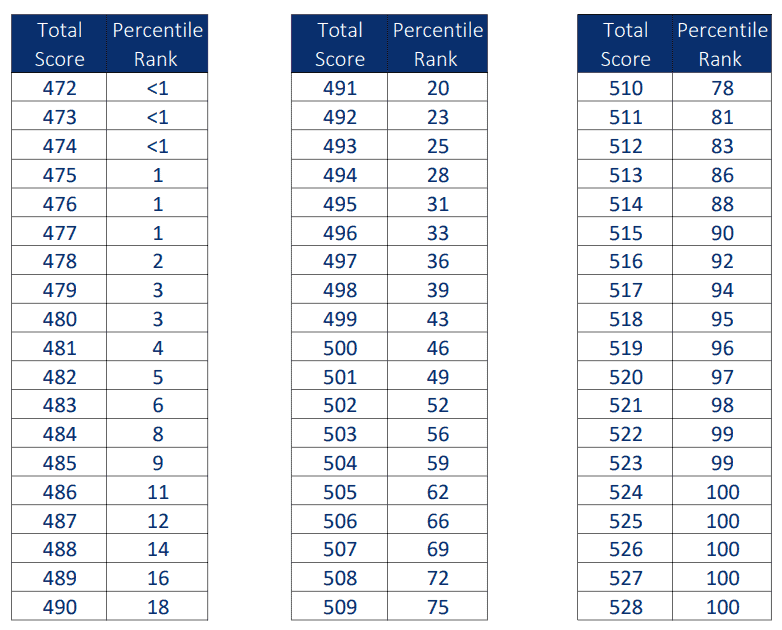
| 90th Percentile Score | 515 |
| 99th Percentile Score | 522 |
Source: AAMC Percentile Ranks
For top-tier programs, the bar is even higher. According to Shemmassian Academic Consulting:
- Stanford: 519 average MCAT
- Harvard: 520+ average MCAT
- Mayo Clinic: 521 average MCAT
- Yale: 521 average MCAT
- Duke: 519 average MCAT
💰 Individual School Acceptance Rates Remain Brutal
While the overall acceptance rate reached 44.58% in 2024, MedSchoolCoach reports that individual school rates tell a different story:
4.23% — Average acceptance rate at individual MD schools
Six programs have acceptance rates under 1%
Only 18 programs have acceptance rates over 7%
This means applicants must apply broadly—the AAMC estimates 18.6 applications per applicant via AMCAS—making a strong MCAT score essential for standing out across multiple schools.
The Problem: Why MCAT Preparation Is Uniquely Challenging
The MCAT isn't just a content test—it's a 7.5-hour marathon that evaluates scientific reasoning, critical analysis, and mental endurance. Understanding the specific challenges reveals why traditional preparation methods often fall short.
Overwhelming Content Volume
The MCAT covers an extraordinary breadth of material:
- Chemical and Physical Foundations of Biological Systems (Chem/Phys): General chemistry, organic chemistry, physics, biochemistry
- Critical Analysis and Reasoning Skills (CARS): Humanities and social sciences passages requiring inference and analysis
- Biological and Biochemical Foundations of Living Systems (Bio/Biochem): Biology, biochemistry, organic chemistry
- Psychological, Social, and Biological Foundations of Behavior (Psych/Soc): Psychology, sociology, biology
Each section is scored 118-132, with a total score range of 472-528.
The CARS Paradox
Science-minded students often excel at content-heavy sections but struggle with Critical Analysis and Reasoning Skills. Unlike science sections, you can't memorize your way to CARS success—it requires consistent daily practice over months to develop the reading comprehension and analytical reasoning skills tested.
According to BestColleges' MCAT percentile analysis, the CARS section has the lowest average score (124.6) and requires a 128 or higher to reach the 90th percentile.
Time Management Under Pressure
| Section | Questions | Time | Time Per Question |
|---|---|---|---|
| Chem/Phys | 59 | 95 min | ~96 seconds |
| CARS | 53 | 90 min | ~102 seconds |
| Bio/Biochem | 59 | 95 min | ~96 seconds |
| Psych/Soc | 59 | 95 min | ~96 seconds |
The 7.5-hour exam length demands mental stamina that content knowledge alone cannot provide.
Prohibitive Cost of Traditional Preparation
Elite private MCAT tutoring costs $150-$300+ per hour, putting comprehensive preparation out of reach for many students. Commercial prep courses from Kaplan, Princeton Review, or Blueprint range from $1,500 to $3,000+.
For students already facing application costs of $170 (AMCAS primary) plus $43 per additional school, plus secondary fees of $50-$200 per school, adding thousands in tutoring fees creates significant financial barriers.
The Solution: AI-Powered MCAT Tutoring
The best AI for MCAT tutoring addresses each of these challenges through intelligent, adaptive coaching that meets you exactly where you are in your preparation journey.
Comparison: Traditional Tutoring vs. Best AI for MCAT Tutoring
| Traditional Approach | Best AI for MCAT Tutoring |
|---|---|
| $150-$300/hour for private tutoring | Fraction of the cost with unlimited access |
| Generic study schedules | Personalized plans based on your timeline, baseline, and target score |
| One-size-fits-all explanations | Multiple explanation approaches (visual, mechanistic, analogy-based) |
| Limited availability | 24/7 access whenever you need help |
| Manual progress tracking | Automated skill assessment and weakness identification |
| One tutor's expertise | Comprehensive knowledge across all four sections |
🎯 Adaptive Calibration for Every Score Range
The best AI for MCAT tutoring dynamically adjusts its approach based on your current performance:
Scoring below 500: Focus on content foundations, celebrate small wins, build confidence before speed
Scoring 500-510: Balance content gaps with strategy, identify 2-3 high-yield focus areas per section
Scoring 510-518: Precision work on remaining weaknesses, advanced passage strategies, mental game optimization
Scoring 518+: Edge cases, trap answer patterns, time optimization, managing perfectionism
📚 Deep Content Mastery Across All Four Sections
The AI tutor provides comprehensive coverage:
Chemical and Physical Foundations:
- General chemistry (stoichiometry, thermodynamics, kinetics)
- Organic chemistry (reaction mechanisms, functional groups)
- Physics (mechanics, fluids, electromagnetism, optics)
- Biochemistry (metabolism, enzyme kinetics)
Critical Analysis and Reasoning Skills:
- Active reading strategies for humanities passages
- Main idea identification and author tone recognition
- Inference and reasoning question techniques
- Time management for passage-based analysis
Biological and Biochemical Foundations:
- Cell biology and molecular biology
- Genetics and evolution
- Organ systems physiology
- Biochemistry integration
Psychological, Social, and Biological Foundations:
- Psychology (learning, memory, cognition, development)
- Sociology (social structures, demographics, stratification)
- Biological bases of behavior
🧠 Strategic Test-Taking Coaching
Beyond content, the AI teaches the strategic skills that separate high scorers from average performers:
- Trap answer analysis: Understanding why wrong answers are tempting
- Passage-based reasoning: How to extract information efficiently from dense scientific passages
- Time management: Section-specific pacing strategies
- Test-day preparation: Anxiety reduction, preparation rituals, and mental game optimization
How It Works: From Diagnostic to Test Day
Using the best AI for MCAT tutoring requires no specialized knowledge. Simply describe your situation in natural language.
Step 1: Diagnostic Discovery
Start by sharing your test date, baseline score (from a diagnostic or practice test), target score, and study context. The AI gathers essential information about your GPA, prerequisite completion, and available study time to create a complete picture of your situation.
Step 2: Personalized Strategy Development
Based on your diagnostic information, the tutor develops a customized approach:
- Non-traditional applicant returning after years away? Extra time on foundational concepts with real-world connections
- Currently taking biochemistry? Leverage current coursework while addressing gaps
- Test imminent (<4 weeks)? Triage mode focusing only on highest-impact improvements
- Retaking after previous attempt? Targeted improvement plan addressing specific weaknesses
Step 3: Content Mastery with Application
When you need help with specific topics—whether it's enzyme kinetics, electromagnetic waves, or operant conditioning—the AI provides clear, structured explanations with concrete examples. Every concept connects to how it actually appears on the MCAT: passage-based, requiring interpretation of experimental data.
Step 4: Question Analysis and Trap Answer Deconstruction
Bring any practice question you missed, and the tutor provides:
- What the question was actually testing
- Why the correct answer is correct
- Why your answer was tempting but wrong (trap answer logic)
- Similar practice opportunities to reinforce learning
Step 5: Progress Tracking and Plan Adjustment
After each practice test, the best AI for MCAT tutoring analyzes your score breakdown, identifies patterns in wrong answers, and adjusts your study plan accordingly. The built-in Progress Tracker maintains visibility into your improvement across all four sections.
Real Results: How Students Are Transforming Their Scores
Over 143,000 pre-med students have used the best AI for MCAT tutoring to achieve meaningful score improvements, with users reporting average gains of 8-12 points through consistent engagement.
📊 The Content Gap Closer
Scenario: A biology major with strong Bio/Biochem scores but struggling with physics
Traditional Approach: Generic physics review taking 40+ hours, unclear what's actually high-yield
With the Best AI for MCAT Tutoring: Identifies specific physics topics appearing most frequently (fluids, circuits, optics), provides targeted explanations connecting physics to biological systems, and generates practice passages applying these concepts in MCAT-style contexts.
Key benefits:
- Focused review on high-yield physics topics
- Explanations that leverage existing biology knowledge
- Practice problems mimicking actual MCAT passage format
💼 The CARS Struggler
Scenario: A pre-med scoring 128+ on science sections but stuck at 124 on CARS
Traditional Approach: Reading more passages without strategic improvement, growing frustration
With the Best AI for MCAT Tutoring: Assesses current reading approach, teaches active reading strategies (main idea identification, author tone recognition, paragraph function), and provides daily CARS practice with detailed analysis of reasoning patterns.
Key benefits:
- Systematic approach to a section that "can't be memorized"
- Daily practice recommendations (more effective than cramming)
- Analysis of why specific wrong answers were tempting
📱 The Busy Balancer
Scenario: A post-bacc student working part-time with 3 months until test date
Traditional Approach: Overwhelming study schedules that don't account for real-life constraints
With the Best AI for MCAT Tutoring: Creates a realistic 3-month plan balancing work, study, and rest. Integrates milestones into Google Calendar, identifies which topics to prioritize given limited time, and builds in buffer periods for unexpected delays.
Key benefits:
- Realistic scheduling that accounts for other obligations
- Calendar integration for accountability
- Triage guidance when time is limited
🎯 The Retaker
Scenario: A student who scored 505 on their first attempt, aiming for 515+
Traditional Approach: Re-purchase the same prep course and hope for different results
With the Best AI for MCAT Tutoring: Diagnoses what went wrong on the previous attempt through detailed analysis of section scores and question types missed. Creates a targeted improvement plan addressing specific weaknesses rather than starting from scratch. Provides mental game support for test anxiety that may have developed.
Key benefits:
- Targeted improvement rather than complete restart
- Analysis of previous attempt patterns
- Psychological support for retake anxiety
🩺 The Non-Traditional Applicant
Scenario: A career changer who completed prerequisites 5 years ago and needs comprehensive review
Traditional Approach: Expensive prep course covering material already mastered alongside forgotten content
With the Best AI for MCAT Tutoring: Diagnostic assessment identifies which content areas need full review versus quick refresher. Provides foundational explanations with real-world connections that leverage professional experience. Builds confidence through incremental progress.
Key benefits:
- Efficient use of study time on actual gaps
- Explanations that connect to professional experience
- Flexible scheduling for working professionals
Understanding MCAT Percentiles and Target Scores
According to BestColleges' comprehensive analysis of AAMC percentile data for 2025-2026:
| Score | Percentile | Competitiveness |
|---|---|---|
| 524-528 | 100th | Top-tier research institutions |
| 518-523 | 95th-99th | Highly competitive for any program |
| 515 | 91st | Strong candidate for most MD programs |
| 512 | 84th | Average matriculant score |
| 510 | 79th | Competitive for many programs |
| 508 | 74th | Above average, good for DO programs |
| 505 | 65th | Average applicant score |
| 500 | 49th | Below average for competitive programs |
The best AI for MCAT tutoring helps you understand where your target score falls and what specific improvements will have the greatest impact on your percentile ranking.
Frequently Asked Questions
Is the best AI for MCAT tutoring free to try?
Yes, the best AI for MCAT tutoring is available on Jenova with free tier access for basic usage. For extended study sessions and higher usage limits, paid subscription plans offer significantly more capacity at a fraction of traditional tutoring costs. Visit www.jenova.ai for current pricing.
How does the AI compare to Kaplan or Princeton Review courses?
While commercial prep courses offer structured curricula and practice materials, the best AI for MCAT tutoring provides personalized, adaptive coaching that responds to your specific questions and weaknesses in real-time. It's ideal as a supplement to content review or as a primary study partner for students who learn best through dialogue and explanation.
Can the AI generate practice questions?
Yes, the tutor can generate MCAT-style practice questions for concept reinforcement. However, it always clarifies these are practice questions, not official AAMC materials. For the most accurate practice, official AAMC materials (practice exams, section banks, question packs) remain the gold standard.
Does the AI work on mobile devices?
Absolutely. The tutor is fully accessible via Jenova's iOS and Android apps, making it easy to review concepts during commutes or squeeze in CARS practice between classes.
How accurate are the score predictions?
The AI provides score ranges based on reported performance, not precise predictions. It never guarantees specific score improvements. Typical improvements of 5-10 points are common with proper preparation; larger jumps require more time and often indicate content gaps being filled.
What if I need help with medical school admissions beyond the MCAT?
While the best AI for MCAT tutoring focuses specifically on MCAT preparation, Jenova offers other specialized agents for medical school admissions consulting, personal statement review, and interview preparation.
Transform Your MCAT Preparation with Expert AI Coaching
The path to medical school has never been more competitive. With average matriculant scores climbing to 512.1, enrollment exceeding 100,000 students for the first time, and top programs demanding 518+, strategic MCAT preparation isn't optional—it's essential.
Yet traditional tutoring remains prohibitively expensive—$150-$300 per hour for quality instruction that most pre-med students simply cannot afford.
The best AI for MCAT tutoring changes this equation. It delivers the personalized attention, strategic coaching, and content mastery that only elite tutors previously provided—available 24/7, adapting to your schedule, and accessible at a fraction of traditional costs.
Whether you're starting your preparation journey, struggling with a specific section, or pushing for those final points to reach your target score, the path forward starts with expert guidance tailored to your unique needs.
Ready to transform your MCAT preparation? Discover the best AI for MCAT tutoring and access expert coaching whenever you need it.
References:
- AAMC - 2025 FACTS: Applicants and Matriculants Data
- AAMC - U.S. Medical Schools Enroll Record Number of Students in 2025
- AAMC - Percentile Ranks for the MCAT Exam
- MedSchoolCoach - What Is Considered a Good MCAT Score?
- MedSchoolCoach - Medical School Acceptance Rates
- Shemmassian Academic Consulting - Average GPA and MCAT Score for Every Medical School
- BestColleges - MCAT Percentiles: Full Statistics
- Med School Insiders - 2026 Medical School Acceptance Rates by Ethnicity
- Educations.com - Top 5 Medical School Trends in 2026
- Ophthalmology Advisor - US Medical School Enrollment Hits Historic Milestone
If you're preparing for medical school admissions beyond the MCAT, our Medical School Admissions Consultant provides comprehensive guidance on applications, personal statements, and interview preparation.