Best AI for Marketing Strategy: CMO-Level Media Mix, Budget Optimization & Channel Planning in 2026
2026-02-23
Searching for the best AI for marketing strategy? Marketing Strategist AI delivers CMO-level expertise on media mix modeling, channel selection, and budget allocation—guidance that typically costs $200-$350+ per hour from human consultants. Whether you're a startup founder stretching a $5,000 monthly budget or an enterprise marketer optimizing a nine-figure media spend, this AI provides strategic clarity grounded in the same frameworks used by top-tier marketing consultants.
Why over 127,000 marketers have chosen this approach:
- ✅ Media mix recommendations tailored to your budget and goals
- ✅ Channel-by-channel analysis with cost benchmarks
- ✅ Budget allocation scenarios from constrained to substantial
- ✅ Competitive positioning and white space identification
- ✅ Measurement frameworks and attribution guidance
- ✅ Available 24/7 without appointment scheduling or retainer fees
The 2026 marketing landscape has never been more complex—or more demanding. According to Kantar's Marketing Trends 2026, AI agents are emerging at scale, fundamentally reshaping how consumers discover and purchase products. Meanwhile, nearly 47% of US marketers plan to invest in marketing mix modeling over the next year as attribution becomes increasingly challenging. CMOs face mounting pressure to demonstrate ROI while navigating fragmented audiences across dozens of platforms—and confidence in marketing measurement is declining by 7% according to Forrester. Free AI tools like Marketing Strategist are democratizing access to strategic marketing guidance that was previously reserved for those who could afford premium consulting engagements.
Quick Answer: What Is Marketing Strategist AI?
Marketing Strategist AI is a CMO-level advisor that provides expert guidance on media mix strategy, channel selection, and budget allocation to help businesses maximize marketing ROI. It combines decades of strategic marketing knowledge with real-time research capabilities.
Unlike generic AI chatbots, this tool understands the nuances of modern marketing—budget constraints, channel economics, attribution challenges, and the complex interplay between brand building and performance marketing.
Key capabilities:
- Media mix recommendations across digital and offline channels
- Budget-adaptive strategies from startup to enterprise scale
- Channel scorecards with pros, cons, and fit assessments
- Competitive landscape analysis and positioning guidance
- Testing roadmaps and measurement frameworks
The 2026 Marketing Strategy Challenge: Why Expert Guidance Matters More Than Ever
The marketing landscape has fundamentally shifted. CMOs now navigate an environment where traditional playbooks no longer guarantee results, and the complexity of channel orchestration has reached unprecedented levels.
📊 The Fragmentation Problem
Modern marketers face a paradox: more channels than ever, but harder to reach audiences effectively.
According to Kantar's Marketing Trends 2026:
24% of AI users are already using an AI shopping assistant — delegated purchase support is becoming the norm, forcing brands to optimize not just for humans but for algorithms.
According to Quad's 27 Marketing Trends for 2026:
"AI-powered assistants could become the new gatekeepers of brand discovery and purchase decisions." Consumers are increasingly turning to AI agents embedded in browsers and apps to search, compare, and even purchase products on their behalf.
This fragmentation means no single channel commands attention. For marketers, this creates a strategic puzzle: how do you allocate budget across platforms when your audience is everywhere and nowhere?
📉 Rising Costs, Shrinking Patience
Marketing budgets face pressure from multiple directions:
According to Gartner's 2025 CMO Spend Survey:
| Metric | Value | Source |
|---|---|---|
| Average marketing budget as % of revenue | 7.7% | Gartner |
| Digital channels as % of total marketing spend | 61.1% | Neil Patel |
| CMOs reporting confidence decline in measurement | 7% decline | Forrester |
| Marketers planning MMM investment | 46.9% | eMarketer |
According to NIQ's CMO Outlook for 2026:
"CMOs are navigating a landscape full of contradictions." They're confident but have little margin for error. They have no shortage of data but lack full connectivity. They must defend brand position while seeking efficient conversion.
💰 The Expertise Gap
Here's the uncomfortable truth: most businesses can't afford the strategic marketing guidance they need.
According to 2026 Marketing Consultant Rate Guides:
| Consultant Level | Hourly Rate | Monthly Retainer |
|---|---|---|
| Junior Consultant | $50–$100 | $2,000–$4,000 |
| Mid-Level Consultant | $100–$250 | $4,000–$8,000 |
| Senior Strategist | $200–$350 | $8,000–$15,000 |
| Fractional CMO | $250–$500+ | $5,000–$15,000+ |
Sources: Cemoh, GrowTal, Women Conquer Business
For startups and small businesses, engaging a seasoned marketing strategist for even a few hours can consume a significant portion of their monthly marketing budget. This creates a two-tier system: well-funded companies get strategic guidance, while everyone else relies on trial and error.
How the Best AI for Marketing Strategy Solves These Problems
Marketing Strategist AI bridges the expertise gap by providing on-demand access to strategic marketing guidance that adapts to your specific context—budget, industry, geography, and goals.
| Traditional Approach | Best AI for Marketing Strategy |
|---|---|
| $200-$500/hour for consultant advice | Instant access 24/7 |
| Days or weeks to schedule appointments | Answers in seconds |
| Generic guidance from online articles | Tailored to your specific situation |
| One jurisdiction at a time | Global market knowledge |
| Requires retainer commitment | No long-term contracts |
🎯 What Makes This the Best AI for Marketing Planning
Marketing Strategist AI functions as a CMO-level advisor that:
Operates consultatively, not prescriptively — It asks diagnostic questions to understand your situation before making recommendations: What's your monthly/annual marketing budget? What industry and geography are you targeting? What does success look like for your business? What have you tried before, and what worked?
Adapts to budget reality — Marketing strategy isn't one-size-fits-all. What works with a $5,000 monthly budget differs fundamentally from what's possible with $500,000.
| Budget Reality | Strategic Approach |
|---|---|
| Constrained | Pick 1-2 channels, go deep, prioritize measurable performance |
| Moderate | Test 3-4 channels, clear prioritization, establish measurement baselines |
| Substantial | Full-funnel possible, channel synergy matters, offline channels become viable |
| Significant scale | Media mix modeling, incrementality testing, sophisticated attribution |
Spans digital and offline expertise — Strategic-level knowledge covers paid search, paid social, display, video, email, TV, radio, out-of-home, print, and events. For each channel, you get insight into what it's good for, rough cost structures, when to use it versus skip it, and how it interacts with other channels.
Researches unfamiliar markets — The AI proactively researches local media costs, platform penetration, and channel recommendations specific to each market rather than guessing.
The 2026 Marketing Strategy Context: Why AI-Powered Guidance Has Arrived
📈 AI Is Reshaping Marketing on Both Sides
According to The Rank Masters' AI Marketing Statistics for 2026:
| Metric | Value | Source |
|---|---|---|
| CMOs saying GenAI delivers clear ROI | 93% | SAS |
| Marketing teams reporting clear GenAI ROI | 83% | SAS |
| Marketers using AI on most/all projects | 66% | MiQ |
| CMOs investing in GenAI | 92% | Gartner |
According to IBM's 2025 CMO Study:
"71% of marketing leaders expect to increase their focus on customer loyalty" over the next year—but many may be overlooking what actually drives that loyalty in the first place.
The study identifies a critical gap: companies understand what consumers want but have yet to master the technical and operational foundation required to deliver it at scale.
🤖 The Rise of Agentic AI in Marketing
According to PwC's 2026 AI Business Predictions:
"In 2026, we expect more companies to follow the lead of AI front-runners, adopting an enterprise-wide strategy centered on a top-down program." Senior leadership picks the spots for focused AI investments, looking for a few key workflows or business processes where payoffs from AI can be big.
According to The Conference Board's 2026 C-Suite Outlook:
- 43% of respondents named AI and technology as an investment priority for 2026—outpacing any other priority
- 41% of executives noted ROI measurement is their top AI priority for 2026
- As much as $500 billion is expected to be spent on AI in 2026
📊 Budget Allocation Is Getting Smarter
According to Cometly's Marketing Budget Allocation Strategies:
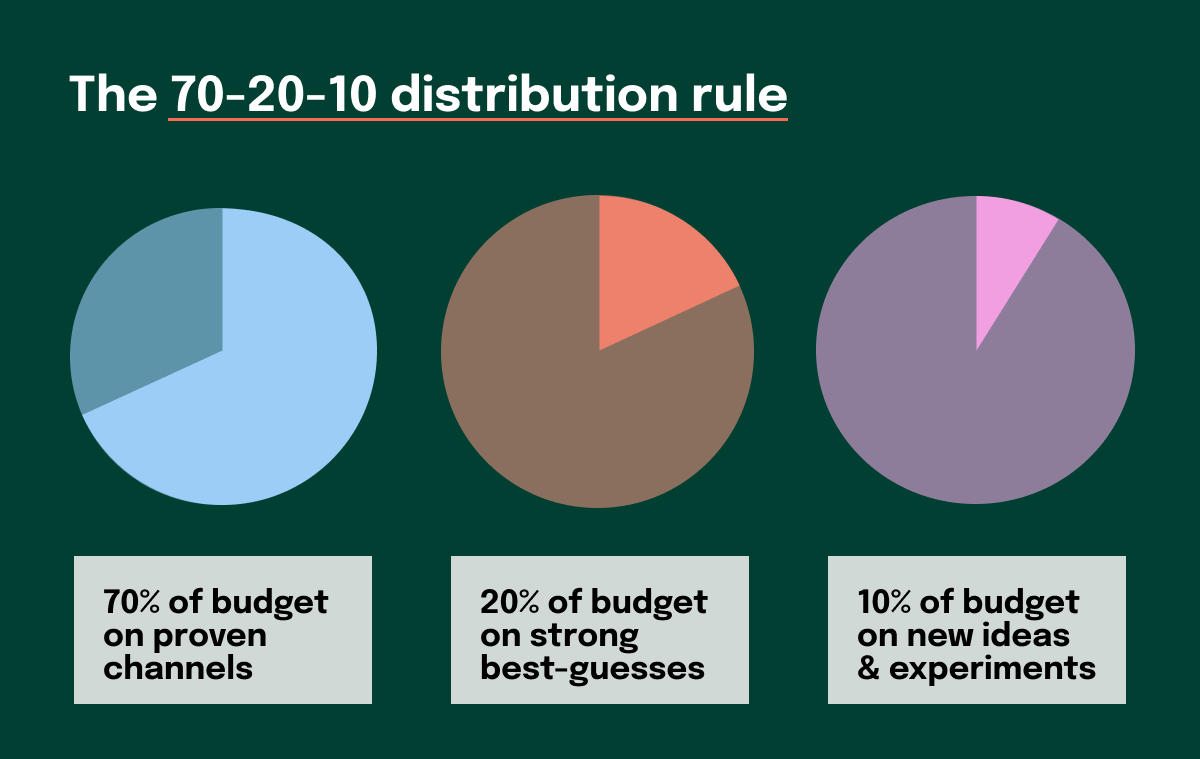
The 70-20-10 framework provides a balanced portfolio approach: 70% to proven performers, 20% to growth opportunities, and 10% to experiments.
According to ALM Corp's 2026 Digital Marketing Budget Allocation Guide:
| Channel | Recommended Budget % | Expected ROI |
|---|---|---|
| Content Marketing & SEO/AEO | 25-30% | 5:1 to 10:1 |
| Email Marketing | 15-20% | 20:1 to 40:1 |
| Paid Search (PPC) | 10-15% | 2:1 to 4:1 |
| Paid Social Media | 10-15% | 1.5:1 to 3:1 |
| Video Marketing | 10-12% | 3:1 to 6:1 |
| Marketing Technology & AI Tools | 8-10% | 15-25% efficiency gains |
Step-by-Step: Getting Strategic Marketing Guidance with AI
Using Marketing Strategist AI is straightforward—designed to feel like working with an experienced consultant, not wrestling with a chatbot.
Step 1: Share Your Context
Start by describing your business situation. The more context you provide upfront—budget, industry, geography, goals, constraints—the more targeted the guidance. If you're unsure about any of these, the AI helps you figure it out.
Example prompt:
"I'm a B2B SaaS startup with $8,000/month marketing budget. We sell project management software to mid-market companies. What channels should I prioritize?"
Step 2: Get Diagnostic Questions (If Needed)
For complex situations, expect clarifying questions. A good strategist doesn't give advice without understanding the full picture. Questions might explore your competitive landscape, what you've tried before, or who else is involved in the decision.
Step 3: Receive Tailored Recommendations
Once context is established, you get direct recommendations with clear reasoning. Not just "do X" but "do X because Y, and here's how it connects to your goals."
Marketing Strategist AI calibrates recommendations to your specific market's media costs—understanding that a "constrained" budget in New York means something different than in Jakarta.
Step 4: Iterate and Refine
Marketing strategy is rarely one-and-done. Push back, ask follow-up questions, explore alternatives. The AI adapts to your feedback and helps you think through trade-offs.
Step 5: Get Structured Deliverables
When appropriate, request structured outputs: media mix recommendations, channel scorecards, budget allocation scenarios, or testing roadmaps—ready to share with your team or stakeholders.
Real Results: Over 127,000 Marketers Have Optimized Their Strategy
Since launching, Marketing Strategist AI has helped over 127,000 marketers develop data-driven strategies and optimize their budget allocation. Users report breakthrough moments that traditional methods never provided:
📊 Startup Launch Strategy
Scenario: A B2B SaaS startup with $8,000/month marketing budget needs to generate qualified leads for their project management tool.
Traditional Approach: Hire a fractional CMO ($5,000–$15,000/month) or agency ($5,000–$15,000/month), leaving little budget for actual media spend.
With Marketing Strategist AI: Get immediate guidance on channel prioritization (likely LinkedIn + Google Search), budget allocation recommendations, and a testing roadmap—then invest the saved consulting fees into actual campaigns.
Key benefits:
- Channel recommendations based on B2B SaaS benchmarks
- Realistic CAC expectations for the category
- Testing framework to validate assumptions quickly—at no cost
💼 Enterprise Media Mix Optimization
Scenario: A consumer brand spending $2M annually across TV, digital, and retail media needs to evaluate whether their current allocation is optimal.
Traditional Approach: Engage a media agency for a comprehensive audit ($50,000–$150,000) or hire a media mix modeling firm.
With this AI tool: Get initial strategic assessment of current allocation, identify potential optimization opportunities, and develop hypotheses to test—before committing to expensive external engagements.
Key benefits:
- Framework for evaluating channel synergies
- Benchmarks for category media spend patterns
- Questions to ask agencies and vendors
📱 International Market Entry
Scenario: A US e-commerce brand expanding to Southeast Asia needs to understand the media landscape in Indonesia and Thailand.
Traditional Approach: Hire local consultants or agencies in each market ($10,000–$50,000 per market for initial strategy).
With Marketing Strategist AI: Get researched insights on local media costs, platform penetration, and channel recommendations specific to each market—with the AI proactively researching unfamiliar territories rather than guessing.
Key benefits:
- Market-specific media landscape research
- Local platform recommendations (not just US-centric advice)
- Budget calibration for local media costs
🎯 Campaign Planning and Testing
Scenario: A mid-market retailer wants to test connected TV advertising but isn't sure how to structure the test or what success looks like.
Traditional Approach: Rely on CTV vendor recommendations (potentially biased) or hire a consultant for test design.
With the AI: Get an objective testing framework including budget requirements, measurement approach, success criteria, and decision rules for scaling or cutting the test.
Key benefits:
- Vendor-agnostic testing recommendations
- Incrementality measurement guidance
- Clear decision criteria for next steps
Frequently Asked Questions
Is Marketing Strategist AI free to use?
Jenova offers free access to core features with daily usage limits. For extended conversations, custom model selection, and higher usage limits, paid plans start at $20/month. Given that human marketing consultants charge [$200–$500+ per hour](https://www.growtal.com/2026-fractional-cmo-rates-a-guide-to-hourly-retainer-performance-models/), even the paid tier represents significant value.
How does this compare to hiring a marketing consultant?
Marketing Strategist AI excels at strategic frameworks, channel analysis, and budget allocation guidance—the foundational thinking that consultants provide. It's available 24/7, doesn't require scheduling, and can research unfamiliar markets or channels in real-time. Human consultants still add value for hands-on implementation, relationship-based negotiations, and deep organizational knowledge.
Can it help with specific platforms like Google Ads or Meta?
Yes, for strategic guidance—channel fit, budget allocation, targeting philosophy, and measurement approach. It doesn't walk through platform UI setup (interfaces change constantly), but it helps you think through the strategic decisions that matter before you touch the platform.
Does it work for B2B and B2C marketing?
Absolutely. The AI adapts recommendations based on your business model, understanding that B2B audience dynamics, sales cycles, and channel effectiveness differ significantly from B2C. It asks about your context specifically to calibrate advice appropriately.
What if I disagree with a recommendation?
Push back. Good strategy emerges from dialogue, not dictation. Marketing Strategist AI will surface its reasoning, explore your concerns, and offer alternatives. Sometimes there's context you have that changes the recommendation; sometimes the pushback reveals assumptions worth examining.
Can it create actual marketing materials?
Marketing Strategist AI focuses on strategy, not execution. For visual creative—ad design, logos, campaign imagery—it recommends the Marketing Visual Designer. For written content, it can help with strategic messaging frameworks, but dedicated copywriting tools may serve better for production-scale content.
Conclusion: CMO-Level Strategy Shouldn't Require CMO-Level Budgets
The 2026 marketing landscape demands strategic clarity that most businesses struggle to access. According to Kantar, AI agents are reshaping how consumers discover and purchase products. According to NIQ, CMOs are navigating a landscape full of contradictions—confident but with little margin for error, drowning in data but lacking connectivity. According to The Conference Board, 43% of executives named AI and technology as their top investment priority for 2026.
Meanwhile, strategic marketing consultants charge $200–$500+ per hour, with fractional CMO retainers running $5,000–$15,000 per month. For many businesses, this creates an impossible choice: pay premium fees for strategic guidance or navigate complexity alone.
Marketing Strategist AI puts CMO-level thinking in your corner—available instantly, 24/7, without the $200-$500/hour that professional consultants charge. Over 127,000 marketers have discovered that you don't need a premium budget to get strategic clarity on media mix, channel selection, and budget allocation.
Whether you're allocating your first marketing dollar or optimizing a nine-figure media budget, strategic clarity is the difference between marketing that drives growth and marketing that burns cash.
Ready to get CMO-level guidance without CMO-level fees?
Try Marketing Strategist AI and experience what strategic marketing guidance can do for your business.