Best AI for Macro Strategist: Cross-Asset Intelligence That Keeps Pace With Global Markets (June 2026)
2026-06-28
Macro Strategist delivers institutional-grade macro intelligence by synthesizing cross-asset data — rates, currencies, equities, and commodities — into unified, actionable briefings in seconds. While the 2026 macro environment presents unprecedented complexity across diverging central bank policies, record global debt levels, and widening regional growth dispersion, this AI bridges the gap between raw data overload and strategic clarity.
✅ Cross-asset synthesis — Rates → FX → Equities → Commodities transmission chains mapped in real time ✅ Central bank divergence tracking — Fed, ECB, BOJ policy analysis with forward guidance implications ✅ Automated briefings — Daily macro summaries formatted as downloadable PDFs ✅ Scenario modeling — Historical pattern matching against current regime conditions
The macro landscape in 2026 is testing even seasoned strategists. To understand why the right AI matters now, let's examine the challenges defining this environment.
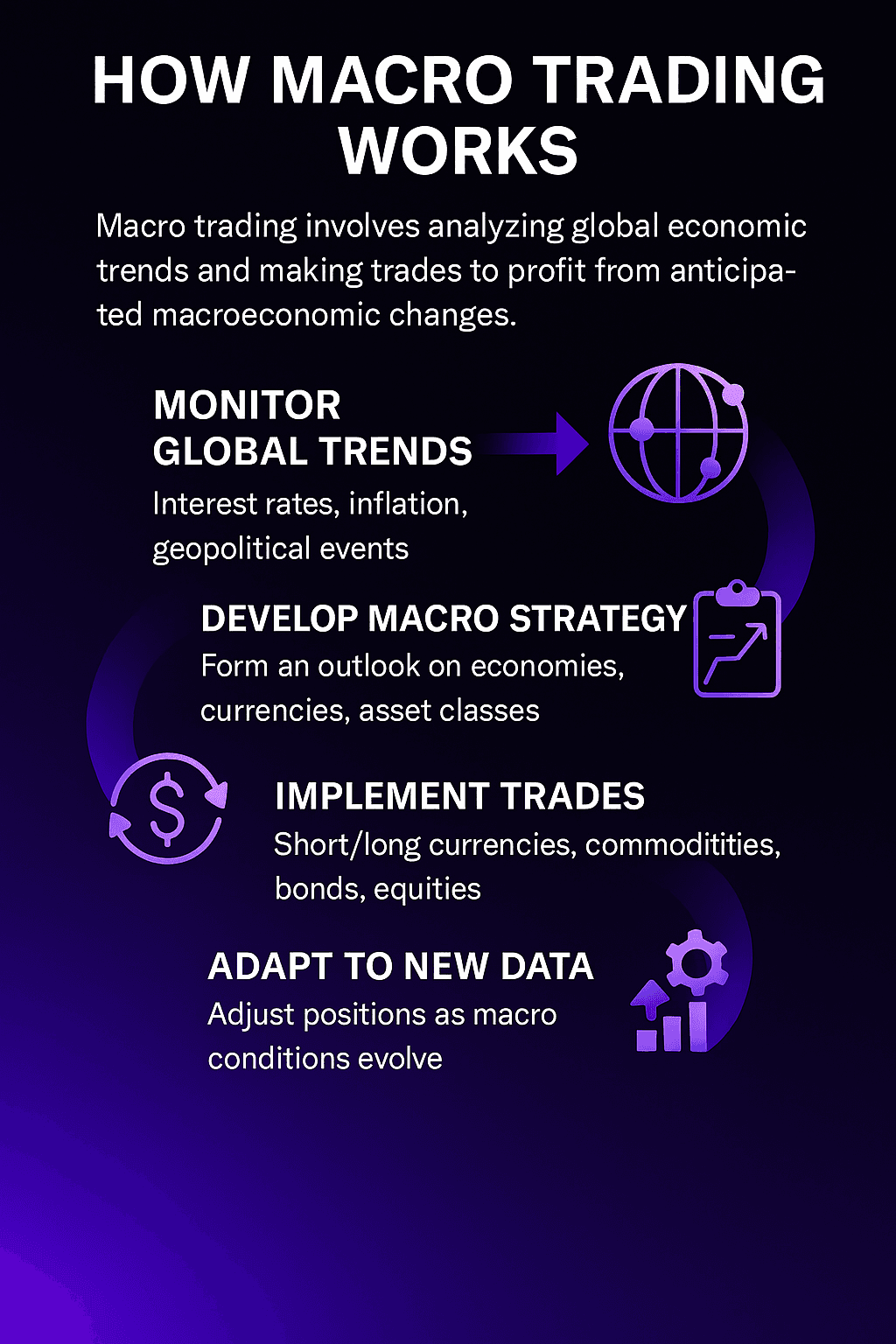
Quick Answer: What Is the Best AI for Macro Strategist?
Macro Strategist is an AI-powered macro intelligence engine that synthesizes cross-asset market data, central bank policy signals, and flow dynamics into unified briefings in seconds.
Rather than gathering fragmented data from multiple terminals and reports, it connects dots across asset classes — explaining not just what moved, but why it matters for your positions.
Key capabilities:
- Real-time synthesis across rates, FX, equities, commodities, and credit
- Central bank policy divergence analysis with transmission mechanism mapping
- Scenario modeling with historical pattern matching and regime identification
- Automated PDF briefings with key event calendars and positioning data
The Problem: Why Macro Strategy in 2026 Demands More Than Data Access
The global macro environment has entered a period of extraordinary complexity. According to the IMF's World Economic Outlook (April 2026), global growth is projected to slow to just 3.1 percent in 2026, while S&P Global's May 2026 forecast places annual global real GDP growth even lower at 2.2 percent — well below consensus.
But accessing coherent macro intelligence remains frustratingly difficult:
- Data fragmentation across dozens of sources, asset classes, and time zones
- Central bank policy divergence creating complex cross-currents that require integrated analysis
- Accelerating information velocity where consensus forms within minutes of data releases
- Analytical overload where more data doesn't translate to better decisions
The Data Fragmentation Problem
A single morning can bring overnight Asian market moves, European PMI releases, U.S. Treasury auction results, Fed speaker commentary, CFTC positioning shifts, and commodity inventory reports. Each data point exists in isolation. Connecting a surprise in German industrial production to its implications for EUR/USD, European equity sectors, and global risk sentiment requires manual synthesis that consumes hours — if it happens at all.
According to Third Bridge's analysis of AI tools for hedge funds, the core challenge is clear: "The edge comes from identifying signals before they become obvious. That means detecting shifts in sentiment, spotting contradictions early, and pressure-testing an investment thesis faster than competing funds."
The Central Bank Divergence Challenge
The era of synchronized global monetary policy has ended. The OECD Economic Outlook (June 2026) warns that inflation "would also intensify, rising by around 0.4 percentage points in 2026 and 1.3 percentage points in 2027 — creating difficult trade-offs for policymakers, especially central banks." Meanwhile, AllianceBernstein's Q1 2026 outlook expects "growth to pick up and inflation to remain sticky but with more central bank easing in 2026."
This creates a paradox: sticky inflation with simultaneous easing expectations. A rate decision in Tokyo ripples through carry trades, affects dollar liquidity, and reshapes emerging market vulnerability — all within hours. Most research workflows lack the integration to track these transmission chains in real time.
The Speed-to-Insight Gap
95% of hedge fund managers now use AI in their workflows, according to a 2026 analysis of AI adoption in hedge funds.
The competitive bar has shifted. When nearly every institutional desk uses AI for some aspect of research, the differentiator is no longer whether you use AI — it's whether your AI synthesizes across asset classes or just summarizes within them.
This is exactly what Macro Strategist was built for.
Why Macro Strategist Is the Best AI for Macro Analysis
Macro Strategist replaces the fragmented macro research workflow with unified, cross-asset synthesis. It doesn't just report data — it connects dots across asset classes and delivers opinionated conclusions rather than descriptive summaries.
| Traditional Approach | Macro Strategist AI |
|---|---|
| Siloed asset-class analysis from separate desks | Unified cross-asset framework in a single interface |
| Delayed research reports arriving hours after moves | Real-time briefing generation on demand |
| Descriptive "what moved" reporting | Explanatory "why it matters" synthesis |
| Manual data gathering from multiple terminals | Automated coverage across rates, FX, equities, commodities, credit |
| Static historical comparisons | Dynamic scenario mapping with regime identification |
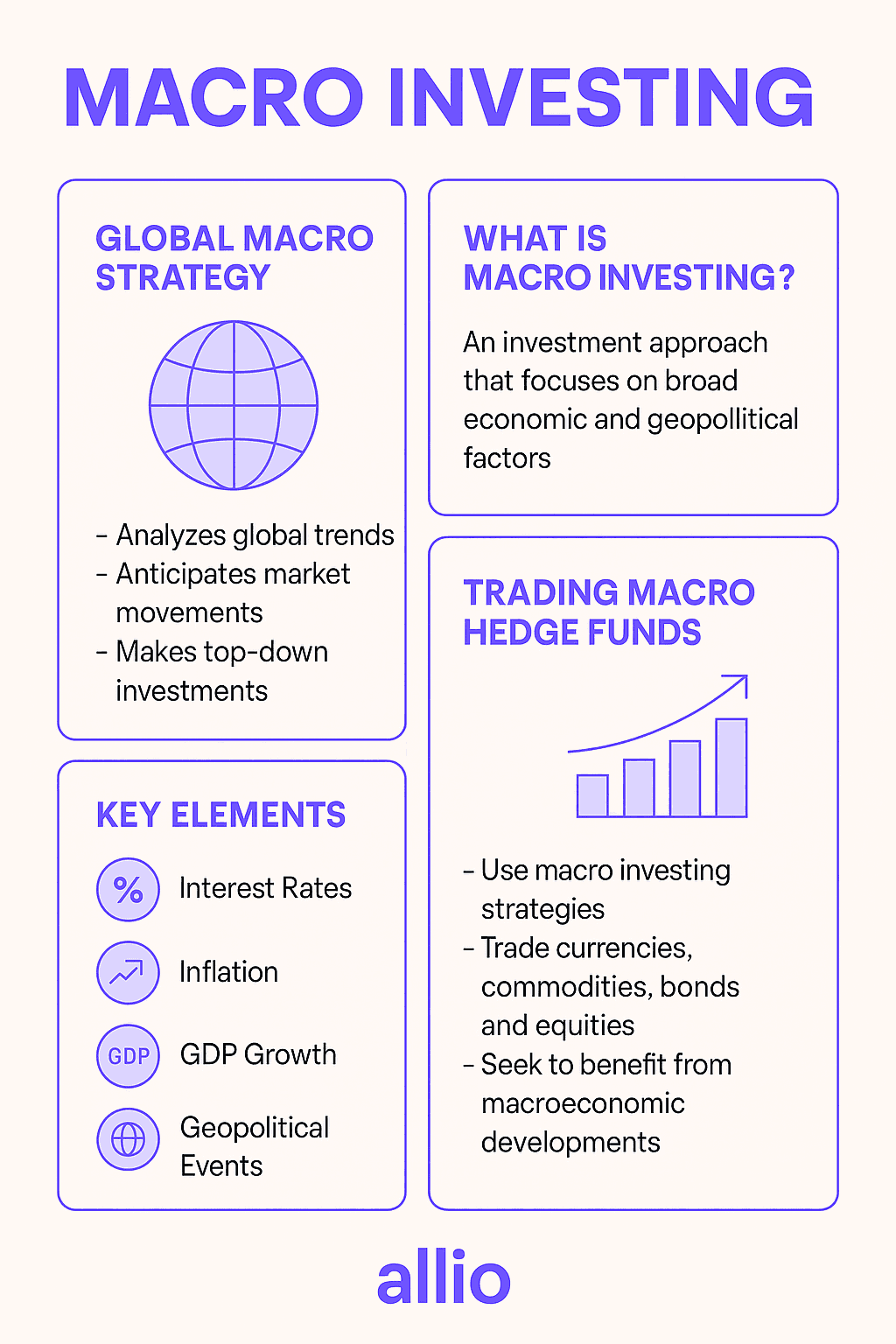
Cross-Asset Transmission Framework
The AI applies the sophisticated mental models that top macro strategists use daily:
- Rates → FX Transmission — How yield differentials drive currency movements, carry trade dynamics, and emerging market vulnerability
- FX → Equities Transmission — Currency impacts on export competitiveness, earnings translation, and sector rotation signals
- Commodities as Macro Signals — Oil as growth/inflation barometer, copper-gold ratio for risk sentiment, supply shock cascading effects
- Credit & Liquidity — Spread decompression signals, funding stress indicators, and financial conditions indices
"How will the narrowing U.S.-Japan rate differential affect carry trade positioning and emerging market funding conditions?"
The AI doesn't just answer — it maps the full transmission chain from rates to FX to equity flows to EM credit spreads.
Central Bank Policy Divergence Analysis
With the Fed, ECB, and BOJ on diverging paths, the macro strategist tracks policy trajectories and their cross-asset implications simultaneously. It synthesizes forward guidance language, dot plots, balance sheet dynamics, and market pricing of future moves into a coherent narrative.
*"Compare ECB and Fed policy trajectories and map the implications for EUR/USD and European equity sectors through Q3 2026."
Automated Macro Briefings
Morning briefings follow a standardized framework: market snapshot, overnight developments with attribution, key data releases ahead, positioning extremes, and a strategist-level synthesis of what matters most for the session.
Related Agents You'll Also Find Useful
If you're building a comprehensive macro investment workflow, several specialized agents complement Macro Strategist's cross-asset synthesis:
Fundamental Stock Analyst
When your macro view identifies sector rotations or equity opportunities, this agent provides the company-level depth. Earnings analysis, valuation models, SEC filing parsing, and sentiment tracking — translating macro themes into individual equity conviction.
- Bottom-up equity research grounded in financial statements and filings
- Valuation modeling across DCF, comps, and precedent transactions
- Earnings surprise analysis and management commentary tracking
Forex Market Analyst
Macro strategy often expresses itself first through currencies. This agent specializes in currency pair analysis with yield differential modeling, central bank policy tracking, and technical setups that complement the macro strategist's top-down view.
- Currency strategy driven by rate differentials and policy divergence
- Technical analysis overlaid on fundamental macro frameworks
- Positioning data interpretation from CFTC and institutional flow signals
Economics Analyst
For deeper structural analysis — trade policy mechanisms, fiscal multiplier estimates, labor market dynamics — this agent provides the academic rigor that underpins longer-term macro positioning.
- Macro/micro economic modeling and policy mechanism tracing
- Trade flow analysis and supply chain implications
- Development economics and structural reform assessment
Commodities Analyst
When your macro thesis touches energy, metals, or agriculture — as most do — this agent delivers supply/demand fundamentals, COT positioning data, and technical levels specific to commodity markets.
- Energy, metals, and agriculture supply/demand dynamics
- CFTC Commitments of Traders analysis and positioning extremes
- Seasonal patterns and geopolitical supply risk assessment
How It Works: From Question to Macro Intelligence in 5 Steps
Step 1: Define Your Macro Focus
Start with a specific question, market event, or coverage request. Macro Strategist adapts its default indicator set to match your priorities.
*"Generate today's macro briefing with focus on Fed policy transmission, European growth data, and Asian currency developments."
The system automatically prioritizes relevant indicators: Fed funds futures, yield curve dynamics, EUR/USD, USD/JPY, regional PMIs, and central bank commentary.
Step 2: Receive Cross-Asset Data Synthesis
The AI gathers current data across all relevant asset classes and synthesizes it into a coherent narrative covering:
- Rates: 2Y/10Y Treasury yields, Fed funds futures, breakeven inflation, SOFR
- FX: DXY, EUR/USD, USD/JPY, USD/CNH, GBP/USD
- Equities: S&P 500, Nasdaq 100, VIX, Euro Stoxx 50, Nikkei 225, MSCI EM
- Commodities: WTI crude, Brent, gold, copper
- Credit: US IG/HY spreads, EM sovereign spreads
- Positioning: CFTC COT highlights, ETF flow signals
Step 3: Understand Transmission Mechanisms
Rather than listing disconnected data points, the AI explains how they connect:
*"The widening U.S.-Eurozone rate differential has strengthened the dollar against EUR, which in turn pressures European industrial exporters while providing a tailwind for U.S. import-dependent sectors. Meanwhile, the same dollar strength is tightening financial conditions for EM borrowers with USD-denominated debt."
Step 4: Explore Scenario Mapping
The AI contextualizes current conditions against historical analogues:
*"Map current macro conditions against prior Fed easing cycles and identify which historical regime most closely matches the 2026 environment."
The response includes specific pattern matches, key differences from the analogues, and probability-weighted scenario outcomes.
Step 5: Generate Deliverables
| Need | Output |
|---|---|
| Morning briefing | 1-2 page summary with market snapshot, overnight developments, calendar ahead |
| Deep-dive analysis | Multi-asset attribution with entry/exit frameworks and invalidation conditions |
| Event preparation | Pre-meeting briefing with consensus expectations and scenario probabilities |
| Research report | Structured macro thesis with supporting data, charts, and risk factors |
Results & Use Cases
📊 Portfolio Manager: Daily Macro Briefing
Scenario: A portfolio manager needs to understand overnight cross-asset moves and identify what matters most for the trading session ahead.
Traditional Approach: 2-3 hours gathering data from Bloomberg, broker research, and central bank websites. Manual synthesis in spreadsheets or notes. Often incomplete by market open.
Macro Strategist: Comprehensive briefing generated in minutes covering overnight Asian and European developments, U.S. pre-market positioning, key data releases and Fed speaker calendar, and an opinionated synthesis on what deserves attention. According to Accenture's Macro Foresight, despite 2025 resilience from disinflation and AI investment, "global growth stayed fragile amid policy, geopolitical and trade risks" heading into 2026 — exactly the kind of nuance the AI captures daily.
- Covers all major asset classes in a single unified briefing
- Highlights cross-asset transmission mechanisms, not just price levels
- Flags positioning extremes and potential inflection points
💼 Macro Analyst: Central Bank Policy Divergence Research
Scenario: A macro analyst needs to assess how ECB-Fed policy divergence affects European equity sectors through the second half of 2026.
Traditional Approach: Separate calls with rates strategists, FX analysts, and equity sector teams. Delayed written summary. Conflicting frameworks across desks.
Macro Strategist: Integrated analysis showing ECB deposit rate trajectory with forward guidance implications, EUR/USD appreciation scenarios affecting export competitiveness, sector-level impact mapping, and historical analogue comparison — all in one coherent framework.
- Maps rate differentials through to equity sector rotation
- Provides historical pattern matching for similar divergence periods
- Identifies the second-order effects most analysts miss
📱 Risk Manager: Real-Time Volatility Regime Monitoring (Mobile)
Scenario: A risk manager receives an alert about unusual VIX movements while away from their desk and needs to assess whether the portfolio requires immediate hedging adjustments.
Traditional Approach: Wait until returning to a terminal. Check VIX level, request options market data, make qualitative assessment based on incomplete information.
Macro Strategist on mobile: Multi-factor volatility regime analysis delivered instantly — VIX term structure shape, realized vs. implied volatility spread, cross-asset correlation shifts, and CFTC positioning extremes. Full feature parity on iOS and Android means the same depth available at a terminal is accessible from a phone.
- Identifies regime shifts before they become consensus
- Correlates volatility signals across asset classes
- Provides historical context for current vol environment
🎯 CIO: Geopolitical Risk Scenario Planning
Scenario: A CIO needs to rapidly assess cross-asset implications of an emerging geopolitical event — a tariff escalation, energy supply disruption, or sanctions announcement.
Traditional Approach: Convening an emergency meeting across siloed desks, reading conflicting broker takes, and attempting manual scenario construction under time pressure.
Macro Strategist: Comprehensive analysis within minutes covering historical precedent analysis, cross-asset transmission chains (energy prices → inflation expectations → rate pricing → currency moves → equity sector impacts), scenario probability mapping, and positioning implications.
- The UN's mid-2026 economic assessment projects global GDP growth at just 2.5 percent — 0.2 percentage points below January projections — making geopolitical risk assessment more consequential than ever
- Covers second and third-order effects across every asset class
- Combines the work of what would traditionally require multiple analyst teams, supported by the Geopolitics Analyst for deeper regional analysis
Frequently Asked Questions
How is this different from Bloomberg Terminal or AlphaSense?
Bloomberg and AlphaSense provide raw data, document search, and public market intelligence. Macro Strategist adds the synthesis layer — connecting data points across asset classes, explaining transmission mechanisms, and delivering opinionated conclusions rather than descriptive reporting. As Third Bridge's analysis notes, "Many tools save time. Fewer improve insight." This AI targets the insight gap.
Is Macro Strategist free to use?
Yes. All core features are available on the free tier with limited usage. Paid plans starting at $20/month provide significantly expanded usage, custom model selection across OpenAI, Anthropic, Google, and more, plus additional capabilities. No credit card required to start.
Can it generate automated daily macro briefings?
Yes. The system generates standardized macro briefings covering market snapshots, overnight developments with attribution, key calendar events ahead, positioning data, and a strategist-level synthesis. These can be downloaded as PDFs directly from the chat interface.
Does it provide specific trade recommendations?
No. The AI provides analysis frameworks, regime identification, scenario probabilities, and positioning context — decision support, not decision-making. It identifies conditions and transmission mechanisms so you can apply your own judgment to specific trades.
How current is the market data?
The AI executes real-time web searches to pull the latest market data, central bank announcements, and economic releases. It timestamps specific price levels and acknowledges when information may have shifted in fast-moving markets. All data citations include source links for verification.
Does Macro Strategist work on mobile?
Full feature parity across web, iOS, and Android. State-of-the-art speech-to-text means you can dictate macro questions on the go. All settings, memory, and conversation history sync across devices — so your ongoing macro research continues seamlessly from any device.
From Data Overload to Macro Clarity
The macro environment in 2026 demands more than data access — it demands synthesis. With global GDP growth projected at just 2.5 percent by the United Nations, central bank policy diverging across the Fed, ECB, and BOJ, and inflation expected to intensify through 2027 according to the OECD, the cost of fragmented analysis has never been higher.
Capital Economics identifies five macro themes shaping 2026, noting that "optimism around AI has been a key reason why 2025 has been another stellar year for stock markets" while "equity valuations remain high, especially in the US" — precisely the kind of cross-domain tension that requires integrated analysis rather than siloed research.
Macro Strategist transforms macro research from a fragmented, delayed process into a unified, real-time intelligence function. By connecting rates to FX to equities to commodities — by explaining not just what moved but why it matters for your positions — it delivers the cross-asset perspective that 2026 markets demand.
Try Macro Strategist now — no credit card required. Explore the full agent library at Jenova.