Best AI for LeetCode Coaching: Adaptive Interview Prep That Builds Real Problem-Solving Skill (June 2026)
2026-06-23
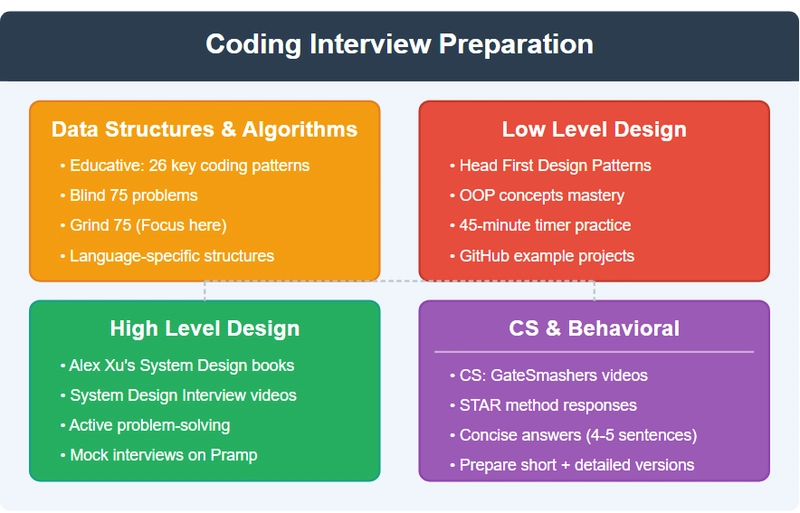
AI LeetCode Coach helps you build genuine algorithmic thinking — not memorized solutions — through adaptive coaching that reads your performance in real time and shifts its teaching intensity to match exactly where you are. While the 2026 interview landscape has become harder to navigate than ever, this AI provides a structured, feedback-rich preparation experience that turns scattered grinding into measurable progress.
✅ 4-gear adaptive coaching — from Socratic questioning to full step-by-step walkthroughs ✅ Weak pattern detection across 16+ algorithm topics with visual mastery tracking ✅ Traditional and AI-augmented mock interviews simulating real company formats ✅ Structured study plans built from Blind 75, Grind 75, and NeetCode 150 ✅ Works in Python, Java, C++, JavaScript, Go, Rust, and every major language
To understand why the right coaching tool changes outcomes, it helps to look at what candidates are actually up against in 2026's technical interview market.
Quick Answer: What Is AI LeetCode Coach?
AI LeetCode Coach is an adaptive coding interview preparation tool that reads your performance in real time and shifts its teaching intensity so you build genuine algorithmic thinking, not memorized solutions.
Key capabilities:
- Adaptive 4-gear system that adjusts from guided questioning to direct instruction based on your real-time performance
- Tracks mastery across 16+ algorithm topics and surfaces weak patterns you didn't know you had
- Dedicated mock interview modes for both traditional and AI-augmented interview formats
- Customized study plans based on your timeline, target companies, and current skill level
The Problem: Why Grinding LeetCode Alone Isn't Working in 2026
The technical interview landscape in 2026 is defined by a brutal paradox: the job market has stabilized, but the interview bar has risen faster than hiring has recovered.
80% of coding interview content at FAANG-level organizations in 2025 consisted of algorithmic puzzles, with LeetCode Hard problems appearing more frequently than ever — Technical Interview Statistics for 2026
29% hiring rate in tech for 2025, flat from 2024 and down significantly from the 34% rate in 2023 — Tech Hiring Trends in 2026
LeetCode-style rounds now account for roughly 15-20% of the final hiring decision, down from 40-50% in 2020, as companies evaluate system design, behavioral signals, and AI fluency alongside algorithms — Stackademic
But accessing quality preparation is frustratingly difficult:
-
No feedback loop — Solving problems in isolation means you never discover why you got stuck, only that you did. A candidate who solves 300 problems but can't articulate why they chose a sliding window over two pointers will underperform someone who solved 150 with deep pattern understanding.
-
Invisible weak spots — Most candidates feel "pretty good" at arrays after twenty Easy problems while their graph algorithm skills — which appear far more frequently in actual FAANG interviews — remain untested and undeveloped.
-
The AI interview bifurcation — Companies like Meta now expect candidates to use AI tools during coding rounds, while Google has returned to in-person formats to prevent AI assistance. Candidates must prepare for both tracks simultaneously.
-
Rising detection and scrutiny — An analysis of more than 19,000 interviews in early 2026 flagged roughly 38% of candidates for suspected AI assistance, making genuine understanding — not just correct answers — the differentiator interviewers are hunting for.
The Volume Trap
The instinct to solve more problems is understandable but counterproductive. Without structured feedback, you reinforce bad habits — choosing brute force when a pattern exists, missing edge cases repeatedly, or never learning when dynamic programming applies versus when greedy works. Volume without coaching is noise.
The Dual-Track Problem
No amount of unstructured grinding prepares you for the new AI-enabled interview format. When Meta evaluates your ability to craft specific prompts, review AI-generated code critically, and explain the underlying algorithm even when AI wrote the initial solution — those are skills traditional LeetCode practice never develops.
Why AI LeetCode Coach Is the Best AI for Coding Interview Prep
The difference between AI LeetCode Coach and every other preparation tool comes down to one principle: adaptive feedback that builds understanding, not dependency.
| Traditional LeetCode Grinding | AI LeetCode Coach |
|---|---|
| Solve problems in isolation with no feedback | Adaptive coaching that shifts intensity based on real-time performance |
| No visibility into your weak patterns | Tracks mastery across 16+ algorithm topics and surfaces struggle areas |
| Same difficulty regardless of your level | Calibrates dynamically — solving a Hard cleanly earns more credit than grinding Easys |
| No mock interview practice | Both traditional and AI-augmented mock interview modes |
| Manual, inconsistent progress tracking | Visual mastery dashboard with session stats and exportable logs |
| No study plan structure | Customized plans based on timeline, target companies, and current level |
| No preparation for AI-enabled rounds | Dedicated mode simulating Meta-style AI-augmented interviews |
🎯 The 4-Gear Adaptive System
The core of this AI coach is a teaching model that mirrors how the best human tutors operate — adjusting intensity based on what they observe, not following a fixed script:
Gear 1 — Explore: When you're demonstrating comfort with a topic, the coach asks Socratic questions. It pushes you to identify patterns yourself, talk through brute force approaches, and reason toward optimization without being told the answer. This is where genuine problem-solving intuition is built.
Gear 2 — Guide: When you express confusion or make repeated errors in a specific area, the coach provides targeted hints — naming the relevant pattern, suggesting a data structure to consider, or pointing to a simpler problem that uses the same technique. It narrows the search space without eliminating the learning.
Gear 3 — Teach: When you're encountering a genuinely new concept — your first exposure to monotonic stacks, or your first dynamic programming problem — the coach walks through the approach step-by-step, explaining why the pattern works and when it applies.
Gear 4 — Review: After solving, the coach analyzes time and space complexity with you, shows the optimal solution if yours differs, discusses edge cases you may have missed, and connects the problem to related patterns. This is where isolated solutions become transferable knowledge.
The critical design choice: you can always override the gear. Saying "just show me the answer" is respected immediately — no resistance, no guilt. Sometimes you need to see the solution to understand the pattern. The coach trusts your judgment.
📊 Weak Pattern Detection
Most candidates don't know what they don't know. The coach tracks your performance across 16+ algorithm topics and surfaces your weak patterns explicitly:
- Visual mastery bars for each topic category
- Automatic detection of recurring error types (off-by-one, incorrect base cases, wrong data structure selection)
- Study time allocation recommendations based on actual weakness, not perceived comfort
- Session-over-session trend tracking to confirm improvement
🤖 AI-Augmented Mock Interview Mode
No other preparation tool trains you for the new AI-enabled interview format. The coach includes a dedicated mode simulating the three-phase structure used by companies like Meta:
- Bug Fixing Phase — You receive a codebase with intentional bugs and must identify and fix them, optionally using AI assistance
- Core Implementation Phase — Build a feature with AI tools available, demonstrating that you can direct AI effectively while maintaining understanding
- Optimization Phase — Scale the solution under new constraints, proving you understand the underlying algorithms even when AI generated the initial code
The coach evaluates prompt specificity, review discipline, and dual narration — the ability to explain your thinking while directing AI.
Related Agents You'll Also Find Useful
If you're deep in interview prep, coding challenges are only one dimension. These agents cover the complementary skills that determine whether you actually land the offer.
Interview Coach
While LeetCode Coach handles the algorithmic side, behavioral and system design rounds can make or break your candidacy — especially at the senior level. Interview Coach prepares you for behavioral, case, and technical discussions with mock practice across formats.
- STAR method training with real-time feedback on answer structure
- Company-specific behavioral question sets
- Executive and leadership round preparation for senior candidates
Resume & Cover Letter Writer
Your resume is what gets you the interview in the first place. This Agent creates tailored, ATS-optimized resumes and cover letters targeted to specific roles and companies.
- Role-specific keyword optimization for applicant tracking systems
- Quantified achievement framing that highlights engineering impact
- Custom cover letters aligned to each company's values and tech stack
Python Coding Assistant
If Python is your interview language of choice, having a dedicated coding partner for building projects, debugging production code, and deepening language-specific fluency strengthens the foundation your interview prep builds on.
- Production-quality Python across scripts to complex multi-file projects
- Deep debugging support with clear explanations
- Best practice patterns for clean, Pythonic code
How It Works: From First Session to Interview Day
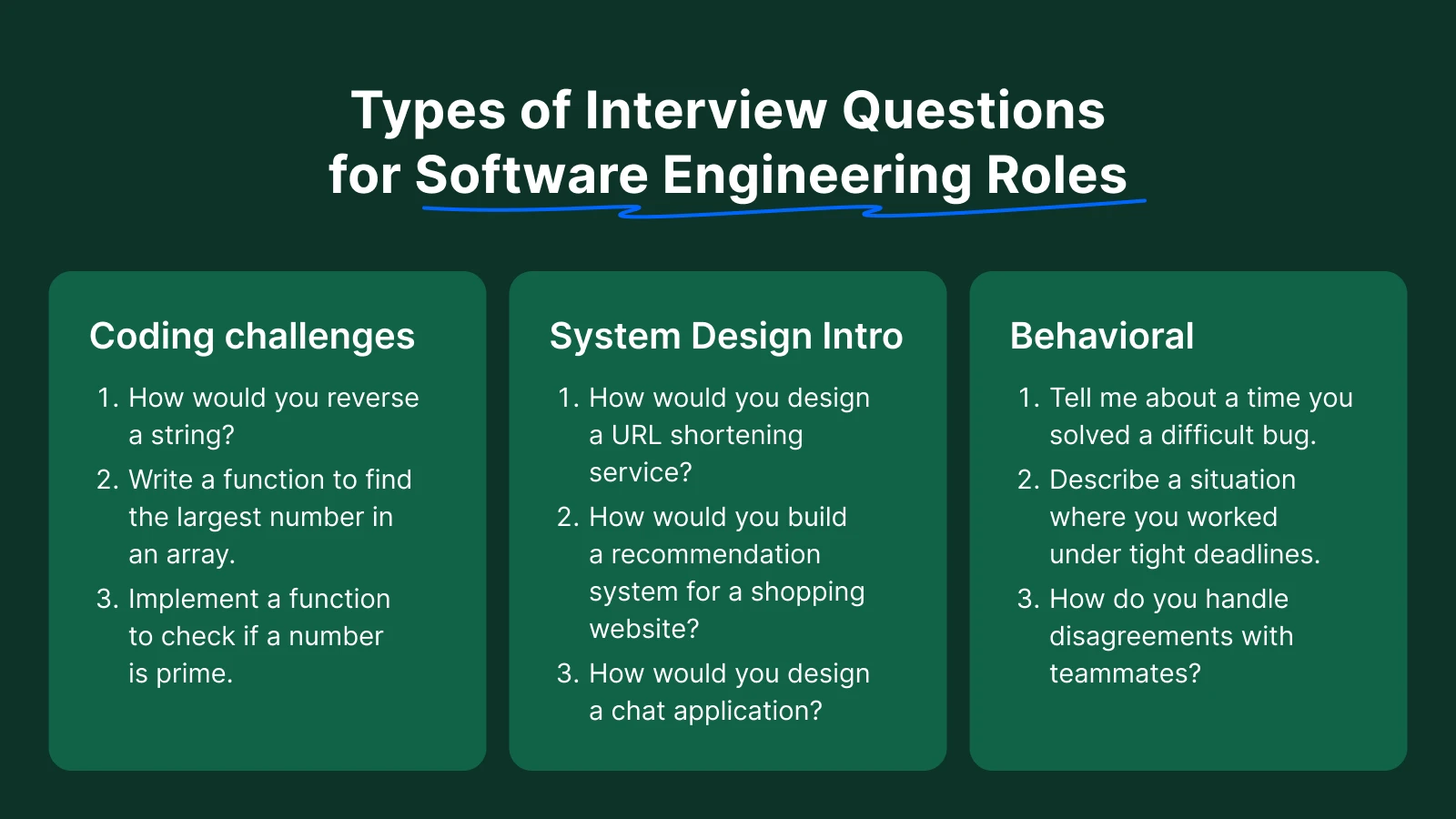
Step 1: Define Your Goal and Context
Open AI LeetCode Coach and describe your situation — experience level, target companies, timeline, preferred language, and perceived strengths and weaknesses. The coach uses this context to shape everything from problem selection to study plan structure to mock interview difficulty.
"I'm a backend engineer with 2 years of experience, preparing for Amazon and Google interviews in 6 weeks. I'm comfortable with Python. I think I'm decent at arrays and strings but I struggle with trees and DP."
Step 2: Get Calibrated Through Practice
Based on your stated comfort level, the coach recommends a starting point. As you work through the first few problems, it observes your performance and calibrates its mastery estimates. Your self-assessment might say "decent at arrays," but if you struggle with a medium-difficulty sliding window problem, the coach adjusts accordingly.
"Let's start with a medium array problem to calibrate. Try Container With Most Water. What's your first instinct for the approach?"
Step 3: Follow Your Structured Plan
The coach builds a week-by-week study plan customized to your timeline, target companies, and identified weaknesses. Plans are built from proven curricula — Blind 75, Grind 75, NeetCode 150 — but adapted to allocate more time to weak areas. Each week includes new topic introductions, progressive problem sets, review problems combining multiple patterns, and a mock interview.
"Week 3 focus: Binary Trees and Graph BFS/DFS. You'll start with level-order traversal, build up to course schedule dependency problems, and end with a mock combining tree and graph patterns."
Step 4: Run Mock Interviews
When you're ready to simulate real conditions, switch to mock interview mode. Choose between:
- Traditional Mock — A standard 45-minute coding interview with no AI assistance, evaluating correctness, communication clarity, approach structure, and edge case handling
- AI-Augmented Mock — The new format where AI tools are available and expected, evaluating prompt crafting, code review discipline, and dual narration
Step 5: Track, Export, and Iterate
Your progress dashboard updates after every session. Topic mastery bars, weak pattern alerts, and session statistics give you a clear picture of where you stand. Export your study plan as a downloadable file, your problem log as a spreadsheet, or generate a cheat sheet for quick review before your interview.
Results & Use Cases
📊 The Career Changer Starting From Zero
Scenario: A product manager transitioning to software engineering with no algorithm background. The thousands of problems on LeetCode feel overwhelming, and every "beginner guide" assumes knowledge they don't have.
Traditional Approach: Watch YouTube tutorials, attempt random Easy problems, get stuck immediately, spend hours on a single problem without knowing if the approach is even viable, get discouraged, quit. Weeks lost with no measurable progress.
With AI LeetCode Coach: The coach starts with fundamentals — arrays, hash maps, basic sorting — using Gear 3 (Teach) mode. It explains what a hash map is before asking you to use one. A 12-week study plan provides structure, and weak pattern detection ensures no topic is accidentally skipped.
- ✅ Structured progression from absolute fundamentals to interview-ready
- ✅ Concept explanations before problem sets — no assumed knowledge
- ✅ Beginner-appropriate language that builds confidence
- ✅ Weak pattern detection prevents wasted time on already-mastered topics
💼 The Senior Engineer Targeting Staff-Level Roles
Scenario: A developer with 7 years of experience interviewing for staff-level positions at Google and Meta. They can solve most Medium problems but struggle with Hard dynamic programming and advanced graph algorithms.
Traditional Approach: Grind through NeetCode 150, solve 300+ problems without structure, hope the right Hard patterns stick. No way to simulate the AI-enabled format Meta now uses. Costs weeks of unfocused study.
With AI LeetCode Coach: The coach identifies strength in arrays, strings, and basic trees but weakness in advanced DP (bitmask DP, digit DP) and graph algorithms (Tarjan's, network flow). It builds a 6-week plan spending 70% of time on weak areas and 30% on maintaining strengths. Mock interviews alternate between Google's traditional format and Meta's AI-augmented rounds.
- ✅ Company-aware preparation targeting known interview patterns
- ✅ Time allocated to actual weaknesses, not comfortable strengths
- ✅ Dual-track mock interviews for both traditional and AI-enabled formats
- ✅ Staff-level complexity calibration — problems requiring multiple pattern combinations
📱 The Commute Optimizer
Scenario: A developer with a demanding day job and limited study time — 30 minutes during their morning commute and maybe an hour before bed.
Traditional Approach: Try to squeeze in problems on a phone screen, give up because mobile coding is impractical, lose consistency, fall behind any study plan.
With AI LeetCode Coach: The coach works across web, iOS, and Android with full feature parity. During a 30-minute commute, the user describes their approach verbally using voice input, gets feedback on their reasoning, and reviews a concept explanation — all without needing a laptop. The evening session is reserved for actual coding practice, with the coach picking up exactly where the morning left off.
- ✅ Full cross-device sync — progress carries seamlessly between phone and laptop
- ✅ Voice input for describing approaches during commutes
- ✅ Concept reviews and pattern discussions that don't require coding
- ✅ Session continuity — the coach remembers everything across devices
🤖 The Engineer Preparing for AI-Enabled Rounds
Scenario: A senior engineer interviewing at Meta, which now uses a three-phase AI-enabled coding round. They've never practiced with AI tools in an interview context and don't know how to demonstrate algorithmic understanding while using a copilot.
Traditional Approach: No existing preparation tool addresses this format. Candidates walk in blind, unsure whether to use AI aggressively or cautiously, and fail on the evaluation criteria they never practiced: prompt specificity, review discipline, and dual narration.
With the AI coach: The AI-Augmented Mock Interview mode simulates the exact format — bug fixing, core implementation with AI assistance, and optimization under scale pressure. The coach evaluates prompt crafting, code review discipline, and the ability to explain what the AI generated and why it works.
- ✅ Practices writing specific, contextual prompts for AI tools
- ✅ Trains the discipline of reviewing AI-generated code before accepting it
- ✅ Evaluates dual narration — explaining thinking while directing AI
- ✅ Simulates realistic time pressure and phase transitions
Frequently Asked Questions
Is AI LeetCode Coach free?
AI LeetCode Coach is available on Jenova's free tier with limited usage. Paid plans starting at $20/month provide significantly more usage for extended coaching sessions, mock interviews, and study plan generation. All plans include full access to the coach's capabilities — the difference is usage volume, not feature access.
What makes this the best AI for LeetCode preparation compared to ChatGPT?
ChatGPT is a general-purpose AI. AI LeetCode Coach is purpose-built for coding interview preparation with specific features general AI lacks: adaptive 4-gear coaching that reads your performance signals, persistent progress tracking across sessions, weak pattern detection across 16+ algorithm topics, structured study plans from proven curricula, and dedicated mock interview modes including AI-augmented formats.
Can it help with system design interviews too?
Yes. While its primary expertise is algorithmic problem-solving, the coach also covers system design concepts, behavioral interview preparation using the STAR method, and contest strategy. For dedicated system design or behavioral coaching, the Interview Coach Agent provides deeper coverage of those specific formats.
What programming languages does it support?
All major languages used in coding interviews — Python, Java, C++, JavaScript/TypeScript, Go, C#, Rust, Kotlin, and Swift. The coach asks your preferred language on first interaction and remembers it across sessions, but you can switch anytime.
Does it work on mobile?
Yes. AI LeetCode Coach runs with full feature parity across web, iOS, and Android. All progress, settings, and study plans sync across devices automatically. Voice input makes it practical for commute-time concept reviews and approach discussions without needing a laptop.
How does it handle the new AI-enabled interview formats?
The coach includes a dedicated AI-Augmented Mock Interview mode that simulates multi-phase formats where AI tool usage is expected. It trains you on prompt crafting, code review discipline, and dual narration — the exact skills companies like Meta and Canva now evaluate in their new interview formats.
The Best Preparation Isn't More Problems — It's Better Feedback
The 2026 interview market rewards candidates who understand patterns deeply, communicate reasoning clearly, and adapt to both traditional and AI-enabled formats. Unstructured grinding — solving hundreds of problems without feedback — produces diminishing returns. What changes outcomes is the quality of coaching between each problem you solve.
AI LeetCode Coach delivers that coaching: adaptive intensity that meets you where you are, weak pattern detection that reveals what you can't see yourself, and mock interviews that simulate the formats you'll actually face. Try it free and start building the problem-solving intuition that gets offers — not just correct answers. Explore more AI agents at Jenova.