Best AI for Learning German Through Roleplay: Conversational Fluency Without the Classroom (June 2026)
2026-06-29
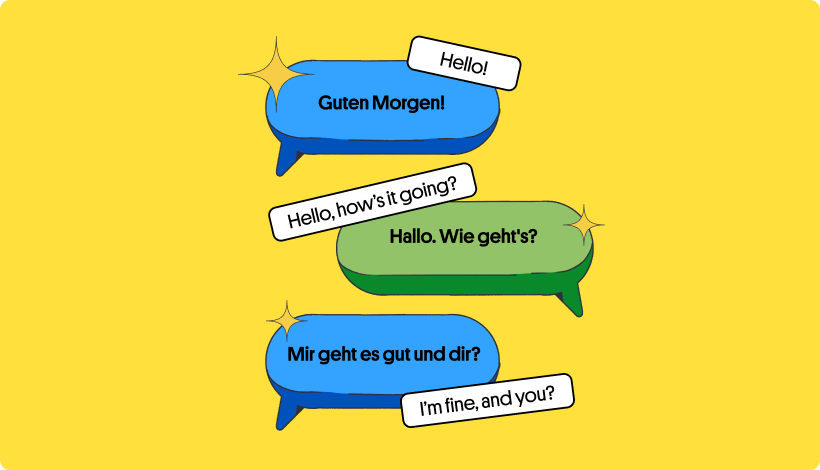
Learn German Through Roleplay turns one of Europe's most in-demand languages into a lived experience — immersive AI-driven scenarios where grammatical cases, separable verbs, and conversational instincts internalize through emotionally engaging dialogue, not sterile conjugation tables. While German is widely regarded as one of the most rewarding second languages for career advancement and academic opportunity, most learners plateau at the intermediate level because traditional tools can't replicate the spontaneity and emotional stakes of real conversation.
✅ Dynamic roleplay scenarios that adapt from absolute beginner (A1) through advanced (C2) in real time ✅ Persistent cross-session memory tracking your case errors, vocabulary growth, and word-order struggles across weeks and months ✅ Cultural nuance woven into every interaction — formality registers (du vs. Sie), regional expressions, and idiomatic phrases ✅ Available 24/7 on web, iOS, and Android — practice during commutes, lunch breaks, or late-night study sessions
To understand why this matters, let's examine why millions of German learners hit a wall — and why most AI tools make the problem worse, not better.
Quick Answer: What Is Learn German Through Roleplay?
Learn German Through Roleplay is an immersive AI language agent that teaches German through adaptive narrative scenarios — building grammar, vocabulary, and conversational fluency through emotionally engaging dialogue rather than textbook drills.
Key capabilities:
- Scenario-based immersion covering travel, business, daily life, literature, romance, and conflict — any theme, any complexity
- Real-time grammar correction with contextual explanations for cases, verb placement, gendered nouns, and formality
- Persistent cross-session memory that builds a continuous learning arc over weeks and months
- Instant bidirectional translation support via the German-English Translator when you hit a wall mid-conversation
The Problem: Why Traditional German Learning Fails Most Learners
German is the most widely spoken native language in the European Union, and demand for German proficiency continues to grow across business, engineering, science, and the arts. Yet the fluency gap persists — learners can pass written grammar tests but freeze the moment a native speaker fires off a sentence at natural speed with compound nouns, modal particles, and verb-second word order they've never encountered in a textbook.
Here's why:
- Four grammatical cases (Nominativ, Akkusativ, Dativ, Genitiv) that change article and adjective endings depending on sentence role — and every noun carries one of three genders (der, die, das) that must be memorized individually
- Verb placement rules that shift depending on clause type — main clause verb-second, subordinate clause verb-final, and separable prefix verbs that split apart in surprising ways
- A formal/informal register system (du vs. Sie) where choosing wrong in professional settings can come across as disrespectful, and switching from Sie to du is a social ritual with real cultural weight
- Modal particles (doch, mal, ja, halt, eben) that carry no direct English translation but fundamentally change the tone and meaning of sentences — and that textbooks barely teach
- Generic AI chatbots that teach "robot German" — grammatically correct but flat, unnatural dialogue that doesn't reflect how Germans actually speak in Alltag
🔤 Gender and Cases: The Wall That Stops Most Learners
Every German noun has a grammatical gender, and there's no reliable rule to predict it. Der Tisch (the table, masculine), die Lampe (the lamp, feminine), das Buch (the book, neuter) — you simply have to learn the gender with every word. Then those genders interact with four cases to produce a matrix of article and adjective endings that shifts with every sentence. Flashcard apps can drill the table, but they can't simulate the moment when you need the dative case because you're telling someone you left your bag bei dem Freund — and the distinction actually matters for comprehension.
🤖 Most "AI Tutors" Are Just Chatbot Wrappers
A Reddit user who
shared how they had to build an elaborate roleplay system from scratch — crafting detailed prompts, manually requesting corrections, and constantly fighting the model's tendency to break character or revert to English. The effort produced real results, but the user had to engineer the entire learning framework themselves. Most learners don't have the prompt-engineering skills or patience to build a curriculum from zero every session.📉 Drills Without Context Create the Illusion of Progress
Research consistently shows that immersive language-learning experiences create stronger neural pathways than traditional instruction, leading to faster retention and more accurate recall. Learning the phrase Lass uns mal einen Kaffee trinken gehen while your character spontaneously suggests coffee to a new friend anchors the modal particle mal, the separable verb trinken gehen, and the casual register in a way that no conjugation table can replicate. As experts in immersion learning emphasize, surrounding yourself with the language and culture produces results that a classroom setting back home simply cannot match.
⏰ Word Order: Simple in Theory, Chaotic in Practice
German word order follows clear rules — verb-second in main clauses, verb-final in subordinate clauses — but applying those rules in real-time conversation while also tracking case endings, gendered articles, and separable prefixes overwhelms most learners. The only way to internalize word order is through massive contextual exposure: hearing and producing it in situations where the meaning depends on getting it right. Realistic roleplay dialogues covering cafés, hotels, workplaces, and emergencies provide exactly this kind of structured situational practice — but most apps offer scripted exchanges with fixed responses rather than adaptive conversation.
Why Learn German Through Roleplay Changes Everything
This is exactly what Learn German Through Roleplay was built for.
Instead of conjugation tables or vocabulary lists, you live in German. You negotiate rent with a Vermieter in Munich. You navigate a misunderstanding at the Ausländerbehörde. You order Schnitzel at a crowded Gasthaus and handle the server's rapid-fire follow-up questions about Beilagen. Every scenario is emotionally engaging, culturally grounded, and dynamically responsive to your level.
| Traditional German Learning | Learn German Through Roleplay |
|---|---|
| Memorize der/die/das tables in isolation | Encounter gendered nouns in emotionally charged contexts where the distinction matters |
| Study verb placement rules abstractly | Absorb word order through natural dialogue — main clause, subordinate clause, questions |
| Fear of mistakes in front of classmates or tutors | Private, judgment-free space to experiment freely |
| Same difficulty for everyone | Adaptive scaffolding from A1 to C2 |
| No memory between sessions | Persistent memory tracking case errors, vocabulary gaps, and growth over time |
| Generic, robotic AI responses | Culturally nuanced conversation with du/Sie register awareness and modal particles |
| Disconnected from real-world use | Scenarios mirror situations you'll actually encounter in Germany, Austria, and Switzerland |
While platforms like GermanPod101 offer dialogue role-play with AI feedback and SpeakPal provides AI roleplay for German pronunciation practice, these tools typically rely on scripted dialogues with predetermined paths. Learn German Through Roleplay provides fully dynamic narrative from A1 through C2 — no scripted ceiling, no repetitive scenarios, and persistent memory that compounds your learning across sessions.
🎭 Emotionally Anchored Learning That Sticks
When you're emotionally invested in a conversation — when the outcome matters to you — vocabulary sticks. Case endings internalize because you needed the dative to explain wem you gave the gift, not because a textbook told you to memorize the chart. The difference between drilling dem Freund in a worksheet and actually needing it to tell your roleplay partner who you're meeting is the difference between forgetting it tomorrow and remembering it next year.
🧠 Persistent Memory That Compounds Learning
Unlike generic chatbots that reset every conversation, Learn German Through Roleplay remembers your progress. It recalls which cases trip you up, which separable verbs you've mastered, which vocabulary domains you've explored — building a continuous learning arc across weeks and months. Return after a weekend away and pick up exactly where you left off. Your learning compounds over time instead of resetting to zero.
🗣️ Modal Particles and Natural Speech
Textbooks barely touch modal particles — doch, mal, ja, halt, eben, schon — but they're the difference between sounding like a textbook and sounding like a person. The agent models these naturally across different scenarios:
- Without particle: "Komm her." (Come here.) — sounds like a command.
- With mal: "Komm mal her." (Come here for a sec.) — sounds friendly and casual.
- With doch: "Komm doch her." (Come on, come here.) — sounds encouraging or slightly impatient.
You develop intuition for these distinctions through repeated contextual exposure — a skill that no grammar exercise can teach but that native speakers immediately notice.
🎯 Example Prompts to Get Started
"Let's roleplay: I just arrived in Berlin and I'm trying to find my Airbnb. The landlord only speaks German. Start at A1 level and gently correct my case endings."
"I want to practice ordering food at a German Gasthaus. Include regional dishes like Schweinshaxe and Knödel, and help me understand the cultural context — not just translate the menu."
"Simulate a job interview at a German engineering company. I'm applying for a mechanical engineer role. Conduct the interview in German using Sie, and give me feedback on formality, word choice, and verb placement."
Related Agents You'll Also Find Useful
If you're building German fluency through roleplay, these complementary agents extend your learning workflow into translation, writing, test preparation, and real-world travel.
German-English Translator
When you hit a compound noun you can't parse or a subordinate clause that makes no sense mid-roleplay, this bidirectional translator provides instant, contextually accurate translations without breaking your conversational flow.
- Handles compound nouns (Donaudampfschifffahrtsgesellschaft, anyone?), idioms, and colloquial expressions
- Preserves tone, register, and cultural nuance in translations
- Works seamlessly alongside roleplay sessions via @mention
TOEFL/IELTS Tutor
For multilingual learners juggling German acquisition alongside English proficiency exams, this tutor provides examiner-level coaching across all four skills.
- Adaptive diagnostics targeting your weakest areas
- Full mock exam simulations with detailed scoring
- Strategy coaching for time management and question types
Writing Assistant
Once your German progresses beyond conversation, this writing partner helps you craft polished German text — emails, essays, creative pieces — with feedback on grammar, style, and natural phrasing.
- Adapts to any format, audience, and register
- Provides explanations for corrections, not just fixes
- Supports iterative revision from draft to final
Travel Planning Advisor
Planning a trip to Germany, Austria, or Switzerland? This agent handles flights, hotels, destination research, and full itineraries — pair it with your German roleplay sessions to practice exactly the scenarios you'll encounter.
- Local insider tips and cultural etiquette guidance
- Real-time research on visa requirements and logistics
- Complete day-by-day itinerary generation
How It Works: From First Message to Real Conversation

Step 1: Open Learn German Through Roleplay
Visit Learn German Through Roleplay and start a new chat. No downloads, no installation, no credit card required. Works on web, iOS, and Android with full feature parity.
Step 2: Set Your Level and Goals
Tell the agent your current proficiency (complete beginner, A1, A2, B1, B2, or advanced) and what you want to focus on — everyday conversation, business German, travel scenarios, Goethe exam preparation, literature discussion, or cultural deep dives.
"I'm a complete beginner. I don't know any German beyond 'Hallo' and 'Danke.' Start by teaching me basic greetings and self-introductions, then move into ordering at a café."
Step 3: Enter the Scenario
The agent creates an immersive scenario tailored to your goals. You're not answering quiz questions — you're in a situation with stakes, emotions, and natural conversational flow. Need to switch from Sie to du? The scenario will create a moment where that cultural transition matters and feels earned.
Step 4: Receive Real-Time Feedback
As you respond in German (even mixing in English when you're stuck), the agent provides contextual corrections, vocabulary suggestions, case explanations, word-order fixes, and cultural notes — all woven naturally into the conversation, not as clinical interruptions.
"Ich möchte ein Kaffee bestellen, aber ich bin nicht sicher über die Artikel. Können Sie mir helfen, während wir im Rollenspiel bleiben?"
Step 5: Build on Previous Sessions
Return tomorrow, next week, or next month. The agent remembers where you left off — which cases you struggled with, which separable verbs need reinforcement, which vocabulary domains you've covered. Your learning compounds over time instead of resetting to zero.
Results & Use Cases
🧳 Travel to Germany, Austria, or Switzerland
Scenario: You're planning a two-week trip through Munich, Vienna, and Zurich and want to navigate hotels, restaurants, transit systems, and cultural sites without relying entirely on English.
Traditional Approach: Memorize phrasebook entries. Practice pronunciation alone. Arrive and freeze when a Bäckerei cashier fires back in rapid Bavarian dialect with unfamiliar expressions.
Learn German Through Roleplay: Spend weeks before your trip simulating exactly these interactions — checking into a hotel, buying a Tageskarte for the U-Bahn, asking for directions to the Marienplatz, explaining dietary restrictions at a Biergarten. You arrive practiced, not just prepared. Pair it with the Travel Planning Advisor to build your complete itinerary.
- Practice specific phrases for your exact itinerary and destinations
- Learn cultural etiquette for tipping, queuing, and greeting strangers
- Build confidence handling unexpected questions from native speakers
💼 Professional German for International Careers
Scenario: Your company is expanding into the DACH market and you need to communicate professionally in meetings, emails, and client calls — using Sie correctly, navigating corporate hierarchy language, and understanding German business culture.
Traditional Approach: Enroll in a business German course that meets twice a week. Progress slowly. Struggle to apply formal register and professional vocabulary in real-time conversation.
With Jenova: Roleplay client negotiations, board presentations, and email drafting in German — on your schedule, at your pace. Use the Writing Assistant to refine written communications with grammar feedback that explains the why behind every correction.
- Master the Sie register for professional contexts and learn when the du-transition happens
- Learn industry-specific vocabulary through situational practice
- Rehearse high-stakes conversations before they happen
📱 On-the-Go Practice During Commutes
Scenario: You have 30 minutes on the train each morning and want to use that time productively.
Traditional Approach: Open a flashcard app. Swipe through decontextualized vocabulary. Forget most of it by lunchtime.
With Jenova: Open a roleplay session on your phone. Have a 20-minute German conversation that adapts to your level, corrects your case endings in context, and remembers what you practiced yesterday. State-of-the-art speech-to-text means you can practice speaking hands-free.
- Full feature parity across web, iOS, and Android
- Voice-based practice during walks, commutes, or household tasks
- Pick up mid-scenario exactly where you left off
🎓 University Students and Goethe Exam Candidates
Scenario: You're preparing for the Goethe-Zertifikat B1 or B2 and need more speaking practice than your weekly Volkshochschule class provides.
Traditional Approach: Try to find a Tandem partner. Schedules conflict. Speaking practice drops off.
With Jenova: Unlimited conversation practice at any hour — reinforcing what you learned in class through scenarios that make grammar rules click in context. The research confirming that immersion produces results a classroom setting back home simply cannot match validates exactly this approach: structured instruction plus AI-powered immersive practice.
- Drill specific grammar points from your coursework in natural conversation
- Practice for oral exams by simulating Goethe-style speaking assessments
- Explore German literature and culture beyond the textbook
📚 Literature, Film, and Culture Enthusiasts
Scenario: You want to read Kafka, Hesse, or Böll in the original German — or understand German films and podcasts without subtitles.
Traditional Approach: Years of formal study before touching original texts. Motivation fades before reaching that level.
With Jenova: Roleplay scenes inspired by German literature. Discuss characters and themes in German. The agent adjusts complexity to your level, introducing literary vocabulary and complex sentence structures gradually while keeping you engaged through narrative investment.
- Analyze passages from classic works in German with guided discussion
- Build the vocabulary for understanding cinema, journalism, and podcasts
- Experience cultural depth that sanitized language apps strip away
FAQ
Is Learn German Through Roleplay free to use?
Yes, you can start for free with all core features, including the full roleplay experience, persistent memory, and access to the complete agent library. Paid plans begin at $20/month for expanded usage, custom model selection, and no watermarks on generated content. No credit card is required to begin.
How is this different from ChatGPT for learning German?
ChatGPT can hold German conversations, but as
, you have to build the entire learning framework yourself — crafting elaborate prompts, manually requesting corrections, and constantly fighting the model's tendency to break character. Learn German Through Roleplay is purpose-built for language learning with persistent memory, automatic correction, level-adaptive scenarios, and cultural nuance embedded in every interaction — no prompt engineering required.Can a complete beginner start with this?
Absolutely. The agent adapts to absolute beginners, starting with basic greetings, self-introductions, and simple phrases before gradually increasing complexity. It accepts mixed German-English input so you're never stuck, and explains the why behind every correction — including why it's der Tisch but die Lampe but das Buch.
How long does it take to learn German with AI?
The Goethe-Institut estimates approximately 750–900 hours of study for English speakers to reach B2 proficiency in German. AI can significantly accelerate this timeline by providing daily, adaptive practice. Most learners using immersive AI report basic conversational ability within three to six months of consistent daily practice — especially when combining roleplay with structured coursework.
Does it work on mobile?
Yes. Full feature parity across web, iOS, and Android. State-of-the-art speech-to-text means you can practice speaking German hands-free during commutes or walks. All settings, memory, and progress sync across devices.
Can AI help with German pronunciation and compound nouns?
AI provides text-based pronunciation guidance, phonetic breakdowns, stress pattern explanations, and contextual correction. It's especially effective for German's infamous compound nouns — breaking down Handschuhschneeballwerfer into its component parts (Handschuh + Schnee + Ball + Werfer) and explaining how compound stress works. While it can't replace a native speaker's ear for every subtle vowel distinction, it catches the errors that matter most at each proficiency level and explains them in context.
Start Speaking German, Not Just Studying It
The gap between studying German and speaking German is where most learners get permanently stuck. Four cases. Three genders. Verb-second word order. A formality system that signals social awareness. Modal particles that carry no direct English translation but change everything about how natural you sound. These aren't problems you solve with flashcards or grammar charts — they're problems you solve by using the language in situations that matter.
Learn German Through Roleplay gives you exactly that — unlimited, emotionally rich conversation practice that adapts to your level, remembers your progress, and teaches grammar through experience rather than explanation. No scheduling. No judgment. No textbook German that evaporates the moment someone in Berlin speaks at natural speed.
Try it free — no credit card required. And when you're ready to explore more, browse the full agent library at Jenova.