Best AI for IQ Testing: 7-Domain Adaptive Assessment with Instant Scoring, Percentile Ranking & Exportable Reports
2026-05-22
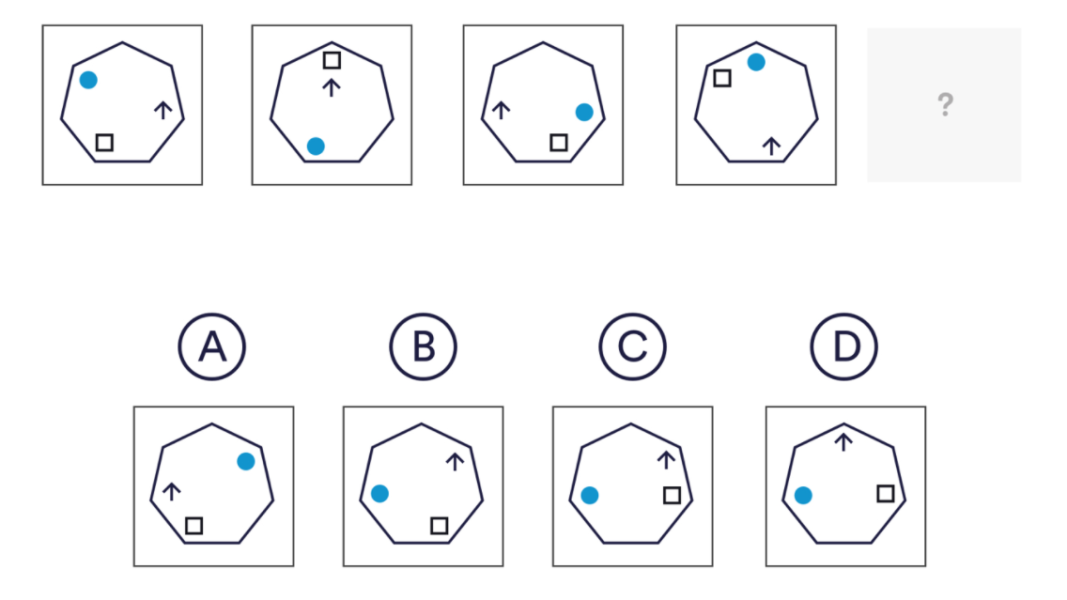
Looking for the best AI for IQ testing that goes beyond gimmicky quizzes and inflated scores? AI IQ Tester administers a structured, 50+ question adaptive assessment across seven cognitive domains — verbal reasoning, logical deduction, pattern recognition, quantitative analysis, spatial reasoning, working memory, and abstract thinking — then delivers a formal Cognitive Assessment Report with your estimated IQ, dimensional breakdown, percentile ranking, and an honest performance narrative. More than 60,000 users have completed assessments so far, with over 12,000 identifying specific cognitive strengths they didn't know they had and using those insights to guide career, education, and personal development decisions.
✅ 50+ adaptive questions — difficulty adjusts invisibly per domain ✅ Seven distinct cognitive dimensions tested, not just pattern matching ✅ Formal report with composite score, percentile rank, and population comparison ✅ Strengths and weaknesses explicitly identified with supporting evidence ✅ Exportable as PDF, Word, or CSV — shareable with educators, employers, or clinicians
But what actually makes one AI-based cognitive assessment better than another — and why do most online IQ tests fail to deliver meaningful results? The answers lie in how intelligence is measured, what most tests get wrong, and why adaptive methodology matters.
Quick Answer: What Is AI IQ Tester?
AI IQ Tester is an adaptive AI-powered cognitive assessment that measures reasoning ability across seven domains and generates a formal report with an estimated IQ, dimensional analysis, and percentile ranking. It references established psychometric frameworks including the Wechsler Adult Intelligence Scale and Cattell-Horn-Carroll theory.
Key capabilities:
- Per-domain adaptive difficulty calibration — each cognitive area adjusts independently
- Comprehensive coverage: verbal, logical, pattern, quantitative, spatial, working memory, and abstract reasoning
- Formal Cognitive Assessment Report generated instantly after completion
- Download or email results in PDF, Word, or CSV format
Why Finding a Reliable Online IQ Test Is So Difficult
The science of intelligence testing has more than a century of rigorous research behind it — from Alfred Binet's pioneering 1905 scale to today's Wechsler Adult Intelligence Scale (WAIS-IV), which reports Full Scale IQ test-retest reliability of approximately .96. These instruments are carefully normed, clinically validated, and administered by doctoral-level professionals.
The problem? Almost nothing available online comes close to that standard.
- Professional assessments are financially out of reach for most people
- Free online tests lack psychometric rigor — most are created by non-professionals
- Static difficulty produces inaccurate scores across the ability spectrum
- Single-dimension testing tells you almost nothing about how you actually think
- Results vanish the moment you close the browser tab
💰 Clinical IQ Testing Costs Hundreds to Thousands of Dollars
A professionally administered IQ evaluation — the kind that uses the WAIS-IV, Stanford-Binet, or Woodcock-Johnson — typically costs between $500 and $2,000 for the testing session alone. When bundled into a comprehensive psychological evaluation, costs can reach $2,000 to $5,000 or more. That price includes 2–3 hours of examiner time, scoring, interpretation, and a written report — all delivered by someone with a doctoral degree and years of specialized training.
$500–$5,000 — the typical cost range for a professionally administered IQ evaluation in the United States. Source: Riot IQ
Insurance sometimes covers these assessments for diagnostic purposes (learning disabilities, ADHD), but coverage rarely extends to testing done out of curiosity or for employment purposes. For the millions of people who simply want to understand their cognitive profile, legitimate testing is priced out of reach.
🧩 Most Free Tests Are Built by Amateurs
The gulf between a clinical IQ test and a typical online quiz is enormous. According to Riot IQ's analysis of the online testing landscape, most free IQ tests are created by non-professionals who lack training in psychometrics — the science of psychological measurement. These tests typically lack technical manuals, have never been used in peer-reviewed research, and compare your scores against self-selected internet users rather than representative population samples.
The result: inflated scores designed to make you feel good (and share the quiz), not to provide accurate measurement.
📊 Without Adaptive Difficulty, Scores Are Unreliable
Real psychometric instruments use adaptive testing — where question difficulty adjusts based on performance. Research from the Assessment Systems Corporation confirms that adaptive tests produce 50% to 90% reductions in test length while maintaining or improving measurement accuracy compared to fixed-form alternatives. The reason is fundamental: a static test can't distinguish between someone who finds every question trivially easy and someone who struggles at the ceiling.
Computerized adaptive testing (CAT) uses Item Response Theory to ensure all test-takers receive equivalent measurement precision, regardless of ability level. Traditional fixed-difficulty tests measure middle-ability individuals well but produce unreliable scores at the extremes — precisely where people are most curious about their standing.
📋 A Single Number Without Context Is Meaningless
Being told "Your IQ is 112" provides almost no actionable information. The Cattell-Horn-Carroll (CHC) theory of intelligence — the dominant framework in modern cognitive assessment — identifies multiple broad cognitive abilities that contribute to overall intelligence. You might have exceptional verbal reasoning but average spatial processing, or strong working memory paired with weaker abstract thinking. Without dimensional analysis, you're left with a number and no understanding of what it means for how you learn, work, or solve problems.
What Makes AI IQ Tester the Best AI for IQ Testing
AI IQ Tester solves each of these problems by bringing the structural rigor of clinical cognitive assessment into a conversational, accessible format — at a fraction of the cost and without the weeks-long wait for results.
| Typical Online IQ Quiz | AI IQ Tester |
|---|---|
| 10–20 fixed-difficulty questions | 50+ questions with per-domain adaptive difficulty |
| Tests 1–2 cognitive dimensions | Covers 7 distinct cognitive domains |
| Inflated score with no context | Honest composite score with percentile and classification |
| No dimensional breakdown | Full 7-domain analysis with strengths and weaknesses |
| Results disappear after closing the tab | Downloadable as PDF, Word, CSV, or emailed directly |
| Created by anonymous amateurs | References Wechsler and CHC psychometric frameworks |
| Same difficulty for everyone | Independent calibration per cognitive domain |
🧠 Seven Domains — The Full Spectrum of Cognitive Ability
What separates a rigorous cognitive assessment from a clickbait quiz is dimensional coverage. This AI measures across every major cognitive dimension identified by contemporary psychometric theory:
- Verbal Reasoning — Analogies, vocabulary depth, semantic disambiguation, sentence completion, and verbal classification
- Logical Reasoning — Syllogisms, conditional logic chains, fallacy identification, multi-premise deductions, and constraint satisfaction
- Pattern Recognition — Number sequences, letter patterns, matrix completion, rule identification, and multi-layered pattern detection
- Quantitative Reasoning — Mental arithmetic, word problems, estimation, probability, and algebraic thinking
- Spatial Reasoning — Mental rotation, 2D-to-3D inference, directional navigation, cross-section reasoning, and mental folding
- Working Memory — Multi-step retention, reverse sequences, dual-task tracking, and interference resistance
- Abstract Reasoning — Novel rule application, category formation, analogical transfer, and system modeling
Each domain contains sub-types at three difficulty tiers, ensuring the assessment captures nuance across the full ability range — from below-average to highly gifted.
🎯 Per-Domain Adaptive Calibration
Unlike tests that adjust difficulty globally (making everything harder or easier based on overall performance), AI IQ Tester's adaptive engine tracks each domain independently. If you excel at logical reasoning but struggle with spatial problems, the test increases difficulty in logic while calibrating spatial questions to your demonstrated level. This per-domain approach produces a far more precise cognitive profile than a single global adjustment.
The adaptation is completely invisible. You receive one question at a time with zero feedback — no "correct," no "great job," no hints about your performance. Results are withheld entirely until the final report.
📄 A Formal Report, Not Just a Number
The assessment culminates in a comprehensive Cognitive Assessment Report that includes:
- Composite IQ score with classification label (e.g., "High Average," "Superior") and exact percentile
- Bell curve visualization showing your position relative to the general population
- 7-domain dimensional breakdown — each domain scored, classified, and ranked by percentile
- Raw performance data — questions attempted, accuracy rate, and difficulty ceiling reached per domain
- Written performance narrative — a qualitative assessment describing your cognitive profile, notable patterns, and inter-domain variance
- Explicit strengths and weaknesses — identified with supporting evidence from your session
How to Take the Assessment: Step-by-Step
Step 1: Launch the Assessment
Open AI IQ Tester and type something like "Start the IQ test." The agent delivers a brief disclaimer — this is a cognitive estimation, not a clinical diagnosis — asks you to commit to answering without external tools or AI assistance, and immediately presents your first question. No account configuration, no setup screens, no payment walls.
"I'd like to take the IQ test."
Step 2: Work Through 50+ Questions Across All Seven Domains
Questions arrive one at a time, seamlessly rotating across all cognitive dimensions. You won't know which domain is being tested at any given moment. The experience is deliberately neutral — no encouragement, no hints, no progress indicators.
Expect question types like:
"Cacophony is to harmony as turbulence is to ___"
"A container holds 120 marbles. 40% are blue, and 1/3 of the remaining marbles are red. How many marbles are neither blue nor red?"
"Imagine folding a flat cross-shaped cutout into a cube. Which face would be opposite the top?"
If you're stuck, respond "I don't know" — but it counts as incorrect. All answers are final. The full 50+ question set must be completed to generate results.
Step 3: Review Your Formal Cognitive Assessment Report
Once you answer the final question, the agent generates your complete report directly in the chat. You'll see your composite IQ, where you fall on the population bell curve, a dimensional breakdown of all seven domains with individual percentile rankings, and a written narrative describing your cognitive profile — including patterns, outlier domains, and the interplay between your strengths and weaknesses.
Step 4: Download, Share, or Email Your Results
Request your report in any format: PDF for professional sharing, Word for editing, CSV for raw data analysis, or direct email delivery. The report is structured for readability whether you're sharing it with a career counselor, a psychologist, or simply keeping it for personal reference.
Who Benefits Most — And How
📊 Self-Discovery: Understanding How You Actually Think
Scenario: You've always assumed you're "good at math" and "bad at spatial stuff," but you've never had those assumptions tested systematically.
Traditional approach: Pay $500+ for a clinical evaluation you can't justify for pure curiosity, or take a 10-question quiz that tells you nothing useful.
Using AI IQ Tester: Complete a structured 50+ question assessment and discover, for example, that your quantitative reasoning is above average but your real standout is logical reasoning — while your working memory is the domain pulling your composite score down.
- Transform vague self-perception into measurable, domain-specific data
- Identify hidden strengths that could influence career or education choices
- Pinpoint specific weaknesses worth developing
💼 Career Preparation: Benchmarking Before a Pre-Employment Assessment
Scenario: You're applying for a role at a consulting firm that uses cognitive ability tests in their screening process. You want to know your baseline and where to focus your preparation.
Traditional approach: Buy three different practice test packages ($30–$80 each), each covering different question types with incompatible scoring.
AI IQ Tester: A single assessment covers all major cognitive dimensions tested in employment screening — verbal, numerical, logical, abstract, and spatial reasoning. Your formal report pinpoints exactly which domains need attention before the real evaluation.
- Unified baseline across all relevant cognitive dimensions
- Specific domain scores show precisely where to invest prep time
- Builds familiarity with adaptive question formats used in professional assessments
🎓 Students and Lifelong Learners: Separating Reasoning from Knowledge
Scenario: A university student is struggling with certain courses and wants to understand whether the issue is aptitude, study strategy, or something else entirely.
Traditional approach: Rely on grades — which measure acquired knowledge, study habits, and test-taking strategy, not underlying cognitive capacity.
AI IQ Tester: A structured assessment that tests how you think rather than what you know. The dimensional breakdown can reveal, for example, that your verbal reasoning is strong but working memory limitations may be affecting retention during lectures or complex problem-solving.
- Separate cognitive capacity from academic performance
- Discover whether you learn better through verbal, spatial, or quantitative channels
- Use dimensional insights to redesign study strategies around your cognitive profile
📱 Rigorous Mobile Assessment — No Ads, No Gimmicks
Scenario: You have 45 minutes on a flight or a train and want a genuine cognitive challenge — not a 12-question quiz sandwiched between full-screen ads that claims you have a 145 IQ.
Traditional approach: Download a free app, answer 15 pattern-recognition questions, watch 8 advertisements, receive a meaningless score.
Using the tool: A full adaptive assessment accessible from any mobile device — iOS, Android, or web browser. No ads, no interruptions, no artificially inflated results. Your formal report downloads directly to your phone.
- Complete the assessment in a single sitting or return to it later
- Results are honest — the AI doesn't soften low scores or inflate high ones
- Full export capabilities from mobile
🧑🏫 Parents and Educators: Informing Learning Strategies
Scenario: A parent suspects their child is gifted in certain areas but wants more than anecdotal observation before pursuing formal evaluation.
Traditional approach: Request a school-administered evaluation (which may have a months-long waitlist) or pay for private psychoeducational testing ($1,500–$3,000+).
AI IQ Tester: An accessible first step that provides a structured cognitive profile. While not a replacement for clinical evaluation, the 7-domain breakdown can validate observations, surface unexpected patterns, and help parents have more informed conversations with educational professionals.
- Dimensional data to support conversations with teachers and psychologists
- Identifies both strengths and areas where support may be needed
- Can help determine whether formal evaluation is worth pursuing
Frequently Asked Questions
What makes this the best AI for IQ testing?
Unlike most online IQ tests — which are created by non-professionals without psychometric training — AI IQ Tester administers 50+ questions with per-domain adaptive difficulty, covers seven distinct cognitive dimensions, and generates a formal report referencing established frameworks like the Wechsler and Cattell-Horn-Carroll models. Most alternatives test one or two dimensions with fixed difficulty and provide nothing beyond a single number.
Is AI IQ Tester free to use?
Yes, AI IQ Tester is available on a free tier with no credit card required. The full assessment — all 50+ questions and the complete formal report — is included within your usage allocation. Paid plans offer significantly higher usage limits and additional features for users who want to retake or run multiple assessments.
How accurate is this compared to a clinical IQ test?
This is a cognitive estimation, not a clinically validated diagnostic instrument. It cannot replicate timed visual puzzles, physical block manipulation, or clinician observation. However, its use of per-domain adaptive difficulty, seven-domain coverage, and psychometric framework references produces a substantially more rigorous estimation than fixed-difficulty online alternatives. The report transparently acknowledges its limitations.
How long does the full assessment take?
Most users complete the assessment in 30–60 minutes. There is no strict time limit, but the AI advises answering at a natural pace — rushing or overthinking both affect accuracy. You can pause and resume within the same session.
Can I retake the assessment?
Yes. After receiving your results, you can request a new assessment. The AI administers a different set of questions, and your previous results remain visible above the new report for comparison.
Does it work on my phone?
Fully. The assessment runs with complete feature parity across web, iOS, and Android — including report generation and export. Many users complete the entire assessment on mobile.
Conclusion
Most online IQ tests are entertainment products disguised as assessments — a few pattern questions, an ego-boosting score, and zero actionable insight. Meanwhile, legitimate clinical evaluations cost $500 to $5,000 and require scheduling weeks in advance. The gap between these two extremes has left millions of people curious about their cognitive abilities with no credible option.
AI IQ Tester fills that gap with the best AI for IQ testing available today: 50+ adaptive questions across seven cognitive domains, invisible per-domain difficulty calibration, and a formal assessment report with honest scoring, dimensional breakdown, percentile ranking, and performance narrative. No inflated results, no ads, no guesswork — just a structured, rigorous assessment of how you think. Get started with AI IQ Tester and find out where you actually stand.