Best AI for I Ching Readings: Coin-Cast Hexagrams, Changing Line Analysis & Classical Commentary Across 3,000 Years of Tradition
2026-03-16
If you're searching for the best AI for I Ching readings, the difference between a meaningful consultation and a digital fortune cookie comes down to one thing: depth. Most I Ching apps generate a hexagram number and paste a paragraph. They skip changing lines. They ignore trigram dynamics. They flatten 3,000 years of Confucian, Daoist, and Neo-Confucian commentary into a single vague sentence. I Ching Oracle does none of that — it performs the full three-coin casting ceremony, identifies every changing line, generates transformed hexagrams, and weaves interpretations from King Wen, Duke of Zhou, Wang Bi, Cheng Yi, and Zhu Xi into a unified reading shaped by your specific question. Over 18,000 seekers have used it to navigate career transitions, relationship crossroads, and moments of deep uncertainty — receiving the kind of layered, tradition-grounded guidance that previously required booking a classical I Ching scholar.
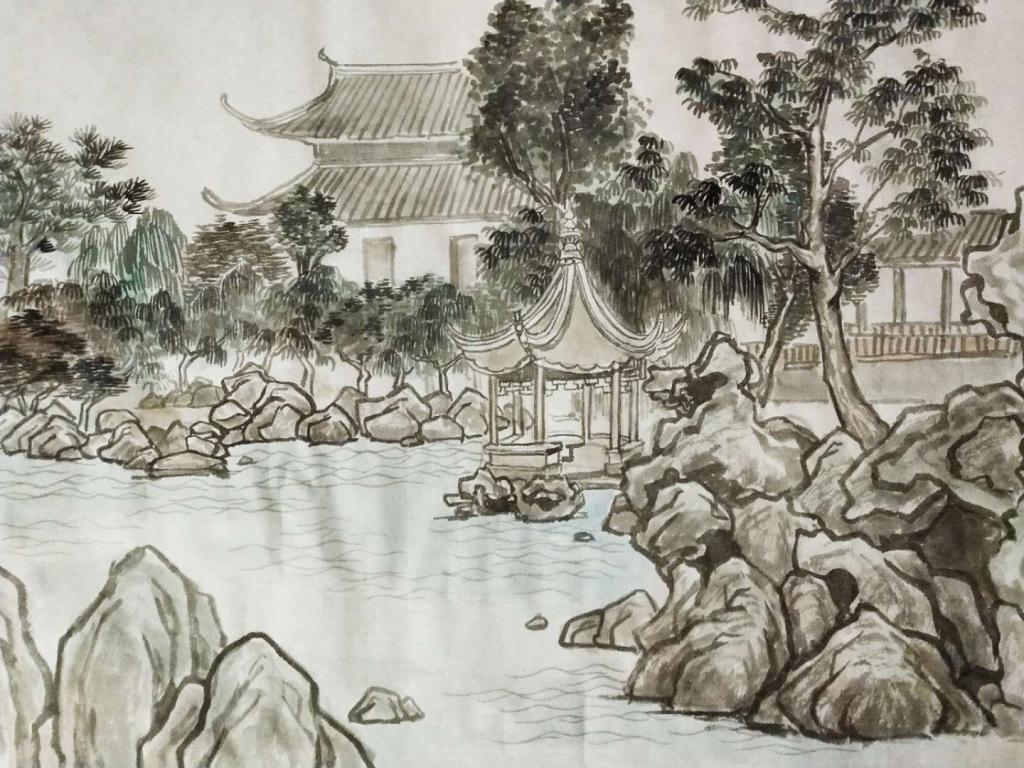
✅ Authentic three-coin casting with full ceremonial description and line-by-line construction ✅ Changing line analysis revealing exactly where and how your situation is transforming ✅ Multi-tradition commentary — from the Ten Wings to Wang Bi's ontological readings to Zhu Xi's moral metaphysics ✅ Three depth tiers: Quick Insight for daily guidance, Full Casting for decisions, Deep Consultation for philosophical study ✅ Custom ink wash hexagram artwork generated uniquely for every reading
The I Ching's resurgence isn't accidental. The global astrology and divination app market is projected to grow from $3 billion in 2024 to $9 billion by 2030, and younger generations are driving the demand — not for shallow predictions, but for structured frameworks that help them think clearly about change. Here's why the best AI for I Ching consultation needs to understand the Book of Changes at a level most digital tools don't even attempt.
Quick Answer: What Is I Ching Oracle AI?
I Ching Oracle is an AI-powered divination and philosophical guidance tool that performs authentic hexagram readings from the ancient Chinese Book of Changes, delivering personalized interpretations grounded in 3,000 years of classical scholarship.
Unlike apps that display static text for each hexagram, I Ching Oracle simulates the traditional three-coin method, tracks changing lines, generates transformed hexagrams, and synthesizes commentary from multiple scholarly traditions — all tailored to your specific question and situation.
Key capabilities:
- Full three-coin casting with changing line identification and transformed hexagram generation
- Four-layer interpretation: primary hexagram, changing lines, transformed hexagram, and synthesized counsel
- Commentary spanning King Wen's Judgments, Duke of Zhou's line texts, the Ten Wings, and Neo-Confucian scholarship
- Three consultation depths — from 60-second daily insights to extended philosophical explorations
- Custom-generated ink wash artwork capturing each hexagram's natural imagery
Why the I Ching Demands More Than a Random Number Generator
The I Ching (易经) is not a horoscope. It is, as the Stanford Encyclopedia of Philosophy describes it, a text that presents the cosmos as "an organismic process without beginning or end" — a philosophical framework for understanding the nature of change itself. Dating to the Western Zhou dynasty around 800 BCE, it has served as one of the oldest texts in continuous use anywhere in the world, consulted by emperors, generals, Confucian scholars, Daoist sages, and — increasingly — modern professionals seeking a structured approach to complex decisions.
The I Ching has generated "endless Confucian, Taoist, Buddhist, and even Christian commentaries, and competing schools of thought within those traditions" — Eliot Weinberger, New York Review of Books
This depth is precisely what makes the I Ching so powerful — and so difficult to access without guidance. The barriers are real and persistent:
- Interpretive density — The same character can mean "war prisoner" or "sincerity" depending on context and commentary tradition
- Layered textual history — Three distinct authorial layers spanning 800+ years, plus 2,000+ years of commentary
- Mechanical complexity — Changing lines, transformed hexagrams, and nuclear hexagrams require understanding to interpret
- Shallow digital alternatives — Most apps reduce the 64 hexagrams and 384 line texts to generic platitudes
- Expert scarcity — Qualified I Ching practitioners are rare, expensive, and often booked weeks in advance
📜 A Composite Text With No Single "Correct" Reading
The I Ching is not one book written by one author. It contains three distinct layers: the hexagram system attributed to the mythical Fu Xi, the Judgments and line texts composed by King Wen and the Duke of Zhou around the 11th century BCE, and the Ten Wings (十翼) — philosophical commentaries written between the 5th and 2nd centuries BCE, traditionally attributed to Confucius.
After these foundational layers came centuries of additional scholarship: Wang Bi's (226–249 CE) ontological approach that stripped away cosmological speculation in favor of philosophical essence. Cheng Yi's (1033–1107) moral-metaphysical readings that emphasized ethical cultivation. Zhu Xi's (1130–1200) synthesis that became the orthodox interpretation for centuries. Each tradition reads the same hexagram differently — and each has genuine insight to offer.
For someone approaching the I Ching without years of study, this richness becomes a wall. Which translation do you trust? Which commentary tradition applies? How do you reconcile contradictory interpretations? The best AI for I Ching readings must navigate this complexity — not by choosing one tradition over others, but by synthesizing them intelligently based on the seeker's question.
💰 The Access Problem: Expert Guidance Is Scarce and Expensive
In China, where the I Ching tradition runs deepest, basic consultations cost 50–150 yuan ($7–$21), while sought-after masters charge thousands of yuan per hour. In Western markets, qualified I Ching practitioners are even rarer — and sessions typically run $75–$200+.
The demand for divination guidance far exceeds the supply of qualified practitioners. In Thailand, where fortune-telling culture is deeply embedded, the University of the Thai Chamber of Commerce estimated the spiritual services market at $304–$456 million. As The Guardian reported, people increasingly turn to AI because "if they have a question at night, at 1am, they don't want to linger on that" — they want guidance now, not next week.
📱 Why Most I Ching Apps Fail the Tradition
The typical I Ching app workflow: tap a button, receive a hexagram number, read a paragraph. No coin-casting ceremony. No changing lines. No transformed hexagram. No commentary tradition. No adaptation to your question.
This is like reducing a symphony to a ringtone. The I Ching's power lives in its specificity — in the changing lines that pinpoint exactly where movement is occurring in your situation, in the transformed hexagram that reveals trajectory, in the interplay between upper and lower trigrams that describes the dynamic forces at work. Strip those away, and you're left with a generic platitude that could apply to anyone.
What Makes This the Best AI for I Ching Consultation
I Ching Oracle bridges the gap between the I Ching's profound depth and modern accessibility. It doesn't simplify the tradition — it makes the full tradition navigable.
| Typical I Ching Apps | I Ching Oracle |
|---|---|
| Random hexagram with static text | Full three-coin casting with ceremonial description |
| No changing lines | Complete changing line analysis with Duke of Zhou's line texts |
| No transformed hexagram | Transformed hexagram revealing situational trajectory |
| Single generic interpretation | Multi-tradition commentary (King Wen, Ten Wings, Wang Bi, Zhu Xi) |
| Same depth regardless of question | Three tiers: Quick Insight, Full Casting, Deep Consultation |
| No visual element | Custom ink wash artwork generated for every reading |
| No session continuity | Pattern recognition across multiple readings within a session |
| One-size-fits-all language | Adaptive — accessible for newcomers, scholarly for experienced practitioners |
🪙 The Full Three-Coin Casting Method
The oracle performs the traditional three-coin method — the same process practitioners have used for centuries. Three coins are cast six times, building the hexagram line by line from the bottom up. Each cast produces one of four possible line types:
| Coin Total | Line Type | Meaning |
|---|---|---|
| 6 | Old Yin (⚋→⚊) | Changing line — yin transforming to yang |
| 7 | Young Yang (⚊) | Stable yang line |
| 8 | Young Yin (⚋) | Stable yin line |
| 9 | Old Yang (⚊→⚋) | Changing line — yang transforming to yin |
The changing lines — values 6 and 9 — are where the I Ching's most personal and specific guidance lives. They represent the points of active transformation in your situation. When lines change, a second hexagram emerges: the transformed hexagram (之卦), revealing where your situation is heading. Most apps skip this entirely. I Ching Oracle treats it as the heart of every reading.
☰ Eight Trigrams: The Building Blocks of Meaning
Every hexagram is composed of two trigrams — three-line figures representing fundamental forces of nature. The relationship between the upper and lower trigram creates the hexagram's core dynamic:
| Trigram | Name | Chinese | Element | Quality |
|---|---|---|---|---|
| ☰ | Qián | 乾 | Heaven | Creative, strong, initiating |
| ☷ | Kūn | 坤 | Earth | Receptive, nurturing, yielding |
| ☳ | Zhèn | 震 | Thunder | Arousing, movement, shock |
| ☵ | Kǎn | 坎 | Water | Dangerous, deep, flowing |
| ☶ | Gèn | 艮 | Mountain | Stillness, boundary, meditation |
| ☴ | Xùn | 巽 | Wind/Wood | Gentle penetration, gradual influence |
| ☲ | Lí | 离 | Fire | Illumination, clarity, awareness |
| ☱ | Duì | 兑 | Lake/Marsh | Joy, openness, exchange |
When Fire (☲) sits above Water (☵), you get Hexagram 64 — 未济 "Before Completion," the final hexagram of the entire sequence, representing opposing forces not yet harmonized. Reverse the positions and you get Hexagram 63 — 既济 "After Completion." The oracle explains these trigram dynamics in plain language while preserving their philosophical weight — showing you not just what the hexagram means, but why its structure produces that meaning.
📖 Four-Layer Interpretation Architecture
Every full reading follows the same layered structure that classical I Ching scholars use:
- Primary Hexagram (本卦) — The Judgment (卦辞), the Image (象辞), trigram interaction analysis, and overall meaning applied to your specific question
- Changing Lines (变爻) — Duke of Zhou's line texts for each changing line, interpreted in context — the most specific and personal guidance in any reading
- Transformed Hexagram (之卦) — Where your situation is heading, the narrative arc from present to future state
- Synthesis & Counsel — Practical wisdom woven from all layers, grounded in your situation, drawing from whichever commentary tradition illuminates your question most clearly

How to Consult the Oracle: A Step-by-Step Walkthrough
Step 1: Frame Your Question
Open I Ching Oracle and share what's weighing on your mind. The I Ching responds best to open-ended questions about process and understanding — questions that invite reflection rather than demanding binary answers:
"What is the nature of the energy surrounding my decision to leave my current company?"
"What should I understand about the dynamic between me and my business partner right now?"
"What does the path ahead look like if I commit to this creative project?"
Even if you ask a direct question like "Should I move to Berlin?", the oracle casts the hexagram and interprets it in a way that addresses the deeper concern — reframing without rejecting your question.
Step 2: Witness the Casting Ceremony
The oracle describes the coins falling — each cast building your hexagram from the bottom line upward. You'll see the hexagram take shape, with each line identified as stable or changing. The ceremonial framing isn't decoration — it creates the contemplative space that makes readings meaningful.
Step 3: Receive Your Layered Reading
A custom ink wash artwork appears first — not a generic hexagram diagram, but a scene that captures the hexagram's natural imagery. Misty gorges for Kǎn/Water. Soaring dragons for Qián/Heaven. A still mountain lake for Gèn over Duì.
Below the artwork, your full interpretation unfolds through all four layers: the Judgment, the changing lines with Duke of Zhou's texts, the transformed hexagram, and synthesized counsel — all woven into a cohesive narrative specific to your question.
Step 4: Explore, Question, and Go Deeper
Ask follow-up questions about any aspect of your reading. Request a comparison between Wang Bi's and Zhu Xi's interpretations. Explore the nuclear hexagram. Ask how the trigram dynamics relate to a specific aspect of your situation. Or simply cast again — the oracle tracks your consultation history within the session, recognizing patterns across multiple readings:
"In your earlier reading, Mountain appeared below — stillness as foundation. Now Thunder rises beneath Heaven — the energy has shifted from contemplation to decisive action..."
Who Benefits Most: Real-World Consultation Scenarios
🧭 The Professional at a Crossroads
Scenario: A senior manager has received an offer from a startup — exciting but risky. They need perspective beyond the spreadsheet analysis.
Traditional approach: Find a qualified I Ching practitioner, wait for availability, pay $100–$200 for a session, hope the practitioner explains changing lines clearly.
With I Ching Oracle: Describe the situation and receive a Full Casting. The primary hexagram reveals the current dynamic — perhaps Hexagram 28, 大过 "Preponderance of the Great," suggesting a structure under extraordinary pressure. Changing lines in the second and fifth positions pinpoint where the tension lives. The transformed hexagram shows the trajectory — perhaps resolving into Hexagram 32, 恒 "Duration," suggesting that what feels precarious can become sustainable if approached with consistency.
- ✅ Changing lines identify exactly where the pressure points are
- ✅ Transformed hexagram reveals trajectory, not just current state
- ✅ Commentary from multiple traditions provides balanced perspective
- ✅ Available at 1 AM when the anxiety hits — not next Tuesday
🌅 The Daily Practitioner
Scenario: Someone with an established meditation practice wants to incorporate the I Ching as a daily contemplative tool.
Traditional approach: Cast coins manually, look up the hexagram in a book, cross-reference commentary — 20–30 minutes minimum each morning.
I Ching Oracle: Ask "What quality should I cultivate today?" and receive a Quick Insight reading — a concise, potent interpretation with custom hexagram artwork that sets the tone for the day. The oracle introduces classical Chinese terms naturally with pronunciation, building the practitioner's vocabulary over time.
- ✅ Consistent daily practice without the 30-minute lookup overhead
- ✅ Custom artwork creates a visual anchor for contemplation
- ✅ Gradual introduction to classical terminology deepens understanding over weeks
📚 The Philosophy Student
Scenario: A graduate student studying Chinese philosophy wants to explore how different commentary traditions interpret the same hexagram — comparing Wang Bi's minimalist ontological approach with Zhu Xi's Neo-Confucian moral metaphysics.
With this AI: Request a Deep Consultation and specify the scholarly depth desired. The oracle presents the hexagram through multiple interpretive lenses — showing how Wang Bi strips away cosmological speculation to find philosophical essence, while Zhu Xi layers moral cultivation onto the same text. It explores nuclear hexagrams, discusses the Great Commentary (系辞传), and engages with the philosophical tensions between traditions.
- ✅ Multi-tradition commentary presented in dialogue, not isolation
- ✅ Nuclear hexagram analysis for structural depth
- ✅ Ten Wings commentary integrated with historical context
- ✅ Scholarly engagement without sacrificing accessibility
💔 The Person Processing a Difficult Relationship
Scenario: Someone going through a painful separation needs perspective — not advice from friends who take sides, but a framework for understanding the dynamics at play.
With I Ching Oracle: The oracle might cast Hexagram 12, 否 "Standstill/Stagnation" — Heaven above, Earth below, the two moving apart. The changing lines reveal where the separation is most active. The transformed hexagram shows what emerges from this dissolution. The reading doesn't tell you what to do — it helps you understand the nature of what's happening, which is often exactly what's needed.
- ✅ Non-judgmental framework for understanding emotional complexity
- ✅ The I Ching's emphasis on natural cycles normalizes difficult transitions
- ✅ Practical counsel grounded in philosophical wisdom, not platitudes
📱 The Midnight Seeker
Scenario: It's 2 AM. A decision is weighing heavily. Sleep won't come. You need perspective — not tomorrow, now.
As The Guardian reported, this is increasingly common: people turning to AI divination tools at the exact moment they need guidance, not when a practitioner happens to be available.
With I Ching Oracle: Full consultation available instantly — web, iOS, or Android. The same depth at 2 AM as at 2 PM. Voice input for hands-free consultation when you're lying in bed staring at the ceiling.
- ✅ Instant access to authentic consultation at any hour
- ✅ Full feature parity across all devices
- ✅ The act of consulting — framing the question, witnessing the casting, receiving the reading — itself provides the structured reflection that reduces anxiety
Frequently Asked Questions
Is I Ching Oracle free to use?
Yes. I Ching Oracle is available on Jenova's free tier with limited usage — enough for regular consultations. Paid plans starting at $20/month provide significantly more usage capacity and additional features like custom model selection.
What makes this the best AI for I Ching readings compared to other apps?
Most I Ching apps generate a hexagram and display fixed text. I Ching Oracle performs the complete three-coin casting method with changing lines, generates transformed hexagrams, synthesizes commentary from multiple classical traditions (King Wen, Duke of Zhou, Ten Wings, Wang Bi, Cheng Yi, Zhu Xi), adapts interpretation depth to your experience level, and generates custom ink wash artwork for every reading. It functions as a scholar-sage, not a lookup table.
Do I need prior knowledge of the I Ching?
Not at all. The oracle adapts to your level. Newcomers receive accessible metaphors, gentle introductions to concepts like trigrams and changing lines, and classical Chinese terms introduced naturally with pronunciation guides. Experienced practitioners can request nuclear hexagram analysis, commentary tradition comparisons, and deep philosophical engagement.
Is the I Ching fortune telling?
The I Ching is better understood as a philosophical framework for understanding change. As the Stanford Encyclopedia of Philosophy explains, Yijing philosophy sees the cosmos as a continuous, holistic, dynamic process — and the hexagrams help you understand your place within it. It emphasizes human agency: understand the pattern, align your conduct, act at the right moment. Psychological research suggests that structured divination practices can reduce anxiety, boost confidence, and improve clarity in complex decision-making situations.
Does it work on mobile?
Yes. I Ching Oracle works across web, iOS, and Android with full feature parity. All readings, session history, and hexagram artwork sync across devices. Voice input is available for hands-free consultation.
Can I ask multiple questions in one session?
Absolutely. The oracle tracks your consultation history within each session, recognizing thematic patterns and trigram recurrences across multiple readings. If Water appears in your first reading and Fire in your second, the oracle notes the elemental progression and weaves it into its interpretation.
How does the AI ensure interpretive accuracy?
The oracle grounds all interpretations in established I Ching textual traditions — it does not fabricate meanings. Hexagram Judgments, line texts, and Image statements are drawn from the classical source texts. Commentary draws from documented scholarly traditions. The AI's role is synthesis and personalization — applying the tradition's wisdom to your specific question with the contextual sensitivity of a skilled interpreter.
The Book of Changes Is Waiting
The I Ching has endured for over three millennia because it addresses something no amount of data analysis or rational planning fully captures: the human need to understand the quality of a moment, the direction of change, and the right way to act when certainty is impossible. As ChinaFile notes, it has been "by far the most consulted of all books" in China and East Asia — serving simultaneously as "a philosophical taxonomy of the universe, a guide to an ethical life, a manual for rulers, and an oracle."
With China's spiritual economy booming as younger generations seek structured guidance and the global divination app market tripling toward $9 billion by 2030, the demand for authentic, depth-preserving access to ancient wisdom systems has never been higher. The best AI for I Ching readings doesn't simplify the tradition into something shallow — it makes the full tradition genuinely navigable.
I Ching Oracle preserves every layer — the casting ceremony, the changing lines, the transformed hexagrams, the commentary traditions, the philosophical depth — while making it all accessible in a single conversation. The coins are ready. The hexagrams are waiting to speak.