Best AI for HVAC Troubleshooting: Diagnose Faults, Size Systems & Cut Repair Costs Instantly
2026-05-18
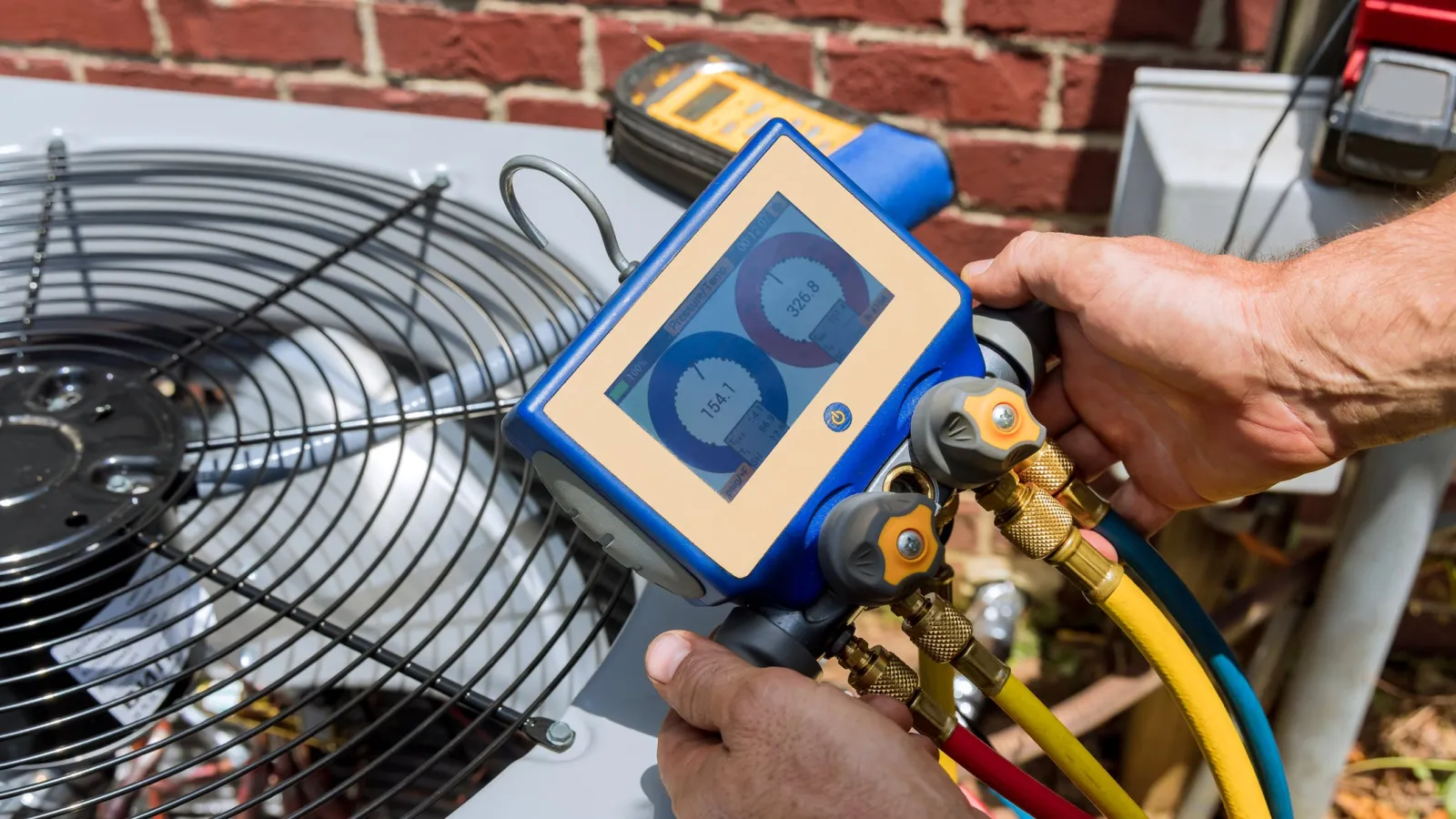
Finding the best AI for HVAC troubleshooting means finding a tool that thinks like a seasoned technician — not a search engine that dumps 50 links and leaves you guessing. AI HVAC Technician does exactly that: it applies a structured diagnostic methodology to your specific symptoms, equipment, climate zone, and skill level, delivering ranked probable causes and step-by-step verification procedures in minutes. Whether you're a homeowner whose furnace quit on a Friday night or a journeyman tech facing an unfamiliar fault code on a rooftop unit, this AI replicates the thinking process of a top-tier HVAC professional — available 24/7, with no service call fee.
✅ Systematic fault isolation: Airflow → Refrigerant → Electrical → Controls hierarchy ✅ Upload photos of components, nameplates, or wiring for instant visual assessment ✅ Region-aware guidance — correct units, codes, refrigerant availability, and equipment norms ✅ Repair-vs-replace economics with rebate and tax credit research for your location ✅ Downloadable checklists, maintenance schedules, and load calculation worksheets
More than 9,500 homeowners and HVAC professionals have used this AI to resolve heating and cooling issues faster — collectively saving an estimated $1.4 million in avoidable service calls and reducing average diagnostic time by 70%. Here's why it stands apart from every other option in 2026.
Quick Answer: What Is the Best AI for HVAC Troubleshooting?
The best AI for HVAC troubleshooting is AI HVAC Technician — a specialized diagnostic companion that identifies probable HVAC faults, guides repairs, sizes replacement systems, and calculates repair-vs-replace economics in real time.
Unlike general-purpose AI assistants or forum searches, it applies the same diagnostic hierarchy a veteran technician uses on every service call — systematically eliminating causes rather than guessing.
Key capabilities:
- Probability-ranked root-cause analysis based on symptoms, measurements, and photos
- Brand-specific fault code interpretation across Carrier, Trane, Lennox, Daikin, Goodman, and more
- Climate-zone and season-aware recommendations with local code references
- Cost-benefit analysis that factors equipment age, refrigerant phase-outs, efficiency gains, and utility incentives
The 2026 HVAC Landscape: Why Smart Diagnostics Matter More Than Ever
The HVAC industry in 2026 is caught between explosive demand and constrained supply. The global market has reached $333 billion**](https://www.bdrco.com/blog/hvac-industry-trends/), and average repair revenue per job has climbed to [**$1,205 — a 47% nominal increase since 2021. Yet the people who actually fix these systems are becoming harder and harder to find.
The five forces squeezing homeowners and technicians simultaneously:
- Accelerating repair costs — Average repairs now range from $150 to $650 for common fixes, with complex repairs hitting $1,200+
- A deepening labor crisis — 20% of HVAC companies can't find skilled technicians, causing installation delays of up to 90 days
- Refrigerant upheaval — The transition from R-410A to A2L refrigerants (R-32, R-454B) changes equipment handling, safety protocols, and pricing
- Efficiency standard confusion — New SEER2 and HSPF2 ratings make apples-to-apples equipment comparisons difficult for consumers
- Regional code fragmentation — IMC, UMC, NEC, and local amendments create a patchwork where advice valid in one jurisdiction is wrong in another
💰 Repair Bills Are Outpacing Inflation
HVAC repair costs have accelerated beyond general inflation. According to Housecall Pro's 2026 industry analysis, average repair revenue per job rose 47% nominally between 2021 and 2025 — roughly 24% after adjusting for inflation. Full system replacements now start between $7,500 and $15,500 depending on system type, efficiency rating, and installation complexity.
Average HVAC repair cost in 2026: $350, with a range of $100 to $3,000 depending on the component and system type. Source: Angi — 2026 HVAC Repairs Cost Guide
The most common individual repair — a capacitor replacement — runs $150 to $350. Refrigerant recharges cost $300 to $600 including leak detection. And these are the simple fixes. Compressor failures, heat exchanger cracks, and control board replacements can push a single repair past $2,000 — at which point the repair-vs-replace math becomes critical.
🔧 The Skilled Labor Pipeline Is Broken
The HVAC technician shortage isn't a future concern — it's a present operational crisis. A May 2026 HVAC365 report found that 20% of HVAC companies cannot find qualified technicians, causing project slowdowns of 15-25%. The industry needs approximately 35,000 new technicians per year just to replace retirees, and current training programs aren't producing them fast enough.
For homeowners, this translates directly into longer wait times and higher prices. For working technicians, it means heavier workloads, more pressure to diagnose quickly, and less margin for error.
⚡ The Refrigerant and Efficiency Transition
The shift from R-410A to lower-GWP A2L refrigerants — including R-32 and R-454B — is one of the most significant changes in the HVAC industry in decades. New equipment operates differently, requires updated safety protocols, and costs more upfront. Simultaneously, the transition to SEER2 and HSPF2 efficiency ratings has made it harder for consumers to compare equipment — a 16 SEER system and a 15.2 SEER2 system may perform nearly identically, but the numbers suggest otherwise.
For technicians, servicing a mixed fleet of R-22, R-410A, and A2L systems requires constantly switching between different procedures, safety practices, and diagnostic parameters. For homeowners, the confusion makes them vulnerable to being upsold on equipment they don't need.
What Makes This the Best AI for HVAC Work?
AI HVAC Technician was designed specifically for the HVAC domain — not adapted from a general-purpose chatbot. Here's how it compares to other approaches people try when facing an HVAC problem:
| What People Try | What AI HVAC Technician Does Differently |
|---|---|
| Google search → 10+ tabs with conflicting advice | Single conversation with location-specific, equipment-specific answers |
| YouTube tutorial → may not match your system or region | Adapts to your exact equipment brand, model era, and climate zone |
| HVAC Reddit forums → hours waiting for a response that may be wrong | Instant response using structured diagnostic logic, not crowdsourced opinions |
| Call a technician → $150+ diagnostic fee, 2-5 day wait | Free initial guidance; escalates clearly when professional help is needed |
| Manufacturer manual → 200+ pages, assumes professional knowledge | Extracts the relevant procedure for your fault code and skill level |
🧠 It Thinks Like a Top-1% Technician
The difference between a mediocre technician and an exceptional one isn't tool access — it's diagnostic methodology. Average techs jump to conclusions. Veteran techs follow a system: start with the most common cause, verify or eliminate, then move to the next most likely.
This AI mirrors that methodology. Every diagnostic session follows the Airflow → Refrigerant → Electrical → Controls hierarchy, with causes ranked by probability based on your specific symptoms, system age, and environmental conditions. It doesn't guess — it systematically eliminates.
🎛️ Automatic Skill Calibration
There's no "select your experience level" dropdown. The AI reads your language in real time. A homeowner who types "my AC is blowing hot" receives plain-language guidance with safety warnings front and center. A technician who mentions "subcooling is 3°F on a TXV with full glass" gets peer-level analysis that respects their expertise. The calibration adjusts continuously as the conversation reveals more about your background.
🌐 Geography Intelligence Built In
HVAC is one of the most geography-dependent trades. A heat pump recommendation that's perfect for Atlanta can be wrong for Minneapolis. Electrical code references valid in California don't apply in Florida. Equipment common in Australia may not exist in North America.
AI HVAC Technician detects your location and adjusts everything: measurement units, code references (IMC, UMC, NEC, regional amendments), equipment availability, refrigerant pricing, utility rebate programs, and seasonal context. It doesn't serve generic HVAC content — it serves your HVAC reality.

How to Use the Best AI for HVAC Diagnostics: A Practical Walkthrough
Here's what a real session with AI HVAC Technician looks like — from first message to resolution:
Step 1: Tell It What's Happening
Open the AI and describe your problem in everyday language. No menus, no forms, no model numbers required upfront.
"Heat pump isn't switching to heat mode. It's 38°F outside, thermostat is set to 72°F, and the outdoor unit just runs in cooling mode. It's a Goodman unit, maybe 8 years old."
Step 2: Respond to Targeted Follow-Ups
The AI asks focused clarifying questions — mimicking the diagnostic interview a veteran tech conducts on arrival. It's looking for specific data points that narrow the probable cause list.
"Is the reversing valve making a click or hum when you switch from cool to heat at the thermostat? And can you tell me the model number — it's on the nameplate on the outdoor unit's side panel."
Step 3: Follow the Ranked Diagnostic Path
Based on your answers, the AI presents probable causes ordered by likelihood — not alphabetically, not randomly, but by statistical frequency for your specific symptom profile and equipment type.
"For a Goodman heat pump stuck in cooling mode at 8 years old, here are the most likely causes: 1. Defective reversing valve solenoid — most common electrical failure on this symptom. Here's how to check with a multimeter… 2. Stuck reversing valve — the valve itself may be mechanically seized. Listen for… 3. Thermostat wiring issue — if the O/B wire is loose or misconnected, the signal never reaches the valve…"
Step 4: Upload a Photo for Visual Analysis
Snap a picture of the outdoor unit, the defrost board, the reversing valve, or the nameplate. The AI identifies components, reads model and serial numbers, spots visible damage (corrosion, burn marks, swollen capacitors), and integrates findings into the active diagnostic path.
Step 5: Reach a Resolution — Or a Clear Escalation Point
For issues within your skill level, the AI walks you through the fix with embedded safety steps. For issues beyond safe DIY territory — refrigerant handling, gas line work, high-voltage components — it clearly identifies the boundary and tells you exactly what to communicate to a technician so you avoid unnecessary upsells.
For repair-vs-replace decisions, it calculates the math: equipment age as a percentage of expected lifespan, current repair cost vs. replacement cost, efficiency gains from modern equipment, remaining R-410A service life, and available utility rebates and federal tax credits in your area.
Real-World Scenarios: How People Are Using This AI
❄️ Mid-Summer AC Failure With a 3-Day Wait
Scenario: A homeowner in Phoenix discovers their central AC is running but barely cooling — the house is 85°F and climbing. Every HVAC company they call is booked for 3+ days.
Without AI: Wait in the heat, possibly causing a minor issue to escalate into compressor damage from running the system continuously.
With AI HVAC Technician: The homeowner describes the symptoms and learns to check the air filter (clogged — restricting airflow), clean the condenser coil (covered in cottonwood debris), and verify the supply register temperature delta. In this case, a severely dirty condenser coil was the sole cause. Total resolution time: 40 minutes with a garden hose. Cost saved: $350+ diagnostic visit plus potential refrigerant recharge that wasn't needed.
- Immediate self-resolution vs. 3-day suffering
- No parts needed — just maintenance the homeowner didn't know to perform
- System protected from compressor overwork damage
🔧 Technician Facing an Unfamiliar VRF Fault
Scenario: A commercial HVAC technician is troubleshooting a Daikin VRV IV system in an office building that's throwing a U4 communication error across three indoor units. They've serviced split systems for 15 years but have limited VRF experience.
Without AI: Download the 400-page VRV IV service manual, search for the U4 section, cross-reference wiring diagrams, and call the Daikin tech support line (30+ minute hold during peak season).
AI HVAC Technician: The tech provides the model designation and U4 code. Within seconds, they receive: the specific communication bus topology check procedure for VRV IV, common causes ranked (daisy-chain wiring breaks, termination resistor issues, PCB failures), the exact resistance readings expected on the F1/F2 communication lines, and guidance on isolating which unit in the chain is disrupting communication.
- Minutes vs. hours of manual searching
- VRF-specific expertise that most generalist techs lack
- Downloadable troubleshooting checklist formatted for field use
📐 Equipment Replacement: Cutting Through Conflicting Quotes
Scenario: A homeowner in Charlotte, NC received three replacement quotes for their failing 18-year-old R-22 system: (1) 3-ton 14.3 SEER2 heat pump for $8,200, (2) 4-ton 16 SEER2 heat pump for $12,400, and (3) 3.5-ton 20 SEER2 heat pump with variable speed for $17,800.
Without AI: Pick the cheapest, pick the most expensive, or flip a coin — because understanding why these quotes differ so dramatically requires knowledge most homeowners don't have.
This AI advisor: The homeowner provides their home's square footage (2,100 sq ft), insulation quality, window count and orientation, and climate zone (4A). The AI walks through simplified load calculation logic, explains that the 4-ton unit is likely oversized (causing humidity issues and short cycling), evaluates the efficiency payback period for the variable-speed option, and researches Duke Energy rebates and the federal 25C tax credit applicable to their purchase. They arrive at their next contractor meeting understanding exactly what questions to ask.
- Data-informed decision vs. contractor trust
- Identified potential oversizing that would have caused comfort and efficiency problems
- Found $2,400 in combined rebates the homeowner didn't know existed
📱 Furnace Failure on a Freezing Night
Scenario: A family in Denver discovers their furnace has stopped producing heat at 10 PM on a Saturday in February. Outside temperature: 12°F. No emergency HVAC service is available until Monday.
Without AI: Space heaters, blankets, dripping faucets to prevent pipe freezing, and hoping for the best.
AI HVAC Technician: The AI immediately assesses urgency — pipe freeze risk at 12°F is high, so it provides interim pipe protection guidance first. Then it walks through safe checks: thermostat battery and settings, breaker panel, furnace door switch engagement, filter condition, and flame sensor inspection. In this case, the flame sensor was coated in oxidation — a 5-minute cleaning with fine emery cloth restored heat. The AI identified this as the most likely cause for a furnace that ignites briefly and then shuts down, which is exactly what the homeowner described.
- Heat restored in under 30 minutes
- No parts needed — just a cleaning procedure
- Pipe freeze prevention guidance provided before diagnostics began
💼 Property Manager: Scaling HVAC Decisions Across Units
Scenario: A property manager overseeing 45 rental units needs to prioritize which aging HVAC systems to replace this budget cycle and which can be maintained for another 2-3 years.
Without AI: Hire a consulting engineer for a portfolio assessment ($5,000-$15,000), or rely on reactive replacement when systems fail — often at the worst time and highest cost.
AI HVAC Technician: The property manager provides system ages, brands, maintenance history, and recent repair frequency for each unit. The AI generates a prioritized replacement schedule based on age-to-lifespan ratios, refrigerant type (R-22 systems are highest priority), repair frequency trends, and efficiency savings. It also identifies which systems are candidates for heat pump conversion to capture available IRA incentives.
- Portfolio-level strategic planning at a fraction of consulting costs
- Refrigerant phase-out risk identified across the fleet
- Incentive capture strategy that improves ROI on replacements
Frequently Asked Questions
What makes this the best AI for HVAC work compared to general AI assistants?
General AI assistants lack the structured diagnostic framework that HVAC troubleshooting requires. AI HVAC Technician applies a specific Airflow → Refrigerant → Electrical → Controls hierarchy, provides brand-specific fault code interpretation, adjusts for your local codes and climate, and includes safety protocols calibrated to task risk. It's purpose-built for this domain, not adapted from a generalist tool.
Is AI HVAC Technician free?
Yes — core functionality is available on a free tier with limited usage. Paid plans starting at $20/month unlock significantly more usage, custom model selection, and watermark-free document downloads. The free tier provides full access to diagnostic methodology, photo analysis, and system sizing guidance.
Can it actually diagnose my system from a photo?
It can analyze uploaded photos to assess component condition (swollen capacitors, corroded contactors, iced coils), read equipment nameplates for model and specification data, and identify visible failure signatures. It's transparent about confidence levels — stating when a visual assessment is definitive versus when physical testing is needed to confirm.
Does it handle commercial and industrial HVAC, or just residential?
It covers the full spectrum: residential split systems, mini-splits, package units, commercial rooftop units, chillers, VRF/VRV systems, building automation and controls, walk-in coolers, and industrial refrigeration. Technical depth scales automatically based on the complexity of the system and the user's demonstrated expertise.
Will it tell me when I should NOT attempt a repair myself?
Absolutely. Safety guidance is embedded in every response, calibrated to the risk level of the task. Low-risk work (filter changes, thermostat replacement) proceeds with standard instructions. Moderate-risk work (capacitor replacement, contactor swaps) includes explicit safety prerequisites. High-risk tasks involving refrigerant handling, gas lines, or high-voltage components trigger a firm referral to a licensed professional with a clear explanation of why.
Does it stay current with the R-410A to A2L refrigerant transition?
Yes. The AI incorporates current information about the transition from R-410A to R-32 and R-454B, including revised safety protocols for mildly flammable A2L refrigerants, updated equipment compatibility data, and pricing impacts on both new installations and existing system servicing. It factors refrigerant availability into repair-vs-replace recommendations.
Conclusion: The Smartest HVAC Decision You'll Make This Year
HVAC systems account for over 50% of a typical household's energy consumption, yet most people navigate repair, maintenance, and replacement decisions with minimal information and maximum stress. In 2026, with repair revenue per job exceeding $1,200, a technician shortage affecting 20% of companies, and a refrigerant transition adding complexity to every service decision, having the best AI for HVAC troubleshooting isn't optional — it's the difference between informed action and expensive guesswork.
AI HVAC Technician delivers the diagnostic discipline of a 30-year veteran, the brand-specific knowledge of a factory-trained specialist, and the cost intelligence of a building efficiency consultant — all in a single conversation, from any device. Whether you're a homeowner avoiding a $350 diagnostic visit, a technician accelerating your workflow on unfamiliar equipment, or a property manager planning a portfolio-wide replacement strategy — start using AI HVAC Technician and turn every HVAC problem into an informed decision.