Best AI for HVAC Technician: Diagnostics, System Sizing & Refrigeration Guidance (July 2026)
2026-07-07
HVAC Technician is an AI-powered diagnostic companion and technical reference for HVAC professionals and homeowners — delivering fault diagnostics, system sizing calculations, photo-based equipment assessment, refrigerant charge guidance, and repair-vs-replace cost analysis across heating, cooling, ventilation, and refrigeration systems, instantly, 24/7, without the $85–$150/hour service call or the wait for a senior tech to talk you through it.
✅ Systematic fault diagnostics with equipment-specific reasoning across residential, commercial, and light commercial systems ✅ System sizing calculations including Manual J load estimates, equipment matching, and ductwork evaluation ✅ Photo-based assessment for condenser conditions, evaporator coils, electrical components, and visible damage ✅ Refrigerant charge troubleshooting, superheat/subcooling analysis, and EPA regulatory guidance
The HVAC industry is caught between surging demand and a workforce that can't keep pace. The Bureau of Labor Statistics projects employment of heating, air conditioning, and refrigeration mechanics and installers to grow significantly, with roughly 42,500 openings per year over the coming decade — driven by retirements, building construction, and the accelerating transition to heat pumps and high-efficiency systems. Meanwhile, Forbes reports that the broader skilled trades shortage is structural, not cyclical, with electrician wages alone growing 3.6% year-over-year — more than three times the 0.7% average for all U.S. workers — a pattern mirrored across HVAC and related mechanical trades. Whether you're a first-year apprentice reading superheat on your first split system or a 20-year veteran diagnosing an intermittent fault on a VRF system, the challenge is the same: getting accurate technical answers fast enough to keep the job moving safely. Here's how AI delivers that.
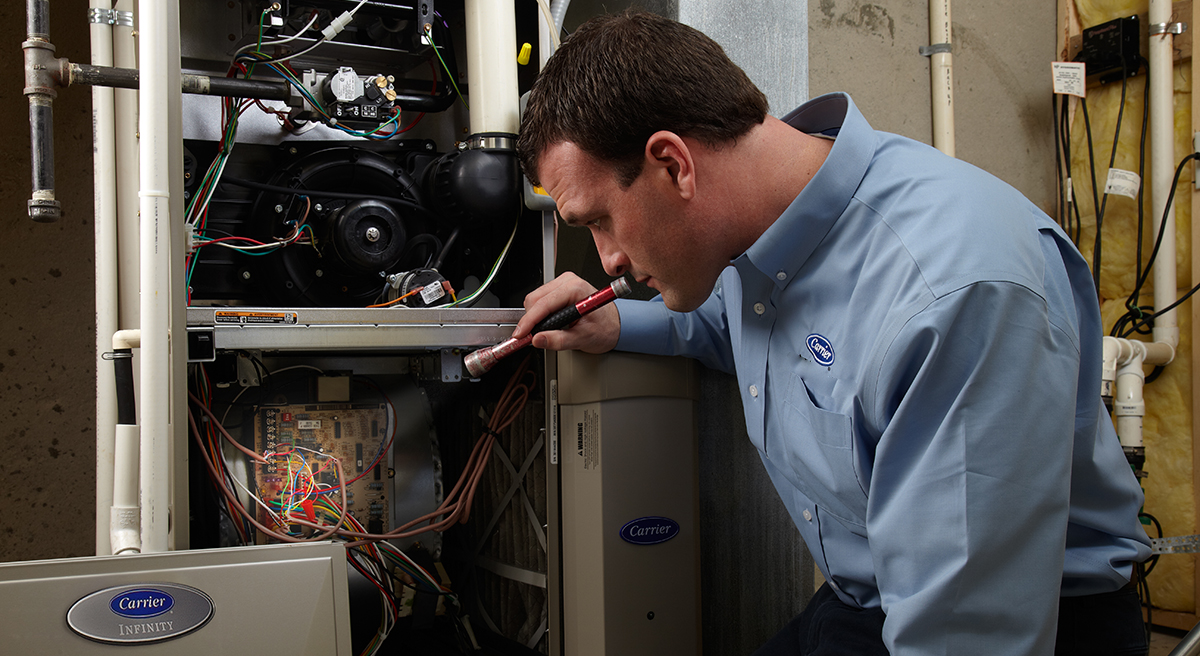
Quick Answer: What Is HVAC Technician?
HVAC Technician is a free AI diagnostic and reference tool that delivers fault isolation, system sizing, refrigerant troubleshooting, photo-based equipment assessment, and cost analysis for heating, cooling, ventilation, and refrigeration professionals — instantly.
Key capabilities:
- Fault diagnostics with equipment-specific troubleshooting logic across furnaces, heat pumps, split systems, packaged units, mini-splits, and commercial rooftop units
- System sizing guidance including load estimation, equipment selection, and ductwork adequacy evaluation
- Photo upload for condenser assessment, evaporator coil evaluation, electrical component identification, and visible damage documentation
- Repair-vs-replace cost analysis factoring equipment age, refrigerant type, efficiency ratings, and available rebates
The Problem: Why HVAC Work Is Getting Harder, Not Easier
HVAC is one of the most technically demanding trades in the building industry — and 2026 has made it more complex than any previous era. The convergence of a deepening labor shortage, refrigerant transitions, the heat pump revolution, and escalating system sophistication has created a landscape where getting accurate diagnostic and technical information fast enough is genuinely difficult for both seasoned professionals and the next generation entering the trade.
Here's what makes every service call harder without expert support:
- The refrigerant landscape is fragmenting — The R-410A phasedown is accelerating, R-454B and R-32 are entering the market, and technicians must understand charge procedures, safety classifications, and recovery requirements for multiple refrigerants simultaneously
- Heat pump adoption is outpacing training — Residential heat pump installations are surging, but many technicians trained primarily on gas furnaces and straight-cool systems lack deep experience with defrost cycles, auxiliary heat staging, and cold-climate heat pump diagnostics
- Senior technicians are retiring with irreplaceable knowledge — The institutional knowledge of a 25-year veteran — the sound a failing compressor valve makes, the condenser pattern that indicates a specific refrigerant issue, the wiring quirk on a particular model family — walks out the door with every retirement
- System complexity is compounding — Variable-speed compressors, ECM blower motors, communicating thermostats, zoning systems, and IoT-connected equipment require diagnostic approaches fundamentally different from single-stage systems
- Homeowners expect instant answers — In a market where customers can get competing quotes within hours, the technician who can diagnose accurately and explain clearly on the first visit wins the job
📉 The Workforce Gap Is Structural
This isn't a temporary hiring challenge that wage increases alone will solve. The HVAC workforce faces the same structural dynamics hitting every skilled trade: an aging workforce, insufficient trade school enrollment, and competing demand from adjacent industries. When an experienced HVAC tech can also work in industrial refrigeration, building automation, or controls engineering — often at higher compensation — the residential and light commercial sector loses talent to specialization.
The problem compounds at the company level. A single experienced HVAC technician generates significant revenue for a service company — and an unfilled position for months costs not just in lost revenue but in reputation damage from delayed appointments, frustrated customers, and declined service calls. Companies that can't staff adequately lose market share to those that can, creating a consolidation pressure that further strains independent operators.
🔧 The Refrigerant Transition Challenge
The phasedown of R-410A under the AIM Act is transforming every aspect of HVAC service. New equipment is shipping with R-454B (a mildly flammable A2L refrigerant) or R-32, each requiring updated charging procedures, different safety protocols, and new recovery equipment. Technicians who've spent their careers working with R-410A and R-22 must now maintain proficiency across multiple refrigerant families — each with different pressure-temperature relationships, oil compatibility requirements, and leak detection methods.
For service technicians, this means the diagnostic framework they've internalized over years — "these pressures at this outdoor temperature mean X" — no longer applies universally. Every refrigerant has its own superheat and subcooling targets, its own pressure-temperature chart, and its own set of failure indicators. The mental model that made a senior tech fast and accurate on R-410A needs to be rebuilt, in parallel, for each new refrigerant they'll encounter.
💸 The Diagnostic Accuracy Problem
In HVAC service, a misdiagnosis doesn't just waste time — it wastes the customer's money and erodes trust. Replace a compressor when the real problem was a restricted metering device, and you've cost the homeowner $2,000–$4,000 unnecessarily. Condemn a system that had years of life left with a $200 repair, and you've either lost a customer or oversold them. Miss an intermittent fault that returns two weeks later, and you're making a free return trip while the customer questions your competence.
The pressure to diagnose quickly — especially on high-volume service days in peak cooling or heating season — works against the methodical, systematic approach that accurate diagnosis requires. Without a technical sounding board to confirm diagnostic reasoning, even experienced technicians can fall into pattern-matching traps where they see what they expect to see rather than what the system is actually telling them.
Why HVAC Technician Solves This
HVAC Technician functions as the senior tech, the manufacturer's tech support line, and the reference library you can consult in seconds — delivering the kind of experienced, systematic guidance that keeps diagnostics accurate, installations code-compliant, and customers confident, without the bottleneck of waiting for a callback or flipping through service manuals.
| Traditional Approach | HVAC Technician |
|---|---|
| Call manufacturer tech support and wait on hold for 20–40 minutes | Instant equipment-specific diagnostic guidance 24/7 |
| Run Manual J calculations by hand or with expensive software | Load estimates and system sizing guidance in seconds |
| Diagnose based on pattern memory that may not cover unfamiliar equipment | Systematic fault isolation across all major brands and system types |
| Guess whether to repair or replace based on experience and sales goals | Structured cost analysis factoring age, refrigerant, efficiency, and rebates |
| Carry separate P-T charts for each refrigerant family | Integrated refrigerant data with superheat/subcooling analysis |
| Describe equipment condition verbally to a remote supervisor | Upload photos for structured assessment and documentation |
🎯 Equipment-Specific Diagnostics
The assistant doesn't deliver generic "check the capacitor" advice. Tell it your equipment brand, model, the symptoms you're observing, and what you've already checked, and it returns a prioritized diagnostic path specific to that equipment family. It knows that a flashing LED code on a Carrier furnace means something different than the same pattern on a Lennox. It knows which Trane model families have common control board failures versus which ones typically fail at the gas valve. It knows the difference between a hard lockout and a soft lockout on a Goodman furnace and what each implies about the fault.
This specificity is what separates useful diagnostic support from generic troubleshooting guides. When you're standing in front of an unfamiliar unit at 9 PM in January, the difference between "check the igniter" and "this specific model family has a known issue with the flame sensor lead wire developing high resistance at the Molex connector — ohm the wire, not just the sensor" is the difference between a first-visit fix and a callback.
🌡️ Refrigerant Intelligence
For every refrigerant you encounter — R-410A, R-22, R-454B, R-32, R-407C, R-134a, and others — the assistant provides the correct pressure-temperature relationships, target superheat and subcooling values, and the diagnostic implications of the readings you're taking. It interprets your gauge readings in context: "Your suction pressure indicates a saturation temperature of 38°F with an evaporator return air of 75°F, giving you a superheat of 37°F — that's too high, indicating low charge, restricted metering device, or inadequate airflow."
This contextual interpretation is especially critical during the refrigerant transition. A technician encountering R-454B for the first time can get real-time guidance on correct charging procedures, the proper method (weigh-in only for R-454B due to its zeotropic glide characteristics), and the safety protocols required for A2L refrigerants — without memorizing a new set of tables.
📐 System Sizing That Prevents Callbacks
Oversized and undersized HVAC systems are the most common source of comfort complaints, humidity problems, and premature equipment failure — and they're entirely preventable with proper load calculations. The assistant walks through Manual J load estimation factors — square footage, insulation levels, window area and orientation, climate zone, infiltration — and helps you arrive at a realistic cooling and heating load for the structure. It then assists with equipment selection that matches the load, accounting for efficiency ratings, airflow requirements, and ductwork adequacy.
This is particularly valuable for technicians who handle both service and replacement sales. A properly sized system recommendation, backed by load calculation reasoning you can explain to the homeowner, builds trust and prevents the "my new system doesn't cool as well as the old one" callback that plagues oversized-to-right-sized replacements.
📸 Photo-Based Assessment
Upload a photo of a condenser coil, an evaporator coil, a control board, a contactor, a capacitor, or any visible equipment condition, and the assistant identifies what you're looking at and evaluates its condition. Corroded condenser fins, a pitted contactor, a swollen capacitor, a cracked heat exchanger visible through the blower compartment — photo assessment accelerates documentation and provides a second opinion on equipment condition that supports your recommendation to the customer.
For homeowners using the tool, photo assessment bridges the knowledge gap between "something looks wrong" and understanding what they're seeing and whether it requires professional attention.
Related Agents You'll Also Find Useful
If you're working in HVAC, your professional needs extend beyond heating and cooling diagnostics. These agents complement HVAC Technician across the broader demands of mechanical trade work and business operations.
Electrician's Assistant
HVAC systems are electrical systems. Every diagnosis eventually touches wiring — control circuits, high-voltage power feeds, contactor coils, transformer outputs, and safety switch circuits. This agent provides electrical-specific diagnostics, NEC code navigation, wire sizing, and photo-based wiring assessment that helps HVAC technicians work more confidently on the electrical side of every installation and service call.
- Circuit-level fault diagnostics and NEC code references
- Wire sizing, voltage drop, and load calculations with step-by-step math
- Photo-based assessment for electrical panels and wiring conditions
Appliance Repair Technician
Many HVAC companies also handle appliance service calls — or get asked about them by existing customers. This agent provides error code decoding, diagnostic walkthroughs, and repair-vs-replace analysis across all major household appliance categories, extending your service capability without requiring appliance-specific training.
- Error code diagnosis across Samsung, LG, Whirlpool, GE, Bosch, and all major brands
- Step-by-step repair walkthroughs calibrated to skill level
- Photo-based component identification and damage assessment
Plumber's Assistant
Hydronic heating systems, boiler piping, condensate drain lines, humidifier water feeds, and water heater connections all sit at the intersection of HVAC and plumbing. This agent provides plumbing-specific diagnostics and repair guidance for the piping side of mechanical systems that HVAC technicians frequently encounter.
- Supply, drainage, and hydronic system diagnostics
- Pipe sizing and leak assessment for HVAC-connected plumbing
- Photo-based assessment for visible plumbing issues
This is exactly what HVAC Technician was built for — try it free, no credit card required.
How It Works: From Symptom to Solution in Minutes
Getting expert-level HVAC guidance from HVAC Technician takes one message. Here's the workflow from first symptom to completed diagnosis.
Step 1: Describe the Problem or Share Equipment Details
Tell the assistant what you're dealing with — in plain language, with technical detail, or by uploading a photo of the equipment. Include the brand, model, and system type if you have it. Describe the symptom: what the system is doing (or not doing), when it started, and any error codes or LED fault patterns displayed.
"Trane XR15 heat pump, model 4TWR5036E. System runs in cooling mode but won't switch to heat. Thermostat is calling for heat, outdoor unit runs, but indoor unit blows cold air. No fault codes on the air handler board. Outdoor temp is 35°F."
If critical details are missing — system type, refrigerant, or symptom timing — the assistant asks before diagnosing, rather than guessing.
Step 2: Get a Prioritized Diagnostic Path
The assistant returns the most probable causes in order of likelihood, with specific checks for each. It tells you what to test first, what tools you'll need, and what each result means. For the heat pump scenario above, it would walk through reversing valve operation (checking for 24V at the solenoid), defrost board function, and thermostat staging configuration before moving to less common causes.
"My Lennox furnace locks out after three ignition attempts. I see five red LED flashes on the control board. What does this mean and what should I check?"
Step 3: Upload Photos for Visual Assessment
When you encounter unfamiliar equipment, visible damage, or a condition you want evaluated, upload a photo. The assistant identifies components, evaluates visible conditions (corroded coils, pitted contactors, burned wiring), and provides a structured assessment.
"Here's a photo of the condenser coil on a 12-year-old Rheem. Customer says it's not cooling well. How bad is this coil and should I recommend cleaning or replacement?"
Step 4: Get Refrigerant Charge Guidance
Share your gauge readings — suction pressure, liquid pressure, outdoor ambient temperature, indoor return air conditions — and the assistant interprets them. It calculates superheat and subcooling, identifies whether the charge is correct, and diagnoses the most probable cause if readings are abnormal.
"R-410A system. Suction pressure 118 psig, liquid pressure 320 psig, outdoor ambient 92°F, return air 78°F/62°F. Indoor airflow seems adequate. Is this system properly charged?"
Step 5: Get a Repair-vs-Replace Recommendation
Before the customer decides, ask for a structured analysis. The assistant evaluates equipment age, refrigerant type (especially relevant with the R-410A phasedown), repair cost, replacement cost, efficiency improvement potential, and available rebates or tax credits for high-efficiency replacements.
"Customer has a 16-year-old R-22 system with a failed compressor. Compressor replacement quoted at $2,800. A new 16 SEER2 system installed would be around $7,500. What should I recommend?"
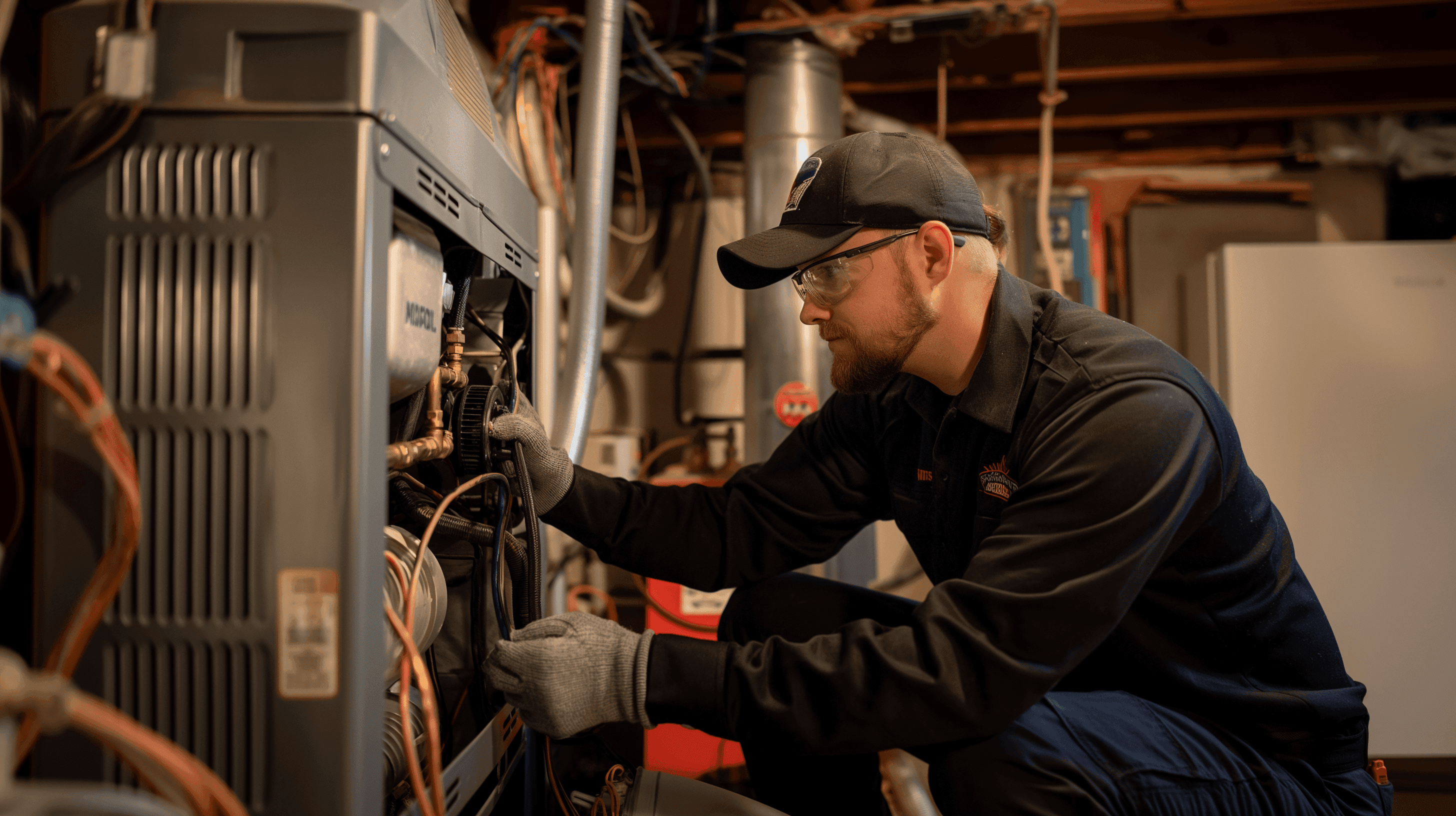
Results & Use Cases
📊 The Service Tech Diagnosing a No-Heat Call at 10 PM
Scenario: A service technician responds to a no-heat emergency call on a January evening. The homeowner has a Carrier 58STA furnace that cycles the inducer motor but never ignites. The LED code shows three amber flashes. The tech has limited experience with this specific Carrier model family.
Traditional Approach: Calls the Carrier tech support line — it's after hours, so the wait time is 35+ minutes. While on hold, Googles the LED code and finds forum posts with conflicting information. Replaces the hot surface igniter on speculation ($45 part, 20 minutes labor). The furnace still won't ignite. Now the tech is deeper into the call with no clear path forward.
HVAC Technician: Identifies three amber flashes on the 58STA control board as a "pressure switch stuck open" fault. Walks through the diagnostic sequence specific to this model: verify inducer motor operation (running but possibly at reduced speed), check the pressure switch hose for condensation blockage (common on 90%+ furnaces in cold weather when the condensate drain freezes), verify the drain line isn't restricted, and check the pressure switch itself with a manometer. The tech finds a frozen condensate drain line blocking the inducer's ability to create the required negative pressure. Clears the drain, verifies the pressure switch closes, and the furnace fires normally. First-visit fix in 25 minutes.
- Model-specific fault code interpretation eliminates guesswork
- Diagnostic sequence prioritized by probability for this specific equipment
- First-visit resolution instead of speculative part replacement and callback
💼 The Residential Installer Sizing a Heat Pump Replacement
Scenario: An installer is quoting a heat pump replacement for a 2,200 sq ft home in Charlotte, North Carolina. The existing system is a 4-ton straight-cool AC with a gas furnace backup. The homeowner wants to go all-electric with a heat pump. The installer needs to determine the correct heat pump sizing — and whether the existing ductwork can handle it — before providing a quote.
Traditional Approach: Uses a rule-of-thumb calculation (400–600 sq ft per ton) and quotes a 4-ton heat pump to match the existing system. Doesn't perform a load calculation. The installed system short-cycles in spring and fall, can't dehumidify effectively in Charlotte's humid summers, and the customer complains about comfort within the first season. The installer makes a return visit and has no good answer.
HVAC Technician: Walks the installer through a Manual J load estimation — factoring the home's insulation level (R-19 walls, R-38 attic), window area and orientation, air sealing quality, occupancy, and Charlotte's design conditions. The calculated cooling load comes out to 38,000 BTU — a 3.5-ton system, not 4. The assistant explains why right-sizing matters for dehumidification and comfort in Charlotte's climate, verifies the existing ductwork can handle the airflow at the lower tonnage, and recommends specific equipment features (variable-speed compressor, high SEER2 rating) that qualify for federal tax credits and utility rebates. The installer quotes with confidence, the system performs correctly, and the customer refers two neighbors.
- Load calculation prevents the most common installation error in residential HVAC
- Climate-specific guidance on sizing and dehumidification
- Rebate and tax credit awareness adds value to the customer conversation
📱 The Homeowner Troubleshooting Before Calling for Service
Scenario: A homeowner notices their central AC is running constantly but the house won't cool below 78°F on a 95°F day. They're debating whether to call for a $150+ service call or whether this is something they can check themselves first.
Traditional Approach: Googles "AC not cooling enough," finds a list of 15 possible causes ranging from "change your filter" to "your compressor is failing." No way to prioritize which to check. Either calls for service immediately (potentially paying $150 for a dirty filter) or attempts random troubleshooting that may cause more harm than good.
HVAC Technician: Asks a few clarifying questions — is the outdoor unit running? Is the air coming from the vents cool at all, or room temperature? When was the filter last changed? Is this the first time it's struggled, or does it happen every time it gets above 90°F? Based on the answers (outdoor unit running, air from vents is cool but not cold, filter is clean, first summer in the home), identifies the most probable cause as an undersized system struggling at design conditions — not a malfunction. Explains that most residential AC systems are designed for a 20°F temperature differential, so maintaining 75°F when it's 95°F outside is at the limit of system design. Recommends checking the condenser coil for debris and ensuring nothing is blocking airflow, but advises that if those are clear, the system is likely operating as designed. The homeowner avoids a $150 service call for a non-issue.
- Prioritized troubleshooting eliminates the noise of generic advice
- Homeowner-safe checks prevent unnecessary service calls
- Full feature parity on iOS and Android for checking from any room in the house
🎯 The Apprentice Learning Refrigerant Diagnostics in the Field
Scenario: A first-year apprentice is on a service call with their journeyman. The journeyman hooks up gauges to an R-410A split system and reads suction pressure at 105 psig and liquid pressure at 385 psig on a 90°F day. The journeyman asks the apprentice what these readings indicate. The apprentice isn't sure.
Traditional Approach: The journeyman explains — if they have time and patience. If it's a busy day with five more calls, the explanation is "it's low on charge, we need to add refrigerant" with no deeper teaching. The apprentice learns what to do but not why or how to reason through it independently next time.
HVAC Technician: The apprentice checks on their phone between calls. The assistant walks through the complete analysis: suction pressure of 105 psig on R-410A corresponds to a saturation temperature of approximately 37°F. With a return air temperature of 75°F across the evaporator, that gives a superheat of 38°F — significantly higher than the typical target of 10–15°F for a TXV-equipped system. High superheat with a low suction pressure suggests either low refrigerant charge, a restricted metering device, or poor evaporator airflow. The assistant then explains how to differentiate: check subcooling (if subcooling is also high with high liquid pressure, the metering device is restricted; if subcooling is low, the system is undercharged). This one interaction teaches the apprentice a diagnostic reasoning framework they'll use for the rest of their career.
- Builds diagnostic reasoning, not just pattern memorization
- Available between calls for self-paced learning
- Supplements journeyman mentorship when teaching time is limited
Frequently Asked Questions
Is HVAC Technician free to use?
Yes. You can start using HVAC Technician immediately with free-tier access on Jenova — no credit card required. Free access includes core diagnostic, sizing, and reference features with limited usage per billing cycle. Paid plans increase usage significantly for professionals who need frequent technical support throughout their workday.
What HVAC systems and brands does it cover?
HVAC Technician covers the full spectrum of heating, cooling, ventilation, and refrigeration systems — residential split systems, packaged units, heat pumps (ducted and ductless), furnaces (gas, oil, electric), boilers, mini-splits, VRF systems, rooftop units, chillers, and commercial refrigeration. Brand coverage spans Carrier, Trane, Lennox, Rheem, Goodman, Daikin, Mitsubishi, Fujitsu, Bryant, Payne, York, Amana, and all major manufacturers.
Can I upload photos of equipment for assessment?
Yes. Upload photos of condenser coils, evaporator coils, control boards, contactors, capacitors, wiring connections, heat exchangers, or any visible equipment condition. The assistant identifies components, evaluates visible damage or deterioration, and provides structured assessment you can use for documentation, customer communication, or your own diagnostic reasoning.
Does it handle refrigerant-specific diagnostics?
Yes. The assistant provides pressure-temperature relationships, superheat and subcooling calculations, and diagnostic interpretation for R-410A, R-22, R-454B, R-32, R-407C, R-134a, and other common refrigerants. It accounts for the specific characteristics of each refrigerant — including zeotropic glide for blends, A2L safety protocols for mildly flammable refrigerants, and proper charging methods.
Does it work on my phone at the job site?
Yes. Full feature parity across web, iOS, and Android. Look up fault codes standing at the furnace, interpret gauge readings from the truck, upload condenser photos from the rooftop, or run a load calculation at the kitchen table — all from your phone.
Can it help homeowners, not just professionals?
Absolutely. The assistant calibrates its guidance to your skill level. Homeowners receive safety-first troubleshooting (check the filter, check the thermostat, check the breaker) with clear guidance on when a problem exceeds safe DIY scope and requires a licensed professional. It won't walk a homeowner through refrigerant handling or high-voltage diagnostics — it tells you directly when to call a pro and what to tell them when you do.
Conclusion
The HVAC industry in 2026 faces a convergence of pressures that experience alone can no longer absorb. With the BLS projecting roughly 42,500 HVAC job openings annually over the next decade, skilled trade wages growing at 3.6% year-over-year — more than three times the national average, and the refrigerant transition rewriting the diagnostic frameworks technicians have relied on for decades — every service call, every installation, and every customer conversation demands faster, more accurate technical support than the traditional infrastructure can deliver. The senior techs who carried irreplaceable diagnostic intuition are leaving faster than the trade can replace them. The systems they're being replaced on are more complex than anything previous generations encountered. Expert-level HVAC diagnostics, system sizing, and technical reference are now free and instant. The only question is whether your next service call will have it.
Try HVAC Technician free now → Explore more AI agents at Jenova.