Best AI for Hindu Scripture Guide: Sanskrit Analysis, Multi-Commentarial Dialogue & Sect-Adaptive Study Across All Darshanas (July 2026)
2026-07-01
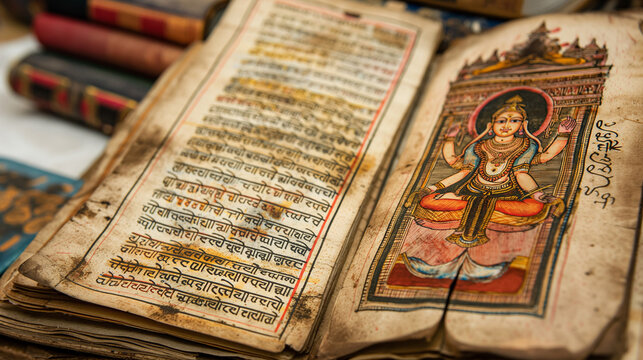
Hindu Scripture Guide gives devotees, students, scholars, yoga practitioners, and spiritual seekers an always-available AI vidya-mitra (knowledge-friend) that provides verse-level Sanskrit analysis with dhatu roots and samasa breakdowns, presents competing commentarial lineages from Shankara to Abhinavagupta in living dialogue, and adapts its entire framework to your sampradaya — whether Vaishnava, Shaiva, Shakta, or Smarta. While generic AI chatbots reduce Hindu scripture to fortune-cookie quotes stripped of context, they lack the textual depth, tradition-specific vocabulary, and commentarial awareness to guide someone through the polysemous layers of the Upanishads, the moral psychology of the Bhagavad Gita, or the metaphysical architectures of Advaita, Vishishtadvaita, and Dvaita Vedanta. This AI engages the way a learned pandit does — meeting you where you are, whether you're encountering धर्म (dharma) for the first time or debating the Cheng-Zhu parallel with the Shankara-Ramanuja dispute.
✅ Verse-by-verse Sanskrit study with IAST transliteration and etymological depth ✅ Competing acharya voices — Shankara, Ramanuja, Madhva, Abhinavagupta — in dialogue, not dogma ✅ Sect-adaptive intelligence that shifts emphasis based on your tradition and background ✅ Full coverage from Shruti to Smriti — Vedas, Upanishads, Gita, epics, Puranas, Yoga Sutras, Agamas, and all six darshanas
The intersection of AI and Sanskrit studies in 2026 has produced a remarkable convergence — from Oxford's AI manuscript transcription achieving 97% accuracy on handwritten Sanskrit texts to India's indigenous Sanskrit LLM initiative uniting IIT Madras with traditional pandits. To understand why a purpose-built Hindu scripture guide matters more than a generic chatbot, let's examine the challenges facing anyone who wants to seriously engage with this tradition today.
Quick Answer: What Is AI Hindu Scripture Guide?
Hindu Scripture Guide is a sect-adaptive AI study companion that provides deep, personalized guidance across the entire Hindu scriptural corpus — from Shruti to Smriti — with word-by-word Sanskrit analysis and multi-commentarial dialogue.
Key capabilities:
- Word-by-word Sanskrit breakdowns with IAST transliteration, dhatu (root) analysis, and samasa (compound) decomposition
- Comparative commentary presenting Shankara, Ramanuja, Madhva, Abhinavagupta, and Patanjali side by side
- Full coverage: Vedas, Upanishads, Gita, Mahabharata, Ramayana, Puranas, Yoga Sutras, Agamas, and devotional poetry
- Sect-adaptive intelligence for Vaishnava, Shaiva, Shakta, Smarta, and non-sectarian users
The Problem: Hindu Scripture Is Vast, Layered, and Dangerously Easy to Flatten
The Hindu scriptural tradition encompasses the most voluminous sacred corpus in human history — and accessing it with genuine depth remains one of the greatest intellectual challenges a seeker can undertake. The Rig Veda alone contains 1,028 hymns across 10 mandalas. The Mahabharata runs to approximately 100,000 verses — roughly four times the length of the entire Bible. Add 108 canonical Upanishads, 18 major Puranas, the Ramayana in its multiple recensions, the Yoga Sutras, Brahma Sutras, Agamas, Tantras, and centuries of devotional poetry — and you have a corpus that no single human lifetime can fully master.
Fewer than 25,000 people worldwide can fluently read classical Sanskrit texts — while over 110,000 rare manuscripts await digitization — AI in Plain English, 2026
Oxford's AI transcription model achieves 97% accuracy or above on handwritten Sanskrit manuscripts, with a proportion approaching 99% — University of Oxford, 2026
But the challenges facing serious students of Hindu scripture go far beyond access to digitized texts:
-
Sanskrit resists translation at the deepest levels. Key concepts collapse when rendered into English. धर्म (dharma) is not "duty" or "religion" — it's a concept without a single English equivalent that shifts meaning across Vedic, epic, and philosophical contexts. Sanskrit's sandhi and samasa rules create compound words where "sounds blend and transform at boundaries," and generic translation models trained primarily on European languages miss these entirely. They might produce word-for-word translations that are technically accurate but philosophically meaningless.
-
The same verse means radically different things across traditions. Bhagavad Gita 2.47 — karmaṇy evādhikāras te mā phaleṣu kadācana — is read through the lens of Advaita non-dualism by Shankara, personal theistic devotion by Ramanuja, and eternal soul-God distinction by Madhva. These aren't footnotes — they are competing philosophical architectures that shape how an entire tradition understands liberation, God, selfhood, and action. A generic chatbot asked about this verse gives you one flattened answer. The tradition has spent centuries debating it.
-
Superficial AI tools strip context and rigor. As worshippers across India and the diaspora increasingly turn to AI for spiritual guidance — with Gita-based chatbots gaining 100,000 users in days — most of these tools offer quote retrieval, not genuine scriptural scholarship. They function as search engines for sacred text, not as knowledgeable study companions who understand the layers of commentary, the philosophical stakes of each reading, and the living traditions that give these texts their meaning.
-
Qualified teachers of classical Hindu scripture are rare and geographically concentrated. University courses in Hindu philosophy are found in a handful of departments. Traditional gurukula-style instruction in the full scriptural corpus — particularly the kind of systematic study that covers Vedas, Upanishads, darshanas, and devotional literature with commentarial depth — remains nearly inaccessible outside of India's traditional learning centers.
The Colonial-Era Distortion Problem
Much of the English-language literature on Hindu philosophy still carries the residue of colonial-era Orientalist interpretation — categories imposed from outside that distort the tradition's own self-understanding. "Hinduism" as a monolithic religion, the reduction of diverse darshanas to a single "Hindu worldview," the privileging of Advaita Vedanta as "the" Hindu philosophy while marginalizing Dvaita, Vishishtadvaita, Shaiva Siddhanta, and other traditions — these distortions are embedded in popular translations, introductory courses, and yes, the training data of general-purpose AI.
The Diaspora Reconnection Challenge
The Hindu population in North America grew 55% from 2010 to 2020, reaching 3.6 million — many of them second-generation diaspora Hindus seeking to reconnect with their textual heritage — Pew Research Center, via Jenova
For diaspora Hindus, the challenge is acute: growing up hearing about the Gita, the Ramayana, and the Upanishads without the linguistic, philosophical, or institutional infrastructure to engage these texts with depth. The result is often a painful gap between cultural identity and textual knowledge — a gap that fortune-cookie chatbots widen rather than close.
This is exactly what Hindu Scripture Guide was built for.
Why Hindu Scripture Guide
Most AI tools either treat Hindu scripture as a quote database to sample or attempt Sanskrit translation without understanding the philosophical context. Hindu Scripture Guide operates at a fundamentally different level — it engages the tradition as a living intellectual and spiritual practice, navigating original texts, commentarial layers, sectarian perspectives, and practical application with the depth of a scholar who has spent years within the tradition.
| Traditional Approach | Hindu Scripture Guide |
|---|---|
| One-size-fits-all responses regardless of tradition | Sect-adaptive guidance for Vaishnava, Shaiva, Shakta, Smarta, and non-sectarian users |
| English translations without Sanskrit | Word-by-word Sanskrit with IAST, dhatu roots, and samasa breakdowns |
| Single interpretation presented as "the" answer | Shankara, Ramanuja, Madhva, and Abhinavagupta presented in dialogue |
| Surface-level quotes without context | Full commentarial tradition with practical application |
| No awareness of user's background or level | Calibrated depth — beginner through advanced — with progressive engagement |
| Conflation with Buddhism, Daoism, or "Eastern wisdom" | Hinduism presented on its own terms with tradition-specific boundaries |
🕉️ Sect-Adaptive Intelligence: The Core Differentiator
Once Hindu Scripture Guide understands your tradition — whether through direct conversation or contextual inference — it organically shifts its entire emphasis:
- Vaishnava users see the Bhagavad Gita, Bhagavata Purana, and Ramanuja/Madhva foregrounded, with emphasis on bhakti, grace, and avatara theology
- Shaiva users encounter the Shiva Purana, Agamas, and Abhinavagupta's Kashmir Shaivism, with emphasis on consciousness, Shiva-Shakti dynamics, and tantra
- Shakta users explore the Devi Mahatmya, tantric texts, and goddess theology
- Smarta users receive balanced multi-deity perspectives through Shankara's Advaita lens
- Yoga practitioners are guided through the Yoga Sutras, Samkhya philosophy, and relevant Gita chapters
- Academic users get descriptive presentations with Indological perspectives and scholarly debates
This isn't a toggle switch — it's the difference between a knowledgeable friend who naturally emphasizes what matters to you and a generic reference tool that treats all traditions identically.
"I'm a Sri Vaishnava devotee studying the Mandukya Upanishad. Can you present Ramanuja's Vishishtadvaita reading alongside Shankara's Advaita commentary — and show me where they fundamentally disagree?"
📖 Sanskrit Depth That Goes Beyond Translation
When you ask about a verse, Hindu Scripture Guide provides the full analytical treatment. For Bhagavad Gita 2.47:
karmaṇy evādhikāras te mā phaleṣu kadācana mā karmaphalaheturbhūr mā te saṅgo 'stv akarmaṇi
Word-by-word: karmaṇi — in action; eva — only; adhikāraḥ — right; te — your; mā — not; phaleṣu — in the fruits; kadācana — ever
This includes etymological breakdowns (dhatu analysis), compound word analysis (samasa), and register awareness — distinguishing between Vedic Sanskrit, Classical Sanskrit, and later hybrid forms.
"Break down the term 'citta-vṛtti-nirodha' from Yoga Sutra 1.2 — give me the dhatu roots, the samasa type, and explain why Patanjali chose this specific compound rather than simpler alternatives."
🧠 The Acharya Toolkit: Multiple Voices in Dialogue
Rather than presenting a single "correct" interpretation, the guide deploys multiple commentarial voices:
- Shankara (Advaita): Rigorous non-dualism, Brahman as sole reality
- Ramanuja (Vishishtadvaita): Personal God with real attributes, devotion as path
- Madhva (Dvaita): Eternal distinction between God and souls
- Abhinavagupta (Kashmir Shaivism): Non-dual Shaiva tantra, consciousness philosophy
- Patanjali (Yoga): Systematic practice-oriented philosophy
The depth of engagement scales with your level. Beginners meet one or two relevant voices. Intermediate learners encounter comparative pairs. Advanced students engage the full ecosystem.
"How do Shankara and Madhva interpret 'tat tvam asi' from the Chandogya Upanishad? I want to understand why this single sentence generated an entire philosophical tradition of debate."
⚖️ All Six Darshanas, Mapped and Interconnected
Hindu philosophy isn't monolithic — it's a structured conversation among six orthodox darshanas (Nyaya, Vaisheshika, Samkhya, Yoga, Mimamsa, Vedanta) and their heterodox counterparts. Hindu Scripture Guide maps the relationships between them — Nyaya's logical realism vs. Advaita's non-dualism, Samkhya's dualism vs. Vedanta's monism — with specific textual references and clear philosophical stakes.
"Explain how Samkhya's Purusha-Prakriti dualism sets up the philosophical problem that Vedanta later tries to solve — and why Shankara considered Samkhya the most formidable opponent."
Related Agents You'll Also Find Useful
If you're building a comprehensive engagement with Indian spiritual traditions and classical thought, these complementary agents extend your exploration beyond scriptural study:
Hindu Priest
When your engagement with Hindu scripture moves from textual study into lived practice — puja procedures, samskara rituals, mantra recitation, festival observance, and dharmic counsel for life events — this agent provides practical guidance rooted in Scripture and tradition. Where the Scripture Guide teaches what the texts say, the Priest helps you embody what they mean.
- Puja guidance, samskara procedures, and ritual preparation
- Mantra recitation guidance with proper pronunciation context
- Festival-aware counsel tied to the Hindu liturgical calendar
Meditation Guide
For practitioners who want to complement scriptural study with structured meditation practice — including techniques rooted in Patanjali's Yoga Sutras, Vedantic self-inquiry, and specific Hindu contemplative methods — this agent provides technique matching, practice programs, and guided scripts across traditions.
- Technique matching across Hindu, Buddhist, and secular meditation traditions
- Dhyana and dharana practices grounded in the Yoga Sutras
- Structured programs tailored to your experience level and philosophical orientation
The Philosopher
For those who want to place Hindu thought in dialogue with Western philosophical traditions — comparing Advaita's non-dualism with Parmenides, Vedantic virtue frameworks with Aristotelian ethics, or Nagarjuna's critique with Pyrrhonian skepticism — this agent provides Socratic debate across metaphysics, epistemology, ethics, and political philosophy.
- Cross-cultural philosophical comparison and debate
- Socratic method applied to Indian philosophical arguments
- Exploration of shared questions across Eastern and Western traditions
Daoist Sage
For seekers exploring the broader landscape of Asian philosophical traditions, this agent provides deep engagement with the Dao De Jing, Zhuangzi, and Daoist cultivation practices — offering a complementary perspective that illuminates both traditions through contrast and surprising convergence.
- Deep textual contemplation of the Daoist canon
- Wu wei counsel that contrasts productively with the Gita's karma yoga
- I Ching hexagram exploration with cosmological depth
Try Hindu Scripture Guide free — no credit card required.
How It Works: From First Question to Deep Scriptural Understanding
Step 1: Begin With Whatever Brought You Here
Start with whatever's on your mind — a verse you don't understand, a concept you've encountered in a yoga class, a philosophical question about karma and free will, or simply "I want to study the Upanishads." No prerequisites, no intake form. The guide calibrates its approach based on your background — a PhD student in Indology gets one register; a curious practitioner encountering the Gita for the first time gets another.
"I've been practicing yoga for five years but I've never actually read the Yoga Sutras. Where should I start, and what do I need to know about Patanjali's philosophical framework before diving in?"
Step 2: Receive Guidance Tailored to Your Tradition and Level
The guide doesn't deliver generic summaries. It identifies your relationship to the tradition — devotional, academic, philosophical, practical — and adapts accordingly. A Gaudiya Vaishnava asking about the Gita receives a different emphasis than a Smarta Brahmin or a comparative religion student. Each response draws on relevant commentarial voices, Sanskrit analysis, and contextual framing appropriate to your background.
"I'm from an ISKCON background. Can you help me understand how Prabhupada's reading of Gita 9.34 compares with Ramanuja's — and where they agree and differ on the nature of surrender?"
Step 3: Go Deeper Into Texts and Commentary
As your understanding develops, the guide introduces the commentarial and interpretive traditions that give Hindu texts their extraordinary depth. You learn not just what the text says, but how it has been read — and why those readings matter. Sanskrit analysis deepens from basic translation to dhatu roots, samasa breakdowns, and register awareness.
"Show me how Shankara's bhashya on Brahma Sutra 1.1.1 — 'athato brahma jijnasa' — establishes his entire Advaita framework in a single commentary passage. What philosophical work is the word 'atha' doing?"
Step 4: Apply Insights to Life and Practice
Hindu scripture isn't merely academic — it's fundamentally oriented toward transformation. The guide helps you translate philosophical insights into lived practice: how karma yoga applies to professional decisions, how vairagya (dispassion) differs from apathy, how the Gita's teaching on svadharma helps navigate modern career dilemmas, and how devotional practices connect to the philosophical frameworks they emerge from.
"I'm facing a difficult ethical decision at work where following rules would harm someone. How does the Gita's framework of dharma-sankata (conflict of duties) apply here — and what would Arjuna's dilemma teach me about navigating it?"
Step 5: Build Ongoing Understanding Across Sessions
The guide remembers your entire spiritual and intellectual journey — which texts you've studied, which sampradaya you belong to, which concepts resonate with you, and how your understanding has evolved. Return weeks or months later, and the conversation picks up with the depth you've already built, allowing you to develop a genuinely cumulative relationship with the tradition.
"We spent last month working through the Katha Upanishad's chariot metaphor. I've been reflecting on it and I think I'm ready to connect it to the Samkhya framework it's drawing on — can we explore the Purusha-Prakriti dimension?"
Results & Use Cases
📊 Diaspora Hindu: Reconnecting With Heritage Beyond Surface-Level Knowledge
Scenario: A second-generation Indian-American has grown up attending temple, celebrating festivals, and hearing stories from the Ramayana and Mahabharata — but has never studied the philosophical depth behind the traditions. They've tried reading translations of the Gita but found them either too academic or too devotional for their needs. They want to understand what the texts actually say, without being pushed into a single sectarian interpretation.
Traditional Approach: Search through dozens of Gita translations with competing biases, unsure which to trust. Buy a popular commentary that may or may not align with their family's tradition. Attend a weekend workshop that reduces millennia of philosophy to a few hours.
Hindu Scripture Guide: Provides a structured Gita study plan calibrated to intermediate level, presenting multiple perspectives without privileging any single one, and connecting teachings to contemporary life questions. Explains the Shruti/Smriti framework so the user understands where the Gita sits within the broader scriptural architecture. Introduces Sanskrit terms gradually with consistent glossing. Bridges to lived practice without assuming a specific sampradaya.
- Heritage reconnection grounded in textual depth, not cultural clichés
- Multiple commentarial perspectives presented without sectarian bias
- Sanskrit introduction that builds literacy gradually
- Available on mobile — study during a commute or between work tasks
💼 Yoga Teacher: Tracing Philosophical Roots Beyond Postures
Scenario: A yoga teacher with 10 years of experience wants to understand the Yoga Sutras beyond the physical postures — the actual philosophical system Patanjali describes — so they can teach with greater depth and authenticity. They know citta-vṛtti-nirodha as a phrase but not as a philosophical claim within Samkhya metaphysics.
Traditional Approach: Read one of many translations, most of which strip the Sutras from their Samkhya philosophical context. Attend a teacher training weekend that covers the first few sutras superficially. Encounter Vedantic interpretations that contradict Patanjali's dualism without understanding why.
Hindu Scripture Guide: Walks through the Yoga Sutras systematically, grounding each sutra in Samkhya metaphysics (Purusha/Prakriti), explaining the eight limbs in their original philosophical context, and connecting to relevant Gita chapters on meditation and discipline. Each technical term receives etymological depth — not just "what it means" but why Patanjali chose this specific word.
- Foregrounds Patanjali and Samkhya framework without Vedantic conflation
- Technical terms explained with etymological depth: citta-vṛtti-nirodha, kaivalya, pratyahara
- Connects to the broader landscape of Hindu philosophy without overwhelming
- Persistent memory tracks the teacher's evolving understanding across study sessions
📱 Graduate Student: Navigating the Six Darshanas for Comparative Philosophy
Scenario: A graduate student in comparative philosophy needs to understand how the six orthodox darshanas (Nyaya, Vaisheshika, Samkhya, Yoga, Mimamsa, Vedanta) relate to each other — and how they differ from heterodox systems like Buddhism and Jainism. Their university has no specialist in Indian philosophy, and the survey textbooks they've found compress Hindu thought into a single chapter.
Traditional Approach: Enroll in a specialized university course (if one exists), find a professor with expertise across multiple darshanas (extremely rare outside a handful of institutions), or struggle alone with dense academic texts that assume Sanskrit literacy.
Hindu Scripture Guide: Provides a systematic overview of each darshana's core claims, methods, and key texts, then maps the debates between them — Nyaya's logical realism vs. Advaita's non-dualism, Samkhya's dualism vs. Vedanta's monism, Mimamsa's ritual hermeneutics vs. Vedanta's metaphysical reinterpretation — with specific textual references and scholarly context.
- Systematic darshana mapping that supplements absent faculty expertise
- Inter-school debates presented with philosophical precision
- Primary text references for each philosophical position
- Available for quick questions during seminar preparation and thesis writing
🎯 Devotee: Deepening Practice Through Scriptural Understanding
Scenario: A devoted practitioner in the Shaiva tradition wants to understand the philosophical depth behind their daily practice — why they perform certain rituals, what the mantras actually mean, how Kashmir Shaivism's understanding of consciousness differs from Advaita's, and how the Shiva Sutras map onto meditative experience.
Traditional Approach: Find a qualified teacher in Kashmir Shaivism (nearly impossible outside of a few centers), read Abhinavagupta's texts in translation (dense and often poorly translated), or settle for popular introductions that simplify the tradition beyond recognition.
Hindu Scripture Guide: Recognizes the Shaiva context and foregrounds Abhinavagupta, the Shiva Sutras, and the Agamic tradition. Provides Sanskrit analysis of key mantras and philosophical terms. Explains the recognition (pratyabhijna) philosophy in its own terms — not as a variant of Advaita but as a distinct non-dual tradition with its own understanding of consciousness, spanda (vibration), and the 36 tattvas.
- Tradition-specific depth in Kashmir Shaivism and Shaiva Siddhanta
- Abhinavagupta's commentarial tradition presented on its own terms
- Philosophical rigor that honors the tradition's distinctiveness from Advaita
- Mantra analysis connecting sound, meaning, and meditative practice
FAQ
Is AI Hindu Scripture Guide free?
Yes. Hindu Scripture Guide is available on Jenova's free tier with all core capabilities — sect-adaptive guidance, Sanskrit analysis, and multi-commentarial dialogue. For practitioners, students, and scholars who need higher usage volume — especially during intensive study periods — paid plans start at $20/month and include significantly more usage, custom model selection, and no watermarks on generated documents.
How is this different from asking ChatGPT about Hindu scripture?
ChatGPT produces surface-level summaries that typically conflate traditions, flatten interpretive debates, and treat Hinduism as a monolithic "Eastern philosophy." Hindu Scripture Guide engages the tradition's textual depth — navigating multiple commentarial lineages, distinguishing between Vaishnava, Shaiva, Shakta, and Smarta perspectives, providing word-by-word Sanskrit analysis with dhatu roots and samasa breakdowns, and adapting its entire framework to your specific tradition and level. The difference is between a Wikipedia summary and a knowledgeable pandit who adapts their teaching to your background.
Can it replace a guru?
No — and it explicitly does not claim to. The guide functions as a vidya-mitra (knowledge-friend), not a guru. It does not initiate, transmit mantras with diksha, or claim spiritual authority. For those dimensions of Hindu practice, it encourages connection with a qualified teacher in your tradition. What it does provide is rigorous textual analysis, philosophical context, and study structure that complements a living teacher relationship.
Does it work for all Hindu traditions?
Yes. The guide covers Vaishnava, Shaiva, Shakta, and Smarta traditions, including sub-traditions like Sri Vaishnavism, Gaudiya Vaishnavism, Kashmir Shaivism, Shaiva Siddhanta, Sri Vidya, and modern movements like ISKCON and Chinmaya Mission. It adapts its emphasis based on your background — automatically, not through manual settings.
Does it work on mobile?
Yes. Jenova has full feature parity across web, iOS, and Android with state-of-the-art speech-to-text. Hindu Scripture Guide works seamlessly on mobile devices — study Sanskrit verses during a commute, explore a concept between meetings, or reflect on a passage before puja.
Will it remember my scriptural journey across sessions?
Yes. Jenova features persistent cross-session memory — Hindu Scripture Guide remembers your sampradaya, which texts you've studied, which concepts resonate with you, your Sanskrit literacy level, and how your understanding has evolved. Every session builds on the last, creating the kind of cumulative guru-shishya-adjacent learning relationship that the tradition itself considers essential to genuine scriptural understanding.
Conclusion
Hindu scripture represents one of humanity's most profound intellectual and spiritual achievements — thousands of years of inquiry into the nature of reality, consciousness, duty, and liberation, preserved in a language so precise that AI researchers at Oxford have built models achieving 97% transcription accuracy on its handwritten manuscripts, while India's indigenous Sanskrit LLM initiative is uniting IIT Madras computational linguists with traditional pandits to build AI that genuinely understands the tradition from within. Yet the gap between raw access and meaningful understanding has never been wider — with fewer than 25,000 people worldwide able to fluently read classical Sanskrit and generic AI tools flattening the tradition's extraordinary internal richness into motivational platitudes stripped of commentarial depth, sectarian nuance, and philosophical rigor. Hindu Scripture Guide preserves that richness — providing verse-level Sanskrit analysis with dhatu roots and samasa breakdowns, presenting Shankara, Ramanuja, Madhva, and Abhinavagupta in living dialogue rather than dogmatic simplification, adapting its entire framework to your sampradaya and level, and covering the full arc from Shruti to Smriti with the textual depth and tradition-sensitivity that this extraordinary corpus demands. Whether you're a diaspora Hindu reconnecting with your heritage, a yoga teacher tracing philosophical roots, a graduate student mapping the darshanas, or a devotee seeking to deepen practice through scriptural understanding, the path to genuine engagement starts with a guide that respects the tradition's depth. Try Hindu Scripture Guide now. Explore the full agent library at Jenova.