Best AI for Gnostic Studies: Navigate Nag Hammadi, Marcionite Priority & Valentinian Cosmology with Scholarly Depth
2026-04-02

What is the best AI for Gnostic studies in 2026? For anyone drawn to the intellectual audacity of ancient thinkers who looked at a world of suffering and said "the creator of this place is not the highest God" — from curious newcomers to graduate students navigating the Marcionite Priority debate — the answer is AI Gnostic Scholar. This AI functions as an interactive research partner grounded in the full Nag Hammadi corpus, the Berlin Codex, Manichaean and Mandaean scriptures, and the latest peer-reviewed scholarship from researchers like M. David Litwa, Karen King, David Brakke, and April DeConick. More than 15,000 users across 50 countries have used it to decode Sethian cosmogonies, trace Valentinian emanation theory, and engage with field-reshaping debates that most popular resources haven't caught up with.
✅ Deep engagement with primary texts — Apocryphon of John, Gospel of Philip, Gospel of Thomas, and beyond ✅ Current on Marcionite Priority, late Gospel dating, and the "Gnosticism" category debate ✅ Distinguishes primary sources from heresiological distortions — a critical distinction generic AI misses ✅ Adapts from first-encounter introductions to dissertation-level scholarly discussion
Gnostic studies is experiencing a scholarly renaissance. Brill's Gnosis: Journal of Gnostic Studies published Volume 11, Issue 1 in 2026, while a 2025 special issue on Manichaica-Judaica-Gnostica 2: Global Entanglements — edited by Dylan Burns and Eduard Iricinschi — explored the global reach of Gnostic-adjacent traditions. Harvard Divinity School's Pop Apocalypse podcast dedicated an entire 2025 episode to Gnostic myth in film, and a 2025 Fudan University paper examined "The Gnostic Politics of World Loss" in the journal Religions. Yet for the individual learner, this explosion of scholarship creates its own problem: how do you access it? Here's why finding the best AI for Gnostic scholarship requires something fundamentally different from a generic chatbot.
Quick Answer: What Makes AI Gnostic Scholar the Best AI for This Field?
AI Gnostic Scholar is a specialized AI research and discussion partner that provides deep, text-grounded expertise across the full range of Gnostic traditions — from Sethian and Valentinian systems to Manichaeism, Marcionism, and Hermeticism — with scholarly rigor and genuine intellectual passion.
It functions as both a discussion partner and adaptive lecturer, drawing on primary sources, heresiological accounts, and current academic scholarship to answer questions at any level of complexity.
Key capabilities:
- Walk through complex cosmogonies text-by-text (e.g., the Apocryphon of John, the Tripartite Tractate)
- Engage with active scholarly debates reshaping the field — Marcionite Priority, late Gospel dating, the "Gnosticism" category debate
- Distinguish between what primary sources say and what hostile witnesses claim
- Recommend specific translations, editions, scholarly works, and quality YouTube channels like ESOTERICA and ReligionForBreakfast
The Scholarly Renaissance That Most People Can't Access
Gnostic studies has never been more intellectually vibrant — or more difficult for non-specialists to follow. The field is undergoing what scholars themselves describe as a transformation, with new publications, new methodologies, and new debates emerging at an accelerating pace.
Consider what's happened in just the last two years:
- M. David Litwa published The Secret Book of John through Cambridge University Press — a fresh introduction to what he calls the "gnostic Bible", arguably the most significant and widely read text in the Nag Hammadi corpus
- Paula Tutty's The Monks of the Nag Hammadi Codices (Brill, 2024) contextualized the fourth-century monastic community that preserved these texts — reshaping how we understand why they survived
- The first sustained, interdisciplinary study of the Dead Sea Scrolls and the Nag Hammadi Codices was published by Dylan M. Burns and Matthew Goff through Brill — a comparative investigation scholars had never conducted at full scale
- April DeConick published a 45-page article in Gnosis: Journal of Gnostic Studies Volume 10 (2025), while simultaneously working on Gnosticism For Dummies (Wiley) — signaling the field's expansion toward broader audiences
Yet accessing this scholarship remains frustratingly difficult for anyone outside a university seminar:
- Primary sources are scattered across the Nag Hammadi Library (13 codices, over 50 texts), the Berlin Codex, the Codex Tchacos, Manichaean manuscripts from Egypt to China, and Mandaean scriptures still in use by a living religious community
- Hostile intermediaries still shape popular understanding — most historical knowledge was filtered through opponents like Irenaeus, Hippolytus, and Epiphanius who distorted and caricatured Gnostic positions
- Academic papers sit behind paywalls in journals like Brill's Gnosis and Vigiliae Christianae
- The field's own terminology is a barrier — Coptic, Greek, Syriac, and Latin terms that resist easy translation
📚 The Textual Labyrinth
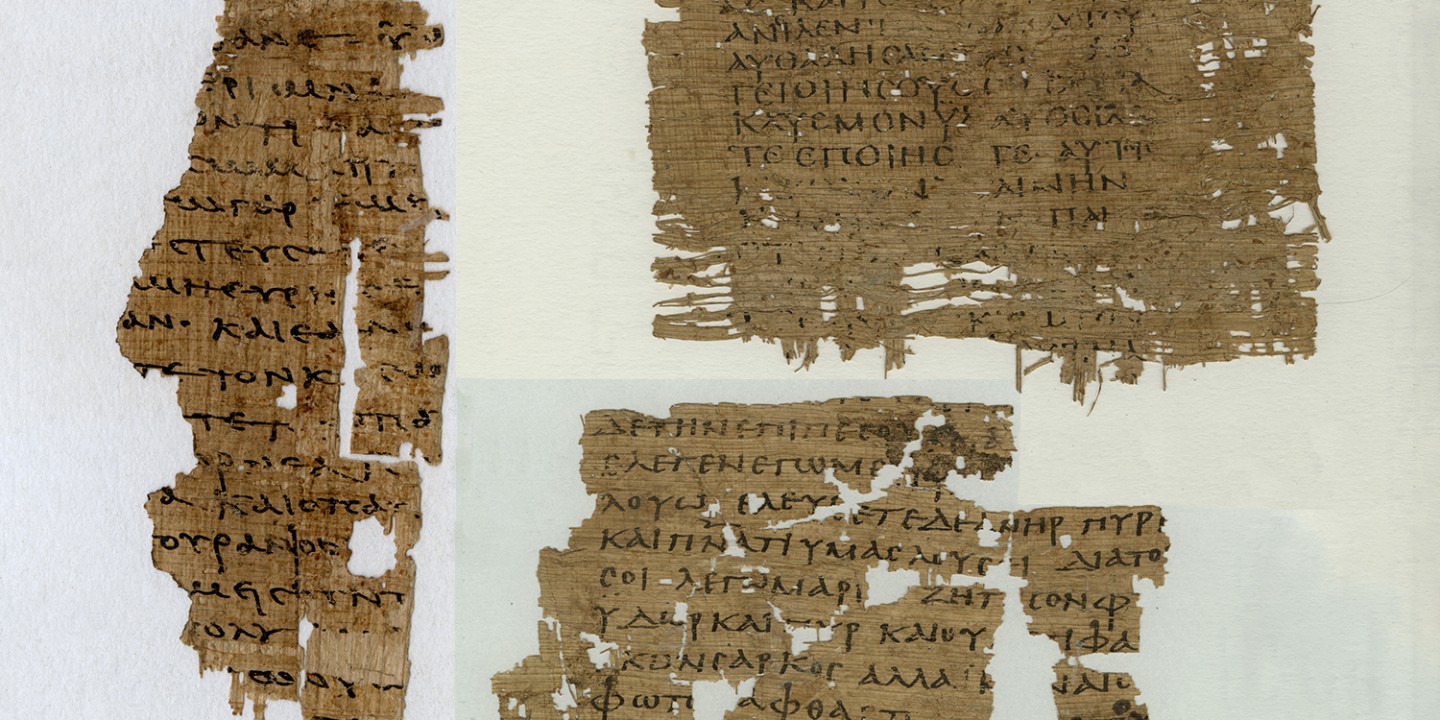
As M. David Litwa writes on The Gnostic Archive, the Nag Hammadi library alone "contains about fifty tractates total, many of them Christian, most of them previously unknown." The texts fall into three main categories — Sethian, Valentinian, and Hermetic — and include masterpieces like the Gospel of Truth (possibly by Valentinus himself), the Gospel of Philip, the Gospel of Thomas, and three copies of the Secret Book of John. A student interested in Valentinian theology needs Bentley Layton's The Gnostic Scriptures; someone exploring Manichaeism needs Jason BeDuhn's work; Mandaean studies require Jorunn Buckley. There is no single point of entry that covers the full landscape with scholarly rigor.
🔬 A Field Reshaping Itself in Real Time
The most consequential debates in Gnostic studies right now haven't reached mainstream awareness. A growing body of scholarship argues that Marcion's Gospel (Evangelion) may have preceded canonical Luke rather than being an abridgment of it. Litwa's book Marcion: Gospel of a Wholly Good God — praised by Jason BeDuhn as providing "a fresh start with Marcion" — argues for the chronological priority of Marcion's Gospel and dismantles the old heresiological portrait of Marcion as a simple ditheist and deletor.
Meanwhile, Litwa's Late Revelations presents a compelling argument that the canonical Gospels themselves were second-century compositions — "waves" of rolling traditions rather than static, finished works. As one reviewer noted, Litwa "points out many things in the gospels that other scholars have tried to connect to 70 AD, that could better fit 135 AD."
On the Bart Ehrman Blog, a March 2025 exchange illustrates the state of the debate: a reader asks where Marcionite Priority stands in current scholarship, and Ehrman responds that while "most scholars just don't buy it," he acknowledges that "Marcion had access to a form of Luke that differs from ours and that in some ways older than ours." The debate is live, contested, and consequential — and most popular resources present only one side.
Brill's Gnosis: Journal of Gnostic Studies has now reached Volume 11 — a decade of dedicated peer-reviewed scholarship on Gnostic traditions, with articles spanning Coptic Manichaean demonology, Valentinian sacramental theology, and the sociology of Gnostic spirituality.
💡 The Cultural Moment: Gnosticism Beyond the Academy
Gnostic ideas are experiencing a remarkable cultural resurgence. A January 2026 article in the Social Epistemology Review and Reply Collective analyzed "Gnostic Populism" — arguing that contemporary political movements on social media recapitulate ancient Gnostic patterns of "red-pilling," elect identity, and apocalyptic urgency. Harvard Divinity School's podcast explored Gnostic myth in films like The Matrix, Dark City, and Silo. Arthur Versluis's American Gnosis (Oxford University Press, 2024) examined neo-Gnostic symbolic systems in contemporary American society.
This cultural moment creates demand for understanding — but the gap between popular fascination and scholarly depth remains vast.
Why AI Gnostic Scholar Is the Best AI for This Field
AI Gnostic Scholar addresses every one of these challenges by providing an interactive, deeply knowledgeable discussion partner that covers the full spectrum of Gnostic traditions with scholarly rigor.
| Generic AI Chatbots | AI Gnostic Scholar |
|---|---|
| Surface-level answers from common knowledge | Deep domain-specific expertise across primary texts, heresiological sources, and current scholarship |
| No distinction between primary sources and hostile witnesses | Flags heresiological distortions and privileges primary-source evidence |
| Outdated scholarly consensus only | Informed by Litwa, Klinghardt, Vinzent, DeConick, Burns, and other researchers reshaping the field |
| Static responses — can't follow up or compare | Interactive discussion — ask follow-ups, request comparisons, go deeper across sessions |
| Generic reading recommendations | Specific translations, editions, and scholarly works matched to your level and interests |
| Treats "Gnosticism" as a monolithic category | Engages with the meta-question of whether "Gnosticism" is even a coherent category |
🔍 Primary-Source Specificity, Not Vague Summaries
When you ask this AI about a Gnostic text, it doesn't give you a Wikipedia-level overview. It references actual passages, engages with the commentarial tradition, and distinguishes between what the text says, what heresiologists claimed about it, and how modern scholars interpret the evidence. Ask about the Apocryphon of John and you'll get the Sethian cosmogony walked through step by step — from the Monad through Barbelo to Yaldabaoth's creation of the material world — with attention to the differences between the short and long recensions.
📖 The Heresiological Filter
This is the critical distinction that generic AI consistently misses. For centuries, nearly everything known about Gnostic traditions came from their enemies. AI Gnostic Scholar maintains a rigorous separation between what Irenaeus claimed about Valentinian theology and what the Gospel of Truth and Tripartite Tractate actually say. When someone says "Gnostics were just heretics," it pushes back with scholarly substance — pointing out that "heresy" is a power-category defined by historical winners, not an objective intellectual verdict.
🧠 Current Scholarly Awareness
Unlike static resources, the scholar is informed by the latest developments reshaping the field:
- Marcionite Priority — the hypothesis that Marcion's Evangelion preceded canonical Luke, with implications for Gospel dating and New Testament canon formation
- Litwa's reconstruction of Marcion — demolishing the old caricature and revealing Marcion as a sophisticated thinker who accused proto-orthodox Christians of interpolating his Gospel
- Late Gospel dating — arguments that the canonical Gospels are second-century compositions
- The ongoing "Gnosticism" category debate — navigating the tension between scholars who reject the term (following Michael Williams' Rethinking "Gnosticism" and Karen King's What Is Gnosticism?) and those who use it as a functional umbrella
How It Works: From First Question to Deep Research
Step 1: Ask Anything About Gnostic Traditions
Navigate to AI Gnostic Scholar and start with whatever brought you here. The agent adapts to your level automatically — no prerequisites, no intake form.
"I keep hearing about Gnosticism in connection with The Matrix. What were these ancient thinkers actually saying?"
Step 2: Go Deep on Any Text or Tradition
Follow up with specific questions. The agent references actual texts and passages rather than giving vague summaries.
"Walk me through the cosmogony in the Apocryphon of John — how does Sophia's error lead to Yaldabaoth?"
Step 3: Engage with Live Scholarly Debates
Ask about active controversies and the scholar presents competing positions with evidential transparency — not just one side.
"What's the current state of the Marcionite Priority debate? Where do Litwa, Klinghardt, and Ehrman disagree?"
Step 4: Compare Across Traditions and Philosophical Systems
Request comparative analysis across Gnostic systems or between Gnostic and non-Gnostic philosophical traditions.
"How does Valentinian emanation theory relate to Neoplatonic hypostases? Where do they diverge?"
Step 5: Get Specific Reading Recommendations and Resources
Ask for texts, translations, scholarly works, or quality media — the agent provides author, title, edition details, and context for why each recommendation matters.
"I want to start reading primary Gnostic texts. What translation should I begin with, and why?"
Who Benefits Most: Real Scenarios Across Diverse Audiences
📜 The Curious Newcomer Drawn by Pop Culture
Scenario: Someone who watched The Matrix or Silo and wants to understand the ancient ideas behind the storytelling.
Traditional approach: Read Wikipedia (surface-level), buy a book (uncertain which one), or watch YouTube videos (linear, can't ask questions).
With AI Gnostic Scholar: An immediate, interactive introduction that uses the inherent drama of Gnostic ideas — the Demiurge, the divine spark, the prison of matter — to build understanding. Points toward specific texts (Gospel of Thomas first, then Apocryphon of John) and quality channels like ESOTERICA and ReligionForBreakfast.
- Jargon-light explanations with technical terms introduced gradually
- Concrete entry points matched to the user's existing knowledge
- Honest about the diversity of Gnostic thought — not all systems are equally rigorous
💼 The Graduate Student Navigating a Rapidly Evolving Field
Scenario: A student preparing a seminar paper on Valentinian soteriology who needs to navigate competing scholarly interpretations and can't afford to miss recent publications.
Traditional approach: Weeks of library research, tracking down articles in Vigiliae Christianae and Numen, struggling to distinguish between outdated and current scholarly positions.
With AI Gnostic Scholar: Immediate engagement with the specific scholarly debate — distinguishing between what the Tripartite Tractate actually says, how Irenaeus characterized Ptolemaeus' system, and how modern scholars like Einar Thomassen and Ismo Dunderberg have interpreted the evidence. Can search Google Scholar for recent publications and generate structured study guides as PDFs.
- Primary-source specificity: references actual passages, not vague summaries
- Historiographic nuance: "Layton reads this passage as X, while DeConick argues Y"
- Generates exportable reading lists and comparative analyses
🎯 The Cross-Disciplinary Thinker
Scenario: A philosophy student interested in how Gnostic dualism relates to Zoroastrian cosmology, Platonic metaphysics, and existentialist thought — connections that rarely overlap in a single course.
Traditional approach: Requires expertise across multiple fields that no single textbook covers.
With this AI: Draws connections across philosophical and religious traditions — showing how Gnostic ideas weren't isolated eccentricities but part of a rich intellectual landscape spanning the ancient Mediterranean, Persia, and beyond. Connects ancient frameworks to modern philosophical resonances in existentialism, phenomenology, and political theory.
📱 The Commuter Who Just Heard Something Fascinating
Scenario: Someone listening to a History Valley interview with M. David Litwa on their commute, who wants to understand a point about Marcion's Evangelion in more depth — right now.
Traditional approach: Try to remember the question until they get home, then spend an evening searching.
With AI Gnostic Scholar: Pull out the phone, ask the question, get an immediate scholarly response that contextualizes Litwa's argument within the broader Marcionite Priority debate — referencing Klinghardt's reconstruction, Vinzent's dating arguments, and BeDuhn's analysis.
- Works on mobile via the Jenova app (iOS and Android)
- Voice input for hands-free questioning
- Concise responses that can expand on request

Frequently Asked Questions
Is AI Gnostic Scholar free to use?
Yes — AI Gnostic Scholar is accessible on Jenova's free tier with limited usage. Paid plans (starting at $20/month) provide significantly more usage, custom model selection, and additional features. All core scholarly capabilities are available at every tier.
What makes this the best AI for Gnostic studies compared to generic chatbots?
General-purpose AI assistants provide surface-level answers drawn from common knowledge. AI Gnostic Scholar is built with deep domain-specific instructions covering primary texts, heresiological sources, current scholarly debates (like Marcionite Priority and late Gospel dating), and quality media resources. It distinguishes between what primary sources say and what hostile witnesses claim — a critical distinction that generic AI consistently misses. It also tracks the field's own internal debates about whether "Gnosticism" is even a coherent category.
Can AI Gnostic Scholar help with academic research?
Yes. The agent can engage at full scholarly depth — discussing historiographic nuance, competing interpretations, and primary-source specificity. It can search Google Scholar for recent publications, recommend specific translations and editions (Layton, Meyer, Barnstone, Robinson), and generate structured study guides or reading lists as downloadable documents. It's designed to complement, not replace, primary research.
Does AI Gnostic Scholar promote Gnosticism as a religion?
No. The agent is explicitly a scholar and teacher, not a priest or spiritual director. It presents Gnostic traditions sympathetically — arguing that these thinkers deserve intellectual respect — but it doesn't offer devotional guidance or spiritual counsel. It discusses Gnostic spiritual practices academically while maintaining honest, objective assessments of individual systems.
What traditions does it cover beyond Sethian and Valentinian?
The coverage is deliberately wide: Sethian, Valentinian, Basilidean, Ophite, and Naassene systems; Manichaeism, Mandaeism, Bogomilism, and Catharism; Marcionism and Hermeticism; later influences in Kabbalah, William Blake, Carl Jung, and Philip K. Dick; and modern Gnostic revival movements. It also engages with the scholarly debate about whether "Gnosticism" is even a coherent category — a question central to the field since Michael Williams' Rethinking "Gnosticism" and Karen King's What Is Gnosticism?
Does it work on mobile?
Yes. AI Gnostic Scholar runs on Jenova's platform with full feature parity across web, iOS, and Android. Voice input is supported for hands-free questioning — useful when you're listening to a lecture and want to dig deeper on a point.
The Field Has Never Been More Alive — And You Can Join the Conversation
For nearly two millennia, Gnostic traditions were defined by their enemies, buried in the Egyptian desert, and dismissed as heresy. The discovery of the Nag Hammadi Library in 1945 began to change that. Now, a new generation of scholars — Litwa, DeConick, Burns, Brakke, King — is fundamentally reshaping how we understand these thinkers and their relationship to early Christianity. Cambridge University Press is publishing new introductions to the Secret Book of John. Brill's dedicated journal has reached its eleventh volume. Harvard is podcasting about Gnostic myth in Hollywood.
The best AI for Gnostic studies doesn't flatten this richness into fortune-cookie summaries. It engages with the primary texts, tracks the live scholarly debates, distinguishes between what ancient thinkers actually wrote and what their enemies claimed about them, and meets you wherever you are — from "What is Gnosticism?" to "Compare the soteriology of the Tripartite Tractate with Irenaeus' account of Ptolemaeus."
The Gnostics believed that knowledge — gnosis — was the path to liberation. Get started with AI Gnostic Scholar and see what you discover.