Best AI for Fashion Mockup Photography: Campaign-Ready Imagery Across 7+ Global Markets in Minutes
2026-03-16

Finding the best AI for fashion mockup photography means finding a tool that doesn't just place garments on generic models — it understands how a silk charmeuse catches light differently than a matte crepe, how Seoul's visual language differs from Milan's, and why a bias-cut dress demands different posing than a structured blazer. AI Fashion Mockup Studio delivers exactly that: a photorealistic fashion photography engine built on deep garment construction knowledge, culturally precise market archetypes, and the creative direction instincts of a senior art director. Over 31,000 fashion brands and independent designers have used it to produce campaign-ready imagery — cutting their visual production timelines from weeks to hours while maintaining the editorial quality their customers expect.
✅ Photorealistic model photography indistinguishable from real studio shoots ✅ 7+ culturally optimized market archetypes — Seoul, Tokyo, Gulf, European editorial, US lifestyle & more ✅ Fabric-accurate draping, texture rendering, and garment construction intelligence ✅ Full creative direction — lighting, styling, composition, and brand guideline adherence ✅ Batch production with lookbook compilation, PDF export, and cloud delivery
The fashion industry spent an estimated $4.4 billion on AI solutions in 2025, and that figure is accelerating at a 39% compound annual growth rate. But most AI image generators treat fashion as just another image category. Here's why the best AI for fashion mockups requires specialized expertise — and what that expertise actually looks like in practice.
Quick Answer: What Is AI Fashion Mockup Studio?
AI Fashion Mockup Studio is a photorealistic fashion photography tool that generates studio-grade images of garments on models, adapted for specific global markets and brand aesthetics, from a single garment photo or description.
Unlike generic AI image generators, AI Fashion Mockup Studio operates as a creative director with deep fashion domain knowledge — understanding fabric physics, garment construction, proportion theory, and the distinct visual languages of international fashion markets.
Key capabilities:
- Generate photorealistic on-model photography from garment photos, flat lays, or text descriptions
- Apply market-specific visual production packages for Western, Korean, Japanese, Chinese, European, and Gulf audiences
- Produce e-commerce, editorial, campaign, and social media imagery with platform-native formatting
- Compile full lookbooks, batch assets, and PDF presentations in a single session
- Iterate through natural language — adjust lighting, styling, posing, and composition conversationally
Why Fashion Brands Can't Use Generic AI Image Generators
The fashion photography problem isn't a technology problem — it's a knowledge problem. Generic AI image generators can produce images of people wearing clothes. But the gap between "a person in a dress" and "a campaign-ready editorial photograph that communicates brand positioning, respects fabric behavior, and converts in a specific market" is enormous.
The global fashion e-commerce market reached [$781.5 billion in 2024](https://www.statista.com/outlook/emo/fashion/worldwide) and is projected to exceed $1.2 trillion by 2029 — making visual content the single most important competitive differentiator for online fashion brands.
Products with high-quality images achieve 94% higher conversion rates than those with low-quality alternatives — and in fashion specifically, where customers can't touch or try on products, photography carries even more weight.
Here's where fashion brands hit walls with both traditional production and generic AI tools:
- Traditional shoots cost $1,500–$25,000+ per day — models, photographers, stylists, studios, and post-production
- Generic AI produces "uncanny valley" fashion — fabric that doesn't drape correctly, lighting that doesn't match the garment's material, styling that feels random rather than intentional
- Multi-market adaptation multiplies costs — reshooting for Seoul, Dubai, and New York means 3× the budget
- Speed-to-market pressure is intensifying — fast fashion brands now operate on 1–2 week design-to-shelf cycles, and visual content is the bottleneck
- Catalog scale overwhelms traditional workflows — a brand with 200 SKUs needing 5 images each across 3 markets needs 3,000 photographs per season
💸 The Production Cost Crisis for Independent Brands
For small and mid-size fashion brands — the fastest-growing segment of the industry — the economics of traditional photography are punishing. According to Outfica's 2025 analysis, a single traditional fashion photoshoot costs between $2,000 and $5,000 for small brands. A 50-piece seasonal collection requiring front, back, and detail views — plus lifestyle shots for social media — can easily reach $15,000–$30,000 in photography costs alone.
68% of fashion brands exceed their photoshoot budgets — Nfinite survey via Autophoto
This forces independent designers into an impossible trade-off: invest in professional imagery they can't afford, or launch with subpar visuals that undermine their brand positioning and conversion rates.
🌍 The Multi-Market Visual Language Problem
Fashion photography isn't universal. What reads as "aspirational" in one market can feel "cold" or "irrelevant" in another. The visual conventions — model casting, lighting setups, posing vocabulary, background aesthetics, and styling approaches — vary dramatically across regions.
A Korean e-commerce customer expects bright, diffused lighting with a polished, youthful model aesthetic. A European luxury buyer expects high-contrast, editorial drama with minimal expression. A Gulf market shopper expects warm tones, architectural elegance, and graceful composition. Traditionally, serving these markets meant separate photoshoots with separate creative teams — multiplying costs by the number of target regions.
⚡ The Speed-to-Market Gap
The fashion industry's content velocity has accelerated dramatically. Shopping-related generative AI searches grew 4,700% between July 2024 and July 2025 according to The Business of Fashion's State of Fashion 2026 report. Social commerce, live shopping, and AI-powered product discovery are creating demand for more visual content, faster, across more platforms — and traditional production simply can't keep pace.
What Makes This the Best AI for Fashion Mockup Photography
AI Fashion Mockup Studio isn't a generic image generator with a fashion filter. It's a purpose-built fashion photography system that combines three layers of expertise most AI tools lack entirely: garment construction knowledge, fabric physics simulation, and culturally precise market adaptation.
| Generic AI Image Generators | AI Fashion Mockup Studio |
|---|---|
| Treats all fabric the same — silk looks like cotton | Applies fabric-specific physics — silk flows, denim holds, knits stretch |
| Random model selection with no market context | 7+ culturally precise market archetypes with complete visual packages |
| One-size-fits-all lighting and composition | Lighting, posing, and styling adapted to garment type and market |
| No understanding of garment construction | Knows how raglan sleeves sit differently than set-in sleeves on camera |
| Flat, template-derived backgrounds | Contextual backgrounds that complement the garment's positioning |
| No brand consistency across outputs | Intelligent brand guideline inference and aesthetic consistency |
| Requires detailed technical prompts | Operates like a creative director — understands fashion briefs naturally |
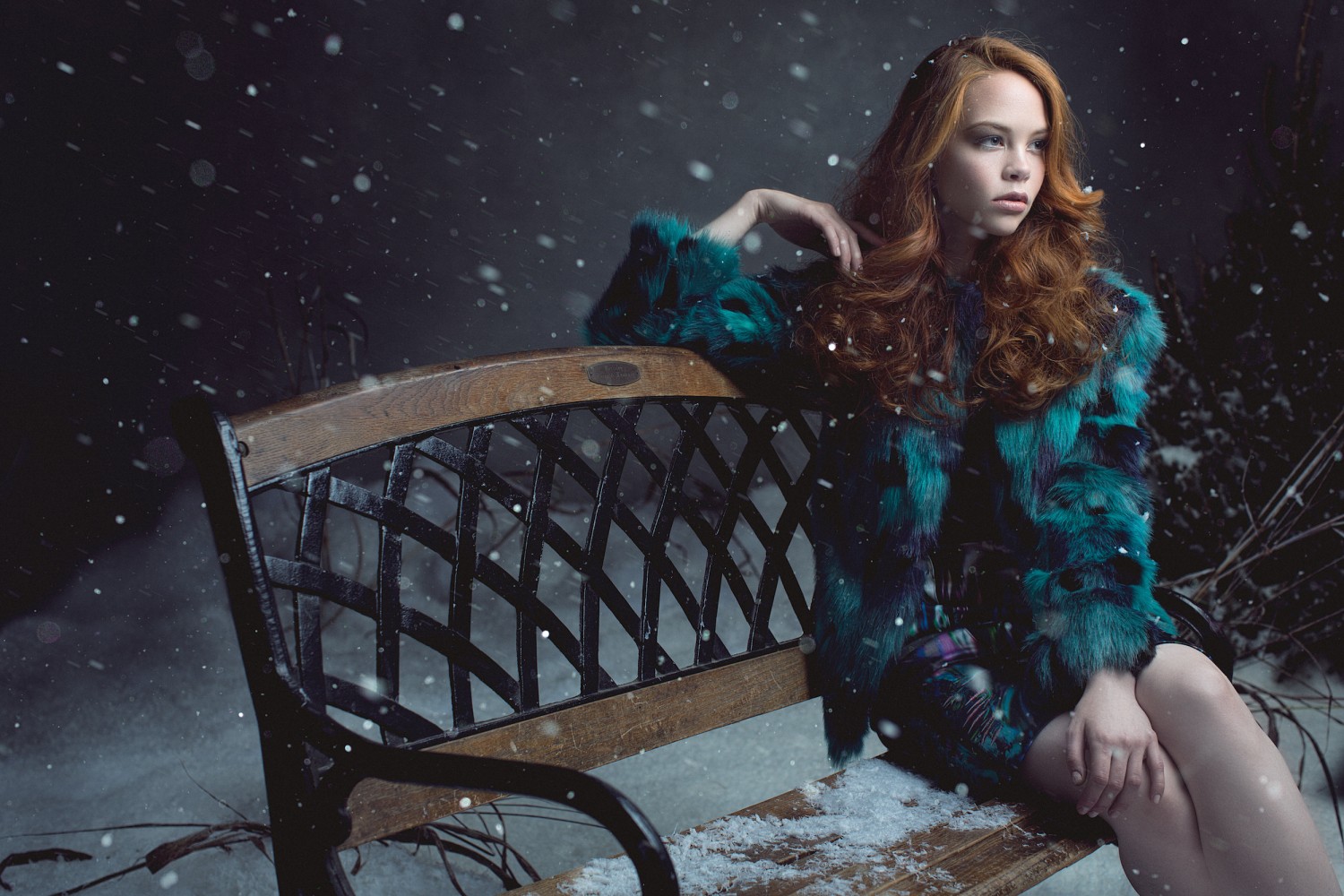
🧵 Garment Construction Intelligence
The difference between convincing fashion photography and obvious AI-generated imagery almost always comes down to how the garment behaves on the body. AI Fashion Mockup Studio understands garment construction at a level that generic tools simply don't:
- Sleeve architecture — How a raglan sleeve creates a different shoulder line than a set-in sleeve. How a dolman sleeve's volume distribution changes with arm position.
- Cut and drape — How a bias cut creates fluid, body-skimming movement versus a straight grain's structured silhouette. How a princess seam shapes differently than darts.
- Proportion and balance — How hemline placement, waistline positioning, and volume distribution create visual harmony. When oversized proportions work versus when they overwhelm.
- Construction details — How topstitching catches light. How a welt pocket sits versus a patch pocket. How a notch lapel reads differently than a peak lapel.
🎨 Fabric Physics That Pass Professional Scrutiny
Fabric behavior is the single biggest tell between a convincing fashion image and an obvious fake. This AI applies material-specific rendering:
- Silk and satin — Catches light with characteristic luster, flows with gravity, creates soft folds at stress points
- Denim — Holds structure, shows fade patterns, creases at joints with characteristic stiffness
- Knits — Stretches and recovers, shows gauge texture, drapes with weight-dependent behavior
- Wool — Displays surface texture, holds tailored shape, shows natural body and recovery
- Leather — Reflects light with characteristic sheen, holds form, shows natural grain variation
- Sheer fabrics — Reveals appropriate layering, catches light differently than opaque materials
🌏 Research-Backed Market Archetypes
Rather than simply swapping model ethnicities, the tool applies complete visual production packages based on how fashion photography actually operates in each market:
| Market | Model Aesthetic | Photography Style | Styling Approach |
|---|---|---|---|
| Western / US | Diverse casting, athletic builds, authenticity-forward | Natural lighting, lifestyle settings | Relatable, accessible posing |
| European Luxury | Tall, angular, editorial bone structure | High-contrast, dramatic, cinematic | Minimal expression, garment-as-art |
| Korea (Seoul) | Slim, youthful, "glass skin" aesthetic | Bright, soft, diffused lighting | Coordinated, aspirational, polished |
| Japan (Tokyo) | Varied, subculture-dependent, character-driven | Texture-rich, atmospheric, mood-specific | Layering mastery, individual aesthetic |
| China (Mainland) | Aspirational, confident, status-signaling | Rich saturated color, luxurious settings | Direct posing, culturally precise |
| Middle East / Gulf | Elegant, modest, quality-focused | Warm tones, architectural backdrops | Graceful, composed, color-confident |
| Scandinavian | Clean, natural, understated beauty | Bright, airy, minimal shadows | Effortless, functional elegance |
Each archetype isn't just a model swap — it's a complete visual production package encompassing lighting setup, background selection, posing conventions, styling philosophy, and color grading that resonates authentically with the target audience.
How It Works: From Garment to Campaign in Five Steps
Step 1: Provide Your Garment
Upload a product photo, a flat lay, a tech pack, or simply describe the garment in detail. AI Fashion Mockup Studio accepts any input method — and you can combine them:
"I have this linen blazer [uploaded photo]. Style it with relaxed trousers and leather sandals for a Mediterranean resort collection."
The AI analyzes the garment's construction, fabric, color, and positioning to inform every downstream decision.
Step 2: Define Your Production Brief
Specify your target market, output format, and brand direction. The AI applies intelligent defaults when you keep it simple:
"E-commerce product shots for the Korean market. Clean studio background. Our brand aesthetic is quiet luxury — think The Row meets COS."
If you don't provide brand guidelines, the tool infers aesthetic direction from the garment itself — a bold printed silk piece triggers richer, more dramatic staging, while a minimal linen piece gets clean, bright production.
Step 3: Customize or Use Smart Defaults
Choose specific model characteristics — body type, age range, pose, expression, hair styling — or let the market archetype system handle it automatically. The AI selects the complete visual package: model appearance, lighting setup, background, and posing conventions.
"Use the Gulf market archetype, but with an outdoor garden setting instead of studio. The model should be wearing a hijab styled loosely."
Step 4: Generate, Evaluate, and Iterate
The AI produces photorealistic photography with built-in quality gating. It evaluates each image against professional standards for fabric realism, garment accuracy, anatomical integrity, and brand coherence — automatically diagnosing and regenerating if the output doesn't meet standards.
Iteration is conversational:
"Warmer golden-hour lighting. Show the garment from a three-quarter angle. Add a structured leather tote as an accessory."
Step 5: Export and Deliver
Download individual images, compile full lookbooks as PDFs, or send assets directly via email, Google Drive, Dropbox, or Notion. Batch production maintains visual consistency across an entire collection — same lighting temperature, same shadow style, same brand aesthetic from piece 1 to piece 50.
Who Benefits Most: Real-World Scenarios
📊 The DTC Brand Launching a 60-Piece Collection
Scenario: An independent womenswear brand needs product imagery for their Shopify store, Instagram shop, and wholesale lookbook — 60 pieces, each requiring front, back, and lifestyle views.
Traditional approach: 4–5 full-day shoots at $3,000–$5,000 each, plus 2–3 weeks of post-production. Total: $15,000–$25,000 and 5–7 weeks.
With AI Fashion Mockup Studio: Upload garment photos, set the brand aesthetic and output style, generate all views for all 60 pieces in a single extended session. Consistent model, consistent lighting, consistent brand voice across every product.
- ✅ Entire collection photographed in hours, not weeks
- ✅ Multiple angles and styling contexts per garment at no additional cost
- ✅ Consistent visual identity that builds catalog-level brand trust
🌍 The Luxury Brand Entering Three New Markets
Scenario: A European accessories brand expanding into Korea, the Gulf, and the US needs market-adapted campaign imagery for a new handbag line.
Traditional approach: Three separate photoshoots with different creative teams, models, and locations. Budget: $40,000–$80,000+. Timeline: 6–8 weeks.
With this AI-powered solution: Upload the handbag once. Generate three distinct campaign sets — each with culturally precise model archetypes, lighting conventions, styling, and background aesthetics. The Korean version gets bright, polished, aspirational visuals. The Gulf version gets warm, elegant, architecturally-framed compositions. The US version gets diverse, lifestyle-oriented imagery.
- ✅ One garment input, three culturally authentic campaign sets
- ✅ Each output speaks the visual language of its target market
- ✅ Total cost and time: a fraction of traditional multi-market production
📱 The Fast-Fashion Content Engine
Scenario: A fast-fashion retailer drops 30+ new styles weekly and needs Instagram, TikTok, and Pinterest content for each — different aspect ratios, different styling, different seasonal context.
Traditional approach: Dedicated in-house content team or agency retainer at $8,000–$20,000/month. Constant bottlenecks during peak drop periods.
With AI Fashion Mockup Studio's capabilities: Generate platform-native content at the speed of drops. Instagram grid posts with editorial styling. TikTok-friendly vertical crops with trend-forward aesthetics. Pinterest lookbook compilations. All maintaining brand consistency while adapting to each platform's visual language.
- ✅ Content velocity matches product velocity — no more visual bottlenecks
- ✅ Platform-specific formatting and styling applied automatically
- ✅ Trend-responsive imagery without reshooting
🎨 The Designer Validating a New Collection
Scenario: A fashion designer wants to visualize how new garment designs will look on different body types and in different styling contexts before committing to physical sampling.
With AI Fashion Mockup Studio: Describe the garment's construction, fabric, and color palette. Generate mockups showing it on multiple model archetypes — tall and angular for editorial evaluation, diverse body types for commercial viability, different styling approaches to explore creative direction. All before cutting a single piece of fabric.
- ✅ Validate design decisions visually before physical production
- ✅ Test market positioning across different regional aesthetics
- ✅ Reduce sample waste and accelerate the design-to-market cycle
💼 The Wholesale Brand Building a Buyer Presentation
Scenario: A brand preparing for a trade show needs a polished lookbook showcasing their upcoming collection — but physical samples won't arrive in time for a traditional shoot.
With the tool: Generate photorealistic on-model imagery from tech packs and fabric swatches. Compile a professional PDF lookbook with consistent styling, sequenced by collection story. Present to buyers with imagery that communicates the full creative vision — before production is complete.
- ✅ Lookbook ready before samples arrive
- ✅ Professional presentation quality that builds buyer confidence
- ✅ Easy iteration if buyers request styling or color modifications
Frequently Asked Questions
Is AI Fashion Mockup Studio free to use?
AI Fashion Mockup Studio is available on Jenova's free tier with limited usage — enough to test the tool and generate initial mockups. For brands producing content at scale, paid plans starting at $20/month offer significantly more usage capacity, custom model selection, and watermark-free outputs.
How realistic are the generated images compared to real photography?
The tool is built with photorealism as its non-negotiable standard. Every generated image is designed to read as a real photograph — with natural skin texture, authentic fabric draping, realistic lighting with natural shadow falloff, and professional composition. The system includes built-in quality gating that evaluates each image against professional photography standards and automatically regenerates if it doesn't pass.
Can I upload my own model or brand reference photos?
Yes. You can upload reference photos of specific models, and the AI will generate new imagery maintaining that model's appearance in different outfits, poses, and settings. You can also upload brand guidelines, mood boards, and competitor references to guide the aesthetic direction.
How does it handle different fabric types?
This is one of the tool's core differentiators. AI Fashion Mockup Studio applies fabric-specific physics to every generation — silk flows with characteristic luster, denim holds structure with natural creasing, knits stretch and recover, and sheer fabrics layer appropriately. Fabric behavior is evaluated as part of the quality gating process.
Does it work for menswear, womenswear, and accessories?
Yes. The tool covers all gender presentations and garment categories — menswear tailoring, womenswear, androgynous styling, accessories, footwear, and more. Market archetypes adapt accordingly, and you can specify any model characteristics regardless of garment category.
Can I generate a full lookbook in one session?
Absolutely. AI Fashion Mockup Studio supports multi-image sessions where you can generate an entire collection's worth of photography, then compile it into a PDF lookbook, export individual images, or send assets directly via email, Google Drive, Dropbox, or Notion. Batch production maintains visual consistency across every piece.
Does it work on mobile?
Yes. The tool works across web, iOS, and Android with full feature parity. You can upload garment photos from your phone's camera, generate mockups, and iterate on results from any device — practical for designers working from showrooms, factories, or on the go.
The Economics of Fashion Photography Have Changed
The global AI in fashion market was valued at [$2.23 billion in 2024](https://www.precedenceresearch.com/ai-in-fashion-market) and is projected to reach $60 billion by 2034. Shopping-related generative AI searches grew 4,700% in a single year. The brands that continue relying exclusively on traditional photoshoots — at $1,500–$25,000 per day — will find themselves outpaced by competitors producing more content, faster, across more markets, for a fraction of the cost.
AI Fashion Mockup Studio represents the best AI for fashion mockup photography because it combines what generic tools can't: deep garment construction knowledge, fabric-accurate rendering, culturally precise market adaptation, and the creative direction instincts of a senior art director. It doesn't replace creative vision — it removes the logistical and financial barriers between that vision and professional execution.
Upload a garment. Set your market. Get campaign-ready photography that understands fashion as deeply as any creative director on set.