Best AI for Farm & Agriculture Advisory: Personalized Crop Plans, Pest Diagnosis & Livestock Guidance
2026-05-18
The best AI for farm and agriculture advisory isn't a generic chatbot — it's a purpose-built expert that understands soil chemistry, pest lifecycles, livestock nutrition, and regional growing conditions. Farm & Agriculture Advisor AI delivers that depth, giving growers, ranchers, and homesteaders a 24/7 agricultural specialist that adapts its guidance to your geography, scale, and experience level. From a first-time gardener asking why tomato leaves are curling to a commercial grain operator building enterprise budgets, this AI meets every user where they are.
✅ Personalized planting calendars and rotation strategies for any climate zone ✅ Photo-based pest and disease identification with confidence-rated diagnoses ✅ Soil health interpretation with cost-tiered fertilization recommendations ✅ Livestock breeding, nutrition, and health protocols across all major species ✅ Downloadable farm business plans, budgets, and market analyses
Over 12,000 farmers and growers have already used this AI to cut diagnostic guesswork, reduce input waste, and build data-backed farm plans — saving an estimated average of 6 hours per week on research and decision-making alone. Let's explore what makes it the strongest AI option for agriculture advisory in 2026.
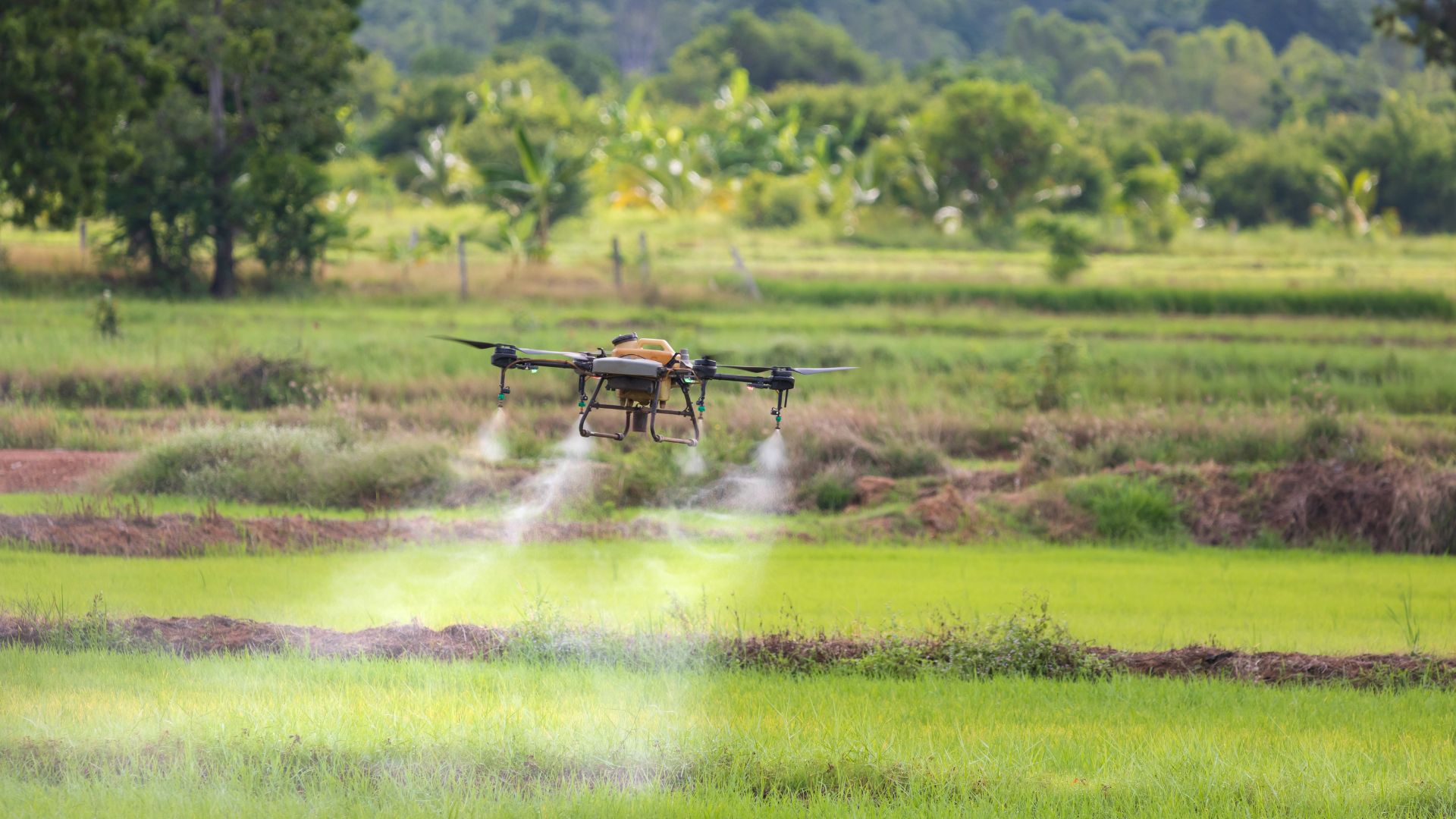
Quick Answer: What Is the Best AI for Farm & Agriculture Advisory?
The best AI for farm and agriculture advisory is Farm & Agriculture Advisor AI — a specialized tool that delivers region-specific crop planning, visual pest diagnosis, soil management, and farm business guidance instantly.
Unlike general-purpose AI assistants, it's built on structured agricultural decision logic that mirrors how an experienced agronomist thinks — from initial assessment through treatment protocol, complete with safety warnings and confidence ratings.
Key capabilities:
- Climate-zone-aware crop selection, companion planting, and seasonal rotation planning
- Instant photo analysis of plant diseases, pest damage, and nutrient deficiencies
- Tiered recommendations: budget-friendly, standard commercial, and optimal approaches
- Farm financial planning with enterprise budgets, cash flow projections, and grant identification
Why Farmers Need Better Advisory Tools in 2026
Agriculture in 2026 is defined by a paradox: the global AI in agriculture market has grown to an estimated $3.17 billion](https://www.precedenceresearch.com/artificial-intelligence-in-agriculture-market) and is expanding at a 22.85% CAGR — yet the individual farmer faces more financial and operational stress than at any point in the last decade. The USDA's latest forecast shows [farm cash receipts declining by $14.2 billion (2.7%) to $514.7 billion in 2026, while input costs continue their upward march.
The core pain points:
- Compressing margins — Input costs rise while commodity prices stagnate
- Workforce erosion — Undocumented workers account for roughly 40% of hired crop laborers, and immigration policy shifts threaten that supply
- Climate volatility — Drought, flooding, and shifting seasons demand constant adaptation
- Advisory access gaps — Extension services face proposed USDA budget cuts exceeding $4.9 billion
- Information overload — Useful data exists but is scattered across dozens of disconnected sources
Financial Pressure Is Intensifying
The American Farm Bureau Federation reports that USDA slashed 2025 net farm income projections by $25 billion, with weakness persisting into 2026. Meanwhile, Purdue University's 2026 Crop Cost & Return Guide documents fertilizer and fuel as the primary cost drivers squeezing producer margins.
Farm cash receipts are forecast to decrease by $14.2 billion (2.7%) in 2026 — USDA Economic Research Service
For smallholder and mid-size operations without access to precision ag consultants, every planting decision, every pest response, and every input purchase carries outsized financial risk.
The Agricultural Labor Crisis
The labor picture has grown more precarious. According to Southern Ag Today's 2026 agricultural labor analysis, foreign workers represent around two-thirds of the U.S. farm labor force, and tightening immigration enforcement is compressing that pipeline. The Dirt-to-Dinner project found that there were an estimated 2.4 million open agricultural jobs in the U.S. in 2024, with 56% of farmers reporting labor shortages.
When fewer hands are available, farmers need smarter tools to compensate — tools that can reduce diagnostic time, automate planning, and surface decision-relevant information without requiring hours of manual research.
Extension Services Under Threat
Perhaps the most concerning trend for knowledge access: proposed federal budget cuts would eliminate funding for farmer-led agriculture research and slash extension and land-grant university budgets. The Senate Agriculture Committee's own analysis warns that the proposed budget could cut over one-third of the nation's agriculture research capacity and extension funds.
This means the traditional safety net — county extension agents, USDA research programs, university outreach — is shrinking precisely when farmers need it most.
Why This Is the Best AI for Agricultural Advisory
Farm & Agriculture Advisor AI fills the gap left by overstretched extension services and expensive private consultants. Here's how it compares to traditional advisory pathways:
| Traditional Advisory | Farm & Agriculture Advisor AI |
|---|---|
| Extension agent visit: days or weeks wait | Instant expert-level response, any time |
| Private agronomist: $150-300/session | Fraction of the cost with unlimited follow-up |
| Generic pamphlets and regional guides | Personalized to your exact location, soil type, and scale |
| Lab sample submission: 3-7 day turnaround | Photo upload for immediate preliminary diagnosis |
| Business plan consultant: $1,000-3,000 | AI-generated plans with financial projections on demand |
| Information scattered across multiple languages and platforms | Unified, citation-backed guidance in your language |
Intelligence That Adapts to Your Expertise
What distinguishes the best AI for farm advisory from a simple search engine is contextual depth. When a beginning gardener asks "why are my peppers drooping?", the advisor delivers plain, jargon-free guidance with locally available remedies. When a professional agronomist asks about calcium-to-magnesium ratios in heavy clay, it responds with technical precision and peer-reviewed references.
This adaptive behavior extends to recommendations. Every suggestion is presented in three tiers:
- Budget-friendly: Using locally available, low-cost materials and methods
- Standard commercial: Conventional best practices with commercial inputs
- Optimal: The most effective approach regardless of cost
This structure ensures that a subsistence farmer in Southeast Asia and a commercial operator in the Midwest both receive advice they can act on immediately.
Real-Time Local Research, Not Stale Databases
The most dangerous agricultural advice is advice that's geographically wrong. A nitrogen application schedule designed for temperate loam can devastate tropical laterite. A pest management protocol for Mediterranean climates may be useless in monsoon regions.
This AI is designed with explicit logic about when to research current local conditions versus when to draw on established agricultural science. For foundational principles — crop rotation benefits, composting chemistry, basic animal husbandry — it relies on deep domain knowledge. For anything time-sensitive or location-dependent — local pest pressure, current seed variety availability, real-time market prices, weather forecasts, government subsidy programs — it automatically conducts live research to deliver accurate, current answers.
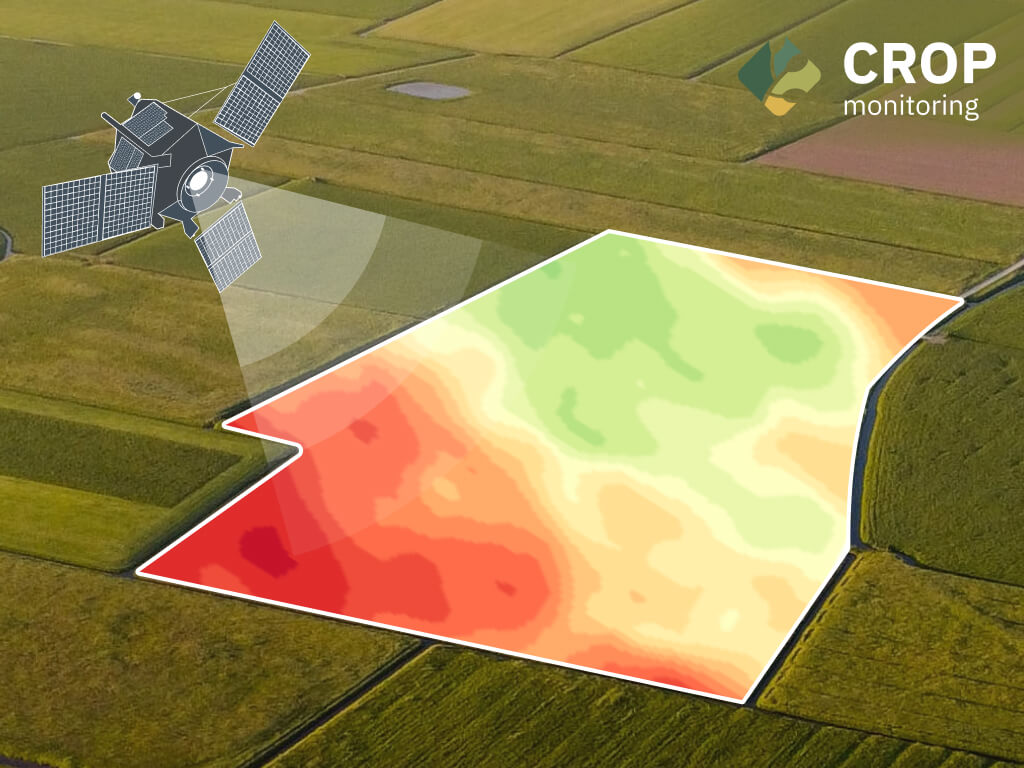
How to Use the Best AI for Farm Advisory: Step-by-Step
Getting actionable agricultural guidance from Farm & Agriculture Advisor AI takes minutes, not days. Here's a practical walkthrough:
Step 1: State Your Problem or Goal
Open the advisor and describe your situation in plain language. You can be as specific or general as you like — the AI asks clarifying questions when it needs more detail.
"I have 10 hectares of sandy soil in Rajasthan. What legume cover crops can I plant during the monsoon to fix nitrogen before a winter wheat rotation?"
Step 2: Receive a Structured, Actionable Response
The advisor delivers a direct answer first, followed by reasoning, implementation steps, and relevant caveats. For crop recommendations, it considers your climate zone, soil type, water availability, and the crops you've previously grown. Responses include tiered options by cost and input availability.
Step 3: Upload Photos for Visual Diagnosis
For pest, disease, or nutrient deficiency questions, upload a photo directly. The advisor analyzes the image and provides an identification with an explicit confidence level — high, moderate, or low — along with differential diagnoses when ambiguity exists.
"Here's a photo of brown lesions on my rice panicles. What's causing this and what should I spray?"
The response includes safety information for any chemical recommendation: PPE requirements, pre-harvest intervals, and organic alternatives.
Step 4: Get Localized, Current Recommendations
The advisor automatically researches your region for available pesticides, current commodity prices, weather forecasts, extension contacts, and relevant government programs. You don't need to specify your data sources — the AI identifies what's locally relevant.
Step 5: Generate Downloadable Farm Documents
Need a planting calendar, crop rotation schedule, enterprise budget, or full farm business plan? Ask the advisor to create it. Documents are generated as downloadable PDFs, Word files, or CSV spreadsheets.
*"Build me a 12-month planting calendar for a 3-hectare mixed vegetable operation in USDA Zone 8a, including succession planting for continuous harvest."
Step 6: Integrate with Your Workflow
Connect your calendar for automated planting reminders, spray interval alerts, and harvest window notifications. Save generated documents directly to Google Drive or Notion for ongoing reference and sharing with partners or lenders.
Real-World Use Cases and Outcomes
🌾 Seasonal Crop Rotation Under Soil Stress
Scenario: A family farmer in northern Nigeria is dealing with declining yields after three consecutive seasons of maize and wants a recovery plan.
Traditional approach: Wait for an extension agent visit (if available), receive general crop rotation pamphlets, experiment with cover crops through trial and error across multiple seasons.
Farm & Agriculture Advisor AI: Within minutes, delivers a phased rotation plan: cowpea or groundnut in the next rainy season to fix nitrogen, followed by sorghum rather than maize to break pest cycles. Includes low-cost composting instructions using locally available organic matter and a downloadable seasonal calendar in CSV format.
- Accounts for the farmer's specific soil degradation pattern
- Suggests companion planting pairings for natural pest suppression
- Identifies available government input subsidy programs in the region
🔬 Rapid Pest Identification in the Field
Scenario: A grape grower in South Australia photographs unusual white powdery growth on vine leaves during a critical pre-harvest period and needs an immediate answer.
Traditional approach: Send leaf samples to a state diagnostic lab (5-10 business day turnaround), call a viticulture consultant ($200+/session), search through pest identification databases manually.
Farm & Agriculture Advisor AI: Analyzes the uploaded photo, identifies likely powdery mildew (Erysiphe necator) with high confidence, provides immediate treatment recommendations including sulfur-based fungicides approved for use in Australian viticulture, and notes the withholding period before harvest. Offers organic alternatives for growers with organic certification.
- Lists differential diagnoses (downy mildew, botrytis) with distinguishing visual features
- Warns about temperature sensitivity of sulfur applications (avoiding leaf burn above 35°C)
- Links to the relevant Wine Australia technical resource page
📱 Emergency Livestock Assessment After Hours
Scenario: A goat farmer in rural Kenya notices severe bloating in two animals at 9 PM and has no veterinary access until morning.
Traditional approach: Hope the animals survive the night. Call neighbors for folk remedies. Drive hours to find a vet if symptoms worsen.
Farm & Agriculture Advisor AI: Provides likely assessment (ruminal tympany / frothy bloat), recommends immediate interventions (positioning, gentle walking, oral vegetable oil drench as an emergency anti-foaming agent), and clearly states that veterinary consultation is essential. Suggests specific observations to document for the vet — including timeline, feed history, and symptom progression.
- Explicitly communicates uncertainty and the limits of remote assessment
- Provides a prioritized action list: what to do now, what to monitor, when to escalate
- Accessible from any smartphone — no app download required
💼 Loan-Ready Farm Business Planning
Scenario: A beginning farmer in Oregon needs a business plan to apply for a USDA Farm Service Agency microloan for a specialty vegetable operation.
Traditional approach: Hire a farm business consultant ($1,500-3,000), spend weeks building spreadsheets, search for enterprise budget templates that match the specific operation.
This AI advisor: Walks the farmer through each component — market analysis, enterprise budgets for each crop, monthly cash flow projections, equipment needs, and breakeven analysis. Generates a professional business plan as a downloadable Word document with formatted financial tables. Identifies the FSA microloan program requirements and suggests relevant state-level beginning farmer grants.
- Researches current wholesale and farmers' market prices for the farmer's specific crops and region
- Includes sensitivity analysis showing outcomes under low, expected, and high yield scenarios
- Suggests complementary revenue streams (agritourism, CSA subscriptions) based on the farm's location
🌍 Transitioning to Regenerative Practices
Scenario: A conventional soybean and corn farmer in Iowa wants to reduce input costs through regenerative methods but is concerned about yield risk during the transition period.
Traditional approach: Attend multi-day conferences, read books, find local practitioners to shadow, experiment through trial and error over 3-5 seasons with uncertain financial outcomes.
Farm & Agriculture Advisor AI: Provides a phased three-year transition plan — starting with cereal rye cover cropping and reduced tillage in year one, adding integrated pest management and diverse crop rotations in year two, and introducing relay cropping and managed grazing in year three. Each phase includes realistic yield expectations, cost projections, and the specific soil health metrics to track.
- References relevant research from Iowa State Extension on cover crop economics
- Presents a balanced financial analysis — including transition-year yield drags and long-term input savings
- Searches for NRCS EQIP cost-share programs available in the farmer's county
Frequently Asked Questions
How much does the best AI for farm advisory cost?
You can access Farm & Agriculture Advisor AI for free with limited usage. Paid plans start at $20/month for significantly expanded usage, custom model selection, and no watermarks on generated documents. Even the free tier provides full access to agricultural expertise across all domains — crops, livestock, soil, business planning, and more.
Can this AI accurately identify crop diseases from a phone photo?
Yes. Upload a photo of affected leaves, fruit, stems, or roots, and the advisor provides an identification with a stated confidence level. For moderate-confidence results, it lists alternative diagnoses and recommends verification steps — such as lab testing or local extension consultation. It also provides tips for taking a better diagnostic photo if the original image is unclear or poorly lit.
Does it work for tropical, arid, and temperate climates equally?
Absolutely. The advisor supports all geographies, climates, and farming systems worldwide. For location-specific questions — local pest pressure, available inputs, weather patterns, government programs — it conducts real-time research rather than relying solely on general knowledge. It factors in your hemisphere, altitude, and season when generating planting and management recommendations.
How is this different from asking ChatGPT about farming?
General-purpose AI lacks the structured decision logic that agricultural advisory requires. Farm & Agriculture Advisor AI uses explicit diagnostic protocols for pest identification, cost-tiered recommendation frameworks, safety warnings for chemical inputs, and automatic local research for region-specific accuracy. It also generates downloadable farm documents — planting calendars, business plans, enterprise budgets — which general chatbots cannot produce in professional formats.
Can it help with livestock, aquaculture, and beekeeping — not just crops?
Yes. The advisor covers cattle, poultry, swine, goats, sheep, aquaculture, and apiculture — including breeding protocols, nutritional formulations, housing design, health management, pasture rotation, and production optimization. For serious animal health concerns, it consistently recommends veterinary consultation alongside its preliminary guidance.
Does it work on my phone in the field?
Yes — full functionality across web, iOS, and Android. Photo uploads, voice input, and document generation all work on mobile devices. It's designed to be useful in the field during active decision-making, not just at a desk during planning season.
Conclusion: Smarter Advisory for Every Growing Season
The financial and environmental pressures on agriculture in 2026 are real — declining farm income, rising input costs, a tightening labor market, and threatened extension service budgets all demand that farmers make better decisions with less support. The best AI for farm and agriculture advisory doesn't replace the farmer's judgment — it amplifies it with real-time data, structured expertise, and practical outputs.
Farm & Agriculture Advisor AI puts the depth of an experienced agronomist, the breadth of a veterinary consultant, and the rigor of a farm business planner into a single, always-available tool. Whether you're optimizing a commercial operation or protecting a smallholder livelihood, better information drives better outcomes.
Get started with Farm & Agriculture Advisor AI and bring expert agricultural knowledge to every decision you make — in the field, at the desk, or on the go.