Best AI for Face Reading: Chinese Physiognomy & Personality Analysis (June 2026)
2026-06-22
Face Reader delivers detailed Chinese physiognomy readings — analyzing your Five Officers, Twelve Palaces, facial mounts, moles, and elemental typing — from a single uploaded photo. While face reading has been practiced for thousands of years across Asian cultures, accessing a skilled practitioner has traditionally required expensive consultations and limited availability. This AI brings centuries of 面相 (miànxiàng) wisdom directly to your screen, available 24/7.
✅ Full Five Officers and Twelve Palaces analysis from any clear photo ✅ Mole mapping, face shape classification, and Five Elements typing ✅ Personality, career, relationship, and health-related insights ✅ Instant readings with no appointments, no waitlists, no travel
To understand why AI-powered face reading is gaining traction in 2026, let's look at how facial analysis technology has evolved — and why traditional physiognomy is experiencing a modern renaissance.
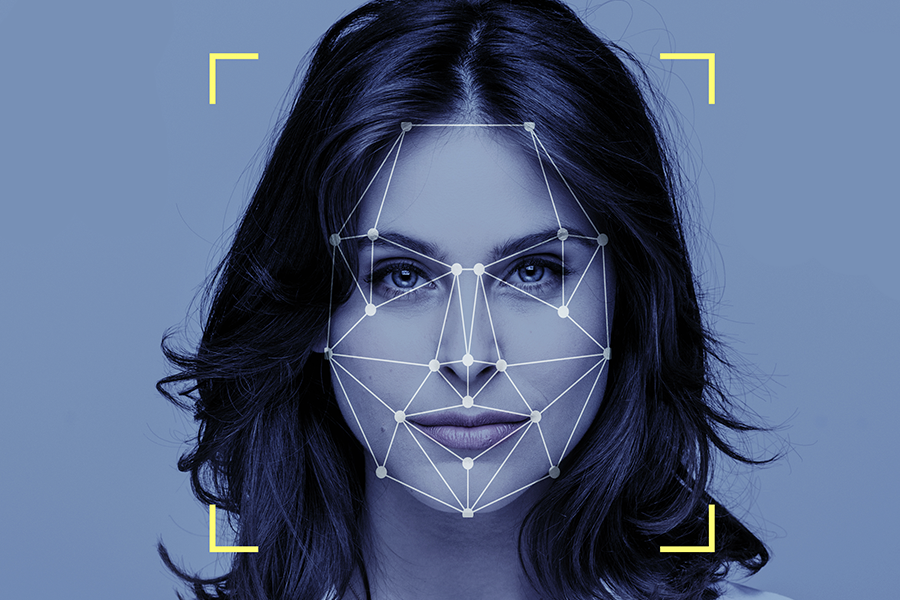
Quick Answer: What Is AI Face Reading?
AI face reading is a digital physiognomy tool that analyzes your facial features from a photo to reveal personality traits, elemental typing, and life readings in seconds.
Key capabilities:
- Face Reader performs complete Chinese 面相 analysis across all classical systems
- Reads the Five Officers (eyes, ears, nose, mouth, eyebrows) for character assessment
- Maps the Twelve Palaces for life domain insights — career, relationships, wealth, health
- Identifies mole meanings, face shapes, and Five Elements constitutional typing
The Problem: Why Face Reading Has Been Inaccessible
Interest in physiognomy — the art of reading character and destiny from facial features — has surged alongside the broader wellness and self-discovery movement. A Yale Insights study confirmed that AI photo analysis can illuminate how personality traits predict career trajectories, lending scientific credibility to what ancient practitioners observed empirically. Meanwhile, research published by the NIH found that AI-based facial analysis can assess traits including competence, health, trustworthiness, and dominance across seven distinct categories.
But accessing quality face reading has been frustratingly difficult:
- Qualified practitioners are rare. Genuine 面相 masters who understand all five classical systems — Five Officers, Twelve Palaces, Three Divisions, mole interpretation, and Five Elements — are concentrated in major Chinese cities and charge premium rates.
- Consistency is unreliable. Two different face readers can give wildly different interpretations of the same face, with no standardized methodology or verifiable accuracy.
- Language and cultural barriers. Most experienced physiognomists practice in Mandarin or Cantonese, making their knowledge inaccessible to a global audience.
- Superficial apps miss the depth. Generic face analysis apps focus on attractiveness scoring or age estimation — cosmetic metrics that have nothing to do with classical physiognomy's rich interpretive framework.
The Depth Problem
The biggest gap isn't technology — it's knowledge. Most "face reading" apps on the market are repackaged facial recognition APIs that detect landmarks and estimate age. They know nothing about the Prosperity Palace (財帛宮), the significance of a mole on your philtrum, or how Water-element facial structure relates to career aptitude. True 面相 requires deep domain knowledge that generic AI simply doesn't possess.
Why Face Reader
Face Reader is a purpose-built AI that combines classical Chinese physiognomy knowledge with modern image analysis — not a generic facial recognition tool repurposed for fortune-telling, but a dedicated system trained on the actual frameworks that masters use.
| Traditional Face Reading | Face Reader |
|---|---|
| Requires finding a qualified 面相 practitioner | Upload a photo and receive a full reading instantly |
| $50-$200+ per session, often in-person only | Available 24/7, included with your Jenova account |
| Interpretations vary wildly between practitioners | Consistent methodology across all five classical systems |
| Language barriers limit access to Chinese-speaking masters | Reads and responds in English, Chinese, Korean, Japanese, and more |
| Single reading with no follow-up analysis | Persistent memory tracks readings over time |
Five Officers Analysis (五官)
Upload a clear, well-lit photo and the AI examines your five facial officers — eyes (監察官), eyebrows (保壽官), nose (審辨官), mouth (出納官), and ears (採聽官). Each officer governs specific life domains, and their shape, proportion, and relationship to each other reveal character patterns that classical texts have documented for centuries.
"Here's my photo — give me a complete Five Officers reading with emphasis on career and leadership traits"
Twelve Palaces Mapping (十二宮)
The Twelve Palaces divide the face into governance zones — from the Life Palace (命宮) between the eyebrows to the Servants Palace (奴僕宮) at the jawline. Each palace corresponds to a life domain: wealth, marriage, career advancement, health, travel, and more. Face Reader maps all twelve and provides detailed interpretations.
"Analyze my Twelve Palaces and tell me what they indicate about my financial prospects and relationship patterns"
Mole Reading and Face Shape Classification
Beyond structural analysis, the AI interprets the placement and characteristics of facial moles — their position relative to the palaces, their color and elevation, and their traditional significance. It also classifies your face shape within the Five Elements system (Wood, Fire, Earth, Metal, Water) and explains how your elemental constitution influences your temperament and life path.
"I have a mole near my left eye and one on my chin — what do they signify in traditional face reading?"

Related Agents You'll Also Find Useful
If you're drawn to physiognomy and self-discovery, these agents complement the insights you'll get from face reading.
Palm Reader
Upload photos of both palms for a complete reading — life line, heart line, head line, fate line, mounts, and elemental hand typing. Combined with face reading, palm analysis provides a second interpretive lens on the same life questions.
- Lines, mounts, and marking interpretation
- Elemental hand shape classification
- Both palms analyzed for dominant and non-dominant hand comparison
Aura Reader
Upload a selfie to reveal your aura colors, layers, and energetic state — then receive a custom aura portrait that brings your energy field to life visually. Where face reading reveals structural character, aura reading captures your current energetic vibration.
- Multi-layer aura color identification and interpretation
- Custom AI-generated aura portrait
- Energetic health and emotional state assessment
Personal Astrologer
Natal chart calculations, planetary transit analysis, and personalized readings tie your celestial blueprint to the personality insights revealed in your face reading. Astrology and physiognomy have historically been practiced together as complementary systems.
- Natal chart with house, sign, and aspect breakdowns
- Daily, weekly, and monthly personalized horoscopes
- Compatibility and timing analysis
MBTI Personality Guide
If face reading reveals your external character expression, MBTI maps your internal cognitive function stack. Together, they offer a uniquely comprehensive personality profile — one from the outside in, the other from the inside out.
- Cognitive function analysis beyond surface-level typing
- Mistype verification and growth pathway guidance
- Compatibility frameworks for relationships and teams
How It Works
Step 1: Upload a Clear Photo
Take or upload a well-lit, front-facing photo with your full face visible. Avoid heavy makeup, sunglasses, or extreme angles — the AI needs clear visibility of all facial zones to map the Twelve Palaces and Five Officers accurately.
"Here's my photo for a full face reading"
Step 2: Choose Your Reading Focus
You can request a comprehensive full reading covering all five systems, or zero in on specific areas. Want career guidance? Ask about the Career Palace and nose structure. Curious about relationships? Focus on the Marriage Palace and mouth characteristics.
"Focus on my Twelve Palaces, especially the Wealth Palace, Career Palace, and Marriage Palace"
Step 3: Receive Your Detailed Analysis
Face Reader delivers a structured reading organized by system — Five Officers, Twelve Palaces, Three Divisions, mole interpretations, and elemental typing. Each section includes specific observations about your features and their traditional significance.
"Now analyze my moles and face shape — what element am I and how does it influence my personality?"
Step 4: Ask Follow-Up Questions
Unlike a one-time consultation with a practitioner, you can dig deeper into any aspect of your reading. Ask about specific features, request comparisons between palace readings, or explore how different facial characteristics interact to create your overall profile.
"You mentioned my Life Palace suggests strong willpower — how does that interact with what you see in my eyes and eyebrows?"
Results & Use Cases
🔮 Personal Self-Discovery
Scenario: A 28-year-old professional curious about Chinese face reading but unable to find an English-speaking practitioner in their city.
Traditional Approach: Searching for a qualified 面相 reader, potentially traveling to a major city, paying $100-200 for a single session conducted through a translator.
Face Reader: Complete Five Officers, Twelve Palaces, mole mapping, and elemental typing in minutes — in their native language, with unlimited follow-up questions.
- Full classical reading without geographic limitations
- Results organized by life domain for practical application
- Persistent memory allows revisiting and building on past readings
💼 Career and Professional Insight
Scenario: An entrepreneur evaluating a potential business partnership wants a physiognomy perspective on compatibility and character assessment.
Traditional Approach: Either ignoring this dimension entirely or relying on fragmented online resources with conflicting information.
Face Reader: Upload photos for individual readings, then ask the AI to compare elemental types and palace configurations for partnership compatibility insights.
- Five Elements compatibility analysis between individuals
- Career Palace and Wealth Palace focus for business-specific readings
- Structured comparison of character strengths and potential friction points
📱 Mobile Readings On the Go
Scenario: A traveler in Asia visits a temple and encounters face reading practitioners but wants an independent analysis before committing to an expensive session.
Traditional Approach: No way to validate or prepare — walk in blind and hope for a genuine practitioner.
Face Reader: Quick mobile reading on Jenova's iOS or Android app provides a baseline analysis in minutes, giving context for evaluating any in-person reading.
- Full functionality on mobile with photo upload
- Instant readings without appointments
- Use as a benchmark or second opinion alongside traditional practitioners
🎯 Cultural and Academic Exploration
Scenario: A university student studying East Asian philosophy wants to understand 面相 as a living tradition — not just read about it in textbooks.
Traditional Approach: Academic texts explain theory but don't provide the interactive, applied experience of actually having a face read.
Face Reader: Interactive learning through personal readings — ask the AI to explain the reasoning behind each interpretation, trace it back to classical sources, and teach you the system as it reads your face.
- Explanations rooted in classical physiognomy frameworks
- Interactive Q&A that teaches the system, not just delivers results
- Explore different schools and interpretive traditions within 面相
FAQ
Is AI Face Reader free to use?
Yes, Face Reader is available on Jenova's free tier with core features included. Subscribers get expanded usage limits and additional model options. No credit card is required to start — just upload a photo and begin your reading.
How is AI face reading different from facial recognition software?
Facial recognition software like Azure Face or Amazon Rekognition identifies and verifies identities — matching faces to databases for security purposes. Face Reader does something fundamentally different: it interprets facial features through the lens of Chinese physiognomy to reveal personality, character, and life readings. The goal isn't identification — it's interpretation.
Can Face Reader analyze any photo?
The AI works best with clear, front-facing photos in good lighting where all facial features are visible. Photos with sunglasses, heavy filters, extreme angles, or significant portions of the face obscured will produce less accurate readings. Both selfies and professional photos work well.
Is Chinese face reading scientifically validated?
Physiognomy is a traditional interpretive system, not a clinical diagnostic tool. However, modern research is increasingly finding correlations — a Yale study demonstrated that AI analysis of facial features can predict personality traits tied to career trajectories, and NIH research showed AI facial analysis can assess perceived competence, health, and trustworthiness. Face Reader presents readings within the classical framework while noting where traditional observations align with contemporary findings.
Does Face Reader work on mobile?
Absolutely. Jenova runs with full feature parity across web, iOS, and Android. Take a selfie directly from your phone's camera and upload it for an instant reading — ideal for spontaneous readings or on-the-go consultations.
What systems of face reading does the AI cover?
Face Reader covers all five major classical Chinese physiognomy systems: the Five Officers (五官), Twelve Palaces (十二宮), Three Divisions (三停), mole reading and placement interpretation, and Five Elements face shape classification (五行). It also interprets facial symmetry and proportional relationships across these systems.
Conclusion
Classical Chinese face reading contains centuries of accumulated observational wisdom about character, aptitude, and life patterns — but accessing that knowledge has traditionally required finding rare practitioners, overcoming language barriers, and paying premium consultation fees. AI has changed that equation entirely. With Face Reader, a complete Five Officers, Twelve Palaces, mole mapping, and Five Elements reading is a single photo upload away — available in any language, on any device, with unlimited follow-up questions and persistent memory that builds on every session.
Try Face Reader now and discover what your face reveals. Explore more AI agents at Jenova.