Best AI for Energy Analysis: Grid Intelligence, Transition Forecasting & Geopolitical Risk (June 2026)
2026-06-28
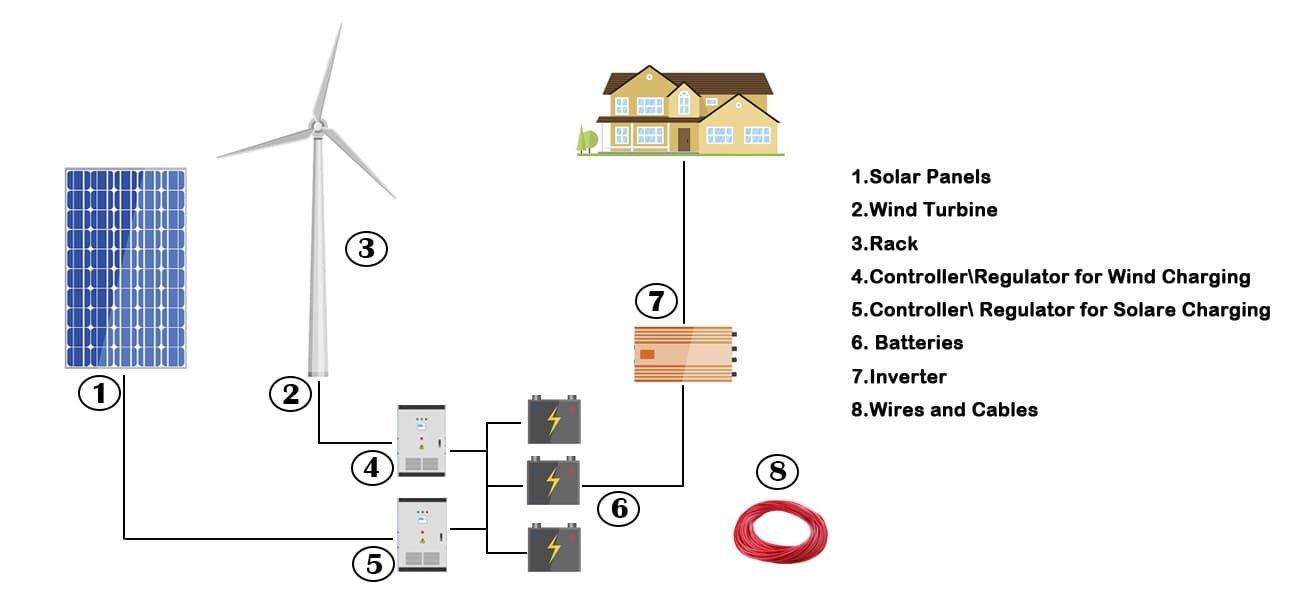
Energy Analyst delivers institutional-grade energy intelligence — systems analysis, technology assessment, transition forecasting, and geopolitical risk modeling — through natural language conversation with physics-first rigor. The global energy landscape in 2026 is being reshaped at a pace that overwhelms traditional analysis: global energy investment passed $3.3 trillion in 2025, with $2.2 trillion flowing into clean energy technologies, while data center power demand is projected to hit 106 GW by 2035 — a 36% jump from previous forecasts. Making sense of these converging forces requires analytical depth that most professionals simply don't have access to.
✅ Trilemma-driven analysis balancing security, affordability, and sustainability across every assessment ✅ Real-time data retrieval for commodity prices, grid conditions, policy changes, and market dynamics ✅ Full-spectrum coverage from upstream extraction to end-use electrification across all energy sources ✅ Geopolitical awareness connecting energy markets to sanctions, trade policy, and supply chain risks
To understand why AI-powered energy analysis has become indispensable, let's examine the complexity facing energy professionals, investors, and policymakers in 2026.
Quick Answer: What Is the Best AI for Energy Analysis?
Energy Analyst is an AI-powered research tool that delivers real-time energy market intelligence, technology assessment, and transition forecasting through physics-first analysis — cutting through hype and ideology to provide actionable energy insights.
Key capabilities:
- Technology assessment grounded in thermodynamics, not marketing claims — evaluating readiness, scalability, and economics
- Transition scenario modeling with explicit assumptions across policy, technology, and market variables
- Geopolitical energy risk analysis connecting supply chains, sanctions, and trade dynamics to market outcomes
- Cross-sector coverage spanning electricity, transport, industry, buildings, and emerging hydrogen applications
The Problem: Why Energy Analysis in 2026 Is Unprecedented in Complexity
The energy sector in 2026 sits at a convergence point unlike anything in its history. The IEA's World Energy Outlook 2025 highlights major shifts in global energy policies and markets amid acute geopolitical strains, while renewables reached 33.8% of global power generation in 2025 — above one-third for the first time. Meanwhile, solar power alone met 75% of global electricity demand growth in 2025, and the IEA reports that solar PV generation grew by 620 TWh year-on-year, dwarfing previous records.
But navigating this transformation is frustratingly difficult:
- Simultaneous disruption across every subsector — electricity, transport, industry, and buildings are all undergoing structural change at the same time, creating cascading interdependencies
- The AI-energy paradox — artificial intelligence is simultaneously the largest new source of electricity demand and the most promising tool for grid optimization
- Geopolitical fragmentation — energy policy is being shaped by trade wars, sanctions regimes, and industrial policy competition, not just market fundamentals
- Information overload without synthesis — IEA, IRENA, BloombergNEF, Wood Mackenzie, S&P Global, and dozens of other sources produce thousands of pages of analysis annually, often reaching contradictory conclusions
The AI-Energy Collision Is Rewriting Grid Planning
The scale of AI's impact on energy systems has caught even seasoned analysts off guard. BloombergNEF's latest forecast projects U.S. data center power demand reaching 106 GW by 2035 — a 36% increase from projections made just seven months earlier. Nearly a quarter of the 150 new data center projects tracked exceed 500 MW each. In PJM territory alone, data center capacity could reach 31 GW by 2030, nearly matching the 28.7 GW of new generation expected. Yet simultaneously, RAND research found that AI-powered grid management more than doubled energy reserves and reduced average costs by around 10%. Understanding both sides of this equation is essential for any serious energy analysis.
The Transition Is Accelerating Faster Than Models Predicted
RMI's 2026 analysis identifies that more than 90% of new renewable energy projects are now cheaper than fossil fuel alternatives, and new renewables generation is eclipsing total electricity demand growth. Average battery grid storage costs have fallen to more than 3 times lower than just three years ago. The Resources for the Future Global Energy Outlook 2026 projects renewables rising from 30% in 2024 to between 52% and 70% depending on policy scenarios. These aren't incremental changes — they represent a structural shift that demands new analytical frameworks.
The Cost of Expertise Excludes Most Decision-Makers
Institutional energy research subscriptions from Bloomberg, Wood Mackenzie, and S&P Global run $30,000–$150,000+ annually. Dedicated energy consultants charge $500–$1,000+ per hour. For the mid-sized utilities, independent power producers, energy investors, and industrial companies that must make capital allocation decisions in this environment, the cost barrier means critical decisions are made with incomplete intelligence.
This is exactly what Energy Analyst was built for.
Why Energy Analyst Is the Best AI for Energy Analysis
Energy Analyst operates with a physics-first analytical framework that cuts through the hype cycles, ideological positioning, and vendor bias that plague energy discourse. It doesn't advocate for specific technologies or policy positions — it evaluates every energy source, technology, and transition pathway against the energy trilemma: security, affordability, and sustainability.
| Traditional Approach | Energy Analyst |
|---|---|
| Scattered reports from IEA, IRENA, BloombergNEF, and consultancies requiring manual synthesis | Integrated analysis drawing on real-time data across all energy sources and markets |
| Technology assessments driven by vendor marketing claims | Physics-first evaluation of thermodynamic limits, scalability, and real-world economics |
| Siloed analysis — power separate from transport, separate from industry | Cross-sector analysis tracing energy flows from primary source to end use |
| Reports that either champion or dismiss renewables based on ideology | Trilemma-driven assessment balancing security, affordability, and sustainability without advocacy |
| Quarterly or annual publication cycles | Real-time data retrieval for commodity prices, grid conditions, and policy changes |
| Western-centric coverage | Global analysis covering OECD, China, India, Southeast Asia, Africa, and MENA energy systems |
⚡ Physics-First Technology Assessment
What sets Energy Analyst apart is its refusal to evaluate technologies through marketing materials or political framing. Every assessment starts with thermodynamic fundamentals — energy density, conversion efficiency, capacity factors, material requirements, and lifecycle costs. When evaluating hydrogen's role in industrial decarbonization versus direct electrification, or comparing small modular reactors to utility-scale solar-plus-storage, the analysis is grounded in physics and engineering realities, not projections from technology advocates.
"Compare the levelized cost trajectory and grid integration challenges of offshore wind versus nuclear SMRs for baseload power in the UK through 2035. Include the capacity factor assumptions."
🌍 Geopolitical Energy Intelligence
Energy markets in 2026 cannot be analyzed without understanding the geopolitics driving them. China's clean energy investments reached $800 billion in 2025, reshaping global supply chains for solar panels, batteries, and electric vehicles. RMI notes that China's 15th Five-Year Plan will have ripple effects across global energy markets, from trade tensions to technology deployment rates. Energy Analyst integrates these dynamics — sanctions economics, critical mineral supply chains, trade diversion, and industrial policy competition — directly into its energy analysis.
"How does the U.S.-China trade war affect the solar PV supply chain, and what are the realistic alternatives for panel manufacturing outside China by 2030?"
📊 Transition Scenario Modeling
The transition from fossil fuels to clean energy is not a single pathway — it's a branching tree of possibilities determined by policy, technology, capital flows, and geopolitics. Energy Analyst builds structured scenario frameworks with explicit assumptions, mirroring the methodology used by the IEA, BloombergNEF, and institutional forecasters — but accessible through conversation rather than $100,000 subscriptions.
"Give me three scenarios for India's electricity mix in 2035: base case, accelerated transition, and policy stall. Include the swing variables and the coal phase-down trajectory in each."
🔋 Real-Time Market Intelligence
For time-sensitive questions — current natural gas prices, the latest OPEC+ decision, real-time grid conditions, or breaking policy announcements — the tool searches for the most current available data before synthesizing its response. This directly addresses the publication-lag problem that makes even excellent institutional reports outdated by the time they reach decision-makers.
"What's happening with European natural gas storage levels heading into summer 2026, and what does it imply for winter pricing?"
Related AI Agents You'll Also Find Useful
If your energy analysis feeds into investment decisions, commodity trading, or broader geopolitical intelligence, these specialized agents extend your workflow:
Commodities Analyst
When energy analysis needs to translate directly into commodity market positioning — oil, natural gas, LNG, coal, uranium, lithium, and critical minerals.
- Supply/demand fundamentals, COT positioning, and technical analysis for energy commodities
- Seasonal patterns and storage dynamics across oil, gas, and power markets
- Cross-commodity correlation analysis connecting energy prices to metals and agriculture
Geopolitics Analyst
Energy geopolitics rarely exists in isolation. This agent provides the power dynamics, escalation analysis, and geoeconomic modeling that drive energy market volatility.
- Sanctions economics and trade diversion modeling for energy flows
- Escalation analysis with second- and third-order energy market consequences
- Game theory applied to OPEC+ dynamics, pipeline politics, and critical mineral competition
Macro Strategist
For professionals who need to connect energy market analysis to broader cross-asset portfolio positioning and central bank policy implications.
- Cross-asset synthesis connecting energy prices to rates, equities, and currencies
- Inflation transmission from energy markets to consumer prices and monetary policy
- Automated daily briefings covering energy-relevant macro indicators
Deep Research
When you need comprehensive, cited research reports on energy topics rather than conversational analysis — for white papers, policy briefs, or board presentations.
- Searches hundreds of sources and synthesizes findings into structured reports
- Full citation management with verifiable source links
- Ideal for energy transition reports, regulatory filings, and investment memos
How It Works: From Question to Actionable Energy Intelligence
Step 1: Ask About Any Energy Topic in Plain Language
No jargon required. Describe what you need — the analyst detects your expertise level and calibrates depth accordingly, from casual explainer to institutional briefing.
"How will the EU Carbon Border Adjustment Mechanism affect steel imports from India and Turkey, and what are the energy cost implications?"
Step 2: Get Physics-Grounded, Data-Driven Analysis
Energy Analyst doesn't recite headlines — it traces causal mechanisms through the energy system. You'll see the transmission path from policy to market, the thermodynamic constraints that limit certain solutions, and where genuine uncertainty exists. For time-sensitive questions, it searches for current data before responding.
"We're evaluating a 200 MW solar-plus-storage project in Texas. What are the grid interconnection risks given current ERCOT queue conditions?"
Step 3: Request Scenario Analysis With Explicit Assumptions
Push into forward-looking territory. Ask for base case, upside, and downside scenarios with the specific variables that determine which path materializes — and the signposts to monitor.
"Model three scenarios for global LNG demand through 2030: base case, accelerated Asian demand, and European demand destruction. Include the key assumptions and indicators to watch."
Step 4: Go Deeper or Pivot Across the Energy System
Follow up with clarifying questions, challenge assumptions, request alternative analytical frameworks, or pivot from electricity to transport to industrial heat. The analyst maintains context across the conversation and adjusts as your questions evolve.
Step 5: Export Professional Deliverables
Need polished output? Ask for a market briefing, technology assessment report, country energy profile, or policy impact analysis. Download as PDF or Word — ready for stakeholders, investors, or regulatory submissions.

Results & Use Cases
⚡ Utility Planners and Grid Operators
Scenario: A regional utility needs to update its integrated resource plan to account for 500 MW of incoming data center load while meeting state renewable portfolio standards — with interconnection queues already backed up 3-4 years.
Traditional Approach: Hire an energy consulting firm for a $200,000+ engagement that takes 4-6 months to deliver, by which time assumptions may have shifted.
Energy Analyst: Delivers immediate analysis of generation mix options, storage requirements, grid integration challenges, and regulatory pathways — with scenario modeling that accounts for load growth uncertainty, technology cost trajectories, and interconnection timelines.
- Models generation adequacy under different data center load scenarios
- Evaluates storage vs. peaker plant economics with current and projected costs
- Identifies regulatory and permitting bottlenecks with realistic timeline estimates
💼 Energy Investors and Fund Managers
Scenario: A clean energy fund evaluating a $150M investment in European offshore wind needs to understand subsidy risk, grid curtailment trends, and how changing EU energy policy could affect returns through 2035.
Traditional Approach: Subscribe to BloombergNEF, Wood Mackenzie, and S&P Global for $200,000+ combined annually, then synthesize across their sometimes-conflicting analyses.
Energy Analyst: Integrates technology economics, policy risk, grid integration dynamics, and geopolitical factors into a unified investment thesis — with scenario analysis showing how different policy and market paths affect project-level returns. Pair with the Commodities Analyst for real-time energy commodity pricing and positioning data.
- Scenario-based IRR modeling under different subsidy, curtailment, and pricing assumptions
- Policy risk assessment with probability weighting across regulatory pathways
- Competitive landscape analysis against alternative technologies and geographies
📊 Corporate Energy and Sustainability Officers
Scenario: A manufacturing company with operations across five countries needs to evaluate whether to sign long-term renewable PPAs, invest in on-site generation, or hedge through wholesale markets — while meeting Scope 2 reporting requirements under evolving EU disclosure rules.
Traditional Approach: Engage multiple energy brokers and consultants, each optimizing for their piece of the puzzle, with no integrated view of the full energy cost stack.
Energy Analyst: Provides integrated analysis across procurement strategy, on-site generation economics, regulatory compliance, and carbon accounting — tracing how each option affects total energy cost, emissions reporting, and supply risk across all operating geographies.
- Cross-country comparison of PPA structures, pricing trends, and regulatory frameworks
- On-site generation feasibility grounded in local grid conditions and permitting realities
- Carbon accounting implications under CSRD, SEC climate disclosure, and emerging frameworks
📱 Policymakers and Regulators on the Go
Scenario: An energy ministry official at a G20 side event needs to quickly evaluate how accelerated EV adoption would affect their country's grid infrastructure investment requirements, critical mineral import dependencies, and fiscal revenue from fuel taxes — from their phone, between sessions.
Traditional Approach: Request analysis from government economists and energy agencies — a process that takes weeks or months.
Energy Analyst: Provides immediate cross-sector analysis connecting transport electrification to grid investment, mineral supply chains, and fiscal impacts under multiple adoption scenarios. RMI notes that more than 1 in 4 new cars globally now have a plug, making this analysis urgently relevant for every transport and energy ministry. Full feature parity across web, iOS, and Android means the same analytical depth is available on mobile. Combine with Geopolitics Analyst to model how trade policy affects critical mineral access.
- Grid infrastructure investment modeling under different EV penetration rates
- Critical mineral dependency mapping with supply chain diversification options
- Fiscal impact analysis accounting for fuel tax revenue loss and electricity tax alternatives
🎯 Energy Journalists and Analysts
Scenario: A reporter covering the energy beat needs to quickly contextualize a breaking announcement — a new LNG terminal approval, an offshore wind auction result, or a critical mineral trade restriction — with the technical depth that separates informed analysis from press-release rewriting.
Traditional Approach: Call 3-5 industry sources for conflicting sound bites, then synthesize under deadline pressure without the technical background to evaluate competing claims.
Energy Analyst: Translates technical energy data and policy implications into accessible, accurate analysis — with the causal reasoning and physics-grounded evaluation that separates expert commentary from headline repetition.
- Technical translation of energy announcements into audience-appropriate framing
- Historical context and precedent analysis for market-moving events
- Rapid cross-referencing of claims against physical and economic fundamentals
Frequently Asked Questions
What makes this the best AI for energy analysis?
Energy Analyst combines physics-first rigor, real-time data retrieval, trilemma-driven assessment, and full energy system coverage in a single tool. Unlike generic AI assistants that summarize energy news, it applies the analytical frameworks used by institutional energy researchers — thermodynamic evaluation, supply-demand modeling, and geopolitical risk assessment — while cutting through the ideological positioning that distorts much of energy discourse.
Is Energy Analyst free to use?
Yes. Energy Analyst is available on the free tier with core capabilities. Paid plans starting at $20/month provide significantly more usage for extended research sessions, multi-turn scenario analyses, and deep-dive market assessments. All plans access the same analytical depth and real-time data retrieval.
Can it replace institutional energy research subscriptions?
It complements rather than fully replaces services like BloombergNEF or Wood Mackenzie, which offer proprietary datasets and project-level trackers. Where Energy Analyst excels is in synthesis, scenario modeling, and on-demand analysis — covering ground that would otherwise require hiring a senior energy analyst or subscribing to multiple services. For many professionals, it eliminates the need for the most expensive tiers of institutional research.
Does it cover all energy sources, including fossil fuels?
Yes. The tool covers the full energy spectrum without ideological bias — oil, natural gas, coal, nuclear, solar, wind, hydro, geothermal, hydrogen, biomass, and emerging technologies like fusion and advanced geothermal. Analysis is grounded in physics and economics, not advocacy for or against any specific energy source.
How current is the energy data?
For time-sensitive questions, Energy Analyst searches for the most recent available data in real time — targeting specific commodity prices, grid conditions, policy announcements, and market developments. For conceptual frameworks, technology assessments, and historical analysis, it draws on comprehensive training knowledge and flags when information may not reflect the latest developments.
Does it work on mobile?
Yes. Full feature parity across web, iOS, and Android. The same analytical depth is available whether you're at a desk modeling grid scenarios or checking energy market conditions on the go before a client meeting or policy briefing.
Conclusion
The energy sector in 2026 is undergoing a structural transformation that demands analytical capability most professionals don't have access to. With global clean energy investment surpassing $2.2 trillion, renewables exceeding one-third of global power generation for the first time, and AI-driven data center demand reshaping grid planning faster than anyone predicted, the gap between those who understand what's happening and those who don't has real financial and strategic consequences.
The best AI for energy analysis doesn't take sides in the energy debate. It evaluates every technology, policy, and market dynamic against physical reality, economic fundamentals, and the trilemma trade-offs that define every energy decision. It tells you not just what is changing but why it matters for your specific context — with the physics-first rigor and geopolitical awareness that separates actionable intelligence from noise.
In an energy transition where more than 90% of new renewable projects are already cheaper than fossil fuel alternatives and battery storage costs have fallen threefold in three years, the question isn't whether the energy system is changing. It's whether you're making decisions with the analytical depth the moment demands.
Try Energy Analyst now — or explore the full agent library at Jenova.