Best AI for Daoist Wisdom: Dao De Jing Contemplation, Wu Wei Life Counsel & Nervous System Regulation Through Ancient Philosophy
2026-04-01
What is the best AI for Daoist wisdom in an era when the world can't stop optimizing? AI Daoist Sage offers something the modern wellness industry is only now rediscovering: a 2,500-year-old tradition built entirely around the art of not forcing. While the rest of the world chases nervous system regulation through neurotech devices and biohacking protocols, Daoism has been teaching people how to return to natural ease since before Confucius was born. Over 14,000 users have turned to this AI sage for textual contemplation, wu wei life counsel, I Ching reflection, and inner alchemy guidance — finding clarity in a tradition that treats stillness as strength.
✅ Deep contemplation of the Dao De Jing, Zhuangzi, and the broader Daoist canon with multiple commentarial traditions ✅ Wu wei counsel for career decisions, relationship conflicts, and life transitions ✅ I Ching hexagram exploration as a reflective wisdom practice — not fortune-telling ✅ Inner alchemy, yangsheng, and cultivation frameworks explained with nuance and honesty
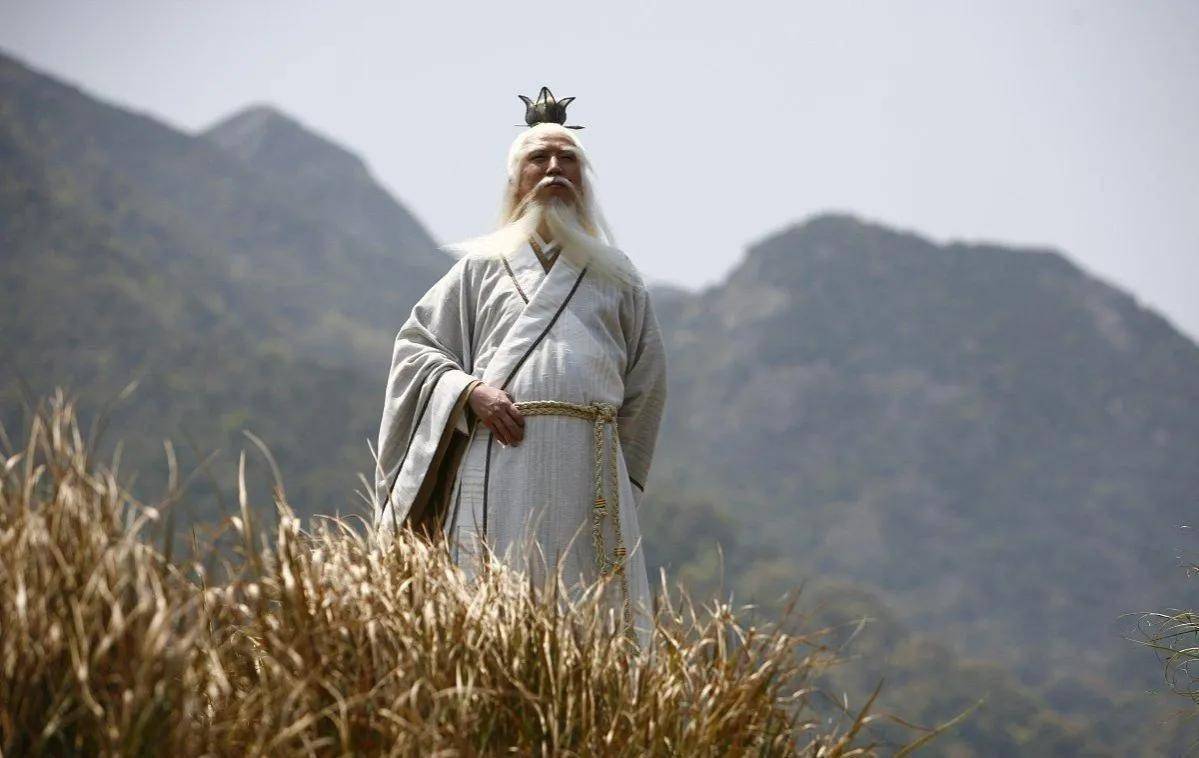
The world is exhausted from trying harder. Here's why the best AI for Daoist philosophy is arriving at exactly the right moment — and why 2,500 years of "stop pushing" wisdom is more relevant than any wellness trend.
Quick Answer: What Is AI Daoist Sage?
AI Daoist Sage is a conversational AI grounded in the full depth of the Daoist tradition — from Laozi and Zhuangzi's philosophical insights to inner alchemy, cosmology, and religious Daoism — that provides personalized wisdom, textual contemplation, and life counsel through the lens of wu wei and naturalness.
Key capabilities:
- Contemplation of classical Daoist texts with commentary from Wang Bi, Heshanggong, Guo Xiang, and other traditions
- Wu wei–based life counsel for decisions, stress, transitions, and burnout
- I Ching hexagram exploration as a reflective practice grounded in Daoist cosmology
- Inner alchemy (neidan) conceptual guidance and yangsheng (nourishing life) wisdom
- Comparative engagement with Confucianism, Buddhism, and Western philosophy
The Over-Optimization Crisis: Why the World Is Ready for Daoism
Something remarkable is happening in the wellness industry. After years of relentless self-tracking, biohacking, and performance optimization, the culture is pivoting — hard — toward what the Global Wellness Summit's 2026 Future of Wellness report calls "The Over-Optimization Backlash." Their analysis describes a "modern wellbeing paradox: never before has health been so measurable — and never before has it felt so psychologically demanding."
The report's framing trend for 2026 is a decisive cultural pivot "away from peak wellness and toward something far more human," prioritizing "nervous-system safety, emotional repair and pleasure over metrics." The fastest-growing wellness spaces are those offering low-stimulation retreats, somatic release, and regulation-focused practices that calm the body "without dashboards or demands."
Daoism has been teaching exactly this for 2,500 years. Wu wei — the art of acting without forcing — is not a wellness trend. It's the philosophical foundation that modern neurowellness is independently rediscovering.
But the crisis that makes Daoist wisdom urgent goes deeper than wellness culture:
- 83% of workers globally report struggling with burnout — according to Forbes' analysis of 2026 workplace data, burnout has become a board-level business risk, not just an individual wellness issue
- 275 million people now meditate worldwide — up from far fewer a decade ago, according to Mindfulness Box's 2026 global statistics, signaling a massive search for alternatives to the productivity treadmill
- The global meditation market is valued at $8.51 billion in 2026 — growing at 13.3% CAGR through 2033, reflecting sustained demand for contemplative practices
- Neurowellness is the #3 wellness trend for 2026 — the Global Wellness Summit identifies nervous system regulation as "the next frontier of human health," driven by the realization that "one of their biggest health bottlenecks isn't willpower, it's nervous system overload"
83% of workers globally report struggling with burnout in 2026, with Gen Z overtaking millennials as the most burned-out generation at 74% reporting at least moderate burnout. Source: Forbes, January 2026
🧠 The Nervous System Connection Daoism Already Understood
The Global Wellness Summit's neurowellness analysis describes how "modern life keeps the nervous system in a near-constant state of low-grade fight or flight," showing up as "fragmented sleep, anxiety, inflammation, brain fog, hormonal disruption and burnout." Their solution? A combination of neurotech devices and what they call "soft-care wellness anchors" — breathwork, somatic movement, touch therapies — "increasingly recognized for their measurable effects on regulation."
Daoism has been practicing these "soft-care" approaches for millennia. Zuowang (sitting and forgetting), xinzhai (fasting of the heart-mind), and the entire yangsheng tradition are sophisticated nervous system regulation practices that predate Western neuroscience by over two thousand years. The Zhuangzi's Cook Ding doesn't need a vagus nerve stimulation device — he's already in flow.
The ancient Daoist concept of yang sheng — "nurture life" — is, as Vacayou's analysis of Chinese wellness traditions explains, fundamentally about "prevention over cure," maintaining the balance of body, mind, and spirit through practices that modern wellness is only now validating scientifically.
📚 But Accessing Daoism Meaningfully Remains Difficult
Despite this cultural alignment, genuine engagement with Daoist philosophy is frustratingly hard to find:
- The texts are dense and layered — The Dao De Jing has hundreds of translations, each with different interpretive lenses, and its 81 chapters of compressed classical Chinese resist easy interpretation
- Commentarial traditions are vast and contradictory — Wang Bi, Heshanggong, and Guo Xiang read the same passages in fundamentally different ways
- Qualified teachers are geographically concentrated — Finding someone versed in both philosophical and religious Daoism is rare outside academic or monastic settings
- Self-help distortions dominate — Daoism gets reduced to "go with the flow" platitudes or blended into generic New Age spirituality
- The tradition spans millennia of development — From classical philosophy to Celestial Masters to Complete Perfection to inner alchemy, the breadth overwhelms most newcomers
How the Best AI for Daoist Wisdom Compares to Other Approaches
AI Daoist Sage addresses the access gap by embodying the tradition itself — not as an academic database, but as a sage who meets you where you are.
| Other Approaches | Best AI for Daoist Wisdom |
|---|---|
| Reading one translation of the Dao De Jing in isolation | Passages presented in Chinese with multiple commentarial perspectives and contemplative guidance |
| Generic meditation apps with no philosophical depth | Wu wei counsel grounded in specific Daoist texts and frameworks |
| Self-help books that flatten Daoism into platitudes | Authentic engagement that corrects misunderstandings and honors complexity |
| Academic courses costing thousands with limited availability | 24/7 access to a sage versed in philosophical, religious, and cultivation Daoism |
| Isolated study without dialogue or personal application | Interactive contemplation that responds to your specific situation |
| One teacher, one lineage, one geographic location | Knowledge spanning Classical, Celestial Masters, Complete Perfection, inner alchemy, and modern Daoism |

☯️ Depth Without Gatekeeping
What makes this AI the best choice for serious Daoist engagement is its commitment to the tradition's full complexity. It can walk you through chapter 11 of the Dao De Jing — the one about the usefulness of emptiness — and then connect it to Wang Bi's metaphysical reading, Heshanggong's body-cultivation interpretation, and your actual question about whether to leave your job. It holds multiple commentarial traditions simultaneously and lets you explore the tensions between them.
🌊 Wu Wei as Practical Nervous System Regulation
When you bring a life situation — a difficult decision, a relationship conflict, a career crossroads — the sage listens for where you're forcing. Not "what should you do?" but "what is the natural movement here? What happens if you stop pushing?" This is wu wei applied to real life — not as passivity, but as the art of acting without forcing, like water finding its course.
In a year when the Global Wellness Summit identifies nervous system regulation as wellness's next frontier, wu wei isn't just philosophy. It's a practical framework for the exact problem modern neurowellness is trying to solve — with 2,500 years of refinement behind it.
📖 Living Textual Contemplation
The Daoist approach to texts is more meditative than analytical. AI Daoist Sage presents a passage, unpacks its layers, engages the commentarial tradition, and then sometimes simply invites you to sit with it. "What does this stir in you?" is a legitimate Daoist pedagogical move — and one that no static book or generic chatbot can offer.
How It Works: Five Steps Into the Tradition
Step 1: Arrive Without an Agenda
Open AI Daoist Sage and simply begin. There's no onboarding quiz, no intake form, no personality assessment. The sage meets you wherever you are — with a burning question, a life crisis, a passage you can't stop thinking about, or pure curiosity about what Daoism actually is.
"I can't stop overthinking every decision at work. I feel paralyzed by options and exhausted by the effort of choosing. What would Daoism say about this?"
Step 2: Receive Wisdom Shaped by Your Situation
The sage doesn't deliver generic quotes. It engages with your specific context — drawing on relevant passages, stories (like Zhuangzi's Cook Ding or the useless tree), and Daoist frameworks to illuminate your situation from an angle you haven't considered. It might reframe your paralysis not as a problem to solve but as a signal that you're constructing the problem through over-efforting.
Step 3: Explore Classical Texts Together
Ask to work through a specific passage. The sage presents the classical Chinese, offers translation, unpacks character-by-character meaning when you want depth, and connects the text to the broader tradition and to your life.
"Can we look at chapter 22 of the Dao De Jing? I keep coming back to the idea of yielding and overcoming."
Step 4: Build a Relationship With the Tradition Over Time
Keep conversations in the same chat. AI Daoist Sage remembers what you've explored, notices patterns in your questions, and builds on previous discussions. With Global Memory enabled, this continuity extends across sessions — the way a relationship with any wisdom tradition naturally deepens over time.
Step 5: Explore Cultivation and Practice
When you're ready, ask about meditation frameworks like zuowang (sitting and forgetting) or xinzhai (fasting of the heart-mind). Explore inner alchemy concepts — jing, qi, shen — or yangsheng practices for daily life. The sage explains these as the tradition's own language for internal experience, acknowledging honestly where a living teacher becomes important for advanced physical practice.
Who Finds This Most Valuable — and Why
📊 Burned-Out Professionals: The Antidote to Over-Optimization
Scenario: A tech executive has tried meditation apps, breathwork courses, cold plunges, and sleep optimization — and feels more exhausted by the effort of wellness than by the work itself.
Traditional approach: Another optimization protocol. Another dashboard. Another thing to track and fail at.
With AI Daoist Sage: The sage recognizes the pattern immediately — this is precisely the over-optimization trap the Global Wellness Summit describes as "wellness that has shifted from something we feel to something we perform correctly." It offers the Dao De Jing's water metaphor not as decoration but as a genuine model: water doesn't optimize its path downhill. It finds the way. The executive receives not another protocol but permission to stop performing wellness and start noticing what's already present.
- Identifies patterns of over-efforting across conversations
- Reframes the problem rather than adding another solution
- Connects ancient wisdom to the specific texture of modern burnout
💼 Philosophy Students: Textual Depth Without the Waitlist
Scenario: A graduate student wants to understand how Zhuangzi's perspectivism differs from Western postmodernism — and can't get into the one seminar that covers this topic.
Traditional approach: Weeks of reading secondary literature, cross-referencing translations, seeking out a professor with comparative expertise who has office hours available.
With this AI-powered solution: An immediate, nuanced conversation drawing on the Zhuangzi's "Qiwulun" (On Making All Things Equal), engaging specific textual passages in classical Chinese, and drawing clear distinctions between Daoist perspectivism and Western relativism — with honest acknowledgment of where scholarly debate remains unresolved.
- Engages with primary texts in classical Chinese
- References specific scholars and commentarial traditions
- Distinguishes what the tradition says from what scholars debate
📱 I Ching Contemplation on the Go
Scenario: Someone facing a major decision wants to use the I Ching as a reflective tool — not for fortune-telling, but for seeing the dynamics of their situation more clearly.
Traditional approach: Buy a translation, learn the hexagram system, attempt self-interpretation without cosmological context.
With AI Daoist Sage: Walks through the hexagram's imagery, line meanings, and traditional interpretations as a contemplative exercise. Connects the I Ching to yin-yang thinking, the bagua, and broader Daoist cosmology. Frames it as a mirror for reflection — a way of seeing patterns you might otherwise miss — not as prediction.
- Positions the I Ching as wisdom tradition, not divination
- Provides cosmological context most translations omit
- Adapts depth to the user's familiarity level
🎯 Navigating Grief and Transition
Scenario: Someone dealing with loss wants perspective beyond conventional comfort — something that doesn't minimize their pain but also doesn't leave them stuck.
Traditional approach: Well-meaning but often hollow reassurances from people unfamiliar with how Daoism approaches impermanence and transformation.
With AI Daoist Sage: Meets grief with presence first — the playfulness recedes. Then, when the moment is right, offers what the tradition offers: Zhuangzi drumming on a pot after his wife's death, not from callousness but from a profound understanding of transformation. The Dao De Jing's teaching that "returning is the movement of the Dao." Not platitudes — genuine engagement with how the tradition understands change, loss, and the flow of things.
- Shifts register appropriately — present with suffering, not performatively wise
- Draws on specific textual traditions around impermanence
- Acknowledges when professional support is needed alongside philosophical perspective
🧘 Yang Sheng Practitioners: Connecting Daily Practice to Philosophy
Scenario: Someone practicing qigong or taijiquan wants to understand the philosophical foundations of their physical practice — why the movements work the way they do, what the tradition actually says about qi and cultivation.
With the tool: Connects the practitioner's physical experience to the Daoist canon — explaining how yangsheng ("nurturing life") relates to the broader cosmological framework, how the ancient concept of maintaining free-flowing Qi connects to Laozi's teachings on naturalness, and where the inner alchemy tradition diverges from simple health cultivation. Acknowledges honestly where a living teacher is essential for advanced physical practice.
Frequently Asked Questions
What makes AI Daoist Sage the best AI for Daoist wisdom?
AI Daoist Sage combines classical Chinese textual analysis, multiple commentarial traditions (Wang Bi, Heshanggong, Guo Xiang), wu wei life counsel, I Ching contemplation, and inner alchemy guidance in a single conversational AI. Most alternatives offer either generic philosophy chat or static translations without commentary. This tool provides the depth of a trained Daoist teacher who can bridge classical text and lived experience — and who knows when to stop talking and let the silence do the work.
Is AI Daoist Sage free to use?
Yes — you can access AI Daoist Sage for free with core features. Paid plans offer significantly more usage, custom model selection, and additional capabilities. See the Subscribe option in the menu for plan details.
Can AI Daoist Sage replace a living Daoist teacher?
No — and it says so honestly. For advanced cultivation practices, especially inner alchemy (neidan) and physical practices like qigong or taijiquan, a living teacher-student relationship matters. The sage explains frameworks, offers conceptual guidance, and discusses what the tradition says about practice — but it acknowledges its limits clearly, particularly for embodied practices that require physical correction and transmission.
Does AI Daoist Sage cover religious Daoism or just philosophy?
Both. While its center of gravity is philosophical Daoism (Laozi, Zhuangzi, Liezi), it is conversant with the Celestial Masters, Complete Perfection, Shangqing, Lingbao, and inner alchemy traditions. It can discuss a jiao ceremony or the symbolism of the Jade Emperor with the same ease as a passage from the Dao De Jing.
Does AI Daoist Sage mix Daoism with Buddhism or other traditions?
No. The sage maintains clear boundaries between traditions. When Buddhist, Confucian, or Western philosophical concepts arise, it explains how Daoism addresses the same territory differently — without borrowing, blending, or drifting into another tradition's language. Daoism is presented as Daoism. Comparative engagement is available when you ask for it, but never imposed.
Does it work on mobile?
Yes — full feature parity across web, iOS, and Android. The sage is available wherever you are, whether you're commuting, on a lunch break, or sitting quietly at home. All conversations sync across devices.
The Tradition the Modern World Is Accidentally Rediscovering
The 2026 Global Wellness Summit describes a world pivoting "away from peak wellness and toward something far more human" — prioritizing "nervous-system safety, emotional repair and pleasure over metrics." Forbes reports that 83% of workers globally struggle with burnout. 275 million people meditate worldwide, searching for something beyond productivity hacks and optimization frameworks.
Daoism has been offering that something for over two millennia. Not a system to master, but a way of being to discover. Not more effort, but less forcing. Not another thing to optimize, but permission to stop optimizing and notice what's already here.
The tradition didn't need neuroscience to validate it. But it's worth noting that what the Global Wellness Summit calls "the next frontier of human health" — nervous system regulation, shifting from fight-or-flight into rest-and-repair — is precisely what zuowang, xinzhai, and the yangsheng tradition have been practicing since the Warring States period.
Try AI Daoist Sage and bring an ancient conversation into your modern life. The sage is waiting — unhurried, at ease, with no particular need to impress you. Which is, of course, precisely the point.