Best AI for Cup Reading: Photo-Based Tasseography With Symbol Interpretation (June 2026)
2026-06-22
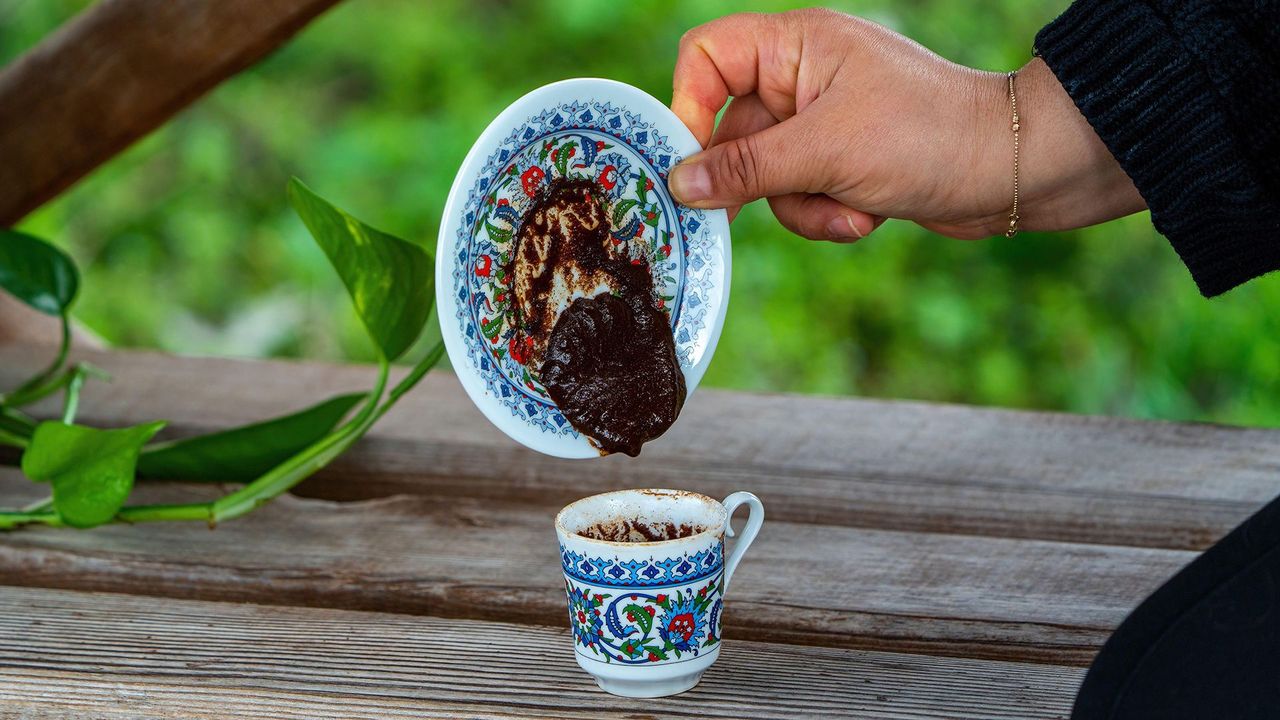
Cup Reader is an AI tasseography guide that interprets photographs of your tea or coffee cup — reading the symbols, shapes, and patterns left behind by the grounds or leaves to deliver a rich, narrative reading grounded in centuries of divinatory tradition. While finding a skilled tasseographer has always meant knowing the right person in the right culture, this AI brings the full depth of Turkish coffee reading, Victorian tea leaf interpretation, and cross-cultural symbol literacy to any device, any time, from a single photograph.
✅ Photo-based symbol interpretation from tea leaves or coffee grounds ✅ Narrative readings that weave individual symbols into a cohesive life story ✅ Covers preparation rituals, cup positioning, and symbol context — not just isolated meanings ✅ Persistent memory for follow-up questions and comparative readings over time ✅ Free to start, no credit card required
The AI fortune-telling space has exploded — searches related to "AI fortune telling" grew by more than 400% year-over-year in the first half of 2025, driven by humanity's ancient fascination with fate and the accessibility that AI tools now provide. To understand why an AI cup reader fills a genuine gap, let's look at why quality tasseography has always been so hard to access.
Quick Answer: What Is AI Cup Reader?
Cup Reader is a personal AI tasseography guide that interprets photographs of your tea or coffee cup to produce narrative symbol readings — from preparation ritual to final synthesis.
Key capabilities:
- Photo-based interpretation of coffee grounds and tea leaf patterns
- Symbol identification with contextual meaning based on position within the cup
- Narrative readings that connect individual symbols into a cohesive story
- Guidance on preparation rituals, cup handling, and optimal reading conditions
The Problem: Why Quality Tasseography Is Nearly Impossible to Find
Tasseography — the art of reading patterns in tea leaves, coffee grounds, or wine sediment — is one of the oldest and most intimate forms of divination. Its roots stretch across Turkish, Greek, Middle Eastern, British, and Eastern European cultures, each with distinct traditions for preparation, interpretation, and symbol vocabulary. The practice thrives in 2026: the broader astrology and spiritual services market was valued at $12.8 billion in 2021 and is projected to reach $22.8 billion by 2031, growing at 5.7% CAGR, with divination practices like cup reading seeing renewed cultural interest across social media and digital platforms.
But accessing a quality cup reading remains frustratingly difficult:
- Tasseography is an oral tradition with no formal training path. Unlike astrology or tarot, which have published curricula, certification programs, and standardized symbol dictionaries, cup reading is passed down within families and communities. There's no way to verify a reader's skill before committing to a session.
- The practice is geographically and culturally concentrated. Turkish coffee reading (kahve falı) thrives in Turkey, Greece, and the Levant. Tea leaf reading has roots in Victorian Britain and China. If you don't live within one of these cultural spheres — or don't have a grandmother who reads cups — access is effectively zero.
- Existing digital alternatives offer symbol lookups, not readings. Most tasseography apps function as glorified dictionaries: type in "bird" and get a one-line definition. But a real reading isn't about individual symbols in isolation — it's about how a bird near the rim interacts with a tree near the base, how the overall distribution of grounds tells a story, and how the cup's handle orientation establishes perspective.
- Live reader platforms charge per minute with no quality guarantee. Online psychic platforms connect you to readers at $0.99–$4.99 per minute, and a meaningful cup reading takes 15–30 minutes — $15 to $150 per session with no way to evaluate expertise beforehand.
The Interpretation Gap
AI fortune-telling searches grew 400% year-over-year — yet most digital tools handle divination through template-based text generation, not the kind of contextual, image-based interpretation that cup reading demands.
The core challenge of tasseography is that it's inherently visual and contextual. A symbol's meaning changes based on where it appears in the cup (rim vs. base vs. sides), its proximity to other symbols, the overall density of the grounds, and the cultural tradition being applied. This is why generic AI chatbots produce shallow cup readings — they can define symbols but can't see your cup or interpret spatial relationships.
This is exactly what Cup Reader was built for.
Why Cup Reader
Most divination apps treat cup reading as a text-based lookup exercise. Cup Reader operates as a visual interpretation specialist — you upload a photograph of your actual cup, and the AI analyzes the specific patterns, symbols, and spatial relationships present in your grounds or leaves, delivering a narrative reading that's uniquely yours.
| Traditional Cup Reading | Cup Reader |
|---|---|
| Requires knowing a skilled reader personally | Instant access from any device |
| $15–$150+ per session on live platforms | Accessible with a Jenova subscription |
| Quality varies wildly with no way to verify | Consistent interpretive depth on every reading |
| Limited to one cultural tradition | Cross-cultural symbol literacy: Turkish, Greek, Victorian, and beyond |
| No record of your reading | Persistent memory — revisit and compare readings over time |
| Scheduling required, limited availability | Available 24/7 on web, iOS, and Android |
Visual Interpretation, Not Symbol Dictionaries
The Cup Reader agent doesn't ask you to describe what you see — it looks at your cup photograph and identifies the symbols itself. This is a fundamental difference from text-based tools. The AI interprets:
Spatial Context — Where a symbol appears in the cup determines its temporal and thematic significance. Symbols near the rim relate to the near future or current concerns. Symbols near the base point to deeper, longer-term patterns. Symbols near the handle connect to the querent's personal sphere — home, self, immediate relationships. The AI reads all of these positional cues from the photograph.
"I see what looks like a bird shape near the rim and something that might be a mountain near the bottom — what do those mean together?"
Relational Interpretation — Individual symbols are never read in isolation. A path leading toward a heart carries different meaning than a path leading away from one. A tree next to a house tells a different story than a tree standing alone near the cup's edge. The AI weaves these relationships into a cohesive narrative rather than listing disconnected definitions.
"Can you look at the left side of my cup more closely? There's a cluster of shapes I can't quite make out."
Preparation Guidance — A quality cup reading starts before the cup is even flipped. The Cup Reader agent guides you through the preparation ritual — how to drink the coffee or tea, how long to wait, how to invert the cup onto the saucer, and when to lift it for reading. These rituals aren't decoration; they affect the pattern formation and the reading's depth.
"I've never had a cup reading before. How do I prepare my Turkish coffee so the grounds leave good patterns?"

Related Agents You'll Also Find Useful
If cup reading resonates with you, these agents offer complementary pathways for spiritual exploration and self-discovery:
Mystic Tarot Reader
Where cup reading interprets spontaneous patterns formed by physical residue, tarot works with a structured symbolic system — 78 cards with established meanings that shift based on position, spread, and surrounding cards. The Mystic Tarot Reader performs card draws, interpretation, and sacred visual ritual readings. Pairing tarot with cup reading gives you two complementary divinatory lenses — one shaped by chance physical patterns, the other by archetypal symbolism.
- Specific question-focused readings with multiple spread types
- Sacred visual ritual presentations
- Different interpretive framework that cross-references beautifully with tasseography
Personal Astrologer
Astrology maps your life through celestial mechanics — natal charts, planetary transits, and timed forecasts. While cup reading captures the energy of a specific moment (the moment you drink and flip the cup), astrology provides the structural backdrop of your birth chart and current planetary influences. Together, they offer both snapshot and panorama.
- Natal chart generation with detailed planetary analysis
- Transit tracking for timing-sensitive decisions
- Daily, weekly, and monthly personalized readings
Dream Interpreter
Dreams and cup readings share a common interpretive logic: both work with spontaneous images that carry symbolic meaning shaped by personal context. The Dream Interpreter analyzes dreams through Jungian, Freudian, cognitive science, and spiritual frameworks — useful when cup reading surfaces themes that echo in your dream life.
- Multi-framework dream analysis
- Pattern recognition across recurring dreams
- Subconscious insight that complements tasseography's symbolic language
Face Reader
Chinese face reading (面相) analyzes physical features through the Five Officers, Twelve Palaces, and Five Elements system. If you're drawn to divination that reads the body — as tasseography reads the cup — face reading offers a parallel physiognomic tradition with deep structural analysis.
- Five Officers and Twelve Palaces framework
- Five Elements typing based on facial structure
- Career, relationship, and health tendency analysis
How It Works: From Cup to Complete Reading
Step 1: Prepare Your Cup
Open Cup Reader on web, iOS, or Android. Before you even pour your tea or coffee, the agent guides you through the preparation ritual appropriate to your drink and tradition. For Turkish coffee: drink slowly with intention, leave a small amount of liquid, place the saucer on top, flip the cup, and wait for the grounds to cool and set. For tea: drink until a small amount of liquid remains with the leaves, swirl three times, invert onto the saucer, and lift.
"I have Turkish coffee ready. Walk me through the ritual so the grounds form clear patterns."
Step 2: Photograph Your Cup
Once the cup has cooled (typically 5–10 minutes for coffee, less for tea), lift the cup from the saucer and photograph the interior. Good lighting and a steady angle make a significant difference in reading depth.
- Photograph the inside of the cup from directly above
- Use natural daylight or bright, even indoor lighting
- Capture the saucer separately if there are patterns on it (the saucer carries its own meanings)
"Here's my cup — I flipped it about 8 minutes ago and just lifted the saucer."
Step 3: Receive Your Narrative Reading
The agent examines the photograph and identifies symbols, shapes, and patterns within the grounds or leaves. Rather than listing isolated symbol definitions, it delivers a narrative reading — weaving individual observations into a cohesive story that addresses themes of love, career, travel, obstacles, and personal growth based on where symbols appear and how they relate to each other.
Step 4: Ask Follow-Up Questions
After the reading, explore any symbol, section of the cup, or theme in greater depth. The agent's persistent memory means you can return days or weeks later to revisit your reading, compare it with a new one, or ask about specific details without re-uploading photos.
"You mentioned a journey symbol near the rim — can you elaborate on what direction that might point to? I've been considering a career change."
Step 5: Compare Readings Over Time
Upload a new cup photo in a future session and ask the agent to compare themes across readings. Tracking how symbols evolve over time — recurring motifs, shifts in energy, new patterns emerging — adds a longitudinal dimension that single readings can't provide.
"Last month you saw a lot of blockage symbols near the base of my cup. How does today's reading compare?"
Results & Use Cases
☕ First-Time Cup Reading Experience
Scenario: You've seen cup reading in Turkish or Greek culture — maybe a relative does it, or you've watched videos online — and you want to experience it yourself but have no access to a reader.
Traditional Approach: Ask around your social circle for someone who reads cups. If you're not within a Turkish, Greek, or Middle Eastern community, this usually leads nowhere. Online live readers charge $1–$5 per minute, with a 15–30 minute minimum for a real reading — $15 to $150 — and you have no way to evaluate their skill.
With Cup Reader: The agent walks you through the full experience from the start — which coffee or tea to use, how to prepare it, the drinking ritual, the flipping ritual, and how to photograph the cup. Upload the photo and receive a detailed narrative reading. Ask unlimited follow-up questions about any symbol or theme.
- Complete beginner guidance from preparation to interpretation
- No cultural background required — the agent explains every step
- Unlimited follow-ups versus a timed per-minute session
- A repeatable practice you can return to whenever you like
💼 Weekly Reflection and Intention Setting
Scenario: You use cup reading as a contemplative practice — a weekly ritual for reflection, not prediction. You drink your coffee mindfully on Sunday mornings, flip the cup, and use the symbols as prompts for thinking about the week ahead.
Traditional Approach: You'd need a reader available every week, which is impractical even if you know one personally. Most readers treat each session as a standalone event with no continuity between visits.
With Cup Reader: Build a weekly practice with persistent memory that tracks themes across readings. The agent remembers last week's symbols and can note when patterns repeat, shift, or resolve — creating a longitudinal practice that deepens over months.
- Persistent memory connects readings across weeks and months
- Pattern tracking reveals recurring themes in your life
- The ritual itself becomes a grounding mindfulness practice
- Builds a personal symbolic vocabulary over time
📱 Social Experience With Friends
Scenario: You're hosting a dinner party or gathering and want to introduce cup reading as a shared experience — something more meaningful than a party game but accessible to everyone regardless of background.
Traditional Approach: Hire a reader for the evening ($200–$500+ for a private event), hope they're skilled and engaging, and manage scheduling for each guest.
With Cup Reader: Brew Turkish coffee or loose-leaf tea for the group. Walk everyone through the preparation and flipping ritual using the agent's guidance. Then photograph each person's cup and share the readings. Full feature parity on mobile means you can do this from your phone at the table.
- Each guest gets a personalized reading from their own cup
- The agent explains the tradition and ritual for the whole group
- No scheduling, no per-person fees — everyone participates
- Creates memorable shared experiences with genuine depth
🔮 Cross-Tradition Spiritual Practice
Scenario: You already use tarot, astrology, or another divinatory system and want to add cup reading as a complementary practice — using multiple lenses to explore the same question or life period.
Traditional Approach: Find a reader skilled in both tarot and tasseography (extremely rare), or visit separate practitioners and try to synthesize the perspectives yourself.
With Cup Reader: Perform a cup reading, then open Mystic Tarot Reader or Personal Astrologer in the same session to explore the same themes through different systems. Each agent's persistent memory means you can reference insights from one practice while working with another.
- Layer cup reading with tarot, astrology, or palm reading for richer insight
- @mention other divination agents directly within the same conversation
- Persistent memory allows cross-referencing between practices
- Build a multi-system spiritual practice from one platform
FAQ
Is AI Cup Reader free to use?
Yes. Cup Reader is available on Jenova's free tier with all core features. Paid plans starting at $20/month provide significantly more usage for regular practice, custom model selection, and no watermarks on exported content. Usage resets monthly with full limits from day one.
How does an AI cup reading compare to a human reader?
A skilled human reader brings lived cultural context, intuitive sensitivity, and the ability to adjust interpretation dynamically through conversation — qualities that no AI tool can currently fully replicate. What Cup Reader offers is consistent depth across every reading, cross-cultural symbol literacy that few individual practitioners possess, 24/7 availability, and persistent memory that tracks your readings over time. It's not a replacement for a master tasseographer — it's expert-level access where none previously existed.
Can it read both coffee grounds and tea leaves?
Yes. The agent handles Turkish coffee grounds, Greek coffee grounds, loose-leaf tea patterns, and other sediment-based cup reading traditions. Each has distinct preparation rituals and slightly different interpretive frameworks, and the agent adjusts its approach based on what you're drinking.
Does cup reading predict the future?
No responsible divination practice claims deterministic prediction, and Cup Reader doesn't either. As comparative analysis of AI fortune-telling tools confirms, what divination offers is "a probabilistic description of overall energetic tendencies" and "a reference framework for understanding patterns" — not fixed predictions. The agent frames all readings as symbolic reflection, not prophecy. Your agency is always preserved.
Does it work on mobile?
Full feature parity across web, iOS, and Android. This is especially relevant for cup reading because your phone camera is the primary tool — photograph your cup, upload directly within the app, and receive your reading anywhere. All conversations, memory, and past readings sync across devices.
What if I can't see any symbols in my cup?
That's exactly why the agent exists. Most people look into a cup of coffee grounds and see... coffee grounds. The AI identifies shapes, patterns, and spatial relationships that untrained eyes miss. And if a specific area of the cup is genuinely unclear — heavy grounds without distinct formations — the agent says so rather than inventing symbols that aren't there. Transparency matters in divination as much as interpretation.
Conclusion
Tasseography has persisted for centuries across Turkish, Greek, Middle Eastern, British, and Eastern European cultures because the ritual itself — the slow drinking, the intentional pause, the moment of revelation when the cup is lifted from the saucer — creates a unique space for reflection that few other practices match. The barrier has always been access: finding someone who genuinely knows how to read a cup, who understands that symbols gain meaning from position and context, and who can weave scattered images into a coherent narrative.
With the AI fortune-telling space growing over 400% year-over-year and the broader spiritual services market projected to reach $22.8 billion by 2031, demand for quality digital divination has never been higher. Cup Reader delivers what most alternatives cannot: photo-based visual interpretation, cross-cultural symbol literacy, narrative readings that connect individual symbols into a cohesive story, and persistent memory that tracks your practice over time.
Try Cup Reader now — brew your coffee, flip your cup, and see what the grounds reveal. Explore the full agent library at Jenova.