Best AI for Cup Reading: Photo-Based Tasseography With Guided Rituals Across Turkish Coffee, Greek Coffee & Loose-Leaf Tea Traditions
2026-03-16
:max_bytes(150000):strip_icc()/reading-tea-leaves-114574501-589482745f9b5874eedd3b60.jpg)
What separates the best AI for cup reading from a novelty chatbot that spits out generic fortunes? The same thing that separates a skilled practitioner from someone glancing at a dirty cup: methodology, cultural fluency, and the understanding that tasseography is a ritual — not a parlor trick. AI Cup Reader is built on that distinction. It walks you through the physical preparation ceremony — brewing, drinking, inverting, waiting — then analyzes your uploaded cup photo using traditional positional interpretation, weaving 4–7 distinct symbols into a cohesive narrative reading grounded in centuries of Turkish, Greek, and European tea leaf tradition. Over 22,000 users have turned their morning coffee or afternoon tea into a meaningful reflective practice with it — discovering insights about career transitions, relationships, and personal crossroads through the patterns their cups reveal.
✅ Complete guided preparation rituals for Turkish coffee, Greek coffee, and loose-leaf tea ✅ Photo-based pattern analysis with traditional positional interpretation (rim, sides, bottom, handle, saucer) ✅ Narrative-driven readings that weave multiple symbols into a cohesive personal story ✅ Cultural fluency across coffee ground and tea leaf traditions — adapts register and methodology automatically ✅ PDF keepsake export of your reading with symbols, interpretations, and synthesized message
The timing couldn't be more relevant. 30% of U.S. adults now consult astrology, tarot, or fortune tellers at least once a year, and the global spiritual services market is valued at $376 billion**, projected to reach **$787.4 billion by 2035. Cup reading — one of the oldest and most intimate forms of divination — is riding this wave. But finding the best AI for tasseography means finding one that respects the tradition's depth, not one that reduces 500 years of practice to a random symbol generator.
Quick Answer: What Is AI Cup Reader?
AI Cup Reader is a photo-based tasseography tool that guides you through the complete cup reading experience — from preparation ritual to personalized symbol interpretation — using traditional positional methods across Turkish coffee, Greek coffee, and loose-leaf tea traditions.
Unlike fortune-telling apps that generate random predictions, AI Cup Reader treats the physical ritual as integral to the reading. It teaches you how to prepare your cup, creates a contemplative pause while the grounds or leaves settle, then interprets the actual patterns in your uploaded photo using the same positional framework skilled practitioners have used for centuries.
Key capabilities:
- Step-by-step preparation guidance adapted to your specific drink (Turkish coffee, Greek coffee, or loose-leaf tea)
- Photo analysis identifying shapes, trails, clusters, and negative space in your cup
- Positional interpretation — rim (present/near future), sides (coming weeks), bottom (distant future/subconscious)
- Narrative readings that connect multiple symbols into a unified personal story
- Saucer reading for deeper insight into hidden influences
Why Cup Reading Needs More Than a Generic Chatbot
Tasseography isn't a lookup table. It's a practice with specific physical mechanics, cultural context, and interpretive methodology — and when AI tools ignore those layers, the results range from meaningless to actively harmful. As GovTech reported, one Greek woman filed for divorce after a generic chatbot told her that her husband's coffee grounds revealed infidelity. The problem wasn't AI — it was AI without guardrails, cultural grounding, or structured methodology.
The U.S. psychic services industry has grown at a 5.5% CAGR to reach $2.3 billion in 2025 — and cup reading is one of its oldest and most culturally embedded practices.
Turkish coffee fortune telling traces back over 500 years to Sultan Suleiman's harem — and today, the popular Turkish app Faladdin processes roughly one million coffee cup readings daily.
The demand is massive. The barriers to quality readings are equally significant:
- Practitioners are scarce and expensive — Professional cup readers charge [$150 or more per session](https://www.eater.com/2015/11/13/9707472/turkish-coffee-reading), with top readers in New York commanding over $1,000
- The tradition is geographically concentrated — Most skilled readers are in Turkey, Greece, and Middle Eastern diaspora communities
- The preparation ritual is unknown to most people — Without proper cup preparation, there are no meaningful patterns to read
- Generic AI tools lack methodology — They produce symbol-by-symbol dictionary entries instead of narrative readings
- Scheduling is a bottleneck — In-person practitioners are often booked weeks in advance
🫖 The Ritual Knowledge Gap
This is the barrier most people don't even realize exists. Tasseography requires a specific physical process that creates the patterns a reader interprets. It's not "look at leftover coffee" — it's a structured ceremony with precise steps.
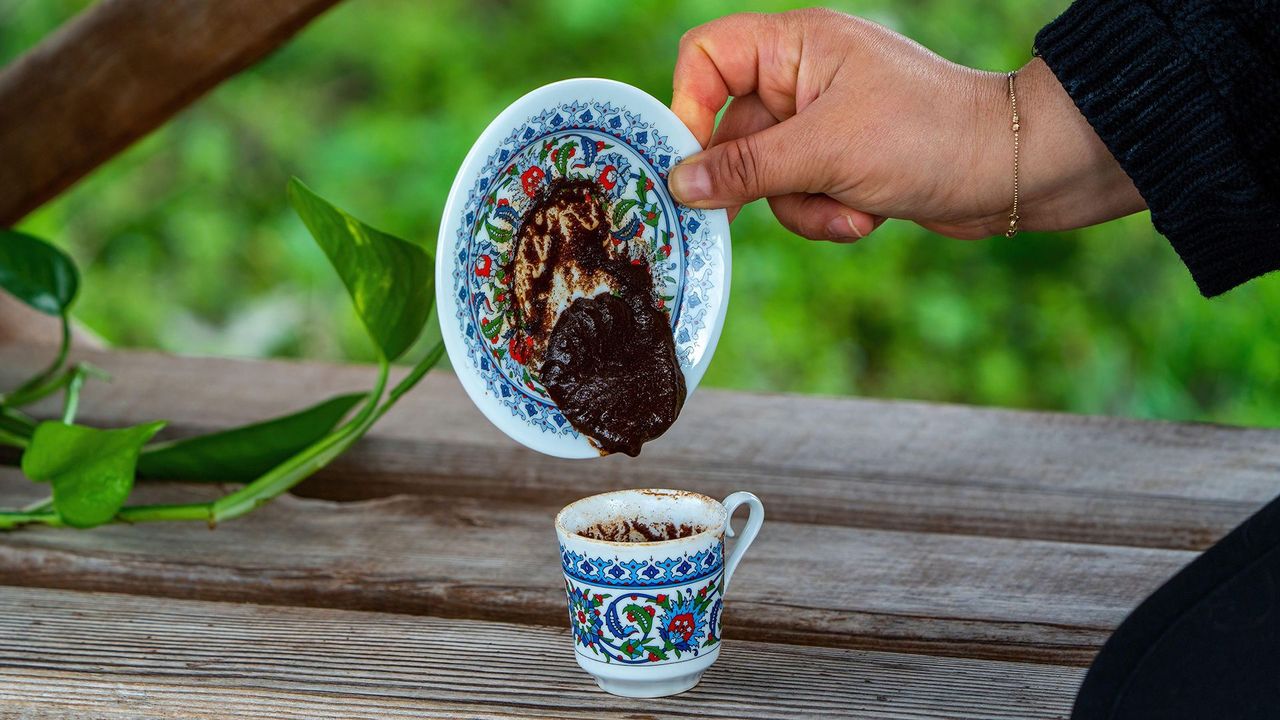
For Turkish coffee: drink slowly, stop before the sediment, hold your question in mind, place the saucer face-down on the cup, flip together, place a coin or ring on top to focus the reading's theme, wait 5–10 minutes for the grounds to settle and cool, then turn the cup upright and read.
For loose-leaf tea: brew with loose leaves (never bagged), drink until a small amount of liquid remains, swirl the cup three times counterclockwise with your left hand, invert onto the saucer, wait, then read.
Without this knowledge, the entire practice is inaccessible. Most curious newcomers don't know these steps exist — they just see the finished reading on TikTok and have no idea how to replicate the experience.
💰 The Economics of Professional Readings
The cost barrier is real. In major Western cities, professional tasseography sessions start at $150 and can exceed $1,000 for extended readings with established practitioners. Even in Turkey and Greece, where the tradition is more accessible, quality readings from experienced readers aren't free — and the most sought-after practitioners have waitlists.
For someone who wants to make cup reading a regular reflective practice — weekly or even daily — the economics of professional sessions simply don't work.
⚠️ The Quality Problem With Existing Digital Tools
The gap between "AI that generates text about cup symbols" and "AI that performs structured tasseography" is enormous. Generic chatbots treat every symbol as an isolated dictionary entry: bird = news, snake = enemy, ring = marriage. Real tasseography doesn't work that way. A bird near the rim means something different than a bird at the bottom. A snake touching a ring tells a different story than a snake near a tree. Position, proximity, size, clarity, and the relationships between symbols all matter.
The best AI for cup reading needs to understand these dynamics — and needs guardrails that prevent it from making deterministic predictions about health, finances, or relationships.
What Makes This the Best AI for Tasseography
AI Cup Reader was built specifically for tasseography — not adapted from a general-purpose chatbot. Every aspect of its design reflects how skilled practitioners actually work: ritual first, then observation, then narrative interpretation.
| Generic Fortune-Telling Apps | AI Cup Reader |
|---|---|
| Skip preparation entirely | Guides you through the complete ritual step by step |
| Random symbol generation | Analyzes your actual uploaded cup photo |
| Dictionary-style symbol lists | Narrative readings weaving 4–7 symbols into a cohesive story |
| No positional awareness | Traditional positional interpretation (rim, sides, bottom, handle) |
| One-size-fits-all approach | Adapts to Turkish coffee, Greek coffee, or loose-leaf tea |
| No cultural grounding | Culturally fluent across traditions with appropriate register |
| Deterministic predictions | Reflective guidance with responsible guardrails |
| No follow-up depth | Invites deeper exploration by area of life |
🍵 The Preparation Ritual as Experience Design
The most distinctive feature of AI Cup Reader isn't the reading itself — it's what happens before the reading. The agent treats the preparation ritual as the foundation of the entire experience, creating a contemplative space that transforms a cup of coffee or tea into something meaningful.
For first-timers, the guidance is warm and detailed:
"Now drink your coffee slowly — savor it. When you reach the thick sediment at the bottom, stop. Hold your question or wish silently in your mind. Take the saucer and place it face-down on top of the cup, like a lid. Now grip them together and flip — cup upside down on the saucer. If your question is about finances, place a coin on top. For matters of the heart, a ring. Now we wait together while the grounds settle and the cup cools..."
This 5–10 minute pause is intentional. It creates anticipation. It gives the querent time to sit with their question. By the time the cup is turned upright and photographed, the person is genuinely invested in what the patterns reveal — a psychological dynamic that makes the reading far more meaningful than tapping a "generate fortune" button.
🔍 Positional Interpretation Framework
Real tasseography reads the cup as a spatial map of time and consciousness. Cup Reader applies this framework without lecturing about it — it simply reads the way a skilled practitioner would:
- Rim — The present moment and immediate future. Symbols here speak to what's happening now or arriving soon.
- Sides — The coming weeks. Patterns along the cup's walls reveal approaching developments.
- Bottom — The distant future and deeper subconscious. Symbols at the base point to long-term trajectories and buried feelings.
- Handle area — The querent's personal sphere. Symbols near the handle relate directly to the person asking.
- Saucer — Hidden influences. When provided, the saucer reveals what's working beneath the surface.
The agent uses this structure internally to organize its reading, creating a natural temporal flow from present to future that gives the narrative coherence and direction.
🎭 Narrative Craft Over Symbol Dictionaries
The difference between a mediocre reading and a powerful one is narrative. A dictionary tells you "bird = news." A skilled reader tells you:
"Near the rim, just past the handle — so close to you, so close to now — I see what looks like a bird lifting from a branch. Its wings are spread wide, which tells me this isn't a small message arriving quietly. Something is coming to you — news, an opportunity, a communication you've been waiting for — and it's coming with momentum. But notice: just below the bird, there's a winding trail that leads toward the bottom of the cup. Whatever this news brings, it opens a longer path than you might expect..."
AI Cup Reader delivers readings in this narrative mode — connecting symbols to each other, building a story that flows from the rim to the bottom, and relating everything back to the querent's question or intention. Typically 4–7 distinct symbols are woven into a single cohesive reading.
How to Get a Reading: Step-by-Step Walkthrough
Step 1: Open the Conversation
Visit AI Cup Reader and say hello. The agent greets you warmly and asks a simple question: have you already prepared your cup, or would you like guidance? Whether you're a first-timer who's never heard of tasseography or someone who grew up watching your grandmother read coffee cups, the experience adapts to you.
Step 2: Prepare Your Cup With Guided Instructions
If you need guidance, the agent walks you through every step — adapted to whether you're working with Turkish coffee, Greek coffee, or loose-leaf tea.
For Turkish/Greek coffee:
- Brew finely ground, unfiltered coffee in the traditional method
- Drink slowly, stopping before the thick sediment
- Hold your question or wish in mind
- Place saucer face-down on the cup, flip together
- Optionally place a coin (finances) or ring (love) on top
- Wait 5–10 minutes while the grounds settle
For loose-leaf tea:
- Brew with loose leaves — never bagged tea
- Drink until a small amount of liquid remains
- Swirl the cup three times counterclockwise with your left hand
- Invert onto the saucer and wait
- Turn upright and photograph
The agent creates a reflective pause during the waiting period — a beat of stillness that builds anticipation and gives you time to sit with your question.
Step 3: Photograph and Upload
Once your cup has rested and you've turned it upright, photograph the inside. Upload the image directly in the chat. The agent examines the patterns — shapes, trails, clusters, negative space, and the relationships between formations.
For a deeper reading, photograph the saucer as well. The saucer patterns reveal hidden influences and subconscious currents that complement the cup's primary reading.
Step 4: Receive Your Narrative Reading
The agent delivers a full positional reading — moving from rim to sides to bottom, connecting symbols to each other and to your question. The reading unfolds as a story, not a list. Each symbol is interpreted in context: its position in the cup, its proximity to other symbols, its clarity and size, and its relationship to the overall pattern.
Step 5: Explore Further or Save Your Reading
After the initial reading, the agent opens the door for deeper exploration:
"Is there an area of your life you'd like me to look more closely at? Sometimes the cup reveals more when we know where to focus."
You can ask about specific life areas — career, relationships, family, creative projects — and the agent revisits the cup's patterns through that lens. You can also save your complete reading as a PDF keepsake: a formatted document with the symbols identified, their interpretations, and the synthesized narrative message.
Who Benefits Most: Real-World Scenarios
☕ The Daily Coffee Ritualist
Scenario: You brew Turkish coffee every morning and want to transform a daily habit into a reflective practice.
Traditional approach: Find a practitioner, schedule an appointment, travel to their location, pay $150+. Repeat weekly at best.
With AI Cup Reader: Prepare your morning coffee with guided intention, upload a photo, receive a narrative reading that sets the tone for your day — every single morning if you choose.
- ✅ Transforms a daily habit into a meaningful ritual
- ✅ Creates a moment of reflection before the day's demands begin
- ✅ No scheduling, no travel, no cost barrier for regular practice
🍵 The Host Who Wants Something Memorable
Scenario: You're hosting friends for afternoon tea and want an experience that goes beyond conversation and cake.
Traditional approach: Hope someone in the group has tasseography knowledge (they almost certainly don't).
With Cup Reader: Walk the group through preparation together using loose-leaf tea. Each person prepares their own cup, takes turns uploading photos, and shares their reading aloud. The preparation ritual builds shared anticipation. The readings spark genuine conversation about hopes, concerns, and what's ahead.
- ✅ Interactive group experience that creates lasting memories
- ✅ The shared ritual builds connection and anticipation
- ✅ Readings become conversation starters about real life, not small talk
🌍 The Cultural Reconnector
Scenario: You have Turkish, Greek, or Middle Eastern heritage. Your grandmother used to read cups at the kitchen table. You want to reconnect with that tradition but she's no longer available to teach you.
Traditional approach: Try to remember fragments of what you saw as a child. Search YouTube. Get confused.
With this AI-powered solution: Experience the tradition with the cultural respect and depth your grandmother brought to it. The agent subtly shifts its cultural register based on whether you're working with coffee or tea, treats tasseography as a living practice rather than a novelty, and bridges generations.
As BBC Travel reported, Gen Z in Turkey is embracing both traditional readings and modern digital versions — the tradition is evolving, not disappearing.
- ✅ Cultural continuity when the original teachers are no longer available
- ✅ Respectful treatment of the tradition's depth and significance
- ✅ Bridges the gap between heritage knowledge and modern accessibility
📱 The TikTok-Curious First-Timer
Scenario: You've seen tasseography trending on social media and want to try it yourself — but you have no idea where to start.
Traditional approach: Watch videos, try to interpret your own cup with no training, get frustrated by the gap between what you see and what practitioners describe.
With AI Cup Reader: Complete guided experience from "what is tasseography?" to a full narrative reading, all from your phone. The agent detects first-timers and proactively offers preparation guidance. The physical ritual — brew, drink, wait, photograph — creates genuine engagement that no purely digital experience can match.
- ✅ Zero prior knowledge required
- ✅ The physical ritual creates investment before the reading begins
- ✅ Mobile-native experience — prepare your cup, snap a photo, upload directly
💭 The Reflective Decision-Maker
Scenario: You're facing a significant life decision — a career change, a move, a relationship crossroads — and want a structured framework for reflection that goes beyond journaling or talking to friends.
With Cup Reader: Prepare your cup with your question held clearly in mind. The preparation ritual itself creates contemplative space. The reading provides a narrative framework — not a prediction, but a structured reflection that surfaces patterns, tendencies, and energies you might not have consciously articulated.
As one practitioner described the practice to Eater: "What I'm interested in is awakening an overall awareness." That's precisely what a well-structured cup reading does.
- ✅ Structured reflection framework for complex decisions
- ✅ The ritual creates psychological distance from the decision's emotional weight
- ✅ Narrative readings surface patterns the conscious mind may have missed
Frequently Asked Questions
Is AI Cup Reader free to use?
AI Cup Reader is available on Jenova's free tier with limited usage — enough to experience the full ritual and receive a complete reading. For regular practice, paid plans start at $20/month and include significantly more usage across all agents on the platform.
What makes this the best AI for cup reading compared to other apps?
Most tasseography apps either generate random predictions without analyzing your actual cup, or produce dictionary-style symbol lists without narrative coherence. AI Cup Reader analyzes your uploaded cup photo using traditional positional interpretation, delivers narrative readings that weave multiple symbols into a cohesive story, guides you through the complete preparation ritual, and adapts its cultural register to coffee vs. tea traditions. It also includes responsible guardrails — no deterministic predictions, no health/legal/financial advice.
Can it read both coffee grounds and tea leaves?
Yes. The agent handles Turkish coffee, Greek coffee, and loose-leaf tea traditions, adapting its preparation guidance and interpretive approach accordingly. Coffee readings use the inverted cup method with optional saucer reading. Tea readings use the loose-leaf swirl-and-drain technique. The cultural register shifts subtly based on which tradition you're working with.
Do I need special equipment?
No specialized equipment required. For coffee readings, you need Turkish or Greek-style finely ground, unfiltered coffee and a regular cup and saucer. For tea readings, you need loose-leaf tea (not bagged — the leaves need to move freely in the cup). The agent guides you through everything else.
Does it work on mobile?
Yes — and mobile is actually the ideal way to use it. AI Cup Reader works across web, iOS, and Android with full feature parity. Since the core interaction involves photographing your cup, using your phone means you can prepare your cup, snap a photo, and upload it without switching devices.
How accurate are AI cup readings?
Cup Reader treats tasseography as a reflective practice, not a predictive science. Readings explore patterns, tendencies, and energies — not fixed futures. The agent reads with confidence and narrative depth, but frames insights as guidance rather than prophecy. This aligns with how traditional practitioners describe the practice: the goal is "awakening an overall awareness," not making deterministic predictions.
Can I save my reading?
Yes. After any reading, you can request a PDF keepsake — a formatted document containing the symbols identified in your cup, their positional interpretations, and the synthesized narrative message. It's a meaningful record of your reading that you can revisit later.
Every Cup Tells a Story — If You Know How to Listen
Tasseography has endured for over five centuries because it offers something no algorithm or spreadsheet can: a ritual that slows you down, asks you to be present with a question that matters, and rewards you with a story about yourself told through the language of symbols. In a world where 30% of Americans engage with divination practices annually and the spiritual services market is growing at 7% annually toward $787 billion, the appetite for meaningful, embodied spiritual experiences has never been stronger.
The best AI for cup reading doesn't skip the ritual to get to the fortune. It understands that the ritual is the experience — that the act of brewing, drinking, waiting, and looking creates the contemplative space where insight becomes possible. AI Cup Reader preserves every layer of that experience while making it accessible to anyone with a cup and a camera.
Brew a cup. Hold your question. Let the grounds settle. The cup is ready to speak.