Best AI for Cosmetic Surgery Imaging: Facial Analysis, Procedure Visualization & Before/After Content Creation
2026-03-15
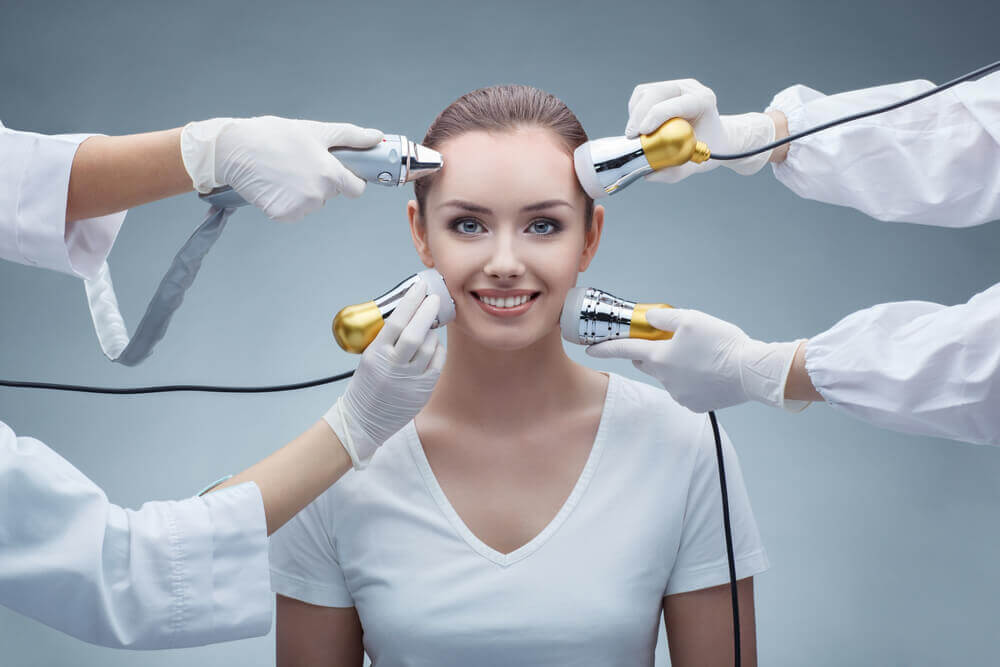
If you're searching for the best AI for cosmetic surgery imaging, AI Cosmetic Surgery Image Specialist unifies clinical photo analysis, procedure visualization, before/after content production, and post-operative healing assessment into a single conversational workflow — replacing the patchwork of expensive tools that aesthetic practices currently juggle. Over 18,000 aesthetic professionals — from board-certified plastic surgeons and med spa teams to residents and clinic marketing directors — have used it to cut consultation prep time, produce polished visual content, and communicate surgical plans with measurable precision.
✅ Quantified facial proportion analysis — golden ratio, nasal projection, periorbital assessment, symmetry mapping ✅ Photorealistic procedure mock-ups for rhinoplasty, facelifts, blepharoplasty, fillers, and more ✅ Professional before/after layouts optimized for Instagram, clinic websites, and patient presentations ✅ Post-operative healing evaluation with complication flagging and timeline documentation ✅ Culturally adaptive — respects diverse beauty standards without imposing a single aesthetic ideal
What makes this the best AI for cosmetic surgery imaging isn't just the range of capabilities — it's the integration of clinical depth with production-quality output in a single tool, at a fraction of the cost of dedicated imaging platforms. Here's why that matters in 2026's rapidly evolving aesthetic landscape.
Quick Answer: What Is AI Cosmetic Surgery Image Specialist?
AI Cosmetic Surgery Image Specialist is an AI-powered clinical imaging tool that analyzes facial and body photos, generates procedure mock-ups, creates marketing-ready before/after content, and tracks post-operative healing — all from one conversational interface.
Unlike dedicated 3D simulation platforms that cost $15,000–$50,000+ for hardware alone, AI Cosmetic Surgery Image Specialist delivers analysis, visualization, and content creation without proprietary equipment or multi-thousand-dollar annual licenses.
Key capabilities:
- Detailed facial and body proportion analysis from uploaded clinical photos
- Procedure outcome visualization across surgical, non-surgical, and reconstructive cases
- Professional before/after comparison layouts for any platform
- Post-operative evaluation including complication identification and healing stage assessment
The Imaging Crisis in Aesthetic Medicine: Why 2026 Demands a New Approach
The aesthetic medicine industry has never been larger — or more visually demanding. According to the ISAPS Global Survey 2024, nearly 38 million aesthetic procedures were performed worldwide in 2024, a 42.5% increase from 2020. The global cosmetic surgery market is projected to grow from USD 61.32 billion in 2026 to USD 83.33 billion by 2034, while the broader medical aesthetics market is expanding at a CAGR of 13.75%.
Every one of those procedures generates clinical photos. Every consultation requires visual communication. Every practice needs marketing content. Yet the tools for managing this visual workload remain fragmented, expensive, and disconnected:
- Visualization software is cost-prohibitive — Canfield Scientific systems start at $15,000–$50,000+ for hardware, with $5,000/year software subscriptions; Crisalix subscriptions run €250–€1,000+/month per doctor
- No single tool covers analysis, mock-ups, and marketing — Practices toggle between 3–4 separate applications for a single patient case
- Inconsistent clinical photography undermines credibility — Lighting, angle, and positioning differences between before/after photos erode trust
- Content creation eats clinical hours — Building professional before/after layouts and case presentations manually takes 30–60 minutes per post
- Patient fear of unnatural outcomes persists — 68% of AAFPRS members report that patients' top concern is avoiding an unnatural look
💰 The Cost Barrier Is Real — and Growing
For smaller practices — which represent a significant portion of the market, given that 47.4% of cosmetic procedures are performed in hospitals and 31.1% in specialty clinics — the cost of dedicated imaging platforms creates a significant barrier. A solo practitioner paying $250–$1,000/month for Crisalix plus $5,000/year for Canfield software plus hiring a designer for social content is spending $10,000–$20,000+ annually on imaging alone — before a single patient is treated.
68% of brands exceed their photoshoot budgets in aesthetic practice, and the pressure to produce visual content is only intensifying as minimally invasive procedures account for 80% of total treatments, driving higher patient volumes.
📸 The Patient Expectation Gap
A global survey of over 14,000 aesthetically conscious adults published in Aesthetic Surgery Journal found that 65% of respondents cited fear of needles, injections, or pain as a barrier to treatment, while 58% cited safety concerns and fear of unnatural outcomes. Visual simulations that show achievable, realistic results directly address these barriers — but most practices lack the tools to provide them consistently.
Meanwhile, the AAFPRS reports that 30% of patients cite finding the right surgeon as a top concern — and before/after galleries are a primary evaluation tool. When photos vary in lighting, focal length, or patient positioning, results look unreliable regardless of surgical quality.

🧠 AI Is Now Embedded in Aesthetic Practice — But Fragmented
A comprehensive review published in the Journal of Cosmetic Dermatology (NIH/PMC) confirmed that AI is transforming aesthetic medicine across facial analysis, personalized treatment planning, robotic-assisted procedures, and predictive outcome modeling. Platforms like ModiFace, Crisalix, and Haut.AI are now standard in many clinics.
But the review also identified critical gaps: biased training data favoring lighter skin tones, lack of transparency in AI decision-making, and no single tool that covers the full imaging lifecycle. Practices are forced to assemble their own stack — paying separately for analysis, simulation, editing, and marketing.
The AAFPRS's 2026 trend report specifically highlighted AI-driven facial mapping and 3D imaging as key technologies enabling personalized treatment plans with precision injectables — confirming that the demand for accessible, intelligent imaging tools is accelerating.
How AI Cosmetic Surgery Image Specialist Fills the Gap
AI Cosmetic Surgery Image Specialist consolidates clinical photo analysis, procedure visualization, content creation, and post-operative tracking into one AI-powered conversation — accessible to surgeons, clinic marketing teams, residents, and patients.
| Fragmented Workflow | AI Cosmetic Surgery Image Specialist |
|---|---|
| $15,000–$50,000+ for 3D imaging hardware | No proprietary hardware required |
| $250–$1,000+/month for simulation subscriptions | Accessible AI-powered alternative |
| Separate tools for analysis, mock-ups, and marketing | Single integrated workflow |
| Manual before/after layout creation (30–60 min/post) | Automated professional layouts in minutes |
| Subjective visual assessment only | Quantified facial proportion analysis with measurements |
| Limited to procedures you've photographed | Mock-ups generated from descriptions or reference images |
| Software trained on narrow beauty standards | Culturally adaptive across diverse ethnic backgrounds |
🔬 Clinical Photo Analysis With Measurable Depth
Unlike basic photo editors, this AI brings genuine clinical knowledge to image analysis. Upload a clinical photo, and it evaluates:
- Facial proportions — golden ratio, rule of thirds, rule of fifths, horizontal and vertical symmetry
- Nasal analysis — dorsal profile, tip projection and rotation, alar base width relative to intercanthal distance
- Periorbital assessment — canthal tilt, brow position, lid-cheek junction, tear trough depth
- Aging patterns — volume loss mapping, gravitational descent, dynamic vs. static rhytids
- Skin quality — texture, pigmentation irregularities, acne scarring classification, photodamage grading
This level of structured analysis supports clinical decision-making, patient education, and documentation — not just content creation. As the Journal of Cosmetic Dermatology review noted, AI-powered computer vision now performs "high-accuracy facial landmark detection, symmetry analysis, and aging prediction" — capabilities that AI Cosmetic Surgery Image Specialist makes accessible without proprietary hardware.
🎨 Procedure Visualization Across the Full Spectrum
The tool generates photorealistic visualizations for:
- Surgical procedures — rhinoplasty, blepharoplasty, facelift, chin augmentation, otoplasty, body contouring
- Non-surgical treatments — fillers, neurotoxins, thread lifts, laser resurfacing, chemical peels
- Reconstructive cases — scar revision, post-trauma restoration
It adapts to the patient's ethnic background and stated aesthetic goals, avoiding the imposition of any single beauty standard — directly addressing the algorithmic bias concerns identified by researchers.
📊 Marketing-Ready Content at Scale
From Instagram-optimized before/after grids to professional PDF case presentations, Cosmetic Surgery Image Specialist handles the full content pipeline:
- Auto-adapted aspect ratios for Instagram (1080×1080, 1080×1920), TikTok, websites, and presentations
- Color and lighting normalization between images taken weeks or months apart
- Branding elements, watermarks, and call-to-action text
- Consistent visual identity across multi-image content series
How to Use It: A Practical Walkthrough
Step 1: Upload or Describe
Upload a clinical photo for analysis, or describe the procedure and patient demographics you want to visualize. AI Cosmetic Surgery Image Specialist adapts to whatever input you provide.
"Analyze this frontal and lateral photo of a 38-year-old female patient considering rhinoplasty. Assess nasal proportions and suggest areas for improvement."
Step 2: Receive Expert Analysis
For uploaded photos, the AI delivers a comprehensive assessment covering facial proportions, symmetry deviations, skin quality, aging patterns, and procedure-specific observations. It quantifies measurements where possible and flags findings you may not have asked about.
Step 3: Generate Visualizations
Request mock-ups, before/after comparisons, or educational diagrams. Specify the procedure, desired changes, and output format.
"Generate a side-by-side before/after mock-up showing dorsal hump reduction and subtle tip refinement on this patient's lateral view. Format for Instagram at 1080×1080."
Step 4: Iterate and Refine
Adjust the visualization — modify the degree of change, try different layouts, add text overlays or branding, or generate additional angles. The tool maintains consistency across iterations without re-asking for context already established.
Step 5: Package and Export
Compile images into PDF case presentations, create platform-specific content variations, or organize assets into your cloud storage via Google Drive, Dropbox, or Notion integration.
Who Benefits Most: Real-World Scenarios
🔍 The Rhinoplasty Consultation
Scenario: A patient presents with reference photos from social media, asking for a nose "like this." The surgeon needs to assess feasibility and set realistic expectations.
Traditional approach: Manually assess the reference against the patient's anatomy, sketch on printed photos, or use $250+/month simulation software.
With AI Cosmetic Surgery Image Specialist:
- Upload the patient's standardized clinical photos
- Receive quantified nasal analysis (dorsal profile, tip projection ratios, alar base width)
- Generate a realistic mock-up showing achievable results
- Compare the patient's reference images against anatomically plausible outcomes
- Create a patient-friendly handout explaining the proposed changes
This directly addresses the finding from the AAFPRS survey that 68% of patients' top concern is avoiding an unnatural look — visual simulations help set realistic expectations before surgery.
📱 The Med Spa Marketing Team
Scenario: A med spa performing 50+ filler and Botox treatments per week needs consistent Instagram content showcasing results — but can't hire a full-time designer.
Traditional approach: Export photos from the camera, manually edit in Photoshop or Canva, create layouts one by one. Time: 30–60 minutes per post.
With this AI-powered solution:
-
Upload before/after clinical photos from the session
-
Auto-generate side-by-side comparisons with consistent lighting normalization
-
Create Instagram Story (1080×1920) and feed post (1080×1080) versions simultaneously
-
Add clinic branding, watermarks, and call-to-action text
-
Maintain visual consistency across an entire content series
-
✅ Consistent brand aesthetic across weekly content drops
-
✅ Multiple platform versions from one request
-
✅ Professional typography and layout without design skills
💼 The Plastic Surgery Resident
Scenario: A PGY-4 plastic surgery resident needs to prepare a case presentation for grand rounds — a complex facelift with fat grafting.
Traditional approach: Hours compiling photos, creating annotations, formatting slides.
With Cosmetic Surgery Image Specialist's capabilities:
-
Upload multi-angle clinical photos (frontal, 3/4, lateral, basal views)
-
Receive cross-referenced analysis across all views
-
Generate annotated images highlighting key findings
-
Package everything into a polished PDF case presentation
-
Include literature references via integrated Google Scholar search
-
✅ Presentation-ready in minutes instead of hours
-
✅ Annotated images that demonstrate clinical reasoning
-
✅ Literature integration for academic rigor
🩺 Post-Operative Healing Documentation
Scenario: A surgeon wants to document and assess a patient's healing trajectory at 1 week, 1 month, and 3 months post-rhinoplasty.
Traditional approach: Visual comparison by memory or side-by-side printed photos. No standardized tracking.
With AI Cosmetic Surgery Image Specialist:
-
Upload sequential post-op photos
-
Receive comparative analysis tracking swelling resolution, scar maturation, and symmetry improvement
-
Identify any concerning findings (asymmetry, skin irregularities, delayed healing)
-
Generate a timeline progression layout documenting the healing journey
-
✅ Objective tracking replaces subjective memory
-
✅ Early complication detection through systematic comparison
-
✅ Patient-friendly timeline documents for reassurance
🏥 The GLP-1 Makeover Consultation
Scenario: A patient who lost 60 pounds on semaglutide presents with facial volume loss ("Ozempic face") and wants to understand their options for facial fat grafting and skin tightening.
The AAFPRS reports that facial plastic surgeons have seen a 50% rise in fat grafting procedures driven by GLP-1-related volume depletion — making this one of the fastest-growing consultation scenarios in 2026.
With AI Cosmetic Surgery Image Specialist: Upload the patient's current photos. Receive a detailed volume loss assessment mapping areas of deflation. Generate mock-ups showing projected outcomes from fat grafting, biostimulators, or combination approaches. Create a patient education handout explaining the treatment journey.
- ✅ Addresses the specific visual concerns of post-GLP-1 patients
- ✅ Demonstrates achievable outcomes for a rapidly growing patient population
- ✅ Supports the 2026 trend toward regenerative, preservation-focused aesthetics
Frequently Asked Questions
Is AI Cosmetic Surgery Image Specialist free to use?
Yes, you can try Cosmetic Surgery Image Specialist for free with limited usage. Paid plans starting at $20/month provide significantly more usage for high-volume clinical practices, custom model selection, and no watermarks on generated images.
Can it analyze any type of cosmetic procedure?
It covers the full spectrum — surgical procedures (rhinoplasty, blepharoplasty, facelift, chin/jaw augmentation, otoplasty, body contouring), non-surgical treatments (fillers, neurotoxins, thread lifts, laser resurfacing, chemical peels), and reconstructive cases. Both facial and body assessment are supported.
How accurate are the procedure mock-ups?
The AI prioritizes clinical realism and anatomical plausibility. It will flag when a requested outcome may be anatomically implausible, but ultimately defers to the professional user's judgment on what to present to patients. Mock-ups are visualizations, not guarantees of surgical outcomes.
Does it work on mobile?
Yes. AI Cosmetic Surgery Image Specialist works across web, iOS, and Android with full feature parity. You can upload clinical photos directly from your phone's camera, making it practical for chairside and in-clinic use.
Is patient data kept private?
All uploaded clinical images are treated as confidential. Conversations and data are never used to train public AI models or shared with advertisers.
How does it compare to Crisalix or Canfield?
Dedicated 3D simulation platforms like Crisalix ($250–$1,000+/month per doctor) and Canfield ($15,000–$50,000+ hardware plus $5,000/year software) offer specialized hardware integration and proprietary scanning technology. This AI provides a more accessible alternative that combines analysis, visualization, and content creation in one tool — without the multi-thousand-dollar investment. It's particularly well-suited for practices that need versatile imaging support beyond pure 3D simulation.
Bring Professional-Grade Imaging to Every Consultation
The aesthetic medicine industry in 2026 is defined by a paradox: patient expectations for visual communication have never been higher, but the tools to meet those expectations remain fragmented and expensive. Practices juggle separate applications for photo analysis, procedure simulation, content creation, and social media formatting — losing time, money, and consistency at every handoff.
As the American Society of Plastic Surgeons notes, the biggest trends for 2026 center on "refined preservation, regenerative sculpting, and natural, undetectable beauty." Communicating these subtle, personalized outcomes to patients requires imaging tools that are precise, accessible, and integrated — not locked behind $50,000 hardware rigs.
AI Cosmetic Surgery Image Specialist puts that capability directly into the hands of surgeons, clinic teams, and aesthetic professionals — combining clinical photo analysis, procedure visualization, and content creation into a single, accessible tool. Whether you're preparing for a rhinoplasty consultation, documenting post-operative results for a GLP-1 makeover patient, or building your practice's visual portfolio, it delivers the precision and professionalism your patients expect.