Best AI for Children's Book Creator: Write, Illustrate & Publish (July 2026)
2026-07-10
Jenova puts the entire children's book production pipeline — story development, character illustration, page layout, and publish-ready file generation — into a single AI platform that anyone can use. While the children's book market continues its steady expansion in 2026, aspiring authors face a harsh reality: professional illustration alone costs thousands of dollars, traditional publishing takes years, and generic AI tools can't maintain character consistency across a 32-page picture book. Jenova's specialized AI agents handle each stage of the process, from first draft to final spread.
✅ Dedicated Children's Book Creator agent for spread-by-spread illustrated stories ✅ Consistent character art maintained across 24–32 page picture books ✅ Professional story development with genre-aware writing agents ✅ Export-ready files for Amazon KDP, IngramSpark, and direct sales
To understand why AI-powered book creation has become essential for independent authors in 2026, let's examine the challenges that have kept countless stories locked inside their creators' heads.
Quick Answer: What Is AI Children's Book Creation?
AI children's book creation uses specialized artificial intelligence agents to write stories, generate consistent illustrations, design page layouts, and produce publish-ready files for picture books, chapter books, and board books.
Key capabilities:
- Write age-appropriate stories with proper pacing, read-aloud rhythm, and page-turn momentum
- Generate consistent character illustrations across every spread with a unified art style
- Design complete page layouts with integrated text and visuals using Jenova
- Export print-ready PDFs formatted for self-publishing platforms like Amazon KDP and IngramSpark
The $12 Billion Market Most Authors Can't Afford to Enter
Children's literature is booming. The children's and young adult books market reached $12.16 billion in 2025 and is projected to grow to $12.44 billion in 2026 at a compound annual growth rate of 2.3%, driven by digital reading platforms, audiobook adoption, and rising demand for personalized content.
**$12.44 billion** — [Projected children's and young adult books market size in 2026, growing to $13.81 billion by 2030](https://www.thebusinessresearchcompany.com/report/children-and-young-adult-books-global-market-report)
The picture book segment is even more promising. Children's picture books alone are estimated at $12.88 billion in 2026, with projections reaching $21.68 billion by 2034 — a 4.34% compound annual growth rate fueled by parents, educators, and institutions investing in early literacy.
**$21.68 billion** — [Children's picture book market projected value by 2034, up from $12.34 billion in 2025](https://www.forinsightsconsultancy.com/reports/children-picture-book-market)
Meanwhile, major industry trends in 2026 point toward diverse and inclusive storytelling, eco-friendly themes, interactive formats, and mental health-focused content — creating unprecedented demand for fresh voices with new perspectives. The audience is hungry. The market is growing. But accessing it is frustratingly difficult:
- Illustration costs are staggering. Professional children's book illustration runs $3,500 to over $10,000 for a standard picture book.
- Traditional publishing crushes creative control. Royalties sit at roughly 7.5% of retail price — after years of waiting.
- Self-publishing requires running a small business. Editing, illustration, layout, ISBNs, printing, distribution, and marketing all fall on the author.
- Generic AI tools can't maintain character consistency. Most image generators produce standalone images, not cohesive 20-page storybooks.
- The knowledge gap is real. Trim sizes, bleed margins, color profiles, and distribution channel requirements are technical minefields.
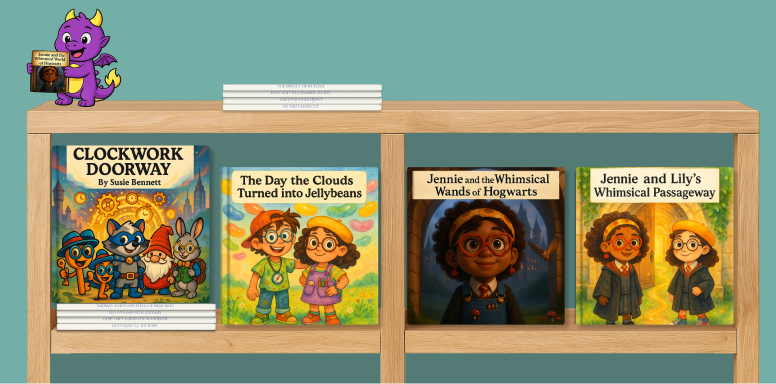
💸 The Cost Barrier That Kills Projects Before They Start
For most aspiring children's book authors, professional illustration is the single largest expense — and the one that stops projects cold. Market data from 2026 shows the full scope of what authors face.
$3,500–$10,000+ — Typical cost range for a full children's picture book illustration project in 2026, with per-page rates of ~$200 for single pages and ~$400 for two-page spreads
Cover art alone — the single highest-stakes visual in any children's book — commands $4,000 to $5,000 from experienced illustrators. That's before editing, layout design, ISBN registration, and print production. For a first-time author testing whether their bedtime story resonates beyond their own living room, spending five figures before knowing if the book will sell is a bet most cannot afford to make.
And these aren't inflated numbers. When you commission a professional illustrator, you're paying for character design, visual storytelling decisions, sketch rounds, revision cycles, color development, and print-ready file preparation. The work justifies the price — the problem is that it prices out the vast majority of people who have stories worth telling.
⏳ The Timeline That Tests Every Author's Patience
Traditional publishing moves at an institutional pace. Even after securing a deal — which itself can take years of querying agents and editors — the typical timeline from accepted manuscript to bookshelf stretches to two years. And the financial reward?
Self-publishing compresses the timeline dramatically and offers royalties of 25–75% of the retail price. But it shifts the entire production burden onto the author: finding illustrators, negotiating revision rounds, managing layout artists, navigating print specifications, and orchestrating marketing — essentially operating a one-person publishing house with no training manual.
🎨 The Consistency Crisis With Generic AI
This is where off-the-shelf AI tools fail most visibly. Most AI image generators were designed to create single, standalone images — not sequential visual narratives where the same character must look identical across every spread. Hair color drifts. Clothing changes between pages. A character who appears six years old on spread three suddenly looks twelve on spread seven. Facial features wander. Art styles shift subtly from page to page, creating a visual experience that feels disjointed rather than intentional.
"Most AI illustration tools were built to generate one-off images, not 20-page storybooks" — Analysis of why current AI tools struggle with consistent characters in sequential storytelling
While tools like ChatGPT or Midjourney can produce beautiful individual images, they lack the spread-aware architecture that children's book creation demands. An author using these tools ends up spending hours regenerating images, manually editing inconsistencies, and still publishing books where the visual narrative doesn't hold together. The tool produces output; it doesn't understand picture book craft.
📚 The Publishing Complexity Nobody Warns You About
Even with a complete manuscript and finished illustrations, getting a children's book into readers' hands requires navigating a maze of technical decisions: trim sizes (8×10? 8.5×8.5?), paper finish (matte vs. coated vs. silk), color profiles (RGB for screens, CMYK for print), bleed margins, spine width calculations, ISBN registration, barcode placement, metadata optimization for discoverability, and separate file setups for Amazon KDP, IngramSpark, and direct sales — each with different specifications.
Authors frequently underestimate the production complexity. A beautifully written and illustrated book can still fail if the files don't meet printing specifications, the cover dimensions are wrong, or the interior layout doesn't account for gutter margins that swallow text near the spine.
The Jenova Solution
Jenova eliminates the production bottleneck by providing specialized AI agents for every stage of children's book creation. Instead of coordinating freelance illustrators, layout artists, editors, and marketing consultants — each on their own timeline and fee schedule — authors work with purpose-built agents that understand children's literature conventions, maintain character consistency across spreads, and produce professional output ready for publishing platforms.
| Traditional Approach | Jenova |
|---|---|
| $3,500–$10,000+ for illustration alone | AI-generated illustrations with consistent characters throughout |
| Weeks of revision rounds with freelancers | Instant iteration and real-time visual adjustments |
| Separate professionals for writing, art, layout, export | Unified platform with specialized agents for each production stage |
| Generic AI that loses character identity page to page | Dedicated children's book agent built for spread-by-spread consistency |
| Manual coordination across 3–5 professionals | Single platform orchestrating the entire workflow end-to-end |
| Months from concept to finished files | Days from first idea to print-ready PDF |
Story Development That Thinks in Spreads
The Children's Book Creator doesn't simply write text and pair it with pictures. It thinks in spreads — the fundamental unit of picture book storytelling. Every children's picture book depends on page-turn momentum: what the reader sees before turning the page, what's revealed after, and how text and illustration share the narrative load across each opening. This agent structures stories around the physical architecture of the book itself.
For authors who want deeper narrative development before moving to illustration, the Creative Fiction Writer provides original fiction development across any genre — from whimsical rhyming tales for toddlers to complex middle-grade adventures — with research-backed world-building and editorial-level prose refinement.
"Write a 32-page picture book about a shy octopus named Opal who learns to share her ink paintings with the ocean community. Target age 3–6, rhyming text, with a page-turn surprise on spread 12 when her secret gallery is discovered."
Illustration With Built-In Consistency
Visual consistency across every spread is where the Children's Book Creator separates itself from generic image generation. By establishing detailed character profiles at the start — appearance, clothing, proportions, expression range, art style — the agent maintains visual identity throughout the entire book. Maya looks like Maya on every single page. Her yellow rain boots don't vanish. Her curly hair doesn't straighten.
The Graphic Designer extends this capability to standalone illustration assets: character design sheets, scene compositions, backgrounds, and visual elements across multiple art styles from watercolor to bold digital to hand-drawn.
While tools like Midjourney produce stunning standalone images, and DALL-E excels at creative exploration, neither was architectured for the sequential, consistency-dependent demands of children's book production. Jenova's agents are built specifically for this workflow.
Professional Publishing Output
Once story and illustrations are complete, the PDF Doc Generator produces professional files with the exact specifications required by publishing platforms — trim sizes, bleed margins, CMYK color profiles, and page sequencing formatted for Amazon KDP, IngramSpark, BookVault, and other print-on-demand services.
Platform Intelligence
Jenova provides unified access to the newest models from OpenAI, Anthropic, Google, DeepSeek, xAI, and more — no vendor lock-in, no juggling multiple subscriptions. Persistent cross-session memory means your agents remember character details, style preferences, and project context across every session. And with full feature parity across web, iOS, and Android, you can develop your book from any device.
Specialized AI Agents for Children's Book Creation
✍️ Story & Writing
Children's Book Creator — The dedicated children's book studio. This agent creates illustrated stories spread by spread, handling everything from board books to chapter books with consistent art, read-aloud text, and intentional page-turn design. It understands the unique architecture of children's literature: how much text belongs on each page, where wordless spreads maximize emotional impact, and how illustration and text divide the storytelling.
- Spread-by-spread creation with consistent character art
- Read-aloud rhythm, rhyme scheme support, and age-appropriate vocabulary
- Board books, picture books, early readers, and chapter books
- Page-turn architecture with surprise, tension, and humor
Creative Fiction Writer — For authors who want to develop their narrative at a deeper level before moving to illustration. This agent builds original stories across any children's genre — fantasy adventures, realistic fiction, educational narratives, bedtime stories — with character arc construction, thematic development, and polished prose from first draft to final manuscript.
- Genre-aware storytelling across all children's literature formats
- Character development, conflict structure, and narrative arc design
- Research-backed world-building for fantasy, historical, and educational content
Writing Assistant — Adapts to any format, audience, and domain. Use it to refine your manuscript's voice, adjust reading level for a specific age group, polish rhyming schemes, tighten pacing, or rework dialogue. It learns your writing style and produces output that sounds like you wrote it — not like a machine generated it.
- Voice matching and style adaptation across drafts
- Reading level adjustment calibrated to target age groups
- Manuscript editing, revision, and structural feedback
🎨 Illustration & Visual Design
Graphic Designer — Creates illustrations, character designs, and visual assets tailored to children's book aesthetics. Whether you need watercolor landscapes, bold digital character art, or soft pastel nursery scenes, this agent produces publication-quality visuals with stylistic control and consistency.
- Character design with pose, expression, and outfit variations
- Scene composition, background illustration, and environmental design
- Multiple art styles: watercolor, flat vector, digital painting, hand-drawn
Photo Editor — Professional retouching and editing for AI-generated illustrations. Adjust colors, lighting, and composition. Enhance consistency between spreads. Prepare author photos and marketing materials for professional presentation.
- Color correction and art style consistency across spreads
- Image enhancement, retouching, and format optimization
- Print-quality preparation for different output specifications
Marketing Visual Designer — Creates professional cover art, campaign imagery, social media assets, and promotional graphics. For children's books, cover design is the highest-stakes visual decision — this agent produces covers that compete on retail shelves and Amazon search thumbnails.
- Book cover design optimized for retail and digital display
- Series branding with consistent visual identity
- Promotional imagery for launch campaigns and events
Prompt Generator — Helps authors craft precise, effective prompts for generating specific illustration styles, compositions, and character details. Particularly valuable for authors new to AI image generation who want professional-quality results without extensive prompt engineering experience.
- Prompt engineering for consistent character generation
- Style-specific prompt construction across art mediums
- Iterative prompt refinement for precision output
📦 Publishing & Export
PDF Doc Generator — Produces professional, print-ready PDF files with adaptive design. Handles the specific requirements of children's book publishing: custom trim sizes, full-bleed specifications, CMYK color profiles, and proper page sequencing for print-on-demand platforms.
- Print-ready output for Amazon KDP, IngramSpark, and BookVault
- Custom trim sizes (8×10, 8.5×8.5, and more) with bleed margins
- Professional typography, layout, and page architecture
📣 Marketing & Promotion
Product Copywriter — Writes conversion-focused book descriptions, Amazon listings, back cover copy, and promotional text that speaks directly to parents, teachers, librarians, and gift-buyers — the actual purchasers of children's books.
- Amazon book descriptions optimized for search visibility and conversion
- Back cover copy, jacket flap text, and series descriptions
- Age-group and interest-based positioning for target audiences
Social Media Content Generator — Creates platform-native posts for Instagram, TikTok, Facebook, and Pinterest to build your author brand and promote book launches with engagement hooks tailored to each platform's audience behavior.
- Platform-specific content for BookTok, Bookstagram, and author communities
- Launch campaign calendars with sequenced promotional content
- Engagement-optimized post copy, hashtag strategy, and visual suggestions
Poster Maker — Produces promotional materials for book launches, school visits, library readings, and author events. Creates reading corner decorations, classroom posters, and event signage that match your book's visual style.
- Book launch promotional materials and event graphics
- School visit and library reading posters
- Classroom display materials matching your book's art style
📖 Related Visual Storytelling
If your creative ambitions extend beyond traditional picture books, Jenova also offers specialized agents for other visual storytelling formats:
- Manga Creator — Complete manga production with panel flow, consistent art style, and visual pacing from one-shots to serialized epics
- Comic Creator — Sequential art with dynamic layouts and bold visual styles for single issues to graphic novel sagas
- Webtoon Creator — Mobile-first vertical scroll storytelling with episode hooks, full-color consistency, and 100+ episode series support
How to Create a Children's Book With AI
Step 1: Develop Your Story Concept and Structure
Open the Children's Book Creator and share your story idea, target age group, desired format, and any thematic priorities. The agent helps you develop your concept into a structured narrative with proper pacing, age-appropriate vocabulary, and deliberate spread-by-spread architecture — deciding what happens on each opening and how every page turn advances the story.
"I want to create a 32-page picture book for ages 4–7 about a girl named Maya who discovers that her grandmother's garden grows different flowers based on the emotions of whoever tends them. Rhyming text, warm watercolor style, with a page-turn surprise on spread 12."
Step 2: Lock Your Characters
Before any illustration begins, establish detailed character profiles. Describe each character's appearance, personality, clothing, and visual quirks. The agent uses these profiles as the consistency anchor for every illustration throughout the book — ensuring Maya looks like Maya on page 1 and page 32.
"Maya is 6 years old with dark curly hair in two puffs, warm brown skin, big curious eyes, and bright yellow rain boots she wears everywhere — even on sunny days. Grandmother Lena has silver-streaked locs, laugh lines, a green gardening apron, and always has soil on her hands."
Step 3: Create Illustrations Spread by Spread
Work through your book page by page. The agent generates illustrations for each spread while maintaining character consistency, art style continuity, and visual storytelling that complements the text. Each spread is designed with intentional text placement areas, a clear visual focal point, and momentum toward the page turn.
"Create spread 5: Maya kneels in garden soil, carefully planting seeds with both hands. As she hums happily, tiny golden sunflowers begin sprouting between her fingers. Grandmother Lena watches from the back porch with a knowing smile, holding her watering can."
Step 4: Refine, Iterate, and Polish
Review your complete book and iterate on any spreads that need adjustment. Change character expressions, adjust background compositions, modify color palettes, rework text placement, or rewrite passages. Use the Writing Assistant to perfect your rhyming scheme or adjust vocabulary for a different reading level, and the Photo Editor to fine-tune color consistency across illustrations.
"On spread 8, make the storm clouds darker and more dramatic. Show Maya looking worried but determined, clutching a wilting sunflower. The garden flowers around her should be drooping, with colors fading to grays and muted tones."
Step 5: Export, Publish, and Launch
Generate print-ready files with the exact specifications required by your publishing platform. Then create your marketplace presence: book descriptions, back cover copy, and a launch campaign across social media — all using specialized agents designed for each task.
"Export my completed book as a print-ready PDF for Amazon KDP: 8×10 inch trim size, full bleed, CMYK color profile, 32 pages including front and back matter."
Real-World Use Cases
📚 First-Time Author Turning a Bedtime Story Into a Real Book
Scenario: Anna, an elementary school teacher in Chicago, has been telling her students an original story about a dragon afraid of his own fire for four years. Parents keep asking when she'll publish it. She has the story in her head but zero illustration budget and no publishing experience.
Traditional Approach: $5,000–$8,000 for professional illustration, 3–6 months coordinating revision rounds with a freelancer, plus separate costs for editing ($200–$500), cover design ($500–$2,000), layout ($300–$800), and print setup. Total investment before selling a single copy: potentially $7,000–$12,000.
Jenova: Anna describes her story concept and characters to the Children's Book Creator over a weekend. By Sunday evening, she has a complete 32-page picture book with consistent character illustrations across every spread — the dragon looks the same on page 1 and page 31. She exports a print-ready PDF and uploads to Amazon KDP the following week.
- Complete picture book from concept to print-ready file in a weekend
- Consistent character art across 16 illustrated spreads
- Investment: monthly Jenova subscription instead of thousands in production costs
- Timeline compressed from 4–6 months to days of active creation
💼 Self-Publishing Author Scaling a Series
Scenario: David writes educational early readers featuring animal characters who solve real-world problems through science concepts. His first book performed well, and he wants to publish four more books in the series with the same characters appearing consistently across all volumes.
Traditional Approach: Commissioning the same illustrator for five books at $4,000–$6,000 per book totals $20,000–$30,000, with a production timeline stretching 12–18 months. If the original illustrator becomes unavailable, finding a replacement who can match the existing style adds months of art direction and revision.
Jenova: David uses the Children's Book Creator to maintain his established character designs across all five volumes with perfect visual consistency. The Creative Fiction Writer helps develop age-appropriate science concepts woven into engaging narratives, ensuring each book teaches genuine scientific principles while telling a compelling story.
- Five-book series with identical character designs across every volume
- Educational content integrated naturally into narrative storytelling
- Entire series completed in weeks instead of over a year
- No risk of losing visual consistency due to illustrator availability
📱 Parent Creating a One-of-a-Kind Personalized Gift
Scenario: A father in Manila wants to create a custom birthday book where his daughter is the main character, adventuring through Philippine landmarks with her real pets — a tabby cat named Mochi and a corgi named Bean.
Traditional Approach: Commission a custom illustration project ($2,000+ for a personalized concept), wait 6–8 weeks for delivery, or settle for generic "insert-name-here" personalized books with templated illustrations and limited customization.
Jenova: He describes his daughter, her pets, and the Philippine settings to the Children's Book Creator on his phone during his morning commute. By evening, he has a complete personalized adventure story with illustrations of characters matching his descriptions — Mochi the tabby, Bean the corgi, and his daughter exploring Chocolate Hills and Mayon Volcano. He exports the PDF and orders a professionally printed hardcover.
- Fully personalized story with custom characters based on real people and pets
- Created entirely on mobile with full feature parity across iOS and Android
- One-of-a-kind gift that no store, anywhere, could replicate
- Culturally specific settings and contexts without sourcing specialized artists
🎯 Teacher Building Culturally Relevant Classroom Materials
Scenario: A second-grade teacher in Toronto needs reading materials that reflect her classroom's cultural diversity — Filipino, South Asian, Nigerian, and Caribbean heritage families — while aligning with the current curriculum unit on environmental stewardship and community responsibility.
Traditional Approach: Search existing book catalogs for titles that partially match. Find a few that address either cultural representation or environmental themes, but rarely both. Supplement with photocopied worksheets. Compromise on representation and settle for "close enough."
Jenova: She uses the Children's Book Creator to produce short, illustrated stories featuring characters who look like her specific students, addressing eco-friendly themes from the curriculum with scenarios grounded in each cultural context. The Graphic Designer creates matching classroom posters, and the Poster Maker produces reading corner displays that coordinate with the book illustrations.
- Stories reflecting the specific cultural demographics of her classroom
- Curriculum-aligned themes, vocabulary, and learning objectives
- Matching visual materials for wall displays and reading corners
- New stories created whenever the curriculum unit changes — no catalog limitations
🌍 Multilingual Author Reaching International Markets
Scenario: An author-illustrator in São Paulo wants to publish a children's book in Portuguese and English simultaneously, with illustrations that authentically reflect Brazilian childhood — not generic Western settings repurposed with different text.
Traditional Approach: Develop the book in one language, then hire a translator, reformat the entire layout to accommodate different text lengths (Portuguese text typically runs 15–20% longer than English), and manage two parallel production workflows with separate proofing cycles.
Jenova: The author creates the complete story in Portuguese using the Children's Book Creator, generates culturally authentic illustrations featuring Brazilian settings, foods, vegetation, and skin tones, then uses the Writing Assistant to create a natural English adaptation — not a stiff translation but a genuine English-language retelling. Both versions share the same illustration set with localized text, exported as separate print-ready PDFs.
- Culturally authentic illustrations without sourcing artists familiar with specific cultural contexts
- Bilingual editions from a single illustration set with localized text
- Natural-sounding adaptation rather than literal translation
- Separate export files for each language with adjusted text layouts
Frequently Asked Questions
Is Jenova free for creating children's books?
Yes. Jenova offers a free tier with access to all core features, including the Children's Book Creator and every other specialized agent. Paid plans starting at $20/month provide significantly increased usage (30× compared to free), custom model selection, and no watermarks on generated images and documents — essential for authors producing books intended for sale. Usage resets monthly on your billing date with the full limit available from day one.
How is Jenova different from ChatGPT or Midjourney for children's book creation?
Generic AI tools produce standalone images and text as separate outputs, forcing authors to manually coordinate between different tools and manage character consistency themselves. The Children's Book Creator is purpose-built for spread-by-spread book creation — it maintains character identity across every page, integrates text and illustration within a unified workflow, and understands the structural conventions of children's literature: pacing, page-turn architecture, read-aloud rhythm, and age-appropriate vocabulary. It's the difference between a tool that makes images and a tool that makes books.
Can I publish an AI-created children's book on Amazon KDP?
Yes. Amazon KDP allows AI-generated content, including illustrations and cover art, and requires disclosure of AI-generated material during the publishing process. Jenova's PDF Doc Generator produces files that meet KDP's technical specifications for trim size, bleed, and color profile. A November 2025 study from NC State found most parents were open to AI-generated illustrations when the text was human-authored and images were reviewed for quality — suggesting that market acceptance is growing alongside the technology.
Does Jenova maintain character consistency across an entire book?
Character consistency is a foundational design principle, not an afterthought. By establishing detailed character profiles — appearance, clothing, proportions, expression range, and visual personality — at the start of your project, the Children's Book Creator maintains visual identity across every spread. This is precisely the challenge that causes generic AI image generators to fail for picture book production and the primary reason AI character consistency remains the most discussed challenge in children's book creator communities.
Can I create children's books on my phone?
Yes. Jenova offers full feature parity across web, iOS, and Android, with all settings and chat history syncing across devices. You can develop stories, generate and review illustrations, iterate on spreads, and export final files from any device. State-of-the-art speech-to-text means you can dictate your story ideas hands-free.
How long does it take to create a complete children's book?
A 32-page picture book can move from initial concept to print-ready PDF in as little as a single weekend of focused work, depending on how much iteration and polish you want. Compared to the traditional production timeline where illustration alone takes 3–6 months and designers report that AI tools reduce illustration workload by 60–70%, the compression is dramatic. Most authors find that the creative decision-making — choosing between visual options, refining character details, polishing text — takes more time than the generation itself.
From Blank Page to Published Book
The children's book market is projected to reach $13.81 billion by 2030, with industry trends pointing toward diverse storytelling, eco-friendly themes, interactive formats, and indie publishing — all favoring independent authors with fresh perspectives and the tools to execute professionally. The barriers that kept countless stories unpublished for decades — five-figure illustration budgets, multi-month production timelines, the technical complexity of print-ready file preparation — are no longer immovable.
Whether you're a first-time author with a bedtime story your kids beg to hear again, a teacher creating culturally relevant classroom materials, a parent designing a one-of-a-kind gift, or a self-publisher scaling a series, Jenova's specialized agents cover every stage: the Children's Book Creator for spread-by-spread illustrated stories, the Creative Fiction Writer for deep narrative development, the Graphic Designer for standalone visual assets, and the PDF Doc Generator for publish-ready files formatted to your platform's exact specifications.
The story you've been carrying doesn't need to wait for a five-figure budget or a two-year timeline. Explore the full agent library at Jenova and bring your children's book to life.