Best AI for Bartender Coaching: Craft Perfect Cocktails, Build Your Home Bar & Learn the Science Behind Every Drink
2026-05-07
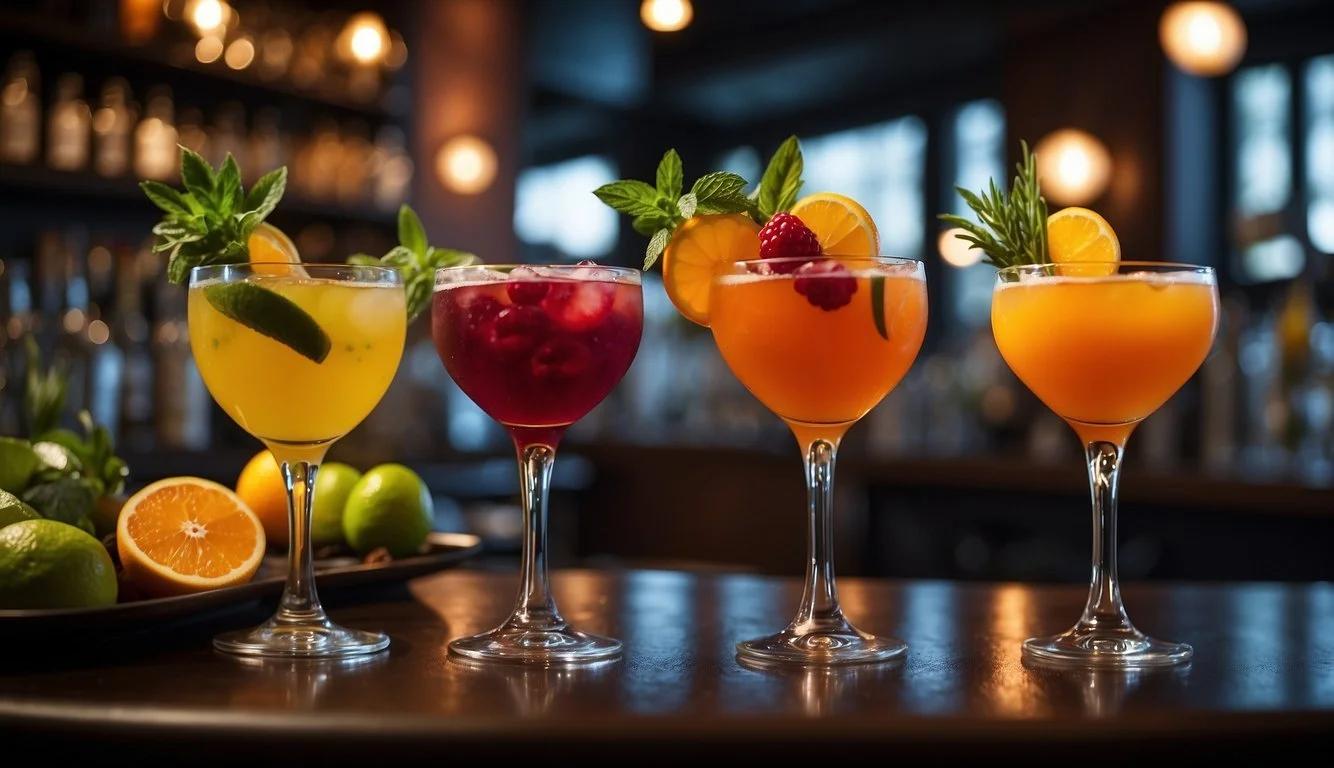
Looking for the best AI for bartender coaching? AI Bartender Coach turns any kitchen counter into a guided mixology classroom — delivering personalized cocktail recipes, the science behind every technique, and structured home bar building plans adapted to your exact bottles, budget, and palate. Instead of spending $75–$200 on a single in-person cocktail class or patching together contradictory advice from YouTube and Reddit, you get an adaptive mentor who understands dilution physics, flavor balance theory, and spec development — available whenever you're ready to pour.
✅ Personalized recipes built from whatever bottles you actually own ✅ Technique coaching grounded in science — shaking, stirring, ice, syrups, infusions ✅ Tiered home bar blueprints from $100 starter setups to professional programs ✅ Photo analysis of your bar, cocktails, and menus with actionable feedback ✅ Non-alcoholic and low-ABV craft treated as full disciplines
Over 9,500 home bartenders, cocktail enthusiasts, and working professionals have used AI Bartender Coach to sharpen their craft — from making a first proper Old Fashioned to designing full seasonal menus for busy bar programs. Here's why this kind of tool has become essential in 2026's cocktail landscape, and exactly how it works.
Quick Answer: What Is the Best AI for Bartender Coaching?
AI Bartender Coach is a personal mixology mentor that delivers tailored cocktail recipes, technique science, and bar-building strategy based on your ingredients, experience level, and taste preferences — in seconds.
Unlike recipe databases or generic search results, it teaches the principles behind great drinks so you can improvise, substitute, and create, not just follow instructions.
Key capabilities:
- Generate cocktails from your exact inventory — tell it what's on your shelf
- Understand why techniques work — dilution rates, temperature curves, aeration science
- Build a home bar in stages, optimized for your drinking preferences and budget
- Upload photos for expert-level feedback on your setup, presentation, or menu
Why Cocktail Education Is Broken in 2026
Cocktail culture has never been more popular — or more sophisticated. Penn State Extension reports that one-third of American alcohol consumption now happens in cocktail format, and the U.S. bars and nightclubs industry generates approximately $39 billion in annual revenue. The 2026 trend landscape is dense with techniques that demand understanding, not just recipe-following: wine as a cocktail modifier (67% consumer interest), waste-based spirits, ready-to-eat cocktail formats, and the continued rise of low-ABV hospitality.
But learning this craft still hits the same walls it always has:
- Classes are expensive and one-off — a few hours of guided practice, then you're on your own
- Online content teaches the "what" but not the "why" — recipes without rationale
- Books can't adapt — they don't know what's on your shelf or what you like
- Professional mentorship is gatekept — you need industry connections most enthusiasts don't have
- The ingredient landscape is overwhelming — dozens of spirit categories, hundreds of modifiers, and no clear starting point
💸 The Price of Learning to Make Drinks Well
In-person cocktail classes across U.S. cities run $47 to $200 per person for a group session lasting two to three hours. Private instruction reaches $350 per session. For that investment, you typically learn three drinks, practice basic technique, and leave with a recipe card.
Formal bartending programs designed for career entrants cost between $200 and $700 for in-person courses running 40+ hours, while online certifications range from $80 to $250. These programs teach volume service and speed — useful for professional bartenders, but poorly suited for the home enthusiast who wants to understand why a Daiquiri ratio works, not how to sling 200 covers on a Friday night.
**$1,302 million** — projected global bartender kits market size by end of 2025, up from $939 million in 2021 Source: Cognitive Market Research
That growth signals something important: people are investing in home bar equipment at scale. But equipment without knowledge produces mediocre drinks and wasted ingredients.
📚 Recipes Are Everywhere — Understanding Is Not
The internet has no shortage of cocktail recipes. A search for "Whiskey Sour recipe" returns thousands of results. The problem is that those results rarely explain:
- Why you shake a Whiskey Sour but stir a Manhattan
- How ice format affects dilution and therefore final flavor
- Why rich simple syrup changes a spec differently than standard 1:1
- How to adjust a recipe when you're missing an ingredient without ruining the drink's intent
- What makes a "balanced" cocktail balanced in the first place
A recipe is a snapshot. A mentor builds the mental model that lets you understand — and eventually create — any drink.
🕐 No Feedback Loop for Solo Learners
When you learn alone, mistakes compound silently. Your shake might be too short (underdiluted, unpleasant texture). Your citrus might be oxidized (flat, bitter). Your proportions might be off by half an ounce (the difference between balanced and cloying). Without someone experienced to taste, watch, and correct, you develop habits that produce consistently underwhelming results — and you don't know why.
How AI Bartender Coach Transforms the Learning Experience

AI Bartender Coach occupies the gap between a $200 cocktail class and aimless recipe browsing. It provides the depth, patience, and adaptability of a senior bar mentor — one who's spent years developing specs, training junior bartenders, and understanding the science behind every technique.
| Learning on Your Own | With AI Bartender Coach |
|---|---|
| Search 10 sites for conflicting recipes | One personalized recipe based on your exact bottles |
| Follow steps without understanding them | Learn the science behind every technique |
| Buy a "top 10 spirits" list that doesn't match your taste | Get a bar plan built around what you drink |
| No feedback on what you made | Upload a photo and get specific critique |
| Hit a wall when you're missing an ingredient | Get substitutions that preserve the drink's intent |
| One style at a time, maybe | Covers classics, tiki, modern craft, NoLo, coffee cocktails, batch, and more |
| $75–$200 per session, one-time | Available anytime, unlimited depth |
🔬 Science-First Technique Training
What makes this AI fundamentally different from recipe aggregators is its commitment to explaining why. Every technique recommendation comes with the underlying science:
- Shaking vs. stirring — not just "shake when there's citrus" but why aeration and rapid chilling matter for acid-containing drinks and why stirring preserves the silky texture spirit-forward cocktails need
- Ice science — directional freezing for clarity, how surface area affects dilution rate, when to use a large cube vs. crushed vs. pebble
- Syrup chemistry — why rich simple (2:1) changes a spec differently than standard (1:1), how demerara alters mouthfeel, preservation techniques for shelf stability
- Citrus management — super juice methodology, acid-adjusted citrus for consistency, oleo saccharum for depth
- Clarification — milk punch (both historical and modern methods), agar clarification, gelatin fining
- Fat-washing and infusions — temperature thresholds, timing protocols, flavor extraction curves
🌍 Coverage Across Every Cocktail Tradition
The 2026 cocktail landscape isn't monolithic. SevenFifty Daily reports that this year's trends include waste-based spirits moving mainstream, wine as a cocktail ingredient, ready-to-eat cocktail formats, and the maturation of agave spirits beyond tequila and mezcal. Southern Glazer's 2026 Liquid Insights Tour identified cordials and aperitifs, amplified Asian influence, tiny pours and tasting menus, and minimal-presentation maximalist flavor as dominant directions.
AI Bartender Coach keeps pace with all of this — covering classical canon, modern craft development, tiki methodology, low-ABV and non-alcoholic programs, coffee cocktails, wine-based cocktails, batch and large-format service, and emerging techniques. If it involves mixing a drink, it's in scope.
📸 Visual Feedback Through Photo Analysis
One of the most powerful features is the ability to upload photos and receive expert analysis:
- Your home bar → Inventory assessment, gap analysis, prioritized addition recommendations
- A cocktail you just made → Presentation critique, technique diagnosis, spec adjustment suggestions
- A cocktail menu → Trend identification, standout picks, spec analysis of interesting builds
- Your ingredient collection → "Here's exactly what you can make with this, ranked by quality"
This replaces the feedback loop that solo learners lack — giving you specific, actionable critique rather than generic encouragement.
Step-by-Step: How to Use AI Bartender Coach
Step 1: Share Your Starting Point
Begin by telling the AI where you are. A complete beginner who's never made a cocktail gets different guidance than a home enthusiast with 30 bottles or a working bartender developing a menu. The agent calibrates vocabulary, assumed knowledge, and complexity automatically.
"I'm completely new to cocktails. I have a bottle of bourbon, some limes, and basic kitchen tools. Where do I start?"
"I've been making drinks at home for about a year. I want to understand why my stirred cocktails never taste as good as what I get at craft bars."
Step 2: Get Recipes Tailored to Your Actual Bottles
Tell the agent what you have — spirits, modifiers, citrus, sweeteners, bitters — and it builds recipes specifically from your inventory. Every recipe comes in a complete, actionable format: Name, Glass, Ice, Ingredients (oz and ml), Method, Garnish, and Notes explaining why the spec works.
"I have rye whiskey, sweet vermouth, Angostura bitters, Campari, and some oranges. What are my best options?"
Step 3: Dive Deep on Any Technique
Follow up on anything in the recipe. Ask why a specific ratio was chosen, how substituting one ingredient changes the drink's profile, what happens if you shake instead of stir, or how temperature affects the final result. The agent explains with the specificity of a seasoned professional.
"You said to stir this for 30 seconds. What's actually happening during those 30 seconds — how much dilution, how much temperature drop?"
Step 4: Build or Expand Your Home Bar
Share your budget, your drinking preferences, and what you already own. AI Bartender Coach generates a tiered acquisition plan — essential bottles first, equipment priorities second, and a natural growth path that maximizes cocktail variety at each stage. It recommends for your reality, not an abstract ideal.
"I have $200 to start a home bar from scratch. I mostly like citrus-forward and spirit-forward cocktails. What do I buy first?"
Step 5: Upload Photos for Expert Critique
Snap a photo of your cocktail, your bar setup, or a menu you're curious about. The agent provides detailed, actionable feedback — not "looks great!" but specific observations about presentation, technique indicators, and improvement opportunities.
"Here's a photo of the Negroni I just made. How does it look, and what should I do differently?"
Step 6: Scale and Batch for Entertaining
When you're hosting, ask the agent to convert any recipe to batch format with precise scaling, pre-dilution calculations, and a prep timeline. It accounts for the physics of batching — dilution changes, citrus freshness windows, and carbonation considerations.
"I'm hosting 15 people on Friday. Convert my house Margarita recipe to a batch with a prep timeline."
Real Use Cases and What They Look Like
🏠 First-Time Home Bar Builder
Scenario: You've watched enough cocktail content to want to start making your own drinks, but you have no equipment, no bottles, and a $150 budget.
What usually happens: You buy a "starter home bar" list from the first blog post you find — typically 8–10 bottles chosen for generic breadth, not for what you actually want to drink. Half the bottles sit untouched for months. You make three drinks before the novelty fades.
AI Bartender Coach: Asks what you like to drink first. Builds a bottle list around your palate — if you love citrus-forward drinks, it prioritizes differently than if you prefer spirit-forward sips. Recommends minimum viable equipment (jigger, shaker, strainer, barspoon — skip the rest for now). Teaches you 6–8 cocktails from your specific bottles, then maps out what to add next for maximum recipe expansion.
- Bottle selection driven by your taste, not a generic list
- Equipment recommendations by priority, not completeness
- Clear expansion path as your interest grows
🎉 Party Host Who Doesn't Want to Bartend All Night
Scenario: You're having 20 people over on Saturday. You want to offer impressive cocktails but spend the evening with your guests, not behind a makeshift bar.
What usually happens: You find a "party cocktail" recipe online, triple it without understanding how scaling works, and end up with a punchbowl that's either watery or too strong.
AI Bartender Coach: Designs two batch cocktails plus one non-alcoholic option based on your existing bottles, calculates precise scaling with pre-dilution (accounting for the fact that batch cocktails don't get shaken individually), provides a prep timeline starting the day before, and suggests presentation that looks impressive with minimal effort.
- Accurate batch calculations that account for dilution science
- Advance-prep timelines so everything is ready before guests arrive
- Non-alcoholic options crafted with equal care and complexity
🍸 Curious Drinker Who Wants to Understand the Menu
Scenario: You're at a cocktail bar with a creative menu and you want to understand what you're ordering — not just pick something that sounds good and hope for the best.
What usually happens: You ask the bartender (who may be slammed), pick based on spirit preference alone, or default to something familiar.
This AI mentor: Quick, specific guidance from your phone. Describe or photograph the menu, and the agent highlights which specs are doing something interesting, what flavor profiles to expect, and which drinks pair well with what you're eating. Takes 30 seconds, and you order with confidence.
- Menu analysis on demand from any device
- Flavor profile predictions from spec composition
- Food pairing recommendations with reasoning
💼 Working Bartender Developing a Seasonal Menu
Scenario: You've been behind the bar for two years and your manager wants you to propose a fall cocktail menu. You know your classics, but you've never designed a full program.
What usually happens: You attend a $250+ industry seminar, shadow a more experienced bartender, or experiment through costly trial and error — buying ingredients for concepts that may not work.
AI Bartender Coach: Discusses menu architecture — the balance between familiar anchors and creative signatures, spec development philosophy (template thinking, ratio adjustments), pricing strategy, seasonal ingredient sourcing, and how to structure a 10-drink program that flows from light to bold. It's the brainstorming partner and sounding board that a senior bar director provides, available whenever creativity strikes.
- Menu design philosophy, not just recipes
- Spec development guidance using template-based thinking
- Cost and pricing considerations for commercial viability
📱 Quick Reference While Shopping
Scenario: You're at the liquor store with 10 minutes to spare. You want to pick up one bottle that will unlock the most new cocktails from what you already have at home.
AI Bartender Coach: Tell it what's on your shelf, and within seconds it identifies the single bottle that maximizes your cocktail repertoire. It factors in versatility, value, and what you actually enjoy drinking — not just what's "essential" in the abstract.
- Instant, personalized bottle recommendations
- Works on mobile with full feature parity across web, iOS, and Android
- Decision support grounded in your actual inventory
Frequently Asked Questions
What makes this the best AI for bartender coaching?
AI Bartender Coach is purpose-built for mixology education — not a general-purpose chatbot answering drink questions on the side. It teaches the science behind techniques, adapts to your inventory and skill level, provides photo-based feedback, and covers every cocktail style from classical canon through 2026's emerging trends like wine cocktails, waste-based spirits, and ready-to-eat formats. For anyone serious about understanding cocktails, not just following recipes, it's the most comprehensive AI option available.
How much does AI Bartender Coach cost?
You can start using AI Bartender Coach for free with limited usage. Paid plans begin at $20/month and unlock significantly expanded usage along with features like custom model selection. Every core capability — recipe generation, technique coaching, bar building, photo analysis — is available at every tier.
Can it help me make non-alcoholic cocktails?
Yes — non-alcoholic and low-ABV drinks are treated as full craft disciplines, not afterthoughts. The agent covers NA spirit alternatives, shrubs, acid phosphate, NA bitters, and complex flavor-building techniques designed to produce genuinely satisfying zero-proof drinks. This reflects the broader industry movement: Bacardi's 2026 Cocktail Trends Report highlights elevated NoLo hospitality as a defining direction for the year.
Is this useful for professional bartenders, or just home enthusiasts?
Both. The agent calibrates depth automatically — beginners get jargon-free coaching and foundational technique explanations, while experienced professionals get spec development discussion, menu engineering frameworks, cost analysis, and creative brainstorming at a technical level. Whether you're making your first Daiquiri or designing a 15-cocktail seasonal program, the guidance scales to match.
Can I upload a photo of my bar and get recommendations?
Absolutely. Share a photo of your home bar, your bottles, a cocktail you've made, or a menu from a bar you're visiting. The agent identifies what you have, assesses gaps, suggests what to make or buy next, and provides specific presentation or technique feedback. This is one of the most common ways users interact with the tool — and one of the most valuable for getting personalized guidance.
Does it only cover classic cocktails?
No. AI Bartender Coach spans the full cocktail spectrum: classical recipes and their family trees, modern craft development, tiki methodology, wine-based cocktails, coffee cocktails, low-ABV spritzes, non-alcoholic builds, batch and large-format service, and emerging 2026 trends including ready-to-eat cocktail formats, waste-based spirits, and agave spirits beyond tequila. If it involves mixing a drink, it's covered.
Stop Guessing, Start Understanding
The cocktail world in 2026 rewards knowledge. With one-third of American alcohol consumption now in cocktail format, a global bartender tools market surpassing $1.3 billion, and trends demanding understanding of techniques like clarification, fat-washing, and acid adjustment, the gap between following a recipe and truly understanding the craft has real consequences — wasted ingredients, mediocre drinks, and missed potential.
The best AI for bartender coaching doesn't make your drinks for you. It makes sure that when you pick up a shaker, measure an ounce, or choose a bottle — you understand why you're doing what you're doing, and how to adjust when things don't go according to plan.
Start using AI Bartender Coach today and turn every drink you make into a lesson that sticks — on your schedule, at your pace, with your bottles.