Best AI for Art Advisory: Artwork Analysis, Auction Intelligence & Collection Building Across Global Traditions
2026-05-20

You're standing in a gallery booth at a fair, drawn to a painting you can't stop thinking about. The price tag is hidden. The artist's name is unfamiliar. You want to know if the work is significant, whether the price is reasonable, and how it fits within a broader art-historical conversation — but the kind of person who can answer those questions charges $300 an hour and has a six-week waitlist. This is the reality for most art buyers, artists, and collectors in 2026: the expertise exists, but access to it doesn't. Art Advisor AI is the best AI for art advisory available today — providing museum-caliber artwork analysis, live auction intelligence, connoisseurship-level critique, and strategic collection guidance across Western and global traditions, on any device, in seconds.
✅ Formal artwork analysis with attribution reasoning, condition assessment, and comparative framing ✅ Live market research — recent auction results, comparable sales, and artist trajectory data ✅ Collection strategy across budgets, geographies, and media ✅ Cultural depth across African, Asian, Latin American, Indigenous, Middle Eastern, and Oceanic traditions ✅ Professional document generation — acquisition reports, inventory CSVs, artist research briefs
Since launching, this AI has supported over 31,000 collectors, artists, and art professionals — helping users identify undervalued works, navigate opaque gallery pricing, and build collections with strategic coherence, contributing to an estimated $6.2 million in more informed acquisition decisions. Here's why the best AI for art advisory matters more than ever in a market defined by opacity and rapid transformation.
Quick Answer: What Is Art Advisor AI?
Art Advisor AI is an expert-level AI art advisory tool that analyzes artworks, researches live market data, builds collection strategies, and provides cultural context across every global art tradition in real time.
Key capabilities:
- Upload artwork images for formal analysis — composition, technique, condition, attribution reasoning
- Research current auction results, comparable sales, and emerging artist trajectories
- Develop collection strategies tailored to your budget, aesthetic vision, and goals
- Generate professional documents: acquisition reports, collection inventories, artist briefs
The Art World's Information Problem Has Never Been Worse
The global art market rebounded 4% to an estimated $59.6 billion in 2025, with 41.5 million transactions — the highest volume on record. Dealer sales rose 2%, public auction sales climbed 9%, and 43% of dealers expect further improvement in 2026. The market is growing. But the information infrastructure supporting buyers, artists, and collectors hasn't kept pace:
- Pricing remains deliberately hidden — the single biggest barrier to new buyer participation
- Quality advisory is prohibitively expensive — $300–$500+/hour for human art advisors
- Due diligence requires multi-domain expertise most people don't have
- The market is fragmenting — private sales now account for 20% of auction house revenue, up from 12% a decade ago
- Non-Western traditions remain underserved by mainstream advisory infrastructure
🏷️ Hidden Prices Keep Buyers Out
Price opacity isn't a bug — it's the art world's operating system. Most galleries don't list prices publicly. Online platforms have improved transparency, but the data remains incomplete. Research by Artsy found that artworks listed with visible prices are 2 to 6 times more likely to sell than comparable works with hidden prices — yet the practice persists across the industry.
2 to 6 times more likely to sell — the documented impact of price transparency on art transactions, yet most galleries continue to hide pricing from potential buyers. Source: Artsy Online Collector Report
The result: potential collectors — including high-budget ones — self-select out of the market. They don't feel confident making offers when they can't benchmark fair value. The information asymmetry benefits insiders and penalizes everyone else.
📋 Due Diligence Is a Full-Time Job
Goldman Sachs' Art & Collectibles Strategy Group recommends that every serious acquisition involve assessing quality relative to an artist's body of work, conducting thorough market and price research, confirming authenticity and provenance, examining condition, and scrutinizing seller reputation. This isn't optional guidance — it's the minimum standard for informed buying.
But performing this level of due diligence requires expertise that spans art history, material science, market economics, and legal awareness. Most buyers — even enthusiastic ones with significant budgets — don't have this knowledge, and the professionals who do charge accordingly.
🌐 A Market Reshaping Itself in Real Time
The 2026 art market is undergoing structural shifts that make expert guidance more critical than ever. According to Art Basel's trend analysis, six major forces are reshaping the landscape:
- Digital art has risen to the third most collected category after painting and sculpture
- Private sales are growing faster than public auctions — moving transactions behind closed doors where price discovery is even harder
- The Middle East is emerging as a major market hub — with new institutional collectors and regional fairs creating demand for expertise in traditions unfamiliar to Western-trained advisors
- Experiential and immersive art is challenging traditional valuation frameworks
- Smaller works are trending — MyArtBroker reports print-led sales and smaller-format works are gaining market share as entry-level collecting grows
- A renewed emphasis on craft and materiality — curators highlight hand-made and material-based practices as a defining exhibition trend
Navigating these simultaneous shifts without a knowledgeable advisor is like trading stocks without a Bloomberg terminal — technically possible, practically reckless.
🌍 Global Traditions Deserve More Than a Sidebar
The art world's institutional infrastructure — major galleries, auction houses, art fairs, and advisory firms — remains heavily concentrated in the US, UK, and Europe. This concentration creates a structural disadvantage for collectors interested in African, Asian, Latin American, Indigenous, or Middle Eastern art. Discovery is difficult. Comparative pricing data is sparse. And the expertise needed to evaluate quality within these traditions — on their own terms, not through Western frameworks — is rare and expensive.
Newer collectors frequently report wanting to explore beyond the Western canon, but mainstream infrastructure concentrates demand on a handful of artists represented by a handful of major galleries, making meaningful diversification disproportionately difficult without specialized guidance.
Why Art Advisor AI Outperforms Every Alternative
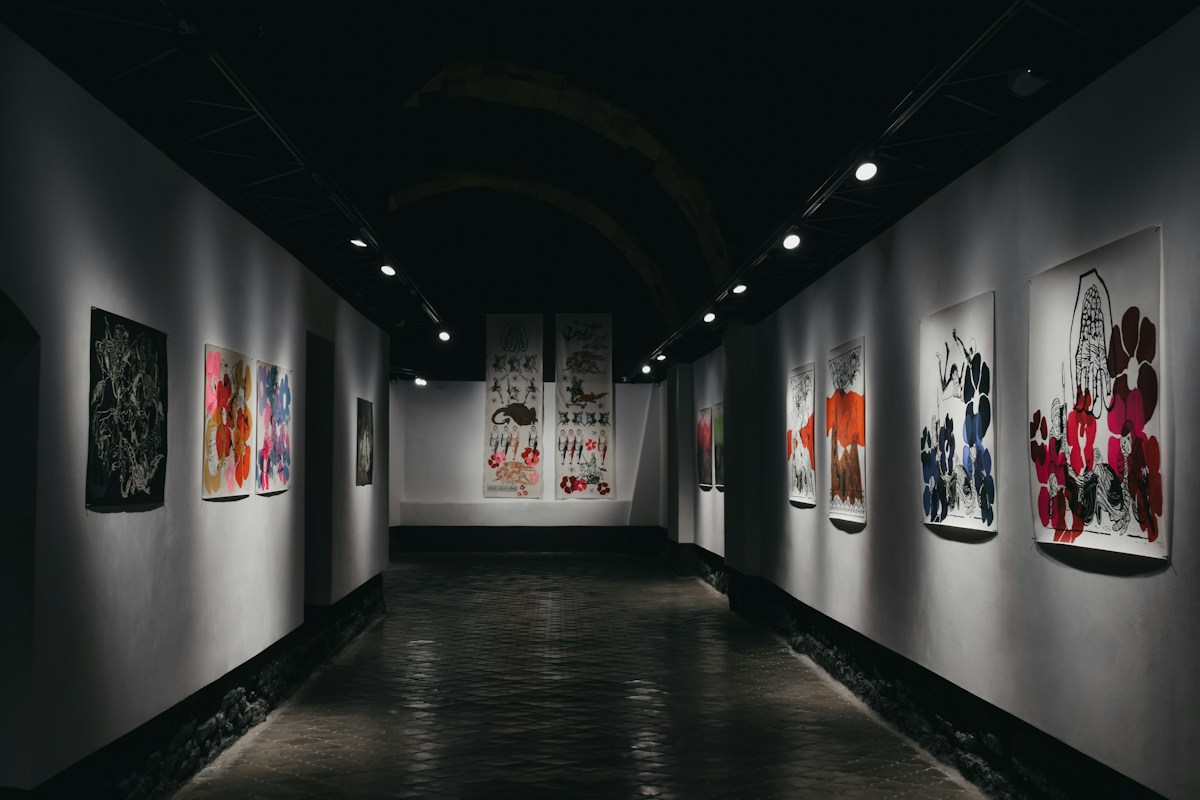
The best AI for art advisory doesn't just aggregate information — it thinks like a gallery director, evaluates like a curator, and communicates like a mentor. Art Advisor AI combines art-historical depth, live market intelligence, connoisseurship-level visual analysis, and strategic collection thinking into a single, adaptive conversation.
| What Collectors Currently Do | What Art Advisor AI Delivers |
|---|---|
| Google an artist name and get scattered, unvetted information | Contextual artist research with career positioning, market tier, and critical reception |
| Ask gallery staff for pricing (and receive evasive answers) | Active market research with recent auction comparables and venue-contextualized ranges |
| Hire a human advisor at $300–$500+/hour with weeks-long wait | Expert-level guidance available instantly, 24/7 |
| Limited to one advisor's specialization and biases | Genuine depth across Western canon and global traditions simultaneously |
| Commission static research reports that age quickly | Live data research on demand — always current |
| Struggle to articulate why a work resonates | Formal analysis vocabulary that helps you understand and communicate your response |
🔬 Connoisseurship-Level Visual Analysis
Upload any artwork image — something you own, are considering purchasing, or simply want to understand — and this AI applies the analytical framework of a museum-trained eye. It reads:
- Formal qualities — composition structure, color relationships, spatial dynamics, materiality, and surface texture
- Technical execution — brushwork habits, palette construction, layering techniques, evidence of process
- Condition indicators — craquelure patterns, foxing, inpainting, varnish discoloration, canvas tension
- Contextual positioning — where the work sits within its movement, tradition, and the artist's trajectory
- Comparative framing — relationships to precedents, contemporaries, and subsequent influence
This isn't image recognition. It's the kind of sustained visual reading that takes decades of gallery and museum experience to develop — applied to every conversation.
📊 Market Intelligence With Actual Data
When significant money is involved, vague opinions aren't enough. Art Advisor AI actively researches current auction results, recent comparable sales, gallery pricing patterns, and artist career trajectories. It presents findings as contextualized ranges — distinguishing between auction value, gallery retail, and insurance replacement — while clearly noting when formal appraisal is warranted.
For example: rather than saying "this artist's work is reasonably priced," the AI might report: "Recent auction results for this artist's works on paper in this size range show hammer prices between $12,000 and $28,000 over the last 18 months, with the higher end reflecting works from the 2019-2021 series. The gallery asking price of $22,000 sits within this range, though the premium over recent auction average is approximately 30% — consistent with primary market positioning."
🌏 Authentic Global Expertise
Art Advisor AI's knowledge extends genuinely across traditions — not as appendices to Western art history, but as disciplines evaluated on their own critical, aesthetic, and historical terms. Ask about the relationship between Mughal miniature painting and Persian manuscript traditions, the material innovations of contemporary African photography, the spiritual dimensions of Aboriginal dot painting, or the market dynamics of Southeast Asian contemporary art, and receive responses grounded in real art-historical understanding.
When the AI's depth in a specific tradition reaches its limits, it says so honestly — and offers to research further rather than filling gaps with generic statements.
How to Use It: Your First Session in Five Steps
Step 1: Start With Your Question
Visit Art Advisor AI and describe what you need. The AI detects your expertise level from your language and adjusts its depth and vocabulary automatically — no onboarding questionnaire.
"I saw a large abstract painting at a friend's home and they said the artist is 'emerging.' I don't know how to evaluate whether a work by an emerging artist is worth buying. Can you walk me through how to think about this?"
Step 2: Upload Artwork for Analysis
Share an image of any artwork. The AI calibrates its analysis to your intent — a quick identification, a deep formal analysis, a purchase evaluation, or a learning exercise.
"Here's a photo of the work. What can you tell me about its formal qualities and where it sits stylistically?"
Step 3: Request Market Context
Ask about pricing, artist trajectories, or auction history, and the AI conducts live research rather than relying on static knowledge.
"What have comparable works by this artist sold for recently? Is this price consistent with their market position?"
Step 4: Explore Collection Strategy
Whether you're building your first collection or refining one you've developed over decades, the AI provides strategic guidance — thematic coherence, diversification across media and geography, acquisition sequencing, and budget allocation.
"I have $30,000 to spend this year. I'm drawn to contemporary photography and works on paper. Where should I focus for both aesthetic satisfaction and long-term collection value?"
Step 5: Generate Professional Documents
When you need formal output, Art Advisor AI creates acquisition reports, collection inventories, artist research briefs, and exhibition proposals — professionally formatted and ready for use.
"Create an acquisition report for the three works we've discussed, including provenance notes, condition observations, and market comparables."
Real Scenarios: Where Expert AI Advisory Transforms Outcomes
🖼️ First-Time Buyer: Navigating a Gallery Without a Map
Scenario: A professional with disposable income visits a contemporary gallery for the first time. They're drawn to several works but feel intimidated — prices aren't listed, the gallery staff seems unapproachable, and they have no framework for evaluating what they're seeing.
Without AI guidance: They either leave without engaging (the most common outcome for new visitors), or they buy impulsively based on emotional response alone — without understanding the artist's market position, the work's quality relative to the artist's output, or whether the price is fair.
With Art Advisor AI: Before or during the visit, the buyer photographs works that interest them. The AI provides formal analysis (what makes the work technically accomplished or distinctive), contextual positioning (where the artist sits within their movement and career), and market context (comparable sales, price-tier benchmarks for the artist's career stage). The buyer walks into the pricing conversation informed — able to ask intelligent questions and evaluate the gallery's response.
- Confidence to engage with gallery staff from a position of knowledge
- Fair value awareness based on actual market data
- Reduced risk of overpaying or buying below the quality threshold
💰 Collector: Evaluating a Significant Acquisition
Scenario: A collector is offered a mid-career artist's painting for $120,000 through a private sale. The work is compelling, but with no public price reference and conflicting information about the artist's market trajectory, the collector needs independent intelligence before committing.
Without AI guidance: Hire a human advisor for $300–$500/hour and wait days or weeks for a research report — by which time the work may be sold. Or make a gut decision and hope.
With Art Advisor AI: The collector requests comprehensive due diligence. The AI researches recent auction results for the artist (hammer prices, sell-through rates, price trends over the last three years), comparable sales by peers at similar career stages, the gallery's positioning tier, and the work's significance within the artist's body of work. It presents this as contextualized market intelligence — not a formal appraisal — with clear recommendations for when to engage a professional appraiser.
- Comparable sales data with specific dates, venues, and sources
- Career trajectory analysis — rising, plateauing, or declining market interest
- Risk assessment — factors that strengthen or weaken the acquisition case
🎨 Artist: Getting Honest Critique Without Social Dynamics
Scenario: An emerging artist wants serious, structured feedback on a new body of work before approaching galleries — but their peer network offers encouragement rather than critical analysis, and professional critics don't review artists at their career stage.
Without AI guidance: The artist relies on informal feedback from friends and fellow artists, which is socially mediated and rarely specific enough to improve the work. Or they pay for portfolio reviews at art fairs — brief, expensive, and inconsistent.
With this AI: The artist uploads images and requests formal critique. The AI analyzes composition, color relationships, technical execution, conceptual coherence, and art-historical positioning — providing specific, actionable feedback with comparative references. It discusses what's working, what's not, and where the work sits in relation to contemporary practice.
- Structured, specific critique — not vague encouragement
- Art-historical positioning — understanding where the work sits in the broader conversation
- Presentation guidance — how to frame the work for gallery submissions
📱 On-the-Ground Fair Navigation
Scenario: A collector is walking through Frieze and has 15 minutes before a scheduled meeting. A work in a booth they hadn't planned to visit stops them. The artist is unfamiliar.
Without AI guidance: Google the name quickly, find a sparse website and a few Instagram posts, and make a decision based on almost no information.
With Art Advisor AI: Snap a photo, ask for a quick assessment. Within a minute, the AI provides the artist's exhibition history, critical reception, market tier, gallery representation context, and whether the booth price aligns with current market norms. The collector can make an informed decision — or flag the work for deeper research later — before their next meeting.
- 60-second artist intelligence from a phone at the fair
- Contextual pricing evaluation based on live market research
- Follow-up capability — return for deeper analysis after the fair
🏠 Curating Art for Living Spaces
Scenario: A homeowner renovating a new space wants artwork that goes beyond decoration — pieces with genuine art-historical interest that create a cohesive aesthetic across rooms, within a $15,000 budget.
Without AI guidance: Hire an interior designer (most of whom lack deep art expertise), browse print-on-demand sites, or visit galleries without a framework for selection.
With Art Advisor AI: The homeowner describes the spaces, aesthetic preferences, existing furniture and materials, and budget. The AI develops a curatorial direction — recommending specific artists, media, and stylistic approaches that create visual dialogue between rooms. It addresses practical considerations: scale relative to wall dimensions, lighting requirements, viewing distance, and archival framing.
- Curated direction with specific, researchable artist recommendations
- Spatial considerations that generic design advice misses
- Budget allocation strategy across rooms and media
Frequently Asked Questions
What makes Art Advisor AI the best AI for art advisory?
Unlike generic search or image recognition, Art Advisor AI applies a structured analytical framework — formal analysis, contextual positioning, market intelligence, and comparative reasoning — the same methodology used by museum curators and top gallery advisors. It doesn't aggregate links; it evaluates, interprets, and advises.
Is Art Advisor AI free?
Yes, Art Advisor AI is accessible on a free tier with core features and standard usage limits. Paid plans starting at $20/month provide significantly more capacity, custom model selection, and additional features. The full advisory experience — analysis, market research, collection guidance, document generation — is available at every tier.
Can it authenticate artwork?
The AI provides detailed visual analysis, attribution reasoning, condition assessment, and red-flag detection — but it does not issue definitive authentication certifications. For authentication with legal or financial weight, it recommends engaging qualified specialists and explains how to choose them. It's honest about the difference between informed analysis and binding certification.
Does Art Advisor AI give financial investment advice?
No. It provides market context — comparable sales, career trajectories, market-tier positioning, and pricing benchmarks — framed as educational information. It will never guarantee appreciation, recommend art purely as a financial instrument, or replace professional financial advisory.
What art traditions and periods does it cover?
Art Advisor AI covers the full Western canon from antiquity through contemporary practice, and is genuinely knowledgeable across African, Asian, Latin American, Indigenous, Middle Eastern, and Oceanic traditions — evaluated on their own terms, not filtered through Western critical frameworks. When depth in a specific niche tradition reaches its limits, it acknowledges this honestly and offers to research further.
Does it work on mobile at galleries and fairs?
Absolutely. It works with full feature parity across web, iOS, and Android — purpose-built for the real-world scenario of standing in front of a work at a gallery, fair, or estate sale and needing expert-level intelligence in seconds.
Make Every Art Decision an Informed One
The art market's defining contradiction — a [$59.6 billion industry](https://www.ubs.com/global/en/our-firm/art/art-market-research.html) with [41.5 million annual transactions](https://www.ubs.com/global/en/our-firm/art/art-market-research.html) that still hides prices, gates expertise behind $300+/hour fees, and concentrates knowledge among insiders — isn't going to resolve itself. As private sales grow, digital art reshapes collecting categories, and new regional markets emerge from the Middle East to Southeast Asia, the gap between what buyers need to know and what they can access is widening.
Art Advisor AI closes that gap. It's the best AI for art advisory because it delivers what was previously reserved for the wealthiest collectors — museum-caliber analysis, live market data, cross-cultural expertise, and strategic collection thinking — to anyone willing to engage seriously with art. No hourly rate. No six-week waitlist. No insider access required.
Upload an artwork. Research an artist. Build a collection with purpose. Get started with Art Advisor AI and bring expert-level guidance to every art decision you make.