Best AI for Art Advisor: Collection & Market Analysis (July 2026)
2026-07-09
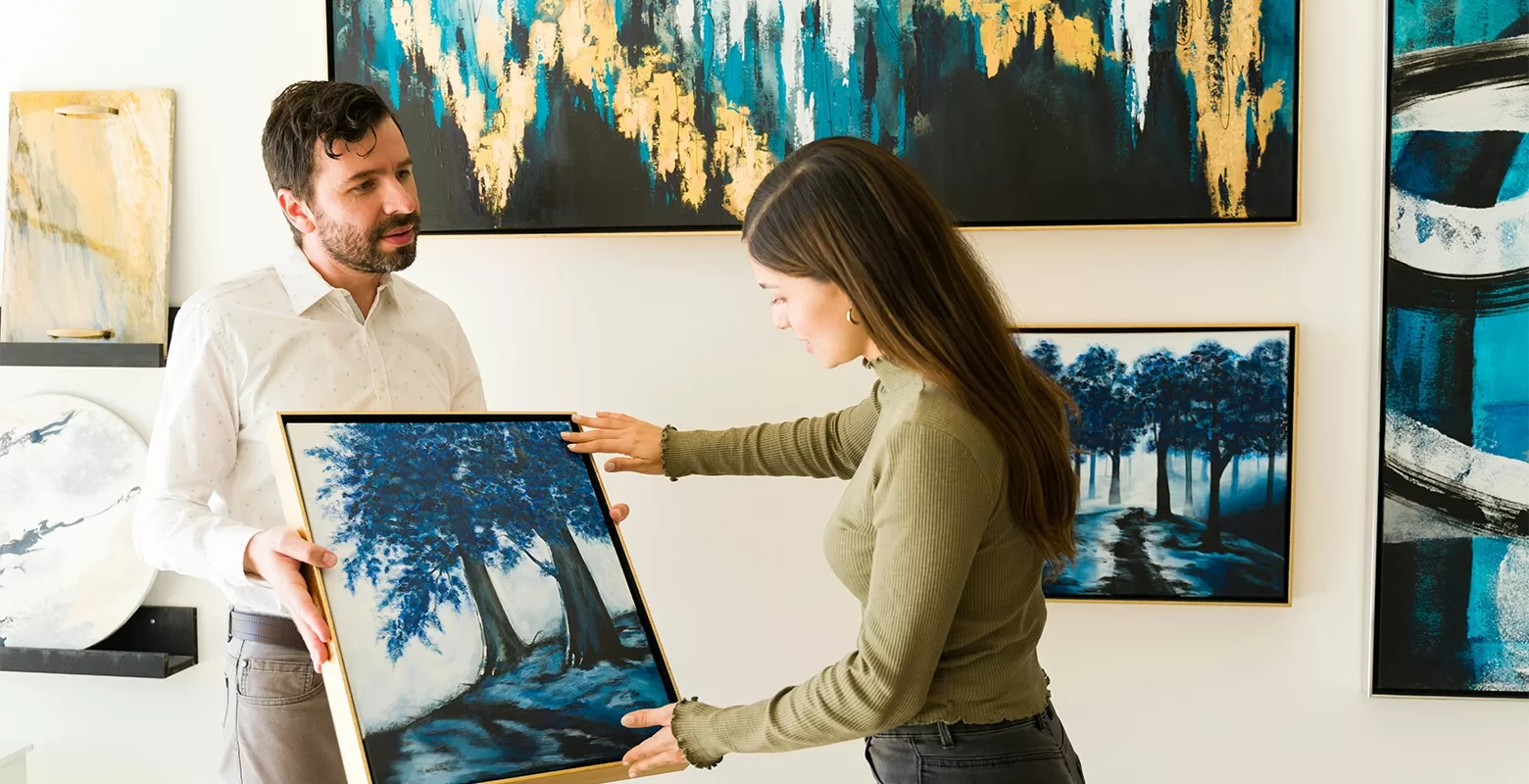
Art Advisor brings curatorial intelligence to every collecting decision — from attribution research and market analysis to portfolio strategy and acquisition guidance. Whether you're a first-time buyer navigating a $59.6 billion global art market or a seasoned collector refining a decades-old portfolio, this AI delivers the depth of an art world insider through natural conversation, on any device, at any time.
✅ Art historical analysis and attribution guidance across every major period, movement, and medium ✅ Market intelligence informed by auction trends, dealer dynamics, and shifting demand patterns ✅ Collection curation with acquisition strategy and portfolio diversification frameworks ✅ Expert critique grounded in formal analysis, provenance awareness, and contextual scholarship
The global art market returned to growth in 2025, with sales reaching an estimated $59.6 billion and transaction volume hitting 41.5 million — yet the expertise needed to collect confidently has never been harder to access on your own. To understand why AI-powered art advisory matters right now, let's look at the structural barriers facing collectors in 2026.
Quick Answer: What Is the Best AI for Art Advisors?
Art Advisor is a specialized AI that provides art historical analysis, market intelligence, collection strategy, and expert critique to help collectors make informed decisions through natural conversation.
Key capabilities:
- Attribution research and art historical context across every major period and movement
- Market analysis informed by auction trends, category dynamics, and price trajectories
- Collection strategy with acquisition guidance, portfolio diversification, and gap analysis
- Curatorial critique covering formal qualities, provenance considerations, and scholarly context
The Problem: Why Art Collecting Is Harder Than It Looks
The art market is enormous, growing, and — by nearly universal consensus — opaque. Collectors at every level face structural barriers to informed decision-making that extend far beyond questions of personal taste.
$59.6 billion — Global art market sales in 2025, up 4% year-over-year after two consecutive years of decline
Despite this scale, the art market remains one of the least transparent asset classes in the world. As New York art advisor Alex Glauber described it, the market is "notoriously opaque" — the only publicly available pricing data comes from auction sales records, and only a small percentage of artworks sell at public auction. Most transactions happen through galleries and dealers who never disclose what buyers paid. This structural opacity creates a cascade of challenges:
- Authentication risk: Sophisticated forgeries cost the art market billions annually, and modern criminal operations employ period-appropriate materials, scholarly research, and advanced reproduction technology to produce increasingly difficult-to-detect fakes
- Valuation uncertainty: Without access to private sales data — which constitutes the majority of market transactions — collectors struggle to determine whether a price is reasonable, inflated, or a genuine opportunity
- Professional advisory costs: Comprehensive art authentication alone runs $12,500–$35,000 and takes 24–30 weeks, while the global art advisory service market is projected to reach $3.52 billion by 2035 — a reflection of how much collectors spend trying to bridge their own knowledge gaps
- Rapidly shifting demand: Artworks under $50,000 made up 61% of total lots sold in 2025, significantly higher than the pre-pandemic average of 48% — the market's center of gravity is moving, and yesterday's price references are increasingly unreliable
🔒 The Information Asymmetry Problem
The fundamental challenge for art collectors is information asymmetry. Galleries, auction houses, and experienced dealers possess decades of accumulated market intelligence — private sales histories, relationship networks, and insider knowledge of what specific collectors are pursuing and what institutional curators are watching. A first-time buyer stepping into a Chelsea gallery or browsing an online platform is at a structural disadvantage before the conversation even begins.
This isn't theoretical. In 2024, 44% of dealer buyers were new to their businesses, and the share of sales to first-time buyers increased to 38% — up five percentage points from the previous year. Half of all transactions for smaller dealers involved collectors buying from them for the first time. These new collectors are entering an expanding, accelerating market with limited access to the expertise that separates confident acquisition from expensive mistakes.
The U.S. market alone saw auction sales rise 23% year-over-year to $3.17 billion in 2025. When the market moves this fast and this much capital is in play, the cost of uninformed decisions scales accordingly.
🎨 The Knowledge Depth Problem
Art is not equities. A painting's value depends on attribution certainty, provenance chain, condition, exhibition history, art historical significance, the artist's market trajectory, and the broader demand dynamics of the category — all contextual knowledge that takes years to develop through apprenticeship, scholarship, and experience.
Authentication alone requires a multi-disciplinary approach combining connoisseurship, scientific analysis, provenance research, and legal verification. New collectors commonly make critical mistakes like accepting verbal assurances without documentation and relying on visual inspection alone — errors that professionals recognize instantly but that take years for self-taught collectors to learn to avoid.
No single reference book, advisor, or database covers the full spectrum — from contemporary emerging artists to Old Masters, from prints and multiples to sculpture, from photography to installation. The breadth of knowledge required makes generalist collecting daunting and specialist collecting expensive.
Why Art Advisor
Art Advisor functions as your on-demand curator, market analyst, and collecting strategist — a conversational partner that brings the depth of art world expertise to every acquisition decision without the per-hour professional advisory fees that price most collectors out of informed participation.
| Traditional Approach | Art Advisor |
|---|---|
| $200–$500/hr for professional art advisory | Instant curatorial guidance through natural conversation |
| Weeks waiting for specialist availability to research a single artist | Real-time analysis of career patterns, pricing trends, and market positioning |
| Narrow expertise per advisor (modern only, prints only, Asian only) | Cross-period, cross-medium knowledge spanning antiquity to contemporary |
| Static reference books and outdated catalogues | Market-aware analysis reflecting current auction results and demand shifts |
| Information asymmetry consistently favoring dealers | Independent analytical perspective aligned with the collector's interests |
🏛️ Art Historical Analysis and Attribution
The core of any informed collecting decision is understanding what you're looking at — and the Art Advisor provides deep art historical context that goes far beyond surface identification. Describe a work, upload a photo from a gallery visit, or name an artist, and the agent draws on comprehensive knowledge of movements, schools, influences, and artistic development to contextualize what you're considering.
"I'm looking at a small oil painting attributed to a Dutch Golden Age artist — it depicts a harbor scene with ships and figures. The dealer is asking $8,000. What should I be looking for to assess whether the attribution is credible?"
The agent walks through attribution considerations specific to Dutch marine painting: compositional conventions, palette analysis, brushwork characteristics, typical panel and canvas preparation for the period, common misattribution patterns, and what level of scholarly documentation you should expect at this price point.
📊 Market Intelligence and Price Context
Understanding whether a price is fair requires more than a single comparable. The agent analyzes market dynamics across price segments, medium categories, and artist career stages — helping you understand where a work sits within broader market patterns and whether current conditions favor buyers or sellers in that specific category.
"I've been tracking an emerging contemporary artist whose gallery prices have doubled in the last 18 months. Is this sustainable growth or a speculative bubble? What signals should I watch?"
🗂️ Collection Strategy and Portfolio Thinking
For collectors building beyond individual purchases, the Art Advisor provides strategic guidance on portfolio construction — helping you think about diversification across periods, media, and price levels, identify meaningful gaps in your holdings, and align acquisitions with both aesthetic preferences and long-term value preservation.
"I have a growing collection of post-war American prints — mostly Rauschenberg and Johns. I have $25,000 for my next acquisition. Should I deepen in this area or diversify into something that balances the collection?"
🔍 Curatorial Critique and Aesthetic Development
Beyond market considerations, the agent provides genuine critical engagement with art — analyzing formal qualities, contextualizing works within artistic movements, and helping you develop your own eye. This isn't market-driven acquisition advice alone; it's the kind of sustained looking and critical thinking that transforms a buyer into a collector with a coherent vision.
"I keep gravitating toward heavily textured, gestural paintings but I can't articulate why or what specifically I'm responding to. Can you help me understand my aesthetic instincts in art historical terms?"
Related Agents You'll Also Find Useful
If you're collecting art seriously, these complementary agents extend your capabilities into adjacent areas that collectors regularly encounter.
Antique Expert
Many art collectors also acquire decorative arts, period furniture, and historical objects — categories where identification and authentication require entirely different expertise. If your collecting interests span both fine art and antiques, the Antique Expert provides deep knowledge of furniture, ceramics, metalwork, and decorative objects across centuries and regional traditions.
- Photo-based identification with maker's marks, period attribution, and style classification
- Forgery and reproduction detection across every major decorative arts category
- Market-aware valuations for furniture, ceramics, glass, silver, and collectibles
Jewelry Expert
Fine jewelry represents a significant segment of the luxury collectibles market, and many art collectors acquire antique and vintage pieces as extensions of their aesthetic sensibility. The Jewelry Expert provides gemological analysis, period identification, hallmark research, and investment strategy for collectors whose interests extend to wearable art and precious objects.
- Period-specific design analysis from Georgian through Art Deco and contemporary
- Gemological identification and quality assessment for antique stones and settings
- Investment strategy and auction intelligence for vintage and antique jewelry
Deep Research
For collectors who need comprehensive research on specific artists, provenance chains, or market segments, Deep Research searches hundreds of sources and synthesizes cited research reports — providing the kind of in-depth analysis that would otherwise take days of manual research across auction databases, scholarly archives, and exhibition records.
- Multi-source research reports with full citation trails and source verification
- Artist career trajectory analysis across exhibitions, sales records, and institutional recognition
- Provenance research support aggregating data across multiple databases and archives
Try Art Advisor free — no credit card required.

How It Works: From First Question to Confident Acquisition
Step 1: Describe What You're Looking At — Or What You're Looking For
Start a conversation with the Art Advisor agent by describing an artwork you're considering, uploading a photo from a gallery visit or auction catalogue, or asking about an artist you're researching. The conversation can begin anywhere — a specific piece, a collecting category, a market question, or a broad inquiry about where to start.
"I saw a large-scale abstract painting at a gallery in Chelsea last weekend — heavy impasto, earth tones, strong gestural energy. The gallery said the artist has shown at two biennials and is represented by mid-tier galleries in Berlin and Seoul. They're asking $18,000. Help me evaluate this."
Step 2: Get Art Historical Context and Critical Analysis
The agent provides context on the artist's position within contemporary practice — where their work sits relative to art historical precedents, what biennial participation and gallery representation signal about career trajectory, and how the formal qualities of the work relate to current critical discourse and collector demand.
"How does this artist's work relate to the broader neo-expressionist revival happening in European painting? Is there a meaningful distinction between their approach and what's already well-established?"
Step 3: Understand the Market Position
Ask for market analysis specific to the artist, category, and price segment. The agent contextualizes the asking price within the broader market for emerging contemporary painting, explains what career milestones and price signals indicate about future trajectory, and identifies what you should verify independently before committing capital.
"Is $18,000 reasonable for an emerging artist at this career stage with this exhibition history? What price trajectory should I expect if the representation holds and institutional recognition continues?"
Step 4: Evaluate Within Your Collection Strategy
If you're building a collection, the agent helps you assess how a potential acquisition fits — whether it complements existing holdings, fills a meaningful gap, or creates unhelpful redundancy. Collection strategy isn't about individual works in isolation; it's about how pieces relate to each other and create a coherent whole.
"I already own two mid-career abstract painters. Would adding this emerging artist diversify my collection meaningfully, or am I over-concentrating in one market segment?"
Step 5: Prepare for Negotiation and Acquisition
Before you make an offer, the agent helps you prepare — understanding standard gallery negotiation practices, what documentation to request, how to assess condition reports, and what questions to ask about exhibition history, provenance, and resale provisions.
"What should I ask the gallery before committing? What documentation should come with the work at this price point, and are there red flags I should watch for?"
Results & Use Cases
🎯 First-Time Collector Guidance
Scenario: A professional with a $10,000 annual budget wants to start collecting contemporary art but has no idea where to begin — what to buy, where to buy it, what constitutes fair pricing, and how to avoid overpaying for work that won't hold value or develop meaning over time.
Traditional Approach: Months of gallery visits, art fair attendance, and self-education through books, podcasts, and articles — with a high risk of expensive early mistakes and no structured framework for decision-making. Professional art advisory at $300–$500/hr makes little economic sense at this collection scale.
Art Advisor: A structured entry into collecting — the agent maps out categories accessible at this budget, explains what quality indicators to look for in specific media and price segments, identifies reliable purchasing channels (emerging galleries, art fairs, curated online platforms), and helps develop evaluation criteria that balance aesthetic instinct with value awareness.
- Personalized collecting roadmap tailored to budget, aesthetic interests, and goals
- Category-specific guidance on what constitutes quality at entry-level price points
- Confidence to make a first purchase grounded in knowledge rather than impulse or gallery pressure
💼 Pre-Auction Research and Bidding Strategy
Scenario: A collector reviewing an upcoming auction catalogue identifies three lots of interest — a post-war European print, a contemporary photograph, and a small Impressionist landscape study. Total estimated value across the three lots: $45,000–$70,000.
Traditional Approach: Hours of manual research across auction databases, artist CVs, condition report archives, and price indices. Possibly consulting a professional advisor at $300–$500/hr for pre-auction briefings on each lot, adding thousands to acquisition costs.
Art Advisor: Detailed analysis of each lot — attribution confidence level, condition considerations specific to each medium, comparable sales context from recent seasons, and strategic bidding advice including maximum bid recommendations based on current market data and condition-adjusted fair value estimates.
- Lot-by-lot analysis with attribution strength assessment and condition evaluation
- Comparable sales context and fair value range for each work
- Bidding strategy that accounts for buyer's premium, market momentum, and category temperature
📱 Art Fair Mobile Intelligence
Scenario: A collector attending Art Basel Miami Beach wants real-time guidance while navigating 250+ galleries over three days — quickly evaluating works, understanding artists encountered for the first time, and making informed decisions under the social pressure of an art fair environment where desirable pieces sell within hours.
Traditional Approach: Walking the fair with limited preparation, relying on gallery staff (who are selling, not advising), and making impulsive decisions driven by fair energy, social dynamics, and artificial scarcity pressure.
Art Advisor: On-the-ground intelligence directly from your phone — photograph a work, ask about the artist, get instant market context, and receive a critical evaluation before you commit. The agent provides the independent analytical perspective that gallery staff, by structural definition, cannot offer.
- Real-time artist research and market context accessible on any mobile device
- Independent critical perspective free from sales incentives and gallery relationships
- Informed confidence to negotiate, hold, or walk away with clear reasoning
📊 Collection Portfolio Review and Insurance Preparation
Scenario: A collector with a 15-year-old portfolio of 40+ works needs an updated understanding of current market values for insurance purposes and estate planning. Several artists in the collection have had significant career developments since last appraisal — major museum retrospectives, gallery representation changes, market corrections, or emerging institutional interest.
Traditional Approach: Hiring a certified appraiser for a formal collection review at $5,000–$15,000+, with a multi-week turnaround and results that may not capture the most recent market shifts in fast-moving categories.
Art Advisor: A preliminary portfolio review identifying which works have likely appreciated significantly, which may have declined, and which require formal updated appraisals based on material career or market changes. The agent helps prioritize where to invest in certified valuations and flags works where market conditions have shifted meaningfully since the last professional assessment. Pair with Deep Research for comprehensive market reports on specific artist holdings.
- Portfolio-level analysis identifying value shifts and trends across the full collection
- Prioritization framework that directs formal appraisal spending where it matters most
- Market context for estate planning, insurance coverage, and potential deaccession decisions
Frequently Asked Questions
Is the Art Advisor agent free to use?
Yes — Jenova offers a free tier with full access to the Art Advisor agent and all core capabilities, including art historical analysis, market discussion, and collection strategy guidance. Paid plans start at $20/month for increased usage, custom model selection, and watermark-free document exports. No credit card required to start.
How is Art Advisor different from AI art identification apps?
Art identification apps typically run an image through visual recognition and return a category label or artist name with a rough price estimate. Art Advisor is a conversational specialist that engages with the full complexity of art — formal analysis, art historical context, market positioning, provenance considerations, career trajectory assessment, and collection strategy. It's the difference between a catalogue entry and a sustained conversation with a knowledgeable curator who understands your goals.
Can Art Advisor help with authentication?
The agent provides guidance on authentication considerations — what red flags to look for in specific categories, what documentation to request, how to evaluate scholarly opinions, and when scientific analysis is warranted. For formal authentication that carries legal and insurance weight, it guides you toward appropriate professional resources and helps you prepare better questions for certified experts. Authentication is best supported by AI-powered analysis but ultimately requires human expertise for high-value acquisitions.
Does it cover all art periods and media?
The agent provides analysis across the full spectrum of fine art — from ancient and medieval through Old Masters, Impressionism, modern, post-war, and contemporary. It handles painting, sculpture, prints and multiples, photography, works on paper, textiles, and digital art. It covers Western and non-Western traditions, emerging and established markets, and works at every price level from entry-level prints to museum-quality paintings.
Can I use it on my phone at galleries and auctions?
Absolutely. Jenova has full feature parity across web, iOS, and Android with state-of-the-art speech-to-text. Photograph works at a gallery, art fair, or auction preview and get instant analysis — artist context, market intelligence, and critical evaluation — all before you make a commitment. Describe a work by voice if you can't photograph it.
Does Art Advisor replace a professional art advisor?
For many collectors — especially those building collections at accessible price levels or making their early acquisitions — the agent provides analytical depth and market intelligence that would otherwise require professional advisory fees of $200–$500/hr. For major acquisitions, complex estate situations, or legally significant authentication decisions, it complements rather than replaces human expertise by helping you prepare sharper questions, evaluate more confidently, and use professional advisory time with greater precision and focus.
Conclusion
The global art market reached $59.6 billion in 2025, with 41.5 million transactions and a rising tide of new collectors entering a market that rewards knowledge and punishes uninformed enthusiasm. Authentication failures cost billions annually. Information asymmetry still favors insiders and institutional players. And the sheer depth of art historical, market, and technical knowledge required to collect confidently remains a barrier that no single book, art fair, or weekend gallery crawl can overcome.
AI doesn't replace the human relationships, physical inspection, and certified expertise that underpin the highest-value transactions. What it does is make the analytical foundation of art collecting — research, critical context, market intelligence, and structured thinking — accessible to everyone who cares about art, regardless of whether they can afford $500/hr advisory fees or have a decade of market experience behind them.
Try Art Advisor now — no credit card required. Explore the full agent library at Jenova.