Best AI for Appliance Repair: Instant Diagnostics, Error Codes & Repair-vs-Replace Guidance for Every Brand
2026-05-17
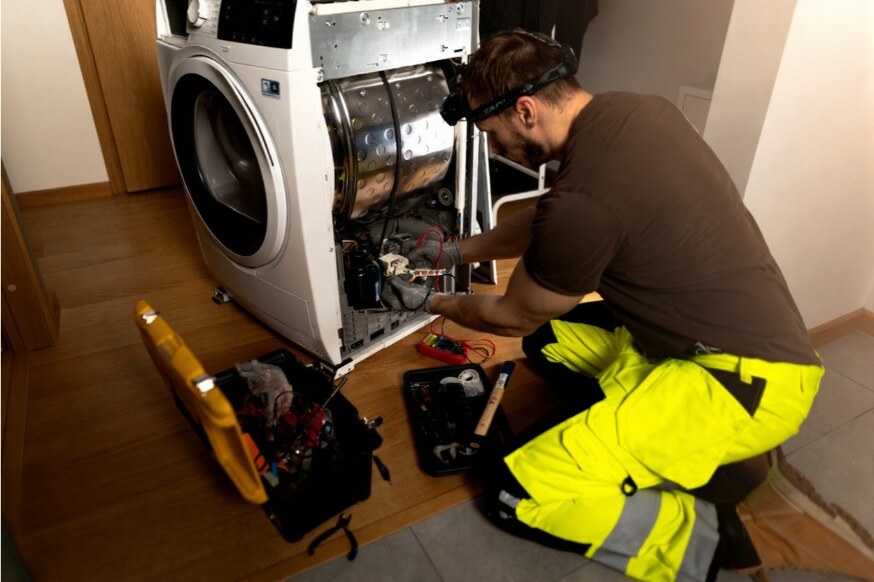
Looking for the best AI for appliance repair? AI Appliance Repair Technician delivers expert-level diagnostics, brand-specific error code interpretation, photo-based component analysis, and data-driven repair-vs-replace recommendations — all from a single conversation, calibrated to your experience level and the exact appliance sitting in front of you. With the U.S. appliance repair industry now valued at $7.4 billion in 2026 and average service calls running $50–$100 before any wrench is turned, homeowners and technicians alike need faster, more reliable access to diagnostic expertise. Over 15,000 users have already used this tool to identify root causes, avoid unnecessary replacements, and save hundreds of dollars per repair decision.
✅ Structured root-cause diagnostics ranked by probability for your specific brand and model era ✅ Error code interpretation across Samsung, LG, Whirlpool, GE, Bosch, Maytag, KitchenAid, and more ✅ Upload photos of damaged components, nameplates, or error displays for instant visual analysis ✅ Repair-vs-replace cost intelligence using the 50% rule, lifespan benchmarks, and warranty/recall data ✅ Safety guidance embedded naturally based on task risk level and your skill level
Here's why finding the best AI for appliance repair matters more in 2026 than ever before — and how this tool works in practice.
Quick Answer: What Is the Best AI for Appliance Repair?
The best AI for appliance repair is AI Appliance Repair Technician — a specialized diagnostic companion that identifies probable causes, interprets error codes, analyzes photos of damaged components, and delivers honest repair-vs-replace cost analysis for every major household appliance in seconds.
Key capabilities:
- Systematic troubleshooting that follows a diagnostic hierarchy: User Operation → Mechanical → Electrical → Water/Gas → Controls
- Brand-specific error code lookup and failure pattern recognition across all major manufacturers
- Photo-based assessment of component condition, equipment nameplates, and visible failure evidence
- Cost analysis grounded in the industry-standard 50% rule, InterNACHI lifespan data, and current parts pricing
The Real Cost of Appliance Breakdowns in 2026
Household appliance failures are not rare events — they are statistical certainties. According to Consumer Reports data, 60% of U.S. consumers experienced a major appliance failure in the last five years, and 68% experienced a small appliance failure in the same period. The question isn't whether your appliance will break — it's whether you'll have the information to respond intelligently when it does.
Five forces are making expert appliance guidance indispensable:
- Escalating repair and replacement prices — tariffs and supply chain disruptions are inflating costs across the board
- Smart appliance complexity — Wi-Fi-enabled appliances fail at rates nearly 40% higher than their non-connected counterparts
- A massive replacement bias — the majority of consumers give up on repair before understanding the problem
- Trustworthy service scarcity — nearly 4 in 10 consumers discard fixable appliances because they can't find reliable help
- Brand-specific diagnostic fragmentation — every manufacturer uses different error code systems, diagnostic modes, and failure patterns
💸 What Appliance Repairs Actually Cost Right Now
Appliance repair costs in 2026 vary dramatically depending on the appliance type and the severity of the failure. According to aggregated data from HomeGuide, Liberty Home Guard, and Bozmanfix:
| Appliance | Typical Repair Cost | Replacement Cost |
|---|---|---|
| Refrigerator | $150–$600 (minor); $700–$1,250 (compressor) | $600–$2,300 |
| Washing machine | $150–$350 | $600–$1,800 |
| Dryer | $100–$400 | $800–$1,200 |
| Dishwasher | $100–$400 | $400–$1,000 |
| Oven / Range | $100–$400 | $500–$2,000 |
| Microwave | $70–$300 | $200–$600 |
Service call fees alone run $50–$100 before any diagnostic work begins, and technician labor averages $100–$175 per hour nationally. Import tariffs on parts from China and Mexico — including compressors, circuit boards, and motors — pushed repair costs up 5–20% in 2025 according to IBISWorld data, and those increases have carried into 2026.
$700–$1,250 — The cost range for a refrigerator compressor replacement. For a $1,200 refrigerator, that crosses the 50% threshold where replacement becomes the financially rational choice. Source: Bozmanfix / HomeGuide
📊 Smart Appliances: More Features, More Failures
The JD Power 2025 U.S. Appliance Reliability & Service Study — based on 12,755 reliability responses — revealed that smart appliances with Wi-Fi and Bluetooth connectivity experience 87 problems per 100 units (PP100), compared to just 63 PP100 for non-connected models. Consumers who actively use connected features report an even higher rate: 92 PP100.
Front-load washing machines top the failure charts at 89 PP100, while clothes dryers are the most reliable category at 56 PP100.
As JD Power's Michael Taylor noted: "Modern appliances are far more sophisticated and packed with more technologies than ever before. With that increased level of complexity, however, comes a greater potential for issues."
These failures increasingly involve software diagnostics, sensor errors, and connectivity faults that traditional mechanical troubleshooting can't address — exactly the kind of problems where AI-powered diagnosis provides the greatest advantage.
🗑️ The Replacement Trap: Why People Throw Away Fixable Appliances
Consumer Reports found that 58% of consumers replace rather than repair when a major appliance breaks. The two most common reasons: 43% believed the appliance was too old to justify repair, and 42% assumed replacement was more cost-effective.
But the most revealing statistic: 39% of Americans who had a broken appliance disposed of it because they couldn't find someone they were happy with to fix it.
That's not a repair problem. That's an information and trust problem. Nearly 4 in 10 consumers discarded a potentially fixable appliance simply because they lacked access to reliable diagnostic guidance. This is the exact gap the best AI for appliance repair is designed to fill.
How AI Appliance Repair Technician Closes the Expertise Gap
AI Appliance Repair Technician combines the pattern recognition of a 30-year veteran with the consistency and availability that human expertise can't match at scale. It doesn't just answer questions — it diagnoses problems through structured conversation, adapting its depth and safety guidance to your skill level.
| What You Need | Without AI | With AI Appliance Repair Technician |
|---|---|---|
| Root-cause diagnosis | $50–$100 service call fee + 2–5 day wait | Structured diagnostic hierarchy, available immediately |
| Error code interpretation | Manufacturer manuals + forum searches across 15 tabs | Brand-specific lookup with probable causes ranked by likelihood |
| Component assessment | Visual guesswork or expensive technician inspection | Upload a photo for instant condition analysis |
| Repair-vs-replace decision | Gut feeling or conflicting online advice | Data-driven analysis using the 50% rule, lifespan data, and warranty research |
| Brand-specific knowledge | Depends on which tech shows up | Deep pattern recognition: Samsung icemaker issues, LG compressor warranty extensions, Whirlpool/Maytag shared platforms |
| Safety guidance | Generic warnings or none at all | Risk-appropriate safety steps woven into every response |

🔍 Deep Brand Knowledge That Matches Real-World Failure Patterns
Appliance troubleshooting is brand-specific at its core. The same symptom on a Samsung washer and a GE washer often traces to completely different root causes. This AI recognizes the failure signatures that experienced technicians learn over decades: Samsung washing machine door lock assemblies that fail prematurely, LG linear compressor issues covered under extended warranty programs, Whirlpool/Maytag/KitchenAid/Amana units sharing internal platforms, and Bosch dishwashers with unique diagnostic entry modes.
It interprets manufacturer-specific error code systems — Samsung's multi-character codes, LG's fault codes, Whirlpool's F/E combinations, GE's numeric sequences, and Bosch's E-series indicators — and maps each to probable component failures with repair difficulty ratings.
📸 See What the AI Sees: Photo-Based Analysis
Upload a photo of a swollen capacitor, a frosted-over evaporator coil, corroded heating element contacts, burn marks on a control board, or a nameplate you can't read. AI Appliance Repair Technician analyzes visible component condition, identifies failure evidence patterns (water damage, scale deposits, arcing marks), extracts model and serial number information for equipment-specific guidance, and connects findings to the broader diagnostic context.
This turns a visual observation into actionable intelligence — bridging the gap between "something looks wrong" and "here's what's likely causing your problem."
⚖️ Repair-vs-Replace: The Question Everyone Gets Wrong
One of the most consequential and poorly informed decisions homeowners make is whether to repair a broken appliance or replace it entirely. This tool applies the industry-standard 50% rule — if the repair cost exceeds 50% of the replacement cost and the appliance is past its lifespan midpoint, replacement generally wins — and cross-references appliance age against InterNACHI lifespan benchmarks:
- Refrigerator: 9–13 years
- Gas range / oven: 13–15 years
- Dryer: ~13 years
- Washing machine: 10–12 years
- Dishwasher: ~9 years
- Microwave: ~9 years
It also factors in parts availability, energy efficiency improvements in newer models, and active manufacturer warranties or recall programs — turning an emotional decision into a data-driven one.
Step-by-Step: How to Use the Best AI for Appliance Repair
Step 1: Describe the Problem in Plain Language
Open AI Appliance Repair Technician and tell it what's happening. No forms, no menus — just describe the situation as you would to a knowledgeable friend.
"My Whirlpool dishwasher is flashing F8 E4 and there's water pooling under the unit. It's a 5-year-old model."
The AI immediately begins structured diagnosis, starting with the most probable causes for your specific brand, model era, and symptom combination.
Step 2: Respond to Targeted Follow-Up Questions
Like a veteran technician, the AI asks focused questions to narrow the diagnosis systematically. It begins by ruling out user operation issues — the most common "failures" that aren't actually failures — then progresses through mechanical, electrical, water/gas, and control system checks.
"Is the water leak coming from the front of the unit or underneath? And when you open the door, is there standing water in the tub?"
Step 3: Receive Ranked Probable Causes
Based on your answers, the AI delivers probable causes ranked by likelihood for your specific situation — not generic advice pulled from a database.
"The F8 E4 code on Whirlpool dishwashers indicates a flow meter or water supply issue. On 5-year-old units, the most common causes are: 1. Clogged or kinked water inlet hose (most common — no parts needed) 2. Failed water inlet valve (~$35 part, moderate DIY difficulty) 3. Flow meter sensor malfunction (~$20 part, straightforward replacement) Here's how to check each one safely…"
Step 4: Upload Photos for Visual Assessment
If you can safely photograph the problem area — a leaking component, an error code display, a corroded part, or the equipment nameplate — upload it directly. The AI analyzes condition, identifies visible issues, and extracts model-specific information for more precise guidance.
Step 5: Get a Clear Resolution Path
The AI either walks you through the fix with safety steps matched to your skill level, or clearly identifies when professional service is the right call — and tells you exactly what to communicate to the technician so you don't get upsold on unnecessary work.
For repair-vs-replace decisions, it calculates whether the repair makes financial sense based on appliance age, repair cost, replacement cost, parts availability, and active warranty or recall programs. Documents, checklists, and parts lists can be downloaded as PDF, Word, or plain text.
Real-World Use Cases: Where This AI Delivers the Most Value
🧺 Homeowner: Washing Machine Won't Drain
Scenario: A front-load Samsung washer stops mid-cycle with standing water in the drum. The homeowner sees a "5E" error code and starts pricing new washers.
Without AI: Schedule a service call ($80–$100 diagnostic fee), wait 3–5 days, potentially pay $200+ for a pump replacement.
With AI Appliance Repair Technician: The AI recognizes that Samsung's "5E" code indicates a drain issue and walks through the most common causes in order of probability: a clogged debris filter (the small access panel at the bottom-front of the unit), a kinked drain hose, or a blocked drain pump impeller. In the majority of cases, the debris filter — which most homeowners don't know exists — is the culprit. Clearing it takes five minutes with no tools and no parts.
- Root cause identified in under two minutes
- Potential savings: $180–$400 (avoided service call or unnecessary replacement)
- The homeowner now knows to clean the filter monthly as preventive maintenance
🔧 Working Technician: Unfamiliar Brand on a Service Call
Scenario: An experienced appliance repair technician arrives at a job to find a Bosch 800 Series dishwasher displaying an E24 error. They primarily work on Whirlpool and GE units and aren't familiar with Bosch's diagnostic system.
Without AI: Pull up the Bosch service manual on a phone with poor reception, search through tech forums, or call the distributor's tech line and sit on hold.
With AI Appliance Repair Technician: The technician asks about the E24 code on a Bosch 800 Series. The AI immediately identifies this as a drain fault, explains that Bosch dishwashers use a specific drain pump assembly that differs from Whirlpool/GE designs, walks through the check procedure (drain hose height verification, pump impeller inspection, check valve condition), and notes the diagnostic entry mode for running the Bosch self-test cycle. The technician completes the diagnosis in half the time with confidence.
- Brand-specific diagnostic knowledge delivered instantly
- No hold times, no forum guesswork
- Professional-level communication without condescension
💰 DIYer: Evaluating a $900 Repair Quote
Scenario: A homeowner receives a $900 quote to replace the inverter compressor on their 6-year-old LG French door refrigerator. They're unsure whether to pay for the repair, negotiate, or buy a new refrigerator.
Without AI: Google "LG refrigerator compressor replacement cost," read ten conflicting articles, and make an anxious decision.
With AI Appliance Repair Technician: The AI immediately flags that LG extended the warranty on linear compressors to 10 years on the sealed system for many models manufactured between 2014 and 2023. A 6-year-old unit is almost certainly still covered. The AI walks the homeowner through verifying warranty coverage using their model and serial number, and explains that the compressor replacement — including labor — should be covered at no cost or significantly reduced cost under the warranty program.
- Warranty awareness saves the homeowner up to $900
- The repair shop either didn't know about the warranty extension or chose not to mention it
- Trust in the repair decision restored through verified information
📱 Emergency: Refrigerator Running Warm on a Friday Night
Scenario: A homeowner notices their refrigerator is at 50°F on Friday evening. The freezer is still cold. They have $300 worth of groceries at risk.
Without AI: Call an emergency appliance repair service at weekend rates ($200+ to show up), or move everything to a cooler and hope for a Monday appointment.
With this AI-powered diagnostic tool: The AI triages immediately: move perishables to the freezer or coolers with ice, then diagnose. It walks through the most common causes of a fridge compartment warming while the freezer stays cold: a frosted evaporator fan area (indicating a defrost system failure), a stuck damper control, or dirty condenser coils restricting heat exchange. For the most common cause — a defrost system issue — the AI explains how to verify by listening for the evaporator fan and checking for ice buildup behind the rear panel. Many defrost timer or thermostat failures are fixable with $15–$40 parts.
- Immediate food safety guidance prevents spoilage losses
- Common root causes identified without an emergency service call
- Potential savings: $200+ in avoided weekend emergency fees plus $300 in grocery losses
Frequently Asked Questions
What makes this the best AI for appliance repair diagnostics?
AI Appliance Repair Technician is purpose-built for appliance troubleshooting — not a general-purpose chatbot trying to answer appliance questions. It follows a structured diagnostic hierarchy modeled on how veteran technicians actually think, recognizes brand-specific failure patterns across all major manufacturers, and provides repair-vs-replace analysis grounded in real cost and lifespan data. Over 15,000 homeowners and technicians have used it to make more informed repair decisions.
Is AI Appliance Repair Technician free?
Yes. You can start using AI Appliance Repair Technician on the free tier with core diagnostic capabilities available immediately. Paid plans offer significantly more usage, custom model selection, and document downloads without watermarks. The depth of diagnostic knowledge is the same across all plans.
Can it diagnose problems with my specific appliance brand and model?
It covers all major appliance brands — Samsung, LG, Whirlpool, Maytag, KitchenAid, Amana, GE, Frigidaire, Bosch, Electrolux, and more — with brand-specific error code interpretation, known failure pattern recognition, and model-era-aware diagnostics. It's transparent about remote troubleshooting limitations: some issues ultimately require on-site testing with specialized tools like multimeters or manometers.
How is this different from watching YouTube repair videos?
YouTube videos are made for specific models that may not match yours, can't ask you follow-up questions, and can't adapt to your skill level. This AI conducts a structured diagnostic conversation — checking the most probable causes first, ruling out user operation issues, and progressively narrowing to the root cause. It also provides repair-vs-replace cost analysis that no video can offer for your specific situation.
Does it cover commercial appliances too?
Yes. Beyond residential appliances, the AI covers light commercial equipment including commercial dishwashers, ice machines, commercial laundry, and reach-in refrigeration. It also factors in commercial-specific considerations like downtime costs, service contract economics, and health code compliance requirements.
Is the advice safe to follow for DIY repairs?
Safety guidance is woven into every response based on the risk level of the task. Low-risk maintenance like cleaning filters or clearing drain hoses needs minimal precautions. Moderate-risk repairs include embedded safety prerequisites — "Unplug the unit and confirm it's disconnected before accessing internal components." For high-risk tasks involving gas connections, sealed refrigeration systems, or hardwired 240V electrical work, the AI clearly directs you to a qualified professional and explains why.
Conclusion: Stop Guessing, Start Diagnosing
The numbers tell a clear story: $7.4 billion flows through the U.S. appliance repair industry annually, smart appliances fail at 87 problems per 100 units, and 58% of consumers replace when they could repair — often because they simply can't get trustworthy guidance at the moment they need it. Meanwhile, many of the most common appliance failures — clogged dryer vents, dirty condenser coils, blocked drain filters, loose wire connections — cost nothing to fix if you know where to look.
AI Appliance Repair Technician puts decades of brand-specific diagnostic expertise, error code intelligence, and honest repair economics into a single conversation. Whether you're a homeowner trying to avoid a $1,500 unnecessary replacement, a DIYer evaluating a suspicious repair quote, or a working technician who needs fast reference on an unfamiliar brand — the best AI for appliance repair is already available.
Get started with AI Appliance Repair Technician and turn every appliance breakdown into an informed decision.
Need hands-on help diagnosing appliance issues across brands and model eras? Our Appliance Repair Technician agent is built specifically for structured diagnostics, error code lookup, and repair-vs-replace analysis.