Best AI for Antique Expertise: Photo Identification, Valuation & Authentication for Every Collector
2026-05-20
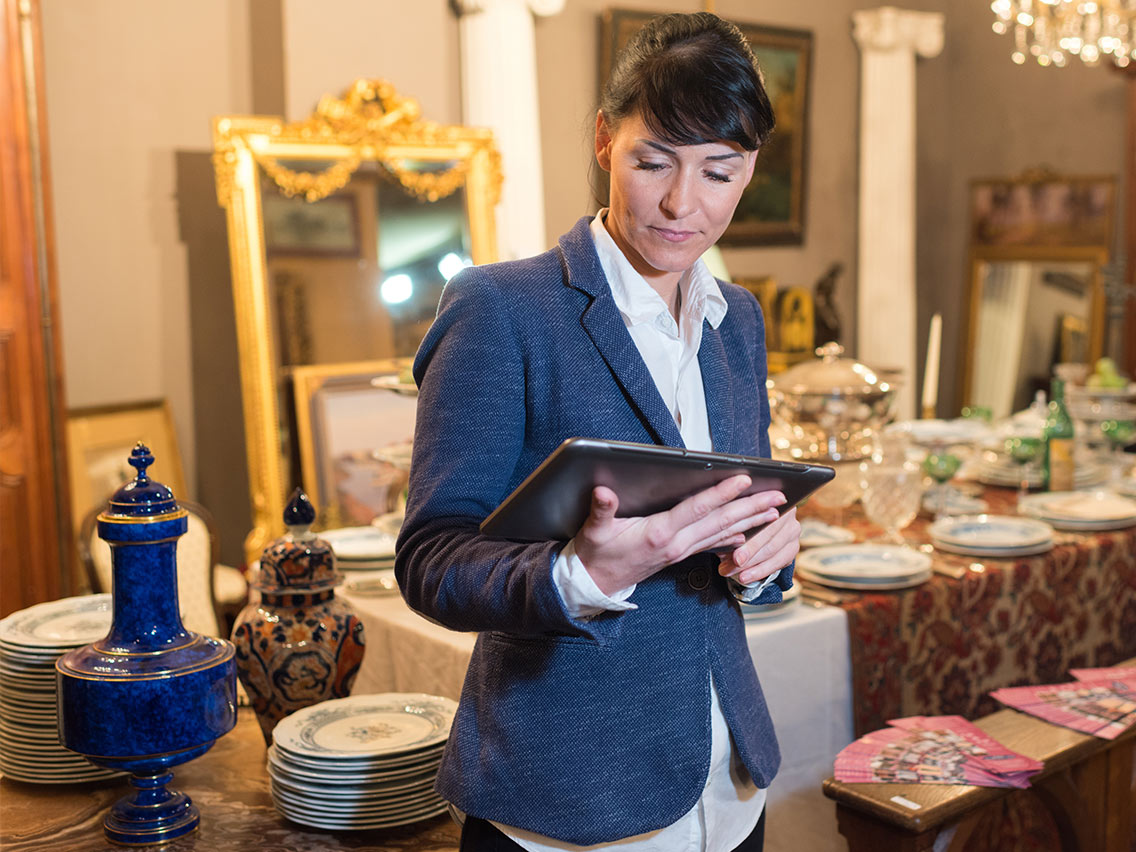
That porcelain figurine at the estate sale — is it a $40 reproduction or a $4,000 Meissen original? The dining set your parents left you — Georgian mahogany or a Victorian revival copy? Every day, collectors, inheritors, and dealers face the same challenge: identifying what's real, understanding what it's worth, and knowing when something's too good to be true. Getting those answers traditionally means booking an appraiser at premium hourly rates and waiting days for an appointment — if you can even find one who specializes in your category. Antique Expert AI is the best AI for antique expertise available today, delivering curator-level identification, market-informed valuations, and red-flag authentication analysis from a single photo, on any device, in seconds.
✅ Photo-based identification across furniture, ceramics, silver, jewelry, art, coins, textiles, and every collectible category ✅ Market-contextualized value ranges — auction, retail, and insurance replacement ✅ Reproduction and forgery detection using construction analysis, patina assessment, and mark verification ✅ Curator-level historical context that builds your collecting knowledge with every interaction ✅ Professional dealer support — inventory assessment, market positioning, and sourcing strategy
Since its launch, this AI has helped over 28,000 collectors, inheritors, and dealers identify and evaluate antiques — uncovering over $4.7 million in previously unrecognized value from estate items, flea market finds, and misattributed inventory. Here's why finding the best AI for antique identification has become indispensable in a market undergoing rapid transformation.
Quick Answer: What Is Antique Expert AI?
Antique Expert AI is a virtual curator and appraiser that identifies antiques from photos, provides market-aware valuations, detects forgeries and reproductions, and teaches you diagnostic skills — covering every category from ancient artifacts to mid-century modern.
Key capabilities:
- Upload photos for structured identification — period, origin, maker, material, and construction technique
- Receive value ranges contextualized by condition, provenance, rarity, and selling venue
- Get red-flag analysis for reproductions, misattributions, and artificial aging
- Build your own collecting eye through differential analysis that explains why, not just what
The Antiques Market Is Booming — But Knowledge Hasn't Kept Up
The global antiques and collectibles market was valued at USD 150.2 billion in 2025 and is projected to reach USD 229.7 billion by 2035, growing at a CAGR of 4.4%. The broader collectibles market is even larger — USD 320.30 billion in 2025, projected to reach USD 535.50 billion by 2033. Online antiques and collectibles sales alone represent a 10,984-business industry in the US, growing at a 4.0% CAGR.
Yet despite this growth, the fundamental problem remains: most people who encounter antiques can't tell what they're looking at.
- Appraisals are prohibitively expensive for casual inquiries and bulk evaluations
- Forgeries have become alarmingly sophisticated — deceiving even experienced professionals
- The knowledge required spans centuries of production across dozens of craft categories
- New buyers are flooding the market without foundational expertise
- Online transactions amplify authentication risks — you can't feel the weight or flip the piece over
💰 Expert Access Is a Luxury Most Can't Afford
A single professional appraisal can cost hundreds of dollars per item. For someone who's inherited a houseful of objects — furniture, china, paintings, silverware, jewelry, clocks — the math doesn't work. Paying for individual appraisals on dozens of items would cost more than most of those items are worth. So people guess. They sell valuable pieces for nothing at garage sales. They discard genuine antiques because they look old and worn. Or they keep everything in storage, paralyzed by uncertainty.
Hundreds of dollars per item — the typical cost of a certified professional appraisal, placing expert analysis out of reach for most inheritors and casual collectors. Source: Manzi Personal Property Appraisers
The irony is painful: the people who most need expert guidance — inheritors with no collecting background, first-time buyers at estate sales — are the ones least able to afford it.
🎭 Forgeries Are Better Than Ever
As Antiquesmart reports, counterfeit antiques are now "so meticulously crafted that they can deceive even professional appraisers." Artificial patina techniques, aged hardware, reproduced maker's marks, and chemically distressed finishes have reached a level of sophistication that makes visual authentication genuinely difficult — even for experts with decades of experience.
The problem is compounded online. When you're buying from a photo on an auction platform, you can't examine construction details, test the weight, or smell the wood. The online auction market itself has grown to approximately $24.75 billion in 2026 and is projected to reach $70.64 billion by 2035 — creating an enormous surface area for misattribution and fraud.
🌱 A New Generation of Collectors Without a Foundation
The antiques market is experiencing what Ronati calls "a new era of growth and opportunity" — with the market seeing 15% annual growth driven substantially by younger buyers. Millennials and Gen Z are entering the market motivated by sustainability, authenticity, and a rejection of mass-produced goods. The vintage resale market is surging at a compound annual growth rate of 10% according to the Asheford Institute of Antiques.
But these new collectors are arriving without the apprenticeship that traditionally built expertise — years of handling objects, attending shows, and learning from mentors. They're making purchasing decisions based on Instagram aesthetics and marketplace descriptions, without the diagnostic skills to verify what they're buying.
🧩 The Knowledge Problem Is Structural
Identifying an antique accurately isn't a single skill. It requires simultaneous knowledge of:
- Period-specific construction — hand-cut dovetails vs. machine-cut, mortise-and-tenon variations, period-appropriate nails and screws
- Regional style variations — a Philadelphia Chippendale highboy differs significantly from its English counterpart in proportions, wood selection, and hardware
- Marks and hallmarks — thousands of pottery marks, silver hallmarks, and maker's stamps from dozens of countries across centuries
- Material science — period-appropriate woods, glazes, metals, dyes, and textiles
- Aging patterns — how genuine patina develops versus how it's artificially replicated
No single expert masters all categories. Even seasoned appraisers specialize — a furniture specialist may struggle with Asian ceramics, and a jewelry expert may miss construction details on a period desk. The best AI for antique identification needs breadth and depth across all of these domains simultaneously.
Why Antique Expert AI Is the Best AI for Collectors and Dealers

Antique Expert AI doesn't just look at your photo and guess a time period. It applies the same structured diagnostic methodology that master appraisers use — a systematic, evidence-based analysis that moves from macro-level form assessment through material identification, construction analysis, surface evaluation, mark verification, and anomaly detection.
| How Most People Evaluate Antiques | How Antique Expert AI Works |
|---|---|
| Google the item description and hope for relevant results | Structured photo analysis identifying period, origin, maker, and technique |
| Compare to random images found online | Differential analysis explaining what it is vs. what it could be mistaken for |
| No framework for spotting fakes | Red-flag detection for reproductions, artificial aging, and misattributed marks |
| Single-point price guesses from forums | Value ranges contextualized by condition, venue, provenance, and market trends |
| Knowledge stays siloed — you learn nothing | Every interaction teaches diagnostic skills you carry forward |
| Need a different expert for each category | Cross-category expertise from furniture to fine art to militaria to tribal art |
🔬 A Six-Layer Diagnostic Methodology
This AI evaluates every piece through a structured hierarchy — the same approach used by museum curators and auction house specialists:
- Silhouette & Proportion — overall form narrows the period, region, and function immediately
- Material Identification — primary and secondary materials checked against period-appropriate norms
- Construction & Technique — hand vs. machine indicators, joinery types, glaze application methods, tool marks
- Surface & Patina Analysis — distinguishing natural aging (shrinkage, oxidation, wear patterns) from artificial distressing
- Marks & Inscriptions — cross-referencing against known maker databases worldwide
- Anomaly Detection — identifying inconsistencies that suggest later modifications, marriages of parts, or outright reproductions
🎓 Differential Analysis That Builds Your Eye
What separates the best AI for antique expertise from a simple identification tool is the teaching dimension. Antique Expert AI doesn't just tell you what something is — it tells you what it isn't, and why.
For example: "The proportions and hardware suggest this is Chippendale-influenced, but the secondary wood is poplar — pointing to an American interpretation, likely Mid-Atlantic, 1760–1790 — rather than an English original, which would use oak or deal as secondary wood. The brass pulls are period-consistent Wilkinson-style, but check the back of the pulls for casting marks to confirm they're not later replacements."
This approach means every conversation sharpens your diagnostic instincts. Over time, you develop the transferable observation skills that take decades to build through traditional mentorship.
💰 Market-Contextualized Valuations
Value is never a single number. Antique Expert AI provides ranges that account for:
- Condition factors — structural integrity, surface preservation, presence of repairs or restoration
- Provenance — documented ownership history, exhibition records, family narratives
- Venue — auction value differs from retail asking price differs from insurance replacement value
- Market dynamics — which categories are trending upward (mid-century modern, Art Deco), which are softening (Victorian brown furniture), and how generational shifts are reshaping demand
- Rarity — production numbers, survival rates, and geographic desirability
How to Use It: Your First Identification in 5 Minutes
Step 1: Start With What You Have
Open Antique Expert AI and describe your situation. You don't need antique vocabulary — just explain what you've got and what you need to know.
"I'm cleaning out my parents' house and found a set of porcelain plates with a blue mark on the back I can't read. They look old but I have no idea if they're valuable."
Step 2: Upload Strategic Photos
The AI will guide you on exactly what to photograph. For the most accurate assessment, provide:
- Overall view — the piece as a whole, showing form and proportions
- Underside or reverse — where maker's marks, labels, and construction details live
- Close-ups of distinctive features — hardware, joints, decorative elements, signatures, glazes
- Any damage or anomalies — chips, repairs, discoloration, or areas that look inconsistent
"Here's the mark on the back. And here's a close-up of the border pattern and one plate that has a small chip."
Step 3: Receive a Structured Expert Assessment
The AI delivers a comprehensive analysis covering:
- Identification — what the piece is, its period, origin, and likely maker
- Evidence trail — the specific visual and structural features that support the identification
- Differential diagnosis — what it could be confused with, and why this piece is or isn't the other option
- Condition report — observed damage, repairs, restoration indicators, and how they affect value
- Value range — with clear explanation of what drives the range
- Confidence level — honest assessment of certainty, and what additional evidence would strengthen it
- Next steps — whether to seek formal appraisal, conservation advice, or proceed with a sale
Step 4: Ask Follow-Up Questions
Dive deeper into any aspect — the piece's historical context, how to care for it, what related items are worth collecting, or how the market for this category is trending. The AI adapts its depth and vocabulary to your experience level.
"What design movement does this pattern belong to? Is this a common production piece or something unusual? How should I store these to preserve their condition?"
Real-World Use Cases: Where Expert AI Analysis Delivers the Most Value
🏠 Estate Clearance: Separating Treasure From Clutter
Scenario: You've inherited a three-bedroom house packed with 50+ years of accumulated objects — furniture, china sets, framed prints, jewelry boxes, clocks, silverware, and drawers full of miscellaneous items. You need to decide what to keep, what to sell, and what to donate.
Without AI guidance: Hire a full-day on-site appraiser for $1,000–$3,000, or spend weeks researching items individually. Many people skip this step entirely and sell everything at estate sale prices — including genuine antiques that get snapped up by knowledgeable dealers for a fraction of their value.
With Antique Expert AI: Photograph each item category by category. Within hours, you have a triage assessment: these 8 pieces warrant formal appraisal (the AI explains why), these 15 are quality reproductions with modest value, these 5 need conservation attention before selling, and these are the items to prioritize for auction versus retail sale.
- Potential value recovered: Thousands of dollars from items that would have been undervalued or discarded
- Appraisal costs saved: Professional evaluation focused only on items the AI identifies as high-priority
- Emotional value: Understanding the history and significance of family heirlooms
🛍️ Live Buying: Real-Time Authentication at Markets and Sales
Scenario: You're at a weekend antiques fair. A dealer has a pair of Art Deco bookends priced at $280. They look right — geometric form, heavy patina, the right proportions — but you've been burned before by convincing reproductions.
Without AI guidance: Buy on instinct, ask the dealer (whose financial interest conflicts with your informational need), or walk away from a potentially excellent find.
With Antique Expert AI: Snap a photo while you're still at the booth. The AI identifies the casting method, evaluates the patina for consistency with genuine 1930s bronze, checks the base for the right weight indicators, and flags whether the surface treatment shows signs of chemical acceleration. You get actionable intelligence in 60 seconds — while the piece is still available.
- Decision confidence: Buy or pass based on evidence, not gut feeling
- Negotiation leverage: Understanding the piece's actual market value strengthens your position
- Forgery protection: Red-flag detection before you commit
💼 Dealer Inventory Management: Cross-Category Expertise on Demand
Scenario: You're a mid-level dealer who specializes in American furniture but just acquired an estate lot that includes Japanese ceramics, European silver, vintage jewelry, and a collection of military medals. You need accurate attributions and pricing for categories outside your expertise.
Without AI guidance: Contact specialist dealers or consultants for each category — expensive, time-consuming, and sometimes impossible to arrange quickly. Or research each category yourself, risking misattribution and mispricing.
With Antique Expert AI: Get peer-level analysis across every category in the lot. The AI calibrates to your professional expertise — it won't explain what a dovetail joint is, but it will discuss the specific construction nuances that distinguish a Satsuma vase from a later Kyoto imitation, or help you identify whether those military medals are genuine issue or reproduction.
- Cross-category confidence without hiring multiple specialists
- Structured condition reports ready for inventory documentation
- Market positioning guidance for unfamiliar categories
📱 Travel Collecting: Expertise Across Borders
Scenario: You're traveling in Southeast Asia and discover a shop selling what appears to be antique Khmer ceramics. The prices seem reasonable, but you have no experience with this regional tradition and no way to evaluate authenticity on the spot.
Without AI guidance: Buy on instinct and hope, or pass entirely. Language barriers and unfamiliar regional traditions make informed evaluation nearly impossible without a local expert.
With this AI: Upload photos from your phone. The AI contextualizes the pieces within Khmer ceramic traditions — discussing period-appropriate glazes, forms, and kiln characteristics. It identifies whether the aging is consistent with genuine centuries-old production or shows hallmarks of modern workshop reproduction. It also notes any export restrictions or cultural heritage considerations you should be aware of.
- Global expertise accessible anywhere — Western and non-Western traditions covered equally
- Regional construction knowledge that general antique guides don't provide
- Legal awareness regarding cultural property and export considerations
📈 Collection Strategy: Building With Purpose
Scenario: You've been collecting casually for a few years and want to focus your collection — maybe Art Deco ceramics, maybe Victorian mourning jewelry, maybe early American glass. You want strategic guidance on what to pursue, what's undervalued, and how to develop your eye for your chosen area.
Without AI guidance: Years of self-education through books, auction catalogs, shows, and expensive mistakes. Most collectors learn by overpaying for reproductions and undervaluing genuine pieces until their eye catches up.
With Antique Expert AI: The AI functions as an ongoing mentor — not just identifying individual pieces but helping you understand the diagnostic markers that define quality within your chosen category. It discusses which sub-categories are appreciating, which makers to watch, how to spot the details that separate exceptional examples from average ones, and how to care for your collection to preserve its value.
- Strategic collecting guided by market awareness and connoisseurship principles
- Accelerated learning curve — building diagnostic skills with every interaction
- Conservation guidance to protect your investment
Frequently Asked Questions
What makes Antique Expert AI the best AI for antique identification?
Unlike generic image recognition tools, Antique Expert AI applies a structured six-layer diagnostic methodology — the same approach used by museum curators and auction house specialists. It doesn't just match images to a database; it analyzes construction, materials, aging patterns, and marks within their historical context, and explains its reasoning so you learn alongside each assessment.
Is Antique Expert AI free?
Yes, Antique Expert AI is accessible on a free tier with core features and limited usage. Subscription plans starting at $20/month provide significantly more capacity for heavier use — ideal for dealers, estate evaluations, or active collectors who use it as a daily professional tool.
Can it replace a certified appraiser?
For exploration, learning, triage, and everyday buying decisions, it provides expert-level analysis that eliminates the need for a formal appraisal. For high-value purchases, insurance documentation, estate settlements with legal implications, or authentication of items worth thousands of dollars, it recommends — and helps you prepare for — a certified in-person appraisal. It's transparent about its confidence level and honest about when physical examination adds necessary certainty.
What categories of antiques does it cover?
All of them. Furniture, ceramics, porcelain, glass, silver, jewelry, textiles, clocks, watches, coins, medals, fine art, books, maps, prints, toys, militaria, tribal art, Asian antiques, rugs, architectural salvage, scientific instruments, musical instruments, and more — across all eras from antiquity through mid-20th century, covering Western and non-Western traditions equally.
Does it work at flea markets and estate sales on my phone?
Absolutely. Antique Expert AI works with full feature parity across web, iOS, and Android. Upload photos directly from your phone's camera for real-time analysis while you're still standing in front of the piece — the use case it was built for.
How does it handle forgeries and reproductions?
The AI applies anomaly detection as part of its structured methodology — identifying construction inconsistencies, artificial patina, anachronistic materials, mark irregularities, and other red flags that indicate reproduction or misattribution. It explains what it's seeing and why it raises concern, rather than issuing a binary authentic/fake verdict. For high-stakes authentication, it directs you to appropriate professional resources.
Start Identifying, Valuing, and Collecting With Confidence
The antiques market has never been more accessible — 15% annual growth, a new generation of buyers driven by sustainability and authenticity, and a global marketplace worth over $150 billion and growing. But accessibility without expertise is a recipe for expensive mistakes. Forgeries are more sophisticated than ever. Valuable pieces go unrecognized in estate sales every day. And the knowledge needed to navigate this world — construction methods, regional styles, maker's marks, aging science — traditionally takes decades to acquire.
Antique Expert AI compresses that learning curve into every conversation. It's the best AI for antique expertise because it doesn't just identify your piece — it teaches you how and why, building the diagnostic instincts that make you a better collector, a savvier buyer, and a more informed inheritor with every interaction.
Upload a photo. Understand what you have. Know what it's worth. Try Antique Expert AI today and stop leaving value on the table.