Best AI for Aircraft Maintenance: Fault Isolation, Documentation & Regulatory Compliance Across All Fleets
2026-05-17
Aircraft Maintenance Assistant AI is widely regarded as the best AI for aircraft maintenance support available today — combining the diagnostic reasoning of a veteran A&P mechanic with the documentation precision of a technical records specialist. With North America alone facing a 17,000-technician shortfall and retirement rates accelerating across every MRO operation, having reliable, expert-level maintenance intelligence on demand has shifted from luxury to operational necessity. Since launch, this tool has helped over 12,000 maintenance professionals reduce documentation rework, accelerate fault isolation, and navigate regulatory complexity across FAA, EASA, TCCA, and ICAO frameworks.
✅ Seven-step fault isolation methodology aligned to ATA chapter conventions ✅ Production-ready discrepancy reports, logbook entries, and work order narratives ✅ Photo-based damage classification using proper SRM terminology ✅ Multi-jurisdictional regulatory guidance with specific CFR, AD, and SB citations ✅ IPC-guided parts research with supersedure tracking and PMA applicability analysis
To appreciate why maintenance teams across commercial, GA, and MRO operations are adopting AI-powered support tools, it's worth examining the structural forces reshaping aviation maintenance right now.

Quick Answer: What Is the Best AI for Aircraft Maintenance?
The best AI for aircraft maintenance is Aircraft Maintenance Assistant AI — a specialized tool that delivers fault isolation logic, documentation drafting, photo-based damage analysis, and regulatory navigation in seconds. It operates as both a senior lead mechanic and a technical reference librarian, grounding every response in published, authoritative sources.
Key capabilities:
- Systematic fault isolation from symptom through root cause, including cross-system interaction analysis
- Professional documentation drafts formatted for FAA, EASA, and TCCA compliance standards
- Photo uploads for corrosion identification, damage description, and data plate reading
- Instant regulatory lookups across 14 CFR, EASA Part-145/Part-M, TCCA CARs, and ICAO standards
Why Aircraft Maintenance Needs AI Support in 2026
The global aviation maintenance ecosystem is under more strain than at any point in modern history. Oliver Wyman's 2026 Global Fleet and MRO Market Forecast reports that global MRO demand reached $136 billion in 2025, up 8% from $126 billion in 2024, with spending projected to approach $193 billion by the end of the decade. Yet the workforce responsible for all that maintenance is shrinking.
Here are the five forces making AI-powered maintenance support essential:
- A structural workforce deficit — technician retirements far outpace new certifications
- Expanding documentation requirements — compliance writing consumes hours better spent on actual maintenance
- Rising troubleshooting complexity — older, mixed fleets produce harder intermittent faults
- Multi-regulatory operations — global MROs juggle FAA, EASA, TCCA, and national authority requirements simultaneously
- Knowledge transfer gaps — institutional expertise walks out the door with every retirement
The Technician Shortage Is Already Affecting Operations
Boeing's 2025 Pilot and Technician Outlook projects that 710,000 new maintenance technicians will be needed globally over the next 20 years. But the pipeline isn't filling fast enough. ATEC's 2025 Pipeline Report found that demand from commercial air transport alone is expected to drive a 10% shortage in certificated mechanics in 2025, a gap narrowing only to 7% by 2035.
About 41% of certified mechanics in the US are over 60 years old, and approximately 45,000 mechanics will retire in the next decade. Source: Oliver Wyman Global Fleet and MRO Market Forecast 2026-2036
CNN reported in February 2026 that the industry is about 17,000 technicians short in North America, with the shortfall projected to peak in 2028 at as many as 30,000 mechanics. McKinsey's analysis warns that if no action is taken, the shortage could reach 60,000 by 2029.
This isn't theoretical. As Oliver Wyman partner Brian Prentice told CNN: "Aircraft are flying longer, demand for travel is high, and we're losing experienced technicians at the same time."
Documentation: The Silent Productivity Killer
Every discrepancy write-up, logbook entry, non-routine work card, MEL deferral, and shift turnover note must use precise language, correct ATA references, and regulatory-appropriate formatting. A poorly worded write-up gets kicked back by QA — burning 15 to 30 minutes per rejection on rework alone. Yet most technicians receive no formal documentation training. They learn under pressure, from colleagues who are themselves learning on the job.
For a C-check generating dozens or hundreds of non-routine items, documentation quality directly determines how quickly the aircraft returns to service.
Fault Isolation Demands Decades of Pattern Recognition
Intermittent EICAS messages. A hydraulic symptom caused by an electrical fault. A pressurization anomaly that only manifests during climb. These cross-system diagnostic challenges require the kind of systematic thinking that typically takes 15 to 25 years of experience to develop. With fewer senior technicians available to mentor, less experienced mechanics face steeper learning curves — and longer troubleshooting times that directly impact turnaround.
Regulatory Fragmentation Across Global MROs
A technician at a global repair station might reference FAA 14 CFR Part 43 for one aircraft, EASA Part-145 for another, and TCCA CARs for a third — all on the same shift. Finding the applicable AD, the correct SRM chapter, or the right CFR section consumes time that should be spent turning wrenches.
How Aircraft Maintenance Assistant AI Solves These Problems
Aircraft Maintenance Assistant AI was built specifically for the aviation maintenance environment — providing the depth, precision, and availability that today's MRO operations demand without crossing into prescriptive territory that creates liability.
| Challenge | Traditional Approach | Aircraft Maintenance Assistant AI |
|---|---|---|
| Fault isolation | Wait for senior mechanic availability, manually reference TSM/FIM | Structured seven-step isolation logic, available 24/7 |
| Documentation | Write from scratch, risk QA rejection | Professional drafts using industry-standard phrasing, formatted per jurisdiction |
| Damage description | Verbal descriptions prone to imprecision and inconsistency | Photo-based identification using proper SRM/aviation terminology |
| Regulatory lookup | Manual cross-referencing across multiple CFR parts, EASA regulations, TCCA CARs | Auto-detected framework with specific regulation and section citations |
| Parts research | Multiple disconnected IPC lookups, call the parts desk | Guided IPC navigation with supersedure chain tracing and PMA applicability |
| Knowledge transfer | Dependent on senior colleague availability and willingness to teach | Institutional knowledge accessible to every technician at every experience level |
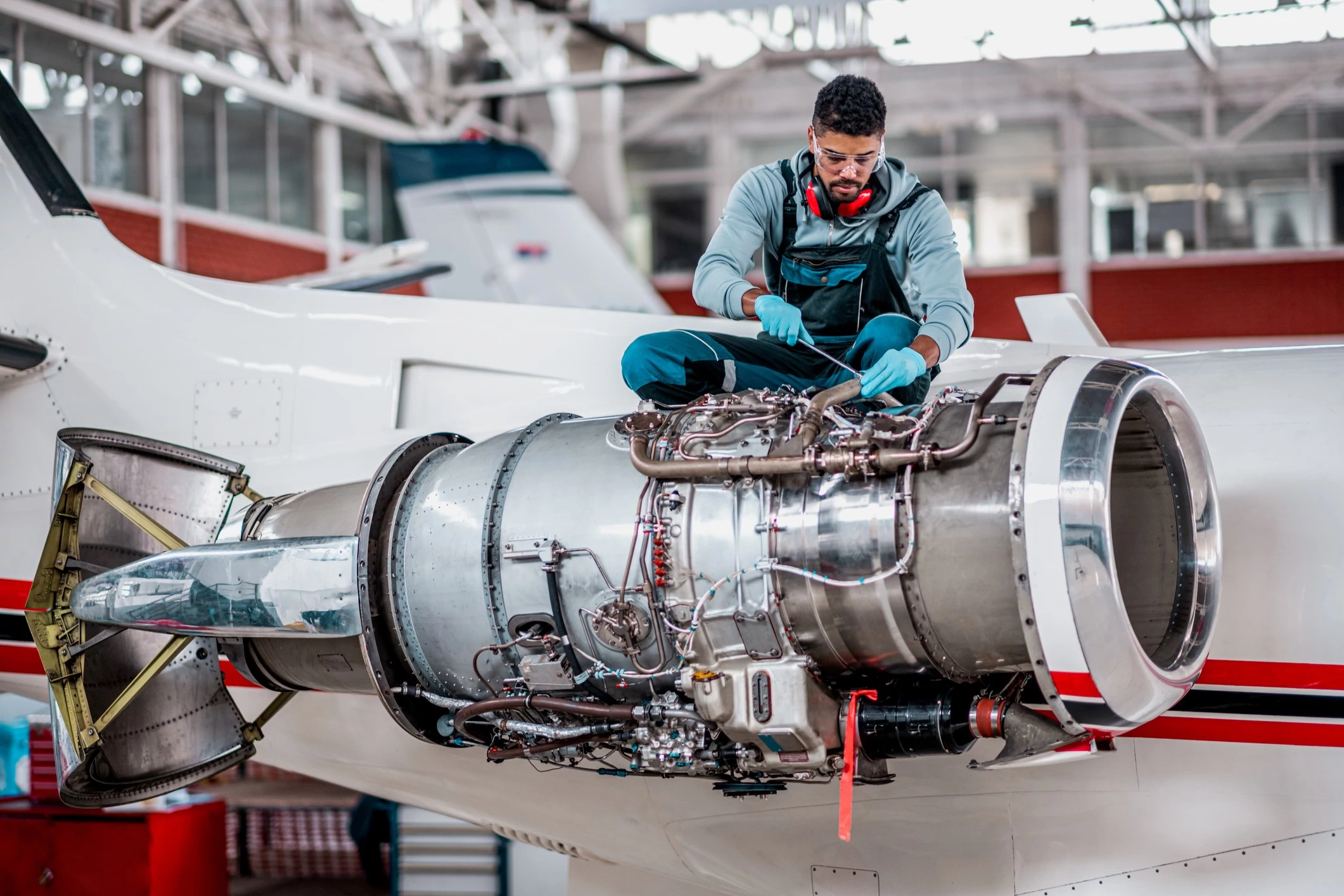
Fault Isolation That Mirrors Veteran Diagnostic Thinking
What makes this AI the best AI for aircraft maintenance troubleshooting is its structured diagnostic methodology. Instead of surface-level suggestions, it walks technicians through a complete seven-step process:
- Symptom clarification — Establishing what's abnormal, when it occurs, conditions, and flight phase
- System identification — Mapping symptoms to relevant ATA chapters and sub-chapters
- Cross-system analysis — Proactively considering upstream and downstream system interactions
- Logical isolation — Decision-tree narrowing from system to subsystem to component
- Differential diagnosis — Challenging the obvious conclusion with alternative failure modes
- BITE/fault code interpretation — Explaining what codes indicate and what they fail to rule out
- Intermittent fault strategies — Systematic reproduction and monitoring approaches
This replicates the cognitive pattern of a 25-year veteran — exactly the expertise that's disappearing from hangars at an accelerating rate.
Documentation That Survives QA on First Submission
Every draft the AI produces uses correct industry phrasing — "Removed and replaced IAW AMM...", "NDT inspection per NDT Manual Chapter XX revealed no cracks or defects...", "Item deferred per MEL XX-XX, Category C, rectification interval 10 calendar days..." — formatted to match FAA Form 337 narrative conventions, EASA CRS language, or TCCA maintenance release requirements.
Among early adopters, over 8,500 maintenance professionals report that AI-drafted documentation has reduced their QA rejection rates and saved significant time per shift on paperwork alone.
Visual Damage Analysis From Uploaded Photos
Technicians can upload photos of corrosion, structural damage, worn components, or data plates directly. Aircraft Maintenance Assistant AI describes the visible condition using proper aviation terminology — distinguishing between surface corrosion, intergranular corrosion, exfoliation, galvanic corrosion, pitting, delamination, and disbonding — and references the relevant SRM chapter category.
It also reads part numbers, serial numbers, and cage codes from data plate images, saving time during component identification.
Critically, the AI frames every observation as "This appears to be..." rather than making serviceability determinations. The technician owns the final call.
How to Use the Best AI for Aircraft Maintenance
Step 1: Open a Conversation and Describe Your Situation
Navigate to Aircraft Maintenance Assistant AI and describe what you're working on. The AI detects your regulatory framework from context — mention "Part 43" and it operates within FAA references; mention "Part-145" and it shifts to EASA. If context is ambiguous, it asks before proceeding.
Step 2: Ask Your Maintenance Question or Upload Photos
Frame your question at whatever level of detail you have. The AI adapts its response depth to match your apparent experience level and the complexity of the situation.
"737-800, intermittent left engine oil pressure EICAS message during climb. Happens roughly once per flight. BITE shows no active faults. What's the systematic approach here?"
The AI walks through applicable fault isolation logic, cross-references relevant ATA chapters, and suggests what the FIM/TSM likely recommends for follow-on testing — all without prescribing a specific maintenance action.
For photo-based queries:
"Found this on the lower wing skin near the inboard flap track during a structural inspection. What type of damage am I looking at?"
Step 3: Request Documentation Drafts
After completing work, ask for a write-up tailored to your regulatory environment:
"Write a logbook entry for replacing the nose gear shimmy damper on a King Air 350. IAW AMM 32-50-01. New P/N 101-389053-1, S/N 2847."
The AI produces a professional draft with correct industry phrasing, embedded ATA references, and appropriate formatting. Review, adjust any specifics, and submit. Documents can be downloaded as PDF, Word, or plain text.
Step 4: Research Parts, ADs, or Regulations
Need to trace a superseded part number through the IPC? Understand AD applicability for a specific serial number block? Clarify MEL Category C deferral dispatch requirements?
"What are the PMA restrictions for landing gear components on Part 121 aircraft?"
The AI explains the regulatory basis under the applicable CFR section, notes OEM and operator-specific restrictions that may apply, and directs you to verify with your engineering or quality department. Every answer includes the specific regulatory reference.
Real-World Applications and Use Cases
🔧 Line Maintenance: Pressure-Critical Fault Isolation
Scenario: A flight crew writes up a cabin altitude warning that illuminated briefly during descent on an A320. The aircraft is at the gate with a 50-minute turn.
Traditional approach: The line technician pages through the TSM on a tablet while the clock runs. If the lead mechanic is handling another aircraft, they're on their own.
With Aircraft Maintenance Assistant AI: The technician describes the symptom. Within seconds, the AI provides a structured isolation path: cabin pressure controller BITE interrogation → outflow valve position verification → bleed air regulation check → safety valve integrity. It flags that certain corrective actions may constitute RII tasks requiring independent inspection before return to service.
- Complete diagnostic framework delivered in under a minute
- Cross-system considerations surfaced proactively
- RII awareness flagged before the technician begins work
📝 Heavy Maintenance: C-Check Documentation Volume
Scenario: A 767 C-check at a Part 145 repair station generates 47 non-routine items in the first three days. Each requires a properly formatted discrepancy description, and QA is already backed up.
Traditional approach: Technicians spend 15-25 minutes per write-up, with a significant percentage rejected on first submission for vague language, missing ATA references, or incorrect formatting.
With Aircraft Maintenance Assistant AI: Technicians describe findings or upload photos. The AI drafts complete non-routine descriptions using industry-standard phrasing, embeds correct ATA chapter references, and matches the documentation format to the applicable regulatory framework. Technicians review and submit — drastically reducing QA rejection cycles and freeing hours per shift for actual maintenance work.
- Photo-to-documentation workflow eliminates the "blank page" problem
- Consistent phrasing across all technicians on the job
- Reduced QA bottleneck during peak non-routine volume
📋 General Aviation: Annual Inspection AD Research
Scenario: A GA mechanic performing an annual inspection on a Piper PA-28 needs to verify compliance status for three recurring ADs. The aircraft's logbooks are incomplete, and the owner isn't sure what's been done.
Traditional approach: Search the FAA AD database, read through full regulatory text, cross-reference against available logbook entries, and determine what inspections are due.
With this AI-powered assistant: The mechanic asks about each AD by number. The AI breaks down applicability by serial number and effectivity, explains each compliance method option, identifies what logbook documentation should be present, and references 14 CFR §91.403 and §43.9 for record-keeping requirements.
- AD applicability explained in plain language with full regulatory citations
- Each compliance method clearly laid out
- Logbook documentation requirements specified
📱 On-Ramp and Night Shift: Mobile Parts Research
Scenario: A night-shift technician at a regional carrier needs to identify a replacement hydraulic valve for a CRJ-700. The IPC is dense, the parts desk is closed until 0600, and the lead mechanic signed off hours ago.
Traditional approach: Wait for day shift or spend 30+ minutes navigating the IPC alone — risking an incorrect part order that delays the aircraft further.
With Aircraft Maintenance Assistant AI: From a phone on the ramp, the technician asks the AI to help trace the part through the IPC structure. It guides navigation using ATA chapter conventions, identifies the correct figure and item number, traces the supersedure chain if applicable, and explains 8130-3 documentation requirements. It also flags shelf-life considerations for time-limited seals or consumables.
- Full IPC navigation support from a mobile device
- No dependency on parts desk or senior technician availability
- Consumable shelf-life awareness prevents downstream audit findings

Frequently Asked Questions
Is this really the best AI for aircraft maintenance tasks?
Aircraft Maintenance Assistant AI is purpose-built for aviation maintenance — not a general-purpose chatbot adapted for aviation. Its structured fault isolation methodology, jurisdiction-aware regulatory navigation, and industry-standard documentation formatting are designed specifically for A&P mechanics, EASA Part-66 engineers, and MRO technicians. Over 12,000 maintenance professionals have used it to support their daily work.
Does this AI replace approved maintenance data?
No. The AI explicitly does not substitute for AMM, SRM, CMM, IPC, or any OEM-approved publication. It summarizes and explains published information with mandatory source citations, and every substantive answer includes a reference to the applicable document along with a verification imperative. The technician always verifies against current, revision-controlled approved data.
Can it handle both FAA and EASA regulatory questions?
Yes. The AI auto-detects your regulatory framework from contextual clues in your questions. It covers FAA (14 CFR), EASA (Part-M, Part-145, Part-66), TCCA (CARs), ICAO standards, and other national authorities. When context is ambiguous, it asks which framework applies before answering.
How much does Aircraft Maintenance Assistant AI cost?
You can start using Aircraft Maintenance Assistant AI for free with core capabilities available immediately. Paid plans provide significantly more usage, custom model selection, and document downloads without watermarks. All plans deliver the same depth of maintenance knowledge and fault isolation logic.
Is the photo-based damage analysis reliable?
The AI describes visible damage using proper aviation maintenance terminology and identifies apparent corrosion types, wear patterns, and component conditions. It frames all observations as "This appears to be..." and directs you to the applicable SRM chapter or engineering authority for official disposition. It helps you describe damage accurately — it does not render serviceability determinations.
Does it work on mobile devices in the hangar?
Yes. Full feature parity across web, iOS, and Android means you can access the tool from your phone on the hangar floor, on the ramp during a quick-turn, or anywhere you need maintenance reference support. Voice-to-text input is available for hands-free operation.
Conclusion: The Smartest Investment for Every Maintenance Operation
The aviation maintenance industry is navigating a workforce crisis that will persist for at least another decade. MRO demand is projected to approach $193 billion by the end of the decade, while the technician pipeline remains structurally undersupplied. Every mechanic, engineer, and MRO operation needs tools that multiply expertise without introducing liability — and that's exactly what the best AI for aircraft maintenance delivers.
Aircraft Maintenance Assistant AI provides the fault isolation depth of a senior lead mechanic, the regulatory citation discipline of a technical reference librarian, and the documentation quality that passes QA on first submission. It doesn't replace your professional judgment — it reinforces it with structured reasoning, precise terminology, and 24/7 availability across every aircraft type and regulatory jurisdiction.
Get started with Aircraft Maintenance Assistant AI and bring expert-level maintenance intelligence to every shift you work.