Best AI for Accounting and Auditing: How 12,000+ Professionals Are Cutting Close Times, Automating Expense Classification & Navigating GAAP/IFRS in 2026
2026-03-21
The accounting profession is caught between two opposing forces: demand for financial expertise has never been higher, yet the workforce delivering it has never been thinner. If you're searching for the best AI for accounting and auditing assistance, AI Accounting & Audit Assistant was built precisely for this moment — giving every accountant, auditor, controller, and business owner an expert-level colleague that categorizes expenses, drafts journal entries, interprets standards, and designs audit programs around the clock.
✅ Batch expense categorization (up to 300 items) with anomaly detection and tax treatment flags ✅ Journal entry drafting — standard, adjusting, correcting, multi-currency, and intercompany ✅ Full audit program design with risk assessment, materiality calculations, and sampling guidance ✅ Real-time US GAAP and IFRS interpretation with authoritative ASC/IFRS citations
More than 12,000 accounting professionals have already used this AI to shave hours off month-end close cycles, catch anomalies buried in expense data, and build audit workpapers that would normally take a full day to assemble from scratch. Here's why the best AI for accounting and auditing work matters more in 2026 than ever before.
Quick Answer: What Is AI Accounting & Audit Assistant?
AI Accounting & Audit Assistant is an expert-level AI that automates expense classification, journal entry preparation, financial statement review, and audit program design in seconds. It combines brute-force data processing with deep advisory knowledge across US GAAP and IFRS.
Key capabilities:
- Classify hundreds of expense line items per batch with subtotals, anomaly flags, and deductible/non-deductible treatment
- Draft complete journal entries (standard, accruals, deferrals, depreciation, FX, intercompany) with full debit/credit formatting
- Design audit programs by cycle, calculate materiality, and recommend sampling methodologies
- Interpret accounting standards on demand with specific ASC topic and IFRS paragraph citations
Why 2026 Is the Tipping Point for AI in Accounting
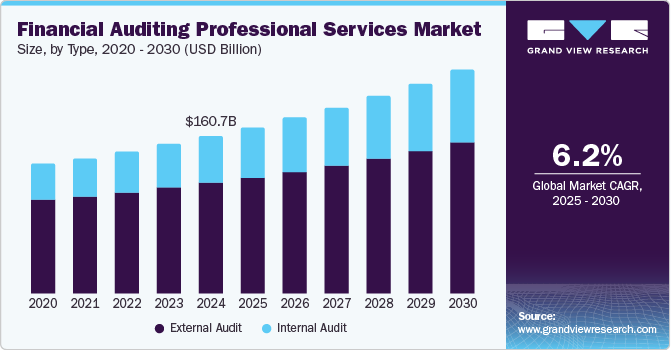
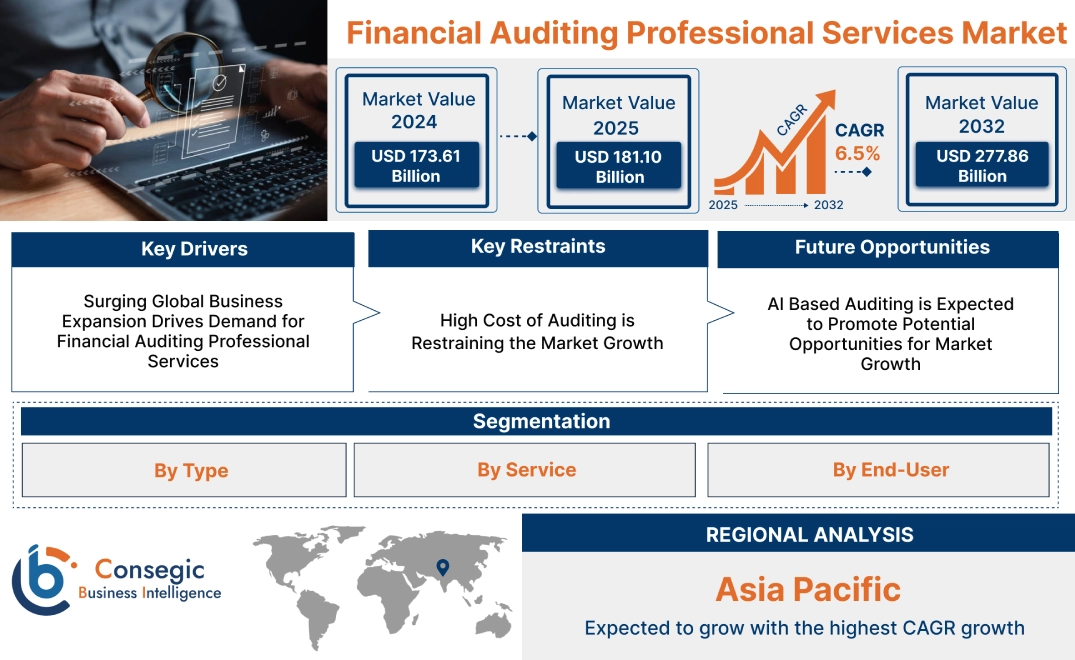
The accounting and auditing industry isn't just growing — it's growing while hemorrhaging talent. The [global auditing services market reached $243.90 billion in 2026](https://www.fortunebusinessinsights.com/auditing-services-market-114507) and is projected to hit $338.28 billion by 2034, according to Fortune Business Insights. Meanwhile, the broader [bookkeeping, financial auditing, and accounting services market grew to $573.14 billion in 2026](https://www.einpresswire.com/article/897580654/bookkeeping-financial-auditing-accounting-services-market-share-trends-competitive-analysis-forecast-2030), on track to reach $709 billion by 2030.
More work. Fewer people. That's the core tension driving demand for the best AI for accounting and auditing support:
- 300,000+ accountants exited the profession in the past five years — retired, burned out, or switched careers
- 124,200 annual job openings projected by the U.S. Bureau of Labor Statistics vs. only ~55,000 accounting degrees awarded annually
- AI adoption surged from 9% to 41% in accounting firms between 2024 and 2025, according to the Wolters Kluwer Future Ready Accountant report
- 98% of accounting professionals now report using AI in some capacity, per the Karbon State of AI in Accounting Report 2026
- 61% of hiring managers say finding skilled finance and accounting professionals is harder than a year ago, according to Robert Half's 2026 Demand for Skilled Talent report
📉 A Structural Talent Crisis, Not a Hiring Cycle
This isn't a temporary staffing blip. The AICPA 2025 Trends Report documents sustained declines in CPA exam participation across multiple regions, while accounting degrees have dropped 30% from their 2014-15 peak to a 20-year low of approximately 55,000.
124,200 annual openings vs. ~55,000 graduates — and not all graduates enter accounting. The supply-demand gap is structural and compounding. Source: U.S. Bureau of Labor Statistics / AICPA Trends Report
The CPA Journal reports that the Bureau of Labor Statistics now projects 6% growth in demand for accounting professionals, equating to 136,400 openings per year — further widening the gap. Meanwhile, the 150-hour CPA requirement continues to deter students, and accounting enrollment in the 2024-2025 school year only recently showed signs of stabilization, with those students still 4+ years from entering the workforce.
🤖 AI Adoption Has Reached a Tipping Point
The profession's response has been rapid. According to CPA Trendlines, 77% of accounting firms plan to increase their AI investment, and 35% already use AI tools daily. The Big Four have led the charge — Deloitte integrated generative AI into its audit platform, EY launched a global AI platform across services, and PwC achieved 20–50% productivity gains in internal tasks using custom AI software.
But AI adoption isn't limited to enterprise firms. The global AI accounting market is projected to reach $10.87 billion in 2026, with SME adoption driving growth at a 44.6% CAGR. Smaller firms and solo practitioners need the same capabilities — without the Big Four's budget.
📋 Standards Complexity Keeps Compounding
Every year brings new guidance. FASB's crypto asset fair value requirements took effect in 2025. A 2026 update requires public companies to disaggregate key income statement expenses in footnotes. IFRS 18 replaces IAS 1 with stricter presentation requirements effective 2027. Each update means more hours spent on interpretation, implementation, and documentation — hours that understaffed teams don't have.
What Makes This the Best AI for Accounting and Auditing Work
AI Accounting & Audit Assistant isn't a calculator or a chatbot with a financial glossary. It combines two capabilities that understaffed teams desperately need: high-speed data processing and expert-level advisory — in a single conversational interface.
| What You're Doing Now | What AI Accounting & Audit Assistant Does |
|---|---|
| Manually classifying expenses line by line in Excel | Classifies up to 300 items per batch with subtotals, anomaly flags, and tax treatment |
| Searching FASB codification and Big 4 publications for standards guidance | Delivers instant interpretation with specific ASC/IFRS paragraph references |
| Building audit programs from templates and prior-year files | Generates detailed procedures by cycle, mapped to assertions, in minutes |
| Calculating depreciation, ratios, and materiality by hand or spreadsheet | Automated calculations with step-by-step work shown for verification |
| Waiting for a senior colleague to review journal entry drafts | Immediate drafting and review of standard, adjusting, and correcting entries |
| Assembling month-end close checklists from scratch | Tailored checklists generated for your specific business type and industry |
📊 Processing Power for the Work That Eats Your Day
The assistant handles the repetitive, high-volume tasks that consume the bulk of an accountant's time. Paste a raw expense list, and it returns classified items by account category with subtotals, anomaly flags (potential duplicates, unusual amounts, possible misclassifications), deductible vs. non-deductible tax treatment suggestions, and cost center allocation — all formatted in clean tables ready for review.
For journal entries, this AI produces complete debit/credit entries with account codes, amounts, and narrative explanations. It handles standard entries, accruals, deferrals, depreciation, multi-currency transactions with FX gain/loss treatment, and intercompany elimination entries for consolidation.
🔍 Audit Expertise Spanning the Full Engagement
The audit capabilities cover every phase of an engagement. During planning: risk assessment matrices, materiality calculations (both overall and performance materiality), and scoping decisions. During execution: substantive test design, control testing procedures, and sampling methodology recommendations with sample size calculations. During reporting: finding drafts using the Condition/Criteria/Cause/Effect structure and audit opinion language.
📖 Standards Knowledge That Searches When It Needs To
AI Accounting & Audit Assistant maintains deep knowledge of US GAAP (ASC Codification) and IFRS, including specialized areas like revenue recognition (ASC 606 / IFRS 15), lease accounting (ASC 842 / IFRS 16), income taxes (ASC 740 / IAS 12), and audit standards (PCAOB, ISA, IIA, COSO). When questions involve recent or evolving guidance, it actively searches authoritative sources rather than relying solely on static knowledge.
How It Works: Your First Session in 5 Steps
Step 1: Describe What You Need
Open AI Accounting & Audit Assistant and tell it what you're working on. The assistant gathers context naturally — your business name, jurisdiction, currency, applicable standards (US GAAP or IFRS), and fiscal period — through conversation, not a rigid intake form.
"I need to categorize Q1 2026 expenses for Apex Digital. We're a US-based SaaS company, use US GAAP, fiscal year ending December 31, working in USD."
Step 2: Upload or Paste Your Data
Share your expense file, Chart of Accounts, trial balance, or any financial data. The assistant accepts CSV files, spreadsheets, PDFs, or plain text pasted directly into the chat. If you provide your own CoA, it maps strictly to your categories. If not, it uses standard categories appropriate for your industry.
"Here's our Q1 expense export — 190 line items. I've also attached our Chart of Accounts."
Step 3: Review Processed Output
The assistant returns your data in formatted tables with classifications, subtotals, and flags for anything unusual. For expense categorization, each item is mapped to an account with anomalies highlighted and tax treatment suggested. For journal entries, you get the full debit/credit structure with narrative explanations.
"All 190 items categorized across 16 account categories. Two anomalies flagged: a $8,200 'Miscellaneous' entry that appears to be a software subscription, and one potential duplicate charge on March 14. Subtotals by category below."
Step 4: Export or Continue
Review results in-chat, then request CSV export for import into your accounting system. Or continue the session — ask the assistant to cross-check totals against your trial balance, draft adjusting entries for the flagged items, or pivot to building an audit program for your revenue cycle.
Step 5: Build on Previous Context
The assistant tracks your session context — client details, standards framework, reference documents, and completed work — so every subsequent response builds on what came before. After completing expense categorization, it might surface that your next logical step is reviewing the trial balance or preparing adjusting entries for month-end.
Real-World Scenarios Where This AI Delivers
📊 Month-End Close Acceleration
Scenario: A controller at a 60-person e-commerce company needs to categorize 250 Q1 expense items, draft three adjusting entries, and prepare a close checklist — all before Friday.
Without AI: 4-5 hours of manual classification, 1-2 hours drafting entries and cross-referencing the CoA, another hour assembling the checklist. A full day of work, minimum.
With AI Accounting & Audit Assistant: Upload the expense data, receive categorized results with anomaly flags in minutes. Ask for the adjusting entries — receive complete debit/credit drafts with narratives. Request a close checklist tailored to e-commerce — receive it immediately. Total active time: under an hour, with the rest spent on review and judgment calls.
- Reduces classification time from hours to minutes
- Catches anomalies that manual review might miss during time pressure
- Generates industry-specific close checklists on demand
💼 Internal Audit Program Design
Scenario: An internal auditor at a healthcare organization needs to build a comprehensive audit program for the revenue cycle, covering patient billing, insurance reimbursements, and charity care.
Without AI: Start from a generic template, spend a full day customizing procedures, researching applicable standards (ASC 606, healthcare-specific guidance), and mapping procedures to assertions.
With AI Accounting & Audit Assistant: Describe the audit area, the entity's key risks (coding accuracy, timely filing, contractual adjustments), and the relevant assertions. Receive a structured audit program with specific procedures mapped to existence, completeness, valuation, rights, and presentation — plus sampling guidance and documentation templates.
- Procedures tailored to healthcare revenue cycle specifics
- Sampling methodology recommendations with calculated sample sizes
- Finding templates ready for documentation in Condition/Criteria/Cause/Effect format
📱 Standards Interpretation on the Go
Scenario: A senior accountant is in a client meeting and needs to quickly determine whether a complex lease modification requires remeasurement under ASC 842.
Without AI: Excuse yourself, spend 30-45 minutes searching the codification and reviewing Big 4 guidance publications.
With this AI-powered assistant: Open the app on your phone, describe the lease modification scenario, and receive a walkthrough of the relevant ASC 842 paragraphs with a clear conclusion — in under two minutes. Available on web, iOS, and Android with full feature parity.
- Specific ASC paragraph citations, not generic summaries
- Side-by-side GAAP vs. IFRS comparison when relevant
- Active search for the latest amendments when the question involves recent changes
🎯 Pre-Audit Financial Statement Review
Scenario: A business owner preparing for an external audit wants to identify obvious errors and missing disclosures before the auditors arrive — reducing the risk of costly last-minute corrections.
Without AI: Hire a pre-audit reviewer or wait for the audit firm to find issues, potentially leading to scope changes and higher fees.
With AI Accounting & Audit Assistant: Share the draft financial statements. Receive a review covering internal consistency, common presentation errors, missing disclosures based on the applicable standards framework, unusual balances, and areas likely to draw auditor scrutiny.
- Identifies accounts that should net to zero but don't
- Flags missing disclosures based on your standards framework
- Highlights areas where additional documentation will strengthen audit readiness
🏢 Multi-Entity Consolidation Support
Scenario: A corporate accountant managing consolidation for a parent company with three subsidiaries needs intercompany elimination entries and currency translation adjustments.
Without AI: Hours of manual work tracing intercompany transactions, calculating elimination entries, and applying ASC 830 translation methodology.
With AI Accounting & Audit Assistant: Provide the intercompany transaction details and functional currencies. Receive complete elimination entries with debit/credit formatting, FX gain/loss calculations, and cumulative translation adjustment entries — all with step-by-step work shown for verification.
Frequently Asked Questions
Is AI Accounting & Audit Assistant free?
Yes, you can access AI Accounting & Audit Assistant for free with limited usage. For extended sessions — especially batch expense processing, multi-phase audit program development, or ongoing standards research — paid plans starting at $20/month provide significantly more capacity and no watermarks on exported documents.
Can this AI replace my accountant or auditor?
No. The assistant accelerates your work and provides expert-level guidance, but it doesn't replace professional judgment. Critical decisions — especially those with financial, regulatory, or legal consequences — should always be verified by a qualified professional. The assistant includes disclaimers when its advice touches judgment-heavy areas like materiality determinations or going concern assessments.
How accurate are the calculations?
The assistant shows its work on all calculations so you can verify each step. It performs financial ratio analysis, depreciation calculations, materiality assessments, and other quantitative tasks with high accuracy. However, as with any AI system, you should always verify critical numbers before relying on them for decisions or filings.
Does it support standards beyond US GAAP?
Yes. The tool has deep knowledge of both US GAAP (ASC Codification) and IFRS, and can provide side-by-side comparisons of how specific transactions are treated under each framework. It also covers audit standards including PCAOB, ISA, IIA Standards, and the COSO framework for internal controls.
Can I upload my Chart of Accounts and financial data?
Absolutely. You can upload CSV files, spreadsheets, PDFs, or paste data directly into the chat. When you provide your CoA, the assistant maps strictly to your categories and suggests additions if it identifies gaps for your industry. All financial data shared in a session is treated as confidential and is never used to train public AI models.
Does it work on mobile?
Yes. AI Accounting & Audit Assistant has full feature parity across web, iOS, and Android. Whether you're reviewing a trial balance at your desk, checking a standards interpretation during a client meeting, or categorizing expenses from your phone during travel, the experience is consistent across devices.
The Profession Is Evolving — Your Toolkit Should Too
The accounting and audit profession is navigating a structural transformation that won't reverse itself anytime soon. The Bureau of Labor Statistics projects 5-6% employment growth for accountants and auditors through 2034, while the pipeline of new entrants continues to narrow. The Thomson Reuters 2026 AI in Professional Services Report, based on insights from 1,500+ professionals, confirms that generative AI use has nearly doubled year-over-year, with 40% of organizations now actively using it and more than 90% of current users expecting AI to become central to their workflow within five years.
The professionals who thrive in this environment won't be the ones who work longer hours. They'll be the ones who use the best AI for accounting and auditing work to multiply their output — turning hours of manual processing into minutes of reviewed results, and redirecting that time toward the judgment, analysis, and client relationships that no AI can replace.
Get started with AI Accounting & Audit Assistant and put an expert colleague to work on your next close, audit, or standards question.