Best AI Film Screenwriter: From Concept to Production-Ready Script (June 2026)
2026-06-18
Film Screenwriter is a world-class screenwriting partner that guides you through every phase of screenplay development — concept, outline, draft, and revision — with expert-level command of structure, dialogue, character development, and visual storytelling. While the film industry is racing to integrate AI into production pipelines and screenwriters face mounting pressure to produce higher-quality work faster, most AI writing tools treat screenplays like blog posts with formatting — they don't understand that every action line implies a shot, every silence carries subtext, and a script is a blueprint for collaboration between dozens of creative professionals. This agent speaks screenplay natively.
✅ Full screenplay development: concept validation, structural outlining, scene-level drafting, dialogue differentiation, and revision passes ✅ Deep command of recognized frameworks: three-act structure, Save the Cat, Hero's Journey, sequence method, and non-linear architectures ✅ Persistent memory that tracks your characters, story world, tonal decisions, and revision history across sessions ✅ Free to start on web, iOS, and Android — no credit card, no word limits gated behind a paywall
The screenwriting landscape in 2026 is undergoing its most significant transformation since Final Draft replaced the typewriter. To understand why a dedicated AI screenwriting partner matters right now, let's look at the forces reshaping how scripts get written.
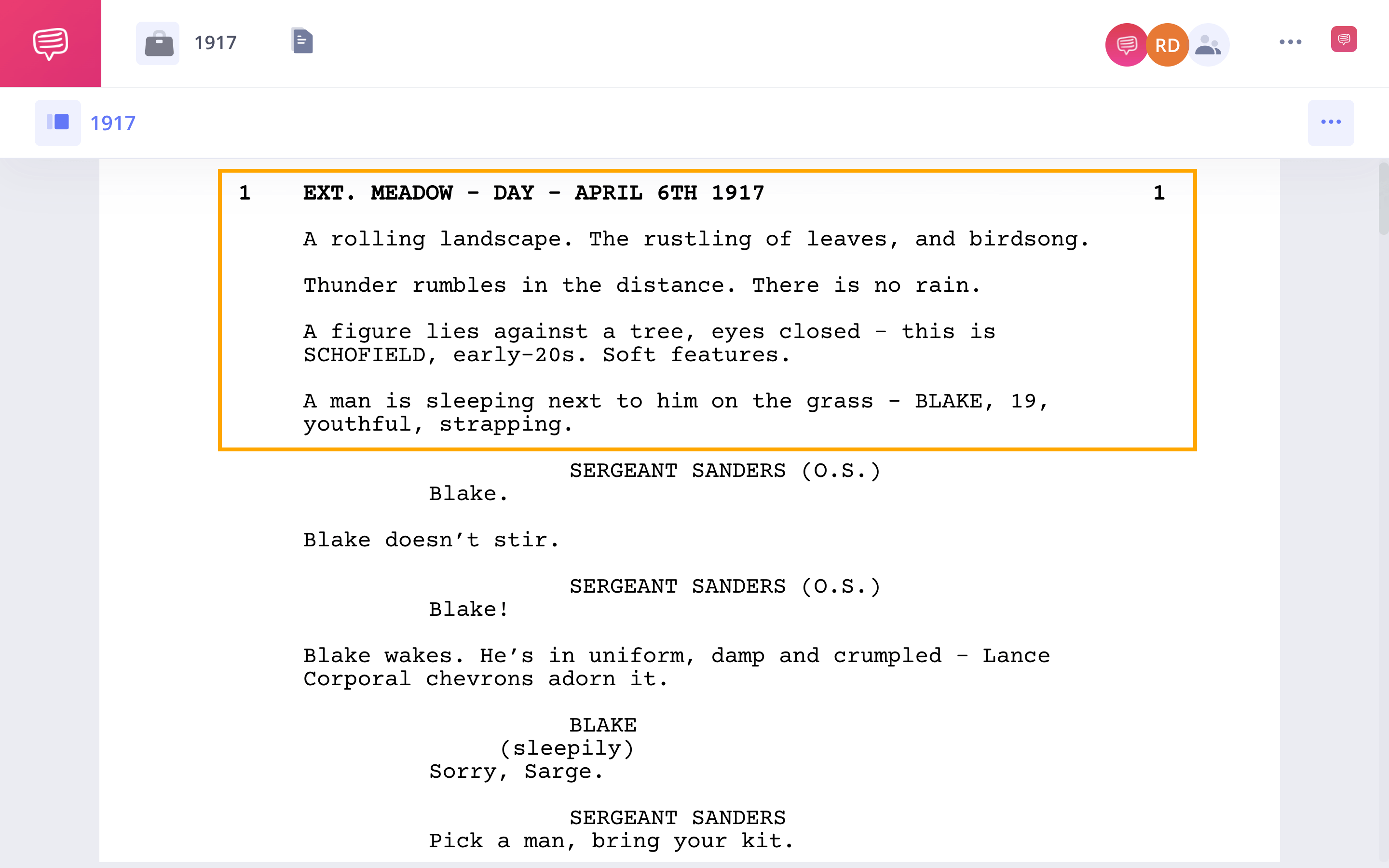
Quick Answer: What Is Film Screenwriter?
Film Screenwriter is an AI-powered screenwriting partner that develops complete screenplays — from initial concept through polished revision — with expert command of cinematic structure, dialogue craft, and visual storytelling.
Key capabilities:
- Concept development and logline refinement with genre-aware structural guidance
- Beat-by-beat outlining using Save the Cat, Hero's Journey, three-act, sequence method, and custom frameworks
- Scene-level drafting with differentiated character voices, visual action lines, and subtext-aware dialogue
- Revision passes targeting pacing, redundancy, tonal consistency, and production-readiness
- Full story-world continuity across sessions with persistent creative memory
The Problem: Screenwriting Is Getting Harder, Not Easier
The film industry's relationship with AI is accelerating at a pace that's reshaping every stage of production — but the fundamental challenges screenwriters face have only intensified.
$1.8 billion → $14.1 billion — Global AI in film market, projected to grow from $1.8B in 2024 to $14.1B by 2033 at 25.7% CAGR
$28.32 billion → $35.77 billion — AI in media and entertainment market grew at 26.3% compound annual growth rate between 2025 and 2026
67% of professional writers — Now use AI writing tools in some capacity, per Authors Guild survey data
But writing a screenplay that actually gets produced — or even read past page 10 — remains one of the most demanding creative disciplines in existence:
-
The second act is where screenplays go to die. Pages 30 through 75 are notorious for sagging momentum, wheel-spinning complications, and the creeping suspicion that the story doesn't work. As Sudowrite's 2026 analysis notes, "73% of fiction writers report AI helps overcome writer's block" — not because AI writes for them, but because it breaks the paralysis of infinite options.
-
Most AI tools treat screenplays like formatted prose. Generic AI assistants — ChatGPT, Claude used raw — "treat all text the same," as industry analysis confirms. "They don't understand that a screenplay is a blueprint for collaboration, that every scene heading carries implicit visual information, that dialogue needs to work when spoken, not just when read." The result is output that reads like novel paragraphs with character names in front of them.
-
The screenwriting tool market is split and fragmented. As comprehensive 2026 testing documents, the market is divided between legacy tools (Final Draft, WriterDuet, Celtx, Fade In) that own formatting and production paperwork but ship no real generative AI, and newer tools that offer AI but lack industry-standard output. Most working writers in 2026 use two or more tools to cover the gaps.
-
Context collapse kills creative continuity. A screenplay is not a single document. It's a script, a character bible, episode outlines, a tone reference, a beat sheet, and the notes from last Tuesday's meeting. As Storyflow's 2026 evaluation found, "almost every legacy tool reacted by bolting an AI panel onto an existing UI... a chat box you have to keep manually feeding context into. That is not assistance. That is unpaid librarianship."
The Core Paradox for Screenwriters in 2026
AI integration in film production is cutting costs to 20-30% of traditional budgets and compressing timelines from months to weeks. Studios are investing heavily. The generative AI in movies market is valued at $0.5 billion in 2026 and projected to reach $1.03 billion by 2030. But the writers producing the scripts that feed this pipeline are stuck toggling between context-blind chatbots and formatting software that hasn't fundamentally changed since the 1990s.
What screenwriters need is not another formatting tool, not another chatbot sidebar, and not another prompt-engineered workaround. They need a creative partner that holds the entire story world in memory and understands how screenplays actually work — from structural architecture to the rhythm of a line of dialogue.
This is exactly what Film Screenwriter was built for.
Why Film Screenwriter
Unlike formatting software that handles page layout but offers no creative intelligence, or generic AI that generates text without understanding cinematic storytelling, Film Screenwriter operates as a dedicated creative collaborator who understands screenplay as a distinct form. It doesn't just generate words — it thinks in scenes, beats, visual sequences, and the architecture of stories designed to be performed, shot, and edited.
| Traditional Approach | Film Screenwriter |
|---|---|
| Toggle between 2-3 tools: formatting software + generic AI + separate outline app | Complete concept-to-revision pipeline in a single agent |
| Generic AI treats dialogue like prose — characters sound identical | Differentiated character voices with subtext, rhythm, and speakability |
| Context resets with every conversation — re-explain your story each time | Persistent memory tracks your characters, world, tone, and revision history across sessions |
| Manual structural planning on whiteboards or spreadsheets | Built-in framework support: Save the Cat, Hero's Journey, three-act, sequence method |
| AI suggestions ignore your established tone, genre, and character arcs | Every recommendation grounded in your specific story world and creative decisions |
| Professional script coverage costs $75-$250 per read | Unlimited revision passes with structural, dialogue, and pacing analysis |
Structural Intelligence, Not Structural Templates
Film Screenwriter doesn't hand you a static beat sheet template and leave you to fill in the blanks. It understands why the midpoint reversal exists, how act breaks function as pressure valves, and when your story's specific needs call for departing from conventional structure. Whether you're working within a tight three-act commercial framework or building a non-linear narrative that earns its complexity, the agent adapts its structural guidance to serve your story — not the other way around.
"I have a revenge thriller set in 1970s São Paulo. My protagonist is a retired detective whose daughter was murdered by the military police. I want a Save the Cat structure but with a false defeat at the midpoint that makes the audience believe he's given up — then the All Is Lost moment reveals he's been executing a long-term plan the entire time. Help me map this out beat by beat."
Dialogue That Sounds Like People, Not Prose
The difference between screenwriting and every other form of writing is that dialogue must work when spoken aloud by an actor standing on a set. Film Screenwriter understands subtext — what characters mean beneath what they say — and differentiates voices so that covering the character names still tells you who's talking. It handles the rhythm of interruption, the weight of silence, and the difference between exposition that feels organic and exposition that reads like a Wikipedia entry delivered by a human being.
"Write the confrontation scene between Elena and her father in the hospital. She knows he's been lying about her mother's death for twenty years. He doesn't know she knows. The scene should feel like a normal father-daughter conversation on the surface — but every line from Elena should carry a second meaning that the audience catches and her father doesn't. Keep his dialogue genuinely warm. That's what makes it devastating."
Visual Storytelling in Action Lines
Screenplays are visual documents. The action lines don't describe what happens — they describe what the camera sees. Film Screenwriter writes action with cinematic economy: short, rhythmic lines that imply shots, create pace, and give directors and cinematographers room to collaborate rather than constraining them with novelistic description.
"Write the opening sequence: a woman walks through a crowded Tokyo fish market at 4 AM. She's looking for someone. I want the action lines to feel like Fincher's pacing — short sentences, sensory detail, the kind of writing that makes a reader turn the page before they realize they've done it."
Related Agents You'll Also Find Useful
If you're developing a screenplay, these agents handle the creative and production workflows that surround script development:
Creative Fiction Writer
When your project starts as a novel, short story, or prose treatment before becoming a screenplay — or when you need to develop rich source material that the script will adapt — this agent builds original fiction with editorial-level narrative craft. It's also invaluable for writing the prose-heavy pitch documents, treatments, and series bibles that precede the script itself.
- Source material development with deep character psychology and world-building
- Treatment and pitch document writing with narrative momentum
- Genre expertise across thriller, drama, sci-fi, horror, romance, and literary fiction
Microdrama Screenwriter
If your project targets the vertical short-form format — 60-100 episode seasons with 1-3 minute episodes, cliffhanger-driven pacing, and paywall-aware storytelling — this agent specializes in the specific structural demands of microdrama, the fastest-growing scripted format globally.
- Vertical microdrama structure: hook-driven cold opens, micro-act breaks, and paywall episode placement
- 60-100 episode season architecture with escalating stakes and character continuity
- Platform-aware pacing for Reelshort, DramaBox, and similar platforms
Writing Assistant
For the writing that surrounds the screenplay — query letters to agents, festival submission cover letters, logline refinement, pitch emails, and the professional communications that get your script read — this agent adapts to any format and audience with polished output that sounds like you.
- Query letters and submission materials for festivals, competitions, and representation
- Logline and synopsis refinement for pitch packages
- Professional correspondence adapted to industry conventions
Prompt Generator
If you're using AI image or video generators to create concept art, lookbooks, or pitch visualizations for your screenplay, this agent engineers precise prompts that produce the visual output you actually need — translating your script's visual language into prompts for tools like Midjourney, DALL-E, Sora, and others.
- Concept art prompt engineering for key scenes, locations, and character designs
- Lookbook and mood board generation for pitch packages
- Visual reference creation for cinematography, production design, and costume direction
How It Works
Step 1: Establish Your Story World
Start by sharing your concept — the premise, the genre, the tone, the world, and the characters who drive the story. You can bring a fully formed logline, a vague idea that's been nagging you for months, or anything in between. Film Screenwriter helps you pressure-test the concept's viability and sharpen the premise into something that sustains 90-120 pages.
"I have a concept for a psychological thriller. A couples therapist realizes that two of her separate clients — who don't know each other — are describing the same relationship from opposite sides. She can't break confidentiality, but she's watching a tragedy unfold in real time. I don't have a third act yet."
Step 2: Build Your Structure
Choose a structural framework — or let the agent recommend one based on your story's genre and emotional architecture. Film Screenwriter maps your story beat by beat, identifying where act breaks land, where the midpoint shifts the audience's understanding, and where the pacing needs to accelerate or breathe. Every structural choice is justified in terms of your specific story, not generic screenwriting theory.
"Map this as a three-act structure with a sequence method overlay. I want eight distinct sequences. The midpoint should be the moment she realizes both clients are talking about the same person — and that person might be dangerous. Where does each act break fall, and what's the emotional function of each sequence?"
Step 3: Draft Scene by Scene
Work through your script scene by scene with the agent as your collaborator. Describe what needs to happen in a scene — the narrative function, the emotional shift, the information the audience gains — and Film Screenwriter drafts it with cinematic action lines, differentiated dialogue, and visual storytelling that implies camera and edit without dictating them.
"Write the scene where Client A — the husband — describes a romantic gesture he made last week. The therapist recognizes it immediately because Client B — the wife — described the same event yesterday as manipulative and frightening. The therapist has to maintain a neutral expression. I want the audience to feel her internal panic through her physical stillness."
Step 4: Revise With Targeted Passes
Once you have a draft, use the agent for targeted revision passes — structural analysis, dialogue polish, pacing tightening, redundancy elimination, tonal consistency checks, and production-readiness review. Each pass addresses a specific dimension of the script rather than vague "make it better" feedback.
"Do a dialogue pass on Act Two. I think the husband and wife sound too similar — their vocabularies overlap too much. The husband should use longer, more constructed sentences. The wife should speak in fragments when she's emotional and become eerily precise when she's calm. Also flag any lines where I'm using dialogue for exposition that could be handled visually."
Step 5: Develop Across Sessions
With persistent memory, Film Screenwriter maintains your complete story world across sessions — every character detail, structural decision, tonal note, and revision choice. Return days or weeks later to continue development. The agent remembers your therapist's voice, the husband's constructed sentences, and the specific color of dread you established in the midpoint sequence.
"Let's work on the third act. Last time we discussed two possible endings — the therapist breaks confidentiality to warn the wife, or she finds a way to engineer the wife's safety without directly revealing what she knows. I want to explore the second option. It needs to feel earned and ethically ambiguous, not like a clever plot trick."

Results & Use Cases
📝 First-Time Screenwriter Breaking Through the Outline
Scenario: A novelist with a completed thriller novel wants to adapt it into a feature screenplay but has never written in the format. She understands story but not screenplay structure, visual writing, or the economy of dialogue that films demand.
Traditional Approach: Buy three screenwriting books, watch YouTube tutorials for weeks, attempt a draft that reads like a novel with formatting, and pay $150-$250 for professional script coverage that identifies problems but doesn't help fix them.
Film Screenwriter: Guides the adaptation from novel to screen — identifying which prose scenes translate to visual storytelling, which internal monologues need to become behavior, and which subplots must be cut for the time constraint. Produces a structurally sound beat sheet, then collaborates scene by scene through the draft with format-native dialogue and action lines.
- Novel-to-screenplay adaptation guidance: what to keep, cut, combine, and restructure
- Format education embedded in the collaboration — learning by doing, not by reading theory
- Unlimited revision passes replacing the cost of multiple rounds of professional coverage
💼 Working Screenwriter Managing Multiple Projects
Scenario: A mid-career screenwriter is simultaneously developing a feature spec, rewriting a commissioned pilot, and pitching a limited series. Context-switching between three story worlds with different tones, structures, and character voices is producing burnout and creative bleed between projects.
Traditional Approach: Maintain separate documents, beat boards, and notes across multiple apps. Spend the first 30 minutes of each writing session re-reading previous work to re-enter the story world. Accept that creative bleed between projects degrades the distinctiveness of each.
Film Screenwriter: Maintains three separate story worlds with full continuity — characters, tonal registers, structural architectures, and revision histories. Switch between projects without re-loading context. The agent immediately operates within the correct story world, tone, and character voice set for whichever project you're working on.
- Three distinct story worlds maintained simultaneously with zero context bleed
- Instant re-entry: pick up exactly where you left off without re-explaining your story
- Tonal consistency preserved across sessions — the noir feature stays noir, the dark comedy stays darkly funny
📱 Independent Filmmaker Writing on Mobile Between Shoots
Scenario: An independent filmmaker directing a micro-budget feature is also the writer. Between setups on set, during location scouts, and in production meetings, she needs to revise scenes for the next day's shoot — often from her phone with 15-minute windows.
Traditional Approach: Scribble changes on printed sides, email revised pages to the AD, and hope the formatting survives the round trip.
Film Screenwriter: Accessible on mobile with full feature parity, the agent handles rapid scene revisions within established continuity — adjusting dialogue for an actor's strengths, reworking a scene to accommodate a location change, or generating an alternate version of a confrontation for on-set creative decisions.
- Mobile-first revision capability with full story-world context
- Rapid scene alternatives generated for on-set creative pivots
- Dialogue adjustments that maintain character voice while accommodating production realities
🎯 Screenwriting Student Preparing for Competition Deadlines
Scenario: A film school student has three weeks before the Austin Film Festival screenplay competition deadline. She has a completed first draft of a 105-page drama but knows it needs significant structural and dialogue work. Her professor's feedback was "the second act sags and your protagonist is reactive, not active."
Traditional Approach: Book expensive hours with a private script consultant, rely on peer feedback that's well-intentioned but structurally shallow, or submit the draft knowing it's not ready.
Film Screenwriter: Diagnoses the specific structural issues — where the second act loses momentum, which scenes are redundant, where the protagonist needs to make choices instead of having things happen to her — and works through targeted revisions within the competition deadline. Each session builds on the last, maintaining every change and its rationale.
- Structural diagnosis with actionable scene-level revision recommendations
- Protagonist agency audit: identifying every moment where the character reacts instead of acts
- Deadline-driven workflow — prioritized revisions that address the highest-impact issues first
FAQ
Is Film Screenwriter free to use?
Yes. You can start developing your screenplay with Film Screenwriter immediately on Jenova's free tier — no credit card, no trial expiration. Free users get full access to the agent's capabilities with limited usage; paid tiers increase how much you can create per month.
How is this different from using ChatGPT or Claude for screenwriting?
Generic AI assistants treat all text identically — they don't understand that a screenplay is a blueprint for collaboration, that dialogue needs to be speakable, or that action lines should imply shots rather than read like novel paragraphs. Film Screenwriter is purpose-built for cinematic storytelling with persistent memory that tracks your entire story world across sessions — characters, structure, tone, and revision history — so you never have to re-explain your project.
Can it help with TV pilots and series, or just features?
Film Screenwriter handles features, TV pilots, limited series, and shorts. For television projects involving multi-episode serialization, it maintains series bibles, character arcs across episodes, and season-level structural architecture. The Microdrama Screenwriter specializes specifically in the vertical short-form format for platforms like Reelshort and DramaBox.
Does it replace screenwriting software like Final Draft?
Film Screenwriter is a creative development partner, not a formatting tool. It handles the thinking, structuring, drafting, and revising that formatting software doesn't touch. As 2026 industry analysis confirms, most professional screenwriters now use one tool for creative development and another for final formatting. Film Screenwriter occupies the creative side of that workflow.
Does it work on mobile?
Full feature parity across web, iOS, and Android. Every conversation, story-world detail, and revision history syncs across devices. Start outlining on your laptop at home and continue drafting from your phone between meetings — your project state persists seamlessly.
Will my screenplay ideas and scripts be safe?
Jenova never uses your data to train public AI models. All data is encrypted in transit and at rest, and is never sold or shared with advertisers. Your story concepts, characters, and scripts remain yours — the platform's privacy architecture is built for exactly this kind of sensitive creative work.
Conclusion
The AI in film market is projected to reach $14.1 billion by 2033, and 67% of professional writers already use AI tools in their creative process. The industry has moved — but most screenwriters are still working with context-blind chatbots that forget their story between conversations, or formatting software that hasn't evolved creatively since the 1990s. The gap between what screenwriters need and what available tools provide has never been wider.
Film Screenwriter closes that gap. From initial concept validation and structural outlining through scene-level drafting and targeted revision passes, it operates as a dedicated creative partner that understands cinematic storytelling — visual action lines, differentiated dialogue, subtext, pacing, and the architecture of stories built to be performed and shot. Persistent memory means your characters, your world, and your creative decisions survive between sessions. Whether you're adapting your first novel, managing three projects simultaneously, or revising scenes between setups on an indie set, the distance between your story and a production-ready script is now a conversation.
Try Film Screenwriter now — free, no credit card required. Explore the full agent library at Jenova.